2011 Toyota Matrix Base 0-60 Times, Top Speed, Specs, Quarter Mile, and Wallpapers
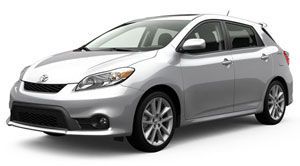
The 2011 Toyota Matrix Base is a Front-wheel drive Wagon. It can accommodate up to 5 passengers. It has 5 Doors and is powered by a 1.8L L4 DOHC 16-valve engine which outputs 132 hp @ 6000 rpm and is paired with 4-speed automatic transmission gearbox. The 2011 Toyota Matrix Base has cargo capacity of 561 Liters and the vehicle weighs 1285 kg. In terms of ride assists, the 2011 Toyota Matrix Base has stability control and traction control in addition to anti-lock brake system (ABS). The vehicle has an optional engine as well It offers and. Safety features also include Driver-side front airbag and Passenger-side front airbag. The front suspension is Independent front suspension while the rear suspension is Independent rear suspension. The car also features a It has 16'' steel wheels with covers as standard. Electronic features include Cruise Control. For convenience, the car has Power windows and Power door locks. There is also a remote keyless entry feature. Moreover, the car has. The steering wheel has audio control buttons. In terms of performance, the car has 144 N.m of torque and a top speed of 187 km/h. The 2011 Toyota Matrix Base accelerates from zero to 60 mph in 10 seconds and hits quarter mile at 17.3 seconds. Fuel consumption is 8.1 L/100km in the city and 6.3 L/100km in the highway. The car price starts at $ 16,715
| Name | Base | |
|---|---|---|
| Price | $ 16,715 | |
| Body | Wagon | |
| Doors | 5 Doors | |
| Engine | 1.8L L4 DOHC 16-valve | |
| Power | 132 hp @ 6000 rpm | |
| Number of Seats | 5 Seats | |
| Transmission | 4-speed automatic transmission | |
| Cargo Space | 561.0 L | |
| Maximum Cargo Space | 1,398.0 L | |
| Wheel Type | 16'' steel wheels with covers | |
| Series | ||
| Drivetrain | Front-wheel drive | |
| Horsepower | 132 HP | |
| Torque | 144 N.m | |
| Top Speed | 187 km/h | |
| Acceleration 0-100 km/h (0-60 mph) | 10.0 s | |
| Fuel Type | ||
| Fuel Consumption (City) | 8.1 L/100km | |
| Fuel Consumption (Highway) | 6.3 L/100km | |
| Gear Type | auto | |
| Weight | 1,285 KG | |
| Brand | Toyota | |
| Model | Matrix | |
| 0-400m (Quarter Mile) | 17.3 s | |
| 0-400m (Quarter Mile) - Speed | 133.1 km/h | |
| 0-800m (Half Mile) | 28.7 s | |
| 0-800m (Half Mile) - Speed | 149.8 km/h | |
| Modifications (MODS) | ||
| Modifications Cost | $ 0 |
2011 Toyota Matrix Used Price Estimates
Estimates based on a driving average of 12,000 miles per year| Used Condition | Trade In Price | Private Party Price | Dealer Retail Price |
|---|---|---|---|
| Outstanding | $ 5,319 | $ 6,916 | $ 8,105 |
| Clean | $ 4,949 | $ 6,445 | $ 7,538 |
| Average | $ 4,210 | $ 5,504 | $ 6,403 |
| Rough | $ 3,470 | $ 4,562 | $ 5,269 |
Though overshadowed by more distinctively styled competitors, the 2011 Toyota Matrix continues to provide plenty of practicality and comfort.
There have been a number of tweener cars that have hit the market within the past few years. That's not to say they're Justin Bieber enthusiasts with their fingers and eyes glued to a smartphone. These are cars that don't easily fall to definition, existing somewhere between a hatchback, a wagon and a crossover. The Toyota Matrix was one of the very first of these 'tween cars and continues to be one of the more desirable.

The 2011 Toyota Matrix stacks up against a rather odd clique of 'tweens. The Chevy HHR looks like a miniaturized version of a Truman-era Suburban; the Kia Soul looks like a roller skate; the Nissan Cube is, well, you know, a cube; and the Scion xB is styled after a box. It's truly a segment that caters to those with quirky design tastes. Yet it also boasts entries with an impressive amount of cargo and passenger space relative to their exterior footprints, so there's a practical side to them as well. For consumers more interested in practicality than attitude, the Matrix should have definite appeal with its more conventional styling.
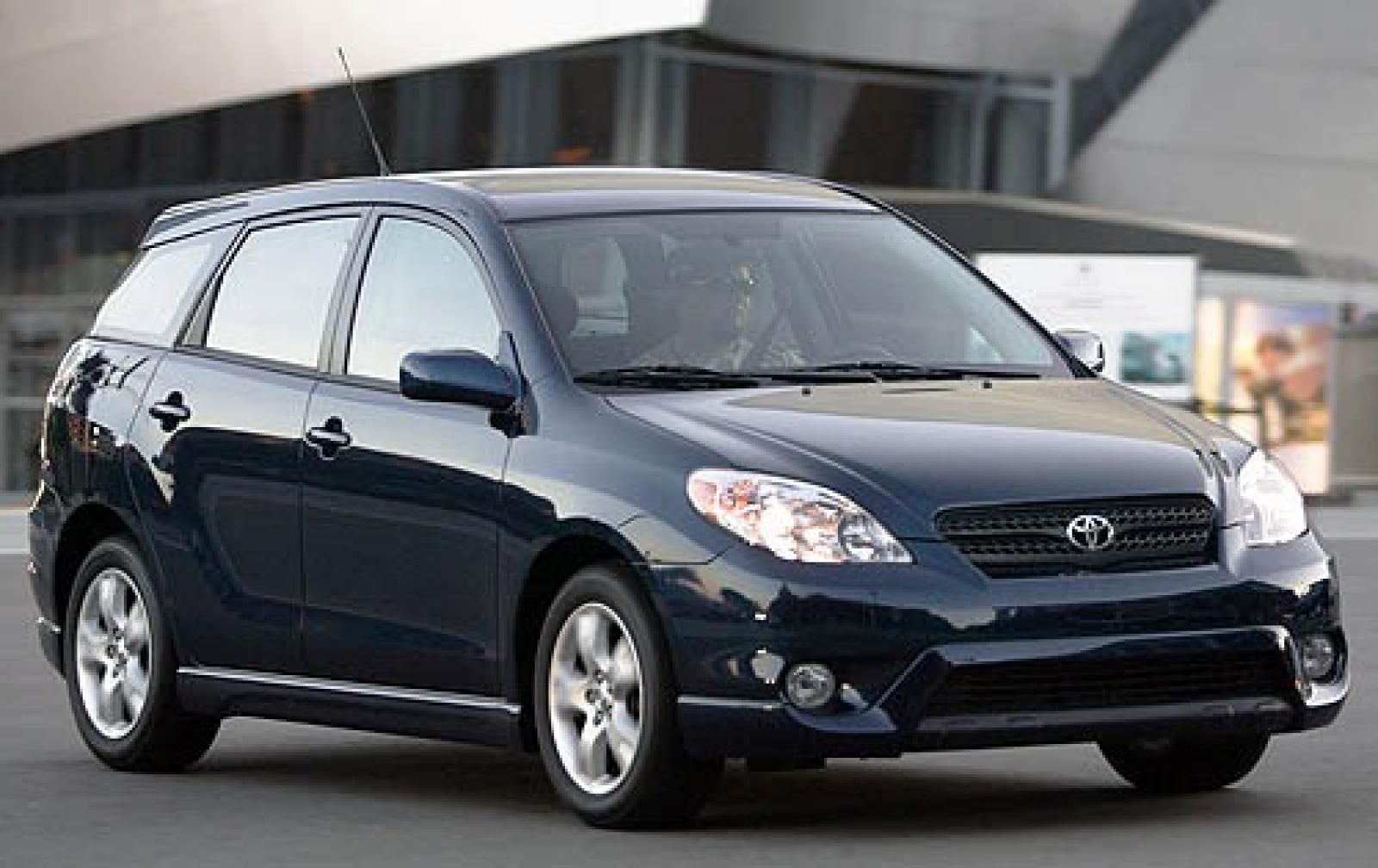
Another benefit is that the Matrix boasts rock-solid mechanicals from the Toyota Corolla. With the available 2.4-liter four-cylinder engine, acceleration is brisk for this class, and the Matrix is also available with all-wheel drive. Unfortunately, neither the 2.4-liter engine nor the base 1.8-liter is especially fuel-efficient given their output.
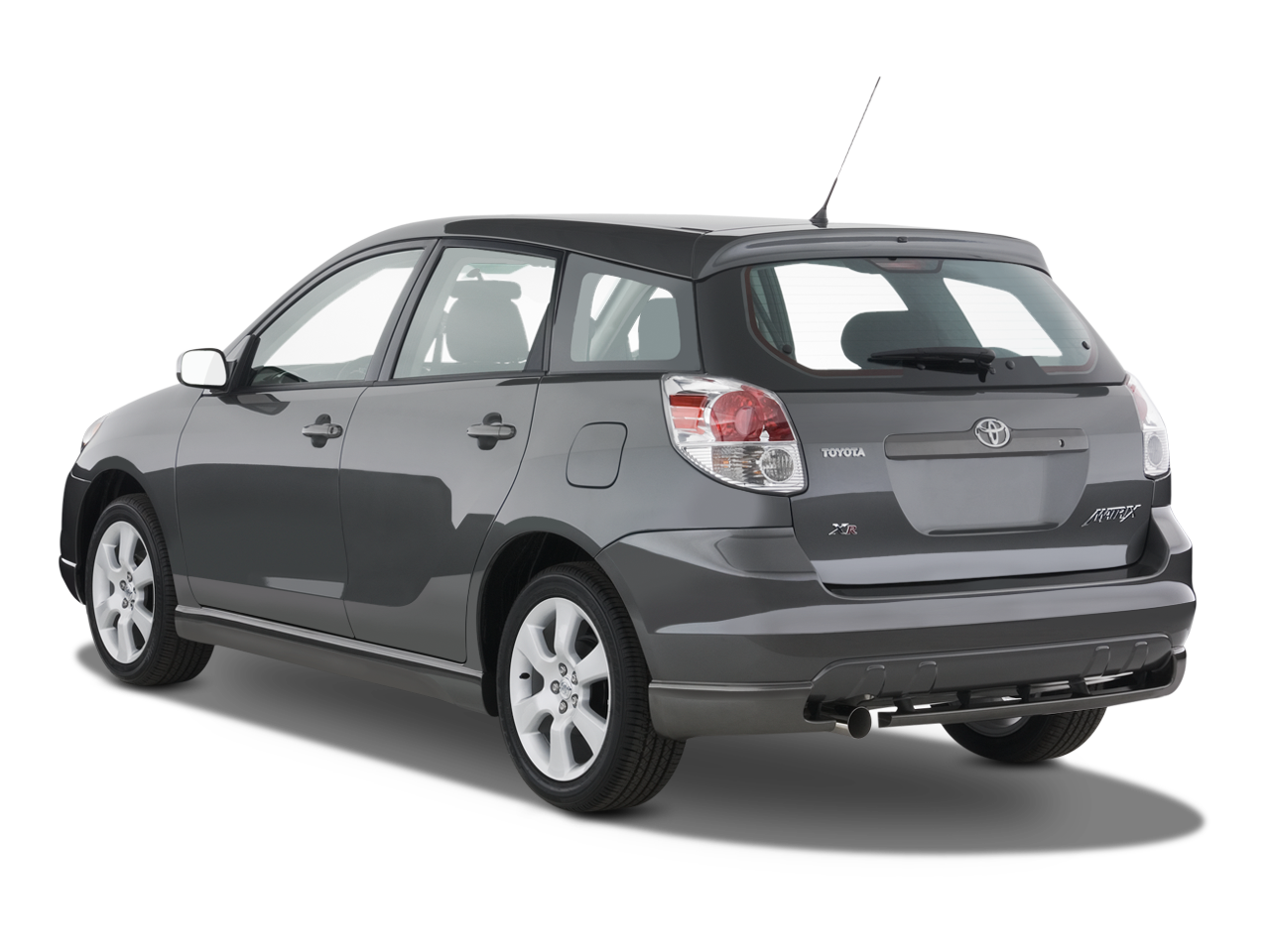
Of course, since the 2011 Toyota Matrix is a 'tween, there are more vehicles to consider than just its oddball brethren. Among hatchbacks, there's the versatile 2011 Honda Fit, the upscale 2011 Mazda 3 and the dynamic 2014 Nissan Juke. The 2011 VW Jetta Sportwagen is a top wagon alternative. Then there are several inexpensive compact crossovers like the Hyundai Tucson and 2011 Kia Sportage. But for those who like the idea of a car that does a little bit of everything well (without looking weird while doing it), the Toyota Matrix is an excellent choice.

The 2011 Toyota Matrix is a five-passenger wagon/hatchback available in base and S trim levels.

The base Matrix comes standard with 16-inch steel wheels, full power accessories, keyless entry, heated and folding rearview mirrors, cruise control, a tilt-and-telescoping steering wheel with audio controls, and a four-speaker sound system with a CD player and an auxiliary audio jack. The Matrix S adds foglamps, a fold-flat passenger seat and a six-speaker sound system.
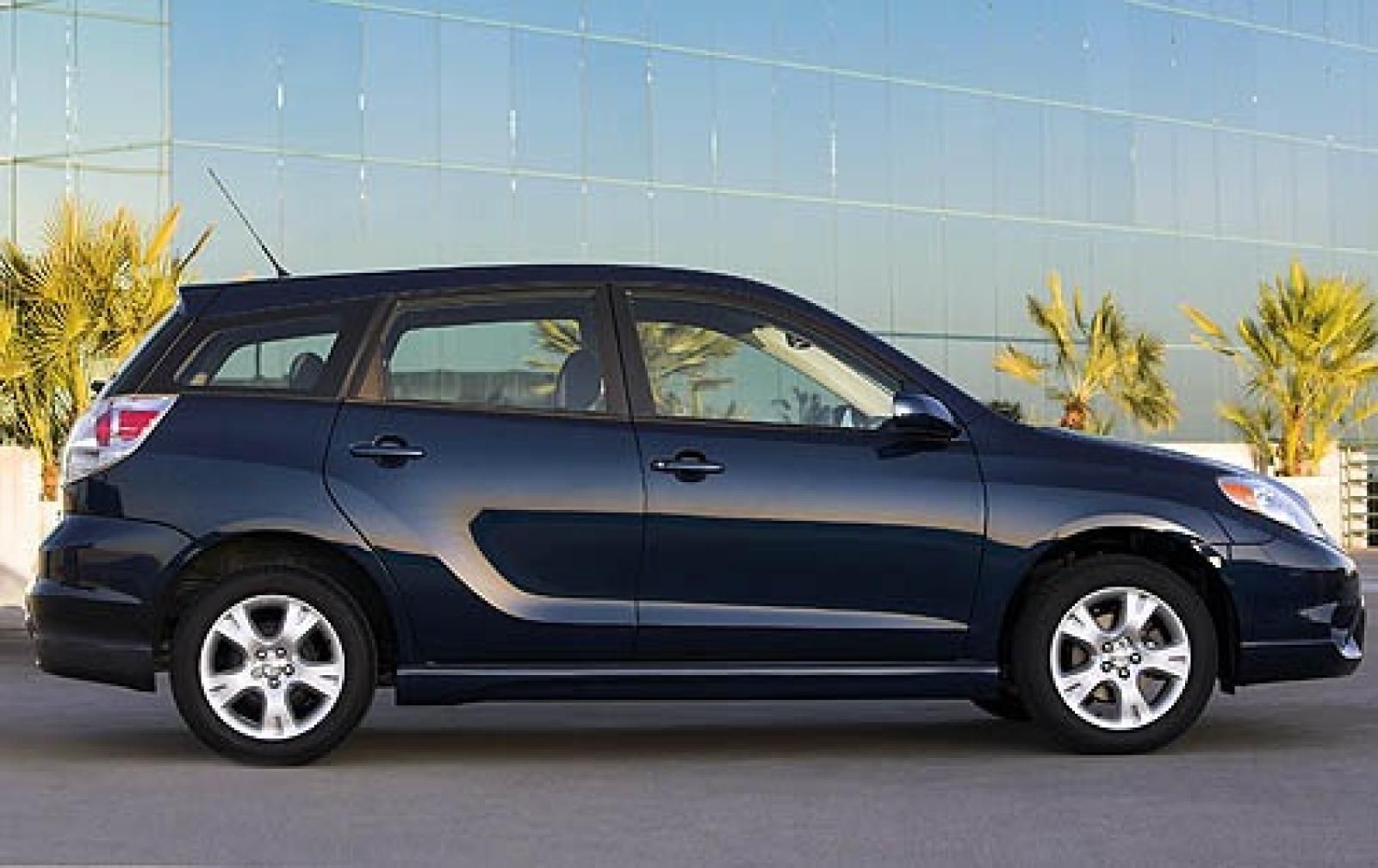
The S Premium package adds a more powerful engine, a sunroof, Bluetooth phone and streaming audio connectivity, and an upgraded six-speaker sound system with an iPod/USB audio interface. The Sport package available on both trims adds front and rear underbody spoilers and a snazzy S badge, along with foglamps for the base model and 17-inch alloy wheels for the S.
The 2011 Toyota Matrix comes standard with front-wheel drive, while the S can be equipped with all-wheel drive. The base Toyota Matrix is powered by a 1.8-liter four-cylinder good for 132 horsepower and 128 pound-feet of torque. A five-speed manual transmission is standard and a four-speed automatic is optional. EPA-estimated fuel economy is 25 mpg city/31 mpg highway and 28 mpg combined with the automatic and 26/32/28 with the manual.

The Matrix S gets a 2.4-liter four-cylinder that produces 158 hp and 162 lb-ft of torque. Front-drive models get a standard five-speed manual or optional five-speed automatic. A four-speed automatic is standard with AWD.
In performance testing of the mechanically identical and now discontinued Pontiac Vibe, a 0-60-mph run took 8.9 seconds with the five-speed auto. A front-wheel-drive Matrix S with the automatic returns an estimated 21/29/24 (21/28/24 with the manual), while an AWD Matrix S returns 20/26/22. These estimates are disappointing given the fuel economy of some crossover SUVs.
The 2011 Toyota Matrix comes standard with stability and traction control, antilock disc brakes, brake assist, active front head restraints, front side airbags and side curtain airbags.
The Matrix has not been rated using the government's new, more strenuous 2011 crash-testing procedures. Its 2010 ratings (which aren't comparable to 2011 tests) saw it earning a perfect five stars for frontal and front-seat side impacts, dropping to four stars for rear-seat side impacts. The Insurance Institute for Highway Safety awarded the Matrix its highest rating of "Good" in both frontal-offset and side-impact crash testing.
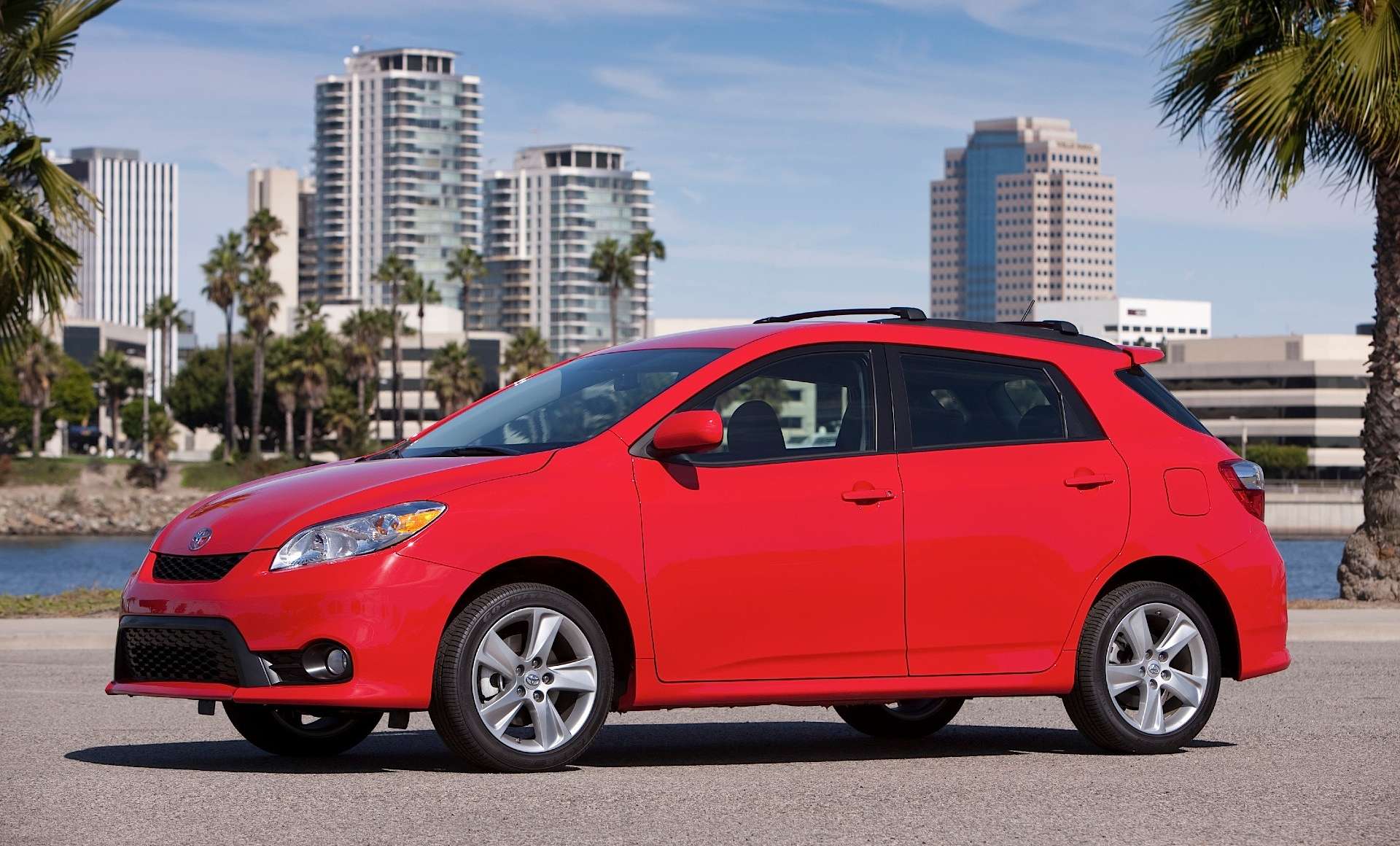
The base Matrix accelerates sluggishly off the line with its 1.8-liter engine, but its fuel economy will redeem it in the eyes of many shoppers. The 2.4-liter engine in the S is the opposite: Power is ample, but fuel economy is disappointing. In either case, the ride is smooth and well-insulated. The 2011 Toyota Matrix might not be the sportiest economy hatchback (especially now that the sport-tuned XRS is gone), but its refinement is laudable.
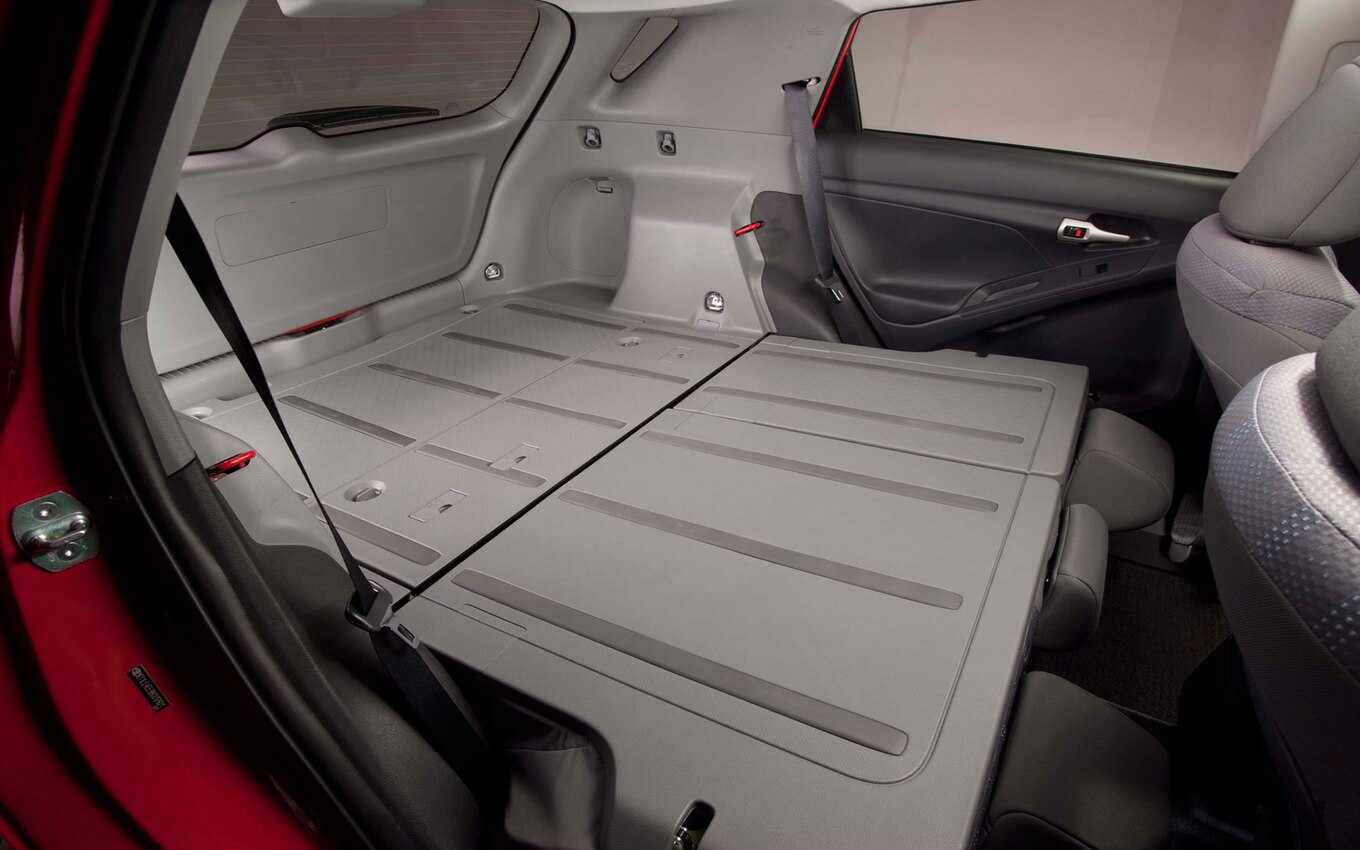
Inside the cabin, the Matrix has a significantly edgier ambience than other Toyotas, but doesn't go quite as far as the funky cabins found in the Scion xB or Nissan Cube. This could certainly be a good thing for many buyers, but either way, it's backed up by simple controls and decent materials.
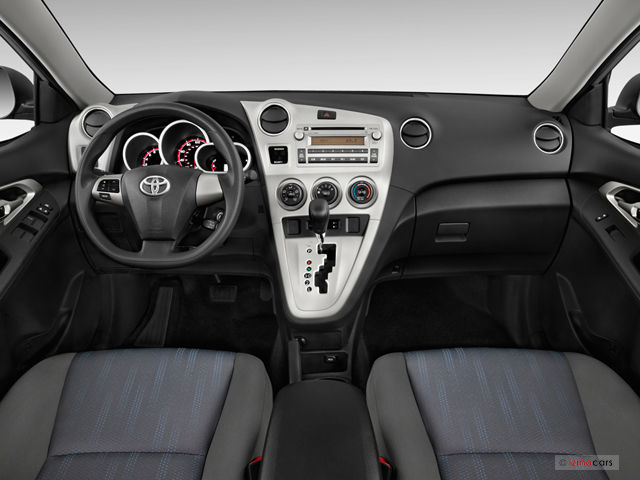
Also bound to be a good thing is the Matrix's generous cargo capacity. There are 19.8 cubic feet of luggage capacity behind the rear seats and a maximum 61.5 cubic feet if you include the space provided by the fold-flat front passenger seat. For rear passengers, a tall, deep bench seat is inviting for children and adults alike. Like most small Toyotas, taller drivers may be a bit squished behind the wheel, but those of average height should be fine.

The 2011 Toyota Matrix and Matrix S share a common suspension that delivers responsive handling and a relatively comfortable ride. An electric-assisted power steering unit replaces the traditional belt-driven hydraulic setup, helping the engine to conserve power and save fuel. When it comes to performance, however, the two trims could not be more different. The base car's 132-horsepower engine provides adequate power, but the Matrix S's 158-horsepower engine is notably better for merging onto fast-moving freeways, while also providing stout off-the-line acceleration. Unless you regularly encounter snowy roads, the all-wheel-drive option is not worth the cost and extra weight.
115-Volt AC OutletThis clever feature allows you to power most devices that need household-style alternating current. Generous Rear Cargo SpaceFold down the rear seats of the 2011 Toyota Matrix and its flat cargo floor can hold a bunch of camping gear, back-to-college supplies or boxes and books for moving day.
Sporty and practical rarely go together, but the two find a home in the 2011 Toyota Matrix. A flat-folding front passenger seat on the up-level Matrix S helps maximize the Matrix's cargo hauling ability. When the vehicle is parked, the forward-folding front passenger seatback can be used as, among other things, a desk for a computer. Front and rear legroom is about average for this class, but the Matrix's front seats sit up higher than most compact cars, giving occupants a good view of the road ahead. When not hauling people or pets, the Matrix's split-folding rear seats can be lowered to form a solid, level loading floor. The Toyota Matrix S also features a 115-volt outlet that allows devices that use household current (such as a computer) to be powered without the need for an AC converter.
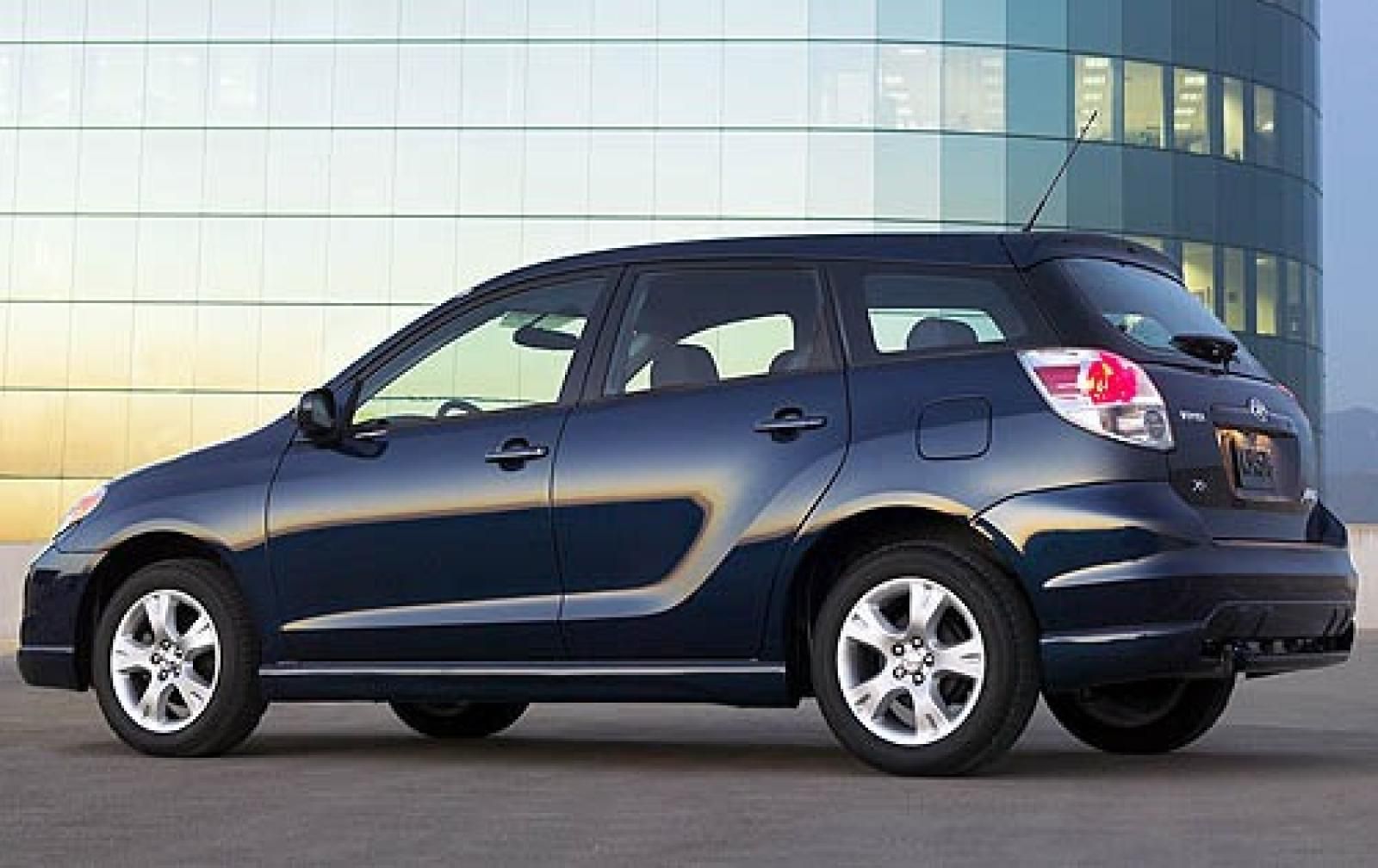
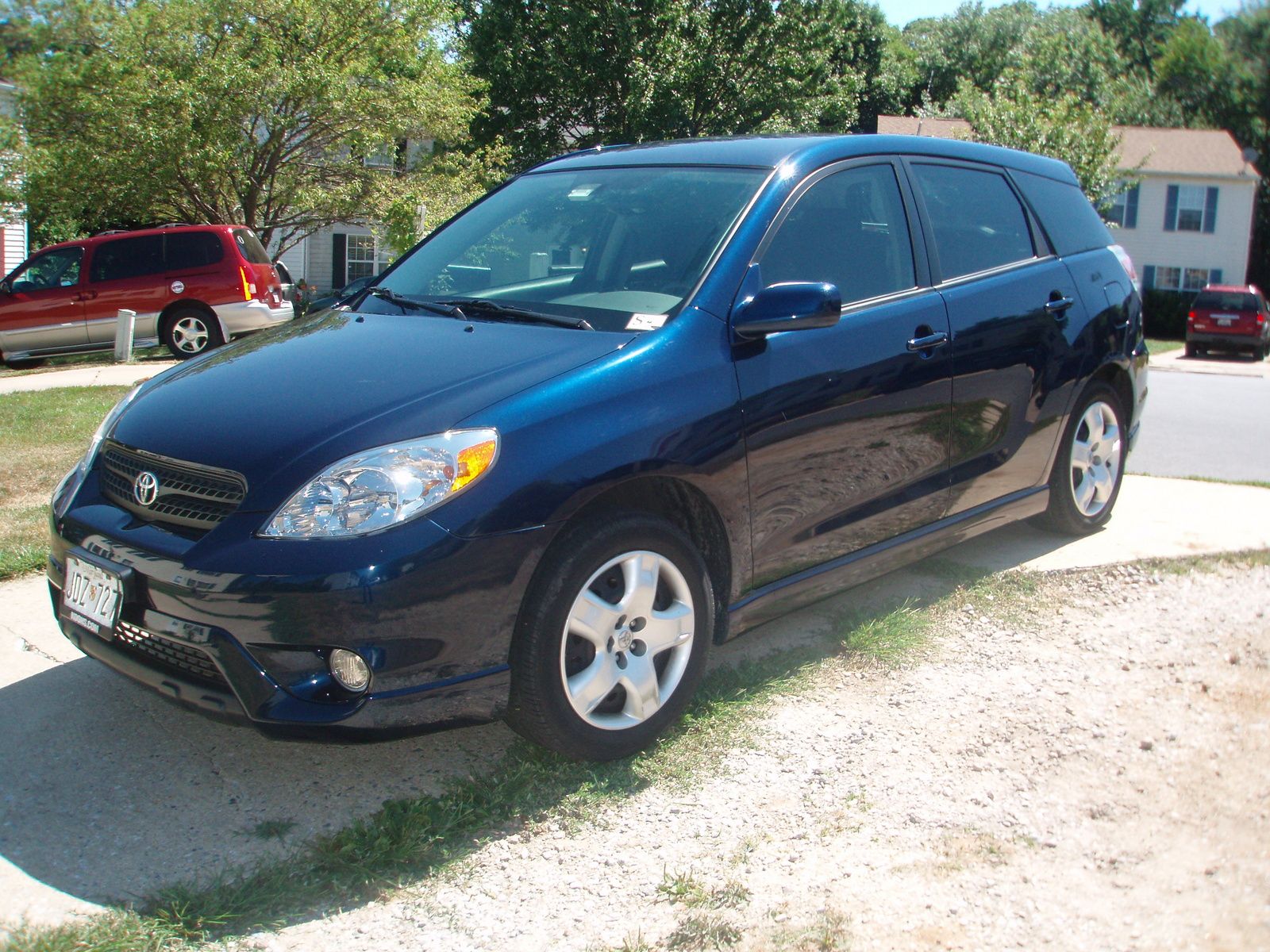
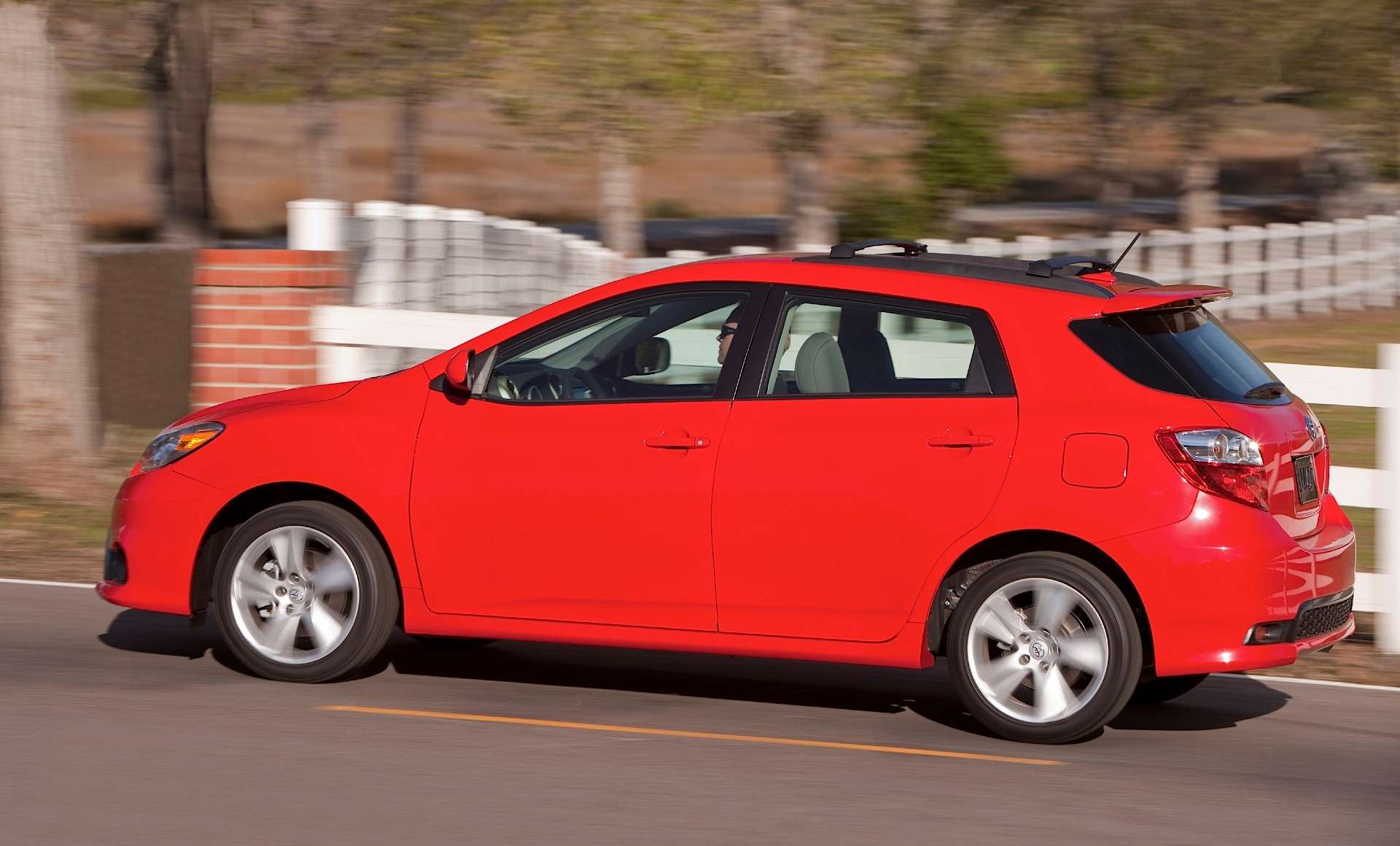
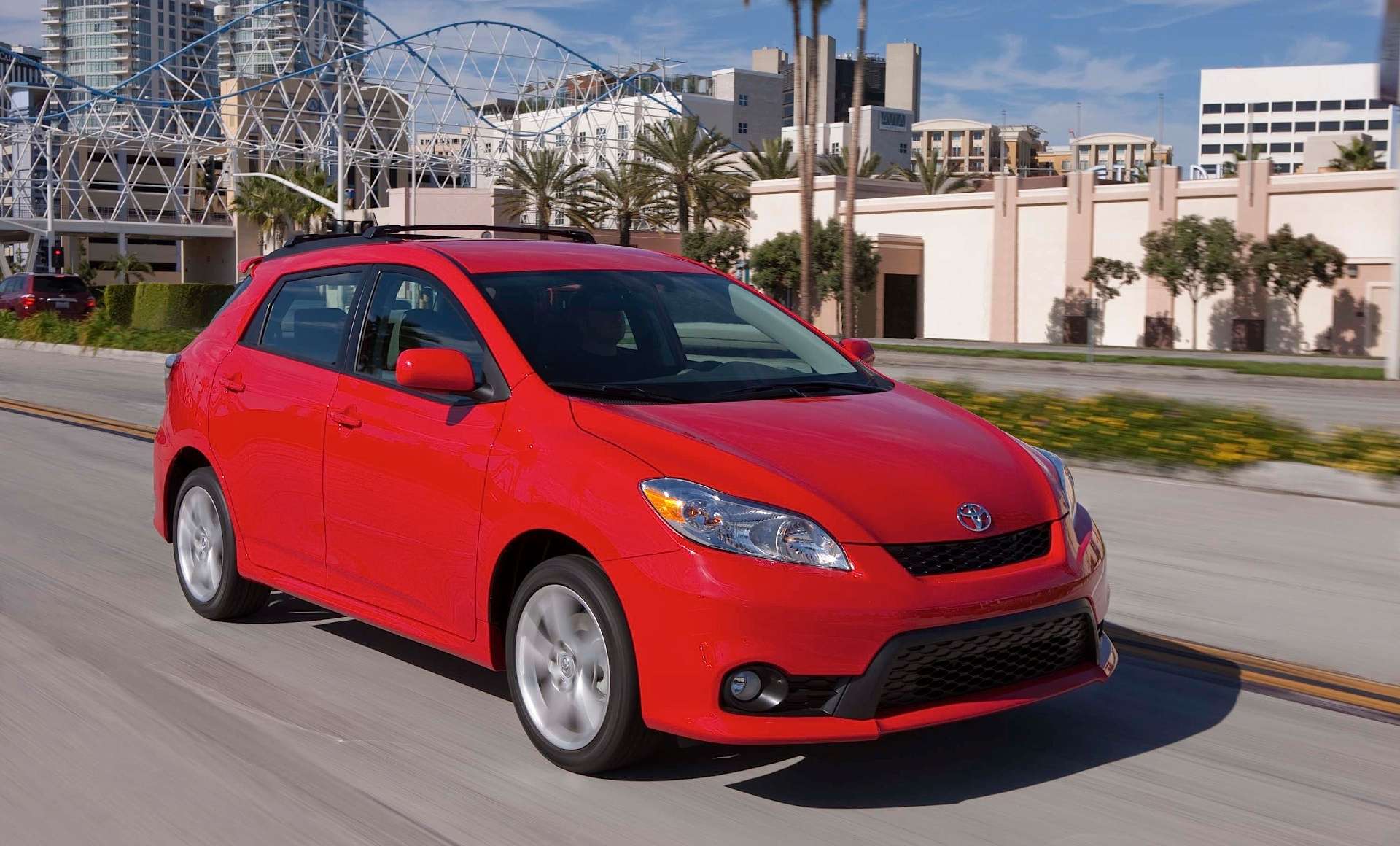
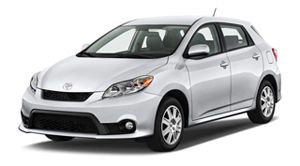
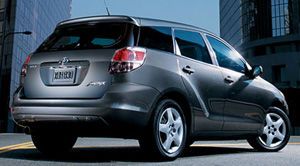
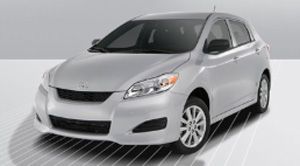
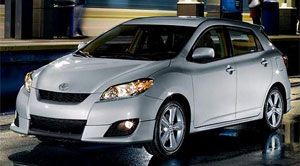
Although it's classified as a small wagon, the 2011 Toyota Matrix doesn't look boring or utilitarian. Its sharply angled front end, swept up beltline and blacked-out, wrap-around D-pillar glass blend together to form one of the most sporty and youthful models in Toyota's lineup. The up-level Matrix S trim enhances the vehicle's good looks with an underbody front spoiler, a rear roof spoiler, a blacked-out rear diffuser, and 17-inch aluminum alloy wheels. All Matrix models include color-keyed, heated side mirrors, a rear-window wiper, and daytime running lights.
The 2011 Toyota Matrix comes in two trim levels: Matrix and the Matrix S. Both have four-wheel anti-lock disc brakes, electronic stability control, and front, front-side and full-length side-curtain airbags. Toyota's Smart Stop Technology cuts engine power if the driver simultaneously presses both the accelerator and brake pedals. The base Matrix has a 132-horsepower, 1.8-liter four-cylinder engine, and returns 32 miles per gallon on the highway, while the 158-horsepower, 2.4-liter four-cylinder in the Matrix S 29 miles per gallon on the highway. All models include power windows, power door locks, heated power exterior mirrors, and a tilt/telescopic steering wheel. The standard auto system is an AM/FM/CD unit that features four speakers, MP3/WMA playback capability, and an auxiliary audio input jack. The Matrix S comes with 17-inch wheels, front fog lamps, silver interior trim, a 115-volt AC outlet, remote keyless entry, and a six-speaker stereo.
The base 2011 Toyota Matrix can be equipped with a four-speed automatic transmission and the Sport package, which adds front fog lights, and front and rear spoilers. The Matrix S can be had with all-wheel drive, and an enhanced Sport Package (rear roof spoiler and unique 17-inch alloy wheels). Also available is the Premium Package, which includes Bluetooth wireless connectivity, Bluetooth streaming audio, a power sunroof, iPod and USB connector, and satellite radio.
Standard on the 2011 Toyota Matrix is a 1.8-liter, 132-horsepower, four-cylinder engine, which is available with either a five-speed manual or a four-speed automatic transmission. The Matrix S has a 2.4-liter, 158-horsepower, four-cylinder engine with either a five-speed automatic or a five-speed manual transmission. The 2.4-liter engine employs variable timing on both exhaust and intake valves to produce both responsive acceleration and good fuel economy. 1.8-liter in-line 4132 horsepower @ 6000 rpm128 lb.-ft. of torque @ 4400 rpmEPA city/highway fuel economy: 26/32 (manual), 25/32 (automatic)2.4-liter in-line 4158 horsepower @ 6000 rpm162 lb.-ft. of torque @ 4000 rpmEPA city/highway fuel economy: 21/28 (manual), 21/29 (five-speed automatic), 20/26 (four-speed automatic, AWD)
The 2011 Toyota Matrix Manufacturer's Suggested Retail Price (MSRP) starts at just over $ 19,000 when equipped with a five-speed manual transmission. Opting for the Matrix S with all-wheel drive brings the price closer to $ 22,000. With the Sport and Premium packages added, the Matrix S tops out right around $ 25,000. To see what consumers are actually paying for this vehicle in your area, check the Kelley Blue Book Fair Purchase Price before you begin negotiations. As for resale, we expect the Matrix to hold a good portion of its value over a five-year period, topping the Suzuki SX4, Chevrolet HHR and Mazda Mazda3 hatchback, equaling the Kia Soul, and falling slightly lower than the Nissan Versa.
2011 Toyota Matrix Base Exterior Colors
2011 Toyota Matrix Base Interior Colors
2011 Toyota Matrix Engines
| Engine | Standard in Trim | Power | Torque | Fuel Consumption - City | Fuel Consumption - Highway | 0-100 km/h | Quarter Mile | Half Mile |
|---|---|---|---|---|---|---|---|---|
| 2.4L L4 DOHC 16-valve | AWD | 158 hp @ 6000 rpm | 144 N.m | 10.2 L/100km | 7.7 L/100km | 9.1 s | 15.2 s | 28.3 s |
| 2.4L L4 DOHC 16-valve | AWD | 158 hp @ 6000 rpm | 144 N.m | 10.2 L/100km | 7.7 L/100km | 9.0 s | 15.1 s | 28.3 s |
| 2.4L L4 DOHC 16-valve | AWD | 158 hp @ 6000 rpm | 144 N.m | 10.3 L/100km | 7.7 L/100km | 9.0 s | 15.1 s | 28.3 s |
| 2.4L L4 DOHC 16-valve | XRS | 158 hp @ 6000 rpm | 144 N.m | 9.8 L/100km | 7.0 L/100km | 9.3 s | 16.7 s | 27.8 s |
| 2.4L L4 DOHC 16-valve | XR | 158 hp @ 6000 rpm | 144 N.m | 9.7 L/100km | 6.9 L/100km | 9.0 s | 16.6 s | 27.5 s |
| 2.4L L4 DOHC 16-valve | AWD | 158 hp @ 6000 rpm | 144 N.m | 10.3 L/100km | 7.7 L/100km | 9.1 s | 15.2 s | 28.3 s |
| 2.4L L4 DOHC 16-valve | XRS | 158 hp @ 6000 rpm | 144 N.m | 9.7 L/100km | 6.9 L/100km | 9.3 s | 16.7 s | 27.8 s |
2011 Toyota Matrix Trims
2011 Toyota Matrix Previous Generations
2011 Toyota Matrix Future Generations
Toyota Matrix Overview and History
The government encouraged such a bold decision mostly because making their own cars would be cheaper and they also needed vehicles for the war with China. Just a year after its foundation in 1933, the Toyota Motor Company created its first engine, the Type A, placed in the Model A1 passenger car and the G1 truck.
During WWII, Toyota was committed to making trucks for the army and only the premature ending of the conflict saved the company's factories in Aichi from a scheduled Allied bomb raid. After the war, Toyota resumed car making but found more success in building trucks and buses than with cars. Still, it didn't give up on cars for good and in 1947 it came up with the Model SA, also known as the Toyopet, a name which later was applied to other models as well.
A little more successful was the Model SF which also had a taxi version but the same 27 horsepower engine as its predecessor. A more powerful model, the RH, which had 48 HP came out shortly after. Production went up rather fast and by 1955, Toyota was turning out 8400 cars a year. That year, Toyota diversified their production, adding the Jeep-like Land Cruiser and the luxury sedan, the Crown.
With numbers growing and with several models under their belt, Toyota now had its eyes set on the international market. The first dealership outside Japan was in America in 1957 an the first plant in Brazil in 1959. An interesting strategy from Toyota ensured that all models were somehow unique to the region where they were produced (they were adapted to the respective market).
The big break for Toyota on the American market came with the 70s when rising gas prices forced local producers to make smaller cars. These were thought of as entry-level and as a consequence lacked in quality of finishings. In contrast, Toyota already had several fuel-efficient models that were also of better quality. The Corolla is the best example in this sense, soon becoming America's favorite compact car.
But as far as the luxury market went, Toyota still had trouble with selling the Crown and the Cressida. At the dawn of the 80s, the entire luxury market in America was entering a downwards slope, with all the other manufacturers finding it difficult to keep up sales, and that's when Toyota came up with Lexus, a new company that would make luxury cars.
By the beginning of the 90s, Toyota vehicles became synonymous with reliability and low-cost maintenance which made them very popular all over the world. A bid for winning over the younger audience was made with the launch of models like the MR2 and the Celica.
Presently, Toyota is at the forefront of the environmental battle, with its successful hybrid model, the Toyota Prius and now announcing a plug-in electric car that will be called Toyota Plug-in HV, which will run on standard electricity powered by a lithium-ion battery pack.
2011 Toyota Matrix Consumer Reviews
Compare Against Competitors
2011 Toyota Matrix Base Specifications
Base Comfort and Convenience
| AM/FM stereo radio | AM/FM stereo radio with auxiliary input jack |
|---|---|
| Air Conditionning (Option) | Air conditioning |
| Bluetooth Wireless Technology (Option) | Yes |
| Courtesy Dome Light | Courtesy lamps |
| Cruise Control (Option) | Yes |
| Driver Vanity Mirror | Driver-side vanity mirror |
| Front Wipers | Intermittent windshield wipers |
| Fuel Door Operation | Remote fuel-filler door release |
| Illuminated Entry | Illuminated entry with fade-out |
| Interior Air Filter | Cabin air filter |
| Number of Speakers | 4 speakers |
| Number of Speakers (Option) | 6 speakers |
| Passenger Vanity Mirror | Front passenger-side vanity mirror |
| Power Door Locks (Option) | Yes |
| Power Outlet | 12-volt power outlet |
| Power Windows (Option) | Yes |
| Reading Light | Front reading lights |
| Rear Heating | Rear heater ducts |
| Rear View Mirror | Day/night rear view mirror |
| Rear Wipers | Intermittent rear window wiper |
| Remote Audio Controls | Steering wheel-mounted audio controls |
| Remote Keyless Entry (Option) | Yes |
| Single CD | CD/MP3/WMA player |
| Special Feature (Option) | XM satellite radio (requires subscription) |
| Special Features | Cargo area tie-down hooks |
| Steering Wheel Adjustment | Tilt and telescopic steering wheel |
| Trunk Light | Cargo light |
Base Dimensions
| Cargo Capacity | 561 L |
|---|---|
| Curb Weight | 1285 kg |
| Front Headroom | 1029 mm |
| Front Legroom | 1057 mm |
| Height | 1550 mm |
| Length | 4365 mm |
| Maximum Cargo Capacity | 1398 L |
| Rear Headroom | 999 mm |
| Rear Legroom | 919 mm |
| Wheelbase | 2600 mm |
| Width | 1765 mm |
Base Exterior Details
| Bumper Colour | Body-color bumpers |
|---|---|
| Door Handles (Option) | Body-color door handles |
| Exterior Decoration (Option) | Chrome exhaust tip |
| Exterior Folding Mirrors | Folding outside mirrors |
| Exterior Mirror Colour (Option) | Body-color outside mirrors |
| Front Fog Lights (Option) | Fog lights |
| Grille (Option) | Sport Style grille |
| Headlight Type | Halogen headlamps |
| Heated Exterior Mirrors | Heated outside mirrors |
| Mudguard | Front and rear splash guards |
| Power Exterior Mirrors | Power-adjustable outside mirrors |
| Rear Air Deflector (Option) | Yes |
| Rear Window Defroster | Yes |
| Sunroof (Option) | Power glass sunroof |
| Tinted Glass | High solar energy absorbing window glass |
Base Interior Details
| Clock | Digital clock |
|---|---|
| Floor Covering | Carpet floor covering |
| Floor Mats | Yes |
| Folding Rear Seats | 60/40-split folding rear bench seat |
| Front Seats Active Headrests | Active front headrests |
| Front Seats Driver Height | Height-adjustable driver's seat |
| Front Seats Front Seat Back Storage (Option) | Front seat back pockets |
| Front Seats Front Seat Type | Front bucket seats |
| Instrumentation Type | Analog instrumentation |
| Low Fuel Warning | Yes |
| Low Washer Fluid Warning | Yes |
| Number of Cup Holders | 4 Cupholders |
| Oil Pressure Gauge | Yes |
| Outside Temperature Gauge | Outside temperature display |
| Overhead Console (Option) | Yes |
| Rear Seat Type | Rear bench seat |
| Seat Trim | Cloth seats |
| Shifter Knob Trim (Option) | Leather-wrapped shift knob |
| Special Feature (Option) | Scuff plates |
| Steering Wheel Trim (Option) | Lether-wrapped steering wheel |
| Tachometer | Yes |
| Water Temperature Gauge | Yes |
Base Mechanical
| Drive Train | Front-wheel drive |
|---|---|
| Engine Name | 1.8L L4 DOHC 16-valve |
| Stability Control | Yes |
| Traction Control | Yes |
| Transmission | 5-speed manual transmission |
| Transmission (Option) | 4-speed automatic transmission |
Base Overview
| Body | Wagon |
|---|---|
| Doors | 5 |
| Engine | 1.8L L4 DOHC 16-valve |
| Fuel Consumption | 8.1 (Automatic City)6.3 (Automatic Highway)7.8 (Manual City)6.1 (Manual Highway) |
| Power | 132 hp @ 6000 rpm |
| Seats | 5 |
| Transmission | 4-speed automatic transmission |
| Warranties | Bumper-to-Bumper60000/km, 36/Months Emissions130000/km, 96/Months Powertrain100000/km, 60/Months Roadside Assistance60000/km, 36/Months Rust-throughUnlimited/km, 60/Months |
Base Safety
| Anti-Lock Brakes | Anti-lock brakes |
|---|---|
| Brake Assist | Brake assist |
| Brake Type | 4-wheel disc |
| Child Seat Anchor | Child seat anchor |
| Child-proof Locks | Rear-door child security locks |
| Driver Airbag | Driver-side front airbag |
| Electronic brake force distribution | Electronic brake force distrbution |
| Front Seat Belts | Height adjustable |
| Ignition Disable | Theft-deterrent engine immobilizer |
| Passenger Airbag | Passenger-side front airbag |
| Rear Airbag | Rear side airbags |
| Roof Side Curtain | Side curtain airbags |
| Side Airbag | Front side airbags |
Base Suspension and Steering
| Front Anti-Roll Bar | Front stabilizer bar |
|---|---|
| Front Suspension | Independent front suspension |
| Front Tires | P205/55R16 |
| Front Tires (Option) | P215/45R17 |
| Power Steering | Electric-assist power rack-and-pinion steering |
| Rear Anti-Roll Bar | Rear stabilizer bar |
| Rear Suspension | Independent rear suspension |
| Tire Pressure Monitoring System (Option) | Yes |
| Wheel Locks (Option) | Yes |
| Wheel Type | 16'' steel wheels with covers |
| Wheel Type (Option) | 17'' alloy wheels |
Discussion and Comments
Share Your Comments