2003 Toyota Matrix XRS 0-60 Times, Top Speed, Specs, Quarter Mile, and Wallpapers
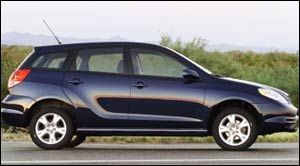
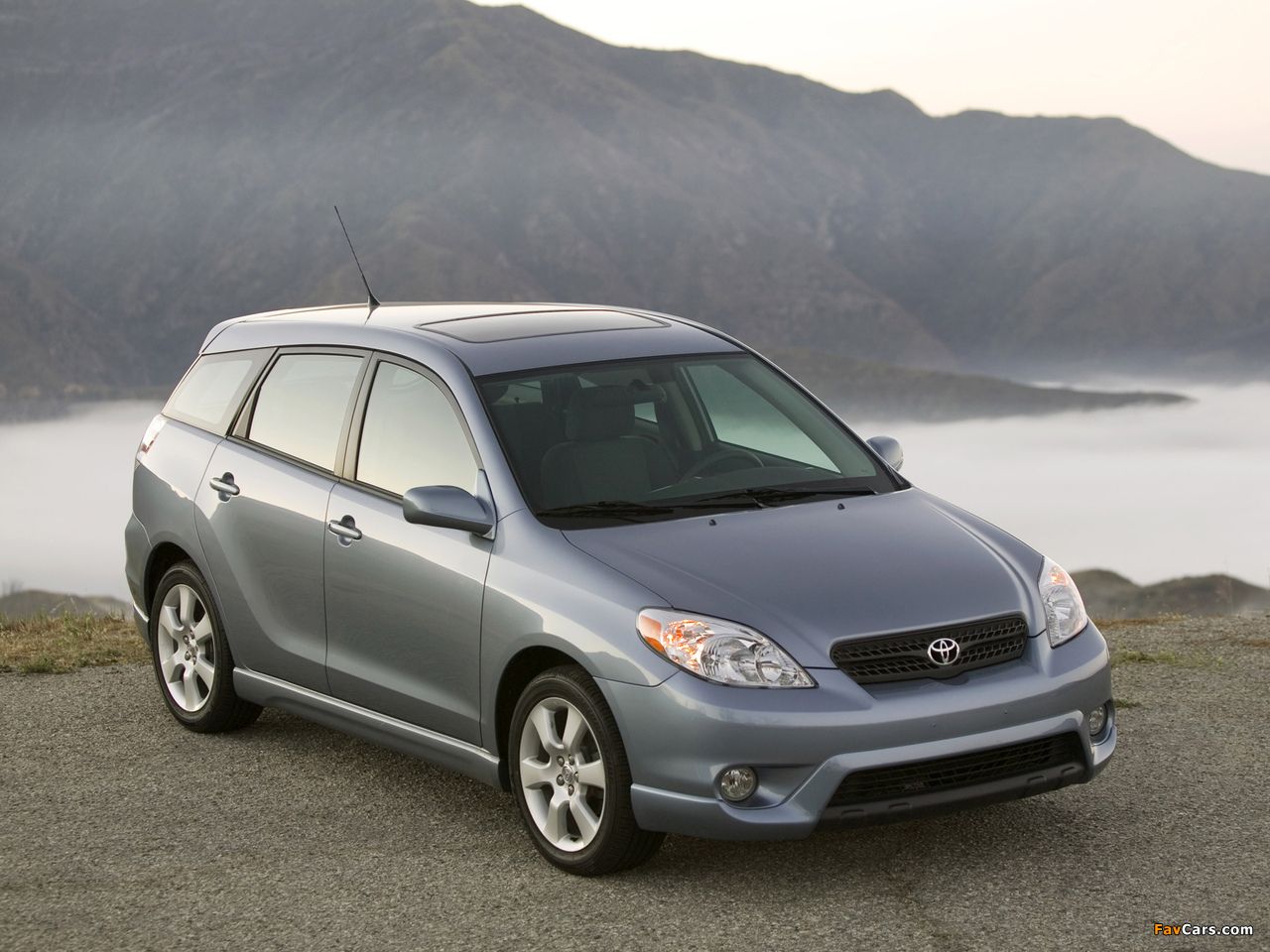
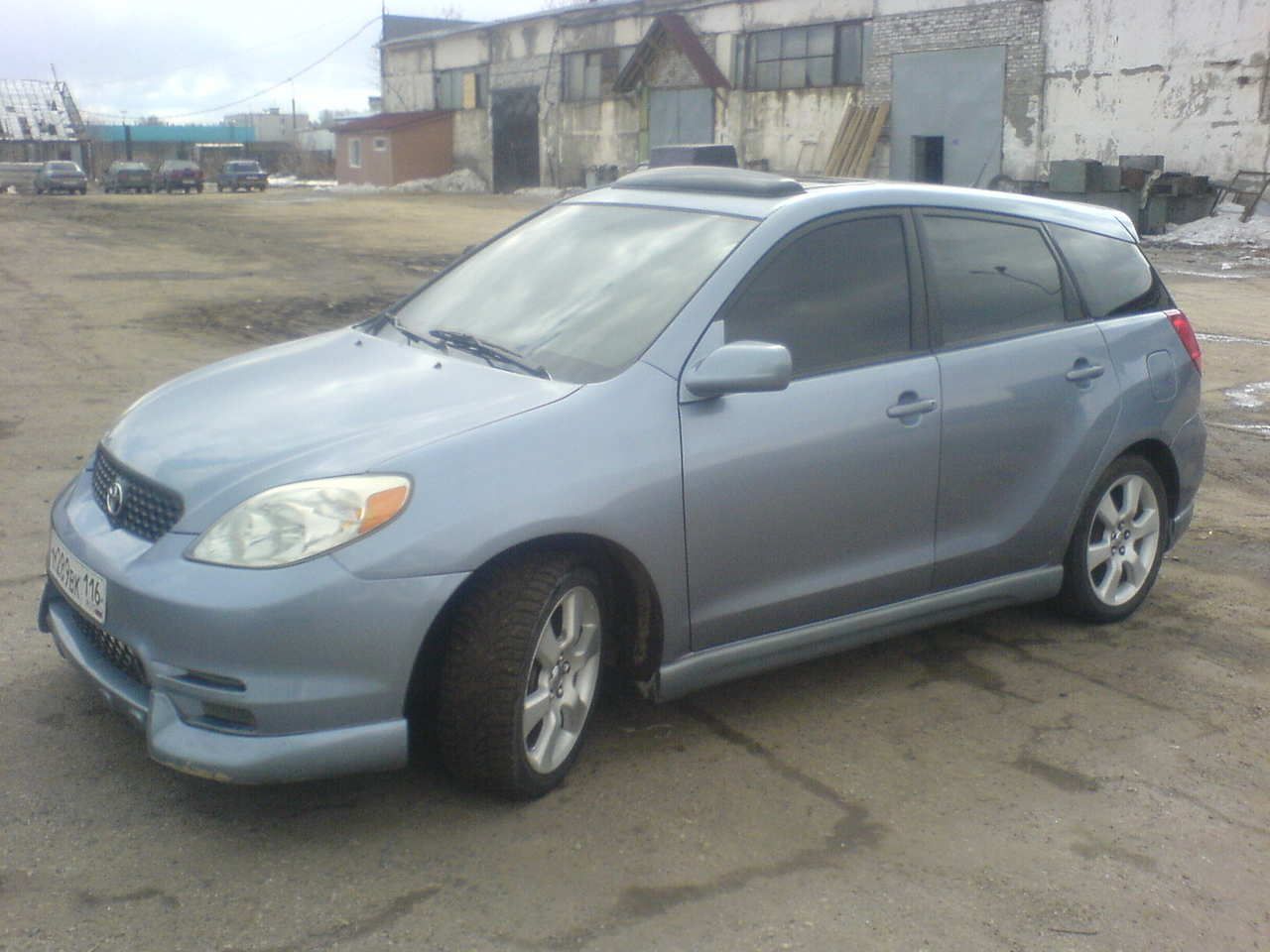
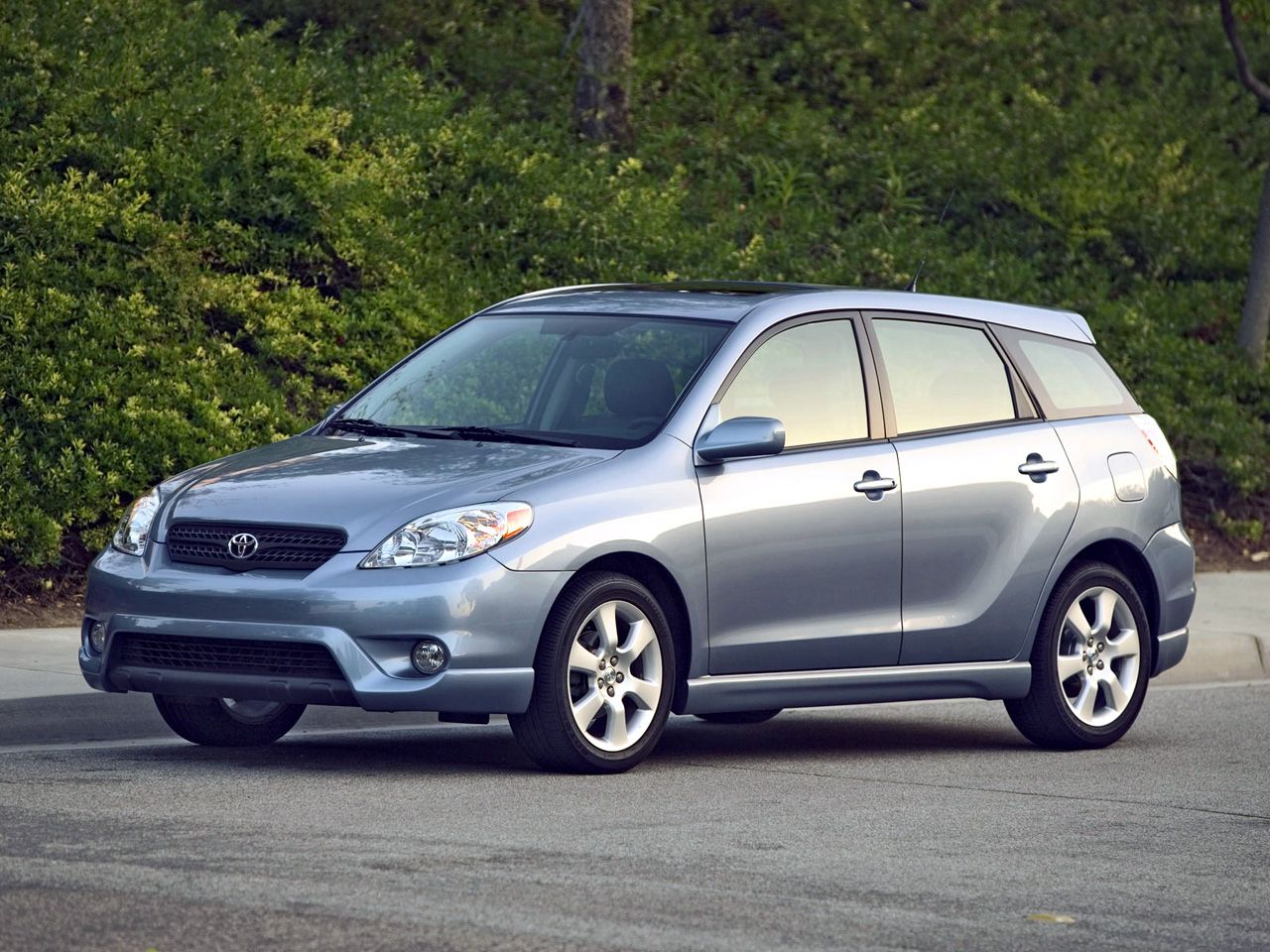
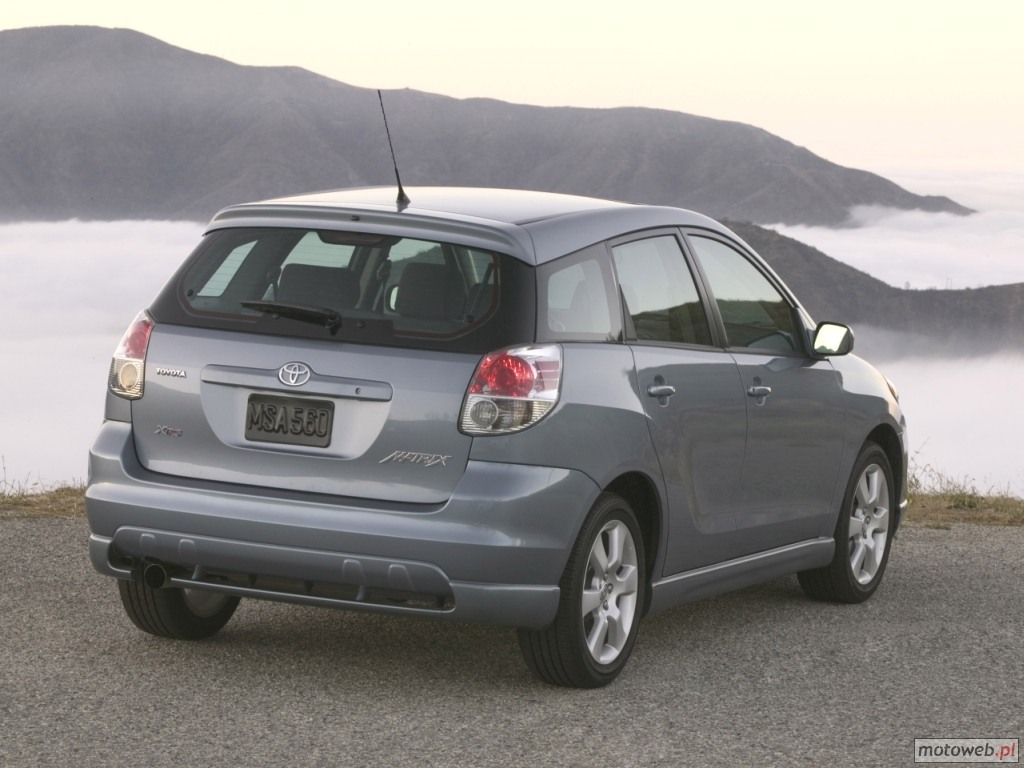
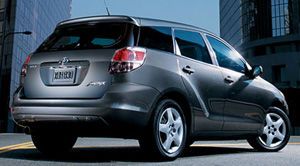
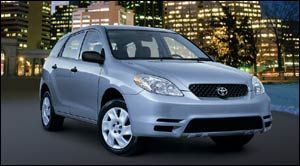
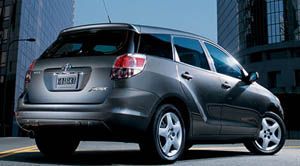
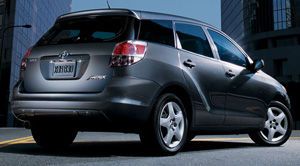
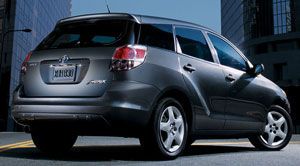
The 2003 Toyota Matrix XRS is a Front-wheel drive Wagon. It can accommodate up to 5 passengers. It has 5 Doors and is powered by a 1.8L L4 DOHC 16 valves VVT-i engine which outputs 180 hp @ 7600 rpm and is paired with 4 speed automatic gearbox. The 2003 Toyota Matrix XRS has cargo capacity of 1506 Liters and the vehicle weighs 1254 kg. In terms of ride assists, the 2003 Toyota Matrix XRS has stability control and traction control in addition to anti-lock brake system (ABS). The vehicle has an optional engine as well It offers and. Safety features also include None and None. The front suspension is while the rear suspension is. The car also features a It has as standard. Electronic features include Cruise Control. For convenience, the car has Power windows and Power door locks. There is also a remote keyless entry feature. Moreover, the car has. The steering wheel has audio control buttons. In terms of performance, the car has 196 N.m of torque and a top speed of 207 km/h. The 2003 Toyota Matrix XRS accelerates from zero to 60 mph in 7.7 seconds and hits quarter mile at 15.5 seconds. Fuel consumption is 9.1 L/100km in the city and 7.2 L/100km in the highway. The car price starts at $ 24,540
| Name | XRS | |
|---|---|---|
| Price | $ 24,540 | |
| Body | Wagon | |
| Doors | 5 Doors | |
| Engine | 1.8L L4 DOHC 16 valves VVT-i | |
| Power | 180 hp @ 7600 rpm | |
| Number of Seats | 5 Seats | |
| Transmission | 4 speed automatic | |
| Cargo Space | 1,506.0 L | |
| Maximum Cargo Space | 1,506.0 L | |
| Wheel Type | ||
| Series | Matrix I | |
| Drivetrain | Front-wheel drive | |
| Horsepower | 180 HP | |
| Torque | 196 N.m | |
| Top Speed | 207 km/h | |
| Acceleration 0-100 km/h (0-60 mph) | 7.7 s | |
| Fuel Type | Petrol (Gasoline) | |
| Fuel Consumption (City) | 9.1 L/100km | |
| Fuel Consumption (Highway) | 7.2 L/100km | |
| Gear Type | auto | |
| Weight | 1,254 KG | |
| Brand | Toyota | |
| Model | Matrix | |
| 0-400m (Quarter Mile) | 15.5 s | |
| 0-400m (Quarter Mile) - Speed | 148.8 km/h | |
| 0-800m (Half Mile) | 25.6 s | |
| 0-800m (Half Mile) - Speed | 167.5 km/h | |
| Modifications (MODS) | ||
| Modifications Cost | $ 0 |
2003 Toyota Matrix XRS (60-100)
2003 Toyota Matrix XRS 0-60 and 2nd gear pulls 2zz-ge vvtl-i
2003 Toyota Matrix XRS Acceleration
Mile - 2003 Toyota Matrix Silver/Automatic
2003 Toyota Matrix Used Price Estimates
Estimates based on a driving average of 12,000 miles per year| Used Condition | Trade In Price | Private Party Price | Dealer Retail Price |
|---|---|---|---|
| Outstanding | $ 1,929 | $ 3,136 | $ 3,785 |
| Clean | $ 1,709 | $ 2,787 | $ 3,367 |
| Average | $ 1,271 | $ 2,089 | $ 2,530 |
| Rough | $ 832 | $ 1,390 | $ 1,694 |
Sporty, versatile and affordable. The Matrix is a strong competitor in just its first year out.
All right, what is it? A wagon? An SUV? A five-door hatchback? A jellybean with attitude? Toyota claims its new Matrix is a crossover utility vehicle, or CUV. How about we just call it a "cargo-friendly small car" and leave it at that?

The Matrix is based on the new 2003 Corolla platform, as is its sister car, the Pontiac Vibe. The goal of both cars is similar to the one set by Chrysler's PT Cruiser: offer the interior functionality and flexibility usually associated with larger vehicles but in a compact package. To that end, the Matrix features room for five passengers, a wealth of storage space, zippy powertrains and an affordable price.
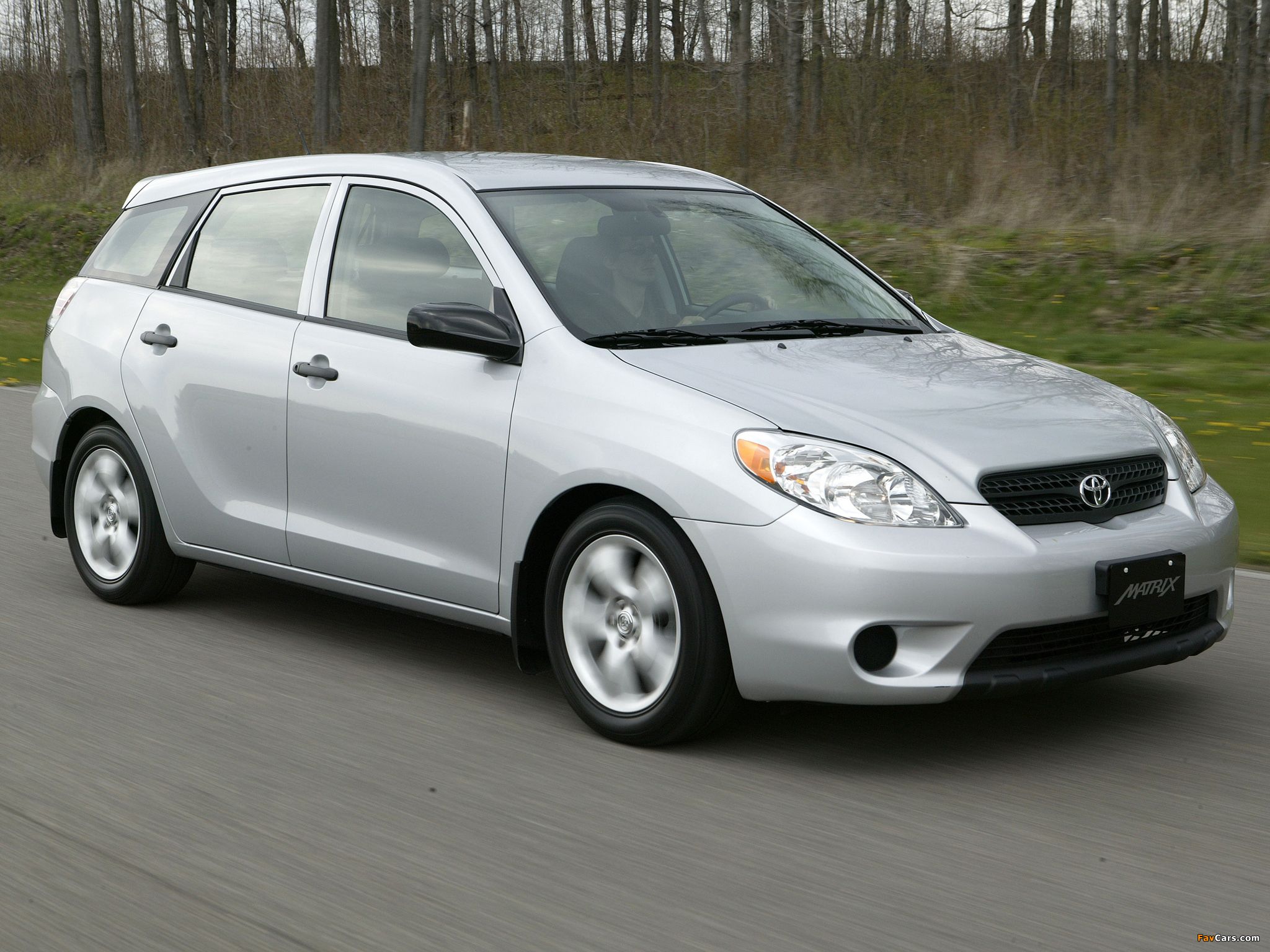
In terms of cargo space, the Matrix is very similar to a compact SUV. The tailgate opens upwards, and the rear glass can be raised independently. Doing so reveals a rear cargo area that can hold 21.8 cubic feet of cargo. A special cargo-floor track features eight adjustable tie-down hooks. Underneath the floor is a hidden storage compartment. The 60/40-split rear seats can be folded flat, thereby expanding cargo room to 53.2 cubic feet. The front passenger seat also folds forward, allowing items more than 8 feet long to be carried with the tailgate closed.
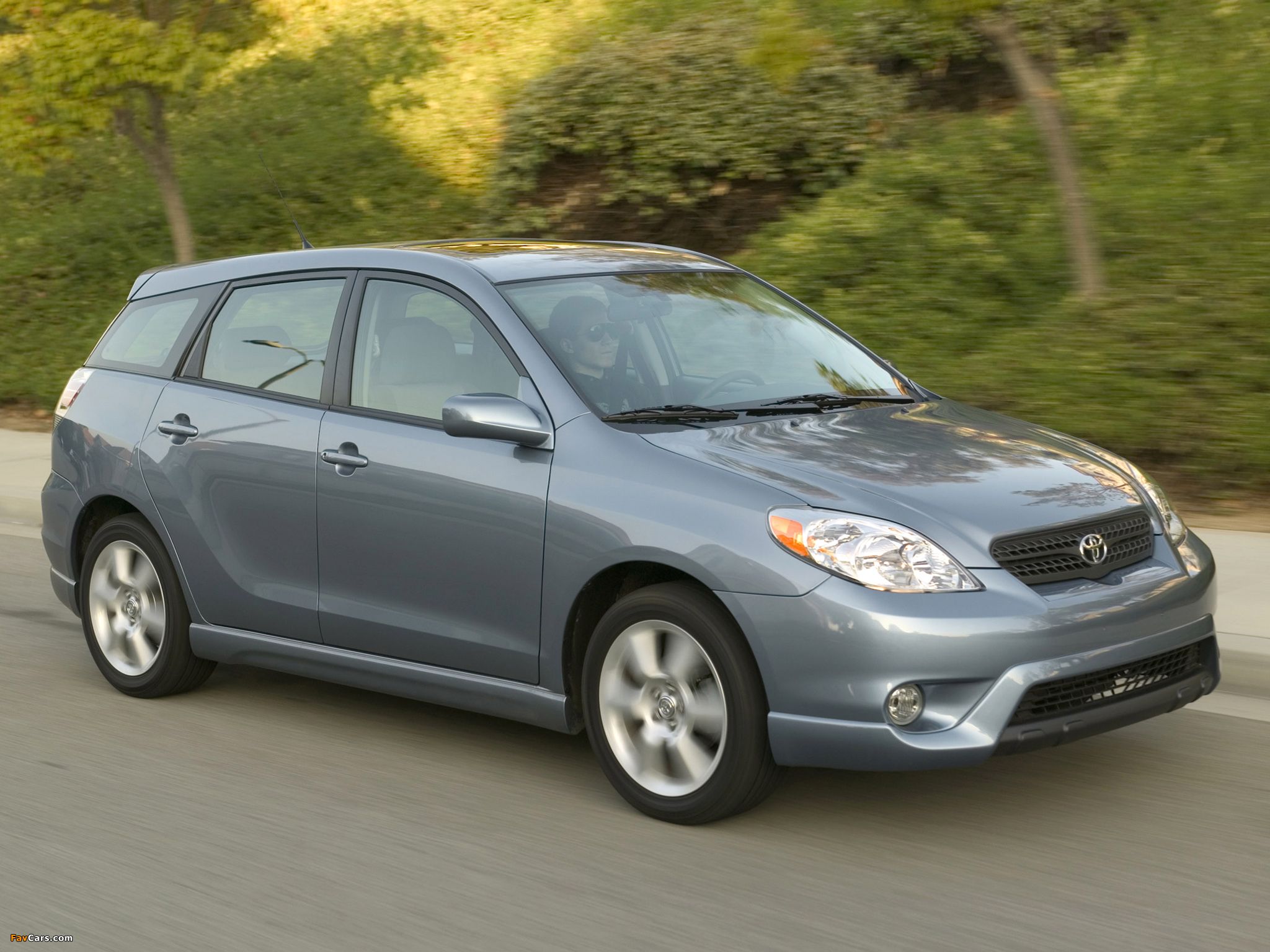
Three trim levels are available: standard, XR and XRS. Each comes with a 1.8-liter four-cylinder engine. Buyers of the standard and XR are offered a choice of either front-wheel drive or full-time four-wheel drive. With front-wheel drive, the engine makes 130 horsepower and 125 lb-ft of torque. It also gets good gas mileage and is clean enough to warrant an Ultra Low Emission Vehicle (ULEV) rating. The four-wheel-drive model has a Low Emission Vehicle (LEV) rating and makes slightly less power (123 hp). A four-speed automatic is the only transmission available with 4WD, while front-drive cars can also be ordered with a five-speed manual.
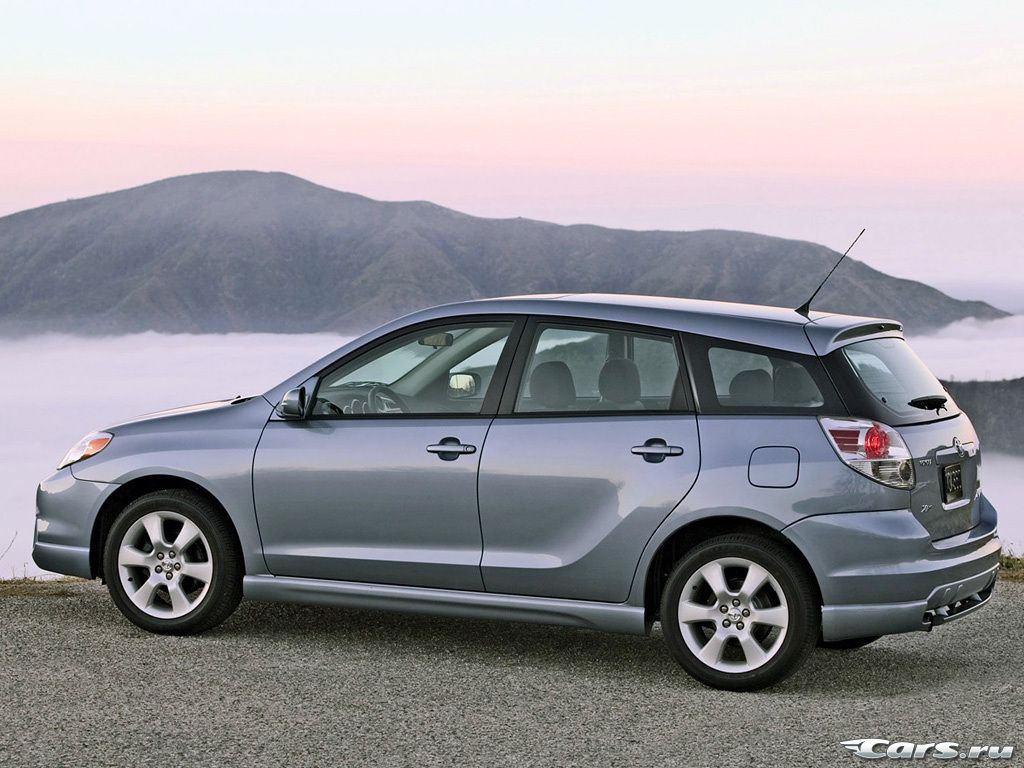
The front-drive XRS is the sportiest trim. It comes standard with a 180-hp engine, four-wheel disc brakes and a six-speed manual transmission. A four-speed automatic is also available. Toyota isn't skimpy with the wheel packages: All Matrix models come standard with 16-inch wheels and 205/55R16 tires. Sixteen-inch alloy wheels are an option, as are 17s with 215/50R17 tires (XR and XRS only). Antilock brakes are standard on the XRS and four-wheel drive models.
Most major amenities are either standard or optional, depending on trim. Highlights include air conditioning; cruise control; power windows, locks and mirrors; a power moonroof; a six-disc CD changer; and side airbags. For the directionally challenged, an optional DVD-based navigation system is available. Perhaps the coolest feature is a 115-volt household auxiliary outlet. Imagine the possibilities! Now you, too, can plug in your dancing and singing Elvis doll and have him with you at all times!
The Matrix (along with the Vibe) is an intriguing choice. Our pick for trim would likely be the XR. It's affordable, sporty and comes with just the right amount of useful features. Should you desire more, nearly everything can be had on the XR. Regardless of trim, the Matrix should be on your list if you're looking for a sporty wagon, err, hatchback. SUV. CUV. Whatever.
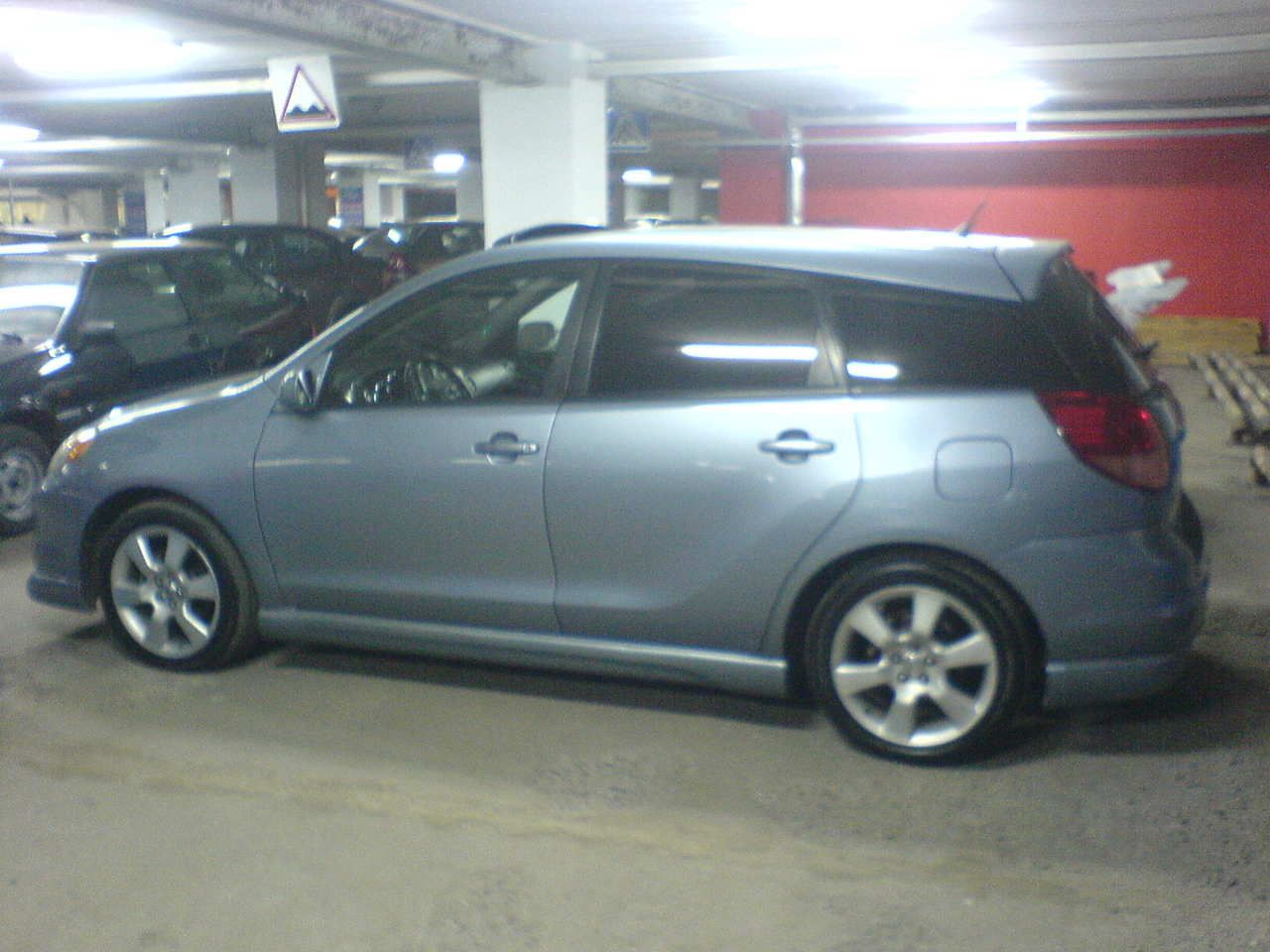
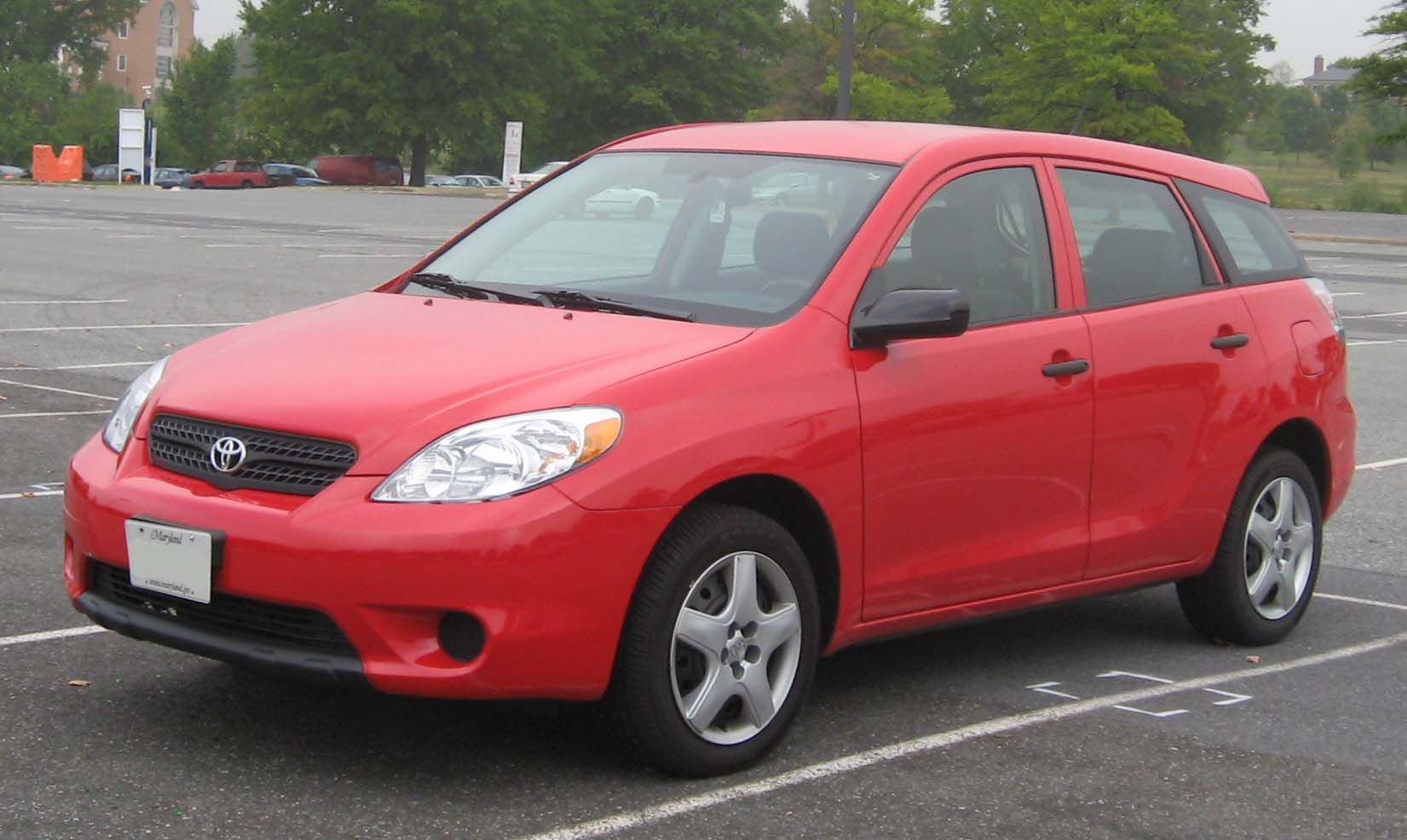
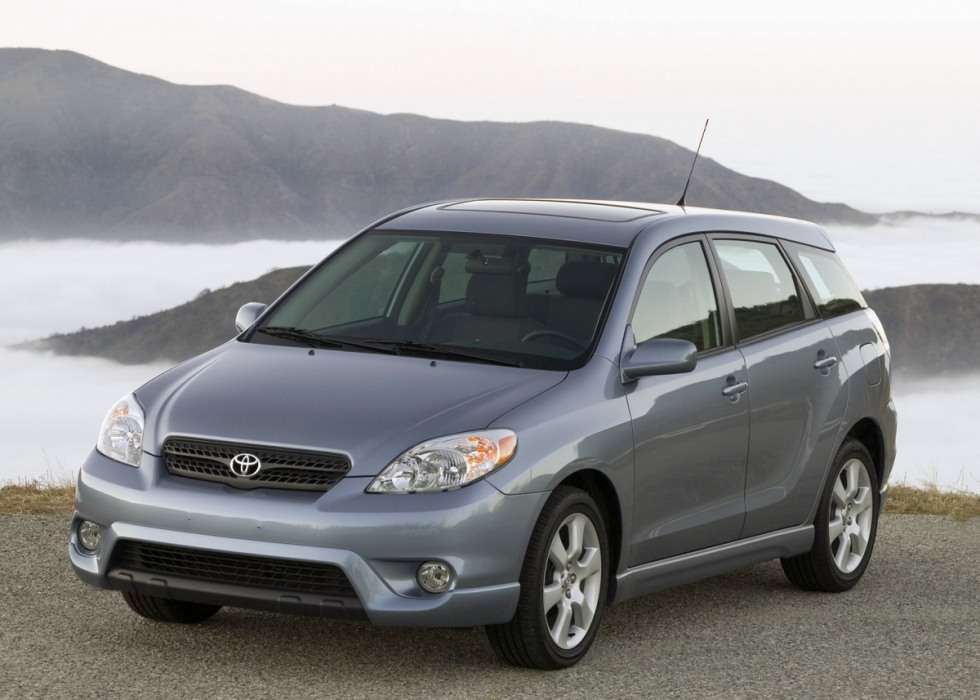

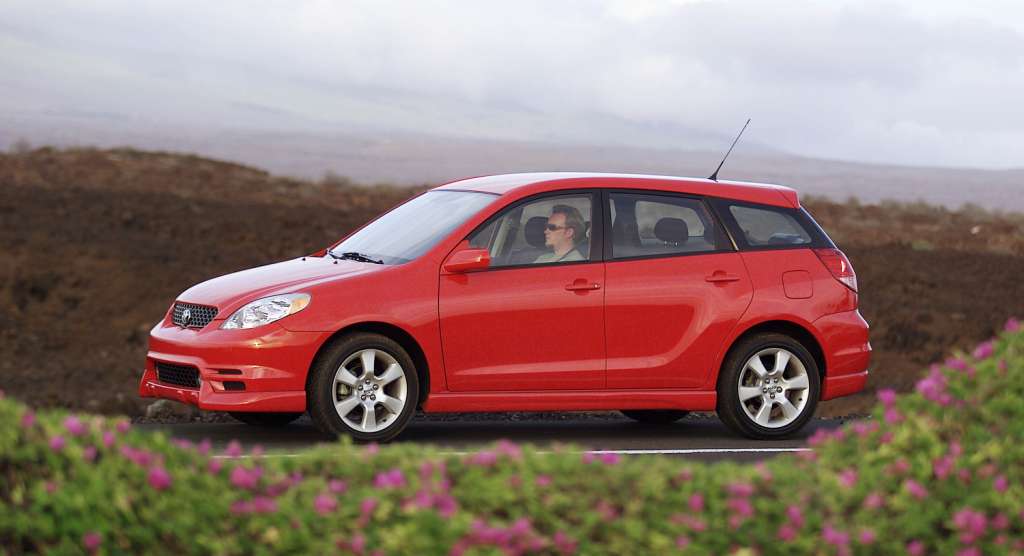
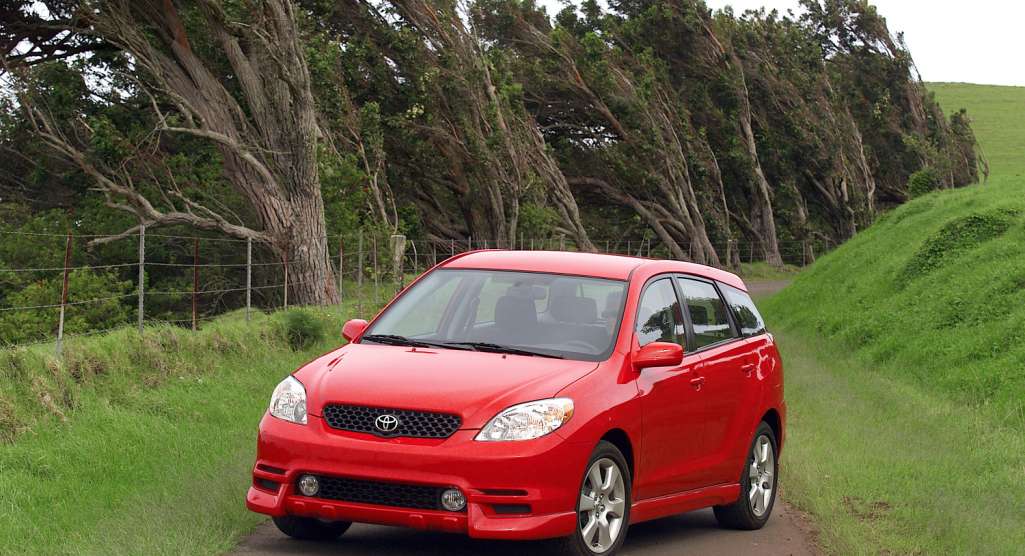
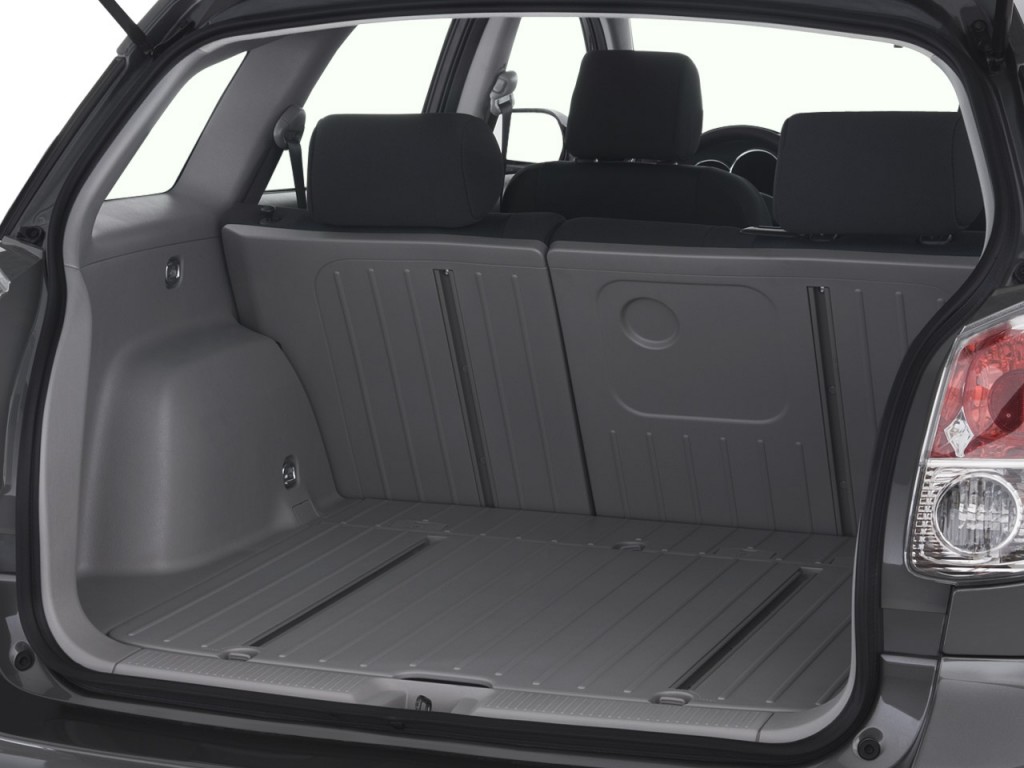
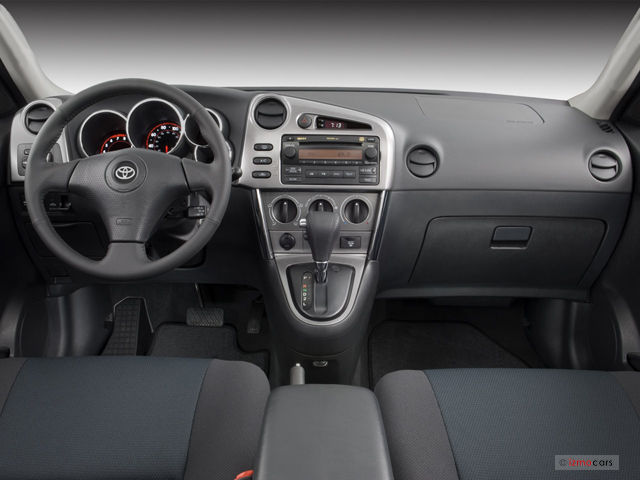
2003 Toyota Matrix XRS Exterior Colors
2003 Toyota Matrix XRS Interior Colors
2003 Toyota Matrix Engines
| Engine | Standard in Trim | Power | Torque | Fuel Consumption - City | Fuel Consumption - Highway | 0-100 km/h | Quarter Mile | Half Mile |
|---|---|---|---|---|---|---|---|---|
| 1.8L L4 DOHC 16 valves | Base | 123 hp @ 6000 rpm | 196 N.m | 9.1 L/100km | 6.9 L/100km | 10.1 s | 15.9 s | 29.7 s |
| 1.8L L4 DOHC 16 valves | XR | 123 hp @ 6000 rpm | 196 N.m | 9.1 L/100km | 6.9 L/100km | 10.1 s | 15.9 s | 29.8 s |
| 1.8L L4 DOHC 16 valves | Base | 130 hp @ 6000 rpm | 196 N.m | 8.3 L/100km | 6.4 L/100km | 9.6 s | 17.0 s | 28.3 s |
| 1.8L L4 DOHC 16 valves | XR | 130 hp @ 6000 rpm | 196 N.m | 8.3 L/100km | 6.4 L/100km | 9.7 s | 17.1 s | 28.3 s |
| 1.8L L4 DOHC 16 valves | XRS | 170 hp @ 7600 rpm | 196 N.m | 9.5 L/100km | 6.8 L/100km | 8.1 s | 15.8 s | 26.1 s |
| 1.8L L4 DOHC 16 valves VVT-i | Base | 123 hp @ 6000 rpm | 196 N.m | 9.1 L/100km | 6.1 L/100km | 10.1 s | 15.9 s | 29.7 s |
| 1.8L L4 DOHC 16 valves VVT-i | XR | 123 hp @ 6000 rpm | 196 N.m | 9.1 L/100km | 6.1 L/100km | 10.1 s | 15.9 s | 29.8 s |
| 1.8L L4 DOHC 16 valves VVTL-i | XRS | 180 hp @ 7600 rpm | 196 N.m | 9.3 L/100km | 7.1 L/100km | 7.7 s | 15.5 s | 25.6 s |
| 1.8L L4 DOHC 16 valves VVT-i | XR | 120 hp @ 6000 rpm | 196 N.m | 10.5 L/100km | 6.5 L/100km | 9.8 s | 15.7 s | 29.4 s |
| 1.8L L4 DOHC 16 valves VVT-i | Base | 130 hp @ 6000 rpm | 196 N.m | 8.3 L/100km | 6.5 L/100km | 9.6 s | 17.0 s | 28.3 s |
2003 Toyota Matrix Trims
2003 Toyota Matrix Previous Generations
2003 Toyota Matrix Future Generations
Toyota Matrix Overview and History
The government encouraged such a bold decision mostly because making their own cars would be cheaper and they also needed vehicles for the war with China. Just a year after its foundation in 1933, the Toyota Motor Company created its first engine, the Type A, placed in the Model A1 passenger car and the G1 truck.
During WWII, Toyota was committed to making trucks for the army and only the premature ending of the conflict saved the company's factories in Aichi from a scheduled Allied bomb raid. After the war, Toyota resumed car making but found more success in building trucks and buses than with cars. Still, it didn't give up on cars for good and in 1947 it came up with the Model SA, also known as the Toyopet, a name which later was applied to other models as well.
A little more successful was the Model SF which also had a taxi version but the same 27 horsepower engine as its predecessor. A more powerful model, the RH, which had 48 HP came out shortly after. Production went up rather fast and by 1955, Toyota was turning out 8400 cars a year. That year, Toyota diversified their production, adding the Jeep-like Land Cruiser and the luxury sedan, the Crown.
With numbers growing and with several models under their belt, Toyota now had its eyes set on the international market. The first dealership outside Japan was in America in 1957 an the first plant in Brazil in 1959. An interesting strategy from Toyota ensured that all models were somehow unique to the region where they were produced (they were adapted to the respective market).
The big break for Toyota on the American market came with the 70s when rising gas prices forced local producers to make smaller cars. These were thought of as entry-level and as a consequence lacked in quality of finishings. In contrast, Toyota already had several fuel-efficient models that were also of better quality. The Corolla is the best example in this sense, soon becoming America's favorite compact car.
But as far as the luxury market went, Toyota still had trouble with selling the Crown and the Cressida. At the dawn of the 80s, the entire luxury market in America was entering a downwards slope, with all the other manufacturers finding it difficult to keep up sales, and that's when Toyota came up with Lexus, a new company that would make luxury cars.
By the beginning of the 90s, Toyota vehicles became synonymous with reliability and low-cost maintenance which made them very popular all over the world. A bid for winning over the younger audience was made with the launch of models like the MR2 and the Celica.
Presently, Toyota is at the forefront of the environmental battle, with its successful hybrid model, the Toyota Prius and now announcing a plug-in electric car that will be called Toyota Plug-in HV, which will run on standard electricity powered by a lithium-ion battery pack.
2003 Toyota Matrix Consumer Reviews
Compare Against Competitors
2003 Toyota Matrix XRS Specifications
XRS Dimensions
| Cargo Capacity | 1506 L |
|---|---|
| Curb Weight | 1254 kg |
| Front Headroom | 1030 mm |
| Front Legroom | 1062 mm |
| Fuel Tank Capacity | 50 L |
| Height | 1550 mm |
| Length | 4350 mm |
| Rear Headroom | 1011 mm |
| Rear Legroom | 922 mm |
| Wheelbase | 2600 mm |
| Width | 1775 mm |
XRS Mechanical
| Drive Train | Front-wheel drive |
|---|---|
| Engine Name | 1.8L L4 DOHC 16 valves VVT-i |
| Transmission | 6 speed automatic |
| Transmission (Option) | 4 speed automatic |
XRS Overview
| Body | Wagon |
|---|---|
| Doors | 5 |
| Engine | 1.8L L4 DOHC 16 valves VVT-i |
| Fuel Consumption | 9.1 (Automatic City)7.2 (Automatic Highway)9.3 (Manual City)7.1 (Manual Highway) |
| Power | 180 hp @ 7600 rpm |
| Seats | 5 |
| Transmission | 4 speed automatic |
| Warranties | Bumper-to-Bumper60000/km, 36/Months Powertrain100000/km, 60/Months Roadside Assistance60000/km, 36/Months Rust-throughUnlimited/km, 60/Months |
XRS Safety
| Anti-Lock Brakes | 4-wheel ABS |
|---|---|
| Anti-Theft Alarm | None |
| Brake Type | 4-wheel disc |
| Child Seat Anchor | None |
| Child-proof Locks | None |
| Driver Airbag | None |
| Front Seat Belts | Height adjustable |
| Panic Alarm | None |
| Passenger Airbag | None |
| Rear Seat Belts | Center 3-point |
XRS Suspension and Steering
| Front Tires | P215/50R17 |
|---|
Discussion and Comments
Share Your Comments