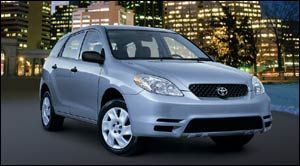
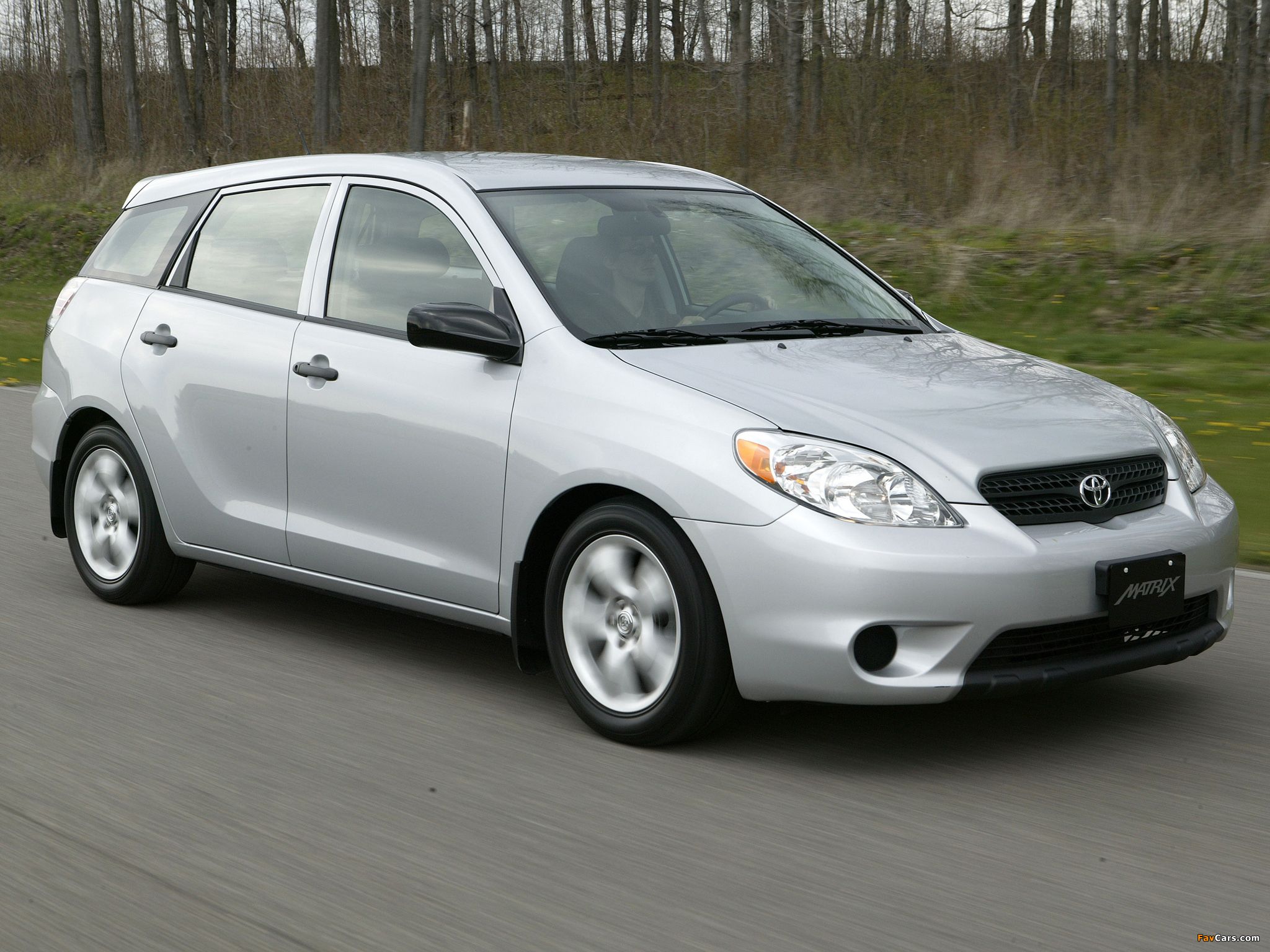
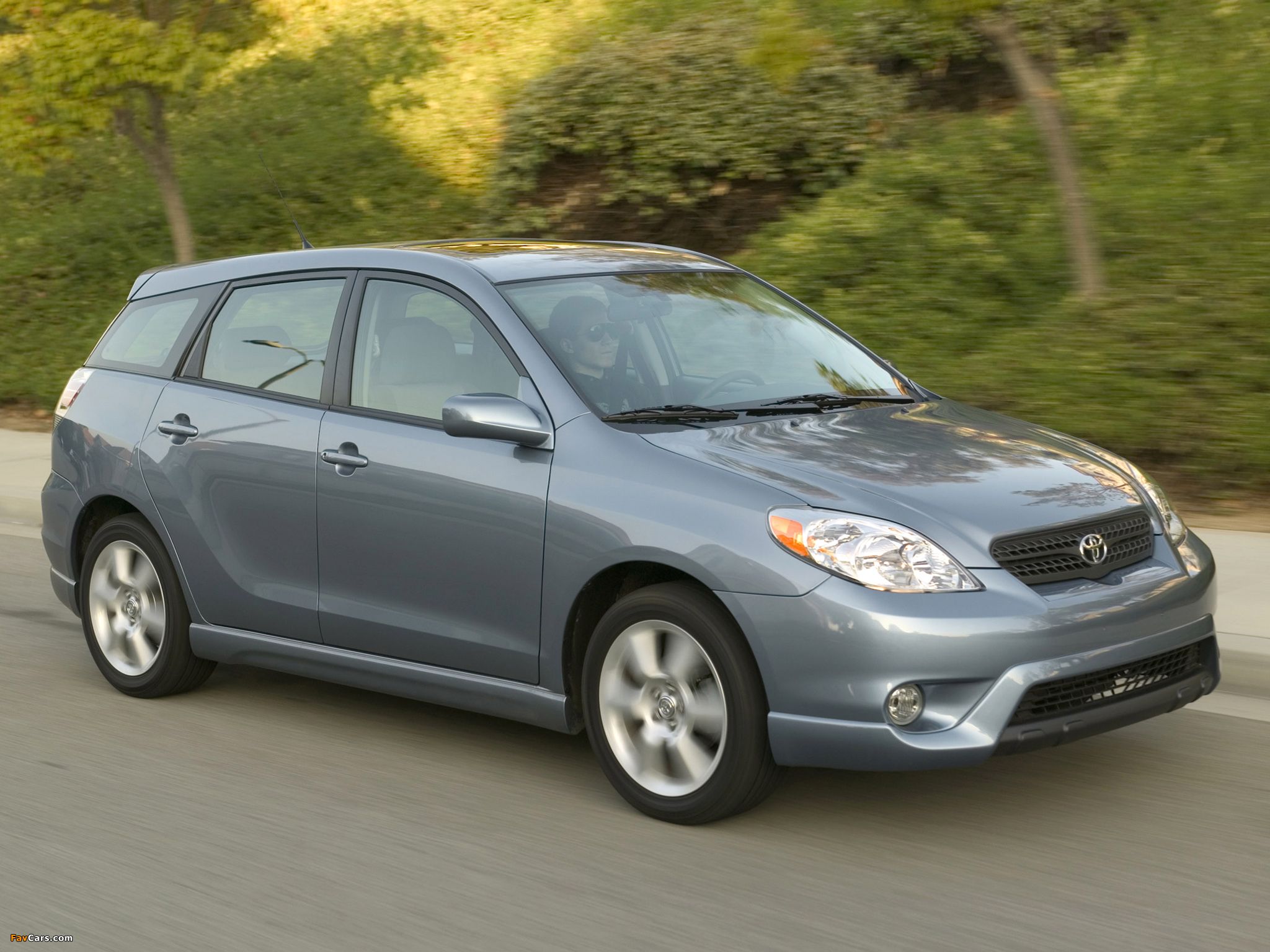
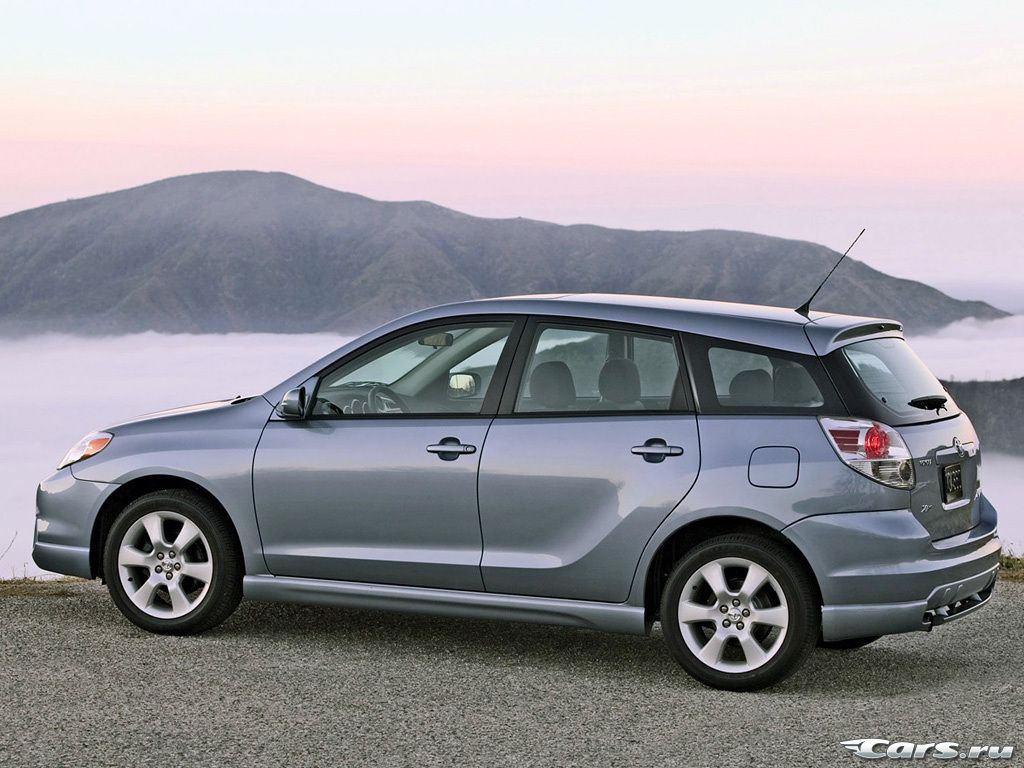
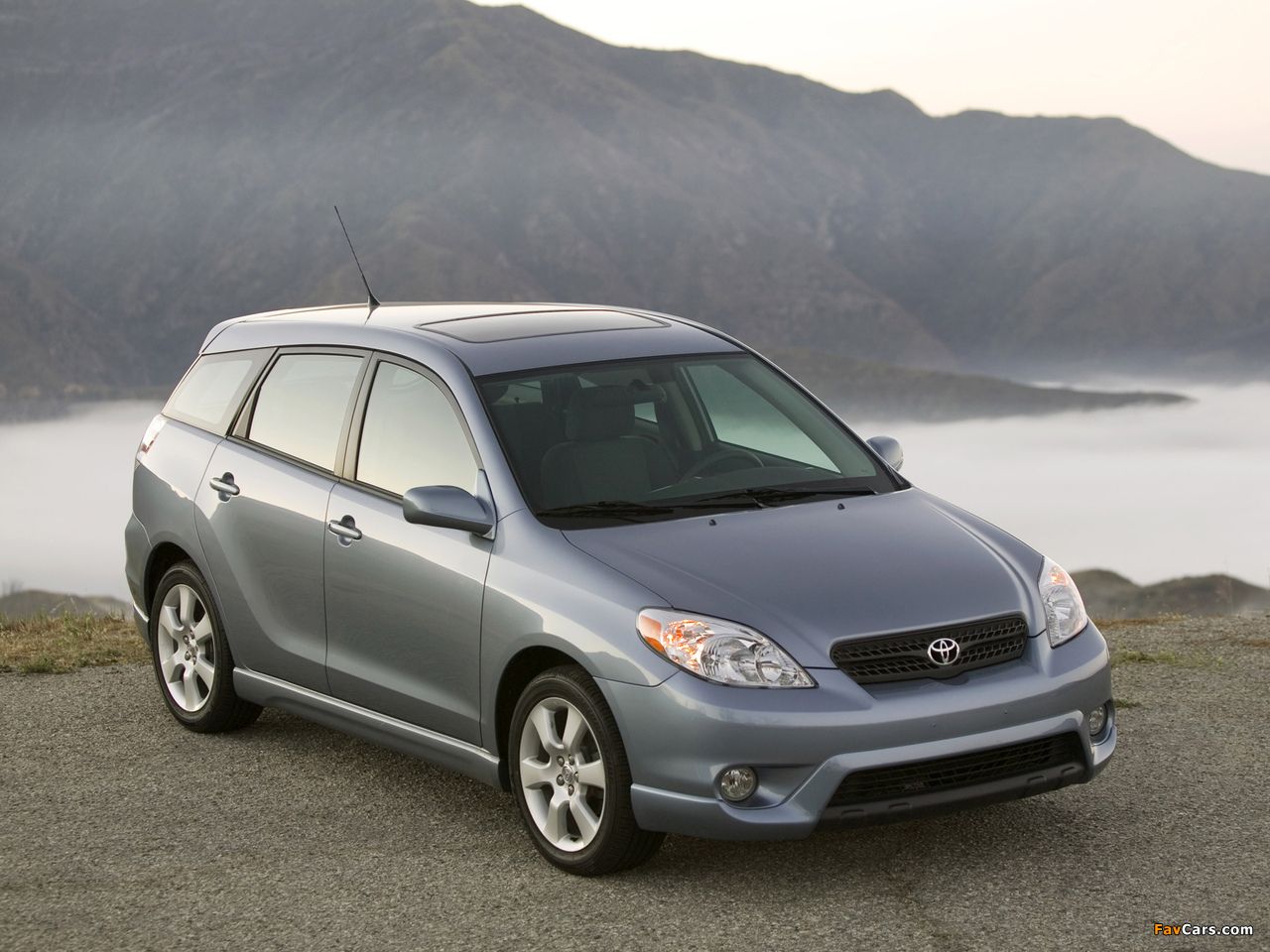
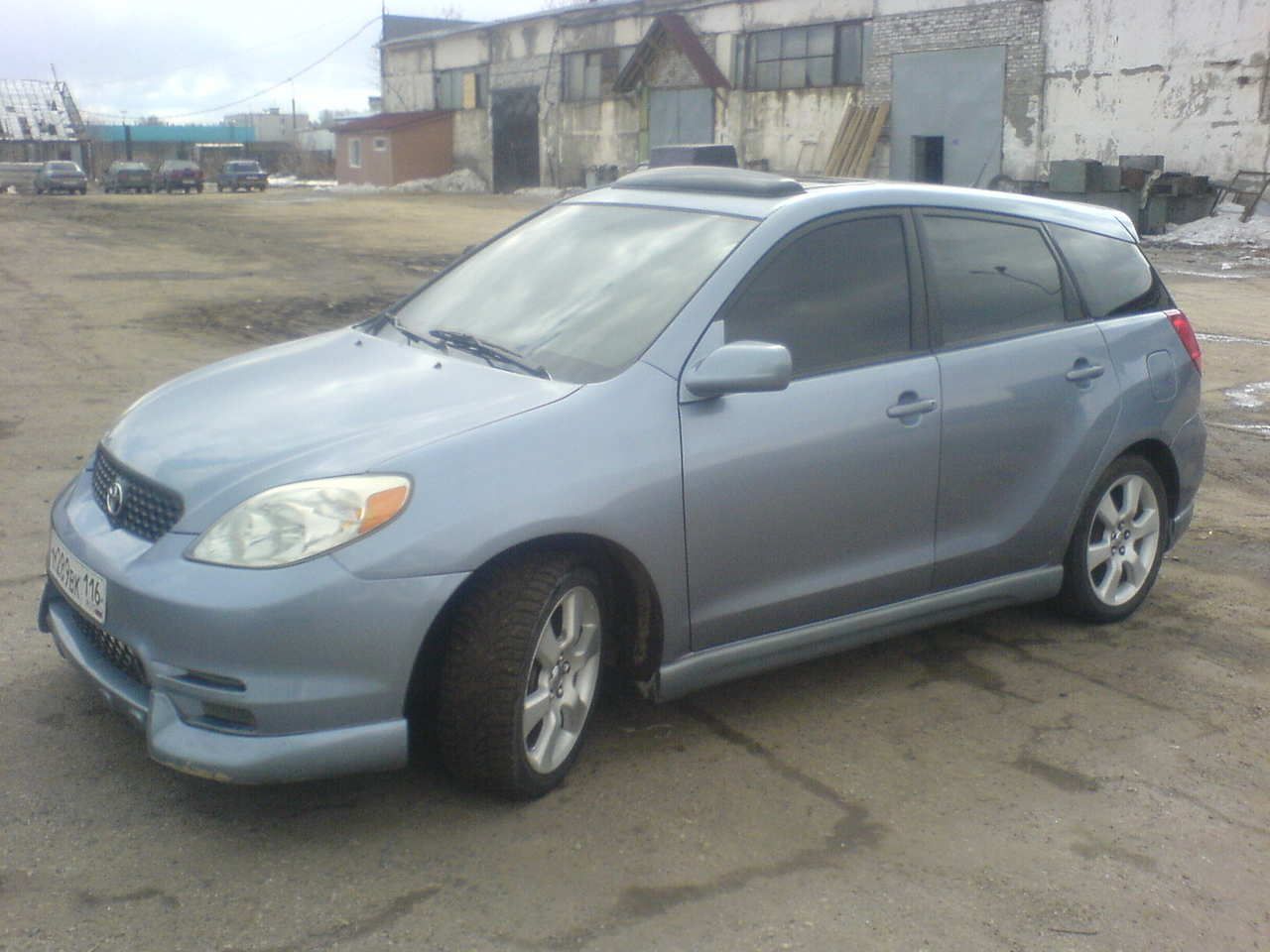
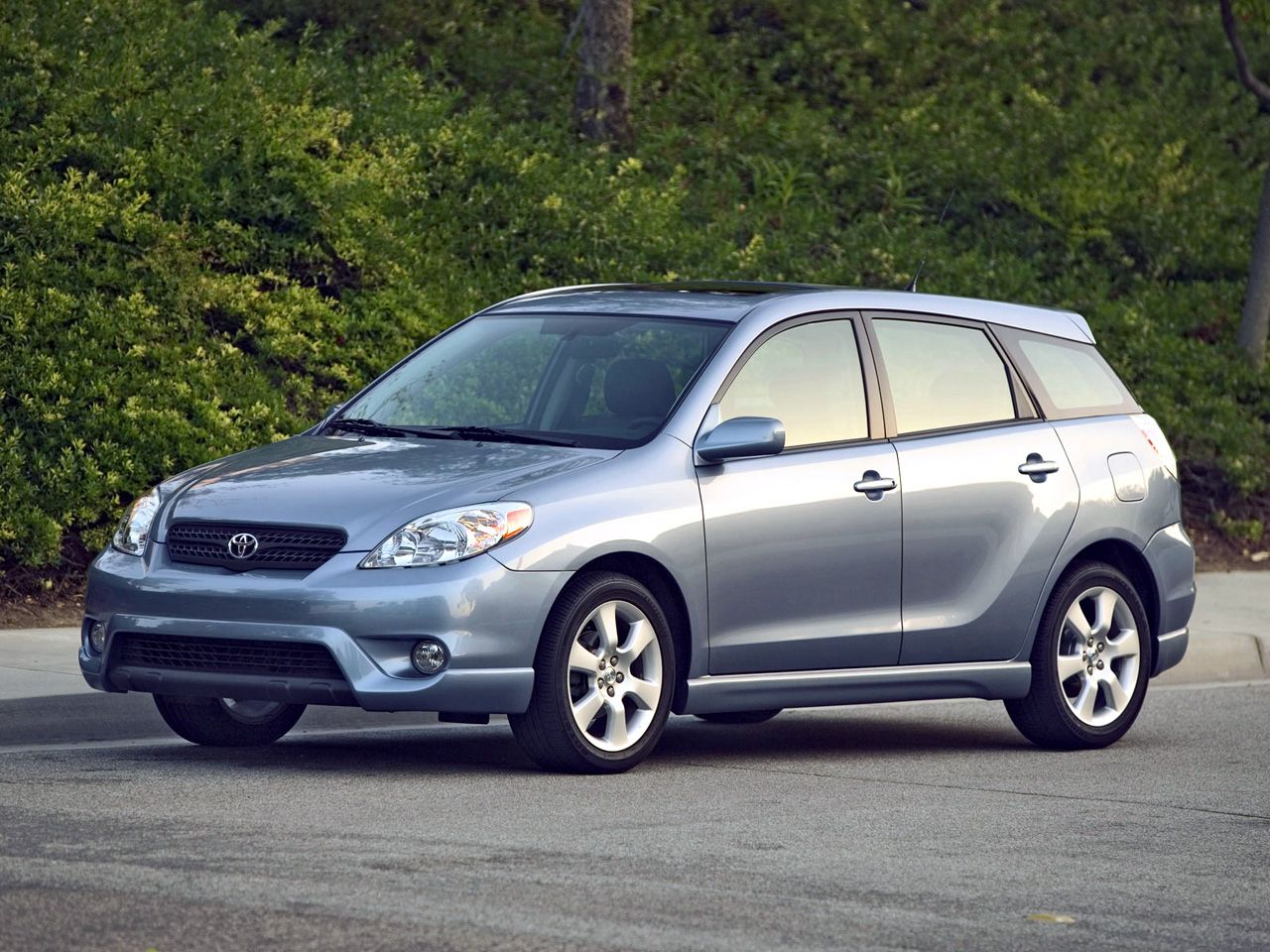
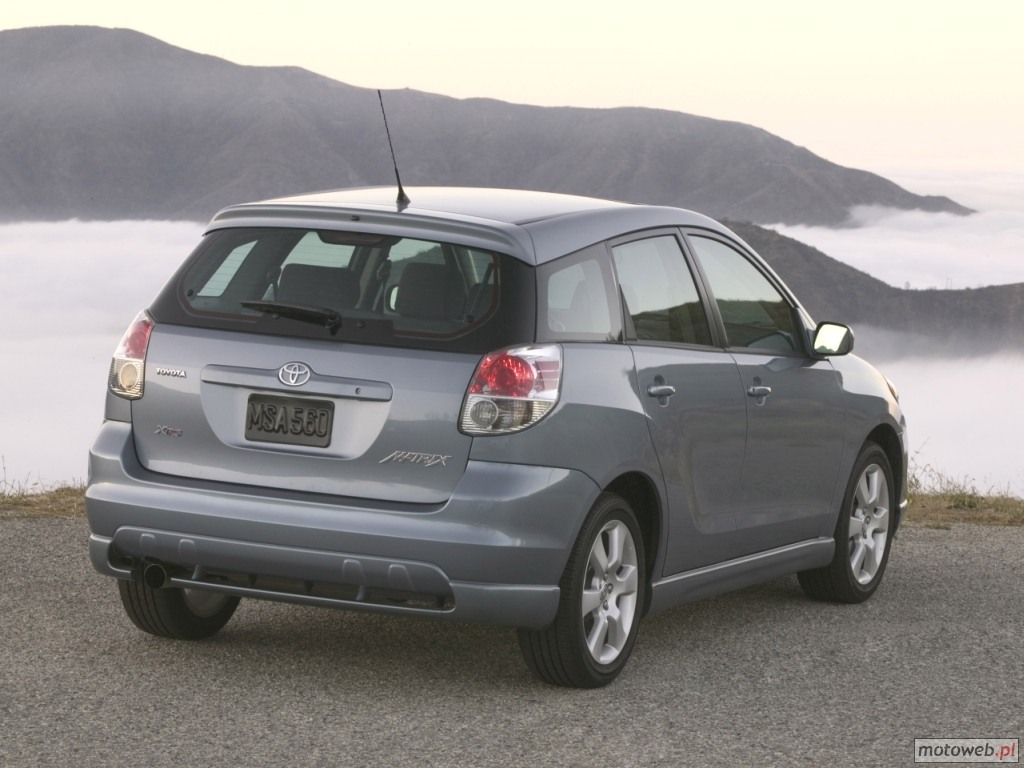
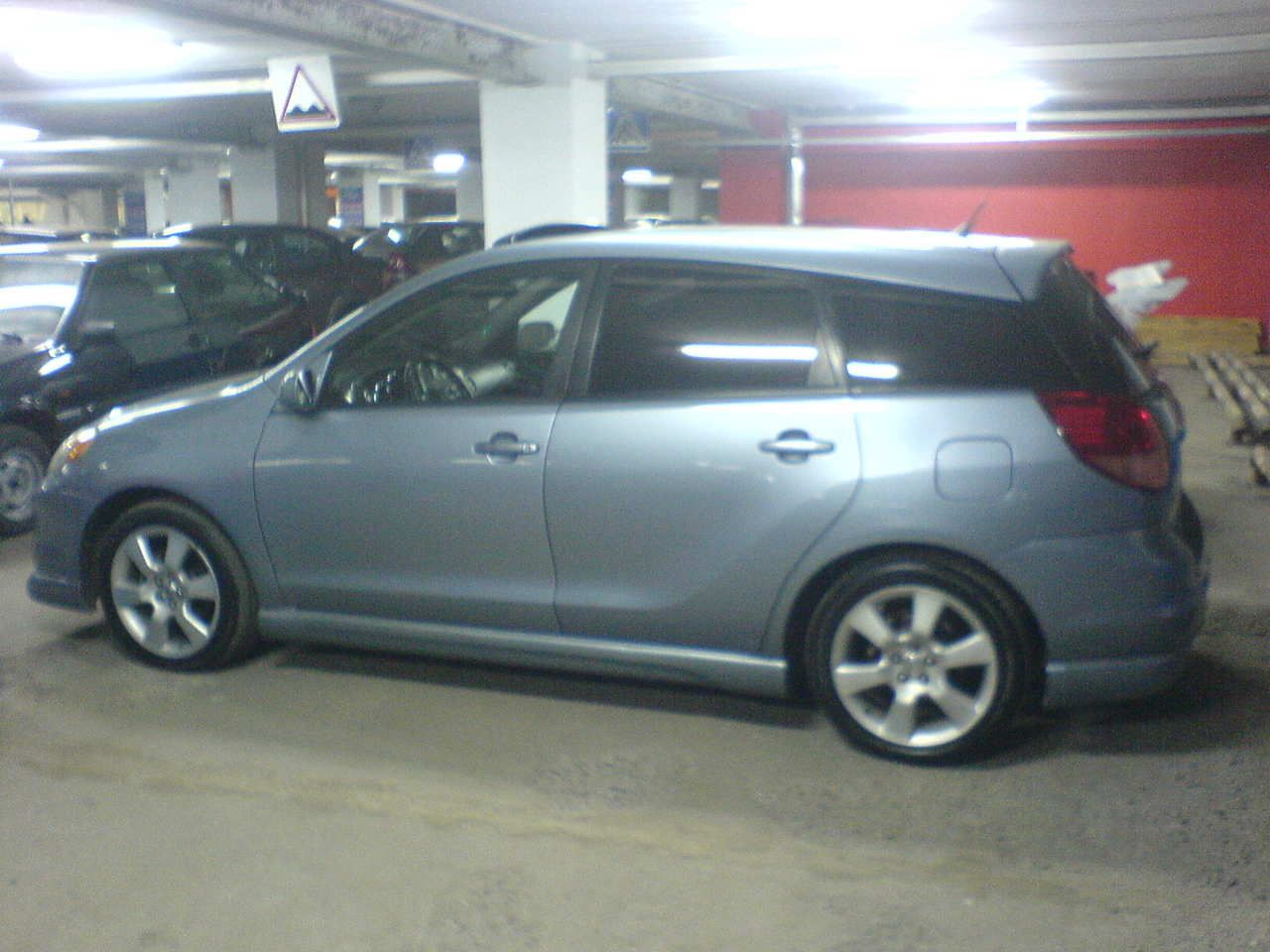
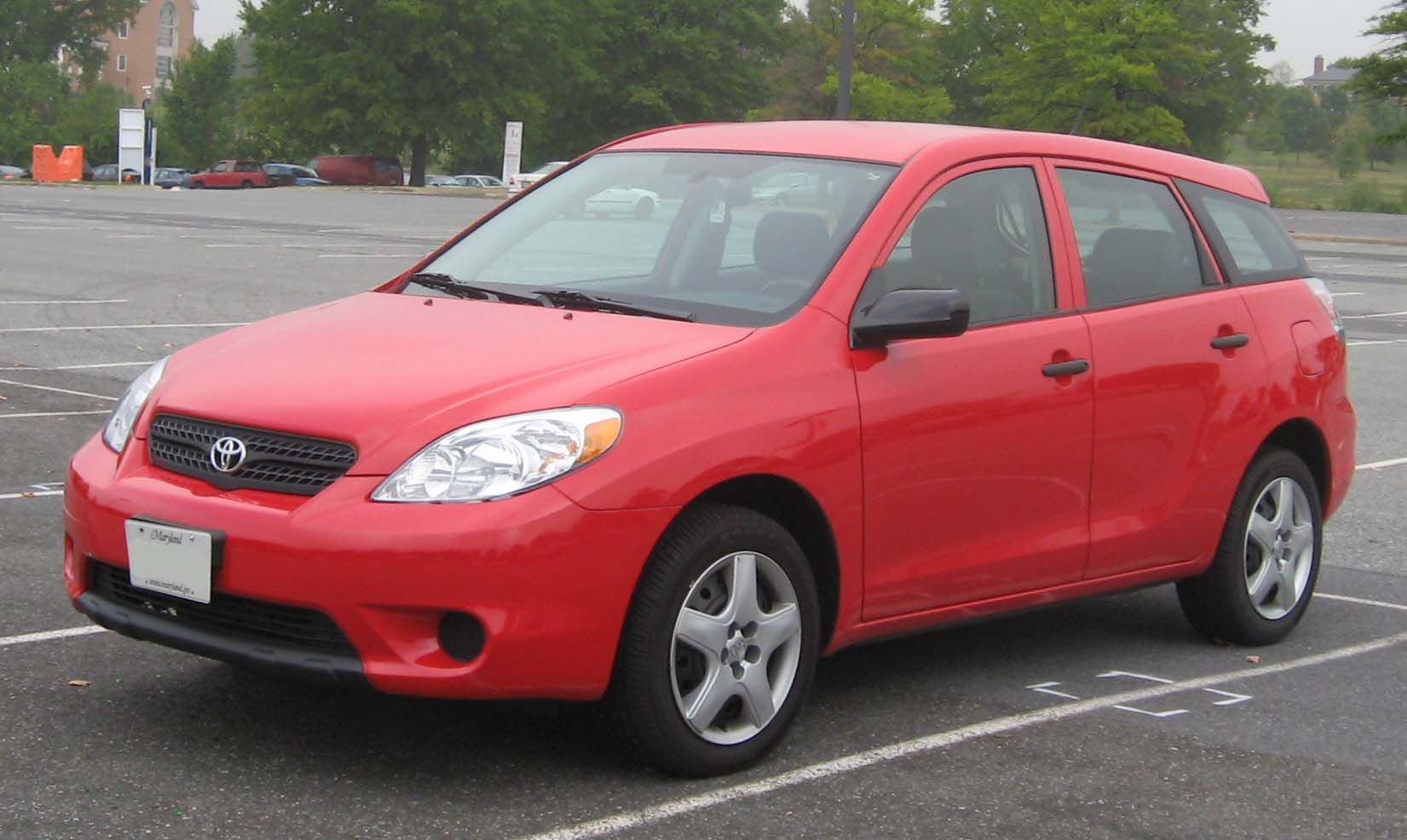
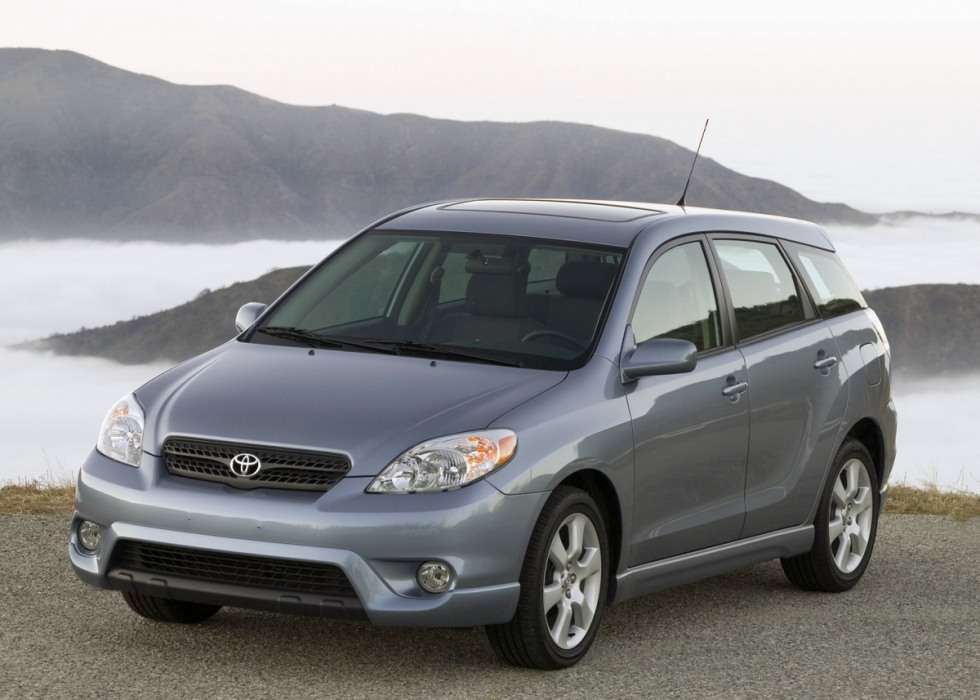
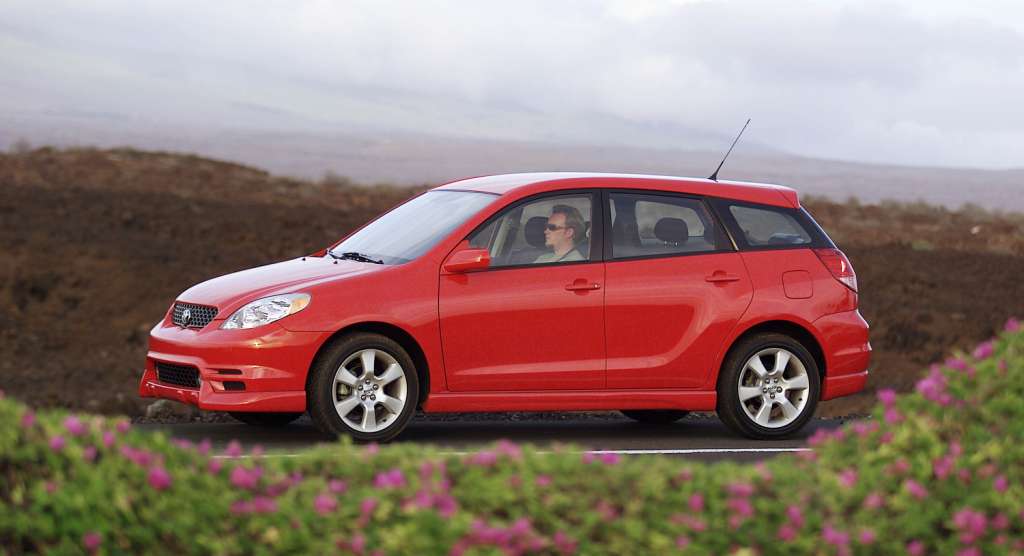
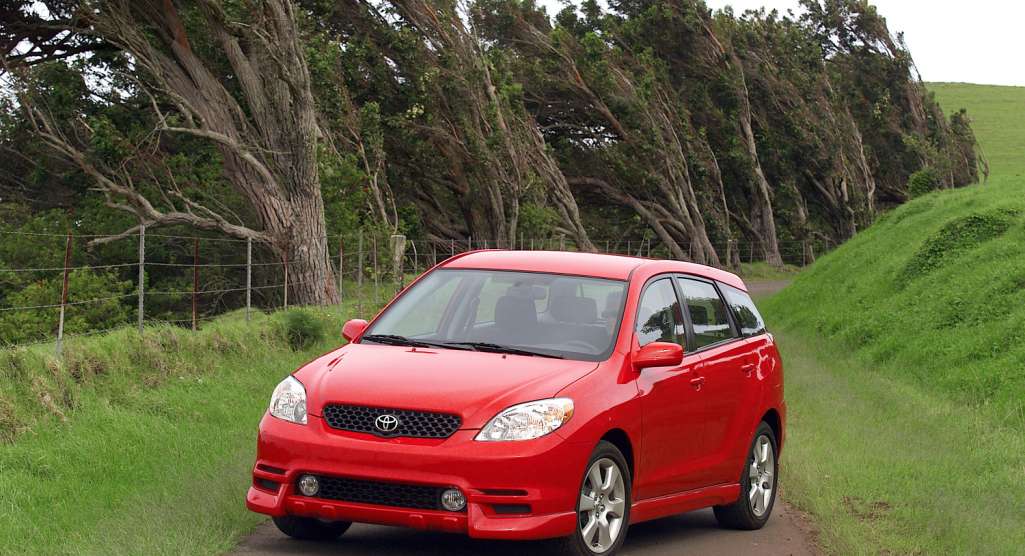
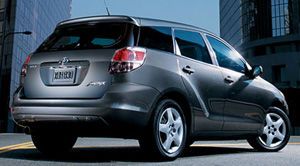
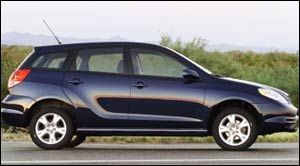
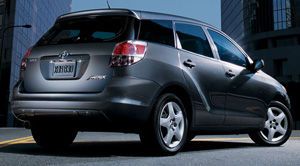
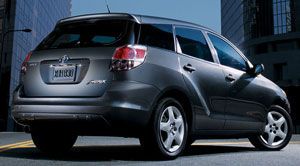
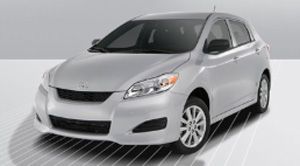
The 2004 Toyota Matrix XR is a Front-wheel drive Wagon. It can accommodate up to 5 passengers. It has 4 Doors and is powered by a 1.8L L4 DOHC 16 valves VVT-i engine which outputs 130 hp @
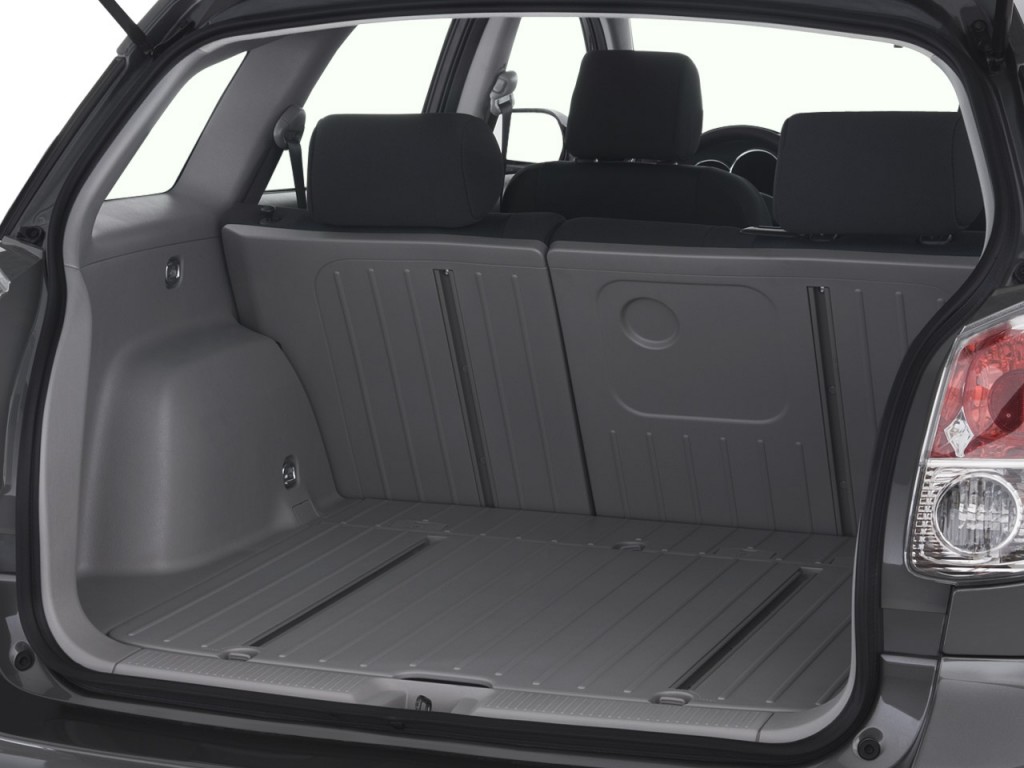
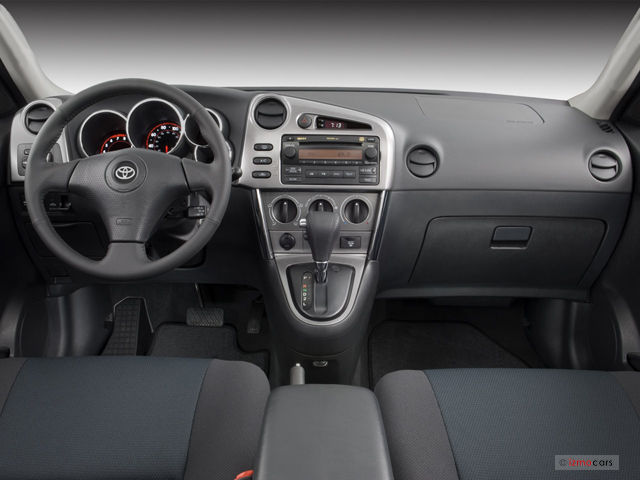
6000 rpm and is paired with 4 speed automatic gearbox. The 2004 Toyota Matrix XR has cargo capacity of 428 Liters and the vehicle weighs 1220 kg. In terms of ride assists, the 2004 Toyota Matrix XR has stability control and traction control in addition to anti-lock brake system (ABS). The vehicle has an optional engine as well It offers and. Safety features also include None and None. The front suspension is Front independent suspension while the rear suspension is Rear torsion beam suspension. The car also features a It has 16'' alloy wheels as standard. Electronic features include Cruise Control. For convenience, the car has Power windows and Power door locks. There is also a remote keyless entry feature. Moreover, the car has. The steering wheel has audio control buttons. In terms of performance, the car has 142 N.m of torque and a top speed of 186 km/h. The 2004 Toyota Matrix XR accelerates from zero to 60 mph in 9.7 seconds and hits quarter mile at 17.1 seconds. Fuel consumption is 8.3 L/100km in the city and 6.5 L/100km in the highway. The car price starts at $ 21,025
Toyota Matrix is a 5-door hatchback manufactured by Toyota and especially addressed to the North American market.
Toyota Jidosha Kabushiki-gaisha or Toyota for short is actually the largest car maker in the entire world, bigger than Ford, GM and anyone else. Their history, like many other car producers, starts with some other product, in this case automatic looms. At some point, in 1933, Kiichiro Toyoda, son to Toyota's founder, decided he wanted to build cars and so he took a trip to Europe to get an idea about gas-powered engines.
The government encouraged such a bold decision mostly because making their own cars would be cheaper and they also needed vehicles for the war with China. Just a year after its foundation in 1933, the Toyota Motor Company created its first engine, the Type A, placed in the Model A1 passenger car and the G1 truck.
During WWII, Toyota was committed to making trucks for the army and only the premature ending of the conflict saved the company's factories in Aichi from a scheduled Allied bomb raid. After the war, Toyota resumed car making but found more success in building trucks and buses than with cars. Still, it didn't give up on cars for good and in 1947 it came up with the Model SA, also known as the Toyopet, a name which later was applied to other models as well.
A little more successful was the Model SF which also had a taxi version but the same 27 horsepower engine as its predecessor. A more powerful model, the RH, which had 48 HP came out shortly after. Production went up rather fast and by 1955, Toyota was turning out 8400 cars a year. That year, Toyota diversified their production, adding the Jeep-like Land Cruiser and the luxury sedan, the Crown.
With numbers growing and with several models under their belt, Toyota now had its eyes set on the international market. The first dealership outside Japan was in America in 1957 an the first plant in Brazil in 1959. An interesting strategy from Toyota ensured that all models were somehow unique to the region where they were produced (they were adapted to the respective market).
The big break for Toyota on the American market came with the 70s when rising gas prices forced local producers to make smaller cars. These were thought of as entry-level and as a consequence lacked in quality of finishings. In contrast, Toyota already had several fuel-efficient models that were also of better quality. The Corolla is the best example in this sense, soon becoming America's favorite compact car.
But as far as the luxury market went, Toyota still had trouble with selling the Crown and the Cressida. At the dawn of the 80s, the entire luxury market in America was entering a downwards slope, with all the other manufacturers finding it difficult to keep up sales, and that's when Toyota came up with Lexus, a new company that would make luxury cars.
By the beginning of the 90s, Toyota vehicles became synonymous with reliability and low-cost maintenance which made them very popular all over the world. A bid for winning over the younger audience was made with the launch of models like the MR2 and the Celica.
Presently, Toyota is at the forefront of the environmental battle, with its successful hybrid model, the Toyota Prius and now announcing a plug-in electric car that will be called Toyota Plug-in HV, which will run on standard electricity powered by a lithium-ion battery pack.
2004 Toyota Matrix Consumer Reviews
silverbasil, 07/21/2015
AWD 4dr Wagon (1.8L 4cyl 4A)
167k Trouble Free Miles
I just sold my Matrix XR after 162k trouble free miles. The only problem I ever had with the car was the original battery failing at 6mo. Even normal maintenance was pretty cheap with the car; (obviously oil, belts, coolant, air filters are really time based and don't vary from car to car) the Matrix was very easy on brakes & gas and decent on tires too.
The car drove well with that nice Toyota balance of good comfort and reasonable handling. The ability to haul stuff is excellent! The rear seats fold completely flat, the front passenger seat also folds, and you can open the entire hatch or just the glass. All together, the combined to make a great car for road trips or oven to the lumberyard for 2x4's. If I could change one thing it would have been power- another gear in the tranny and 20 lb-ft more torque would have really helped (was disappointed with Toyota when the next generation came out and didn't address these issues, they were the only problems with the design).
If you're reading this, you're probably looking at a used Matrix... if it's been well maintained, go for it. It should treat you very well in the long run.
grublunchbox, 12/23/2015
XR Fwd 4dr Wagon (1.8L 4cyl 4A)
Amazing car all around
I've never owned a car I liked better. In fact, when kids came along and we needed to upsize one of our cars to a mini-van, I traded in my newer Honda Civic which had a lot fewer miles. The Matrix had proven itself a better car all around. This car is very comfortable for someone under 6 feet tall. It's robust, has tons of cargo space and gets good gas milage 30 mpg hwy. I use mine to commute 50 miles to work everyday and another 50 miles back home. Last time I checked it had about 240,000 miles on the odometer.
bogeycycle, 01/26/2013
Reliable, practical, it's been a great car.
I bought my Matrix used in '08 with 52k. It's currently at 103k and I still haven't had any problems with it, aside from regular maintenance (oil/filter changes, replaced tires/brake pads). It's my first car and I've really enjoyed its mix of practicality, fuel economy, and relative sportiness. That's sportiness relative to a camry or corolla; it's relatively fun to drive around town, but the fun is limited beyond that. I'm a college student, so the flexible cargo area is great for the frequent moves, group trips to the grocery store, and weekend getaways. As far as style, the asymmetrical dash is cool and the exterior is sporty enough (the solar yellow paint helps). It's been a great car.
embargoplay, 12/16/2009
'04 Matrix XRS 150K Miles Review
I am a driver. The transmission is very well matched. Replaced clutch at 110K miles. Only normal maintenance required. I love the sound it makes at high revs.
cocoillegal, 10/29/2019
2003 Toyota Matrix
"fantastic value"
This car is outstanding--a pocket rocket. RPM limit is 8200, one of the highest in production cars. It comes "on the cams" at about 5500!! Six speed manual, top speed in the mid-120's. Excellent storage, front passenger seat folds flat. We've carried a full dining room set it in, and (separately) a 300 pound generator. Totally Toyota reliable. Too bad they stopped production of it.
kittzero, 07/16/2019
2005 Toyota Matrix
"Over 200k miles and still going"
This is the second Toyota I've put over 200k miles on. The first was an '87 fx16 carolla, the second is an '05 matrix XR. Its been driven in all types of weather, including ice and snow, and temps above 100F. I've never had a garage, so the clear coat is gone on the roof, but the engine is as responsive as it was the day I bought it, still gets 30 mpg and the AC runs super cold. I've never needed anything more then regular maintenance on it and a new alternator when I hit 200k. I plan on keeping it until it costs more to keep it running then it's worth. Then, I will buy another toyota!


Discussion and Comments
Share Your Comments