1996 Mercury Sable Wagon GS 0-60 Times, Top Speed, Specs, Quarter Mile, and Wallpapers
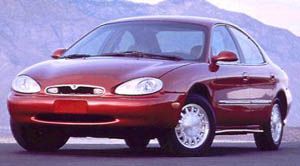
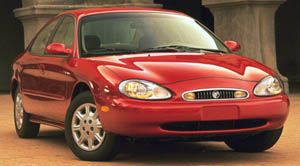
The 1996 Mercury Sable Wagon GS is a Front-wheel drive Wagon. It can accommodate up to 6 passengers. It has 4 Doors and is powered by a 3.0L V6 OHV 12 valves engine which outputs 145 hp @ 5250 rpm and is paired with 4 speed automatic gearbox. The 1996 Mercury Sable Wagon GS has cargo capacity of 2296 Liters and the vehicle weighs 1604 kg. In terms of ride assists, the 1996 Mercury Sable Wagon GS has stability control and traction control in addition to anti-lock brake system (ABS). The vehicle has an optional engine as well It offers and. Safety features also include None and None. The front suspension is while the rear suspension is. The car also features a It has as standard. Electronic features include Cruise Control. For convenience, the car has Power windows and Power door locks. There is also a remote keyless entry feature. Moreover, the car has. The steering wheel has audio control buttons. In terms of performance, the car has 158 N.m of torque and a top speed of 193 km/h. The 1996 Mercury Sable Wagon GS accelerates from zero to 60 mph in 11 seconds and hits quarter mile at 18 seconds. Fuel consumption is 11.9 L/100km in the city and 7.6 L/100km in the highway. The car price starts at $ 23,795
| Name | GS | |
|---|---|---|
| Price | $ 23,795 | |
| Body | Wagon | |
| Doors | 4 Doors | |
| Engine | 3.0L V6 OHV 12 valves | |
| Power | 145 hp @ 5250 rpm | |
| Number of Seats | 6 Seats | |
| Transmission | 4 speed automatic | |
| Cargo Space | 2,296.0 L | |
| Maximum Cargo Space | 2,296.0 L | |
| Wheel Type | ||
| Series | Sable IV | |
| Drivetrain | Front-wheel drive | |
| Horsepower | 145 HP | |
| Torque | 158 N.m | |
| Top Speed | 193 km/h | |
| Acceleration 0-100 km/h (0-60 mph) | 11.0 s | |
| Fuel Type | Petrol (Gasoline) | |
| Fuel Consumption (City) | 11.9 L/100km | |
| Fuel Consumption (Highway) | 7.6 L/100km | |
| Gear Type | auto | |
| Weight | 1,604 KG | |
| Brand | Mercury | |
| Model | Sable | |
| 0-400m (Quarter Mile) | 18.0 s | |
| 0-400m (Quarter Mile) - Speed | 127.5 km/h | |
| 0-800m (Half Mile) | 29.9 s | |
| 0-800m (Half Mile) - Speed | 143.5 km/h | |
| Modifications (MODS) | ||
| Modifications Cost | $ 0 |
1996 Mercury Sable Used Price Estimates
Estimates based on a driving average of 12,000 miles per year| Used Condition | Trade In Price | Private Party Price | Dealer Retail Price |
|---|---|---|---|
| Outstanding | $ 1,224 | $ 2,299 | $ 2,885 |
| Clean | $ 1,076 | $ 2,027 | $ 2,544 |
| Average | $ 782 | $ 1,484 | $ 1,862 |
| Rough | $ 487 | $ 940 | $ 1,180 |
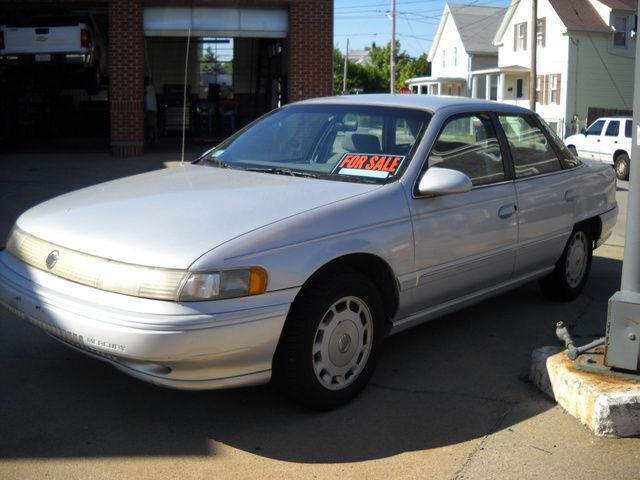
One of the biggest automotive stories for 1996 is the total redesign of the Mercury Sable. Longer, wider and larger inside than the old Sable, the 1996 model sports radically modern, yet heavy-handed, styling. Three trim levels, G, GS and LS, are available as well as two body styles. Sedans and wagons are available in either GS or LS trim levels.
Mercury claims that the new Sable sports 87 percent greater torsional stiffness. Part of this increase is directly attributable to the fact that the entire side of the new Sable is a single stamped section of steel, except for the doors, of course. Glass area is up 28 percent, lending the Sable a lighter, more airy feel than its predecessor. MacPherson struts hold up the front of the new Sable, while a quadralink rear suspension, similar to that found on the 1995 Lincoln Continental, keeps the rear of the car in line. Standard tire size is P205/65 R15.

An improved Vulcan 3.0-liter V6 powers G and GS models, pumping out 145 horsepower. Order LS trim and get an all-aluminum twin-cam 3.0-liter Duratec V6 good for 200 healthy ponies. Rumors continue to fly that the Sable will get the Taurus SHO's Yamaha-built V8 with 240 horses. If the big engine appears in the Sable, it will be the first time a V8 has ever been offered. LS models run to 60 mph in about eight seconds.
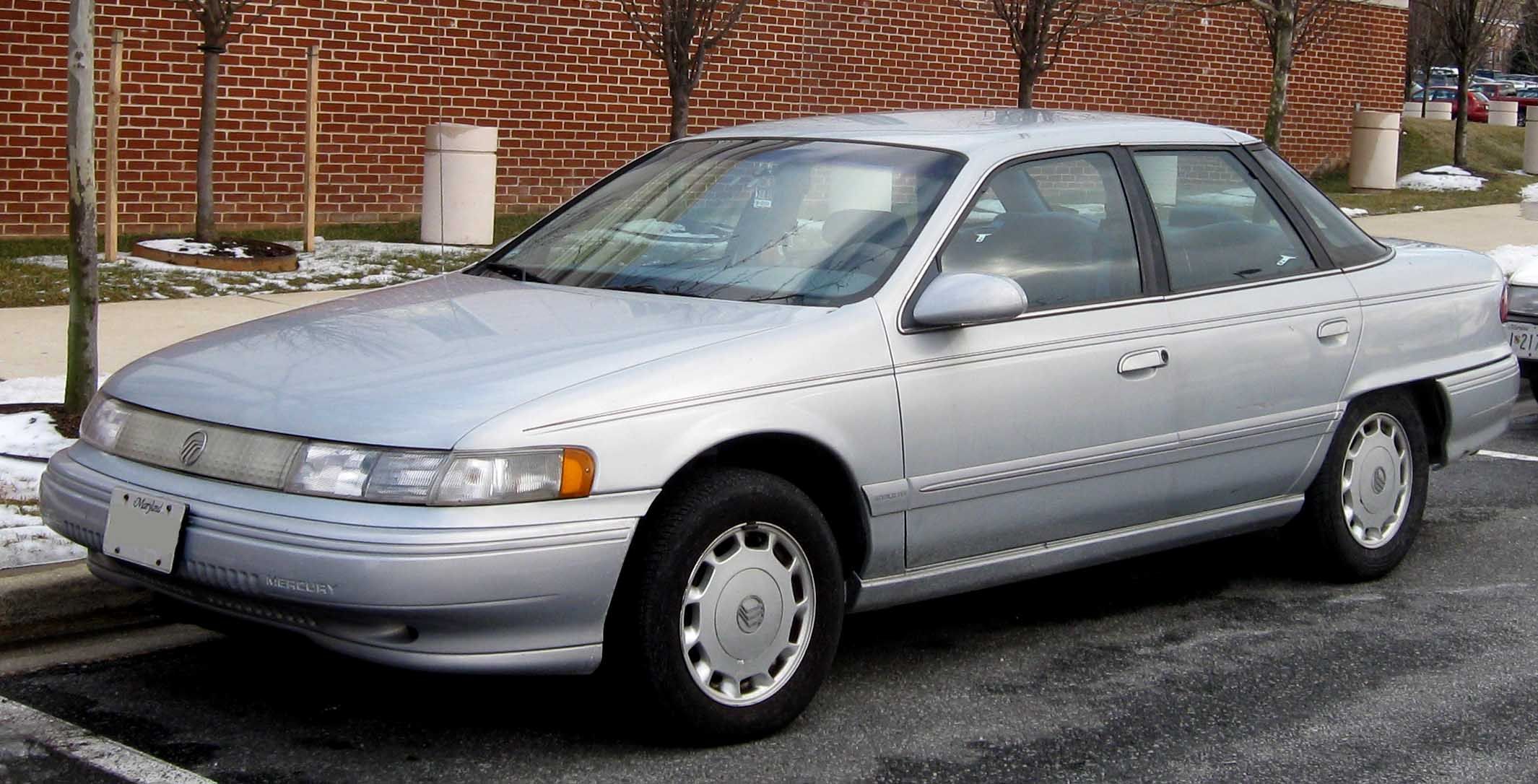
Front disc and rear drum brakes are standard. Antilock four-wheel disc brakes are optional. Sporting the same steering rack as the Lincoln Continental, Ford says that steering feel and response is much improved over the old version.
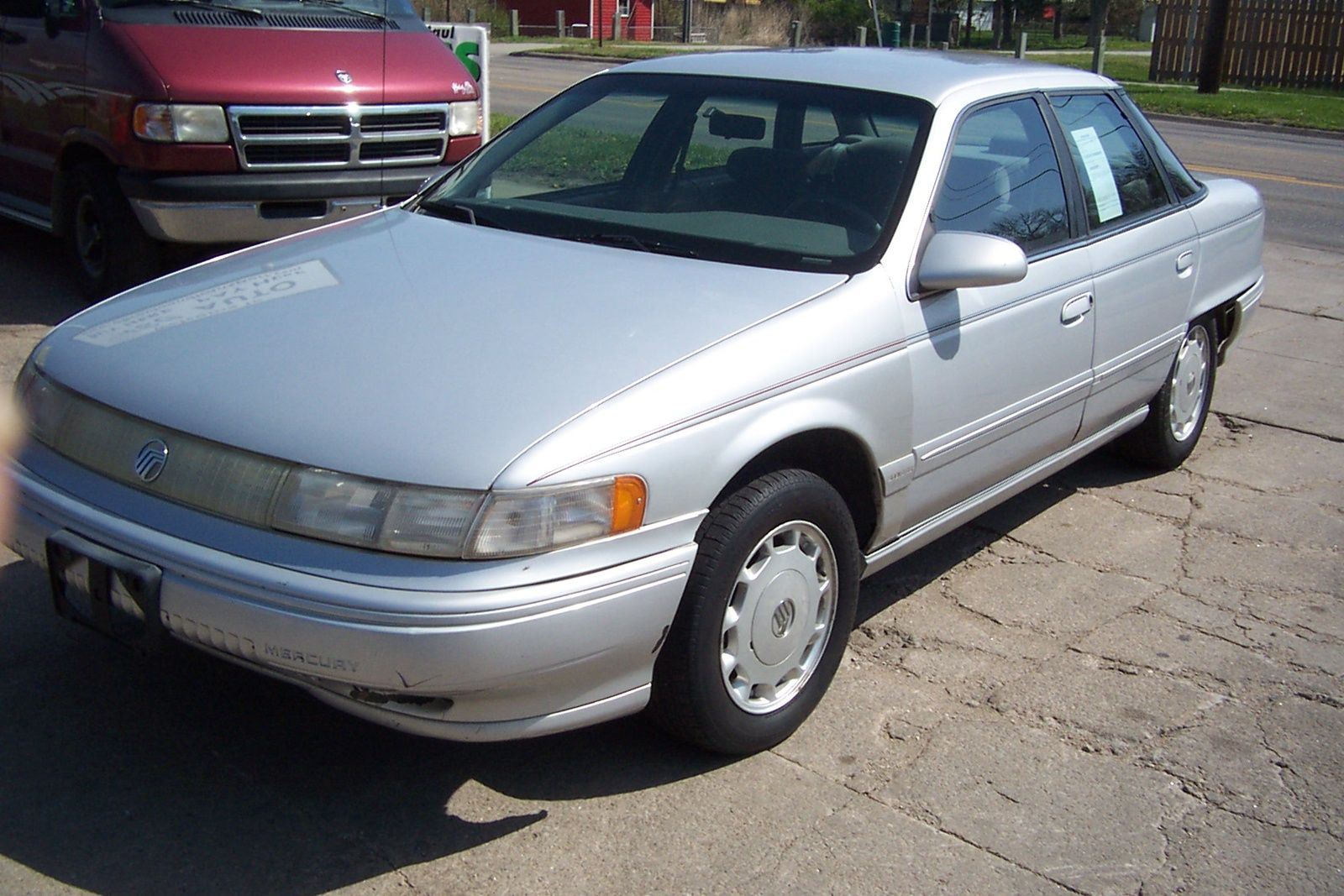
Standard equipment includes air conditioning, five-mph bumpers, rear seat heat ducts, split-fold rear seats and a battery saver system. Innovations on the 1996 Sable include an Integrated Control Panel, which combines stereo and climate controls in one easy-to-use pod. Stereo componentry has been relocated to the trunk. A patented three-way flip-fold console is available in cars equipped with six-passenger seating. In its upright position, the console is a seating position. Flip it down, and it's an armrest. Flip it once more, and it turns into a handy storage bin with cupholders and room for audio cassettes. Optional on Sable Wagon is an integrated child seat.
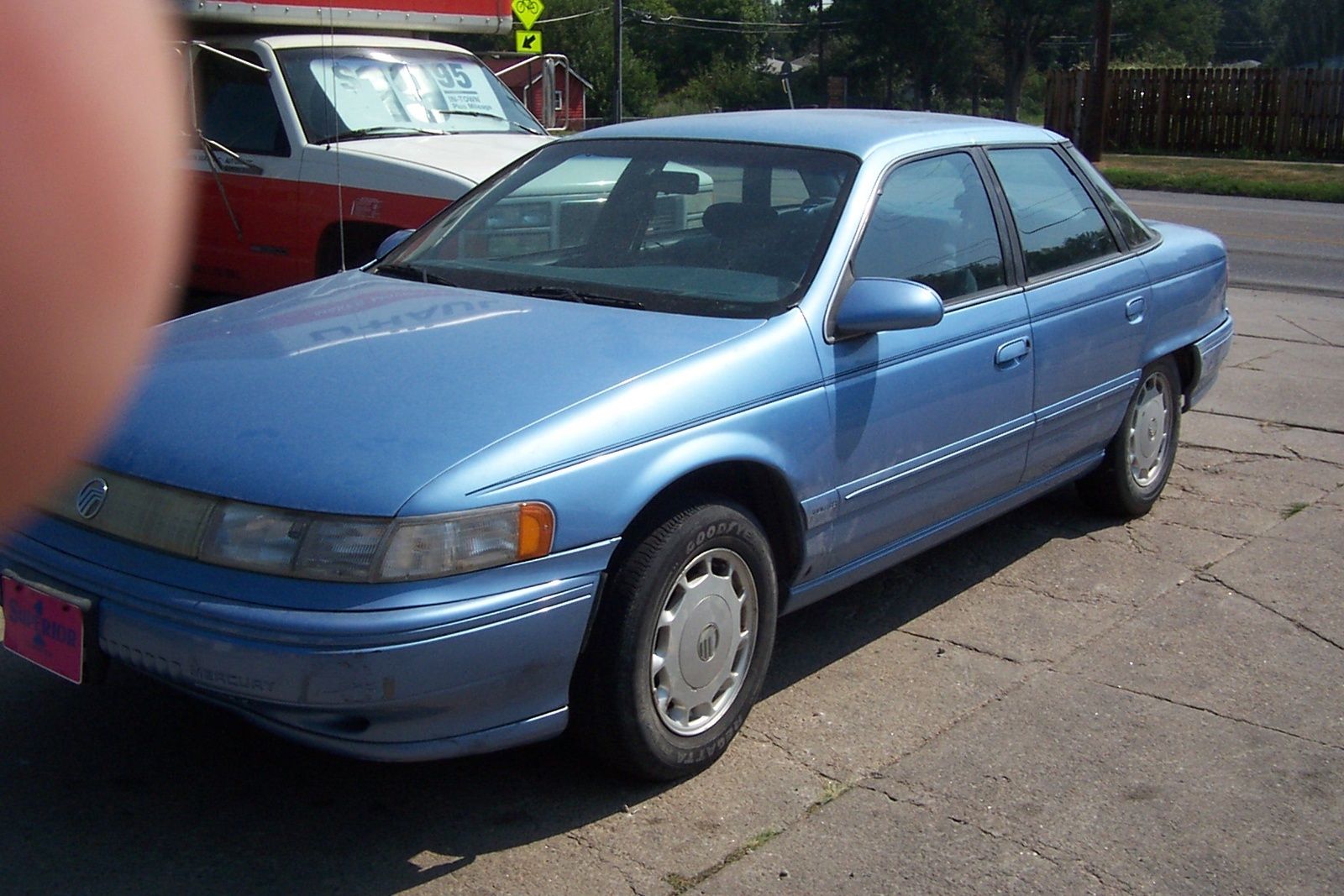
We must admit that we're a bit skeptical about the fishy-faced styling of the new car, but our initial shock has diminished to distinct distaste. Recently, photos ran of a Sable prototype that was pitched to the Chinese government after they complained about the frontal styling of the new car. The prototype had a raised hood, revised fascia, traditional rectangular headlamps and a chrome waterfall grille. The changes transformed the homely Sable into an Infiniti look-alike. Too bad the Chinese styling exercise didn't make it onto American production lines.
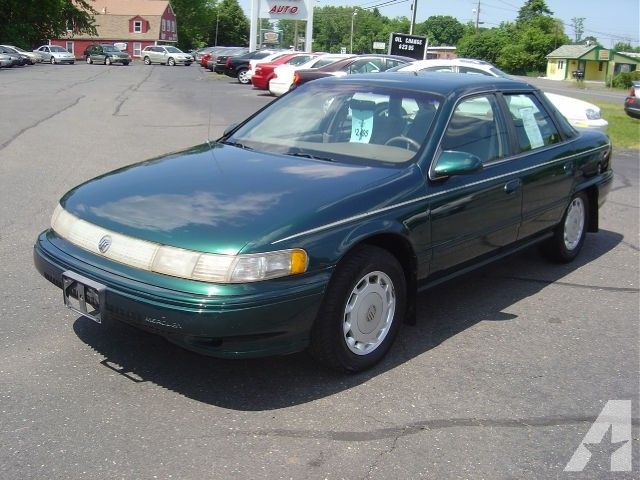
Preliminary reports indicate that the Sable is indeed a much improved sedan, ready to go head-to-head with the best in this class. Time, and a test drive, will tell.
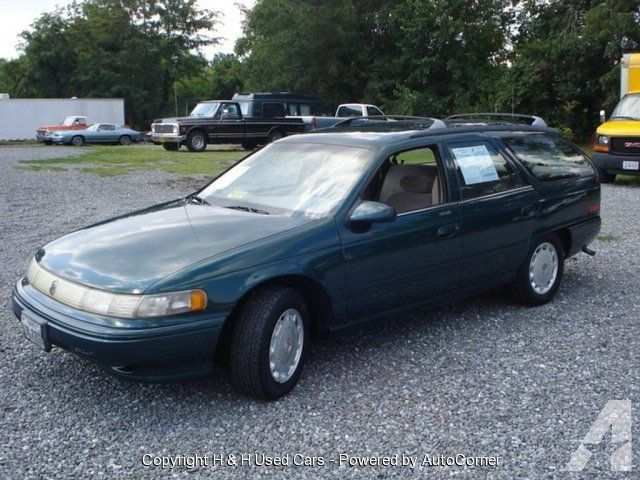
1996 Mercury Sable Wagon GS Exterior Colors
1996 Mercury Sable Wagon GS Interior Colors
1996 Mercury Sable Engines
| Engine | Standard in Trim | Power | Torque | Fuel Consumption - City | Fuel Consumption - Highway | 0-100 km/h | Quarter Mile | Half Mile |
|---|---|---|---|---|---|---|---|---|
| 3.0L V6 OHV 12 valves | GS Plus | 155 hp @ 4900 rpm | 158 N.m | 20.0 L/100km | 28.0 L/100km | 10.0 s | 17.3 s | 28.7 s |
| 3.0L V6 DOHC 24 valves | LS Premium | 200 hp @ 5650 rpm | 158 N.m | 20.0 L/100km | 27.0 L/100km | 8.2 s | 15.9 s | 26.4 s |
| 3.0L V6 OHV 12 valves | GS Plus | 155 hp @ 4900 rpm | 158 N.m | 20.0 L/100km | 28.0 L/100km | 18.7 s | 22.9 s | 38.0 s |
| 3.0L V6 DOHC 24 valves | LS Premium | 200 hp @ 5650 rpm | 158 N.m | 20.0 L/100km | 27.0 L/100km | 15.4 s | 21.0 s | 34.8 s |
| 3.0L V6 OHV 12 valves | GS | 145 hp @ 5250 rpm | 158 N.m | 12.0 L/100km | 7.7 L/100km | 10.5 s | 17.7 s | 29.4 s |
| 3.0L V6 DOHC 24 valves | LS | 200 hp @ 5750 rpm | 158 N.m | 13.2 L/100km | 8.3 L/100km | 8.2 s | 15.9 s | 26.4 s |
| 3.0L V6 OHV 12 valves | LS | 145 hp @ 5250 rpm | 158 N.m | 13.2 L/100km | 8.3 L/100km | 11.0 s | 18.0 s | 29.9 s |
| 3.0L 6cyl. ohv | LS | 145 hp @ 5250 rpm | 158 N.m | 16.8 L/100km | 13.0 L/100km | 10.5 s | 17.7 s | 29.4 s |
| 3.0L 6cyl. ohv | LS Wagon | 145 hp @ 5250 rpm | 158 N.m | 16.8 L/100km | 13.0 L/100km | 11.0 s | 18.0 s | 29.9 s |
| 3.0L V6 OHV 12 valves | GS | 145 hp @ 5250 rpm | 158 N.m | 11.9 L/100km | 7.6 L/100km | 10.5 s | 17.7 s | 29.4 s |
1996 Mercury Sable Trims
1996 Mercury Sable Previous Generations
1996 Mercury Sable Future Generations

Mercury Sable Overview and History
The name Mercury actually seems to be of good augury, considering that the main line of activity of the Roman god Mercury was commerce. So you could say that in giving this name to the brand, Ford was trying to appease the gods and make it big in the car business.
The first design, of course made by Ford's development department, was the Mercury Eight or the Super Ford, which had a 95hp engine and a design that was hailed as being the most aerodynamic of its time. This was the first car which was first designed using a clay model. From 1930 when it was first launched and up until 1938, production already reached 17,000 units.
This radical increase in production was the result of an unexpected rise in demand, so much so in fact, that by 1940, Ford was struggling to keep up. Figures reached the 155,000 mark. But pretty soon things were going to come to a screeching halt due to WWII, during 1942 and 1945.
In 1946, production resumed but with a slightly modified version of the 1942 model Eight. By 1950, there were 1 million Mercurys rolling on the roads. It was now time to push things forward from an innovative point of view, and this is why Mercury launched its first automatic transmission, the Merc-O-Matic on all its models starting with 1951. Cars also underwent a few stylish changes, like “frenched” headlamps with sheet metal surround or behind grille, airfoil bumpers, jet scoop hoods and instrument gauges aviation style.
During the mid 50s, Mercury cars were just about the wickedest things on the road, and a testament of that is the fact that a customized Mercury was featured in the movie “Rebel Without a Cause” starring James Dean. Towards the end of the decade, Mercury also entered the racetrack circuit.
1960 would see the introduction of two new models: the Comet and the Meteor. Whereas the Comet was a stylish compact, the Meteor was a somewhat smaller car, an indication of the fact that America was downsizing. The Comet showed its mettle on the Daytona Speedway Track where it showed remarkable stamina as a fleet of Mercury cars ran for 100,000 at an average speed of 105 mph. As the 60s drew to an end, a new model was added to the lineup, the Cougar, which joined the Mercury family in 1967.
When the oil crisis of the 70s hit, Mercury responded by introducing smaller, European-made cars, the Mercury Capri and the Bobcat. But that doesn't mean that older models weren't selling anymore. On the contrary, a redesigned Cougar XR-7 caused sales to go through the roof. Sales figures for Mercury continued to climb well into the 80s.
It was during the 80s that Mercury tried to capture a wider section of the market and came out with new models, the Lynx and the Grand Marquis. But the car that stands out in this decade is the 1986 Mercury Sable. It had a very low drag coefficient which made it fuel efficient.
Mercury's expansion continued all through the 90s. This time it would be a minivan that would be added to the fleet, Mercury Villager, soon to be followed in 1997 by the SUV Mountaineer which managed to attract a more younger market.
With the dawn of the new century, Mercury sought to improve on performance but also on fuel efficiency and emissions. Also, in an effort to unify the brand, all cars began to share certain design features as the front grille and the updated badge lettering. New models from this period include the Milan and Mariner.
Recently though sales began to show lower number and many people wondered about the future of the brand. Ford was quick to dismiss any rumors that it would burry Mercury and in 2008 announced that it would be making the company part of its small car strategy.
1996 Mercury Sable Consumer Reviews
Compare Against Competitors
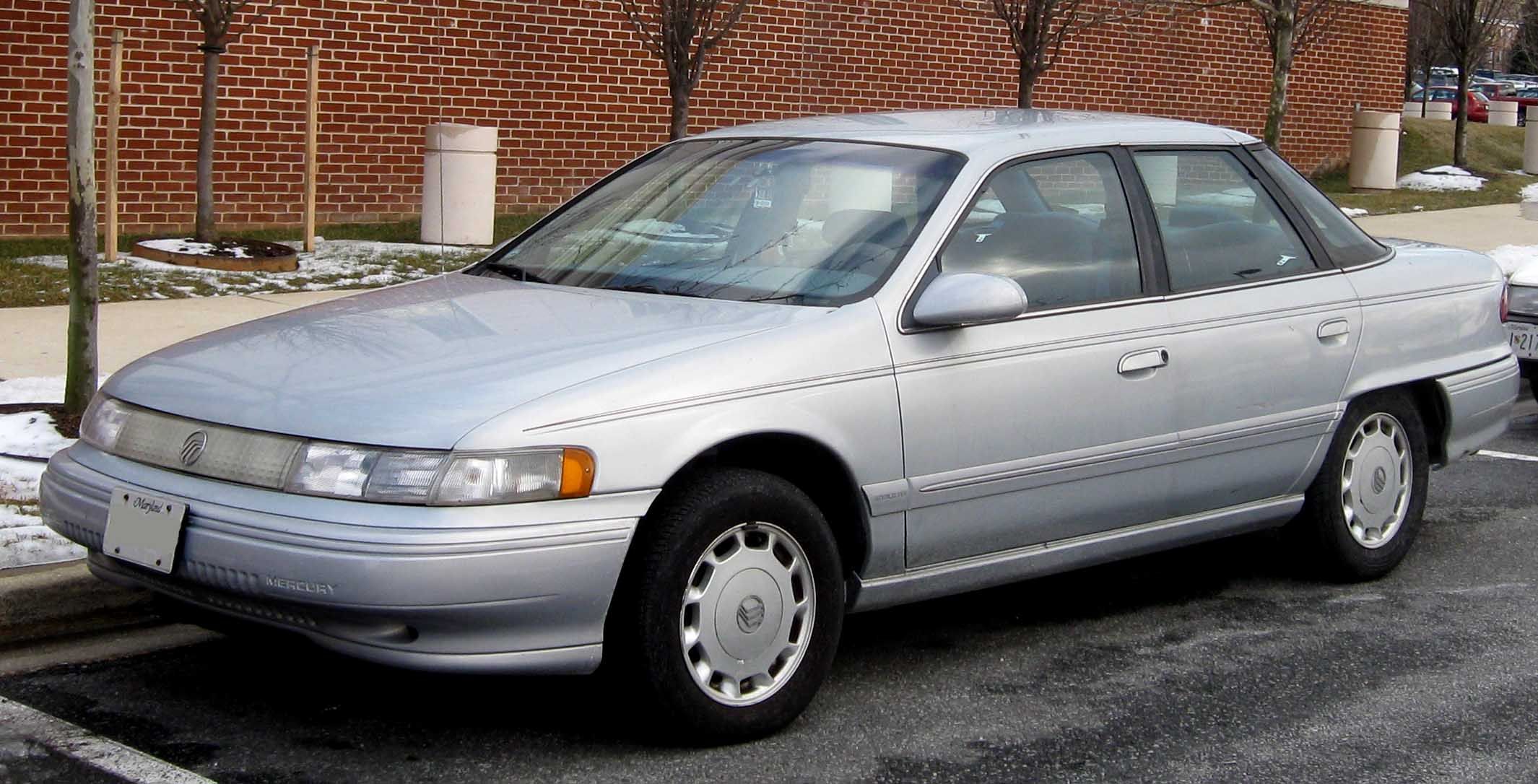
1996 Mercury Sable Wagon GS Specifications
GS Dimensions
| Cargo Capacity | 2296 L |
|---|---|
| Curb Weight | 1604 kg |
| Fuel Tank Capacity | 60 L |
| Height | 1417 mm |
| Length | 5060 mm |
| Wheelbase | 2756 mm |
| Width | 1854 mm |
GS Mechanical
| Drive Train | Front-wheel drive |
|---|---|
| Engine Name | 3.0L V6 OHV 12 valves |
| Transmission | 4 speed automatic |
GS Overview
| Body | Wagon |
|---|---|
| Doors | 4 |
| Engine | 3.0L V6 OHV 12 valves |
| Fuel Consumption | 11.9 (Automatic City)7.6 (Automatic Highway) |
| Power | 145 hp @ 5250 rpm |
| Seats | 6 |
| Transmission | 4 speed automatic |
| Warranties | Bumper-to-Bumper60000/km, 36/Months Powertrain60000/km, 36/Months Roadside Assistance60000/km, 36/Months Rust-throughUnlimited/km, 60/Months |
GS Safety
| Anti-Lock Brakes | Std |
|---|---|
| Brake Type | 4 wheel disc |
| Child-proof Locks | None |
| Driver Airbag | None |
| Passenger Airbag | None |
GS Suspension and Steering
| Front Tires | P205/65R15 |
|---|
Discussion and Comments
Share Your Comments