1996 Mazda MPV L 2WD 0-60 Times, Top Speed, Specs, Quarter Mile, and Wallpapers
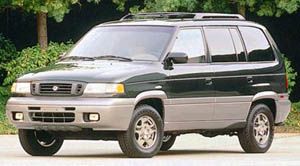
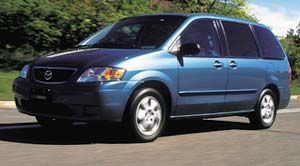
The 1996 Mazda MPV L 2WD is a Rear-wheel drive MiniVan. It can accommodate up to 8 passengers. It has 4 Doors and is powered by a 3.0L V6 SOHC 18 valves engine which outputs 155 hp @ 5000 rpm and is paired with 4 speed automatic gearbox. The 1996 Mazda MPV L 2WD has cargo capacity of 3115 Liters and the vehicle weighs 1719 kg. In terms of ride assists, the 1996 Mazda MPV L 2WD has stability control and traction control in addition to anti-lock brake system (ABS). The vehicle has an optional engine as well It offers and. Safety features also include None and None. The front suspension is while the rear suspension is. The car also features a It has as standard. Electronic features include Cruise Control. For convenience, the car has Power windows and Power door locks. There is also a remote keyless entry feature. Moreover, the car has. The steering wheel has audio control buttons. In terms of performance, the car has 169 N.m of torque and a top speed of 197 km/h. The 1996 Mazda MPV L 2WD accelerates from zero to 60 mph in 10.6 seconds and hits quarter mile at 18.1 seconds. Fuel consumption is 14.3 L/100km in the city and 10.2 L/100km in the highway. The car price starts at $ 27,300
| Name | L 2WD | |
|---|---|---|
| Price | $ 27,300 | |
| Body | MiniVan | |
| Doors | 4 Doors | |
| Engine | 3.0L V6 SOHC 18 valves | |
| Power | 155 hp @ 5000 rpm | |
| Number of Seats | 8 Seats | |
| Transmission | 4 speed automatic | |
| Cargo Space | 3,115.0 L | |
| Maximum Cargo Space | 3,115.0 L | |
| Wheel Type | ||
| Series | MPV I (LV) | |
| Drivetrain | Rear-wheel drive | |
| Horsepower | 155 HP | |
| Torque | 169 N.m | |
| Top Speed | 197 km/h | |
| Acceleration 0-100 km/h (0-60 mph) | 10.6 s | |
| Fuel Type | Petrol (Gasoline) | |
| Fuel Consumption (City) | 14.3 L/100km | |
| Fuel Consumption (Highway) | 10.2 L/100km | |
| Gear Type | manual | |
| Weight | 1,719 KG | |
| Brand | Mazda | |
| Model | MPV | |
| 0-400m (Quarter Mile) | 18.1 s | |
| 0-400m (Quarter Mile) - Speed | 127.4 km/h | |
| 0-800m (Half Mile) | 29.9 s | |
| 0-800m (Half Mile) - Speed | 143.4 km/h | |
| Modifications (MODS) | ||
| Modifications Cost | $ 0 |
1996 Mazda MPV Used Price Estimates
Estimates based on a driving average of 12,000 miles per year| Used Condition | Trade In Price | Private Party Price | Dealer Retail Price |
|---|---|---|---|
| Outstanding | $ 485 | $ 1,115 | $ 1,432 |
| Clean | $ 442 | $ 1,016 | $ 1,310 |
| Average | $ 356 | $ 818 | $ 1,066 |
| Rough | $ 270 | $ 620 | $ 823 |
Like Honda's new Odyssey, the longer-lived Mazda minivan does without a sliding entry door. And for 1996, Mazda matches the Odyssey by providing rear doors on both sides. Mazda promises sedan-like comfort and ride qualities for up to eight passengers. Front MacPherson struts and front/rear stabilizer bars help keep the minivan comfortable and on-course. Bucket seats hold the front occupants, while three fit on the middle and back seat. Optional on LX and ES models are quad captain's chairs. Center-section leg room is less than great, but most riders aren't likely to complain. When fewer passengers are aboard, cargo space can reach 110 cubic feet.
Mazda's lineup, streamlined to three models last year, has been revised again. Three trim levels remain: value-priced DX, well-equipped LX, and luxury ES. Upper-level minivans can have shift-on-the-fly four-wheel-drive. All-disc brakes include rear-wheel anti-locking. The ES edition contains such pleasantries as leather seating surfaces, and automatic load leveling.

Acceleration with the 155-horsepower, 18-valve, 3.0-liter V-6 engine is sufficient, if not quite matching a few contemporary rivals. Four-wheel-drive cuts into potential performance, because of its sizable extra weight. Gas mileage also dips considerably. A four-speed automatic, with electronic controls, is the sole transmission choice. With 4WD, a dashboard switch can lock the center differential, for peak low-speed traction.
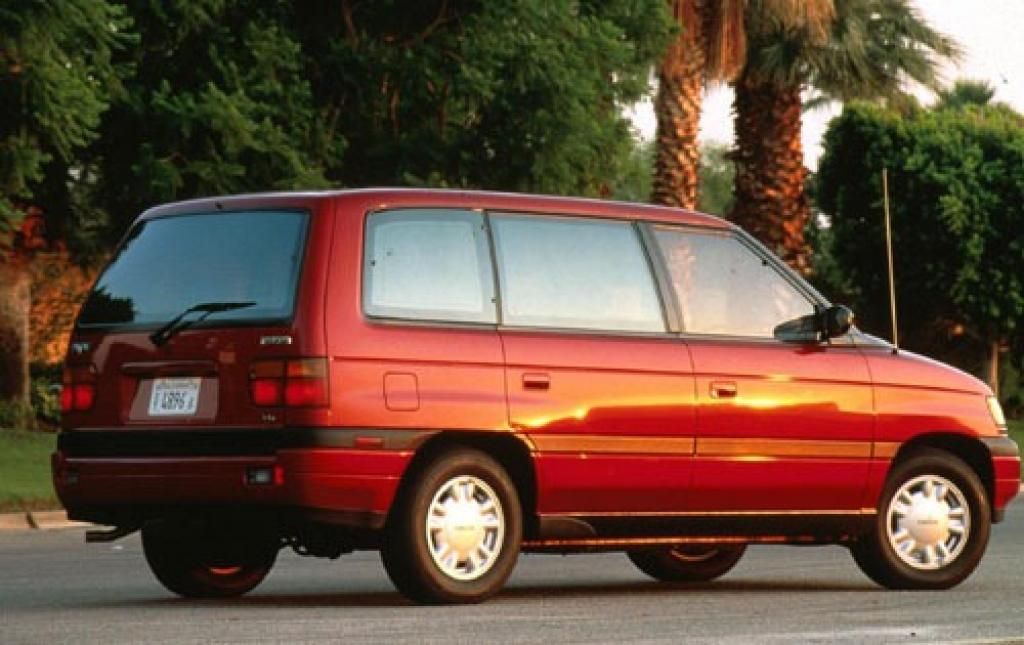
Inside and out--especially up front--MPVs offer a distinctive appearance, not quite like most minivans. Styling has been revised for 1996, and the MPV now sports a protruding, ungainly countenance in an effort to make it look more like a sport utility. A new, more contemporary instrument panel debuts, containing dual airbags. Visibility is terrific from the airy cabin. Storage space has been increased by the addition of a large glovebox and deep bins on each of the door panels.
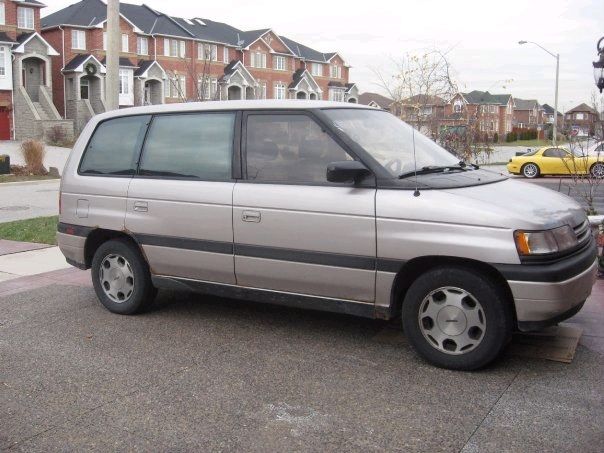
The 1996 MPV is the equivalent of a double Big Mac that's been sitting under the heating lamp too long. There's more to it, but it's old, loaded with fat, and costs more than many competitors. We liked the old MPV plenty for its crisp, clean looks and fun rear-wheel drive personality. This new, heavier, bulbous model leaves us cold. And with base stickers approaching $ 22,000 with destination charges, we can't recommend the MPV over most other minivans on the market.
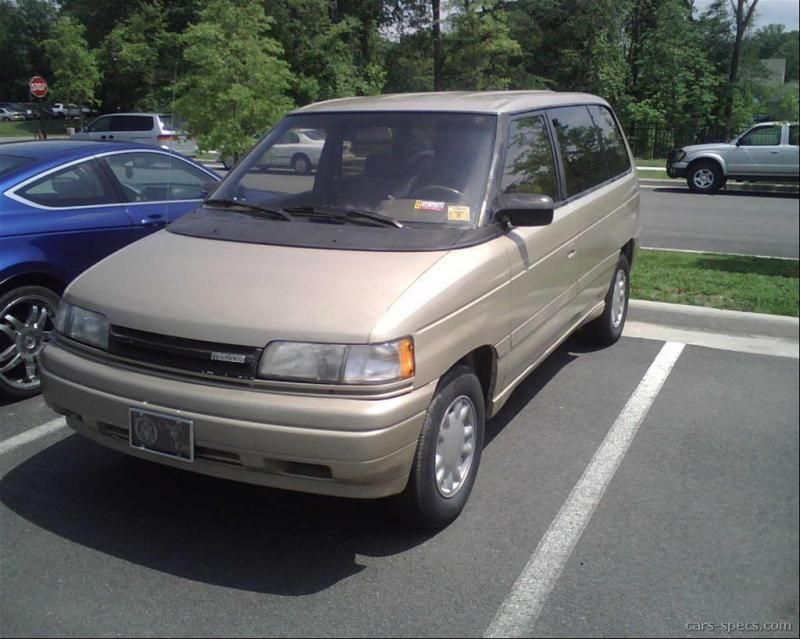
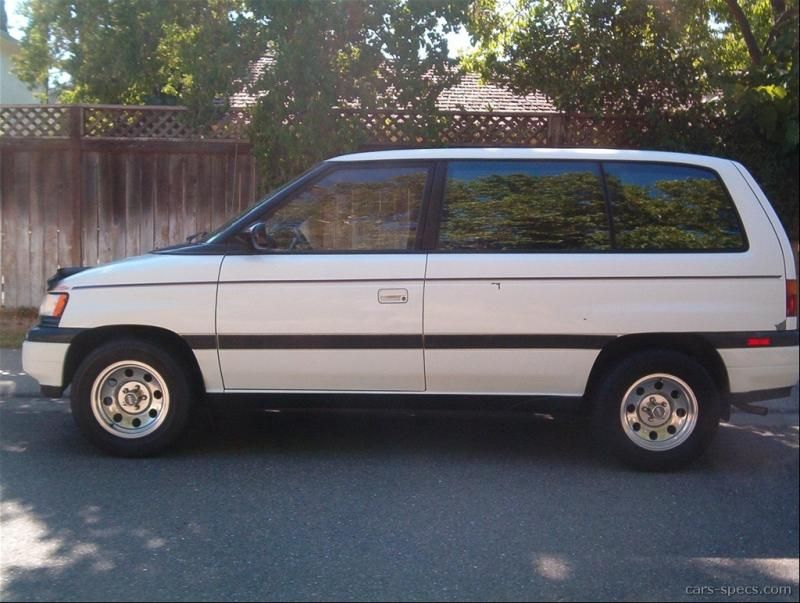
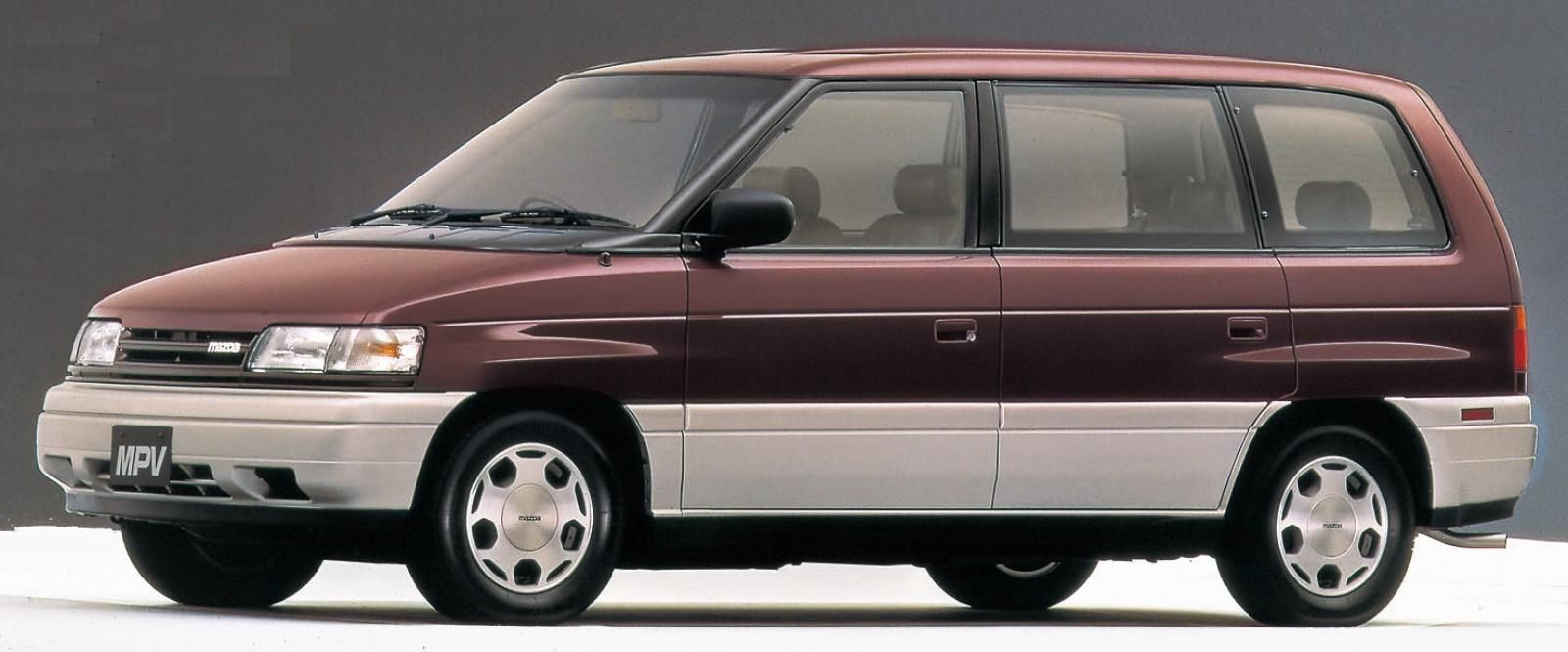
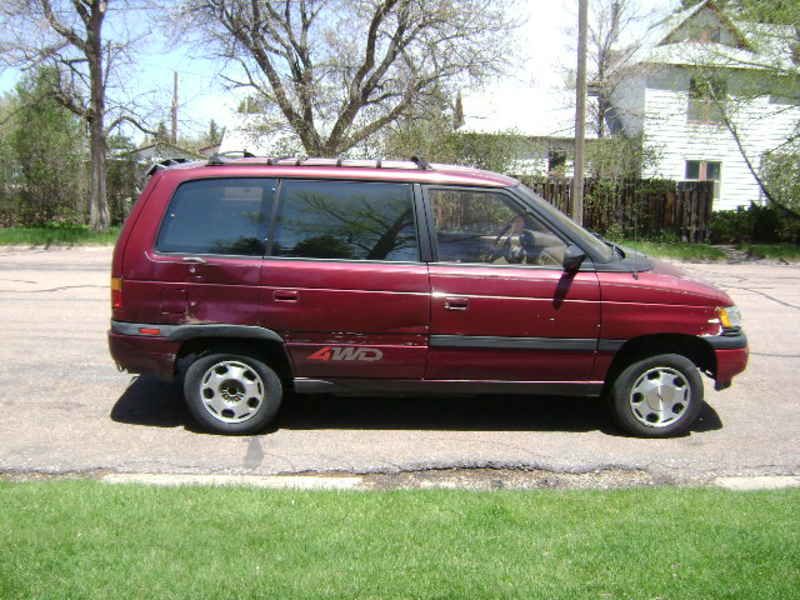
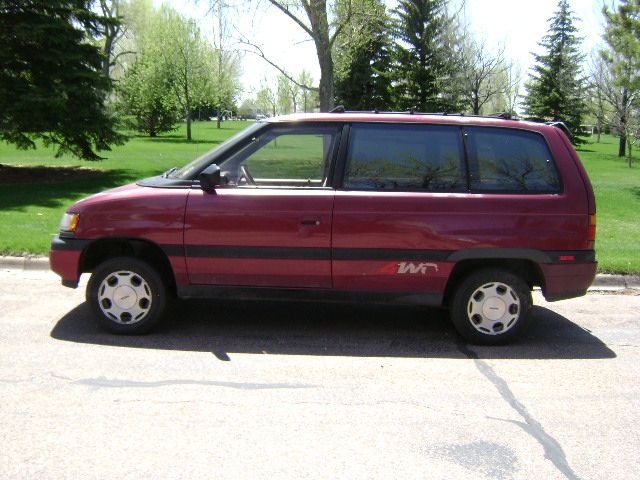
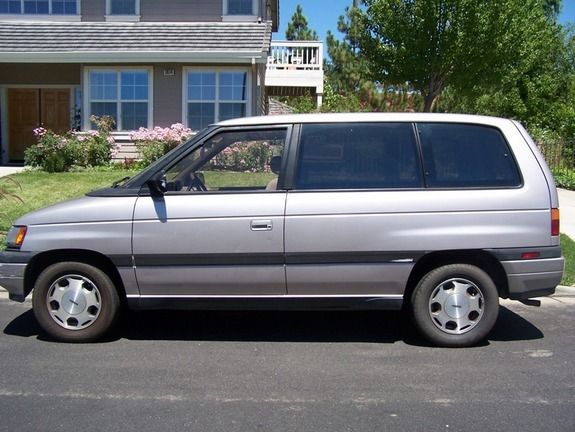
1996 Mazda MPV L 2WD Exterior Colors
1996 Mazda MPV L 2WD Interior Colors
1996 Mazda MPV Engines
| Engine | Standard in Trim | Power | Torque | Fuel Consumption - City | Fuel Consumption - Highway | 0-100 km/h | Quarter Mile | Half Mile |
|---|---|---|---|---|---|---|---|---|
| 3.0L V6 SOHC 18 valves | L | 155 hp @ 5000 rpm | 169 N.m | 14.7 L/100km | 10.7 L/100km | 10.4 s | 18.0 s | 29.8 s |
| 3.0L V6 SOHC 18 valves | LX | 155 hp @ 5000 rpm | 169 N.m | 14.7 L/100km | 10.7 L/100km | 10.6 s | 18.1 s | 29.9 s |
| 3.0L V6 SOHC 18 valves | LX 4WD | 155 hp @ 5000 rpm | 169 N.m | 17.0 L/100km | 12.3 L/100km | 10.8 s | 16.4 s | 30.6 s |
| 3.0L V6 SOHC 18 valves | LX 2WD | 155 hp @ 5000 rpm | 169 N.m | 14.3 L/100km | 10.2 L/100km | 10.6 s | 18.1 s | 29.9 s |
| 3.0L V6 SOHC 18 valves | LX 4WD | 155 hp @ 5000 rpm | 169 N.m | 16.6 L/100km | 12.1 L/100km | 10.8 s | 16.4 s | 30.6 s |
1996 Mazda MPV Trims
1996 Mazda MPV Previous Generations
1996 Mazda MPV Future Generations
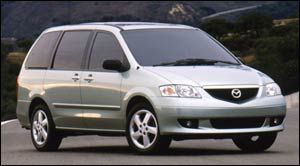
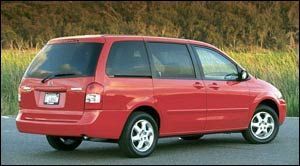
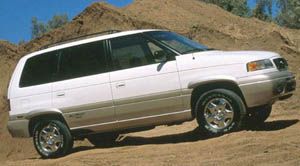

Mazda MPV Overview and History
After the war, part of the Mazda plant served as the Hiroshima prefecture for a short while. Production and export resumed in 1949 with the same 3-wheeled truck. The first 4-wheel truck was the Mazda Romper, introduced in 1958.
The first pasenger car came in 1960, the Mazda R360 Coupe. Mazda's first partnership with a foreign company was the one in 1961 with NSU/Wankel with which it produced and developed rotary engines. This was done in order to differentiate Mazda from the other Japanese companies. To this day, Mazda is the only manufacturer of Wankel rotary engines as the other companies (NSU and Citroen) gave up on the design sometime during the 70s.
Mazda's paid off because its models quickly gained a name as being powerful yet light vehicles. The most successful series for Mazda were going to be the R100 and the RX models which eventually led to the company's development.
Starting with 1970 Mazda began eyeing the biggest market for its cars, the United States. It opened up a North American branch under the name Mazda North American Operations and it proved to have the winning recipe. In fact, Mazda models were so successful that the company even produced a pick up truck based on the rotary engine.
With 1973 and the oil crisis, the thirsty rotary engines that Mazda used caused a drop in sales but the Japanese company hadn't really given up on piston engines so it was able to use a 4 cylinder model on its cars. The smaller Familia series and Capella were born.
But Mazda wasn't about to give up on its sporty cars and it decided to develop a parallel plant that would produce cars outside the mainstream. In 1978, they came up with the very sporty RX7 and later with the RX8. The piston engine also showed up on Mazda's line up with the MX-5 or Miata.
In 1979 Ford Motor Company became an investor in Mazda with a 27% share after the financial decline of the company. Later on, in the 80s, Ford acquired 20% more of the company after a few joint ventures like using the Familia series platform for the Laser and Escort models as well as building the new Probe and the Mazda plant in Flat Rock, Michigan.
The 90s started off with another joint venture with Ford on the 1991 Explorer which turned out to be a bad investment for the Japanese while the Americans reaped all the benefits. Following its fascination with alternative engine designs, Mazda started developing the Miller cycle engine in 1995.
The latter part of the 90s proved to be not so profitable for the Japanese as the financial crisis hit in 1997, during which Ford acquired 39.9% of the company. From that point on, the collaboration between the two marques intensified, sharing engine design and even some platforms (Ford Escape with Mazda Tribute and the new generation Ford Focus with the Mazda Axela).
For the future, Mazda intends to maintain its forward thinking and experimental technology, by developing a hydrogen-powered car. The prototype has so far reached a 200 kilometers autonomy.
1996 Mazda MPV Consumer Reviews
Compare Against Competitors
1996 Mazda MPV L 2WD Specifications
L 2WD Dimensions
| Cargo Capacity | 3115 L |
|---|---|
| Curb Weight | 1719 kg |
| Fuel Tank Capacity | 74 L |
| Height | 1730 mm |
| Length | 4660 mm |
| Max Trailer Weight | 1179 kg |
| Wheelbase | 2805 mm |
| Width | 1826 mm |
L 2WD Mechanical
| Drive Train | Rear-wheel drive |
|---|---|
| Engine Name | 3.0L V6 SOHC 18 valves |
| Transmission | 4 speed automatic |
L 2WD Overview
| Body | MiniVan |
|---|---|
| Doors | 4 |
| Engine | 3.0L V6 SOHC 18 valves |
| Fuel Consumption | 14.3 (Automatic City)10.2 (Automatic Highway) |
| Power | 155 hp @ 5000 rpm |
| Seats | 8 |
| Transmission | 4 speed automatic |
| Warranties | Bumper-to-Bumper80000/km, 36/Months Powertrain100000/km, 60/Months Rust-throughUnlimited/km, 60/Months |
L 2WD Safety
| Anti-Lock Brakes | Std |
|---|---|
| Brake Type | 4 wheel disc |
| Child-proof Locks | None |
| Driver Airbag | None |
| Passenger Airbag | None |
L 2WD Suspension and Steering
| Front Tires | P195/75R15 |
|---|
Discussion and Comments
Share Your Comments