2014 Lexus ES 300h 0-60 Times, Top Speed, Specs, Quarter Mile, and Wallpapers
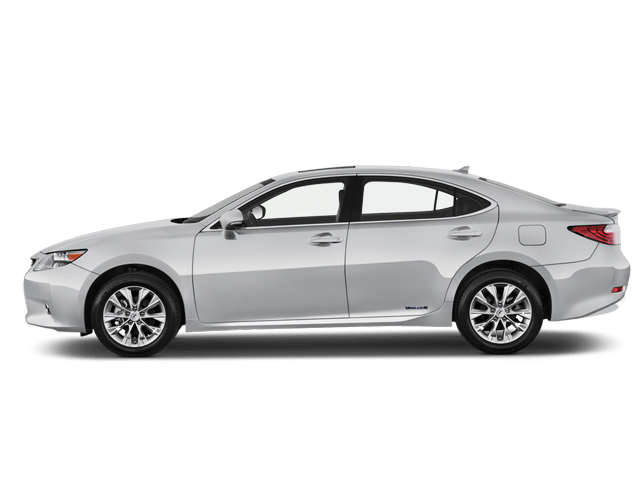
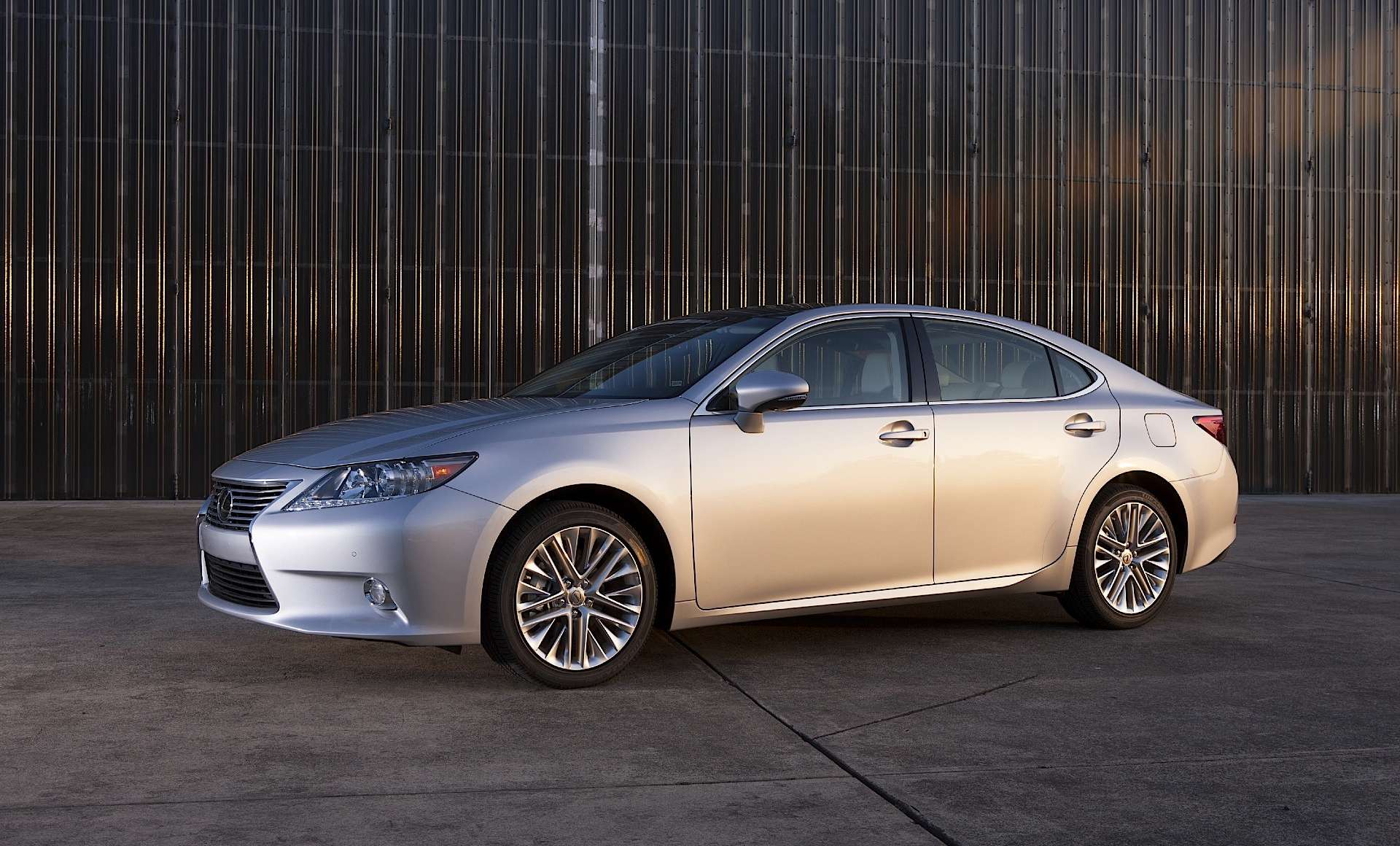
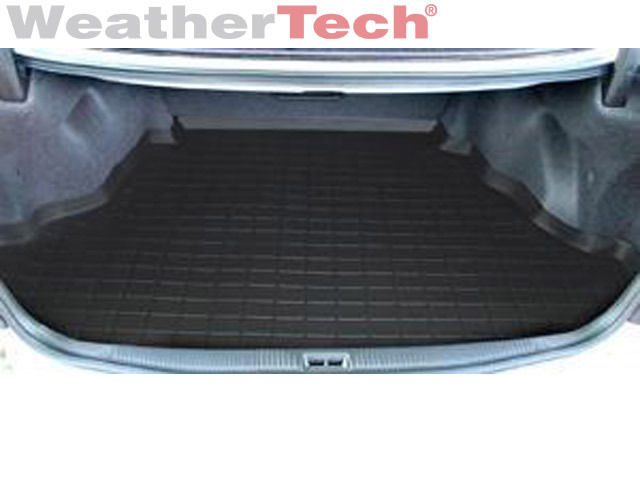
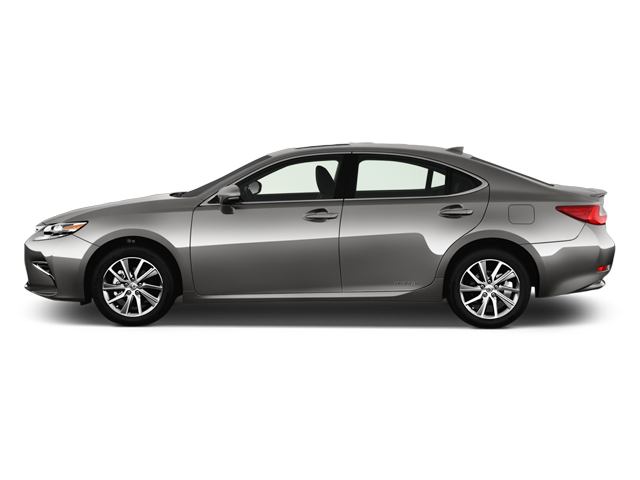
The 2014 Lexus ES 300h is a Front-wheel drive Sedan. It can accommodate up to 5 passengers. It has 4 Doors and is powered by a 2.5L L4 DOHC 16-valve + electric motor engine which outputs 200 hp @ 5700 rpm and is paired with Continously Variable transmission gearbox. The 2014 Lexus ES 300h has cargo capacity of 342 Liters and the vehicle weighs 1660 kg. In terms of ride assists, the 2014 Lexus ES 300h has stability control and traction control in addition to anti-lock brake system (ABS). The vehicle has an optional engine as well It offers Clearance and Backup Sensor and Rear view camera. Safety features also include Driver-side front airbag and Passenger-side front airbag. The front suspension is Independent front suspension while the rear suspension is Independent rear suspension. The car also features a Tire pressure monitoring systemwith Auto Location It has 17'' alloy wheels as standard. Electronic features include Cruise Control. For convenience, the car has Power windows and Power door locks. There is also a remote keyless entry feature. Moreover, the car has. The steering wheel has audio control buttons. In terms of performance, the car has 218 N.m of torque and a top speed of 215 km/h. The 2014 Lexus ES 300h accelerates from zero to 60 mph in 8.8 seconds and hits quarter mile at 16.4 seconds. Fuel consumption is 4.7 L/100km in the city and 5.1 L/100km in the highway. The car price starts at $ 44,100
| Name | 300h | |
|---|---|---|
| Price | $ 44,100 | |
| Body | Sedan | |
| Doors | 4 Doors | |
| Engine | 2.5L L4 DOHC 16-valve + electric motor | |
| Power | 200 hp @ 5700 rpm | |
| Number of Seats | 5 Seats | |
| Transmission | Continously Variable transmission | |
| Cargo Space | 342.0 L | |
| Maximum Cargo Space | 342.0 L | |
| Wheel Type | 17'' alloy wheels | |
| Series | ||
| Drivetrain | Front-wheel drive | |
| Horsepower | 200 HP | |
| Torque | 218 N.m | |
| Top Speed | 215 km/h | |
| Acceleration 0-100 km/h (0-60 mph) | 8.8 s | |
| Fuel Type | ||
| Fuel Consumption (City) | 4.7 L/100km | |
| Fuel Consumption (Highway) | 5.1 L/100km | |
| Gear Type | ||
| Weight | 1,660 KG | |
| Brand | Lexus | |
| Model | ES | |
| 0-400m (Quarter Mile) | 16.4 s | |
| 0-400m (Quarter Mile) - Speed | 140.3 km/h | |
| 0-800m (Half Mile) | 27.2 s | |
| 0-800m (Half Mile) - Speed | 157.9 km/h | |
| Modifications (MODS) | ||
| Modifications Cost | $ 0 |
2014 Lexus ES 350 0-100km/h and engine sound
2014 Lexus ES350 0-60 MPH
2014 Lexus ES250 acceleration
2014 Lexus ES Used Price Estimates
Estimates based on a driving average of 12,000 miles per year| Used Condition | Trade In Price | Private Party Price | Dealer Retail Price |
|---|---|---|---|
| Average | $ 700 | $ 1,300 | $ 1,060 |
The 2014 Lexus ES 350 delivers one of the most comfortable and quiet rides in the segment. Both the ES 350 and ES 300h are extremely quiet at highway speeds, so much so that it’s sometimes hard to hear the engine working. But punch the accelerator and the ES 350's 268-horsepower V6 emits a subtle growl no amount of insulation can shut out. Capable of sprinting to 60 mph in just 7.1 seconds, the ES is no slouch and delivers ample power for passing or merging. A selectable drive mode features a “sport” setting that changes the transmission’s shift patterns to deliver better acceleration. Oddly, this setting seems to work better in the hybrid model, perhaps due to the added torque provided by the electric assist motor. The transitions between the hybrid's electric motor and gasoline engine are very smooth, except when in “eco” mode, in which the throttle response feels muted and the powertrain nervous.
HYBRID POWERTRAINThe 2014 Lexus ES 300h hybrid is rated at 40 mpg combined, and from our experience that number is realistic.CREATURE COMFORTSThe Lexus ES has a host of options that can make it an oasis on wheels. Some of our favorites include the heated and ventilated front seats, heated steering wheel, and Mark Levinson audiophile sound system that pumps out 835 watts through 15 speakers.
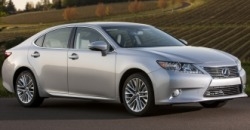
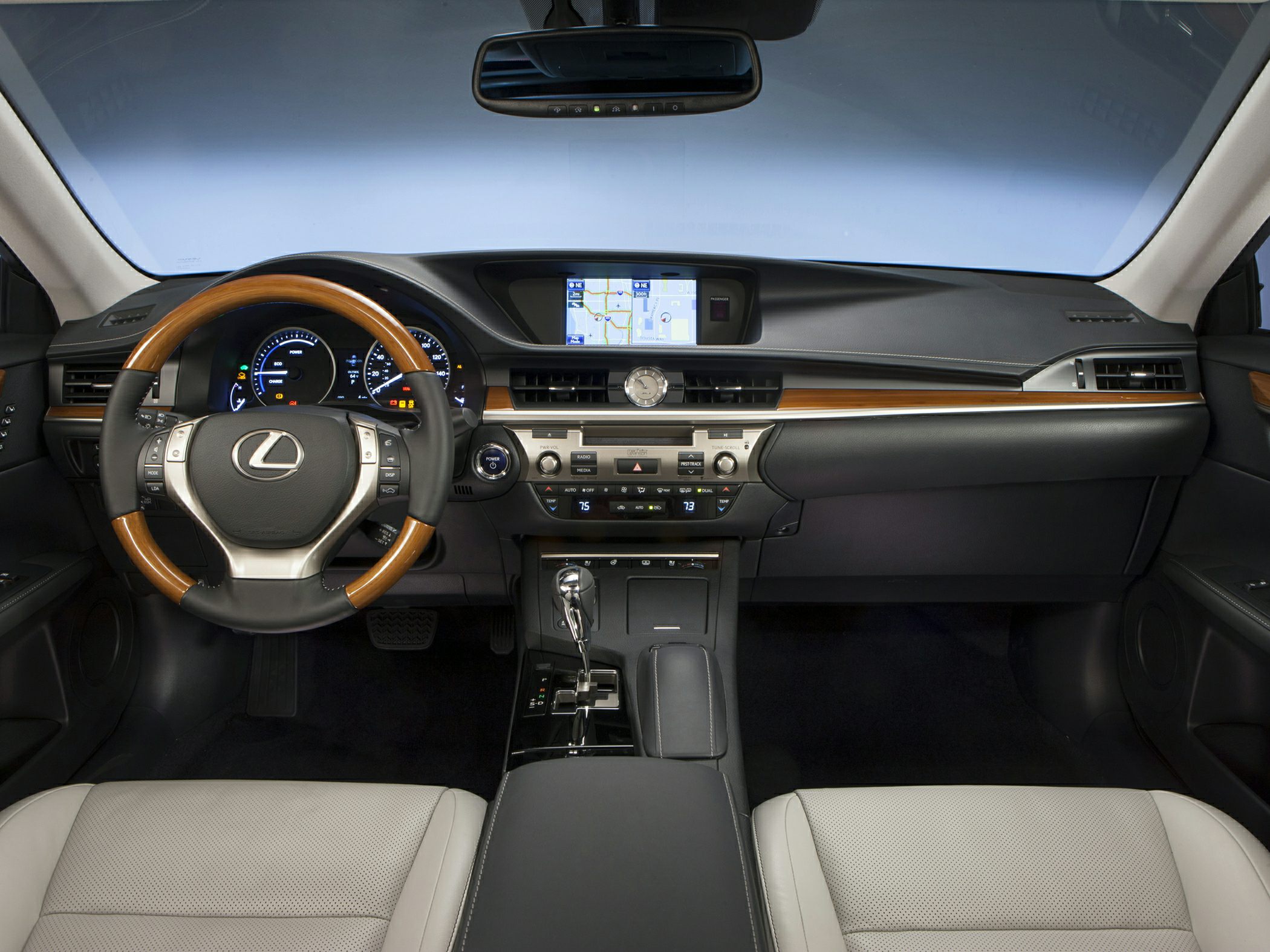
No Lexus is Spartan when it comes to interior amenities, and for 2014, the ES has upped the ante. The cabin’s design is sophisticate yet still logical and easy to figure out. The more contemporary design boasts clean lines and soft surfaces. All models employ a dial above the shift knob that can set the car to “normal,” “sport” or “eco” modes, and hybrid models have a button that allows the car to drive a short distance on battery power alone, similar to the Toyota Prius. The seats are comfortable for four adults thanks to a roomy back seat.
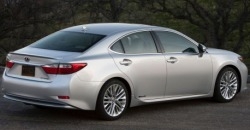
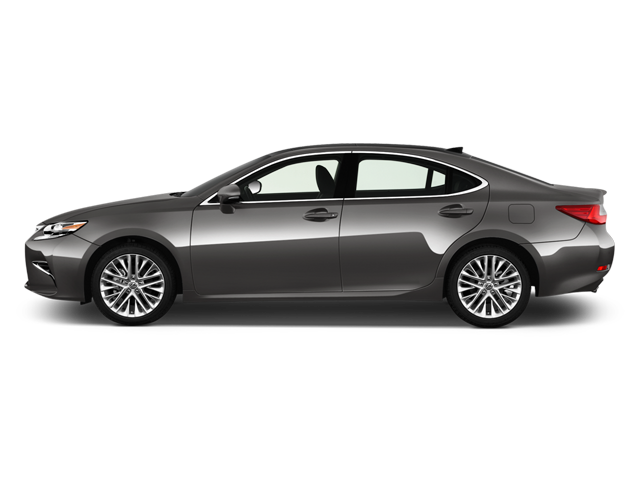
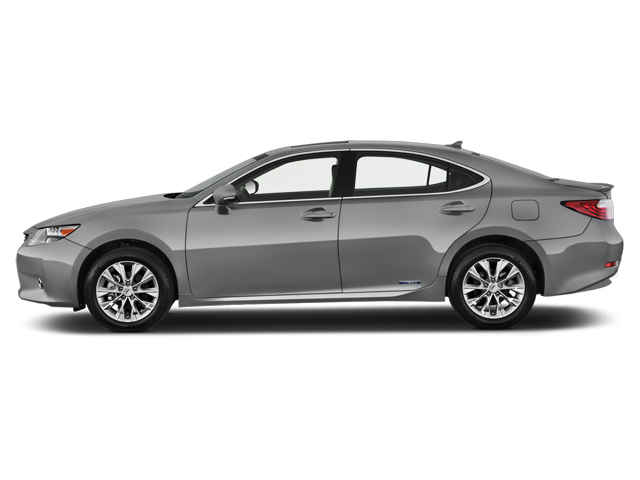
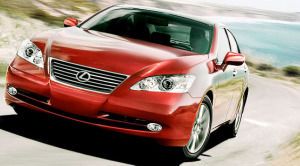
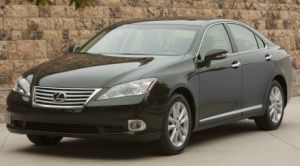
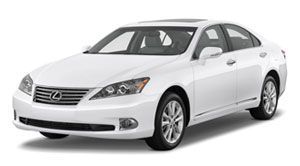
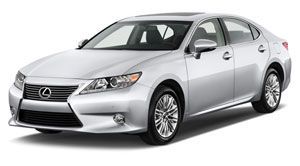
One look at the front of the 2014 Lexus ES is all it takes to know this is not the Lexus of old. Up front the ES shows of a dynamic spindle grille that is defining new Lexus models. On the sides, flared fenders and a high beltline give a slightly aggressive impression. Around back, the snubbed trunk flows smoothly from the C-pillars. The ES 350 has twin tailpipes peeking from beneath the bumper, while the ES 300h hybrid has just one that is hidden below a spoiler running under the bumper. The Lexus ES rides on low-resistance tires and 17-inch aluminum-alloy wheels, with larger wheels optional.
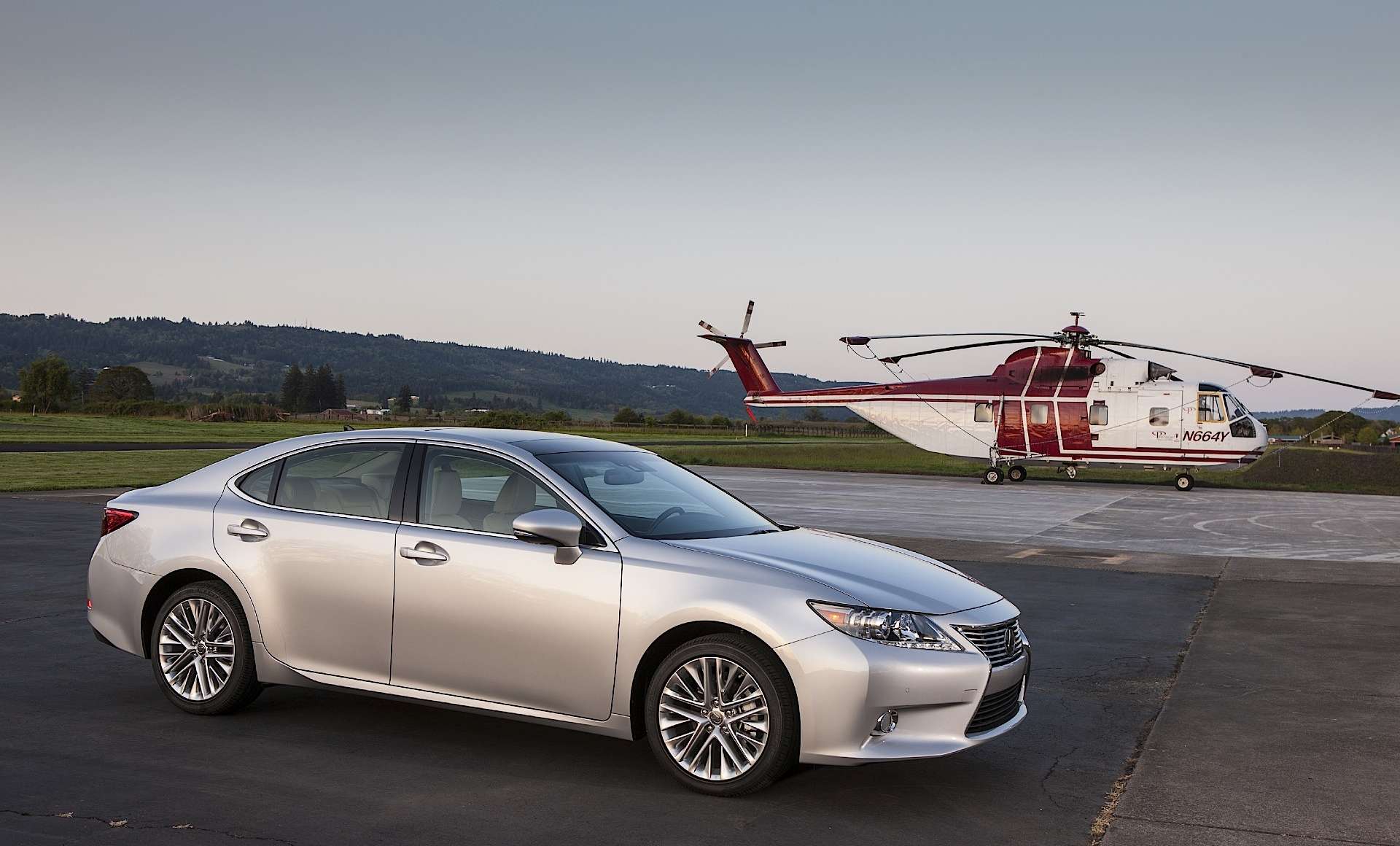
Even a base model of the 2014 Lexus ES comes well equipped with push-button start/stop, dual-zone automatic climate control with air filter and smog sensor, a moonroof, auto-dimming rear-view mirror, HomeLink garage door opener, and an 8-speaker AM/FM/6-CD/satellite radio audio system with USB and iPod inputs. Seats are now trimmed in Lexus’ NuLuxe material, with leather optional. On the safety front, the 2014 ES has 10 airbags, a backup monitor, and a service that offers emergency assistance at the touch of a button, and Lexus’ Automatic Collision Notification in the event of an accident.
The Lexus ES can go from good to grand via a handful of packages or by checking off the boxes on individual options. Among the amenities you can add are a navigation system, heated and ventilated seats, a panorama glass roof, a power rear sunshade, and a Mark Levinson premium sound system. Drive-centric options include lane-departure warning system, radar-based cruise control, parking assist, and blind-spot monitoring.

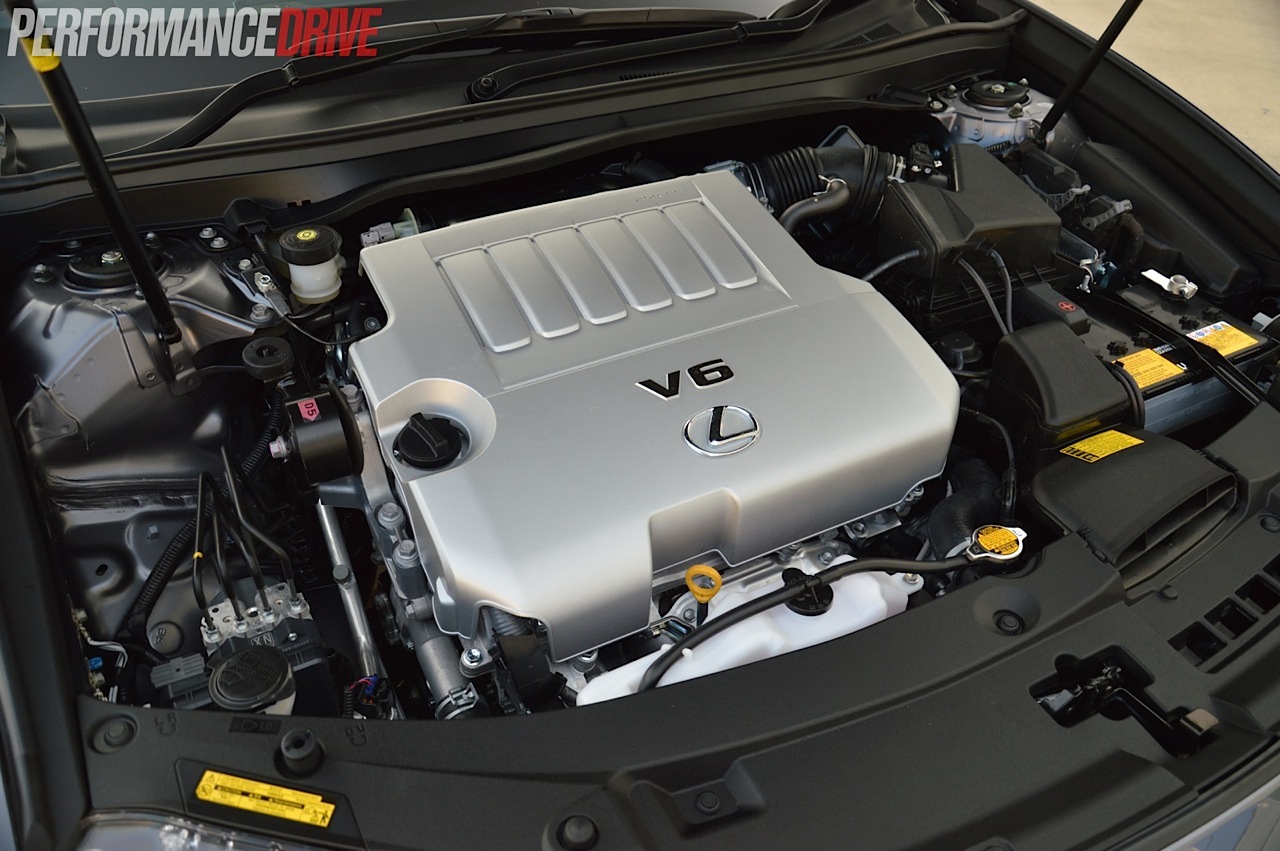
Lexus ES 350 models use a 3.5-liter V6 engine that makes an ample 268 horsepower and is connected to a 6-speed automatic transmission. Though this is the same engine and transmission as the last-generation ES, fuel economy has improved through the use of low-friction materials. ES 300h models use a hybrid powertrain consisting of a 2.5-liter 4-cylinder engine and battery-powered electric motor that creates a total of 200 horsepower. The hybrid model uses an automatic, continuously variable transmission (CVT). Both models can run on regular 87-octane gasoline.Lexus ES 3503.5-liter V6268 horsepower @ 6,200 rpm248 lb-ft of torque @ 4,700 rpmEPA city/highway fuel economy: 21/31 mpgLexus ES 300h2.5-liter inline-4 + hybrid electric motor and nickel metal hydride battery module156 horsepower @ 5,700 rpm (gasoline engine alone)Total system horsepower: 200156 lb-ft of torque @ 4,500 rpm (gasoline engine)EPA fuel city/highway fuel economy: 40/39 mpg
The base manufacturer’s suggested retail price (MSRP) for a 2014 Lexus ES 350 starts just under $ 37,500, including destination charge. The MSRP on a 2014 Lexus 300h hybrid is just a shade over the 40,000 mark. At these prices, the Lexus ES is comparable to the Acura TL and Cadillac CTS, higher than the Buick LaCrosse, and below the BMW 5 Series, Audi A6 and Infiniti Q60. Be sure to check the Fair Purchase Price to see what buyers are actually paying for the 2014 Lexus ES in your area. Down the road, resale value of the Lexus ES is expected to remain strong.
2014 Lexus ES 300h Exterior Colors
2014 Lexus ES 300h Interior Colors
2014 Lexus ES Engines
| Engine | Standard in Trim | Power | Torque | Fuel Consumption - City | Fuel Consumption - Highway | 0-100 km/h | Quarter Mile | Half Mile |
|---|
2014 Lexus ES Trims
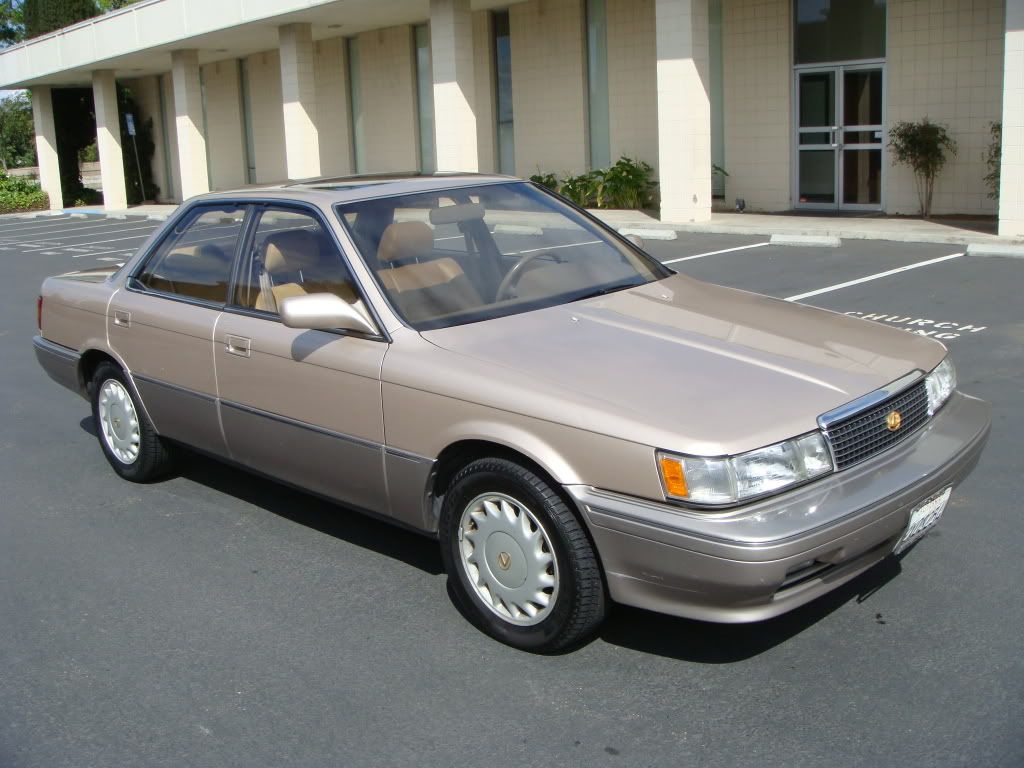
2014 Lexus ES Previous Generations
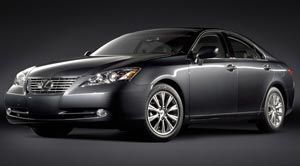
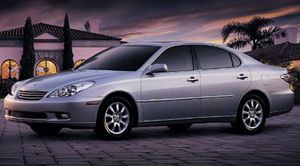
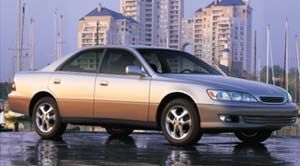
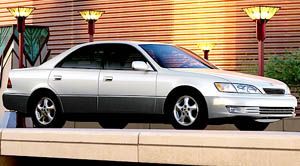
2014 Lexus ES Future Generations

Lexus ES Overview and History
Such a meeting was held in 1983 between Toyota chairman Eiji Toyoda and his company executives. Toyoda had not invited his enforcers over for cookies and tea but to question them about the possibility of developing a luxury-car line that could successfully compete with American brands. The project was labeled as F1 -Flahship 1- and proved to be a most lucrative endeavor. The result was a vehicle that later became known as the Lexus LS 400 prior to its US premier.
The LS 400 was not just a car that took time and resources to built. In researching American luxury-product consumer habits and lifestyles, the Japanese went as far as renting a house in Laguna beach in order to observe their “subjects” closely. Offspring of long-gestating consumer research and cutting-edge engineering, the LX 400 was a hit.
Endorsed by insightful advertising, the LS 400 made its entrance at the North American Auto Show in Detroit, 1989 where it was one of the main attractions. And how could it not have been after 24 engineering teams and a few thousands employees worked on 450 prototypes at the cost of a paltry $ 1 billion investment?
The main advantage Lexus had over Acura, that had reached US markets 3 years before, was its uniqueness. Unlike the first Acura models which were sold as rebadged Hondas, the Lexus held little connections to Toyota design patterns.
Silent, ergonomic, powerful and reliable, the LS became a fierce competitor for European imports such as Mercedes Benz and BMW, whose sales drastically dropped following Lexus' trumpeting market entrance.
Models like the ES 250 followed which along the LS registered enough sales to allow the brand expanding through an 81-dealership network. During those first years of sales, Lexus became the top-selling luxury car in the U.S. Things were going smoothly for the Japanese manufacturer, just like its cars, and in 1991, two new models were released: the SC400 coupe and the ES 300 sedan. The latter was marketed as a replacement for the ES 250 and quickly became the company's best selling sedan.
Following the release of a heir to the LS 400 and the Toyota Aristo-based series of the GS, Lexus entered the sport utility vehicle segment in 1996 with the launch of the LX 450, a large car based on the Toyota Land Cruiser 100. By 1998, Lexus would release the RX, a top-selling crossover based on Toyota's Camry model as well as a new series of the GS. During the following years, further technological improvements such as the introduction of the Lexus Hybrid Drive system on the 2005 RX 400h, resulted in an even greater sales increase.
Things were so good for Lexus that it has constantly grown since its inception. The brand has been introduced to the Japanese home-market in 2005 as well as it has in other regions of Asia and South America as well as Australia and Europe. By 2007, Lexus had spread in over 50 countries and it continues to grow. The company's “pursuit of perfection” is fronted by its current line-up, comprised of the IS, LS and RX series among others as well as the avant-garde LF-A concepts.
2014 Lexus ES Consumer Reviews
Compare Against Competitors

2014 Lexus ES 300h Specifications
300h Comfort and Convenience
| AM/FM stereo radio | Yes |
|---|---|
| Air Conditionning | Dual zone auto climate control |
| Audio Display Audio | Lexus 7'' Display Audio screen with Controller |
| Audio Display Audio (Option) | Display Audio Controller with 7'' Display Screen |
| Audio Monitor (Option) | 8'' display screen |
| Bluetooth Wireless Technology | Yes |
| Cargo Net | Yes |
| Cruise Control (Option) | Dynamic radar cruise control |
| DVD Audio Capability (Option) | Single In-Dash DVD |
| Driver Vanity Mirror | Driver-side vanity mirror |
| Front Wipers | Variable intermittent windshield wipers |
| Front Wipers (Option) | Rain sensing wipers |
| Garage Door Opener | Garage door opener |
| Heated Steering Wheel (Option) | Heated Wood steering wheel |
| Illuminated Entry (Option) | Premium illuminated entry system |
| Intelligent Key System | Smart key system |
| Interior Air Filter | Dust, pollen and deodorizing air filter |
| MP3 Capability | MP3/WMA compatibility |
| Multi-CD Changer (Option) | Remove 6-Disc CD Changer |
| Navigation System (Option) | Yes |
| Number of Speakers | 8 speakers |
| Number of Speakers (Option) | 15 Speakers |
| Passenger Vanity Mirror | Front passenger-side vanity mirror |
| Power Door Locks | Power locks |
| Power Outlet | 12-volt power outlet |
| Power Windows | Power windows with auto up/down for all windows |
| Premium Sound System | Lexus Premium audio system |
| Premium Sound System (Option) | Mark Levinson audio system with 8'' display screen |
| Rear Side Sunscreens | Rear side window auto sunshade |
| Rear Side Sunscreens (Option) | Rear door sunshades |
| Rear Sunscreen (Option) | Power rear window sunshade |
| Rear View Mirror | Electrochromic Rear View Mirror |
| Rear View Mirror (Option) | Delete Compass in Rear View Mirror |
| Remote Keyless Entry | Yes |
| Single CD | CD player |
| Single CD (Option) | Compact Disc |
| Steering Wheel Adjustment | Power tilt and telescopic steering wheel |
| Trunk/Hatch Operation | Power assisted trunk closer |
| Trunk Cargo Power Trunk Tailgate (Option) | Automatic Powered Opening Trunk and Easy Close Trunk |
300h Dimensions
| Cargo Capacity | 342 L |
|---|---|
| Curb Weight | 1660 kg |
| Front Headroom | 953 mm |
| Front Legroom | 1065 mm |
| Fuel Tank Capacity | 65 L |
| Gross Vehicle Weight | 2150 kg |
| Height | 1450 mm |
| Length | 4895 mm |
| Rear Headroom | 953 mm |
| Rear Legroom | 1015 mm |
| Wheelbase | 2820 mm |
| Width | 1820 mm |
300h Exterior Details
| Automatic Headlights (Option) | Automatic High Beam Feature |
|---|---|
| Driving Lights | LED Daytime running lights |
| Front Fog Lights | Fog lights |
| Headlight Type | Halogen headlamps |
| Headlight Type (Option) | High intensity discharge headlights (HID) |
| Headlights Leveling Headlights (Option) | Auto levelling headlamps |
| Power Exterior Mirrors | Power mirrors |
| Rear Spoiler | Rear Lip Spoiler |
| Sunroof | Power glass sunroof |
300h Interior Details
| Clock | Yes |
|---|---|
| Compass | Digital compass |
| Compass (Option) | Compass in Navigation Display |
| Driver Info Center | Multi Information Display with Eco Drive Monitor |
| Front Seats Climate | Ventilated Front Seats |
| Front Seats Climate (Option) | Ventilated front Seats |
| Front Seats Driver Power Seats | 10 way power driver seat |
| Front Seats Driver Power Seats (Option) | Driver Variable Cushion Length (Power) |
| Front Seats Driver Seat Memory (Option) | Driver's seat position memory |
| Front Seats Front Seat Back Storage | Front seat back map pockets |
| Front Seats Heated | Heated front seats |
| Front Seats Heated (Option) | Heated front seats |
| Front Seats Passenger Power Seats | 10 way power front passenger seat |
| Front Seats Passenger Seat Memory (Option) | Passenger seat position memory |
| Instrumentation Type (Option) | Remote Touch Interface |
| Luxury Dashboard Trim | Woodgrain interior trim |
| Luxury Dashboard Trim (Option) | Woodgrain interior trim |
| Number of Cup Holders | Front and rear cupholders |
| Seat Trim | NuLuxe synthetic leather seats |
| Seat Trim (Option) | Leather seats |
| Steering Wheel Trim | Leather-wrapped steering wheel |
300h Mechanical
| Drive Train | Front-wheel drive |
|---|---|
| Engine Name | 2.5L L4 DOHC 16-valve + electric motor |
| Stability Control | Yes |
| Start button | Yes |
| Traction Control | Yes |
| Transmission | Continously Variable transmission |
300h Overview
| Body | Sedan |
|---|---|
| Doors | 4 |
| Engine | 2.5L L4 DOHC 16-valve + electric motor |
| Fuel Consumption | 4.7 (Automatic City)5.1 (Automatic Highway) |
| Power | 200 hp @ 5700 rpm |
| Seats | 5 |
| Transmission | Continously Variable transmission |
| Warranties | Bumper-to-Bumper80000/km, 48/Months Emissions130000/km, 96/Months Powertrain110000/km, 72/Months Roadside Assistance80000/km, 48/Months Rust-throughUnlimited/km, 72/Months |
300h Safety
| Anti-Lock Brakes | 4-wheel ABS |
|---|---|
| Blind Spot Warning | Yes |
| Brake Assist | Brake assist |
| Brake Type | 4-wheel disc |
| Driver Airbag | Driver-side front airbag |
| Driver Assistance | Rear Cross Traffic Alert |
| Electronic brake force distribution | Electronic brake force distrbution and Electronically Controlled Brake System |
| Forward collision warning | Yes |
| Ignition Disable | Engine immobilizer |
| Knee Airbags | Driver and front passenger knee airbags |
| Lane Departure System | Lane-departure warning system |
| Parking Distance Sensor | Clearance and Backup Sensor |
| Passenger Airbag | Passenger-side front airbag |
| Rear Airbag | Rear seat side airbags |
| Rear Side Airbags | Rear Seat Side Airbags |
| Rear View Camera | Rear view camera |
| Roof Side Curtain | Front and rear side head curtain airbags |
| Side Airbag | Seat mounted side airbags |
300h Suspension and Steering
| Front Anti-Roll Bar | Front stabilizer bar |
|---|---|
| Front Suspension | Independent front suspension |
| Front Tires | P215/55R17 |
| Power Steering | Electric Power Steering |
| Rear Anti-Roll Bar | Rear stabilizer bar |
| Rear Suspension | Independent rear suspension |
| Tire Pressure Monitoring System | Tire pressure monitoring systemwith Auto Location |
| Turning Circle | 11.4-meter turning circle diameter |
| Wheel Type | 17'' alloy wheels |
Discussion and Comments
Share Your Comments