1996 GMC Safari 4wd SLX 0-60 Times, Top Speed, Specs, Quarter Mile, and Wallpapers
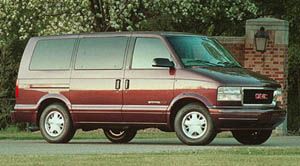
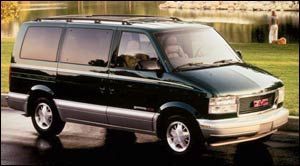
The 1996 GMC Safari 4wd SLX is a All-wheel drive MiniVan. It can accommodate up to 8 passengers. It has 4 Doors and is powered by a 4.3L V6 OHV 12 valves engine which outputs 190 hp @ 4400 rpm and is paired with 4 speed automatic gearbox. The 1996 GMC Safari 4wd SLX has cargo capacity of 4825 Liters and the vehicle weighs 1955 kg. In terms of ride assists, the 1996 GMC Safari 4wd SLX has stability control and traction control in addition to anti-lock brake system (ABS). The vehicle has an optional engine as well It offers and. Safety features also include None and None. The front suspension is while the rear suspension is. The car also features a It has as standard. Electronic features include Cruise Control. For convenience, the car has Power windows and Power door locks. There is also a remote keyless entry feature. Moreover, the car has. The steering wheel has audio control buttons. In terms of performance, the car has 207 N.m of torque and a top speed of 211 km/h. The 1996 GMC Safari 4wd SLX accelerates from zero to 60 mph in 9.7 seconds and hits quarter mile at 15.6 seconds. Fuel consumption is 15.3 L/100km in the city and 11.3 L/100km in the highway. The car price starts at $ 27,835
| Name | SLX | |
|---|---|---|
| Price | $ 27,835 | |
| Body | MiniVan | |
| Doors | 4 Doors | |
| Engine | 4.3L V6 OHV 12 valves | |
| Power | 190 hp @ 4400 rpm | |
| Number of Seats | 8 Seats | |
| Transmission | 4 speed automatic | |
| Cargo Space | 4,825.0 L | |
| Maximum Cargo Space | 4,825.0 L | |
| Wheel Type | ||
| Series | ||
| Drivetrain | All-wheel drive | |
| Horsepower | 190 HP | |
| Torque | 207 N.m | |
| Top Speed | 211 km/h | |
| Acceleration 0-100 km/h (0-60 mph) | 9.7 s | |
| Fuel Type | ||
| Fuel Consumption (City) | 15.3 L/100km | |
| Fuel Consumption (Highway) | 11.3 L/100km | |
| Gear Type | auto | |
| Weight | 1,955 KG | |
| Brand | GMC | |
| Model | Safari | |
| 0-400m (Quarter Mile) | 15.6 s | |
| 0-400m (Quarter Mile) - Speed | 130.7 km/h | |
| 0-800m (Half Mile) | 29.2 s | |
| 0-800m (Half Mile) - Speed | 147.0 km/h | |
| Modifications (MODS) | ||
| Modifications Cost | $ 0 |
1996 GMC Safari Used Price Estimates
Estimates based on a driving average of 12,000 miles per year| Used Condition | Trade In Price | Private Party Price | Dealer Retail Price |
|---|---|---|---|
| Outstanding | $ 738 | $ 1,457 | $ 1,817 |
| Clean | $ 672 | $ 1,327 | $ 1,662 |
| Average | $ 541 | $ 1,069 | $ 1,353 |
| Rough | $ 410 | $ 810 | $ 1,044 |
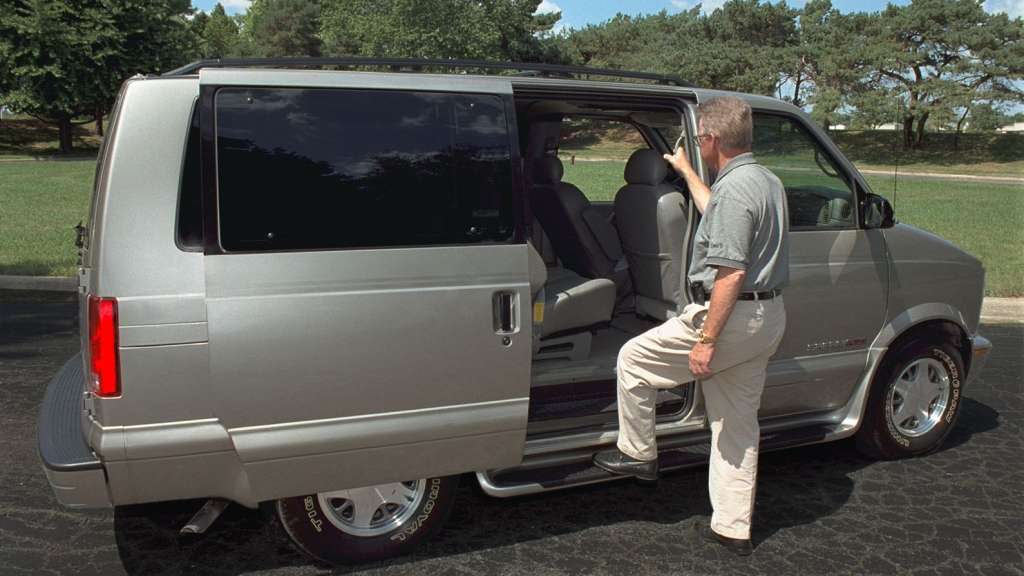
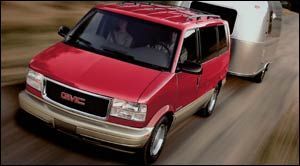
Choosing between an Astro and a Safari is more a matter of image than necessity. Do you want to see Chevrolet's badge every time you approach? Or would it be viscerally satisfying to face those bold "GMC" block letters, with their implication of long-haul trucking--or even rough living. Climbing aboard either one demands a high step upward, enhancing the impression of entering a truck, not a car.
Tangible differences between the two are modest--a fact that's true of most Chevrolet and GMC cousins. Once you've decided that a rear-drive (or all-wheel-drive) General Motors midsize van is the rational choice, you'll likely be satisfied with either one.
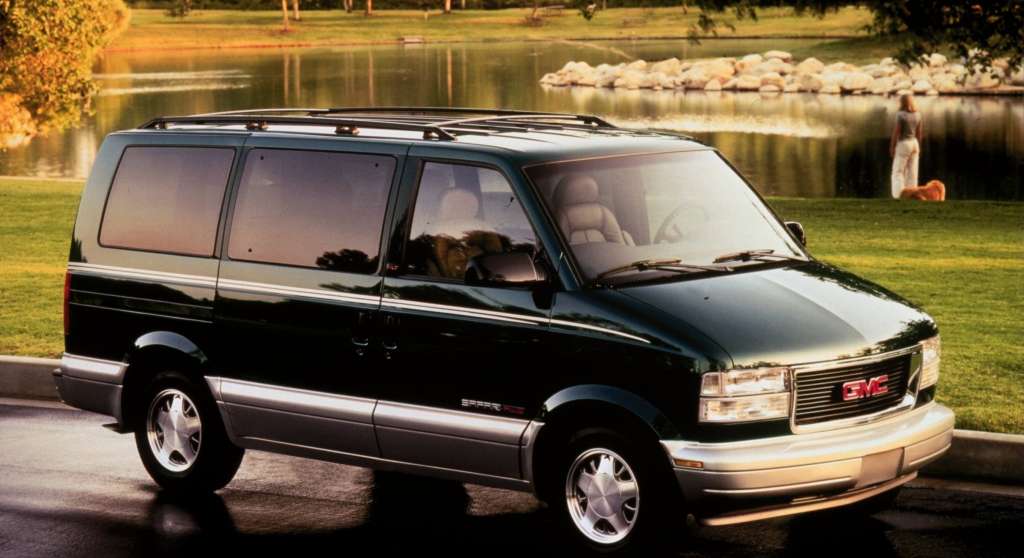
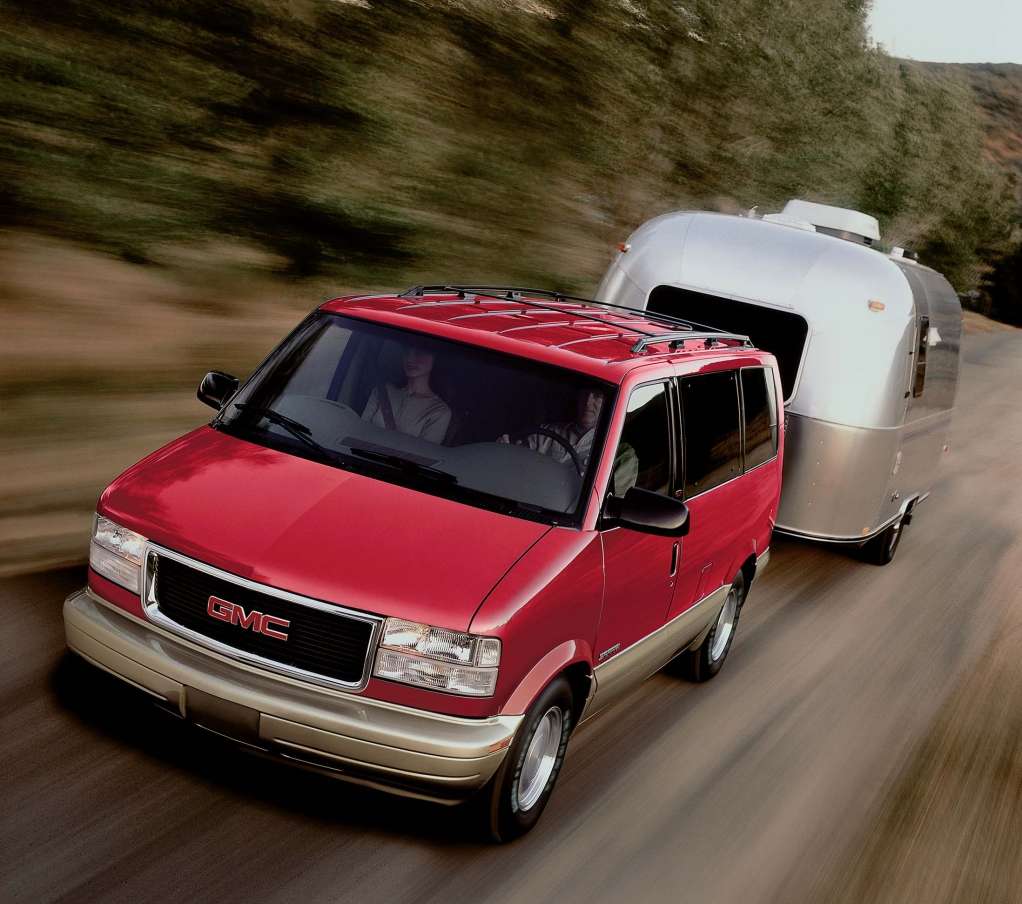
Because of their traditional-type full-frame construction and rear-drive layout, Safaris (and Astros) are most adept at heavy hauling and burly trailer-towing. Not everyone will relish the truck-like ride over harsh surfaces, but it's not bad at all when the highway smoothes out. Don't expect top-notch fuel mileage, though.
Front ends earned a facelift last year. This year, the interior is all-new. Dual airbags are housed in an artfully styled dashboard complete with analog gauges and improved switchgear. Integrated child safety seats are available for the center bench seat, and the sliding door gets a child safety lock. Rear seat heat ducts direct warm air to freezing rear passengers, improved storage compartments, and new audio systems make the Safari far more livable, and modern, than before.
One slick feature sure to be appreciated by the parents of teenagers is the middle radio option. The driver and front passenger can listen to Casey Kasem up front, or nothing at all, while Junior blasts the local alternative music station into his eardrums via a set of headphone jacks that plugs into a separate radio unit in the center row. This option alone is worth the savings in family therapy, don't you think?
GM's improved 4300 Vortec V6 is now standard, sending 190 horsepower to an electronically controlled four-speed automatic transmission. Long-life engine coolant and 100,000-mile spark plugs are new this year.
Safaris come in three trim levels. The FE2 touring suspension option has stiffer shocks, a rear stabilizer bar, and grabby Goodyear rubber for a firmer, controlled ride. Eight-passenger seating is now standard in Safaris with SLE or SLT trim, and available in the base (SLX) rendition. Whether rear-drive or running full-time all-wheel drive, Safaris serve the muscular tasks that a front-drive minivan just cannot handle--yet convey a family in a fashion that won't produce pangs of pain.
1996 GMC Safari 4wd SLX Exterior Colors
1996 GMC Safari 4wd SLX Interior Colors
1996 GMC Safari Engines
| Engine | Standard in Trim | Power | Torque | Fuel Consumption - City | Fuel Consumption - Highway | 0-100 km/h | Quarter Mile | Half Mile |
|---|
1996 GMC Safari Trims
1996 GMC Safari Previous Generations
1996 GMC Safari Future Generations

GMC Safari Overview and History
Despite its fortunate premature involvement in truck development, Gabrowski's establishment would not survive on its own. GM, whose popularity was soaring thanks to Business-whiz Durant bought the company in 1909 setting the base for the General Motors Truck Company that later turned into GMC.
GM's buy-out-smaller-companies skills allowed he giant to encompass another manufacturer the same year, this time the “Reliance Motor Car Company”. The latter was regarded as the missing ingredient and was quickly merged with “Rapid” to form “GMC Truck” in 1911. One year later, Gm would boast its new brand at the New York International Auto Show.
Having garnered the attention needed to start production, GM focused on truck building, having made about 20,000 trucks in 1912. GMC's involvement was barely noticeable with only 372 self-units.
Although GMC was timidly developing within GM boundaries, it did have spark attention through a series of country cross-overs. In 1916, a GMC truck covered the distance form Seattle to New York on a thirty-day long drive while 14 years later, a second GMC truck made it from NY to San Francisco in 5 days and 30 minutes.
As WWI came to end, GMC would begin a new chapter in the automotive industry. The war had thrown back many companies, allowing survivors such as the large GM to scavenge for prey. In 1925, a Chocago, Illinois based bus manufacturer called Yellow Coach was partially absorbed into General Motors. BY 1943, GM had gained full ownership of Yellow Coach and transformed it into the GM Truck and Coach Division. GMC has also involved in the production of urban and transit buses throughout the 70's and 80's after which production was stopped as a result of being outrun by competition.
Resuming their regular truck-making activity, GMC joined the row of suppliers for the US Army during WWII, having built 600,000 trucks throughout the conflict. Post war times found GMC experimenting with utility vehicles such as Fire trucks and ambulances as well as heavy duty trucks. Despite the reputation GMC had earned, extensions in other market segments did not meet expectations and were dropped. SUV, pick up and light truck production was re-emphasized and has remained unchanged ever since.
GMC has held on its older designs like sister-competitor Chevrolet has, until recently when the company brushed the dust off its shoulders through the introduction of Acadia, a curvier model highlighting the segregation between GMC and Chevrolet designs. Presently, GMC is enjoying a greater popularity and sales in Canada rather then US where Chevy trucks still hold a grip on the first place.
1996 GMC Safari Consumer Reviews
Compare Against Competitors
1996 GMC Safari 4wd SLX Specifications
SLX Dimensions
| Cargo Capacity | 4825 L |
|---|---|
| Curb Weight | 1955 kg |
| Fuel Tank Capacity | 102 L |
| Gross Vehicle Weight | 2767 kg |
| Height | 1935 mm |
| Length | 4821 mm |
| Max Trailer Weight | 2268 kg |
| Wheelbase | 2819 mm |
| Width | 1968 mm |
SLX Mechanical
| Drive Train | All-wheel drive |
|---|---|
| Engine Name | 4.3L V6 OHV 12 valves |
| Transmission | 4 speed automatic |
SLX Overview
| Body | MiniVan |
|---|---|
| Doors | 4 |
| Engine | 4.3L V6 OHV 12 valves |
| Fuel Consumption | 15.3 (Automatic City)11.3 (Automatic Highway) |
| Power | 190 hp @ 4400 rpm |
| Seats | 8 |
| Transmission | 4 speed automatic |
| Warranties | Bumper-to-Bumper60000/km, 36/Months Powertrain60000/km, 36/Months Roadside Assistance60000/km, 36/Months Rust-through160000/km, 72/Months |
SLX Safety
| Anti-Lock Brakes | Std |
|---|---|
| Brake Type | Front disc/rear drum |
| Driver Airbag | None |
| Passenger Airbag | None |
SLX Suspension and Steering
| Front Tires | P215/75R15 |
|---|
Discussion and Comments
Share Your Comments