2001 Dodge Durango Sport 4X4 0-60 Times, Top Speed, Specs, Quarter Mile, and Wallpapers

The 2001 Dodge Durango Sport 4X4 is a 4-wheel drive Sport Utility. It can accommodate up to 5 passengers. It has 4 Doors and is powered by a 4.7 L V8 SOHC MAGNUM engine which outputs 235 hp @ 4800 rpm and is paired with 4 speed automatic gearbox. The 2001 Dodge Durango Sport 4X4 has cargo capacity of 532 Liters and the vehicle weighs 2086 kg. In terms of ride assists, the 2001 Dodge Durango Sport 4X4 has stability control and traction control in addition to anti-lock brake system (ABS). The vehicle has an optional engine as well It offers and. Safety features also include None and None. The front suspension is while the rear suspension is. The car also features a It has as standard. Electronic features include Cruise Control. For convenience, the car has Power windows and Power door locks. There is also a remote keyless entry feature. Moreover, the car has. The steering wheel has audio control buttons. In terms of performance, the car has 257 N.m of torque and a top speed of 227 km/h. The 2001 Dodge Durango Sport 4X4 accelerates from zero to 60 mph in 8.7 seconds and hits quarter mile at 14.9 seconds. Fuel consumption is 17.4 L/100km in the city and 12 L/100km in the highway. The car price starts at $ 38,410
| Name | Sport 4X4 | |
|---|---|---|
| Price | $ 38,410 | |
| Body | Sport Utility | |
| Doors | 4 Doors | |
| Engine | 4.7 L V8 SOHC MAGNUM | |
| Power | 235 hp @ 4800 rpm | |
| Number of Seats | 5 Seats | |
| Transmission | 4 speed automatic | |
| Cargo Space | 532.0 L | |
| Maximum Cargo Space | 532.0 L | |
| Wheel Type | ||
| Series | Durango | |
| Drivetrain | 4-wheel drive | |
| Horsepower | 235 HP | |
| Torque | 257 N.m | |
| Top Speed | 227 km/h | |
| Acceleration 0-100 km/h (0-60 mph) | 8.7 s | |
| Fuel Type | Petrol (Gasoline) | |
| Fuel Consumption (City) | 17.4 L/100km | |
| Fuel Consumption (Highway) | 12.0 L/100km | |
| Gear Type | auto | |
| Weight | 2,086 KG | |
| Brand | Dodge | |
| Model | Durango | |
| 0-400m (Quarter Mile) | 14.9 s | |
| 0-400m (Quarter Mile) - Speed | 137.3 km/h | |
| 0-800m (Half Mile) | 27.8 s | |
| 0-800m (Half Mile) - Speed | 154.4 km/h | |
| Modifications (MODS) | ||
| Modifications Cost | $ 0 |
2001 dodge durango 0-60
2001 Dodge Durango Used Price Estimates
Estimates based on a driving average of 12,000 miles per year| Used Condition | Trade In Price | Private Party Price | Dealer Retail Price |
|---|---|---|---|
| Outstanding | $ 1,013 | $ 1,535 | $ 1,802 |
| Clean | $ 913 | $ 1,384 | $ 1,628 |
| Average | $ 714 | $ 1,081 | $ 1,280 |
| Rough | $ 514 | $ 778 | $ 931 |
A serious SUV, down to its stout towing ability, generous cargo room, unyielding ride and abysmal fuel economy.
The Durango is Dodge's fierce competitor in the sport-utility market. Eighty percent of its parts are shared with the Dakota, including the platform, but the Durango's frame is actually three times stiffer than the pickup's. Unfortunately, the rough ride doesn't let you forget its truck origins. It's somewhat bouncy, and you'll be aware of the added stiffness, yet it's not miserable enough to hamper the Durango's cushy-cruiser status. The Durango may be compact on the outside, but once inside you'll be shocked by the roominess. With a 7,600-pound towing capacity and 88 cubic feet of maximum cargo space, it's an SUV that can be stuffed to the gills with family and friends, and still have the ability to haul your watercraft or other form of weekend fun. However, you'll have to make a choice - eight people, or useable interior cargo space, because you can't have the best of both worlds when there's a full house. Thankfully, a standard roof rack further expands your cargo carrying options. If you are taking advantage of the third row, you'll appreciate the ease of the fold-and-tumble forward second-row seating and the improved-for-2001 climate control system with separate second and third-row air conditioning outlets. Legroom is notable throughout, but larger folk may want to avoid the third row for anything other than short jaunts. Headroom shouldn't be an issue, thanks to the raised roofline.
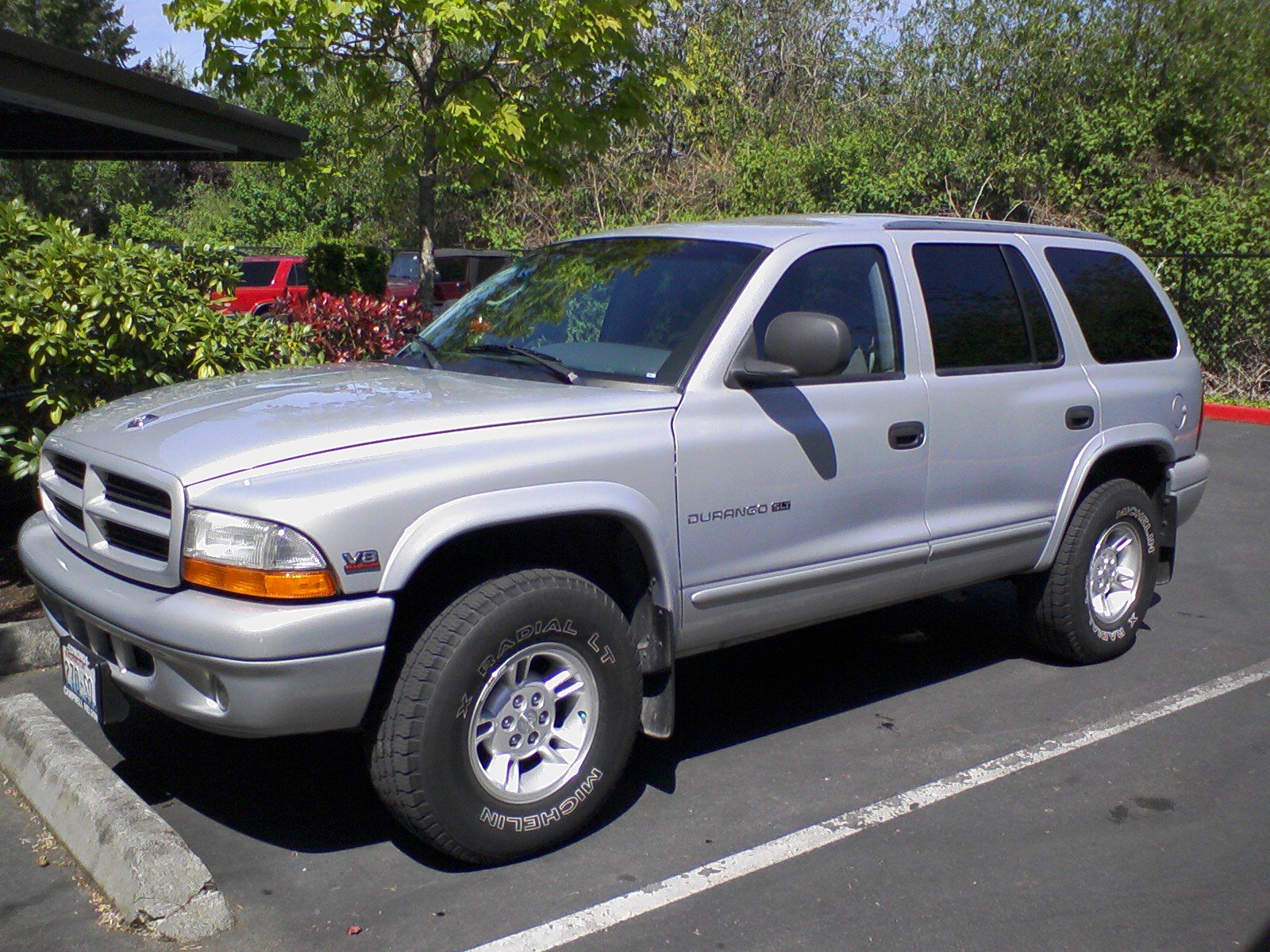
The interior underwent a major revamp for 2001. A new instrument panel, a Homelink transmitter (available in Overhead Convenience Group), a redesigned floor console and new seat patterns give the Durango's cabin a thoroughly modern look. Also new this year are power lumbar supports, a power passenger seat, heated leather seats with two-level temperature control, and three new colors -- Sandstone, Dark Slate Grey, and Taupe. The improved climate control system offers dual-zone front temperature controls and has a greater heating/cooling capacity.
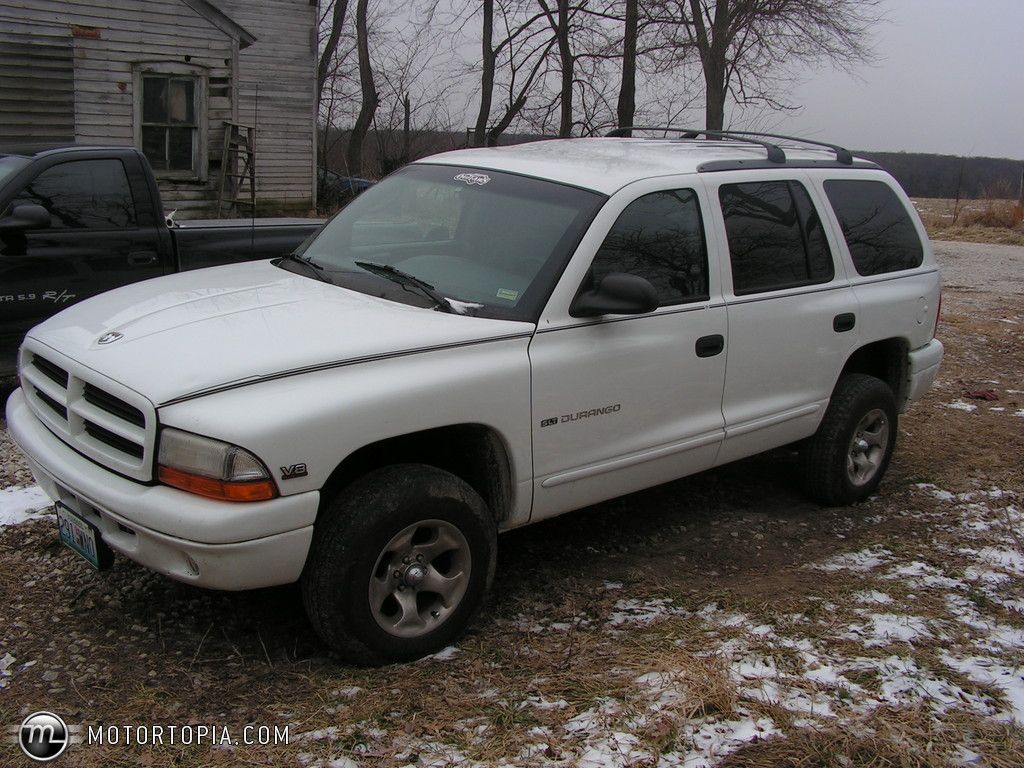
Durangos come in either 4x2 or 4x4 configurations. Both versions come standard with the modern 4.7-liter Magnum V8, a sprightly engine, requiring less-frequent fill-ups than with the optional 5.9-liter eight-pot, though the best choice for towing is the optional V8. Performance aficionados will want to consider the Durango R/T with its 5.9-liter engine, shorter rear axle ratio, 17-inch wheels, sport-tuned exhaust, and stiffer suspension as an alternative to mundane minivans.

Off-road, Durango is a capable, if somewhat oversized, wilderness runner, able to tackle a wide range of obstacles. The Durango also shines as a grocery-getter and soccer-team hauler. Steering is commendably responsive and overall build quality is up to par for this vehicle segment, though we'd like to see higher-grade interior materials used in certain areas. Emphasis for this vehicle is on utility and style.
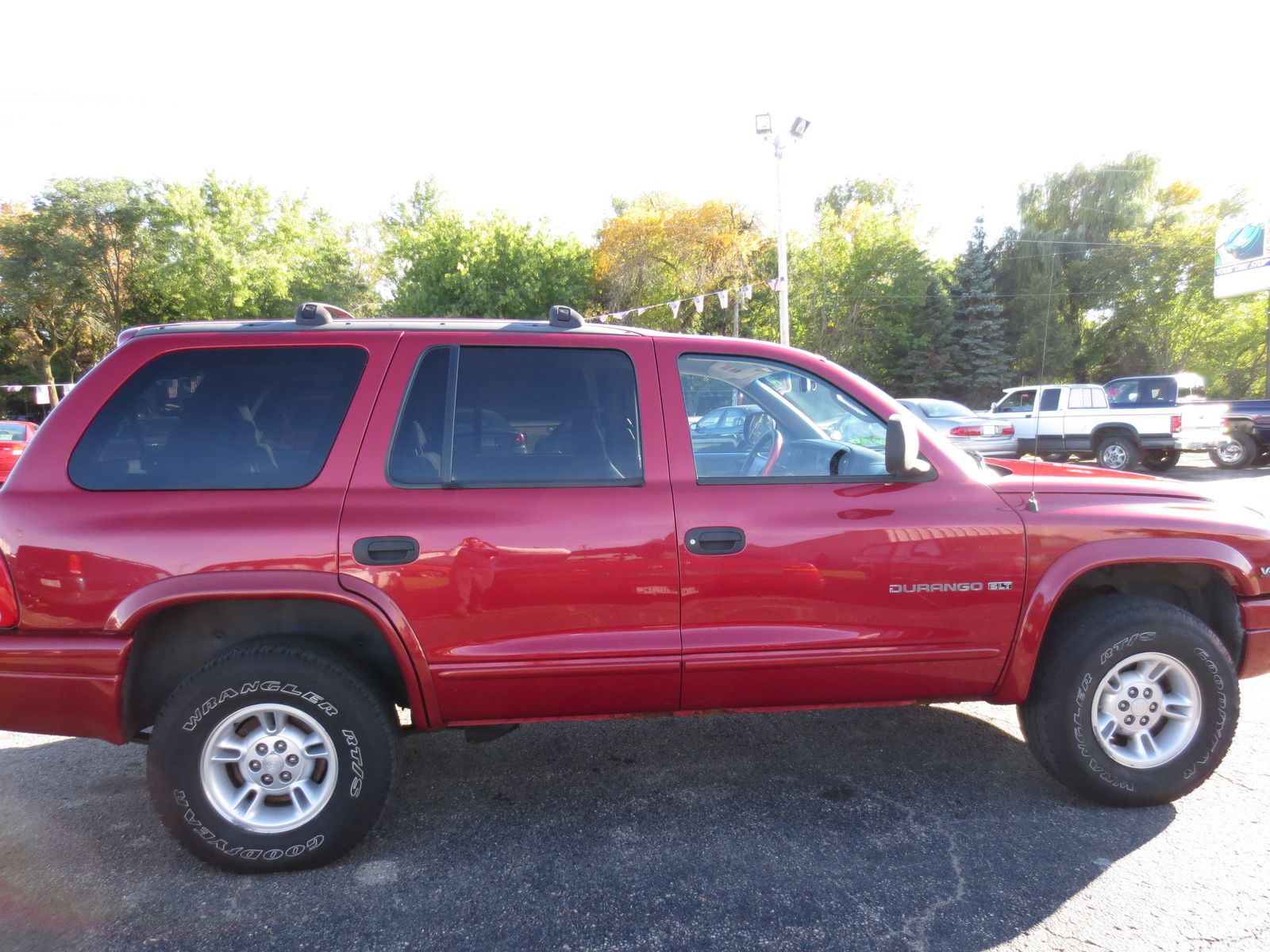
The Toyota 4Runner, Nissan Pathfinder, Jeep Grand Cherokee and Ford Explorer are rivals, but none of them have bolted in a third row of seats, yet (Explorer gets them in 2002), so the Durango still has the advantage in terms of passenger capacity. Also, a fully equipped SLT Plus comes in under $ 34,000 (and remember, that's for a V8, four-wheel drive, and leather seats), making it a budget-conscious splurge. If Dodge could address the Durango's poor gas mileage and mediocre crash test scores, this would be the clear choice for those seeking maximum utility in a user-friendly size.
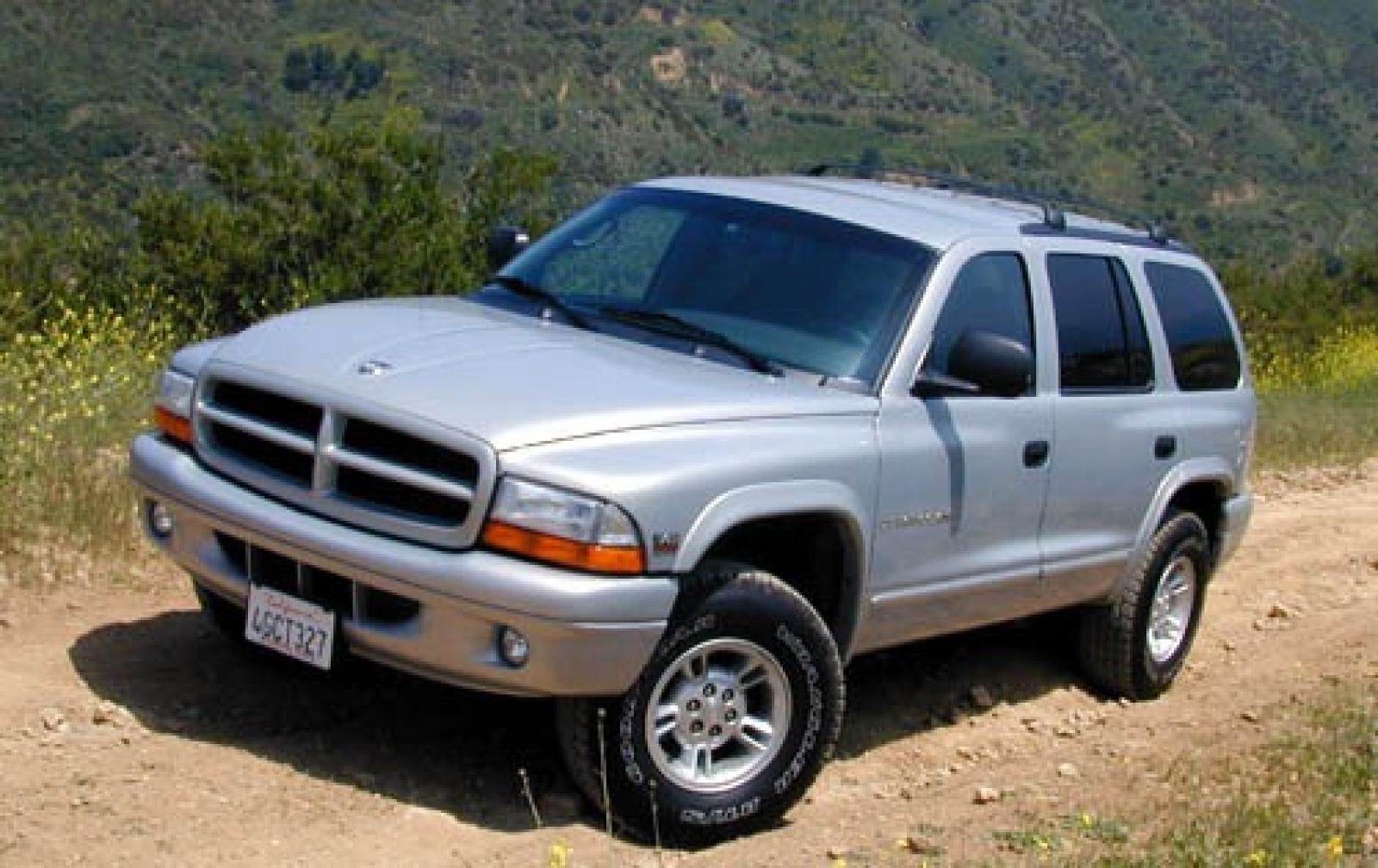
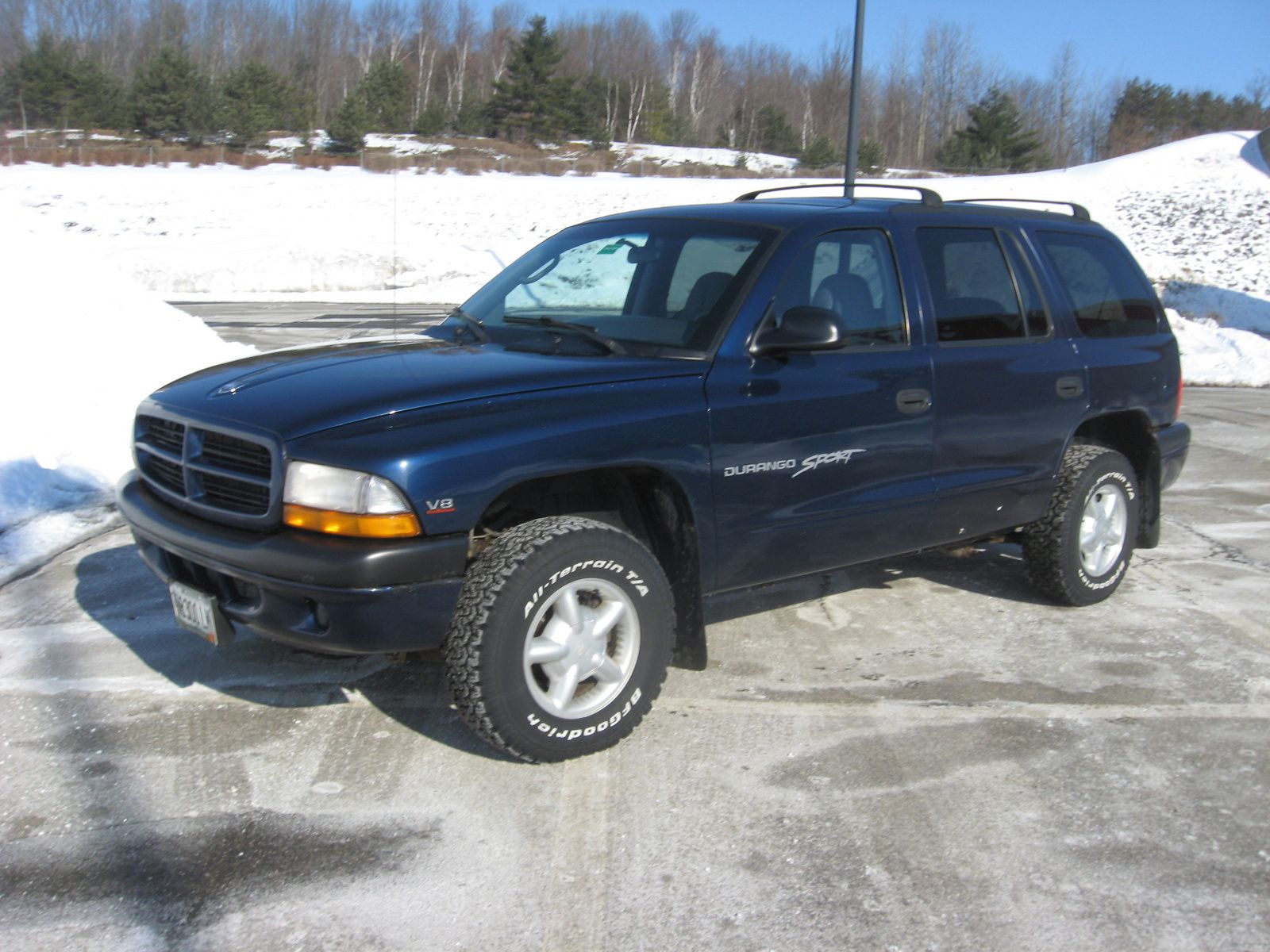
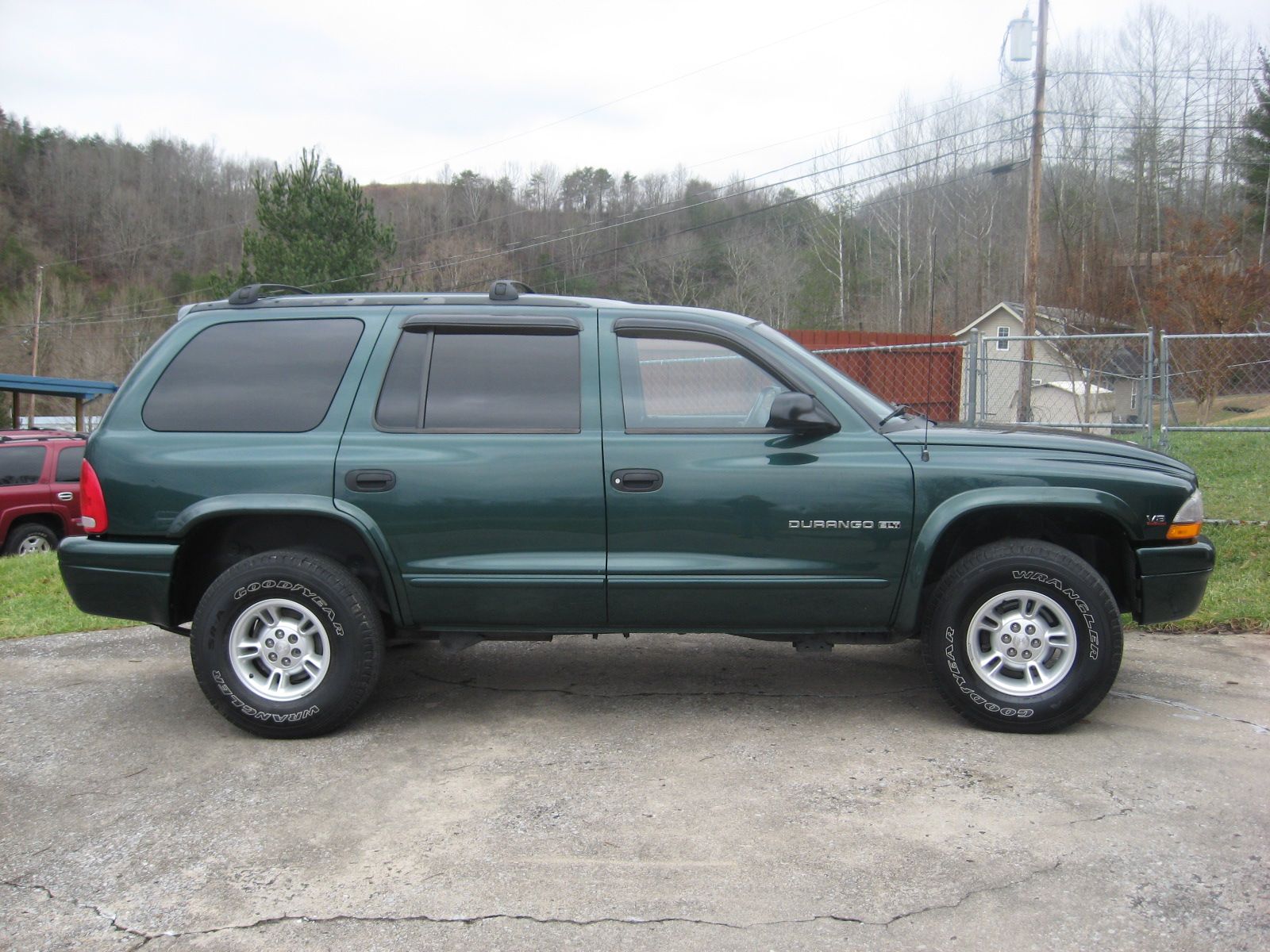
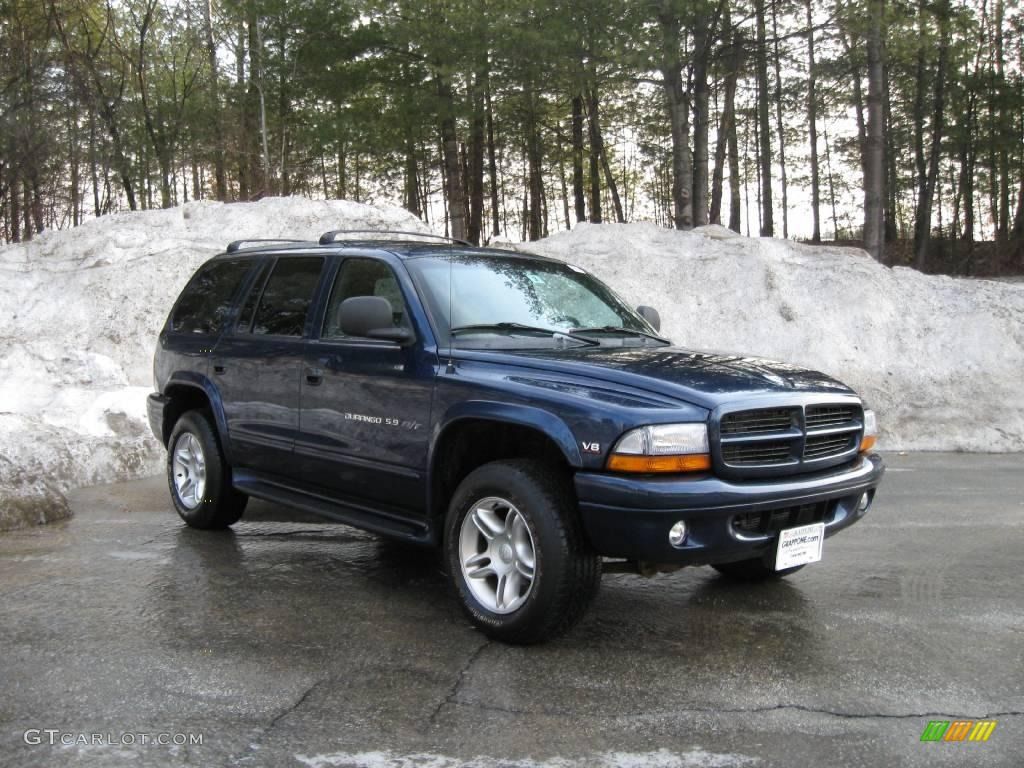
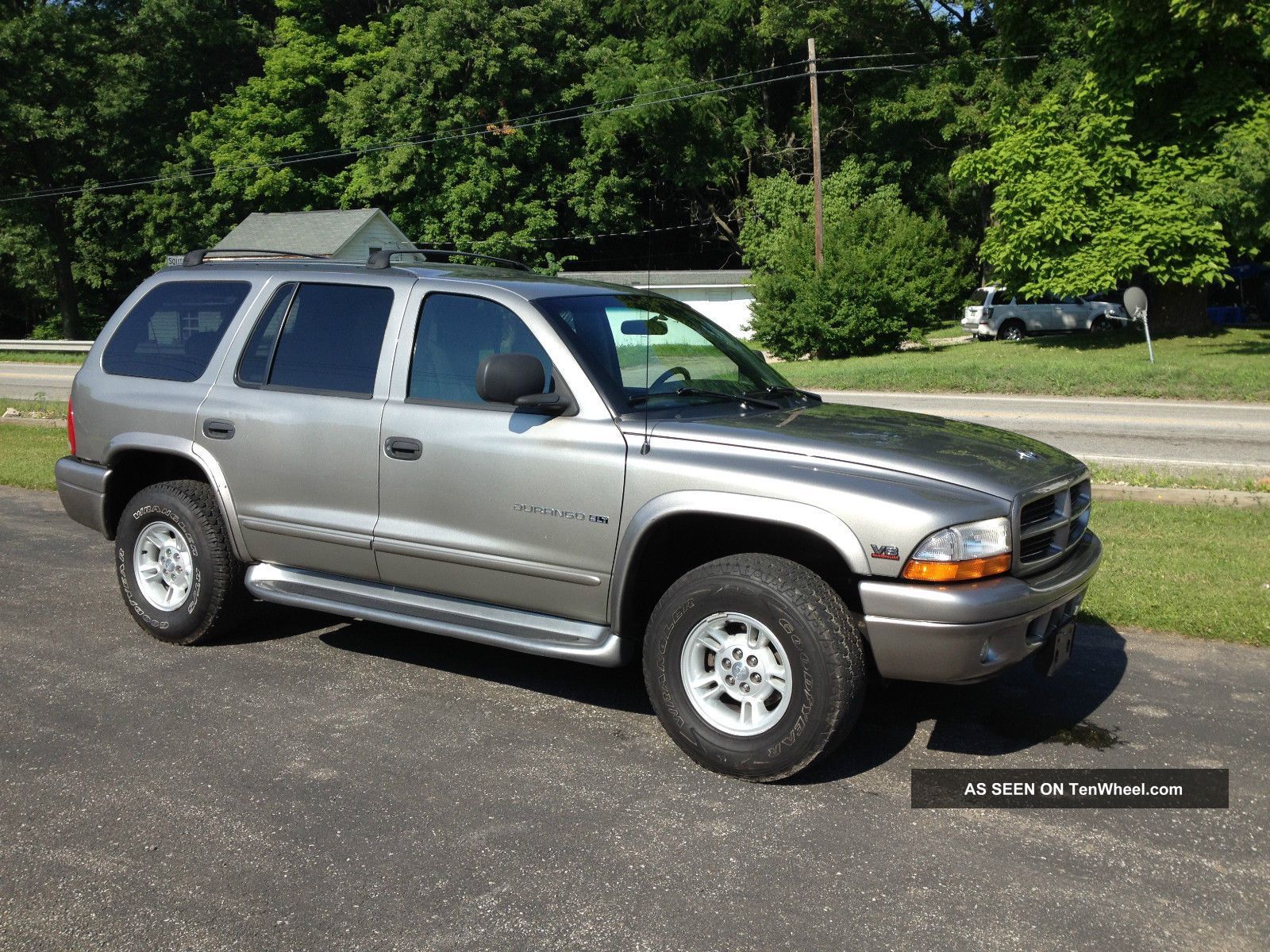
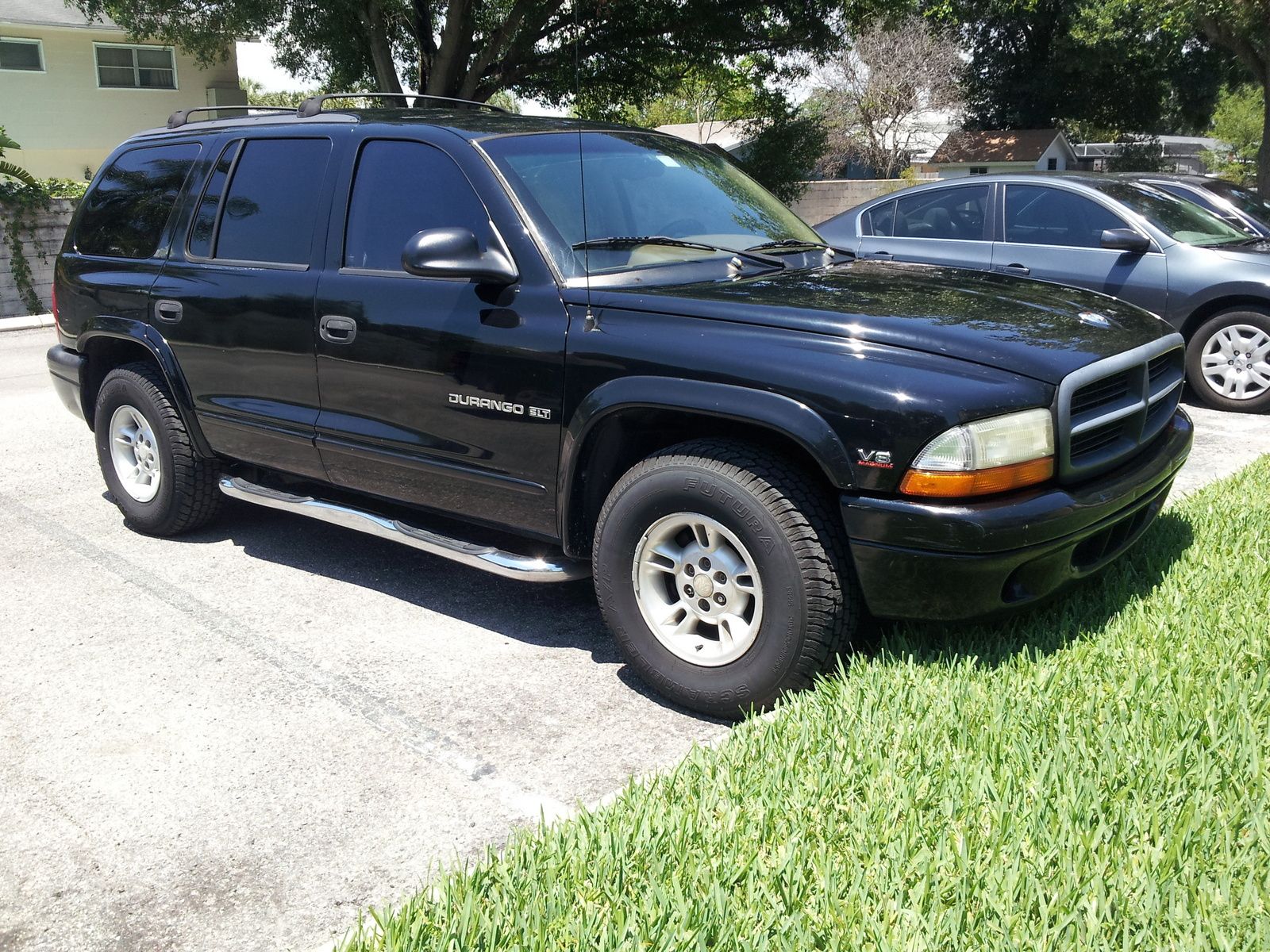
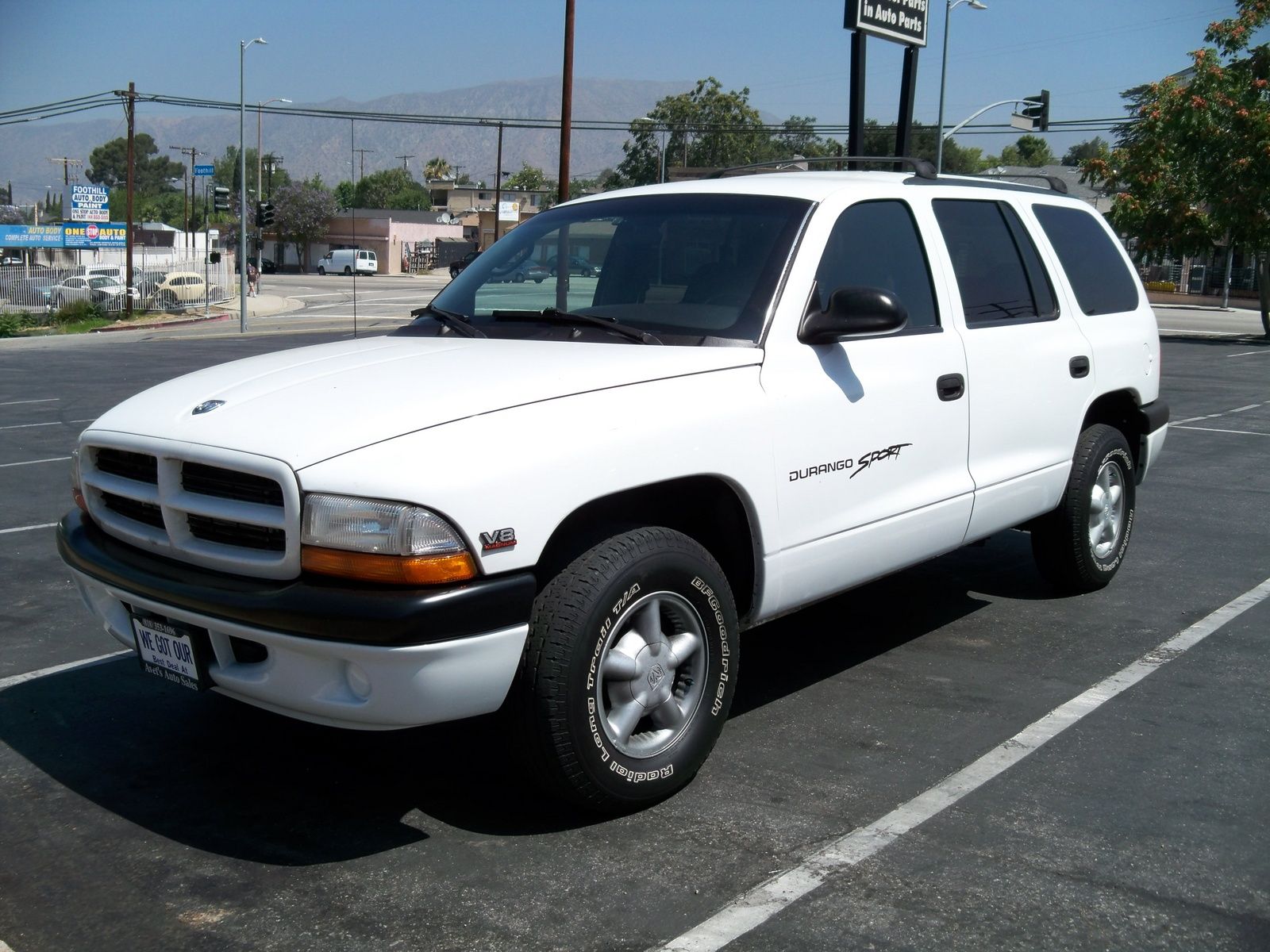
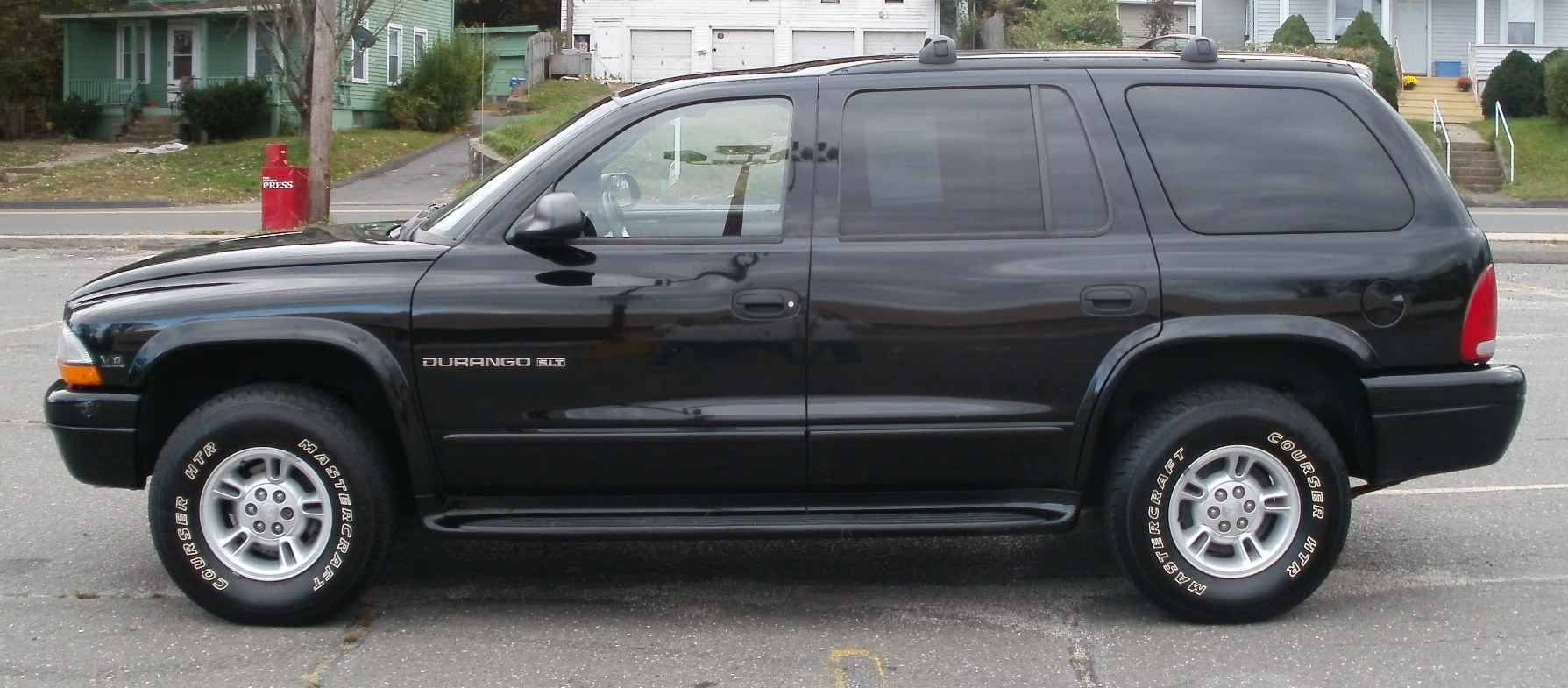
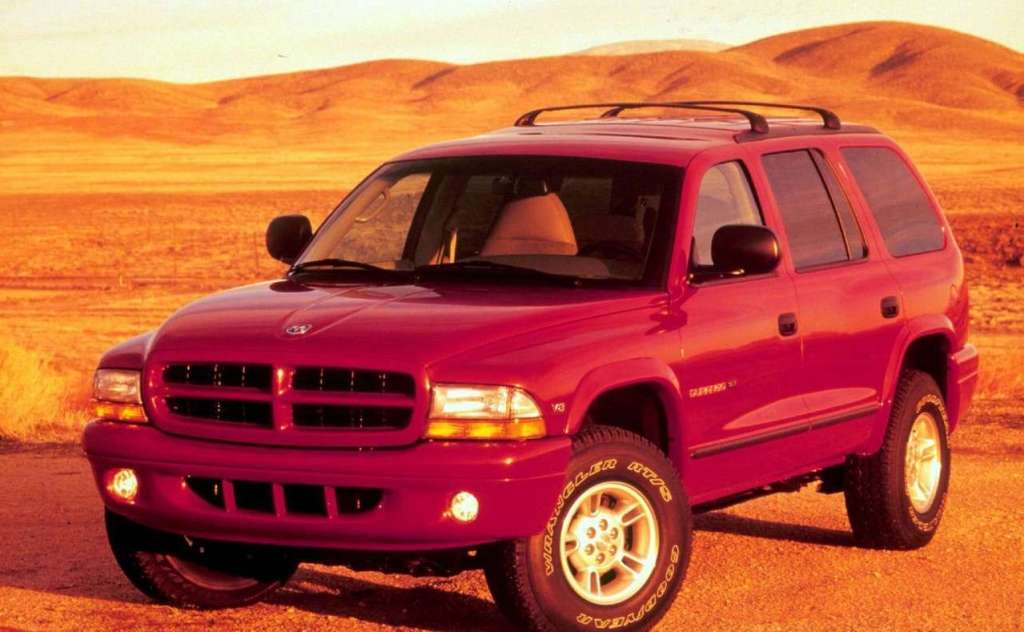
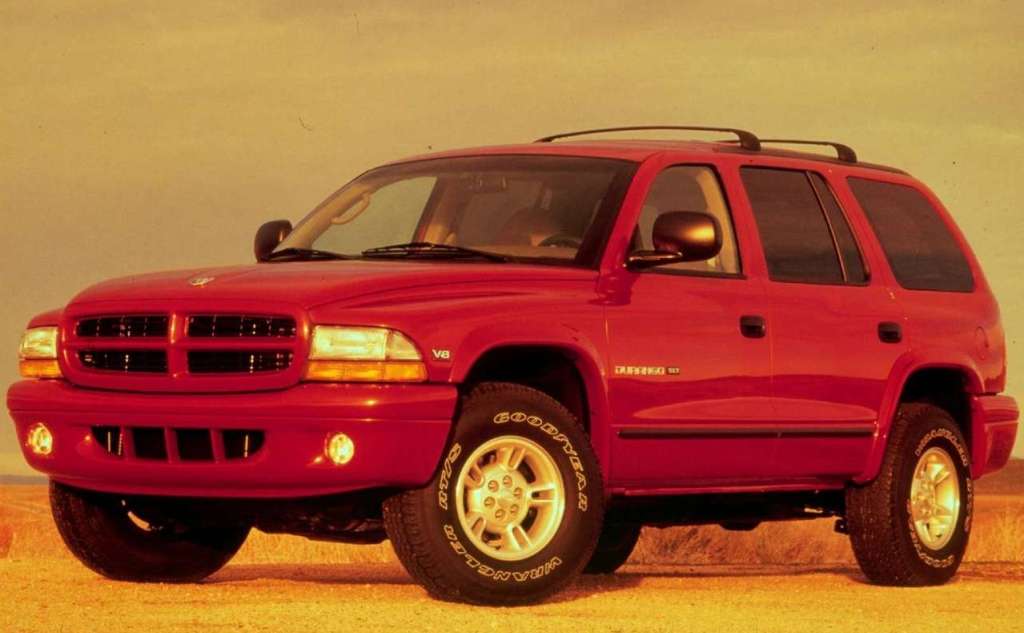
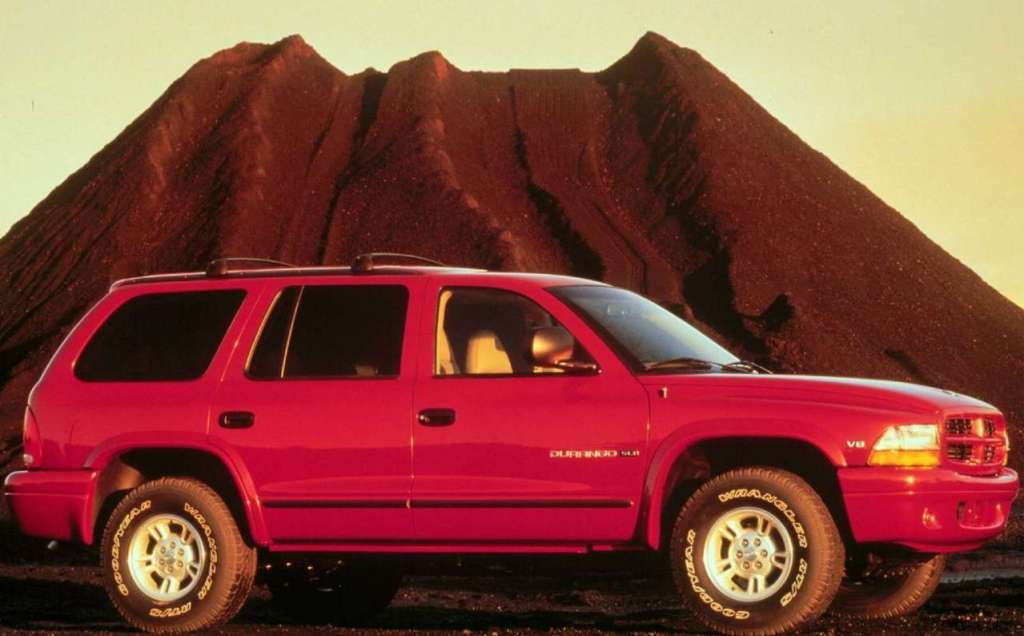
2001 Dodge Durango Sport 4X4 Exterior Colors
2001 Dodge Durango Sport 4X4 Interior Colors
2001 Dodge Durango Engines
| Engine | Standard in Trim | Power | Torque | Fuel Consumption - City | Fuel Consumption - Highway | 0-100 km/h | Quarter Mile | Half Mile |
|---|---|---|---|---|---|---|---|---|
| 5.9L V8 OHV 16 valves Magnum | SLT Plus | 245 hp @ 4000 rpm | 257 N.m | 19.6 L/100km | 13.6 L/100km | 8.5 s | 14.7 s | 27.5 s |
| 5.9L V8 OHV 16 valves Magnum | R/T | 250 hp @ 4200 rpm | 257 N.m | 19.6 L/100km | 13.6 L/100km | 8.3 s | 14.6 s | 27.3 s |
| 5.9L V8 OHV 16 valves | SLT+ | 245 hp @ 4400 rpm | 257 N.m | 19.6 L/100km | 13.6 L/100km | 8.5 s | 14.7 s | 27.5 s |
| 5.9L V8 OHV 16 valves | R/T | 250 hp @ 4400 rpm | 257 N.m | 19.6 L/100km | 13.6 L/100km | 8.4 s | 14.6 s | 27.3 s |
| 5.9 L V8 SOHC MAGNUM | SLT 4X4 | 245 hp @ 4000 rpm | 257 N.m | 20.3 L/100km | 12.0 L/100km | 8.4 s | 14.7 s | 27.4 s |
| 5.9L V8 OHV 16 valves | SLT | 245 hp @ 4000 rpm | 257 N.m | 17.4 L/100km | 12.0 L/100km | 8.4 s | 14.7 s | 27.4 s |
| 5.9L V8 OHV 16 valves | R/T | 245 hp @ 4000 rpm | 257 N.m | 20.3 L/100km | 13.4 L/100km | 8.4 s | 14.7 s | 27.4 s |
| 5.9L 8cyl. | SLT | 250 hp | 257 N.m | 23.5 L/100km | 16.6 L/100km | 8.3 s | 14.5 s | 27.2 s |
| 4.7L V8 SOHC 16 valves Magnum | SLT | 235 hp @ 4800 rpm | 257 N.m | 17.5 L/100km | 12.4 L/100km | 8.7 s | 14.9 s | 27.9 s |
| 4.7L V8 DOHC 32 valves | SXT | 235 hp @ 4800 rpm | 257 N.m | 17.5 L/100km | 12.4 L/100km | 8.8 s | 14.9 s | 27.9 s |
2001 Dodge Durango Trims
2001 Dodge Durango Previous Generations
2001 Dodge Durango Future Generations


Dodge Durango Overview and History
Before Cadillac would outrun Dodge in engine development years later, the Brothers were supplying car parts for many producers. Their early involvement in the process of making cars lead them to starting their own business, entering the queue for a large order of recognition and notoriety. Setting the Dodge Brothers Motor Vehicle Company in 1914 brought them a step closer to the counter.
The first Dodge automobiles shared some of Ford Model T's features but outran the latter in terms of ignition and other improvements meant to ease driving. One of the major advantages Dodge offered was a smooth, electrical start rather than the sluggishly classic crank start. Built for the middle class, the cars quickly became a commercial success, mainly due the clever blend of reliable ruggedness, engine improvements and style elements.
By 1917, Dodge had produced enough cars to start thinking expanding in other car-manufacturing areas. Trucks seemed like something they could successfully take on and the Dodge truck division came to being. Dodge trucks were used by the US army during the First World War after which they kept being used as commercial vehicles.
The Dodge brothers sold their business to Dillon, Read & company for the astoundingly large sum of $ 146 million, said to be the largest amount in history to have been paid at the time. Dillon helmed Dodge management only for 3 years, passing the new acquisition to the Chrysler Corporation on July 31, 1928.
Due to Chrysler's financial conquests over some European automotive groups, such as the British Rootes group and the French Simca, Dodge is introduced to Europe in the 60's. Lightweight commercial vehicles are sold here under a different badge. The Dodge 50 series is fairly well received in the UK, becoming a favorite for military and utility operations.
1977 brought forth the collapse of Chrysler's European subsidiary and its adjacent Dodge branch altogether. The Dodge factory as well as some rights to use the Dodge name were purchased by Renault who resumed the production of Dodge's commercial vehicles. However, Renault only made use of the Dodge name till the 80's when it gave up control over the name rights. Only the factory was kept.
Dodge is currently part of the DaimlerChrysler group and has been lately been know for its trucks rather than retro-future stylized muscle cars as it used to be know for during the 60's and 70's. Much like any other American car builder, Dodge garnered huge amounts of success at the time with the launch of the Charger and Coronet models, to name only a few.
As far as the company's current status is concerned, trucks make the most sales, representing 78% of the division's venue. Still undergoing intensive promotion in Europe, Dodge have sought to reach the same type of customer it did back in the 70's by launching a series of mean-looking, rowdy road-tamers such as the Nitro and Caliber.
2001 Dodge Durango Consumer Reviews
Compare Against Competitors


2001 Dodge Durango Sport 4X4 Specifications
Sport 4X4 Comfort and Convenience
| Number of Speakers (Option) | 8- Speakers Infinity |
|---|
Sport 4X4 Dimensions
| Cargo Capacity | 532 L |
|---|---|
| Curb Weight | 2086 kg |
| Front Headroom | 1011 mm |
| Front Legroom | 1064 mm |
| Fuel Tank Capacity | 95 L |
| Gross Vehicle Weight | 2903 kg |
| Height | 1842 mm |
| Length | 4915 mm |
| Max Trailer Weight | 2019 kg |
| Rear Headroom | 950 mm |
| Rear Legroom | 780 mm |
| Wheelbase | 2944 mm |
| Width | 1821 mm |
Sport 4X4 Mechanical
| Drive Train | 4-wheel drive |
|---|---|
| Engine Name | 4.7 L V8 SOHC MAGNUM |
| Transmission | 4 speed automatic |
Sport 4X4 Overview
| Body | Sport Utility |
|---|---|
| Doors | 4 |
| Engine | 4.7 L V8 SOHC MAGNUM |
| Fuel Consumption | 17.4 (Automatic City)12.0 (Automatic Highway) |
| Power | 235 hp @ 4800 rpm |
| Seats | 5 |
| Transmission | 4 speed automatic |
| Warranties | Bumper-to-Bumper60000/km, 36/Months Powertrain100000/km, 60/Months Roadside Assistance100000/km, 60/Months Rust-throughUnlimited/km, 36/Months |
Sport 4X4 Safety
| Anti-Lock Brakes | Rear ABS |
|---|---|
| Brake Type | Front disc/rear drum |
| Child Seat Anchor | None |
| Child-proof Locks | None |
| Driver Airbag | None |
| Front Seat Belts | Height adjustable |
| Panic Alarm | None |
| Passenger Airbag | None |
| Rear Seat Belts | Height adjustable |
Sport 4X4 Suspension and Steering
| Front Tires | P235/75R15 |
|---|---|
| Front Tires (Option) | P265/70R16 |
Discussion and Comments
Share Your Comments