2004 Ford Mustang Base 0-60 Times, Top Speed, Specs, Quarter Mile, and Wallpapers

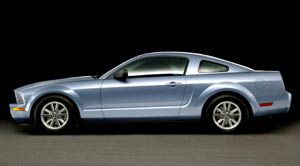
The 2004 Ford Mustang Base is a Rear-wheel drive Coupe. It can accommodate up to 4 passengers. It has 2 Doors and is powered by a 3.8L V6 OHV 12 valves engine which outputs 190 hp @ 5250 rpm and is paired with 5 speed manual gearbox. The 2004 Ford Mustang Base has cargo capacity of 308 Liters and the vehicle weighs 1413 kg. In terms of ride assists, the 2004 Ford Mustang Base has stability control and traction control in addition to anti-lock brake system (ABS). The vehicle has an optional engine as well It offers and. Safety features also include Driver side front airbag and Passenger side front airbag. The front suspension is Front independent suspension while the rear suspension is Rear solid axle suspension. The car also features a It has 16 x 7 alloy wheels as standard. Electronic features include Cruise Control. For convenience, the car has Power windows and Power door locks. There is also a remote keyless entry feature. Moreover, the car has. The steering wheel has audio control buttons. In terms of performance, the car has 207 N.m of torque and a top speed of 211 km/h. The 2004 Ford Mustang Base accelerates from zero to 60 mph in 7.7 seconds and hits quarter mile at 15.7 seconds. Fuel consumption is 12.3 L/100km in the city and 8 L/100km in the highway. The car price starts at $ 23,495
| Name | Base | |
|---|---|---|
| Price | $ 23,495 | |
| Body | Coupe | |
| Doors | 2 Doors | |
| Engine | 3.8L V6 OHV 12 valves | |
| Power | 190 hp @ 5250 rpm | |
| Number of Seats | 4 Seats | |
| Transmission | 5 speed manual | |
| Cargo Space | 308.0 L | |
| Maximum Cargo Space | 308.0 L | |
| Wheel Type | 16 x 7 alloy wheels | |
| Series | Mustang Convertible IV | |
| Drivetrain | Rear-wheel drive | |
| Horsepower | 190 HP | |
| Torque | 207 N.m | |
| Top Speed | 211 km/h | |
| Acceleration 0-100 km/h (0-60 mph) | 7.7 s | |
| Fuel Type | Petrol (Gasoline) | |
| Fuel Consumption (City) | 12.3 L/100km | |
| Fuel Consumption (Highway) | 8.0 L/100km | |
| Gear Type | auto | |
| Weight | 1,390 KG | |
| Brand | Ford | |
| Model | Mustang | |
| 0-400m (Quarter Mile) | 15.7 s | |
| 0-400m (Quarter Mile) - Speed | 146.4 km/h | |
| 0-800m (Half Mile) | 26.1 s | |
| 0-800m (Half Mile) - Speed | 164.8 km/h | |
| Modifications (MODS) | ||
| Modifications Cost | $ 0 |
0-60 Time of a 2004 Ford Mustang V6 Auto
Stock 2004 Ford Mustang V6 Acceleration
2001 Lexus IS300 vs 2004 Ford Mustang GT Drag Race
2004 Ford Mustang Used Price Estimates
Estimates based on a driving average of 12,000 miles per year| Used Condition | Trade In Price | Private Party Price | Dealer Retail Price |
|---|---|---|---|
| Outstanding | $ 2,661 | $ 4,398 | $ 5,375 |
| Clean | $ 2,384 | $ 3,945 | $ 4,814 |
| Average | $ 1,828 | $ 3,040 | $ 3,692 |
| Rough | $ 1,273 | $ 2,134 | $ 2,571 |
Fittingly, the Mustang is the last surviving member of the "pony car" breed. For the 2004 Ford Mustang, the Anniversary Edition should give enthusiasts something to brag about.
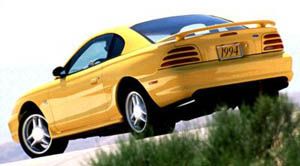
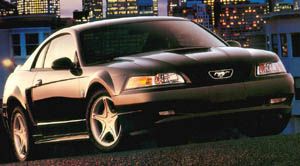
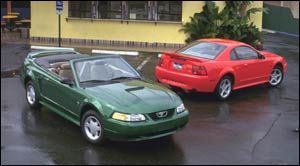
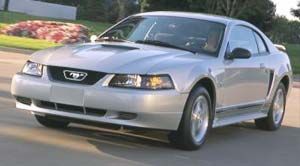
The Ford Mustang debuted in April of 1964 as either a coupe or convertible with six or eight cylinders under the hood, and became a national sensation. Ford sold hundreds of thousands of Mustangs, convincing General Motors and Chrysler Corporation to release their own variations on the theme. By the late 1960s, the Mustang competed against the AMC Javelin, Chevrolet Camaro, Plymouth Barracuda and Pontiac Firebird. But, like Elvis Presley, the Mustang had evolved from lightweight and simple agile to overweight and cumbersome. By the time the oil crisis of 1973 hit, the Mustang had lost its edge in terms of performance and appeal. Reborn for 1974, the much smaller Mustang II rode on a Pinto platform to save development costs and improve fuel economy. Emissions regulations had stifled performance, and the convertible model had disappeared from the lineup. The mid-1970s represented a dismal time for the American automobile industry, and the emasculation of the Ford Mustang is perhaps the greatest example of what went wrong in the middle of this decade. Not surprisingly, sales reached an all-time low during this period of time. Still, Ford wasn't ready to give up on the Mustang. In 1979, it was completely redesigned. There was even a performance model with a turbocharged 2.3-liter, four-cylinder engine, and a stripes-and-decals Cobra version. The new Mustang proved popular, and by 1982, Ford had endowed it with a relatively strong (for the time) V8 engine and the GT designation that continues today. General Motors released a sexy new Camaro and Firebird duo in '82, so Ford countered by continually updating the Mustang GT and engineering a special turbocharged performance model called the SVO. In the late 1980s, Mustang enthusiasts heard that Ford planned to replace the rear-drive model with a front-drive car based on a Mazda. Recoiling in revulsion, these purists bombarded Ford with hate mail, effectively convincing corporate brass to keep the all-American Mustang as it was and release the new vehicle under development as the Probe. This delay meant Ford needed to market the existing and aged Mustang beyond its expiration date until a suitable replacement could be styled and engineered. To retain buyer interest, Ford kept boosting power and improving the Mustang in subtle but effective ways. The new car arrived in 1994 wearing retro styling cues such as tri-bar taillights and a side scoop. Inside, a dual-cowl dashboard provided plenty of pizzazz. A coupe and convertible were available, with either a V6 or V8 engine. A Cobra model with added horsepower and special performance upgrades paced the Indianapolis 500 that year. In 1999, the Mustang was updated with boxy new styling and more power. The 2004 Ford Mustang appeals to those who love the burble of a V8, the handling of rear-wheel drive and the appeal of a legendary car with a long and storied history. For 2004, Ford will offer a 40th Anniversary trim package to commemorate the longevity of the original American muscle car.

Base, Deluxe and Premium models have a V6 engine. The GT Deluxe, GT Premium and Mach 1 get a V8. Coupes are available in each trim, while the convertible is limited to regular and GT versions of Deluxe and Premium trim. Standard equipment on base models includes 16-inch wheels, air conditioning, a CD player and power windows, mirrors and locks. Deluxe models add a power driver seat, cruise control and a spoiler on coupes; additionally, the GT Deluxe gets 17-inch wheels, an upgraded suspension, sport seats and a limited-slip differential. Premium models come with leather upholstery, an upgraded sound system and a CD changer. The 40th Anniversary Package is available on all Premium models (either engine) and specifies either red, black or white exterior paint; special Arizona Beige wheels; brushed aluminum pedals; and embroidered floor mats, while deleting the spoiler on coupes and adding a better-insulated cloth top on convertibles. The limited-production Mach 1 includes a functional shaker hood with ram-air scoop; special interior detailing; unique alloy wheels and exterior trim; a lowered, retuned sport suspension; and upgraded brakes.
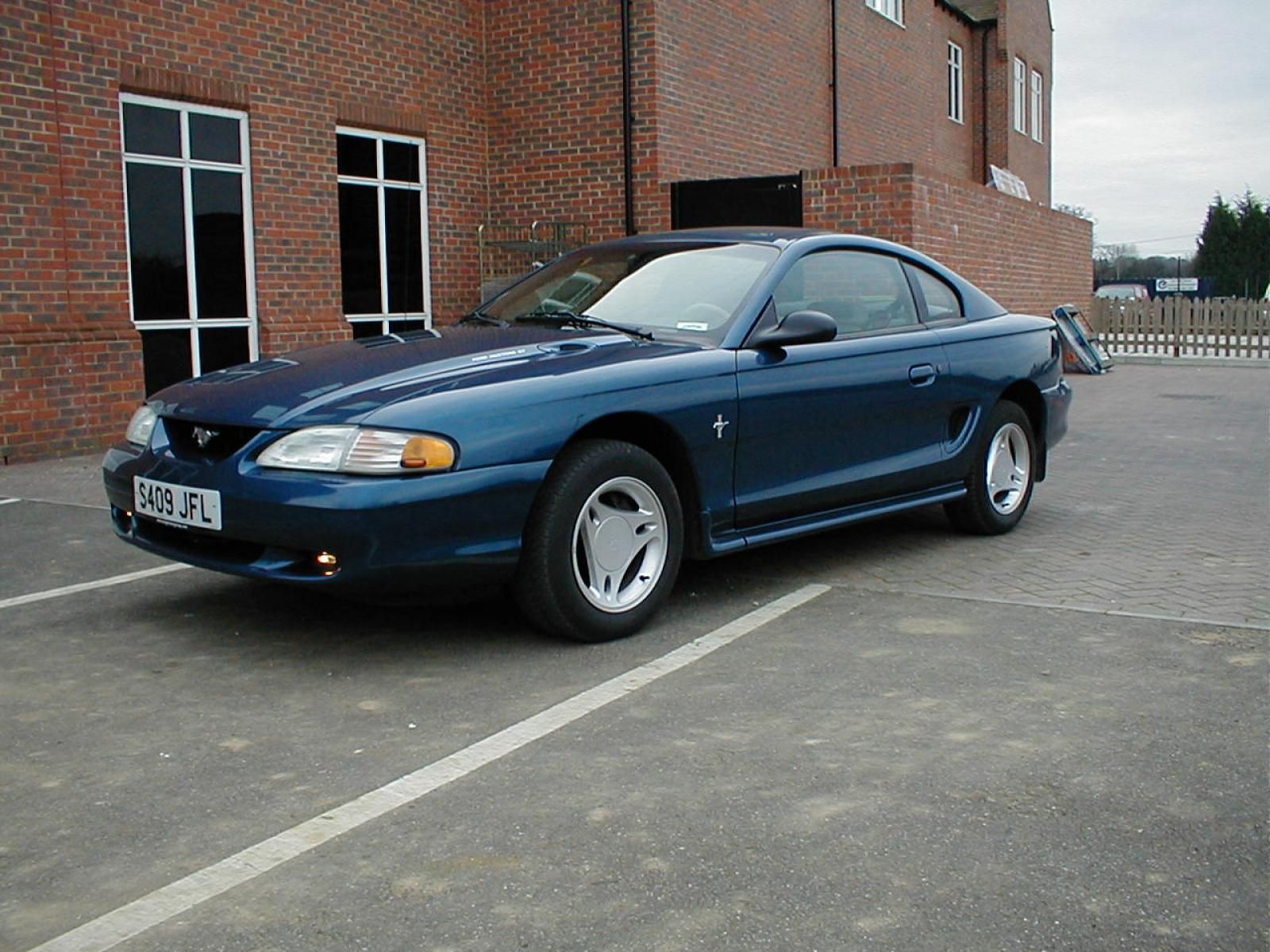
Standard on base, Deluxe and Premium Mustangs is a 190-horsepower, 3.8-liter V6. Step up to the GT Deluxe and GT Premium, and you'll get a 260-horsepower, 4.6-liter V8. The Mach 1 gets a tweaked version of this V8 worthy of 310 horsepower and 335 pound-feet of torque. All Mustangs are rear-drive and can be equipped with either a five-speed manual or a four-speed automatic transmission.
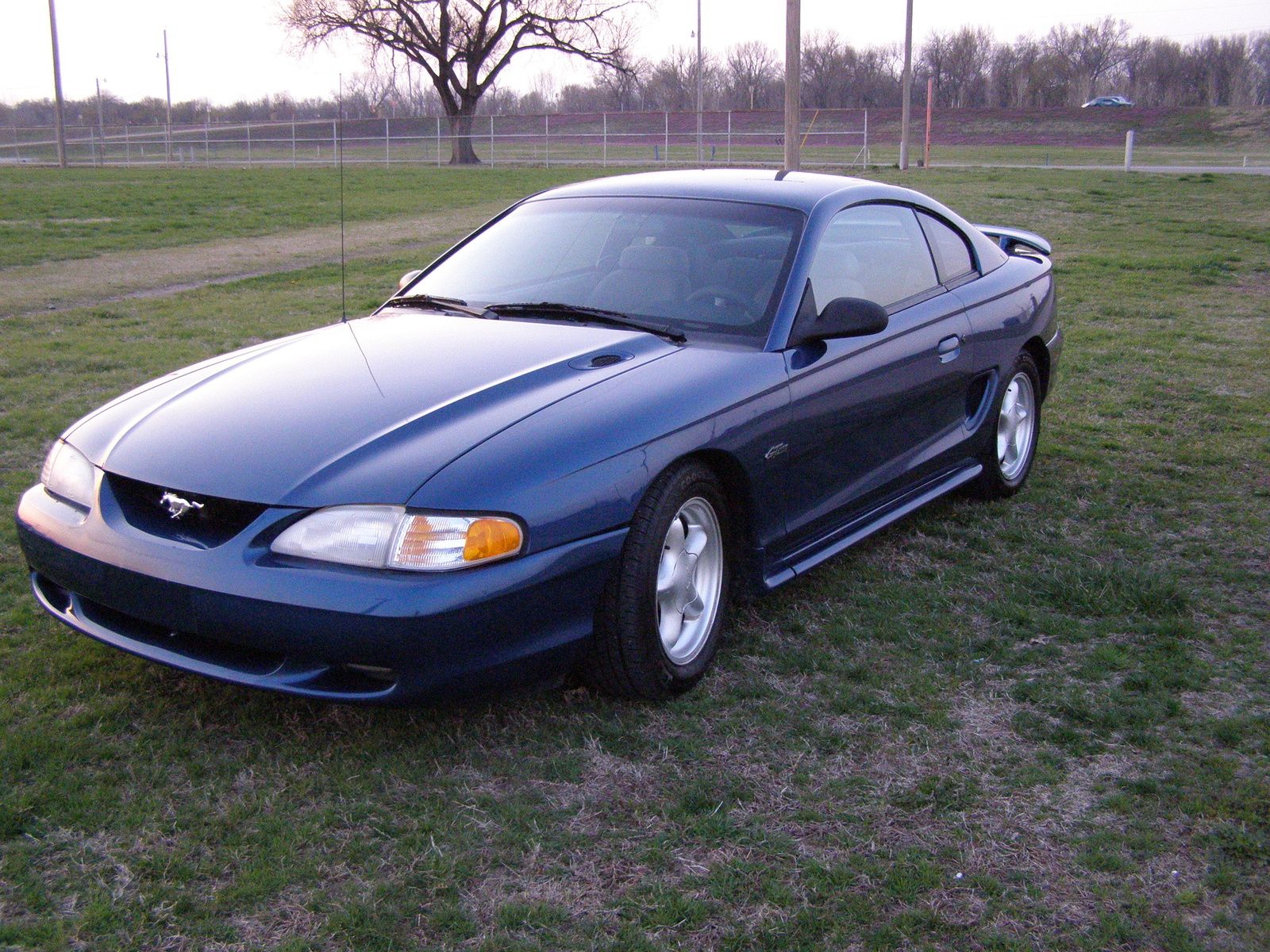
Four-wheel disc brakes are standard on the 2004 Ford Mustang. Antilock brakes and traction control are optional on all Deluxe models and standard on all Premium and Mach 1 models. The Mustang coupe received five-star frontal crash test scores for the driver and passenger. Side-impact testing resulted in three-star scores for both front- and rear-seat occupants.
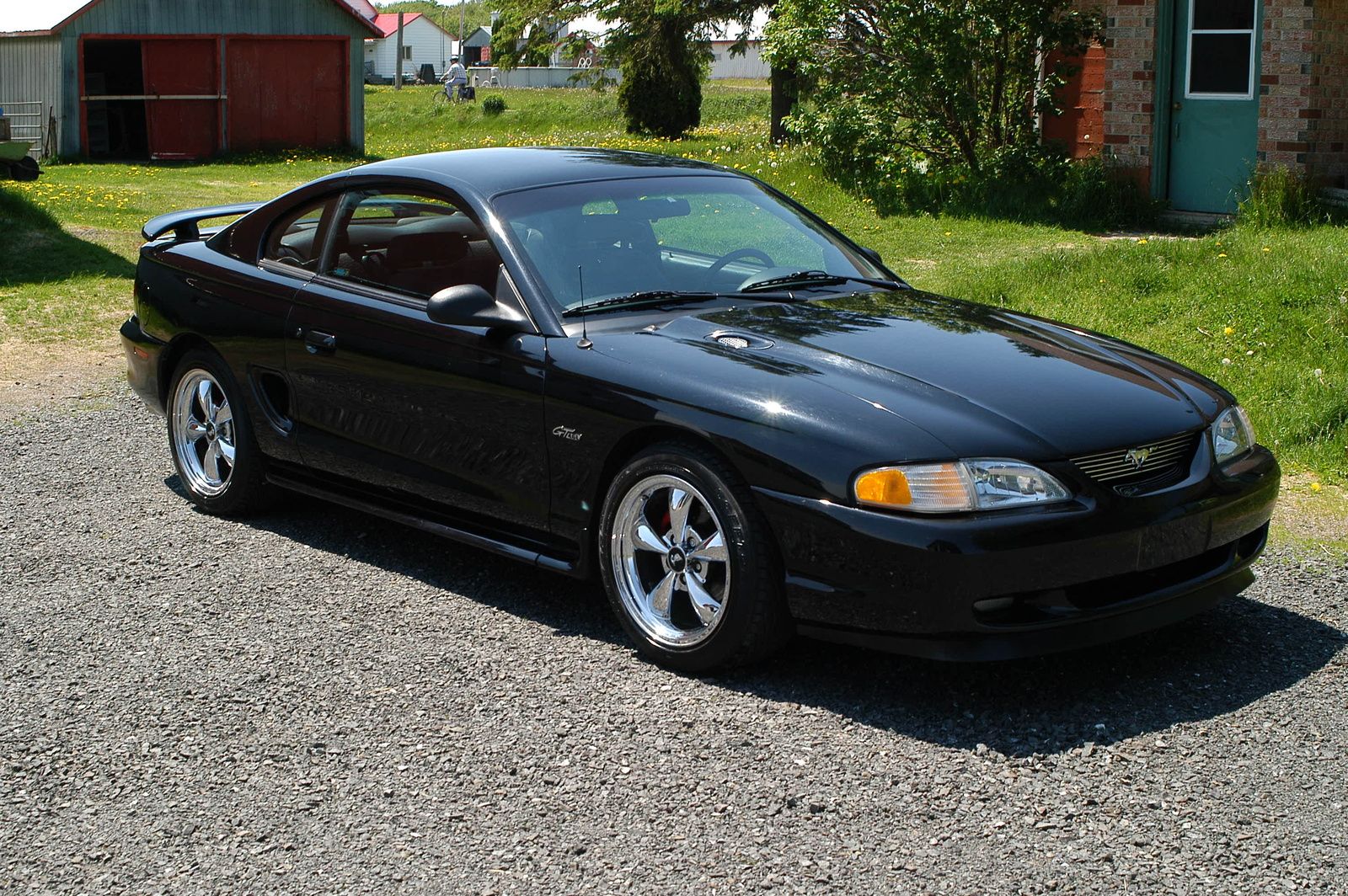
Mustangs are crude by modern standards, but strong engines and low prices keep them plenty desirable next to the more refined sport coupes and convertibles on the market. The performance-oriented Mach 1 is a terrific blend of power, handling and retro design, while the GT offers V8 power for under $ 25,000. Even V6 models can be entertaining when equipped with a manual transmission. Both the GT and the V6 make fine daily drivers, especially for those who crave tail-out thrills and don't mind a less-than-ideal seating position.
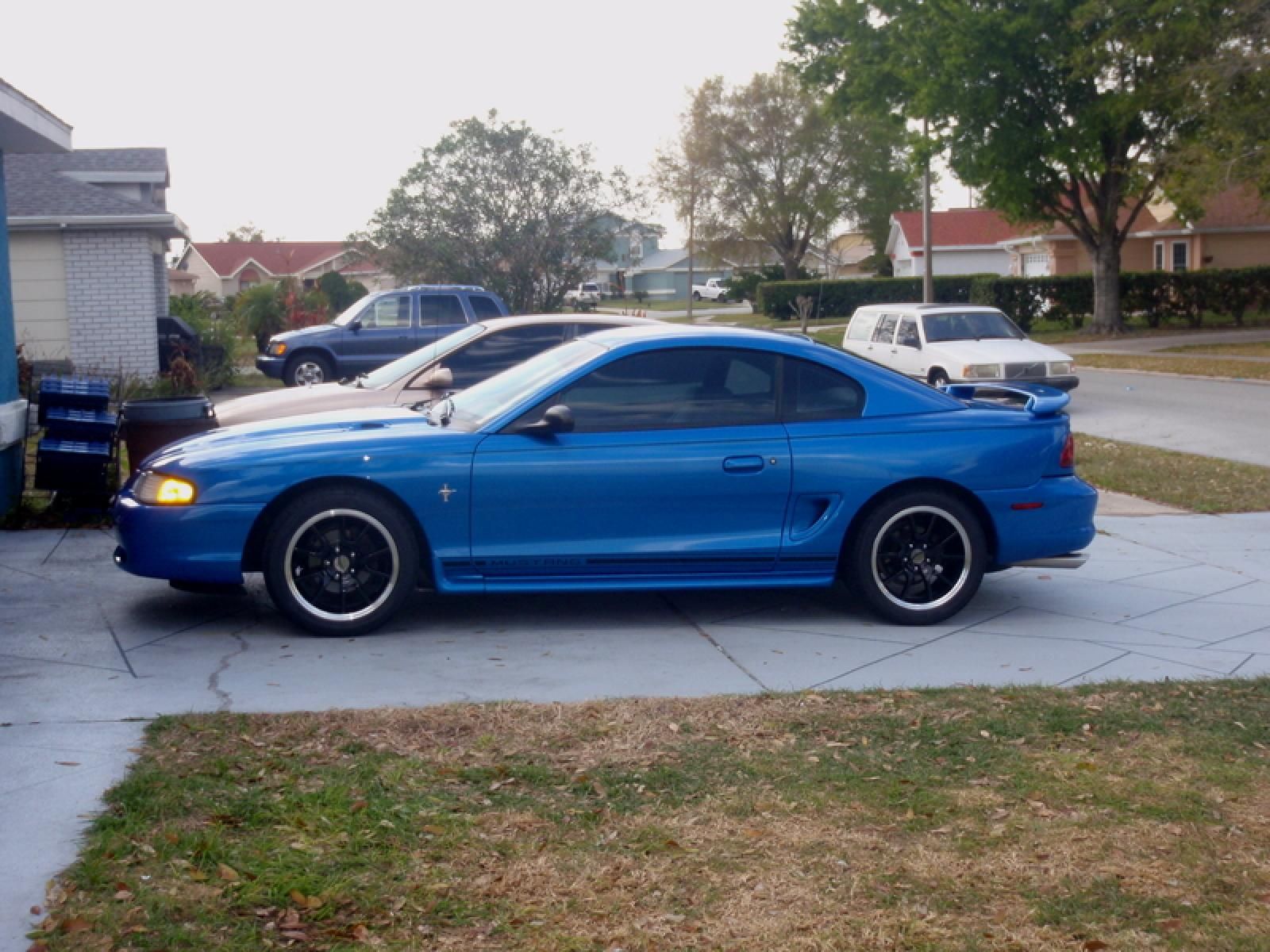
Instrumentation is simple and controls are straightforward, if sometimes hard to locate and reach. Seats in the V6 and GT models are flat and featureless; the Mach 1's seats offer a retro design to go along with their stiffer bolsters and greater adjustability. You can spruce up the interior by adding the 40th Anniversary Package, which bundles together metallic trim, aluminum pedals, embroidered floor mats and upgraded head restraints. It's not uncommon for Mustang drivers to find it difficult to achieve a comfortable driving position. This is because of the rather awkward placement of the shifter and steering wheel in relation to the driver seat.
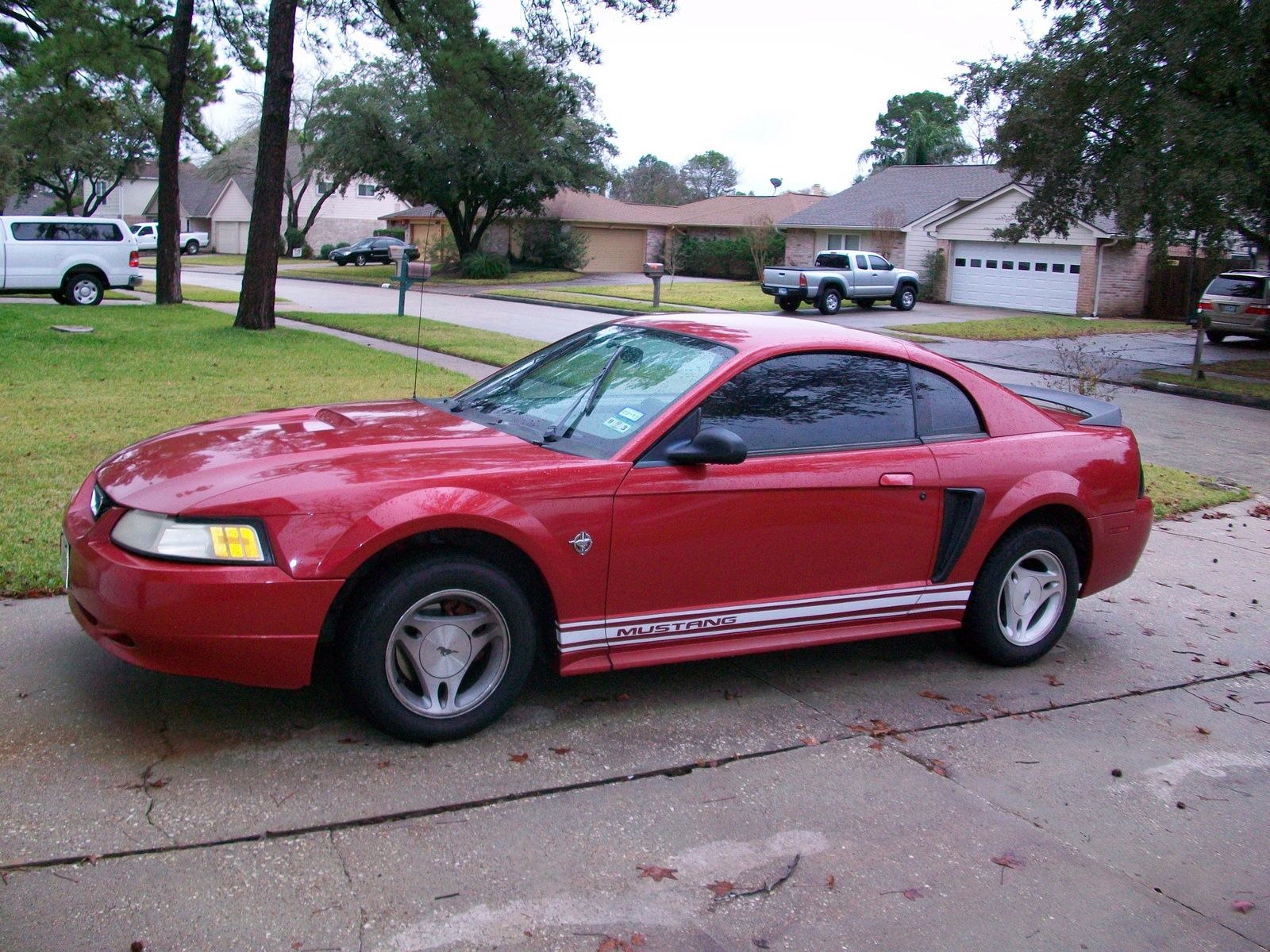
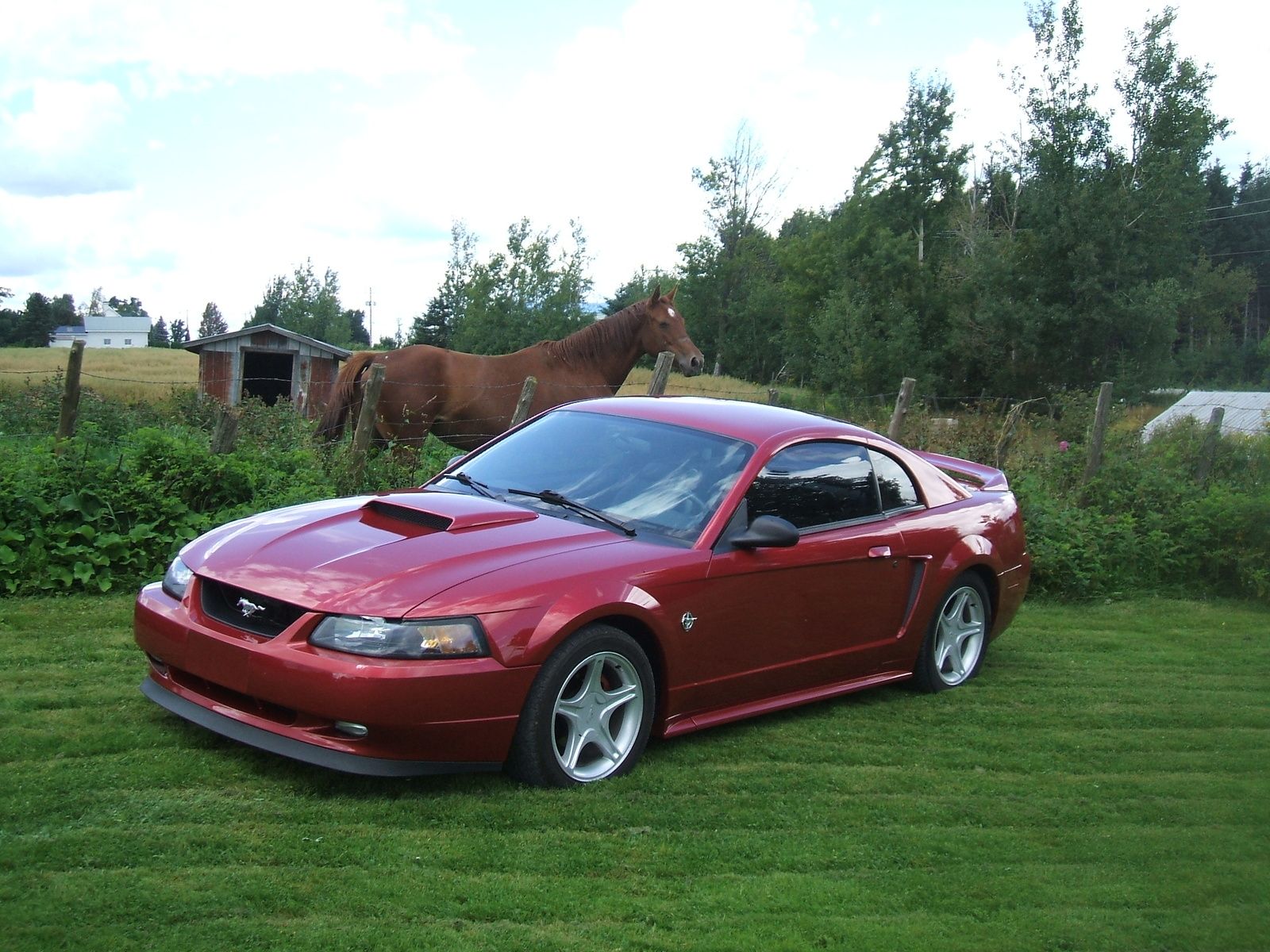
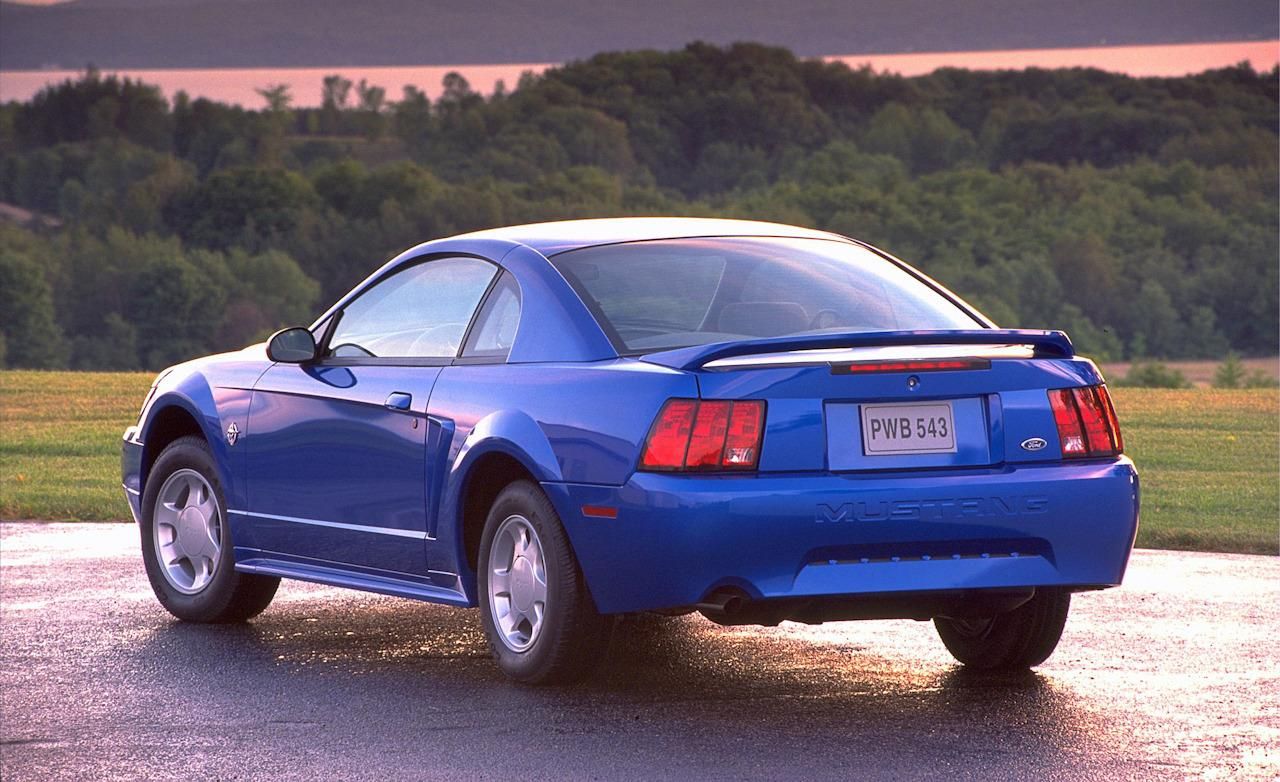
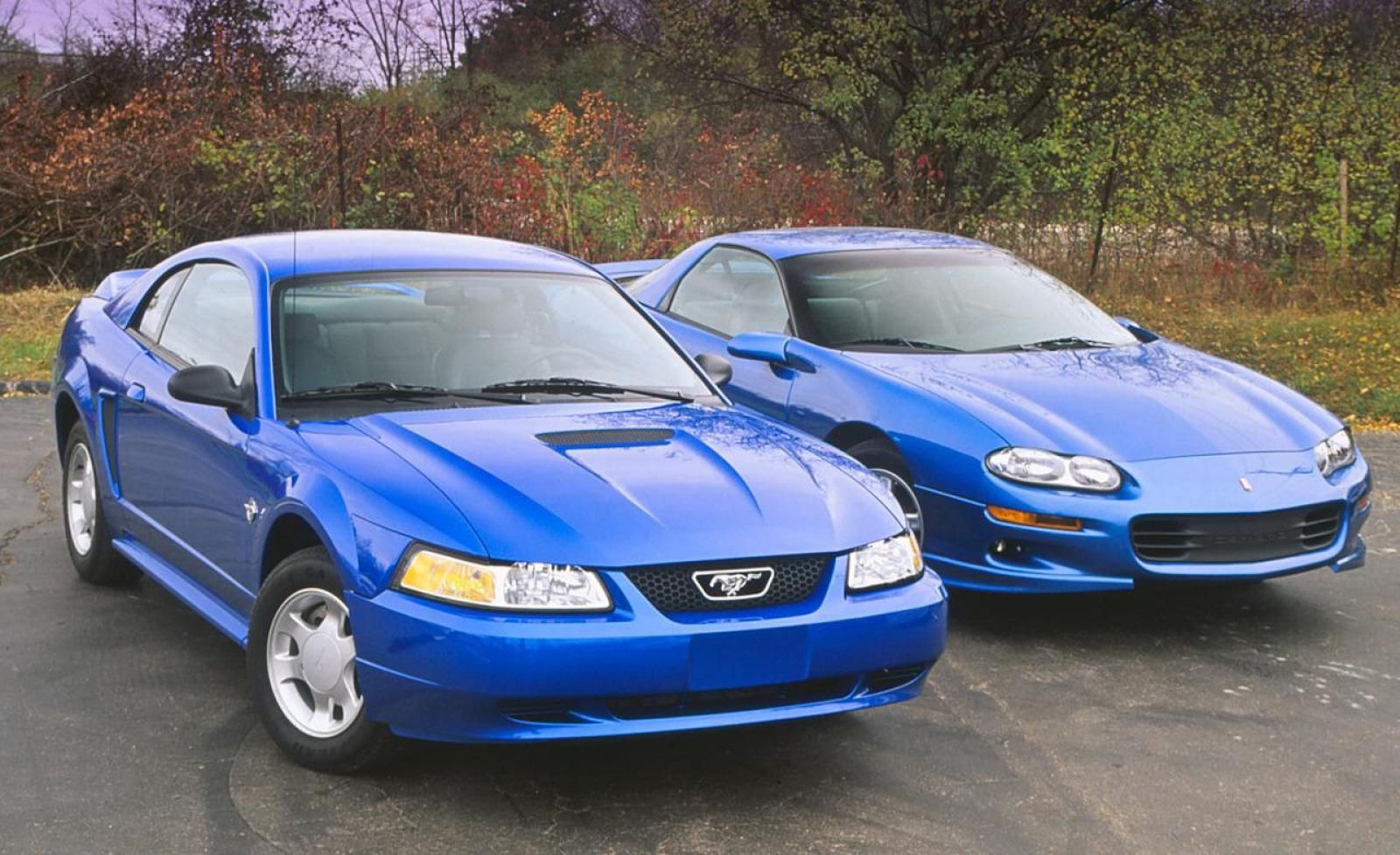

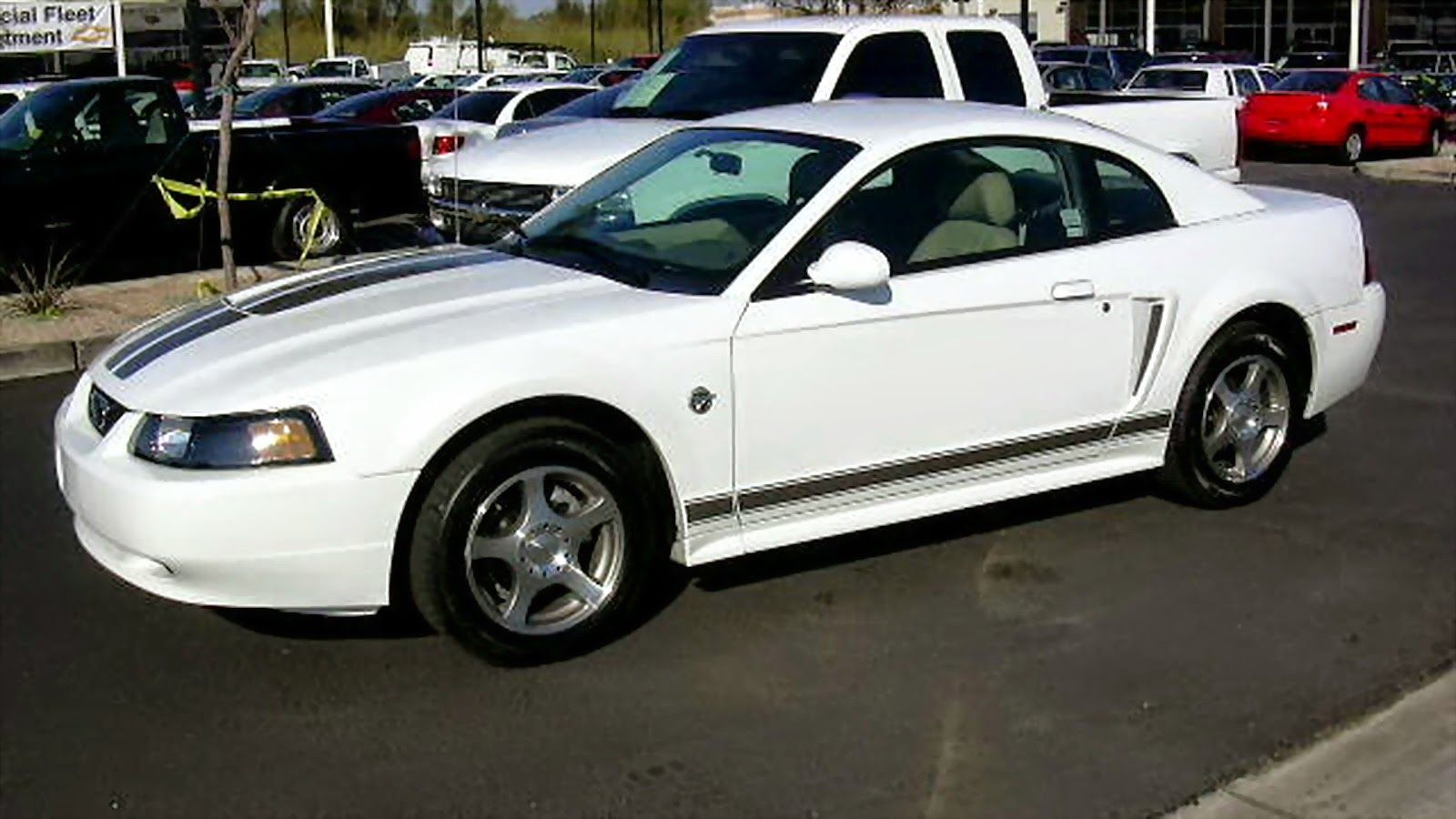

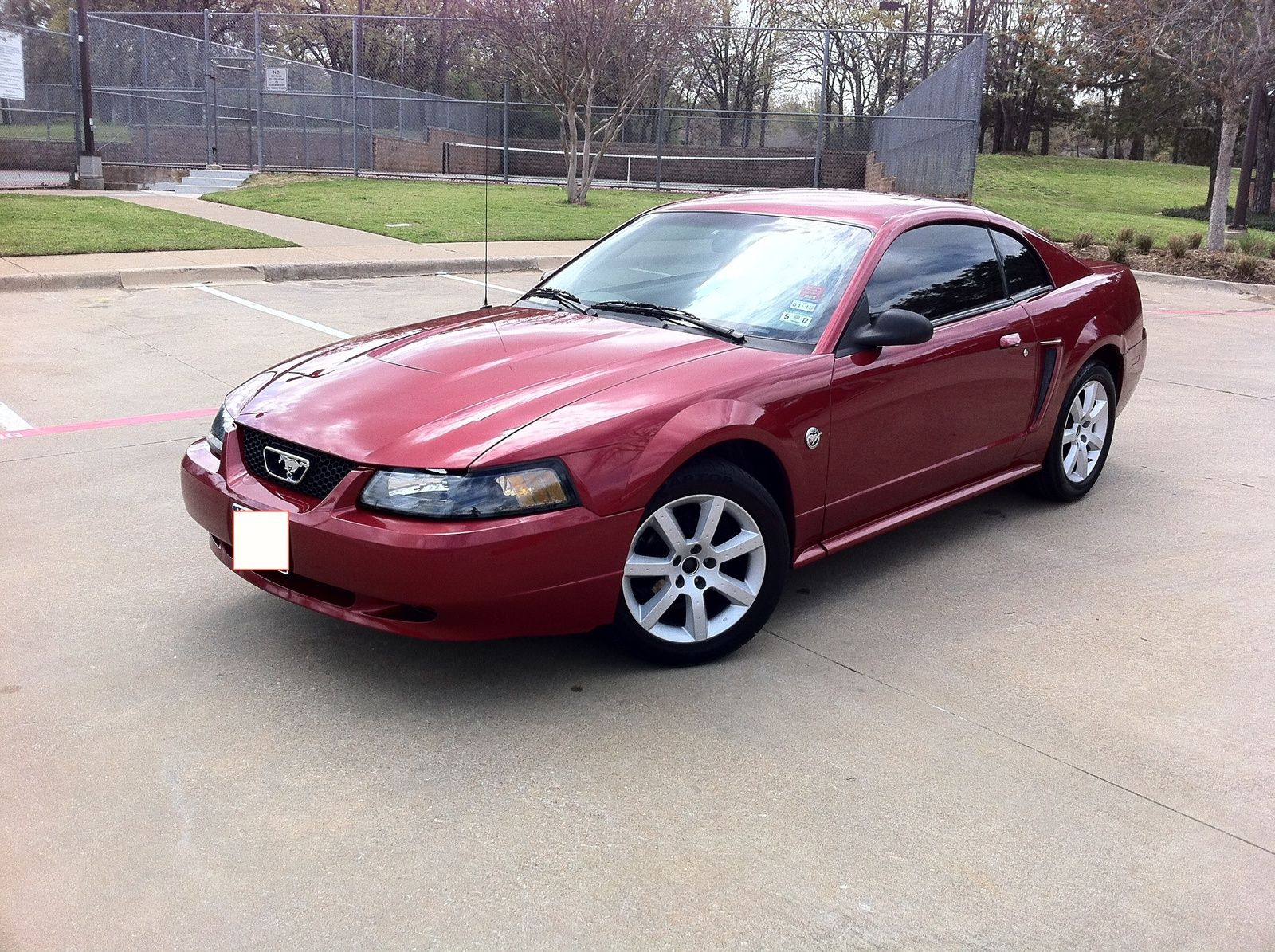
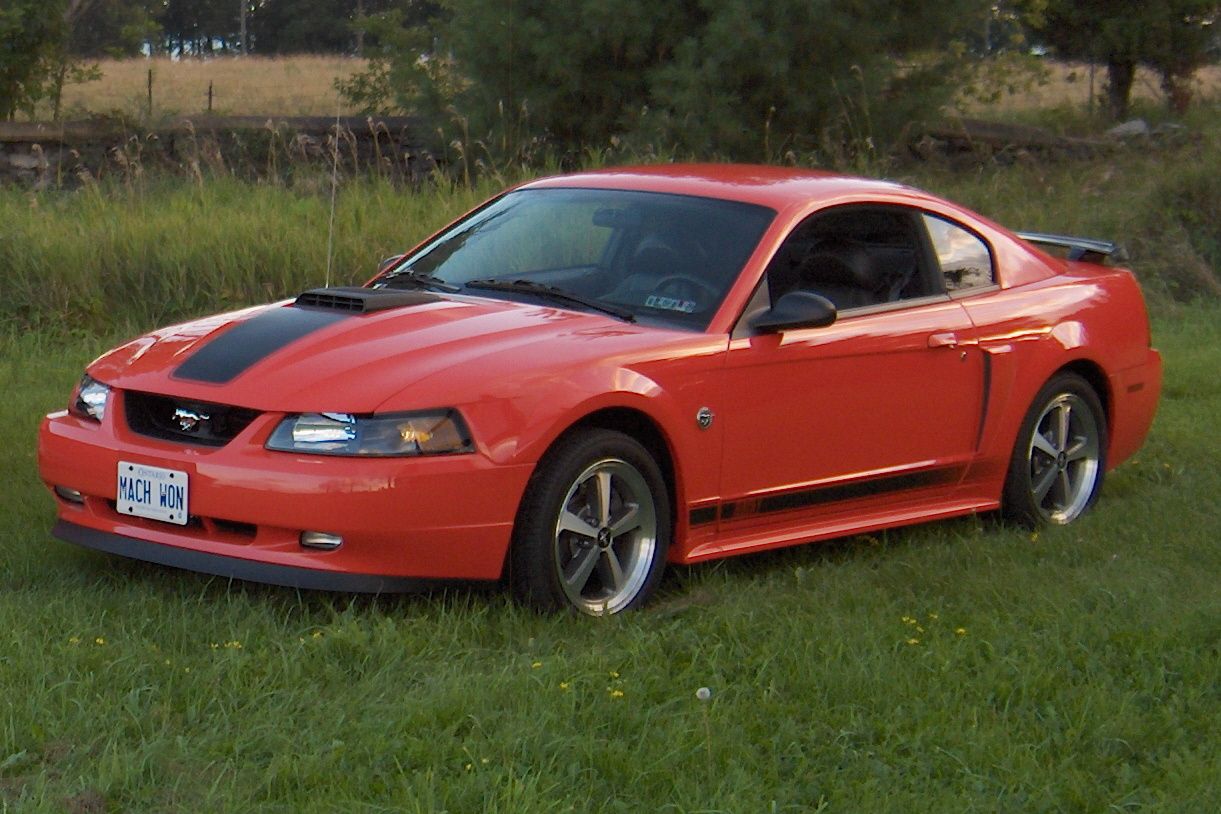
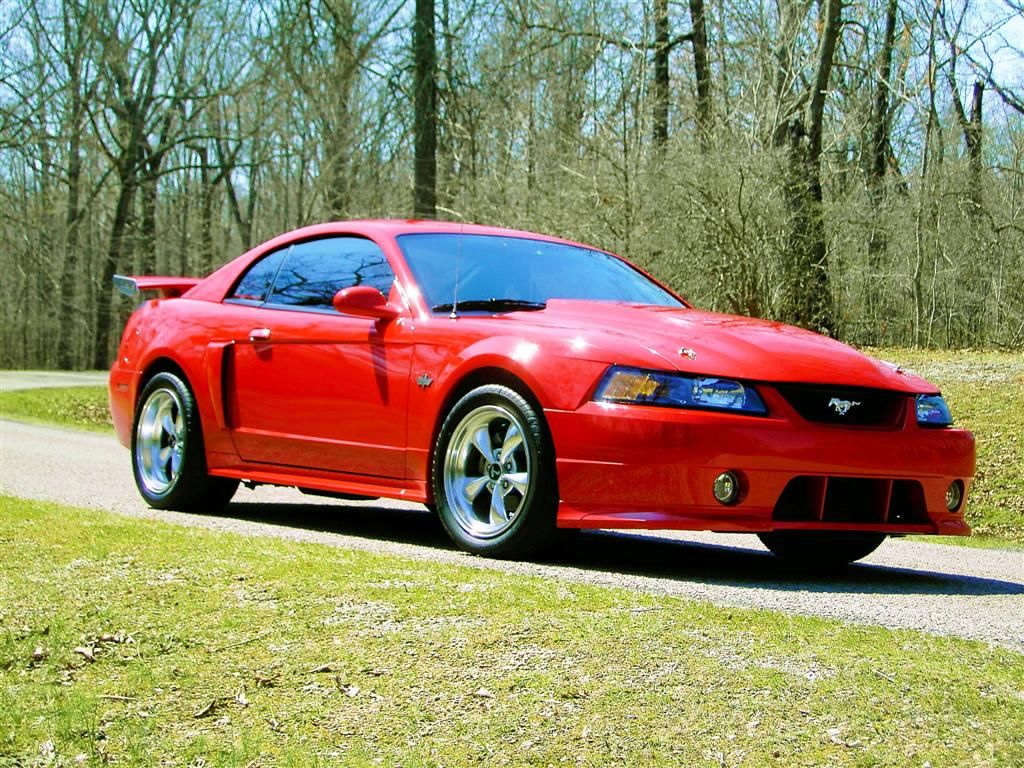
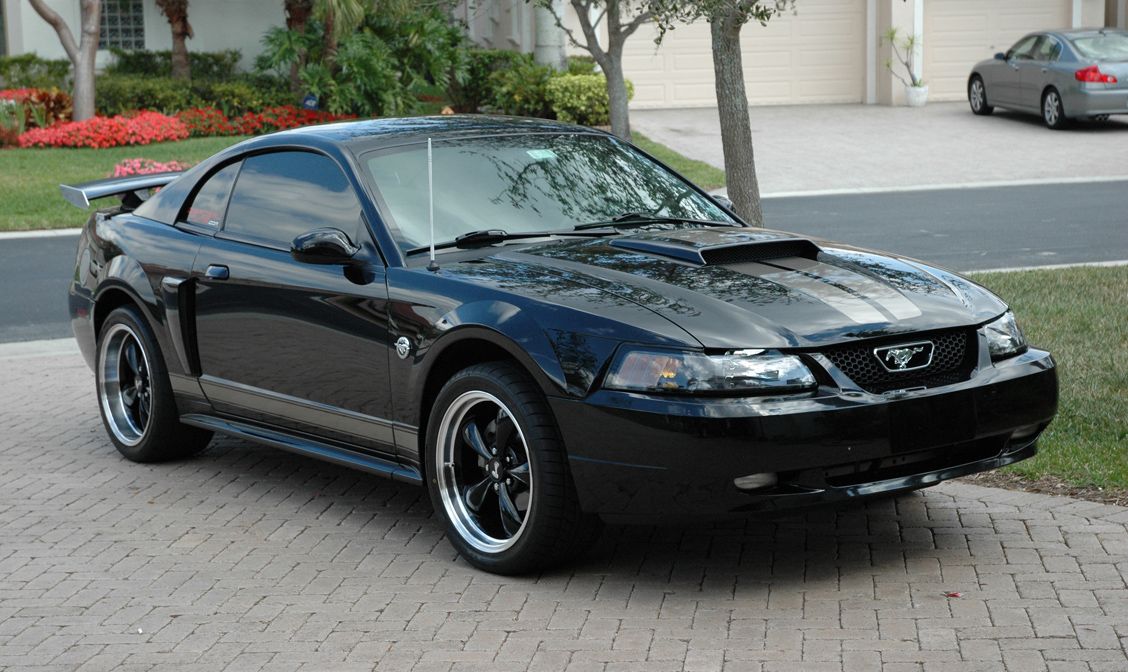
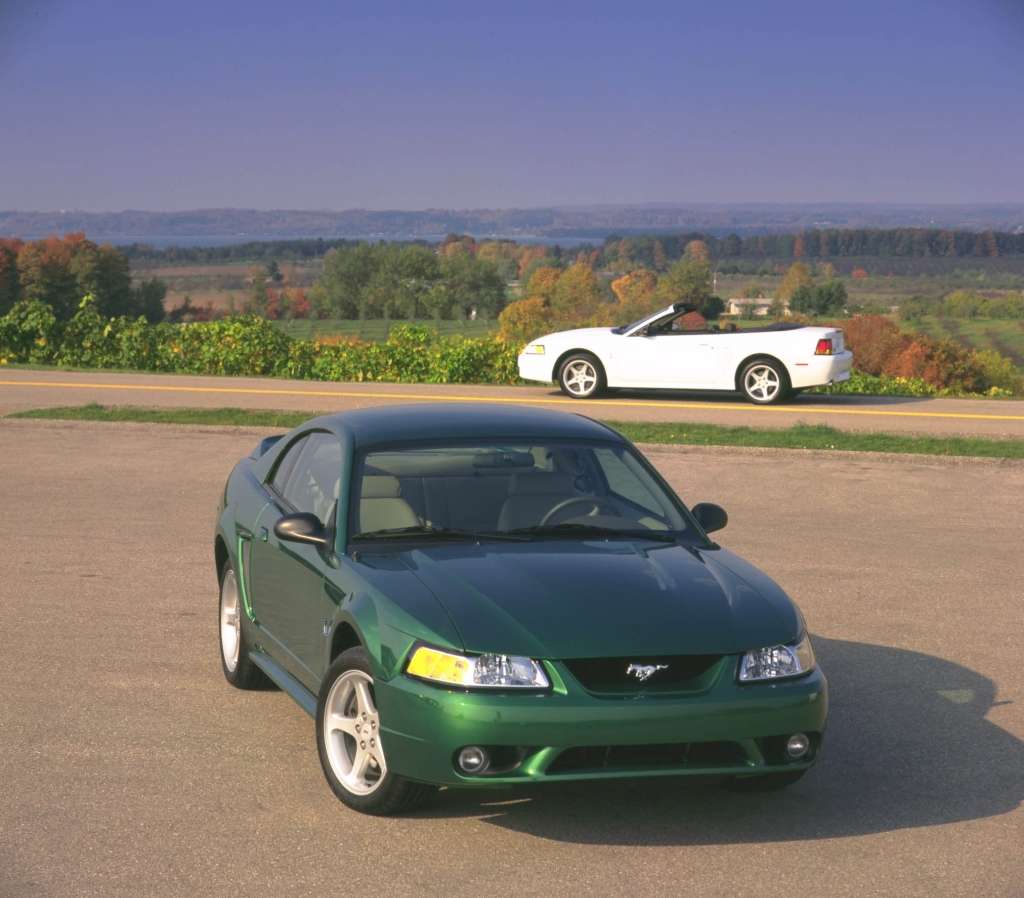
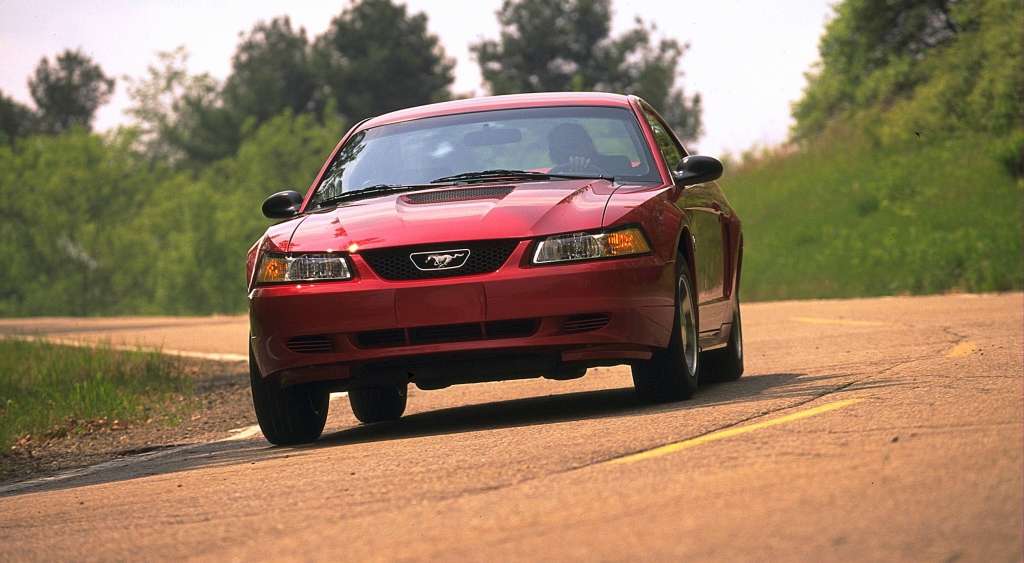
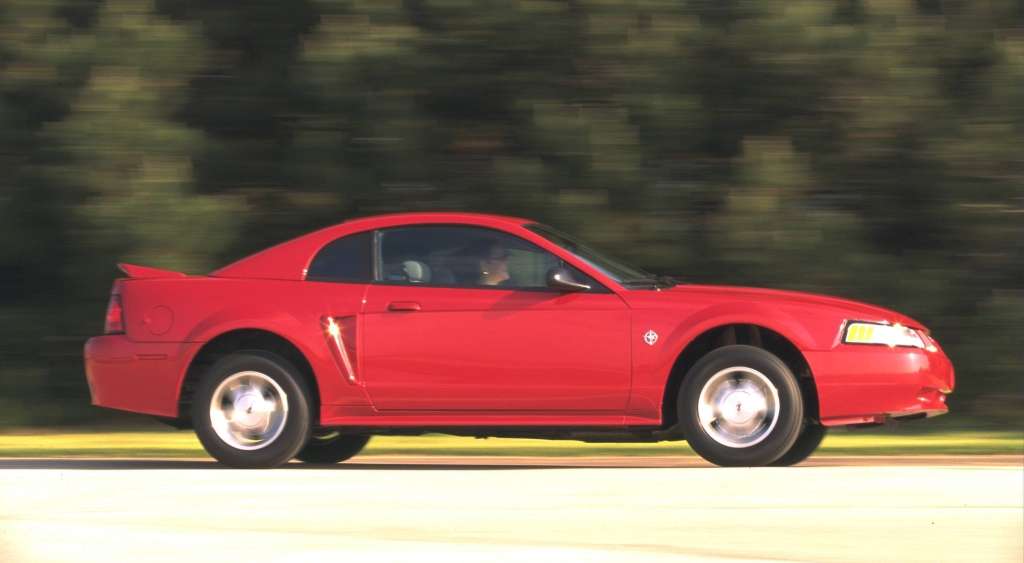
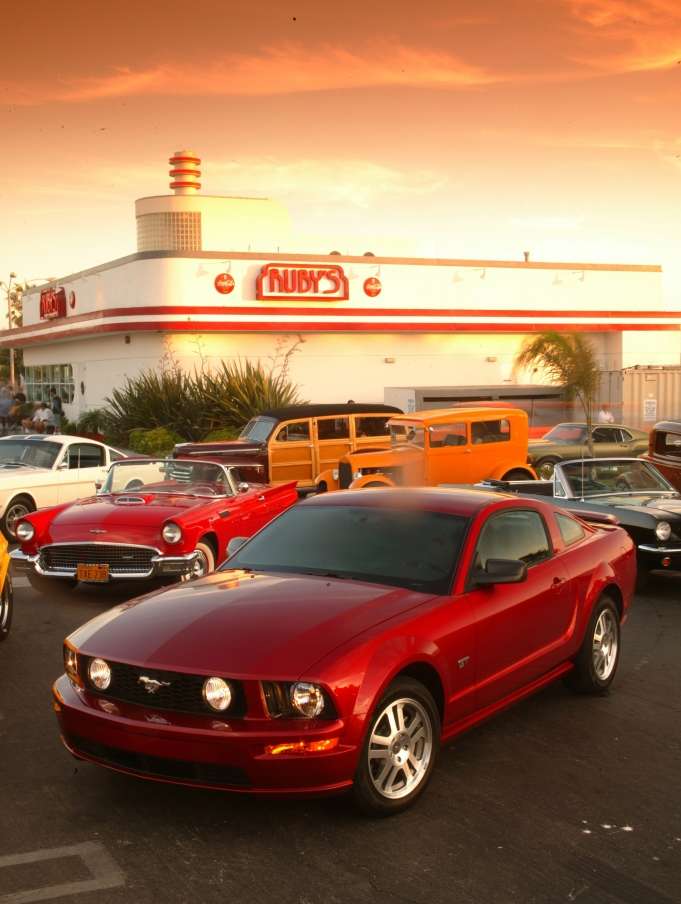
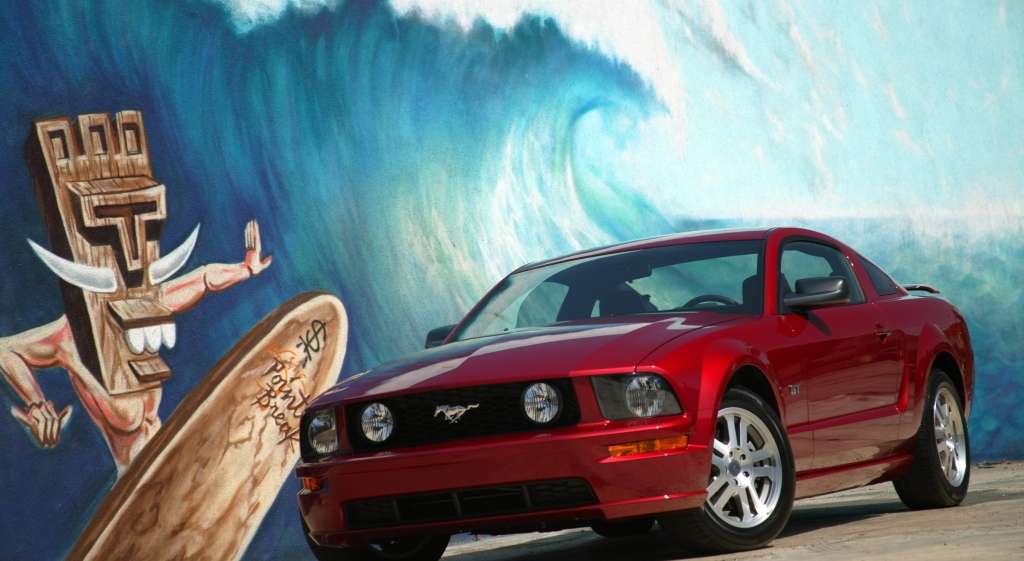
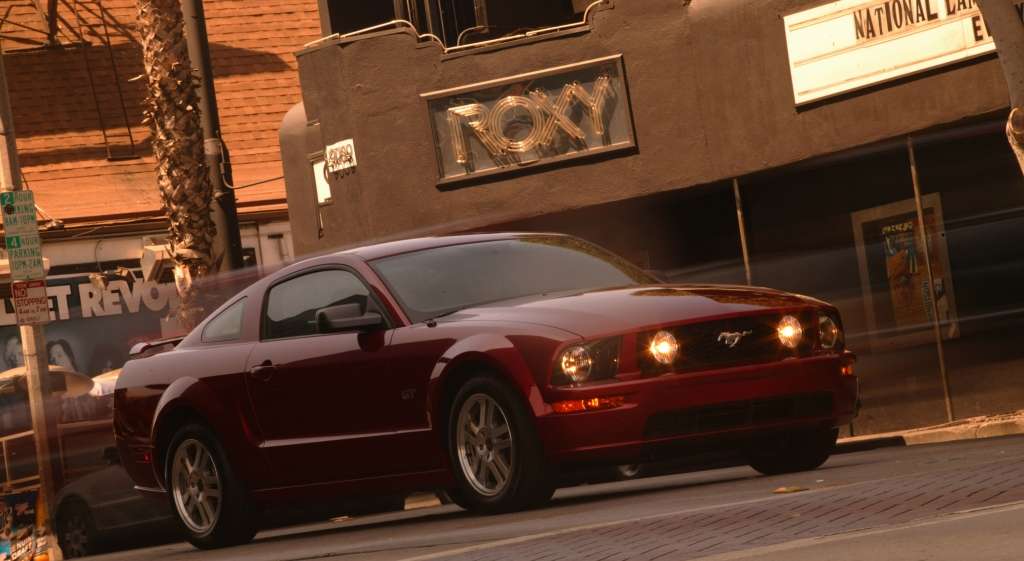
2004 Ford Mustang Base Exterior Colors
2004 Ford Mustang Base Interior Colors
2004 Ford Mustang Engines
| Engine | Standard in Trim | Power | Torque | Fuel Consumption - City | Fuel Consumption - Highway | 0-100 km/h | Quarter Mile | Half Mile |
|---|---|---|---|---|---|---|---|---|
| 4.6L V8 SOHC 16 valves | GT | 260 hp @ 5250 rpm | 207 N.m | 13.5 L/100km | 8.9 L/100km | 6.1 s | 14.2 s | 23.5 s |
| 4.6L V8 DOHC 32 valves | Mach 1 | 305 hp @ 5800 rpm | 207 N.m | 18.0 L/100km | 10.0 L/100km | 5.4 s | 13.4 s | 22.3 s |
| 4.6L V8 SOHC 16 valves | GT | 260 hp @ 5250 rpm | 207 N.m | 13.5 L/100km | 8.9 L/100km | 6.6 s | 14.7 s | 24.4 s |
| 4.6L V8 SOHC 16 valves | GT | 260 hp @ 5250 rpm | 207 N.m | 13.2 L/100km | 8.7 L/100km | 6.1 s | 14.2 s | 23.5 s |
| 4.6L V8 SOHC 16 valves | GT | 260 hp @ 5250 rpm | 207 N.m | 13.5 L/100km | 9.1 L/100km | 7.1 s | 15.2 s | 25.1 s |
| 4.6L V8 SOHC 16 valves | GT | 260 hp @ 5250 rpm | 207 N.m | 13.5 L/100km | 9.1 L/100km | 6.1 s | 14.2 s | 23.5 s |
| 4.6L V8 SOHC 16 valves | GT | 260 hp @ 5250 rpm | 207 N.m | 13.5 L/100km | 9.3 L/100km | 6.1 s | 14.2 s | 23.5 s |
| 4.6L V8 SOHC 16 valves | GT | 260 hp @ 5250 rpm | 207 N.m | 13.5 L/100km | 9.3 L/100km | 6.7 s | 14.7 s | 24.4 s |
| 4.6L V8 SOHC 24-valve | GT | 315 hp @ 6000 rpm | 207 N.m | 12.3 L/100km | 8.7 L/100km | 5.7 s | 13.7 s | 22.7 s |
| 4.6L V8 SOHC 24-valve | GT | 315 hp @ 6000 rpm | 207 N.m | 12.3 L/100km | 8.7 L/100km | 5.9 s | 13.9 s | 23.1 s |
2004 Ford Mustang Trims
2004 Ford Mustang Previous Generations

2004 Ford Mustang Future Generations
Ford Mustang Overview and History
He would later incorporate the firm on June 16, 1903. Ford Motor Company would go on and label their models chronologically in alfabetical order, starting with the Model A to the Model K and Model S, which was Ford's last right-hand steering vehicle. Then, in 1908 Ford introduced the Model T, which was designed by Childe Harold Wills and two Hungarian immigrants, Joseph A. Galamb and Eugene Farkas. This model proved to be of quintessential Ford vehicle, placing the company among the most influential automotive brands in history.
The Ford Model T was reliable, practical and affordable, which made it a big hit in the US, where it was advertised as the middle-class man's vehicle. The car's success compelled Ford to expand his business and layout the basics of mass production principles in 1913 with the introduction of the world's first vehicle assembly line. By 1912, production figures for the Model T alone reached nearly 200,000 units.
This organizational innovation brought in the vehicle construction field allowed Ford to reduce chassis assembly time by as much as 10 hours, dropping from 12 ½ h to 2h 40 min.
Besides ensuring the efficiency of the production process, Ford turned his company into an interactive entity by announcing a new profit-sharing policy. This would grant buyers a cut of profits if sales reached 300,000. As expected, sales effortlessly reached the 300k threshold and went even further to hit a record 501,000 in 1915.
As part of a new set of financial tactics, Ford provided working places for the disabled who otherwise had a hard time finding a job, reduced work shifts and doubled all employee's salaries. Changes like these sparked a tremendous sales increase while also setting the base of modern working conditions.
Still, the US and Canadian market would prove to be too small to fit Ford's plans. By the mid 20's, the Ford label had crossed the ocean and reached England, France, Germany, Denmark, Austria as well as distant Australia. The company's activity on European grounds further helped the brand's revenue growth.
War would not shake the Ford company as bad as other car makers. Post WWI improvements include the introduction of four-wheel brakes and a series of new vehicle releases to match new consumer demands. In 1922 Ford entered the luxury car segment with the acquisition of the Lincoln Motor Company, named after Abraham Lincoln whom Henry Ford admired.
Ford Motor Co. was one of the few big American corporations to survive the Great Depression, although the plummeting automotive sales led the company to scale down its operations and lay off many workers. In May 1929, Ford Motor Co. signed an agreement with the Soviet Union to provide technical assistance until 1938 to construct an integrated automobile-manufacturing plant at Nizhny Novgorod, in exchange for the Soviets purchasing $ 13 million worth of automobiles and parts. Under this agreement many American engineers and skilled auto workers went in 1932 to work on the Gorkovsky Avtomobilny Zavod (GAZ), or Gorki Automotive Plant. The few who remained in the Soviet Union after the completion of the plant fell victims to Stalin's Great Terror, ending either shot or exiled to Soviet gulags.
With the arrival of WWII Ford increased its influence on the global stage becoming an active player in the war effort, a thing underlined by US President Franklin Roosevelt referring to Detroit as the "Arsenal of Democracy." When the US War Department handed production of B-24 Liberator airplanes to Ford, the output rose to 20 airplanes per day instead of only one per day managed by the Consolidated Aircraft Corporation.
After WWII Ford continued its passenger vehicle operations and in 1955 introduced the iconic Thunderbird model. Then it introduced the Edsel brand in 1958, which proved to be a failure and was dissolved in 1960. Part Edsel's failure as an automotive brand resided in the onset of the 1957 recession in the States and the vehicle's high price tag.
Ford Motor Co. managed to get back up from its Edsel failure with the introduction of the Falcon model in 1960 and the Mustang in 1964. The company's next major step was represented by the formation of Ford Europe division in 1967.
Ford plunged into a state of brand-fatigue that would bring the company to the point of near bankruptcy. Following major sales losses in the 2000's, Ford was pinned against the wall by debts and the imminence of closing down.
Preferring to make it back on its own, Ford mortgaged all of its assets in 2006. As of then, the company has releases a variety of new models both under the Ford brand name and the rest of the sub-brands it owns such as fresher and edgier Mercuries and flashier Lincolns, Ford's luxury division. Business in Europe has also been good for Ford, especially after the introduction of the Focus model in 1997 and although it hasn't fully recovered, it's definitely on the way to regaining popularity.
2004 Ford Mustang Consumer Reviews
Compare Against Competitors
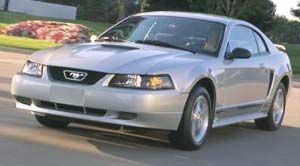

2004 Ford Mustang Base Specifications
Base Comfort and Convenience
| AM/FM stereo radio | Yes |
|---|---|
| Air Conditionning | Air conditioning |
| Antenna | Fixed antenna |
| Courtesy Dome Light | Courtesy light |
| Cruise Control | Yes |
| Driver Vanity Mirror | Yes |
| Front Wipers | Variable intermittent wipers |
| Number of Speakers | 4 speakers |
| Passenger Vanity Mirror | Yes |
| Power Windows | Yes |
| Rear View Mirror | Day/night rear view mirror |
| Single CD | CD player |
| Single CD (Option) | AM/FM stereo radio with CD/MP3 player |
| Smoking Convenience | Lighter and ashtray |
| Steering Wheel Adjustment | Tilt steering wheel |
| Trunk/Hatch Operation | Interior trunk release |
Base Dimensions
| Cargo Capacity | 308 L |
|---|---|
| Curb Weight | 1413 kg |
| Fuel Tank Capacity | 59 L |
| Height | 1349 mm |
| Length | 4653 mm |
| Wheelbase | 2570 mm |
| Width | 1857 mm |
Base Exterior Details
| Bumper Colour | Body-color bumpers |
|---|---|
| Door Handles | Body-color door handles |
| Exterior Decoration | Fender badging 40th anniversary |
| Exterior Decoration (Option) | Arizona Beige stripe on hood, lower door panels and decklid |
| Exterior Mirror Colour (Option) | Body-color mirrors |
| Grille | Black grille |
| Headlight Type | Halogen headlamps |
| Lower Side-Body Extension | Body-color rocker mouldings |
| Power Exterior Mirrors | Power side mirrors |
| Rear Spoiler | Yes |
| Rear Spoiler (Option) | Spoiler delete |
| Side-Body Trim (Option) | Bodyside mouldings |
Base Interior Details
| Clock | Digital clock integrated to radio |
|---|---|
| Door Trim | Vinyl door trim |
| Floor Console | Yes |
| Floor Mats | Front floor mats |
| Floor Mats (Option) | Floor mats 40th anniversary logo |
| Folding Rear Seats | 50/50 rear split folding bench |
| Front Center Armrest | Front center armrest with storage |
| Front Seats Driver Headrest | Height adjustable driver headrest |
| Front Seats Driver Headrest (Option) | 4 way head restraint |
| Front Seats Driver Power Seats | 6 way power driver seat |
| Front Seats Front Seat Type | Bucket seats |
| Front Seats Passenger Headrest | Height adjustable passenger headrest |
| Headliner | Cloth headliner |
| Instrumentation Type | Analog instrumentation |
| Seat Trim | Cloth seats |
| Seat Trim (Option) | Leather seats |
| Shifter Knob Trim (Option) | Leather-wrapped shift knob |
| Special Feature | Storage net between visors on headliner |
| Special Feature (Option) | Grey metallic satin steel centre panel and shifter bezel |
| Steering Wheel Trim (Option) | Leather-wrapped steering wheel |
Base Mechanical
| Drive Train | Rear-wheel drive |
|---|---|
| Engine Name | 3.8L V6 OHV 12 valves |
| Traction Control (Option) | Yes |
| Transmission | 5 speed manual |
| Transmission (Option) | 4 speed automatic transmission |
Base Overview
| Body | Coupe |
|---|---|
| Doors | 2 |
| Engine | 3.8L V6 OHV 12 valves |
| Fuel Consumption | 12.3 (Automatic City)8.0 (Automatic Highway)12.0 (Manual City)7.4 (Manual Highway) |
| Power | 190 hp @ 5250 rpm |
| Seats | 4 |
| Transmission | 5 speed manual |
| Warranties | Bumper-to-Bumper60000/km, 36/Months Powertrain60000/km, 36/Months Roadside Assistance60000/km, 36/Months Rust-throughUnlimited/km, 60/Months |
Base Safety
| Anti-Lock Brakes | Std |
|---|---|
| Brake Type | 4 wheel disc |
| Child Seat Anchor | None |
| Driver Airbag | Driver side front airbag |
| Front Seat Belts | Regular |
| Ignition Disable | Securi-lock passive anti-theft system |
| Passenger Airbag | Passenger side front airbag |
| Rear Seat Belts | Center 3-point |
Base Suspension and Steering
| Front Anti-Roll Bar | Front stabilizer bar |
|---|---|
| Front Suspension | Front independent suspension |
| Front Tires | P225/55R16 |
| Front Tires (Option) | P225/55HR16 |
| Rear Suspension | Rear solid axle suspension |
| Spare Tire | Compact spare tire |
| Wheel Type | 16 x 7 alloy wheels |
| Wheel Type (Option) | 16'' polished aluminium wheels |
Discussion and Comments
Share Your Comments