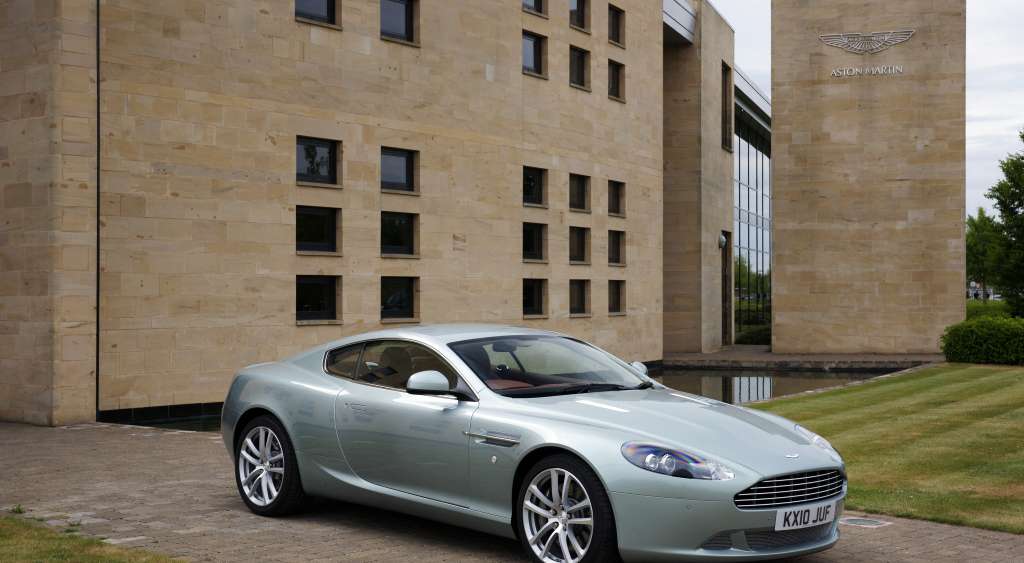
2010 Aston Martin DB9 Base 0-60 Times, Top Speed, Specs, Quarter Mile, and Wallpapers
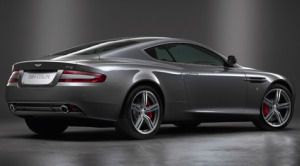
The 2010 Aston Martin DB9 Base is a Rear-wheel drive Coupe. It can accommodate up to 4 passengers. It has 2 Doors and is powered by a 6.0L V12 DOHC 48-valve engine which outputs 477 hp @ 6000 rpm and is paired with 6-speed automatic transmission with manual mode gearbox. The 2010 Aston Martin DB9 Base has cargo capacity of Liters and the vehicle weighs 1760 kg. In terms of ride assists, the 2010 Aston Martin DB9 Base has stability control and traction control in addition to anti-lock brake system (ABS). The vehicle has an optional engine as well It offers Rear park distance sensor and. Safety features also include Driver-side front airbag and Passenger-side front airbag. The front suspension is Independent front suspension while the rear suspension is Independent rear suspension. The car also features a Yes It has 19'' alloy wheels as standard. Electronic features include Cruise Control. For convenience, the car has Power windows and Power door locks. There is also a remote keyless entry feature. Moreover, the car has. The steering wheel has audio control buttons. In terms of performance, the car has 521 N.m of torque and a top speed of 287 km/h. The 2010 Aston Martin DB9 Base accelerates from zero to 60 mph in 3.3 seconds and hits quarter mile at 10.7 seconds. Fuel consumption is 16.2 L/100km in the city and 10.1 L/100km in the highway. The car price starts at $ 0
| Name | Base | |
|---|---|---|
| Price | $ 0 | |
| Body | Coupe | |
| Doors | 2 Doors | |
| Engine | 6.0L V12 DOHC 48-valve | |
| Power | 477 hp @ 6000 rpm | |
| Number of Seats | 4 Seats | |
| Transmission | 6-speed automatic transmission with manual mode | |
| Cargo Space | L | |
| Maximum Cargo Space | L | |
| Wheel Type | 19'' alloy wheels | |
| Series | ||
| Drivetrain | Rear-wheel drive | |
| Horsepower | 477 HP | |
| Torque | 521 N.m | |
| Top Speed | 287 km/h | |
| Acceleration 0-100 km/h (0-60 mph) | 3.3 s | |
| Fuel Type | ||
| Fuel Consumption (City) | 16.2 L/100km | |
| Fuel Consumption (Highway) | 10.1 L/100km | |
| Gear Type | auto | |
| Weight | 1,100 KG | |
| Brand | Aston Martin | |
| Model | DB9 | |
| 0-400m (Quarter Mile) | 10.7 s | |
| 0-400m (Quarter Mile) - Speed | 215.0 km/h | |
| 0-800m (Half Mile) | 17.7 s | |
| 0-800m (Half Mile) - Speed | 242.1 km/h | |
| Modifications (MODS) | ||
| Modifications Cost | $ 0 |
2010 aston martin DB9 acceleration AMAZING sound!
Mercedes SL55 AMG & Aston Martin DB9 Drag Race Hungaroring 2010.08.20.
2010 Aston Martin DB9 Used Price Estimates
Estimates based on a driving average of 12,000 miles per year| Used Condition | Trade In Price | Private Party Price | Dealer Retail Price |
|---|
The 2010 Aston Martin DB9 may not be the ultimate driver's car, but what it lacks in maximum thrills it makes up for with stunning good looks and loads of character.
Styling is subjective and all that, but really, you need to see an oculist if your eyes see the 2010 Aston Martin DB9 as something other than a gorgeous automobile. When the world's automakers finally stop making cars and resort to some sort of hydrogen-powered hover pod, everyone will look back on the DB9 as one of the prettiest cars to ever roam the Earth. So the DB9 is obviously desirable for its looks, but the real question is: What's going on underneath all that pretty?
Well, the DB9 is built on Aston Martin's VH platform that underpins all its vehicles -- it's a strong aluminum architecture that manages to keep weight reasonably in check. This in turn allows for greater agility and less taxed acceleration from the 470-horsepower V12, which propels the DB9 coupe to 60 mph in 4.6 seconds. That's certainly not slow, but less costly exotic cars like the Porsche 911 Turbo or Audi R8 5.2 are notably quicker. It definitely won't handle with the tenacity of those cars either.
Even so, the DB9 isn't intended to be the ultimate automotive thrill machine. The DB9 is more of a grand touring car, one that possesses sharp handling yet has a ride comfortable enough to go from Miami to Los Angeles without making your butt go numb and reducing your spine to a garbled mash of vertebrae. The interior's masterful and customizable collection of fine leathers, rich woods and even sapphire crystal make such a trip all the more enjoyable.
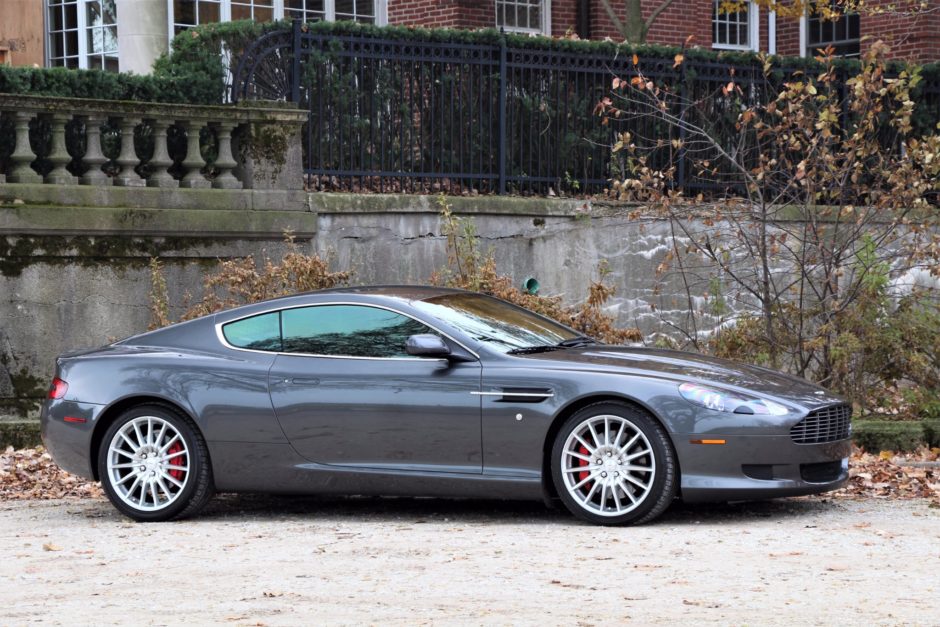
Among exotics, its fellow Brit the Bentley Continental GT is the closest competitor to the DB9 in terms of power and character, but even that comparison is a stretch. To a further degree, cars like the Audi R8 5.2, Ferrari California, Maserati GranTurismo, Mercedes-Benz SLS AMG and Porsche 911 Turbo would appeal to the same sort of high-priced demographic, but all offer vastly different styles and various degrees of ride/handling acumen.

In the end, though, we suspect many buyers will not worry too much that Exotic A is quicker than Exotic B, or even that Exotic G is a better value. They're more likely to care about the style and image each exotic exudes, with the assumption that what's going on underneath all that pretty is a brilliantly engineered car. For the 2010 Aston Martin DB9, that's indeed a safe assumption.

The 2010 Aston Martin DB9 is a 2+2-seat luxury GT available in coupe and convertible body styles. The convertible is known as the Volante. Standard equipment includes 19-inch wheels, a limited-slip differential, HID headlamps, front and rear parking sensors, a wind deflector (Volante), automatic power-folding exterior mirrors, cruise control, a tilt-and-telescoping steering wheel, an eight-way power driver seat, a four-way power passenger seat, driver memory functions, heated front seats, automatic climate control, a full leather interior, battery disconnect switch (for vehicle storage), Bluetooth, a navigation system and a surround-sound audio system with an iPod interface, satellite radio and a six-CD changer.
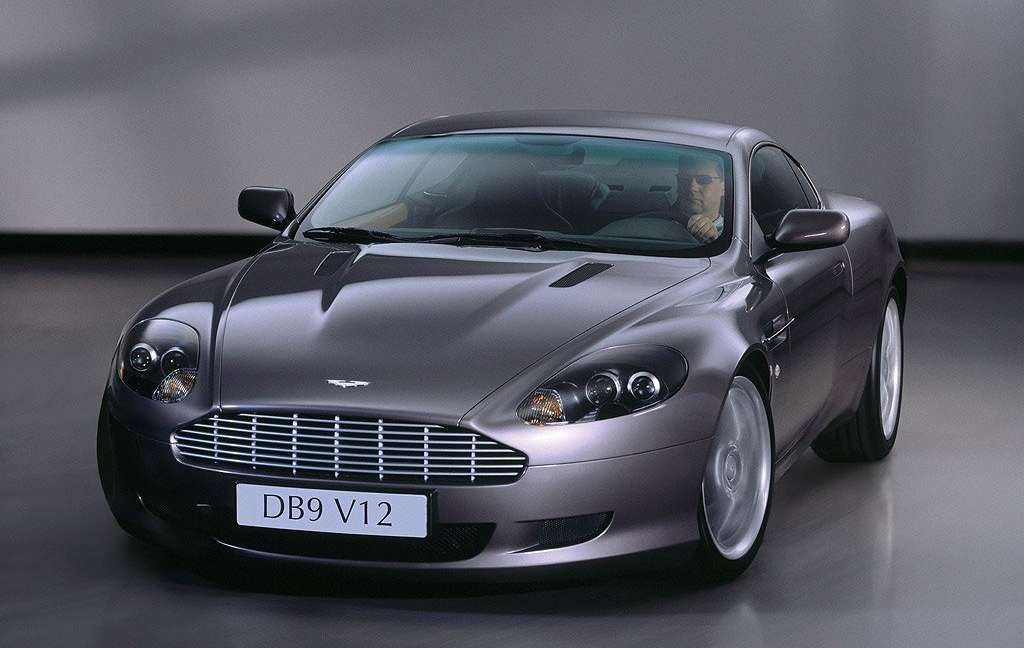
The coupe can be equipped with an optional Sport Pack, which adds firmer suspension tuning along with lighter-weight 19-inch wheels. Other options include 20-inch wheels and a Bang & Olufsen surround-sound system. The DB9 is also highly customizable, especially when it comes to exterior paint. There's a rather large selection of colors to choose from (including Volante roof colors), plus you can request any paint code Aston Martin or any other manufacturer has ever used. You can match your car to a sample -- meaning it's possible to accessorize your DB9 to your velour jumpsuit. Also, the color of almost all interior leather surfaces can be made to order.
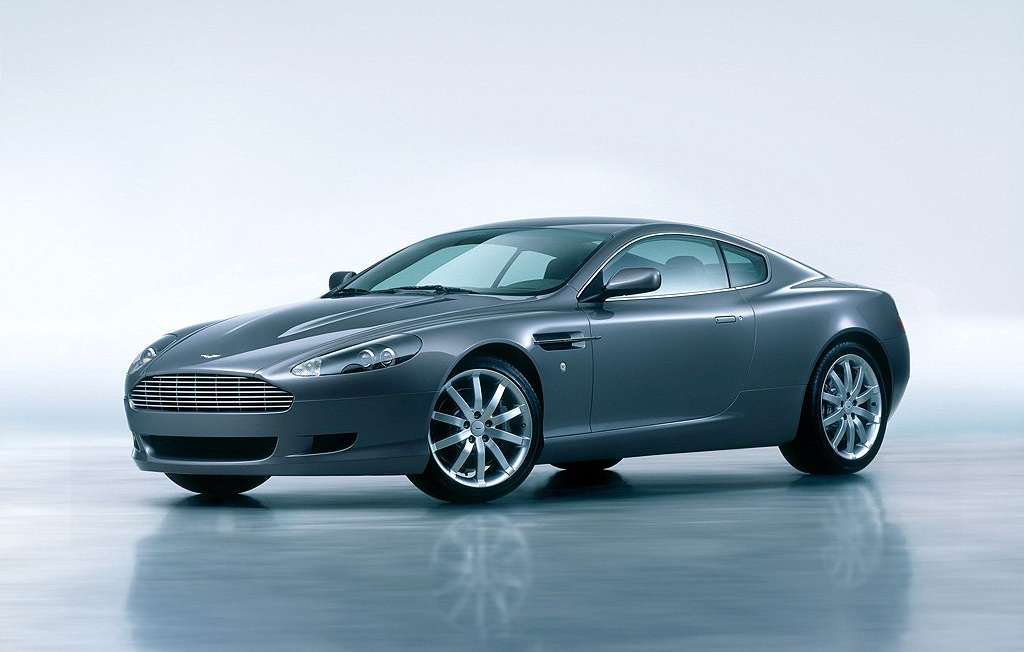
The rear-wheel-drive DB9 is powered by a 6.0-liter V12 capable of 470 hp and 443 pound-feet of torque. A six-speed manual transmission and a six-speed automatic with paddle shifters are available. With either transmission or body style, acceleration is prodigious. According to Aston Martin, both manual- and automatic-equipped coupes go from zero to 60 mph in 4.6 seconds. The heavier convertible is a few tenths slower. In case you care, fuel economy with the automatic is 12 mpg city/19 mpg highway and 14 mpg combined.
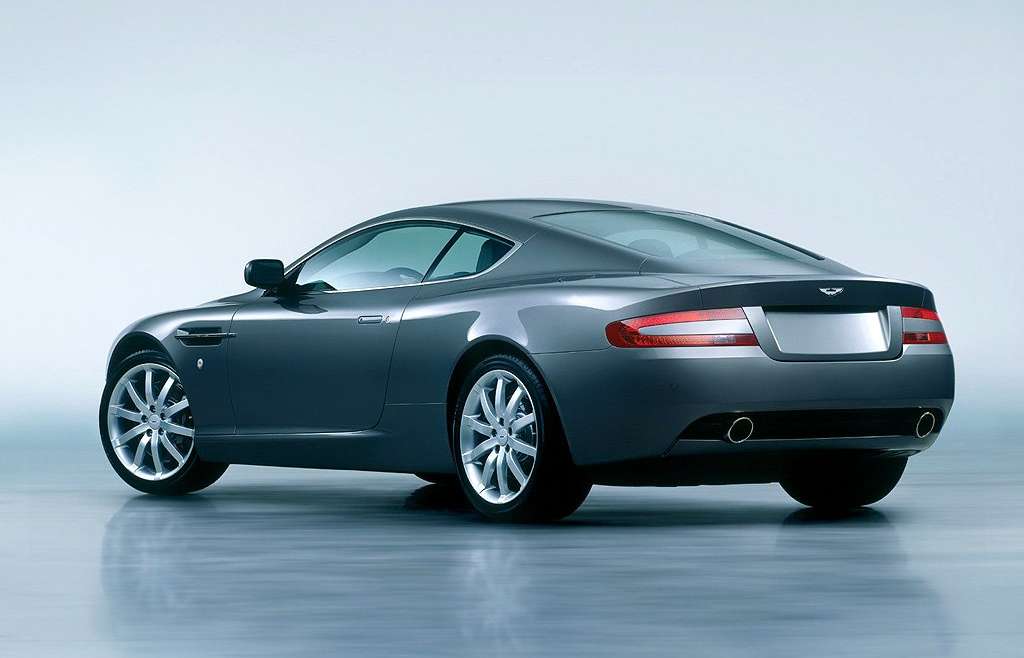
Safety equipment on the 2010 Aston Martin DB9 includes antilock brakes, stability and traction control, front-seat side airbags (that protect the head and torso) and front and rear parking sensors. The Volante comes standard with automatically deploying rollover hoops.
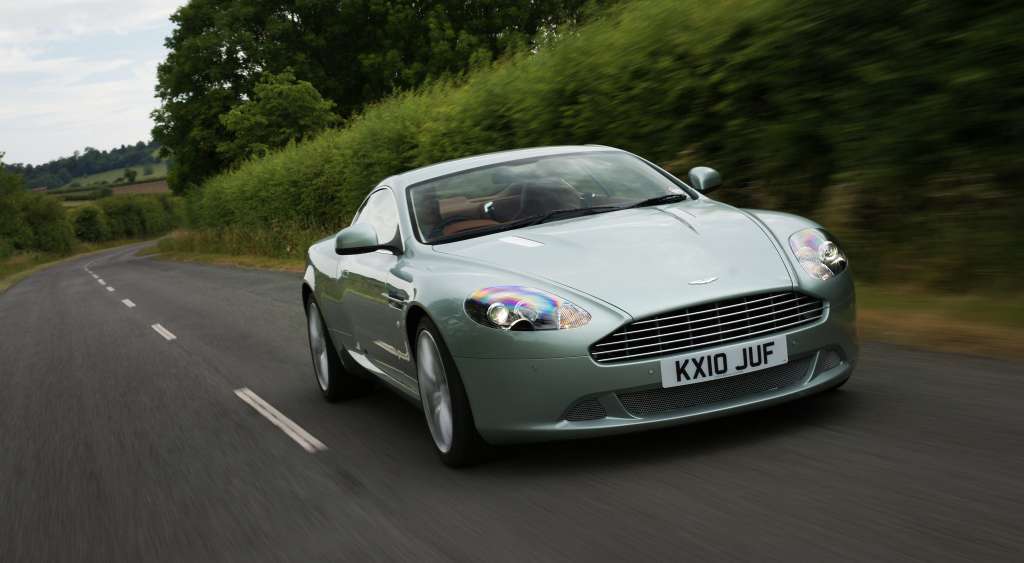
The 2010 Aston Martin DB9 is striking for how easy it is to drive. The clutch is light and short in travel, and the shifter snicks through the gates with precision. The automatic transmission is remarkably smooth, and its manual-mode paddle shifts are quick. The steering is light and precise, although don't expect Ferrari accuracy and feel. As exotic GTs go, the DB9 is generally exhilarating to drive, as it changes direction easily and responds smartly to steering and braking inputs. Best of all, it still manages to offer a compliant ride that makes it one of the few exotic sports cars you'd look forward to driving cross-country.

Still, driving enthusiasts should note that the DB9 Volante's less rigid body not only makes it jiggle over rough surfaces but also forces it to have a softer suspension, making it more of a boulevard cruiser. Enthusiasts interested in the coupe should make sure they specify the Sports Pack option, as it exhibits better steering feel, sharper turn-in response and better ride control over midcorner bumps.
It's difficult to find a surface in the DB9 that's not covered in soft leather, while wood, piano black, alloy trim and even sapphire crystal fill in the blanks. Easily deciphered buttons combine with a central LCD screen to create a more-user-friendly and better-looking interface than earlier DB9s. Still, the navigation system is one of the worst in the business, and we wish Aston would ditch the metallic electroluminescent gauges that strangely rotate in opposite directions (the tach goes the wrong way). The speedometer also has such a huge range and tiny numbers that it's rendered practically useless. Luckily, there's a digital speedometer in the trip computer.
The driver seat is marvelously comfortable, with ample leg- and headroom for taller drivers. Unfortunately, the four-way power passenger seat doesn't offer the same amount of adjustability and comfort. The two rear seats are glorified parcel shelves, while the trunk offers enough room for a set of golf clubs and a suitcase. The cabin's decent outward visibility makes the DB9 less onerous to drive than some other exotics.
2010 Aston Martin DB9 Base Exterior Colors
2010 Aston Martin DB9 Base Interior Colors
2010 Aston Martin DB9 Engines
| Engine | Standard in Trim | Power | Torque | Fuel Consumption - City | Fuel Consumption - Highway | 0-100 km/h | Quarter Mile | Half Mile |
|---|---|---|---|---|---|---|---|---|
| 5.9L V12 DOHC 48-valve | Base | 477 hp @ 6000 rpm | 521 N.m | 17.3 L/100km | 10.4 L/100km | 3.3 s | 10.7 s | 17.7 s |
| 5.9L V12 DOHC 48-valve | Base | 477 hp @ 6000 rpm | 521 N.m | 17.3 L/100km | 10.4 L/100km | 4.6 s | 12.5 s | 20.8 s |
| 5.9L V12 DOHC 48-valve | Base | 450 hp @ 6000 rpm | 521 N.m | 19.2 L/100km | 11.3 L/100km | 3.4 s | 10.9 s | 18.1 s |
| 5.9L V12 DOHC 48-valve | Base | 455 hp @ 6000 rpm | 521 N.m | 18.8 L/100km | 11.8 L/100km | 4.8 s | 12.7 s | 21.1 s |
| 5.9L V12 DOHC 48-valve | Base | 450 hp @ 6000 rpm | 521 N.m | L/100km | L/100km | 3.4 s | 10.9 s | 18.1 s |
| 5.9L V12 DOHC 48-valve | Base | 450 hp @ 6000 rpm | 521 N.m | L/100km | L/100km | 4.7 s | 12.6 s | 21.0 s |
2010 Aston Martin DB9 Trims
2010 Aston Martin DB9 Previous Generations
2010 Aston Martin DB9 Future Generations

Aston Martin DB9 Overview and History
Aston Martin was founded in 1913, soon after Martin emerged victorious out of the famed Aston Hill race. The duo produced their first car 2 years later by fitting a four-cylinder Coventry-Simplex engine to a 1908 Isotta-Fraschinni chassis. However, their plans of starting production were abruptly shattered by the First World War outbreak when both of the car-makers joined the army.
Still, Aston Martin would prevail as soon as the War was over, with the company being refunded to resume its activity. However, not much time went by before Bamford left Aston Martin in 1920. Luckily enough, a wealthy investor saw the true potential of the brand and poured heavy funds into its rejuvenation. Count Louis Zborowski investment turned almost overnight into a delicious technological improvement reward topped with racing track winnings whipped cream.
In 1922, Aston Martin produced vehicles to compete in the French Grand Prix. Besides gaining fame by appearing at some of the most popular races of that time, the cars also collected acclaim by setting new speed and endurance records at Brooklands. The three types of chassis that were used at the time became known as the winning trio with chassis number 1915 at the top and supporting numbers 1914 and 1916 at the sides.
However, the tidal wave of fame that has propelled Aston Martin to new heights broke against the solid wall of a 1924 bankruptcy. Still, it survived, having been purchased by Lady Charnwood who gave her son John Benson an important administrative role. It would ultimately prove that her son could not face the challenges of such a position and the company failed again only one year later. By 1926, the doors had slammed shut, with Lionel Martin stepping into the shoes of his former business partner, Robert Bamford.
Soon after Martin's leaving, the company would be revived for a second time by a ring of rich investors including Bill Renwick and Augustus Bertelli who were responsible for the design and performance of some of the models that would later enter production. By 1937, Bertelli had already developed a variety of vehicles, some of the most famous being the 'Le Mans', the Mk II' and the 'Ulster'.
Although Aston Martin was doing well, it was soon afflicted by a third set of financial problems that were deftly fixed by L. Prideaux Brune, who continued to finance the company for a short time. After changing ownership for a fourth time, the luxury car-maker became still, once the Second World War broke out.
in 1947, the lethargy that had snugly wrapped around the company's activity received a coupe de grace from 'charioteer' David Brown, who had also acquired Lagonda the same year. Aston Martin Motors, who had gained the name during its 1926 resurrection, had entered a new stage of production. The first model of the DB series would soon appear, with a successor being announced in 1950, the DB3 seven years later and so on until the early 70's with the DBS V8.
Although Aston Martin enjoyed success and appreciation, it switched to financial-trouble mode once more, changing two ownerships over the next two decades until Ford took over in the early 90's. During this time, Aston had grown in size and notoriety with a much wider palette of offerings ranging from the Volante to the Vantage and the DB7. Although Ford would not slacken the reigns on Aston Martin's leadership, the board committee was forced to take the same decision as Aston's previous owners: sell the company. Last year (2007) Aston Martin entered a new era when it was purchased by a Prodrive chairman David Richards-led consortium for the amount of $ 848 million. Ever since, Aston has registered an overall sales increase and has expanded by opening more dealers in Europe and even moving to China, a performance that hasn't been achieved in almost a century worth of car-brand history.
2010 Aston Martin DB9 Consumer Reviews
2010 Aston Martin DB9 Base Specifications
Base Comfort and Convenience
| AM/FM stereo radio | AM/FM stereo radio with auxiliary input jack and USB port |
|---|---|
| Air Conditionning | Automatic climate control |
| Bluetooth Wireless Technology | Yes |
| Cruise Control | Yes |
| Garage Door Opener | Universal garage-door opener |
| Multi-CD Changer | In-dash 6-CD/MP3 changer |
| Navigation System | Yes |
| Number of Speakers | 11 speakers including subwoofer |
| Power Door Locks | Central lock switch |
| Power Windows | Power windows with one-touch up/down feature |
| Premium Sound System | 700-watt premium audio system |
| Reading Light | Front reading lights |
| Rear View Mirror | Auto-dimming day/night rear view mirror |
| Remote Keyless Entry | Yes |
| Special Feature | IPod integration |
| Special Features | Trunk-mounted umbrella |
| Steering Wheel Adjustment | Power tilt and telescopic steering wheel |
| Trunk/Hatch Operation | Remote trunk release |
| Voice Recognition System | Yes |
Base Dimensions
| Curb Weight | 1760 kg |
|---|---|
| Fuel Tank Capacity | 80 L |
| Height | 1300 mm |
| Length | 4710 mm |
| Wheelbase | 2740 mm |
| Width | 1875 mm |
Base Exterior Details
| Exterior Decoration | LED taillights |
|---|---|
| Exterior Folding Mirrors | Power-folding outside mirrors |
| Exterior Mirror Colour | Body-color outside mirrors |
| Headlight Type | Xenon headlights |
| Power Exterior Mirrors | Power-adjustable outside mirrors |
| Rear Window Defroster | Yes |
Base Interior Details
| Clock | Analog clock |
|---|---|
| Door Trim | Leather door trim |
| Front Seats Driver Power Seats | 10-way power driver's seat |
| Front Seats Driver Seat Memory | 3-position memory feature for driver's seat and outside mirrors |
| Front Seats Front Seat Type | Sport bucket front seats |
| Front Seats Heated | Heated seats |
| Front Seats Passenger Power Seats | 10-way power front passenger seat |
| Front Seats Passenger Seat Memory | 3-position memory feature for front passenger seat |
| Instrumentation Type | Electroluminescent analog instrumentation |
| Luxury Dashboard Trim | Wood and leather interior trim |
| Seat Trim | Leather seats |
| Shifter Knob Trim | Alloy-trimmed shift knob |
| Steering Wheel Trim | Leather-wrapped steering wheel |
| Tachometer | Yes |
| Trip Computer | Yes |
Base Mechanical
| Drive Train | Rear-wheel drive |
|---|---|
| Engine Name | 6.0L V12 DOHC 48-valve |
| Stability Control | Yes |
| Start button | Yes |
| Traction Control | Yes |
| Transmission | 6-speed manual transmission |
| Transmission (Option) | 6-speed automatic transmission with manual mode |
Base Overview
| Body | Coupe |
|---|---|
| Doors | 2 |
| Engine | 6.0L V12 DOHC 48-valve |
| Fuel Consumption | 16.2 (Automatic City)10.1 (Automatic Highway)18.9 (Manual City)11.7 (Manual Highway) |
| Power | 477 hp @ 6000 rpm |
| Seats | 4 |
| Transmission | 6-speed automatic transmission with manual mode |
| Warranties | Bumper-to-BumperUnlimited/km, 36/Months PowertrainUnlimited/km, 36/Months Roadside AssistanceUnlimited/km, 36/Months Rust-throughUnlimited/km, 36/Months |
Base Safety
| Anti-Lock Brakes | Anti-lock brakes |
|---|---|
| Anti-Theft Alarm | Alarm system |
| Brake Assist | Brake assist |
| Brake Type | 4-wheel disc |
| Driver Airbag | Driver-side front airbag |
| Electronic brake force distribution | Electronic brake force distrbution |
| Ignition Disable | Theft-deterrent engine immobilizer |
| Parking Distance Sensor | Rear park distance sensor |
| Passenger Airbag | Passenger-side front airbag |
| Side Airbag | Front side airbags |
Base Suspension and Steering
| Front Anti-Roll Bar | Yes |
|---|---|
| Front Suspension | Independent front suspension |
| Front Tires | 235/40R19 |
| Power Steering | Speed-sensitive power rack-and-pinion steering |
| Rear Anti-Roll Bar | Yes |
| Rear Suspension | Independent rear suspension |
| Rear Tires | 275/35R19 rear tires |
| Special feature | Active damping control suspension |
| Tire Pressure Monitoring System | Yes |
| Turning Circle | 12.0-meter turning circle diameter |
| Wheel Type | 19'' alloy wheels |
Discussion and Comments
Share Your Comments