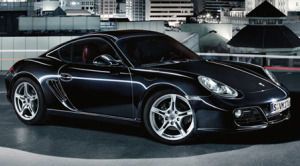
2007 Porsche Cayman Base 0-60 Times, Top Speed, Specs, Quarter Mile, and Wallpapers

The 2007 Porsche Cayman Base is a Rear-wheel drive Coupe. It can accommodate up to 2 passengers. It has 2 Doors and is powered by a 2.7L H6 DOHC 24-valve engine which outputs 245 hp @ 6500 rpm and is paired with 5 speed automatic transmission with manual mode gearbox. The 2007 Porsche Cayman Base has cargo capacity of 260 Liters and the vehicle weighs 1337 kg. In terms of ride assists, the 2007 Porsche Cayman Base has stability control and traction control in addition to anti-lock brake system (ABS). The vehicle has an optional engine as well It offers and. Safety features also include Driver side front airbag and Passenger side front airbag. The front suspension is Front independent suspension while the rear suspension is Rear independent suspension. The car also features a It has 18. alloy wheels as standard. Electronic features include Cruise Control. For convenience, the car has Power windows and Power door locks. There is also a remote keyless entry feature. Moreover, the car has. The steering wheel has audio control buttons. In terms of performance, the car has 268 N.m of torque and a top speed of 230 km/h. The 2007 Porsche Cayman Base accelerates from zero to 60 mph in 6.2 seconds and hits quarter mile at 14.3 seconds. Fuel consumption is L/100km in the city and L/100km in the highway. The car price starts at $ 69,600
| Name | Base | |
|---|---|---|
| Price | $ 69,600 | |
| Body | Coupe | |
| Doors | 2 Doors | |
| Engine | 2.7L H6 DOHC 24-valve | |
| Power | 245 hp @ 6500 rpm | |
| Number of Seats | 2 Seats | |
| Transmission | 5 speed automatic transmission with manual mode | |
| Cargo Space | 260.0 L | |
| Maximum Cargo Space | 260.0 L | |
| Wheel Type | 18. alloy wheels | |
| Series | ||
| Drivetrain | Rear-wheel drive | |
| Horsepower | 245 HP | |
| Torque | 268 N.m | |
| Top Speed | 230 km/h | |
| Acceleration 0-100 km/h (0-60 mph) | 6.2 s | |
| Fuel Type | ||
| Fuel Consumption (City) | L/100km | |
| Fuel Consumption (Highway) | L/100km | |
| Gear Type | auto | |
| Weight | 1,340 KG | |
| Brand | Porsche | |
| Model | Cayman | |
| 0-400m (Quarter Mile) | 14.3 s | |
| 0-400m (Quarter Mile) - Speed | 161.3 km/h | |
| 0-800m (Half Mile) | 23.7 s | |
| 0-800m (Half Mile) - Speed | 181.6 km/h | |
| Modifications (MODS) | ||
| Modifications Cost | $ 0 |
2007 Porsche Cayman S 0-60
Porsche Cayman 0-200 km/h sprint. 2007 model 2.7L engine. Fast acceleration !
2007 Porsche Cayman S Top Speed Run
2007 Porsche Cayman Used Price Estimates
Estimates based on a driving average of 12,000 miles per year| Used Condition | Trade In Price | Private Party Price | Dealer Retail Price |
|---|---|---|---|
| Outstanding | $ 16,425 | $ 20,548 | $ 23,076 |
| Clean | $ 15,046 | $ 18,850 | $ 21,104 |
| Average | $ 12,288 | $ 15,454 | $ 17,160 |
| Rough | $ 9,529 | $ 12,058 | $ 13,216 |
Thanks to its stirring performance capabilities, semi-affordable base price and petite dimensions, the 2007 Porsche Cayman embodies the heart and soul of history's best road-going Porsches.
Introduced last year, the Porsche Cayman S neatly bridged the gap between the Boxster roadster (from which it was derived) and the 911 series in terms of performance and price. With the stiffness afforded by its solid-topped body, the reflexes provided by a firmer suspension and the thrust offered by its muscular 3.4-liter flat-6, the Cayman S coupe was (and is) an extremely well-rounded sports car.
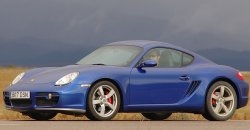
But as any Porsche enthusiast knows, the "S" typically indicates a higher-performance version of a given model. The question of, "Where's the base version?" has been answered for 2007 with the debut of the regular Cayman. With a smaller, 2.7-liter flat-6 (as opposed to the S model's 3.4-liter engine), the Cayman makes a still-respectable 245 horsepower and 201 pound-feet of torque, which Porsche says is enough punch to hit 60 mph in just under 6 seconds. A top speed of 160 mph isn't too shabby, either. Listing at just under $ 50,000, the standard Cayman is nearly $ 10,000 less than the S version and would seem to be more than adequate for most sports car fanciers. Still, another obvious question remains: What does the S give you for the additional cabbage? The biggest (literally) upgrade is the more powerful engine, which brings that 0-60 sprint down to 5.1 seconds and pumps up the top speed to 171 mph. The S also has upgraded wheels, bigger brakes and a six-speed (versus five-speed) manual gearbox.
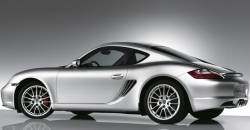
Regardless of model, the Cayman's core strengths are its compact and nimble midengine platform and high body rigidity. This has allowed Porsche's engineers to hone the car's reflexes to a point where one can argue that this is the company's best-handling car. It feels sharper than a Boxster and is more forgiving at the limit of adhesion than the 911. The Cayman also offers a measure of practicality thanks to its hatchback body style that allows a total of 14.5 cubic feet of cargo capacity.
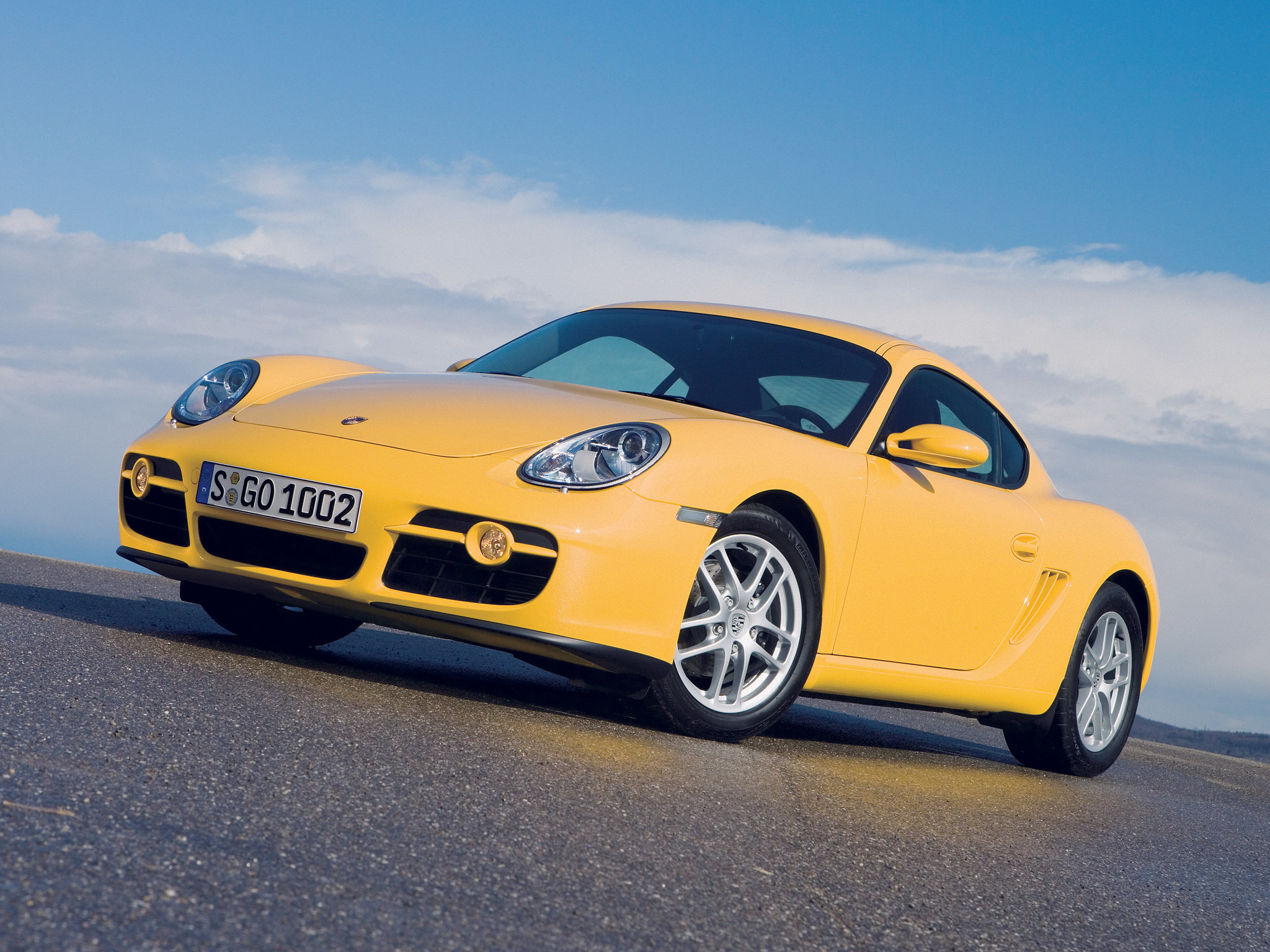
If you just look at the numbers, the 2007 Porsche Cayman and Cayman S are no bargains, especially if you start adding some of Porsche's extensive (and expensive) options. There are plenty of sports cars, such as the BMW Z4 coupe, Chevrolet Corvette and Nissan 350Z, that can produce similar or even more impressive test track data for less money. But as it's always been with Porsche, there's a lot more to the 2007 Cayman than brag-worthy numbers. It's about how connected to the road you feel through the communicative steering, how composed and rhythmic the car feels as you unravel a twisty road and how utterly cool the flat-6 sounds as you accelerate hard onto a freeway. For the driving enthusiast, it doesn't get much better than this.

The midengine 2007 Porsche Cayman comes in two trims, the standard Cayman and the higher-performance Cayman S. The Cayman comes with 17-inch alloy wheels, a CD player, cruise control, a trip computer and power accessories. The S adds the bigger engine, 18-inch alloys, larger brakes, metallic gauge faces and an upgraded, nine-speaker audio system. There are options galore, including a choice of leather trim that can be ordered à la carte on virtually every interior piece of the car, including the dash, sun visors and steering column. Other options include power seating, a choice of wood, carbon or aluminum trim, rear parking assist, heated seats, a navigation system, race-bred ceramic composite brake discs and Porsche Active Suspension Management (PASM). PASM, which drops the car's ride height slightly and adds automatically adjustable dampers, allows the driver to choose between a sporty but comfortable "Normal" mode and a full-on "Sport" suspension setup at the touch of a button on the dash. Another interesting choice is the Sport Chrono package. It makes for even quicker and sharper responses via a remapped electronic throttle and (on automatic cars) transmission. This serious enthusiast-oriented package also switches the PASM to a stiffer setting.
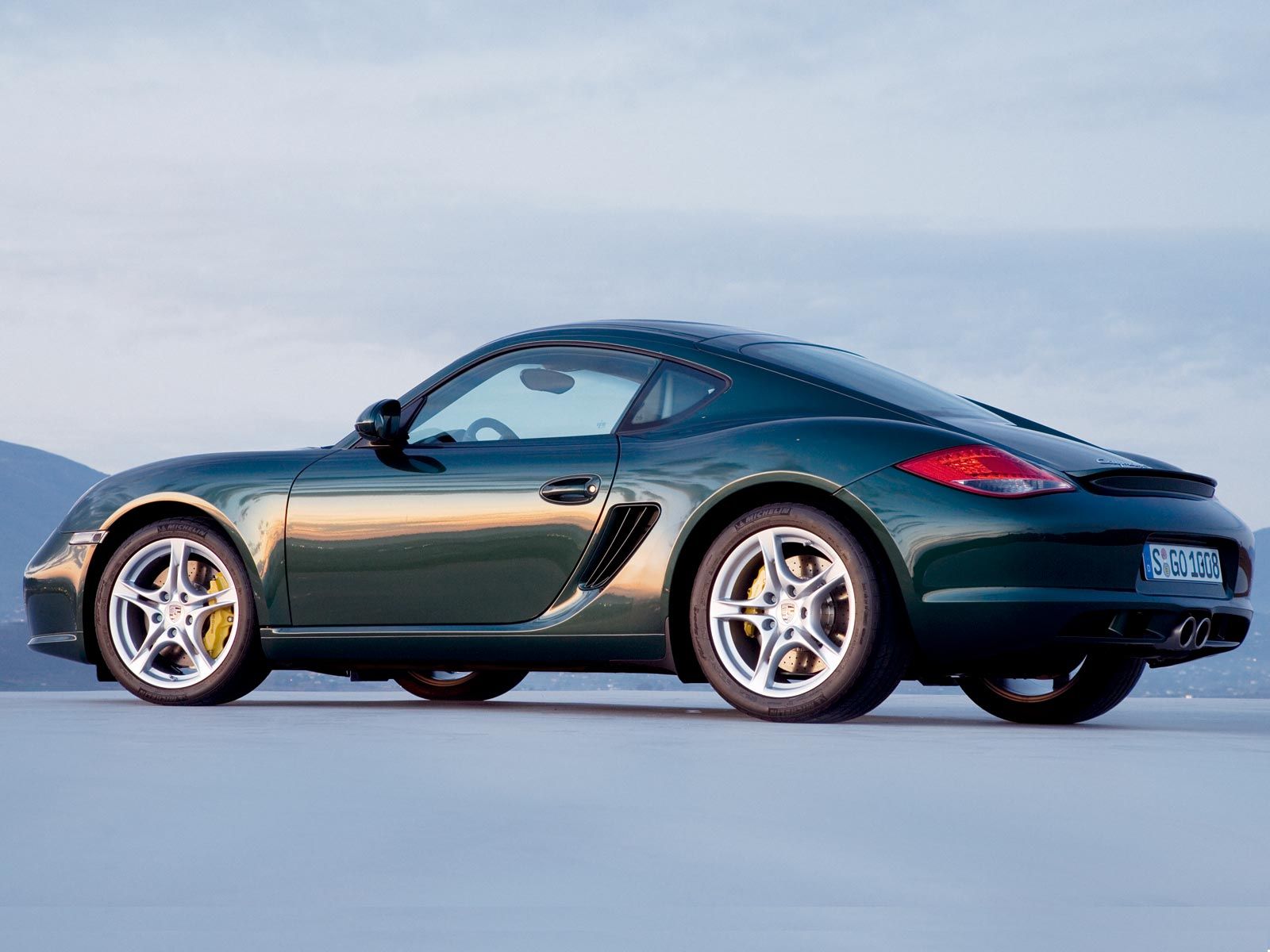
The Cayman has a 2.7-liter horizontally opposed ("flat") six-cylinder engine that makes 245 hp and 201 lb-ft of torque. It's paired with a five-speed manual transmission. Optional are a six-speed manual and five-speed Tiptronic S automatic, with the latter allowing manual-style gearchanges via the gear selector or buttons on the steering wheel. The Cayman S is powered by a 3.4-liter flat-6 that produces 295 hp and 251 lb-ft of torque. A six-speed manual transmission is standard, while the Tiptronic S automatic is optional.
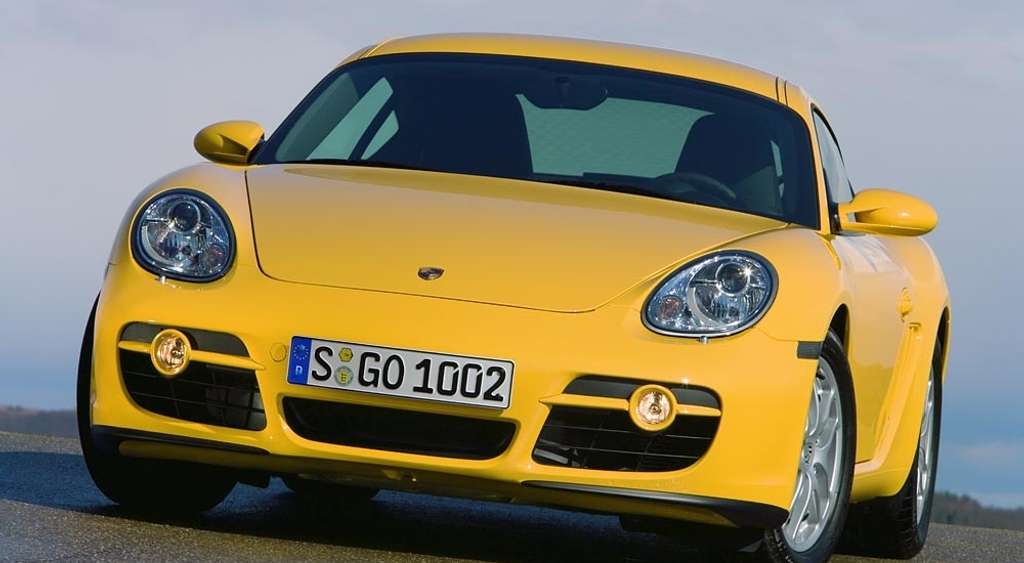
Manufacturer 0-60-mph times are 5.8 and 5.1 seconds for manual-transmission versions of the Cayman and Cayman S, respectively, while top speeds stand at 160 and 171 mph, respectively. A Cayman S that we instrument-tested made good on Porsche's claim, accelerating to 60 mph in 5 seconds flat and hitting the quarter-mile mark in 13.2 seconds. It also turned in a highly impressive 60-to-0 braking distance of 106 feet.

Antilock disc brakes, stability control, traction control and torso- and head-protecting side-impact airbags are all standard on the 2007 Porsche Cayman.

Choose the 2007 Porsche Cayman and you're in for a great driving experience. Handling is virtually identical for both versions, with the S version having a bit more punch in terms of acceleration. The variable-ratio rack-and-pinion steering provides precise control and quick reflexes, yet the Cayman is also stable at triple-digit speeds. Potential Cayman buyers should seriously consider getting the optional PASM suspension; in Normal mode it still feels sporty, yet absorbs the bumps well enough to make the Cayman a fine daily driver. Switch to the no-compromises Sport mode and the chassis stiffens up considerably, taking body roll out of the equation and allowing one to attack the corners with even greater bravado, provided the road is fairly smooth. Brakes are likewise a confidence booster, as they respond quickly without being grabby and have a firm, solid feel underfoot.
Even the standard seats are well-bolstered and supportive and headroom is especially generous for a sports car. As with other Porsches, the Cayman's handsome cockpit contains a number of initially confusing controls, mainly those of the audio and climate control systems. With familiarity, however, they become fairly easy to use and the gauges are also typically Porsche, meaning large and well-marked. With the hatchback body comes more cargo capacity than the Boxster on which the Cayman is based. There are 9.1 cubic feet under the hatch, which combined with the front trunk, provides a total of 14.5 cubic feet of capacity.
Even among all the legendary Porsche models, it's hard to recall a car that feels so utterly right under virtually all dynamic conditions. The Cayman's super-stiff structure provides a rock-solid suspension platform that allowed chassis engineers to work true handling magic, complementing the excellent Porsche Stability Management system (PSM) with quick, responsive steering and a clutch-and-shifter combo that's near-perfect on both models. While the 245-horsepower base Cayman lacks the sheer acceleration of the pricier 295-horsepower "S" variant, it does offer a somewhat more complaint ride. And with both versions possessing prodigious stopping power and offering optional Porsche Active Suspension Management (PASM) that lets you fine tune the ride characteristics with the touch of a button, either Cayman may prove to be all the Porsche that you'll really want or need.
Mid-Engine BalanceAutomotive theory holds that putting a car's engine between the two axles will contribute to superior handling, and the Cayman S is real-world proof. We're hard-pressed to remember a car that feels so "just right," in so many driving situations, as the Cayman S. Head-turning StylePorsche has a history of creating memorable automotive statements, but the Cayman's definitive combination of sensual form and delightful details seems destined to ensure it a place in the marque's Hall of Fame.
Plenty of Porsche heritage is evident in the detailing of the Cayman's compact but well-finished and comfortable cabin, starting with the signature dash-mounted ignition to the left of the three-spoke steering wheel and lots of leather and brushed aluminum accent trim. Easy-to-scan gauges - with black faces on the base Cayman and satin-aluminum dials on the Cayman S - well-positioned main controls and supportive bucket seats reinforce the sense of purpose in this domain. However, with stowage space under both the front hood and beneath the rear hatch, the Cayman has a good deal more practicality than might be apparent at first glance. Dismal cupholders aside, the only real shortcoming is that the prominent roof pillars can block sightlines to the sides or rear.
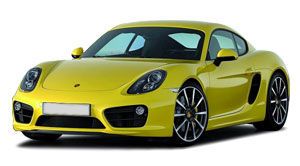
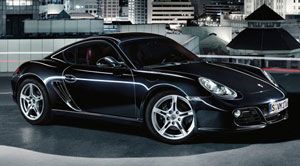
Even at first glance, the Cayman is unmistakably a Porsche, displaying numerous classic styling cues not only from the 911 but from a host of the marque's previous street and competition cars. Easily the most eye-catching touch is its sweeping C-pillar treatment, a flourish that harkens back to the elegant 904 racing coupe. A key visual differentiator between the two models is that the Cayman S wears 18-inch wheels fitted with lower-profile tires than those that wrap the 17-inch rims on a base Cayman. The top-line variant also has a subtle black front spoiler lip, a large single oval exhaust - rather than dual squared-off outlets - and red instead of black brake calipers.
Both Cayman and Cayman S are equipped to put the driver's needs first, a fact most directly reflected in the Porsche Stability Management (PSM) system that encompasses traction control, engine throttle control and enhanced functions of the anti-lock vented disc brakes to help keep the car on the path the driver intended. The Cayman mounts Z-rated 205/55 front and 235/50 rear tires on 17-inch alloy wheels, while the Cayman S gets bigger front brakes and steps up to 235/40 front and 265/40 rear rubber on larger 18-inch wheels. As for comfort and convenience touches, both boast a full range of power assists, tilt steering column, air conditioning, AM/FM/CD radio, speed control, remote keyless entry, trip computer and an anti-theft immobilizer. Conventional front and front-side airbags are supplemented by special door-mounted head-protection bags.
Nifty upgrades start with the Sport Chrono Package that can keep track of your lap times, intensify throttle response and alter shift mapping of the Tiptronic S transmission - plus further stiffen suspension settings when matched with the optional Porsche Active Suspension Management (PASM). Also available are racing-derived Porsche Ceramic Composite Brakes (PCCB), both manual and full-power sport seats, bi-xenon headlamps and four different kinds of 19-inch alloy wheels. Touring aficionados will appreciate the Porsche Communication Management system that includes available DVD navigation, MP3 playback capability and the 13-speaker BOSE Surround Sound System. In addition to full leather upholstery, automatic climate control and aluminum-look/stainless steel or wood trim kits, there's a near-endless array of factory and dealer accessory items.
The 245-horsepower 2.7-liter "boxer" flat-six engine that sits amidships in the Cayman and the 295-horsepower 3.4-liter six in the Cayman S both benefit from the same VarioCam Plus technology used on the flagship Porsche 911. This system precisely controls intake camshaft timing and valve lift to enhance both total response and fuel efficiency. While the Cayman comes with a five-speed manual transmission and the Cayman S gets a six-speed gearbox (optional in the Cayman), for those who prefer an automatic a five-speed Tiptronic S with steering wheel-mounted shifter buttons is available on both models. Porsche claims a manually-shifted Cayman S can hit 60 miles per hour in 5.1 seconds and a base car needs only 5.8 ticks to reach that benchmark, with their automatic counterparts adding about a second to each of those figures. 2.7-liter Boxer-6245 horsepower @ 6500 rpm201 lb.-ft. of torque @ 4600-6000 rpmEPA city/highway fuel economy: 23/32 (5-speed manual), 22/31 (6-speed manual), 21/28 (automatic)3.4-liter Boxer-6295 horsepower @ 6250 rpm251 lb.-ft. of torque @ 4400-6000 rpmEPA city/highway fuel economy: 20/28 (manual), 20/27 (automatic)
The Porsche Cayman has a Manufacturer's Suggested Retail Price (MSRP) of $ 50,260 while the Cayman S starts at $ 59,760. The Tiptronic S automatic adds an additional $ 3,210. Currently both Cayman models are selling for their full sticker prices, but prices, that represent prices consumers are actually paying at any given moment, can differ substantially, so click on the prices to compare. Over time, the Cayman S is projected to hold slightly more of its original value than a base Cayman. Its resale percentages also are expected to be slightly higher than key competitors like the BMW Z4 M Coupe or Mercedes-Benz SKL350.
2007 Porsche Cayman Base Exterior Colors
2007 Porsche Cayman Base Interior Colors
2007 Porsche Cayman Engines
| Engine | Standard in Trim | Power | Torque | Fuel Consumption - City | Fuel Consumption - Highway | 0-100 km/h | Quarter Mile | Half Mile |
|---|---|---|---|---|---|---|---|---|
| 3.4L H6 DOHC 24-valves | S | 320 hp @ 7200 rpm | 268 N.m | 10.6 L/100km | 6.7 L/100km | 5.1 s | 13.0 s | 21.6 s |
| 3.4L H6 DOHC 24-valve | R | 330 hp @ 7400 rpm | 268 N.m | 10.4 L/100km | 6.7 L/100km | 5.0 s | 12.9 s | 21.4 s |
| 3.4L H6 DOHC 24-valves | S Black Edition | 330 hp @ 7400 rpm | 268 N.m | 10.6 L/100km | 6.7 L/100km | 5.0 s | 12.9 s | 21.4 s |
| 3.4L H6 DOHC 24-valve | R | 330 hp @ 7300 rpm | 268 N.m | 14.0 L/100km | 6.6 L/100km | 5.0 s | 12.9 s | 21.4 s |
| 3.4L H6 DOHC 24-valve | S | 320 hp @ 7200 rpm | 268 N.m | 10.6 L/100km | 6.7 L/100km | 5.1 s | 13.0 s | 21.6 s |
| 3.4L H6 DOHC 24-valve | S Porsche Design Edition 1 | 295 hp @ 6250 rpm | 268 N.m | 11.8 L/100km | 8.7 L/100km | 5.4 s | 13.4 s | 22.2 s |
| 3.4L H6 DOHC 24-valve | S | 295 hp @ 6250 rpm | 268 N.m | 15.3 L/100km | 7.8 L/100km | 5.4 s | 13.4 s | 22.2 s |
| 3.4L H6 DOHC 24 valves | S | 295 hp @ 6250 rpm | 268 N.m | 15.3 L/100km | 7.8 L/100km | 5.4 s | 13.4 s | 22.2 s |
2007 Porsche Cayman Trims
2007 Porsche Cayman Previous Generations
2007 Porsche Cayman Future Generations
Porsche Cayman Overview and History
Situated in downtown Stuttgart, Porsche's first contract of developing a people's car, a Volkswagen, appointed by the German government. The result was one of the most famous cars in history, one of the best sold and one of the most easily recognizable out there, the Beetle. Many features of the Beetle would find their place on the first ever Porsche, the 64, developed in 1939.
During WWII the Porsche factory turned to making vehicles for the German Army, such as the Kubelwagen and the Schwimmwagen as well as contributing to the production of Tiger and Elefant tanks. After the war Ferdinand was imprisoned for war crimes for 20 months and was during that time that his son, Ferry Porsche, decided to build a new car to suit his needs – the 356.
The success of the 356 and the death of Ferdinand Porsche in 1951 gave Ferry the confidence to follow in his father's footsteps and continue designing cars. One of his most famous designs was the Spyder 550, a car that would prove very successful in races.
By now, the general line of the company seemed evident, as in 1964 another sporty model, the 911, another car with a air-cooled, boxer, rear-mounted engine. The design team for this car was led by Ferry's oldest son, Ferdinand Alexander Porsche. this car would take the legacy of the 550 Spyder even further, winning races and rallies. Testimony to the success of the 911 is the fact that it's still in production today, despite being heavily modified.
Porsche was going to change its status in 1972 from a limited partnership to a public limited company, which meant that now Porsche would be run by a board of directors supervised by family members. In 1974, at the Paris Auto Show, Porsche unveils the new 911 Turbo, with exhaust turbocharger and pressure regulator.
When the 924 was entered in production in 1975, Porsche took a leap of faith because it had not experienced with front-mounted engines for a long time. By Porsche standards, the 928 was an oddity, with its front-mounted V8 engine made out of metal alloy. Then, in 1981, a new transaxle model is added to the Porsche line-up, the 944. The high-performance Porsche 959 is unveiled at the Frankfurt Auto Show in 1985. It will go on to win a lot of races and rallies, the best known being the Paris-Dakar.
A new technological leap was made in 1988 when the 911 Carrera 4 with all-wheel drive was introduced on the market. Then, in 1989, the “Tiptronic” automatic gearbox system is fitted on Porsches. In 1991, Porsche becomes the first car manufacturer to fit driver and passenger airbags on all its models.
The Boxter model is introduced in 1996 after 3 and a half years of development. That same year, Porsche celebrates 1million units being produced. Two years later, Ferry Porsche dies at the age of 88 but the company moves on and has a great season at Le Mans with the 911 GT1, coming in first and second. This was going to be only the beginning for Porsche, which continued with the very sporty and high-performance models Boxster S and the Carrera GT in 2000.
In 2002 Porsche entered the SUV market with the unconventional Cayenne and its later versions, the Cayenne Turbo and Turbo S. The next model on the line-up for Porsche, announced for 2009 is the Panamera, a four-door sedan. With this new model, Porsche seems set to take on a whole new market, directly competing with other luxury brands such as Mercedes, BMW and Audi.
2007 Porsche Cayman Consumer Reviews
Compare Against Competitors


2007 Porsche Cayman Base Specifications
Base Comfort and Convenience
| AM/FM stereo radio | Yes |
|---|---|
| Air Conditionning | Air consitioning |
| Cruise Control | Yes |
| Power Door Locks | Yes |
| Power Windows | Yes |
| Remote Keyless Entry | Yes |
| Single CD | CD player |
| Steering Wheel Adjustment | Tilt and telescopic steering wheel |
Base Dimensions
| Cargo Capacity | 260 L |
|---|---|
| Curb Weight | 1337 kg |
Base Exterior Details
| Power Exterior Mirrors | Yes |
|---|
Base Interior Details
| Front Seats Front Seat Type | Bucket seats |
|---|---|
| Seat Trim | Leather seats |
Base Mechanical
| Drive Train | Rear-wheel drive |
|---|---|
| Engine Name | 2.7L H6 DOHC 24-valve |
| Stability Control | Yes |
| Traction Control | Yes |
| Transmission | 6 speed manual transmission |
| Transmission (Option) | 5 speed automatic transmission with manual mode |
Base Overview
| Body | Coupe |
|---|---|
| Doors | 2 |
| Engine | 2.7L H6 DOHC 24-valve |
| Fuel Consumption | |
| Power | 245 hp @ 6500 rpm |
| Seats | 2 |
| Transmission | 5 speed automatic transmission with manual mode |
| Warranties | Bumper-to-Bumper80000/km, 48/Months Powertrain80000/km, 48/Months Roadside Assistance80000/km, 48/Months Rust-throughUnlimited/km, 120/Months |
Base Safety
| Anti-Lock Brakes | Std |
|---|---|
| Anti-Theft Alarm | Anti-theft alarm system |
| Brake Type | 4 wheel disc |
| Driver Airbag | Driver side front airbag |
| Passenger Airbag | Passenger side front airbag |
| Side Airbag | Seat mounted side airbags |
Base Suspension and Steering
| Front Suspension | Front independent suspension |
|---|---|
| Front Tires | P235/50R18 |
| Power Steering | Variable assisted rack-and-pinion steering |
| Rear Suspension | Rear independent suspension |
| Wheel Type | 18. alloy wheels |
Discussion and Comments
Share Your Comments