2025 Kia K5 Kia K5 EX 0-60 Times, Top Speed, Specs, Quarter Mile, and Wallpapers

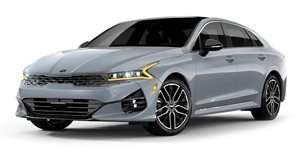
The 2025 Kia K5 Kia K5 EX is a FWD Sedan. It can accommodate up to 5 passengers. It has 4 Doors and is powered by a 4-Cyl, GDI, 2.5 Liter engine which outputs 191 @ 6100 RPM and is paired with Automatic, 8-Spd gearbox. The 2025 Kia K5 Kia K5 EX has cargo capacity of 441.74280696 Liters and the vehicle weighs 1465.1050974771 kg. In terms of ride assists, the 2025 Kia K5 Kia K5 EX has stability control and traction control in addition to anti-lock brake system (ABS). The vehicle has an optional 4-Cyl, Turbo, GDI, 2.5 Liter engine as well It offers Yes and Yes. Safety features also include Yes and Yes. In terms of performance, the car has 208 N.m of torque and a top speed of 211 km/h. The 2025 Kia K5 Kia K5 EX accelerates from zero to 60 mph in 8.3 seconds and hits quarter mile at 16 seconds. Fuel consumption is 27 L/100km in the city and 37 L/100km in the highway. The car price starts at $ 35,645
| Name | Kia K5 EX | |
|---|---|---|
| Price | $ 35,645 | |
| Body | Sedan | |
| Doors | 4 Doors | |
| Engine | 4-Cyl, GDI, 2.5 Liter | |
| Power | 191 @ 6100 RPM | |
| Number of Seats | 5 Seats | |
| Transmission | Automatic, 8-Spd | |
| Cargo Space | 441.7 L | |
| Maximum Cargo Space | 441.7 L | |
| Wheel Type | Alloy Wheels | |
| Series | ||
| Drivetrain | FWD | |
| Horsepower | 191 HP | |
| Torque | 208 N.m | |
| Top Speed | 211 km/h | |
| Acceleration 0-100 km/h (0-60 mph) | 8.3 s | |
| Fuel Type | Gas | |
| Fuel Consumption (City) | 27.0 L/100km | |
| Fuel Consumption (Highway) | 37.0 L/100km | |
| Gear Type | auto | |
| Weight | 1,465 KG | |
| Brand | Kia | |
| Model | K5 | |
| 0-400m (Quarter Mile) | 16.0 s | |
| 0-400m (Quarter Mile) - Speed | 144.2 km/h | |
| 0-800m (Half Mile) | 26.5 s | |
| 0-800m (Half Mile) - Speed | 162.2 km/h | |
| Modifications (MODS) | ||
| Modifications Cost | $ 0 |
2025 Kia K5 Used Price Estimates
Estimates based on a driving average of 12,000 miles per year| Used Condition | Trade In Price | Private Party Price | Dealer Retail Price |
|---|

2025 Kia K5 Kia K5 EX Exterior Colors
2025 Kia K5 Kia K5 EX Interior Colors
2025 Kia K5 Engines
| Engine | Standard in Trim | Power | Torque | Fuel Consumption - City | Fuel Consumption - Highway | 0-100 km/h | Quarter Mile | Half Mile |
|---|---|---|---|---|---|---|---|---|
| 4-Cyl, Turbo, GDI, 2.5 Liter | Kia K5 GT | 290 @ 5800 RPM | 208 N.m | 24.0 L/100km | 32.0 L/100km | 6.1 s | 13.9 s | 23.0 s |
| 4-Cyl, GDI, 2.5 Liter | Kia K5 EX | 191 @ 6100 RPM | 208 N.m | 27.0 L/100km | 37.0 L/100km | 8.3 s | 16.0 s | 26.5 s |
2025 Kia K5 Trims
2025 Kia K5 Previous Generations

2025 Kia K5 Future Generations
Kia K5 Overview and History
Once the first step was made, Kia rushed through the process of developing light means of transport, such as scooters and fast forwarded through motorcycle building upon the point of reaching the necessary resources and experience to start building cars. The whole conversion process took Kia about two and a half decades to complete.
Bigger, richer and propelled by the enthrallment of having their own car brand, Kia poured a considerable amount of cash into a plant to accommodate its assembly lines. By 1973, the new facility at Sohari saw completion, becoming Korea's first of its kind. Fully integrated and equipped with the latest cutting, bolting and welding machinery, the plant ulteriorly became the womb in which Kore's first internal-combustion gasoline engine would develop. The first Kia built car was unveiled one year later, a medium passenger car named Brisa.
Kia's sounding debut and modern technology caught the eye of different foreign producers(e.g. Peugeot and Fiat) with whom it partnered to house production of some of their models such as Peugeot's 604 and Fiat's 132.
By the 80's Kia had expanded to almost the size of its main competitor, Hyundai who was still the no. 1 Korean producer. Some of Kia's newer models at the time were rebadged and marketed abroad such as the Pride which sold overseas as the Ford Festiva. Only a few years later, Ford would manifest interest in the Avella, a subcompact car available in a 5-door hatchback version and a 4-dour sedan powered by either a 1.3 or a 1.5 liter engine. The Avella was rebadged as the Ford Aspire on the North American market.
The Korean manufacturer had not yet reached US shores on its own but it was only a few strokes away. In 1992, the brand was incorporated into the US and timidly started business through a tiny four-dealership network that sold its first vehicles in 1994. Ever since, Kia has been methodically expanding, reaching every state except north Dakota.
The main selling point of Kia cars was its affordability which was later supplemented by Kia's expansion into other market segments through the introduction of their first sport utility vehicle in 1995, the Sportage. From that point on, Kia suffered a fate very similar to that of Hyundai, company it would later blend into due to unsuccessful management of financial difficulties.
Trouble began in the late '90 when the company became stagnant and thus unable to rollout new models. That's when Hyundai came into play. The major Korean car-builder got rid of competition by means of merger. Both companies have experienced trouble and low sales due to reliability complaints over their vehicles.
The somewhat bland styling was not exactly what buyers were looking for in a car either so both had to undergo costly restructuring stages. Kia found itself rejuvenated by 2001 when, following its owner's example, it started working on a new vehicle line-up with an emphasis on quality and long-warranty offerings. Ever since, Kia has been steadily conquering segments of the European market, especially through the Cee'd, Sorento and Rio models. The development of newer, bolder designs is also among Kia's priorities, predating a future line-up with the announcement of concepts such as the Soul, unveiled at the Montreal auto show in 2006 and the Kee, a fresh coupe boasting strongly appealing style elements.
Discussion and Comments
Share Your Comments