2019 Ford Fiesta Hatchback SE 0-60 Times, Top Speed, Specs, Quarter Mile, and Wallpapers
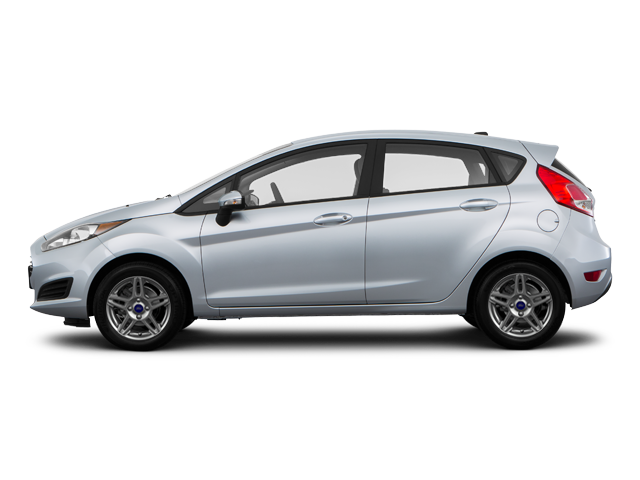
The 2019 Ford Fiesta Hatchback SE is a Front-wheel drive Hatchback. It can accommodate up to 5 passengers. It has 5 Doors and is powered by a 1.6L L4 DOHC 16-valve engine which outputs 120 hp @ 6350 rpm and is paired with 6-speed automatic transmission with manual mode gearbox. The 2019 Ford Fiesta Hatchback SE has cargo capacity of 363 Liters and the vehicle weighs 1169 kg. In terms of ride assists, the 2019 Ford Fiesta Hatchback SE has stability control and traction control in addition to anti-lock brake system (ABS). The vehicle has an optional engine as well It offers and Rear view camera. Safety features also include Driver-side front airbag and Passenger-side front airbag. The front suspension is Independent front suspension while the rear suspension is Torsion bar rear suspension. The car also features a Yes It has 15-inch sparkle silver painted aluminum wheels as standard. Electronic features include Cruise Control. For convenience, the car has Power windows and Power door locks. There is also a remote keyless entry feature. Moreover, the car has. The steering wheel has audio control buttons. In terms of performance, the car has 131 N.m of torque and a top speed of 181 km/h. The 2019 Ford Fiesta Hatchback SE accelerates from zero to 60 mph in 9.4 seconds and hits quarter mile at 16.9 seconds. Fuel consumption is 8.6 L/100km in the city and 6.4 L/100km in the highway. The car price starts at $ 18,924
| Name | SE | |
|---|---|---|
| Price | $ 18,924 | |
| Body | Hatchback | |
| Doors | 5 Doors | |
| Engine | 1.6L L4 DOHC 16-valve | |
| Power | 120 hp @ 6350 rpm | |
| Number of Seats | 5 Seats | |
| Transmission | 6-speed automatic transmission with manual mode | |
| Cargo Space | 363.0 L | |
| Maximum Cargo Space | 363.0 L | |
| Wheel Type | 15-inch sparkle silver painted aluminum wheels | |
| Series | ||
| Drivetrain | Front-wheel drive | |
| Horsepower | 120 HP | |
| Torque | 131 N.m | |
| Top Speed | 181 km/h | |
| Acceleration 0-100 km/h (0-60 mph) | 9.4 s | |
| Fuel Type | ||
| Fuel Consumption (City) | 8.6 L/100km | |
| Fuel Consumption (Highway) | 6.4 L/100km | |
| Gear Type | auto | |
| Weight | 1,089 KG | |
| Brand | Ford | |
| Model | Fiesta | |
| 0-400m (Quarter Mile) | 16.9 s | |
| 0-400m (Quarter Mile) - Speed | 136.3 km/h | |
| 0-800m (Half Mile) | 28.0 s | |
| 0-800m (Half Mile) - Speed | 153.3 km/h | |
| Modifications (MODS) | ||
| Modifications Cost | $ 0 |
2019 Ford Fiesta SE 1.6L 0-60 / 0-100 & more accelerations
2019 Ford Fiesta SE 1.6L 0-60 / 0-100 & more accelerations
2019 Ford Fiesta SE 1.6L 0-60 / 0-100 & more accelerations
2019 Mount Alma Mile Ford Fiesta ST #52
2019 FORD FIESTA ST | TOP SPEED 237km/h AUTOBAHN POV by AutoTopNL
2019 Ford Fiesta Used Price Estimates
Estimates based on a driving average of 12,000 miles per year| Used Condition | Trade In Price | Private Party Price | Dealer Retail Price |
|---|---|---|---|
| Outstanding | $ 9,002 | $ 10,506 | $ 12,391 |
| Clean | $ 8,839 | $ 10,318 | $ 12,159 |
| Average | $ 8,512 | $ 9,943 | $ 11,694 |
| Rough | $ 8,186 | $ 9,568 | $ 11,229 |
Confident, comfortable and easily controlled, the 2019 Ford Fiesta remains a favorite. Yes, an aging design means it’s missing some key safety features, and there are foreign competitors out there that offer more content at a better price (not to mention a better warranty), but after a few minutes behind the Fiesta’s wheel, all of that melts into the rearview mirror. Run the Fiesta through a winding single-lane road, and you’ll be amazed at the car’s poised balance, nimble reflexes and communicative steering. Power from the 1.6-liter engine isn’t robust, but it’s sufficient, especially when paired with the slick 5-speed manual (a 6-speed automatic is optional). For those willing to spend a bit more, the 197-horsepower ST trim is the ultimate “little rocket man,” offering both performance and economy in a versatile hatchback body. Standard equipment includes 17-inch wheels, a 6-speed manual and performance tires, a sport suspension and available Recaro sport seats.
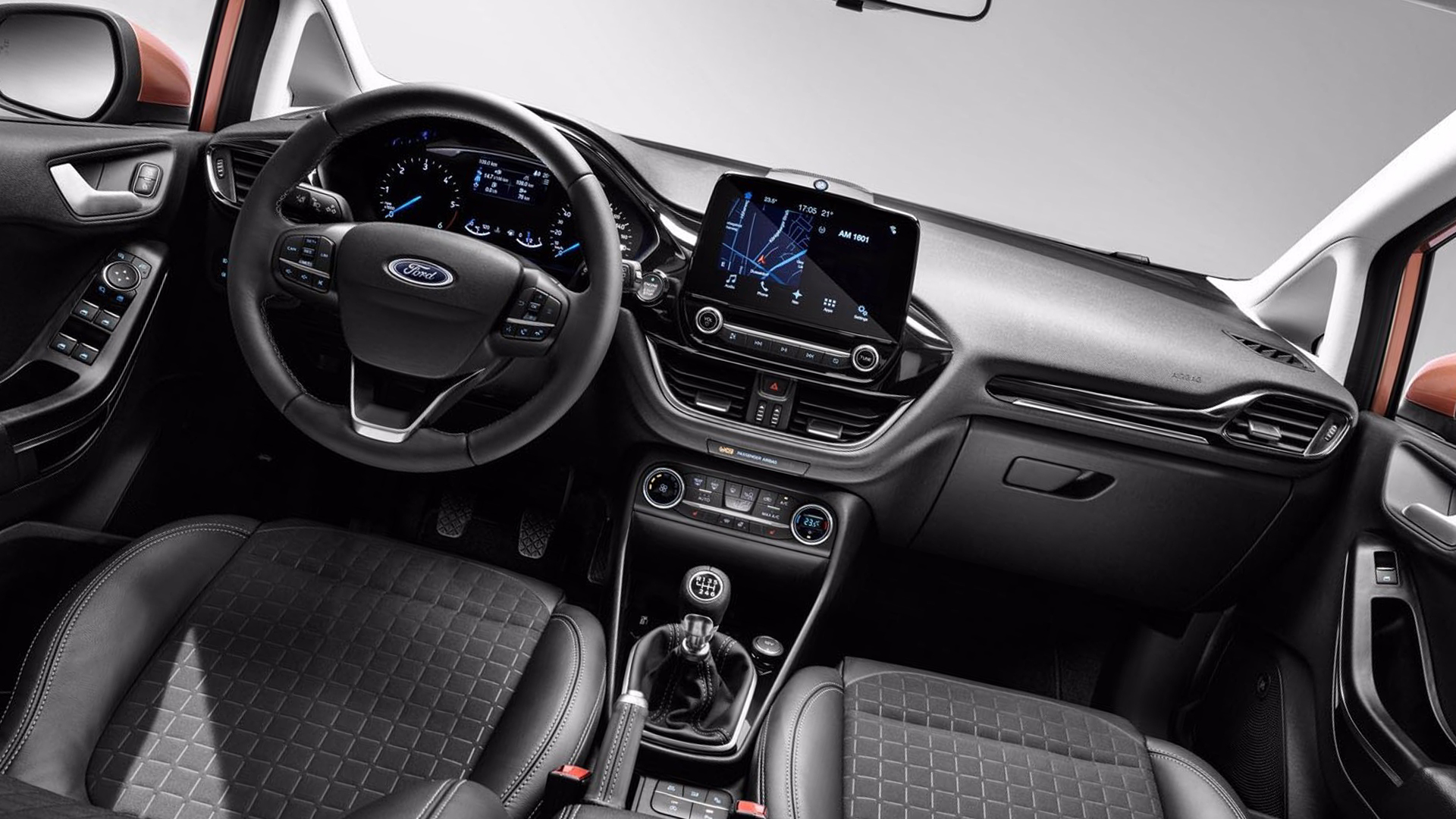
SYNC 3While some parts of the Fiesta have grown old, the Sync 3 infotainment system isn’t one of them. Displayed on a bright 6.5-inch touch screen, Sync 3 allows voice control of the audio, phone and available navigation, as well as integration with smartphone apps via Apple CarPlay and Android Auto. 1.6-LITER ECOBOOST ENGINESmall cars are supposed to be fun, which is why the 1.6-liter turbocharged engine found in the Fiesta ST works so well. This engine delivers great low-end torque and plenty of power for passing and merging, yet still pulls off an EPA-estimated 33 mpg.
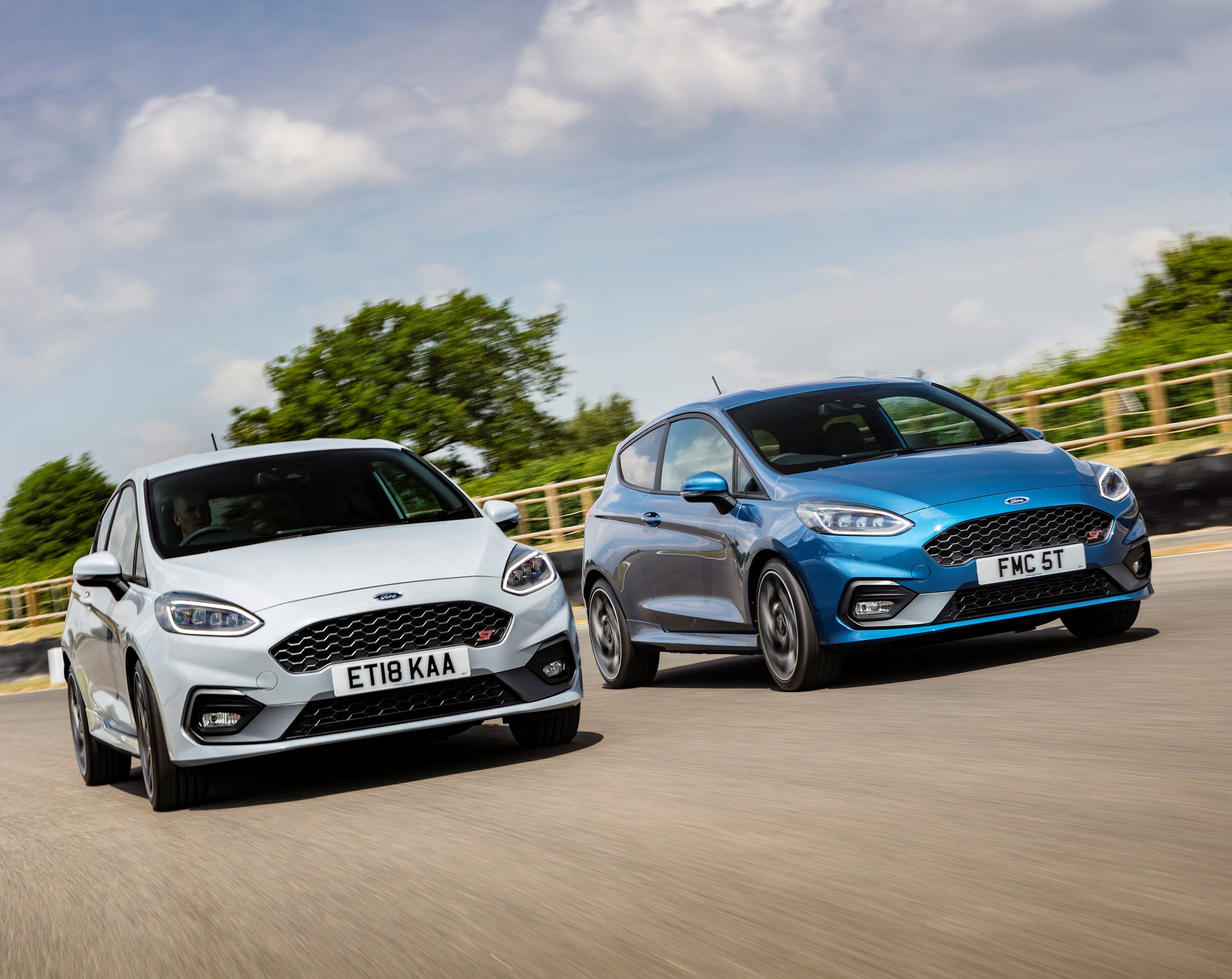
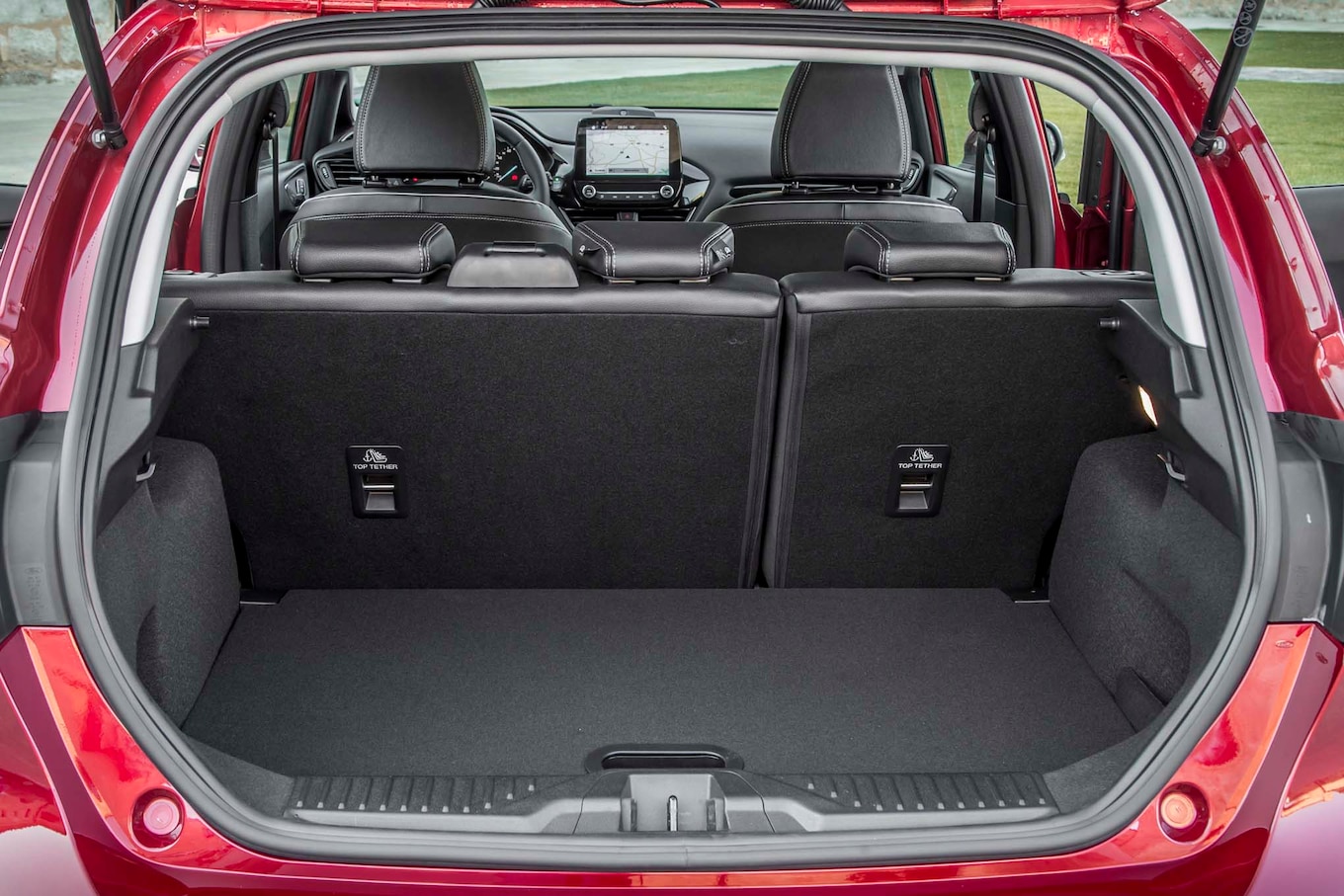
The 2019 Ford Fiesta’s interior is comfortable for front-seat passengers, but a bit cramped when it comes to rear-seat legroom, especially when compared to a car like the Kia Rio. The sedan offers a spacious trunk, and both sedan and hatchback feature 60/40-folding rear seats that increase cargo volume to over 25 cubic feet. The base S trim provides most essentials, but the SE is better equipped. Regardless of trim, you’ll find a handsome interior constructed of high-quality materials and solid assembly. Upscale options include heated front seats, a power sunroof, navigation and, for the ST, Recaro seats.
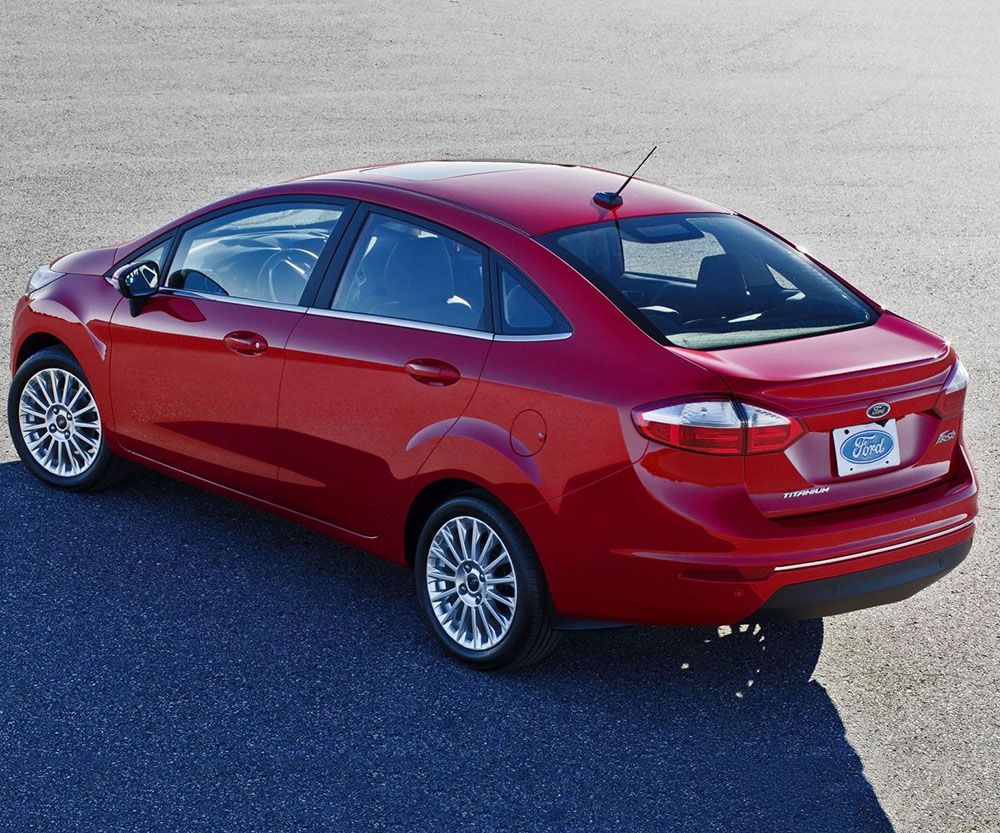
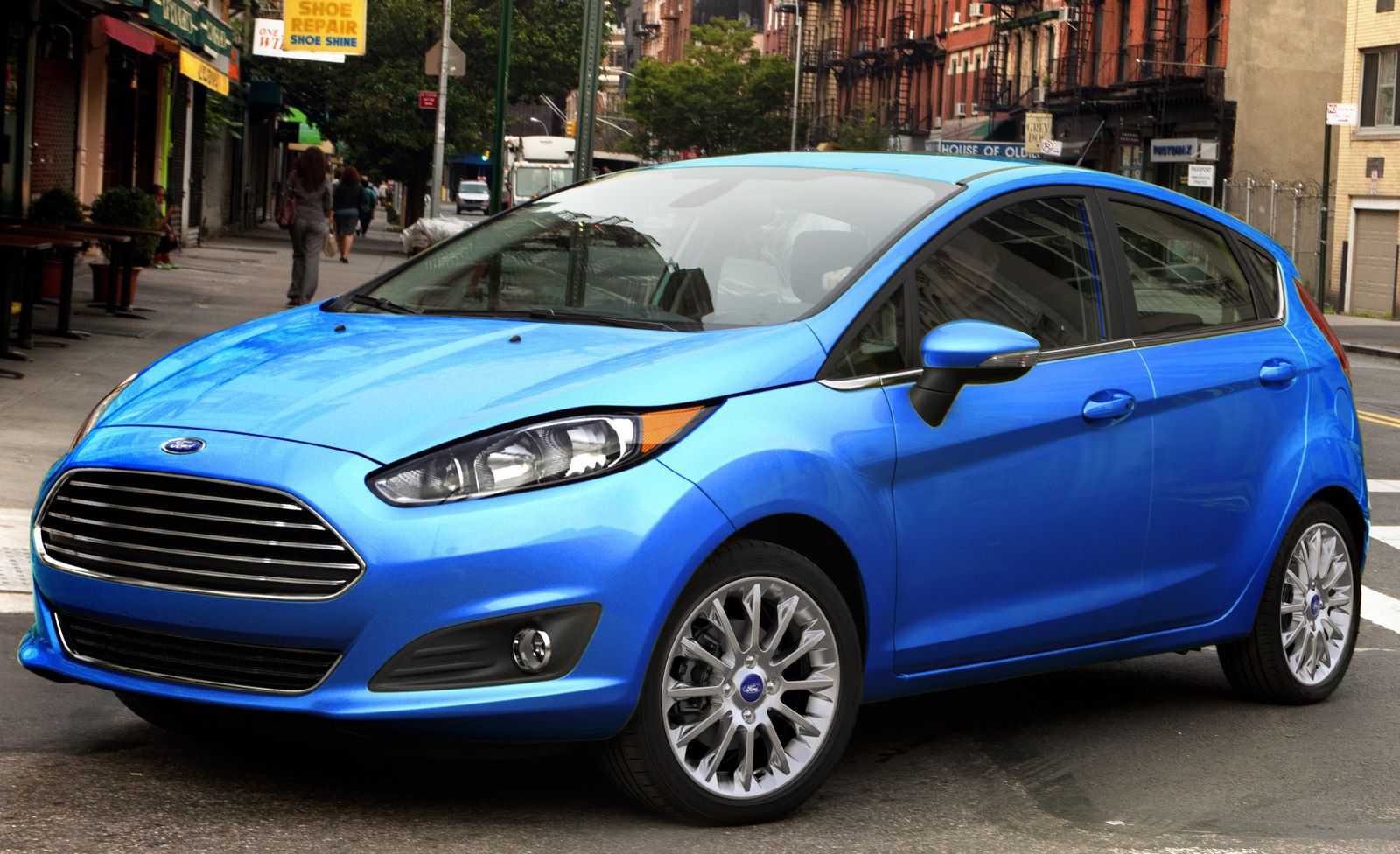
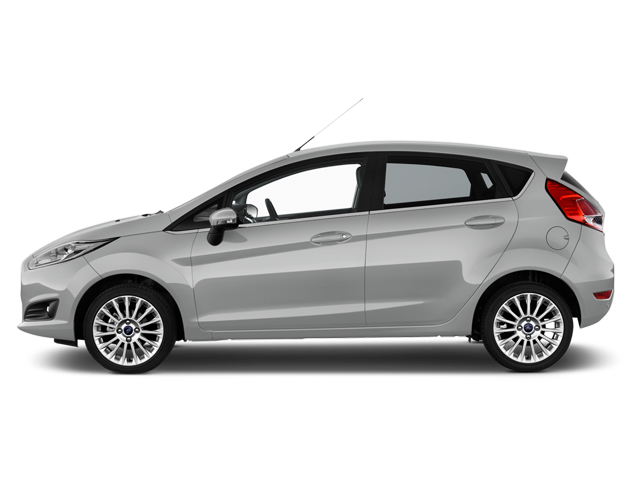
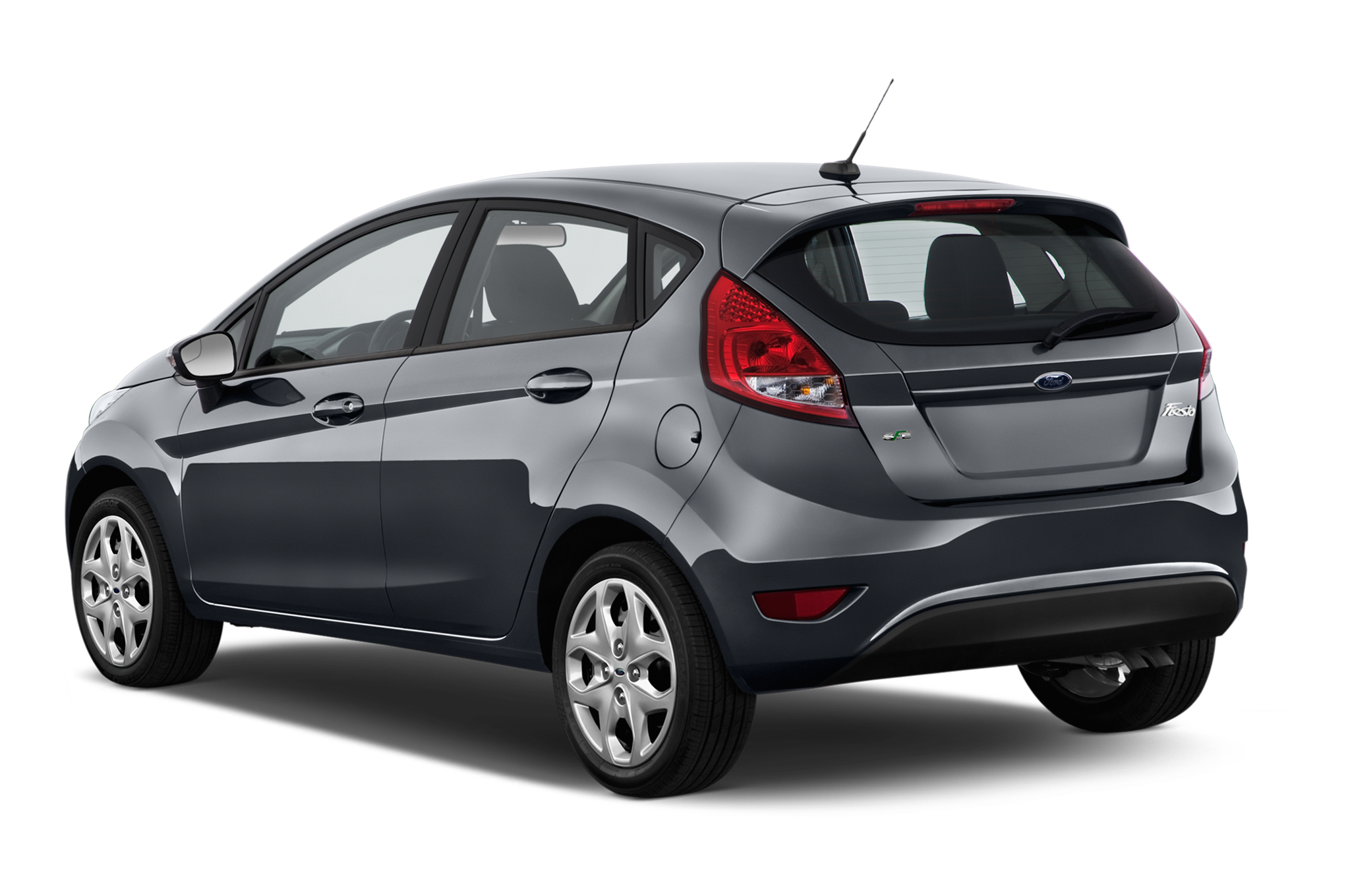
In a world where “affordable subcompact” too often means “dowdy and unattractive,” the 2019 Ford Fiesta wears a stylish and distinctive suit. Attractive and modern as a 4-door sedan or more practical 5-door hatchback, the new Fiesta never turns heads for the wrong reasons. In addition to swallowing more cargo, the hatchback is particularly attractive, offering better proportions and a sportier physique. The Fiesta ST is endowed with a more aggressive style befitting its high-performance intentions, including larger wheels and tires, a deeper front spoiler, ST badging and two chrome exhaust pipes right out of your hot-rodding high school dreams.
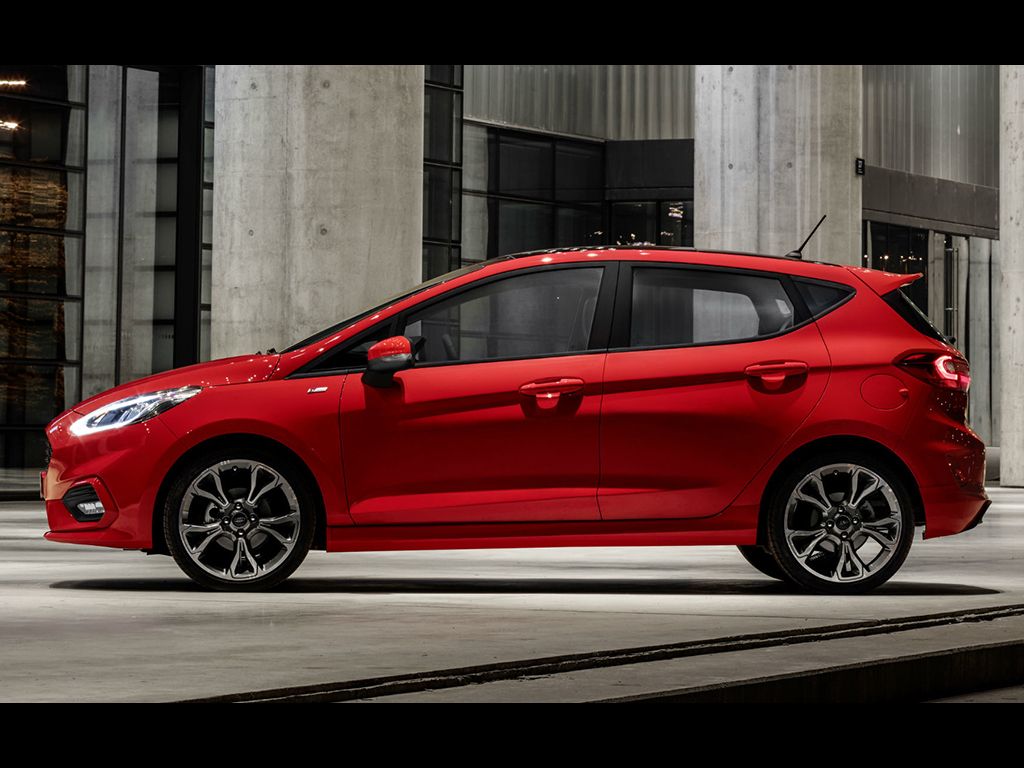
The least expensive 2019 Fiesta is the S sedan, but even it is nicely equipped. Standard fare includes a 4.2-inch display screen, 6-speaker AM/FM/CD/MP3 radio with auxiliary input, rearview monitor, air conditioning, tilt/telescopic steering wheel, power door locks, Hill Start Assist, dual USB inputs and keyless entry. You will, however, still have to crank your own windows. SE models add cruise control, power windows and the MyKey system. The sporty ST trim adds a 6-speed manual transmission, sport suspension, auto temp control, rear spoiler and 17-inch wheels. The ST Line has many of the ST’s features but without the turbocharged engine.
Popular options for the 2019 Fiesta include the Sync infotainment system, which features a large 6.5-inch touch screen with smartphone gestures like swipe and pinch-to-zoom. Other options vary by trim and include navigation, power moonroof, heated front seats, keyless entry pad, satellite radio and an automatic transmission. The potent Fiesta ST hatchback can be made racier with hood stripes and race-car-ready, height-adjustable Recaro seats with cool leather and cloth upholstery. Strangely no automatic transmission is available on the ST.
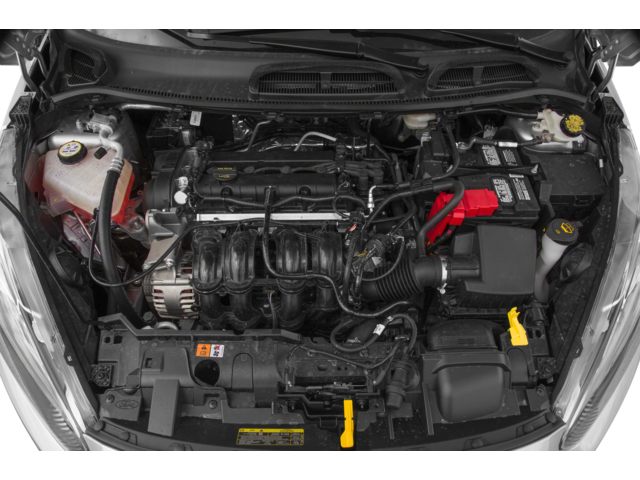
The 2019 Ford Fiesta offers a choice of two 4-cylinder engines. For the base S, SE and ST Line, a 1.6-liter engine good for 120 horsepower comes standard with a 5-speed manual transmission. A 6-speed SelectShift automatic is optional on all three trims. The sporty ST model uses a turbocharged version of the same engine, adding 77 additional horses plus significantly more torque and a slick-shifting 6-speed manual. All Fiesta models are pulled along by their front wheels.1.6-liter inline-4 (S, SE, ST Line)120 horsepower @ 6,350 rpm112 lb-ft of torque @ 5,000 rpmEPA city/highway fuel economy: 27/35 mpg (manual), 27/37 mpg (automatic)1.6-liter turbocharged inline-4 (ST)197 horsepower @ 6,000 rpm202 lb-ft of torque @ 4,200 rpmEPA city/highway fuel economy: 25/32 mpg
The 2019 Ford Fiesta S sedan has a Manufacturer's Suggested Retail Price (MSRP) starting at $ 15,135 with a manual transmission. Unless the lowest price is of highest concern, we recommend at least stepping up to the mid-trim Fiesta SE, which begins around $ 16,365. Opting for the hatchback version of any of these three trims is about $ 300 more. The hatchback-only ST Line starts at $ 18,500, while the full-blown Fiesta ST begins at $ 22,215. Stuff a 2019 Fiesta with options, and you're looking at a low- to mid-$ 20,000 subcompact. This is in line with competitors such as the Chevrolet Sonic and Honda Fit. Undercutting the Fiesta's starting price are the Nissan Versa Note, Kia Rio and Mitsubishi Mirage. Before buying, check 's Fair Purchase Price to see what others in your area are paying. The Fiesta's residual value has traditionally been about average, but lagged the leading Honda Fit.
2019 Ford Fiesta Hatchback SE Exterior Colors
2019 Ford Fiesta Hatchback SE Interior Colors
2019 Ford Fiesta Engines
| Engine | Standard in Trim | Power | Torque | Fuel Consumption - City | Fuel Consumption - Highway | 0-100 km/h | Quarter Mile | Half Mile |
|---|---|---|---|---|---|---|---|---|
| 1.0L EcoBoost engine | SE | 123 hp @ 6000 rpm | 131 N.m | 8.6 L/100km | 6.4 L/100km | 9.5 s | 16.9 s | 28.1 s |
2019 Ford Fiesta Trims
2019 Ford Fiesta Previous Generations


2019 Ford Fiesta Future Generations
Ford Fiesta Overview and History
He would later incorporate the firm on June 16, 1903. Ford Motor Company would go on and label their models chronologically in alfabetical order, starting with the Model A to the Model K and Model S, which was Ford's last right-hand steering vehicle. Then, in 1908 Ford introduced the Model T, which was designed by Childe Harold Wills and two Hungarian immigrants, Joseph A. Galamb and Eugene Farkas. This model proved to be of quintessential Ford vehicle, placing the company among the most influential automotive brands in history.
The Ford Model T was reliable, practical and affordable, which made it a big hit in the US, where it was advertised as the middle-class man's vehicle. The car's success compelled Ford to expand his business and layout the basics of mass production principles in 1913 with the introduction of the world's first vehicle assembly line. By 1912, production figures for the Model T alone reached nearly 200,000 units.
This organizational innovation brought in the vehicle construction field allowed Ford to reduce chassis assembly time by as much as 10 hours, dropping from 12 ½ h to 2h 40 min.
Besides ensuring the efficiency of the production process, Ford turned his company into an interactive entity by announcing a new profit-sharing policy. This would grant buyers a cut of profits if sales reached 300,000. As expected, sales effortlessly reached the 300k threshold and went even further to hit a record 501,000 in 1915.
As part of a new set of financial tactics, Ford provided working places for the disabled who otherwise had a hard time finding a job, reduced work shifts and doubled all employee's salaries. Changes like these sparked a tremendous sales increase while also setting the base of modern working conditions.
Still, the US and Canadian market would prove to be too small to fit Ford's plans. By the mid 20's, the Ford label had crossed the ocean and reached England, France, Germany, Denmark, Austria as well as distant Australia. The company's activity on European grounds further helped the brand's revenue growth.
War would not shake the Ford company as bad as other car makers. Post WWI improvements include the introduction of four-wheel brakes and a series of new vehicle releases to match new consumer demands. In 1922 Ford entered the luxury car segment with the acquisition of the Lincoln Motor Company, named after Abraham Lincoln whom Henry Ford admired.
Ford Motor Co. was one of the few big American corporations to survive the Great Depression, although the plummeting automotive sales led the company to scale down its operations and lay off many workers. In May 1929, Ford Motor Co. signed an agreement with the Soviet Union to provide technical assistance until 1938 to construct an integrated automobile-manufacturing plant at Nizhny Novgorod, in exchange for the Soviets purchasing $ 13 million worth of automobiles and parts. Under this agreement many American engineers and skilled auto workers went in 1932 to work on the Gorkovsky Avtomobilny Zavod (GAZ), or Gorki Automotive Plant. The few who remained in the Soviet Union after the completion of the plant fell victims to Stalin's Great Terror, ending either shot or exiled to Soviet gulags.
With the arrival of WWII Ford increased its influence on the global stage becoming an active player in the war effort, a thing underlined by US President Franklin Roosevelt referring to Detroit as the "Arsenal of Democracy." When the US War Department handed production of B-24 Liberator airplanes to Ford, the output rose to 20 airplanes per day instead of only one per day managed by the Consolidated Aircraft Corporation.
After WWII Ford continued its passenger vehicle operations and in 1955 introduced the iconic Thunderbird model. Then it introduced the Edsel brand in 1958, which proved to be a failure and was dissolved in 1960. Part Edsel's failure as an automotive brand resided in the onset of the 1957 recession in the States and the vehicle's high price tag.
Ford Motor Co. managed to get back up from its Edsel failure with the introduction of the Falcon model in 1960 and the Mustang in 1964. The company's next major step was represented by the formation of Ford Europe division in 1967.
Ford plunged into a state of brand-fatigue that would bring the company to the point of near bankruptcy. Following major sales losses in the 2000's, Ford was pinned against the wall by debts and the imminence of closing down.
Preferring to make it back on its own, Ford mortgaged all of its assets in 2006. As of then, the company has releases a variety of new models both under the Ford brand name and the rest of the sub-brands it owns such as fresher and edgier Mercuries and flashier Lincolns, Ford's luxury division. Business in Europe has also been good for Ford, especially after the introduction of the Focus model in 1997 and although it hasn't fully recovered, it's definitely on the way to regaining popularity.
2019 Ford Fiesta Consumer Reviews
Compare Against Competitors
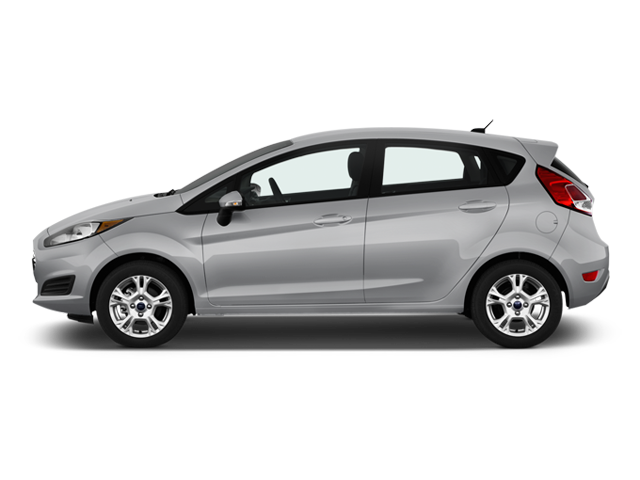
2019 Ford Fiesta Hatchback SE Specifications
SE Comfort and Convenience
| AM/FM stereo radio | Yes |
|---|---|
| AM/FM stereo radio (Option) | AM/FM Stereo/Single-CD/MP3 Capability and Navigation with SiriusXM Traffic and Travel Link |
| Air Conditionning | Electronic automatic temperature control |
| Ambient Lighting | Yes |
| Ambient Lighting (Option) | Yes |
| Audio Display Audio | SYNC |
| Audio Display Audio (Option) | SYNC 3 - enhanced voice recognition communications and entertainment system |
| Audio Monitor (Option) | 6.5-inch centre LCD touch screen with swiping and pinch-to-zoom capabilities |
| Auxiliary input jack | Auxiliary audio input jack |
| Cargo Mat (Option) | Cargo area protector |
| Cargo Net (Option) | Yes |
| Cargo Organizer (Option) | Foldable soft cargo organizer |
| Cruise Control | Yes |
| Driver Vanity Mirror | Driver-side sun visors with covered vanity mirrors |
| Engine Block Heater | Yes |
| Front Wipers | Intermittent front windshield wipers with anti drip wipe |
| Fuel Door Operation | Capless refuelling easy fuel |
| Intelligent Key System | MyKey |
| MP3 Capability | Yes |
| Number of Speakers | 6 speakers |
| Passenger Vanity Mirror | Passenger-side sun visors with covered vanity mirrors |
| Power Door Locks | Power door locks with automatic locking doors |
| Power Outlet | 12-volt power outlet |
| Power Outlet (Option) | 12V powerpoint - rear |
| Power Windows | Power windows with driver one-touch up/down feature |
| Reading Light | Front reading lights |
| Rear Heating | Rear seat heat ducts |
| Rear View Mirror | Day/night rear view mirror |
| Rear Wipers | Rear window wiper |
| Remote Keyless Entry | Yes |
| Remote Keyless Entry (Option) | Keyless-entry keypad |
| Remote Starter (Option) | Remote start system |
| Single CD | CD player |
| Sirius XM satellite radio (Option) | SiriusXM radio with a 6-month free trial subscription to the Sirius Select+ package |
| Steering Wheel Adjustment | Tilt and telescopic steering wheel |
| Trunk Light | Cargo light |
| USB Connector (Option) | Two smart charging USB ports |
| Voice Recognition System | Voice activation system |
SE Dimensions
| Cargo Capacity | 363 L |
|---|---|
| Curb Weight | 1169 kg |
| Front Headroom | 994 mm |
| Front Legroom | 1107 mm |
| Fuel Tank Capacity | 47 L |
| Height | 1475 mm |
| Length | 4406 mm |
| Rear Headroom | 943 mm |
| Rear Legroom | 793 mm |
| Wheelbase | 2488 mm |
| Width | 1722 mm |
SE Exterior Details
| Acoustic Windshield | Acoustic laminated windshield |
|---|---|
| Bumper Colour | Body-color bumpers |
| Bumper Colour (Option) | Body-colour front bumper with Chrome insert |
| Door Handles | Body-color door handles |
| Exterior Decoration | Black beltline |
| Exterior Mirror Colour | Body-color exterior mirrors |
| Exterior Mirrors Lamp | Exterior mirrors with side marker lamps |
| Front Fog Lights (Option) | Fog lamps with chrome-trimmed ring |
| Grille | Carbon black lower grille and chrome upper grille bars and surround |
| Headlight Type | Halogen headlights |
| Heated Exterior Mirrors | Heated outside mirrors |
| Power Exterior Mirrors | Power-adjustable outside mirrors with integrated blind spot mirrors |
| Power Exterior Mirrors (Option) | Black dual-power/heated exterior mirrors with blind spot indicators |
| Rear Spoiler | Rear decklid spoiler |
| Rear Spoiler (Option) | Rear spoiler (sedan only) |
| Rear Window Defroster | Yes |
| Side-Body Trim | Body-colour decklid eyebrow moulding |
| Sunroof (Option) | Power moonroof |
| Tinted Glass | Solar tinted glass |
SE Interior Details
| Clock | Yes |
|---|---|
| Driver Info Center | Multifunctional message centre with LCD screen |
| Floor Console | Front centre floor console with cell phone holder |
| Floor Mats | Carpeted front floor mats |
| Floor Mats (Option) | All-weather floor mats (front and rear, Ebony-coloured) |
| Folding Rear Seats | 60/40 split-folding rear bench |
| Front Center Armrest | Yes |
| Front Seats Driver Headrest | 2-way adjustable head restraint |
| Front Seats Driver Lombar (Option) | Driver's seat with adjustable lumbar support |
| Front Seats Front Seat Back Storage | Front passenger side seatback map pocket |
| Front Seats Front Seat Type | Front bucket seats |
| Front Seats Heated | Heated front seats |
| Front Seats Passenger Headrest | 2-way adjustable head restraint |
| Glove Box | Illuminated glove box |
| Inner Door Handle Trim | Chrome door release handles |
| Number of Cup Holders | Front and rear cupholders |
| Overhead Console | Yes |
| Seat Trim | Cloth seats with embossed seat design |
| Seat Trim (Option) | Unique sport cloth seat trim |
| Shifter Knob Trim | Shift knob with metallic trim insert |
| Shifter Knob Trim (Option) | Leather-wrapped shift knob with chrome insert |
| Tachometer | Yes |
SE Mechanical
| Drive Train | Front-wheel drive |
|---|---|
| Engine Name | 1.6L L4 DOHC 16-valve |
| Stability Control | Yes |
| Traction Control | Yes |
| Transmission | 5-speed manual transmission |
| Transmission (Option) | 6-speed automatic transmission with manual mode |
SE Overview
| Body | Hatchback |
|---|---|
| Doors | 5 |
| Engine | 1.6L L4 DOHC 16-valve |
| Fuel Consumption | 8.6 (Automatic City)6.4 (Automatic Highway)8.6 (Manual City)6.7 (Manual Highway) |
| Power | 120 hp @ 6350 rpm |
| Seats | 5 |
| Transmission | 6-speed automatic transmission with manual mode |
| Warranties | Bumper-to-Bumper50000/km, 36/Months Powertrain50000/km, 60/Months Roadside Assistance50000/km, 60/Months Rust-throughUnlimited/km, 60/Months |
SE Safety
| Anti-Lock Brakes | 4-wheel ABS |
|---|---|
| Anti-Theft Alarm | Perimeter alarm |
| Brake Type | Front disc/rear drum |
| Child Seat Anchor | LATCH child seat anchors |
| Child-proof Locks | Rear-door child safety locks |
| Driver Airbag | Driver-side front airbag |
| Electronic brake force distribution | Electronic brake force distribution |
| Front Seat Belts | Height adjustable |
| Hill Start Assist | Hill start assist |
| Knee Airbags | Driver's knee airbag |
| Passenger Airbag | Passenger-side front airbag |
| Rear Seat Belts | Center 3-point |
| Rear View Camera | Rear view camera |
| Roof Side Curtain | Side-curtain airbags |
| Side Airbag | Side impact airbags |
SE Suspension and Steering
| Front Anti-Roll Bar | Yes |
|---|---|
| Front Suspension | Independent front suspension |
| Front Tires | P185/60R15 |
| Power Steering | Electric-assist speed-sensitive rack-and-pinion steering |
| Rear Suspension | Torsion bar rear suspension |
| Spare Tire | Mini spare steel wheel |
| Spare Tire (Option) | Mini-aluminum spare tire and wheel |
| Tire Pressure Monitoring System | Yes |
| Wheel Type | 15-inch sparkle silver painted aluminum wheels |
| Wheel Type (Option) | 16-inch 8-spoke black machined-aluminum wheels |
Discussion and Comments
Share Your Comments