2011 Suzuki Equator Crew Cab JX 0-60 Times, Top Speed, Specs, Quarter Mile, and Wallpapers
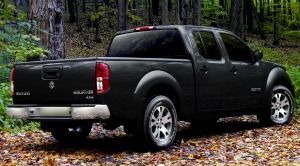
The 2011 Suzuki Equator Crew Cab JX is a 4-wheel drive Pick-Up. It can accommodate up to 5 passengers. It has 4 Doors and is powered by a 4.0L V6 DOHC 24-valve engine which outputs 261 hp @ 5600 rpm and is paired with 5-speed automatic transmission gearbox. The 2011 Suzuki Equator Crew Cab JX has cargo capacity of Liters and the vehicle weighs 2050 kg. In terms of ride assists, the 2011 Suzuki Equator Crew Cab JX has stability control and traction control in addition to anti-lock brake system (ABS). The vehicle has an optional engine as well It offers and. Safety features also include Driver-side front airbag and Passenger-side front airbag. The front suspension is Independent front suspension while the rear suspension is. The car also features a Yes It has 17'' alloy wheels as standard. Electronic features include Cruise Control. For convenience, the car has Power windows and Power door locks. There is also a remote keyless entry feature. Moreover, the car has. The steering wheel has audio control buttons. In terms of performance, the car has 285 N.m of torque and a top speed of 235 km/h. The 2011 Suzuki Equator Crew Cab JX accelerates from zero to 60 mph in 7.3 seconds and hits quarter mile at 13.8 seconds. Fuel consumption is 14.6 L/100km in the city and 10.6 L/100km in the highway. The car price starts at $ 34,995
| Name | Crew Cab JX | |
|---|---|---|
| Price | $ 34,995 | |
| Body | Pick-Up | |
| Doors | 4 Doors | |
| Engine | 4.0L V6 DOHC 24-valve | |
| Power | 261 hp @ 5600 rpm | |
| Number of Seats | 5 Seats | |
| Transmission | 5-speed automatic transmission | |
| Cargo Space | L | |
| Maximum Cargo Space | 2,863.0 L | |
| Wheel Type | 17'' alloy wheels | |
| Series | ||
| Drivetrain | 4-wheel drive | |
| Horsepower | 261 HP | |
| Torque | 285 N.m | |
| Top Speed | 235 km/h | |
| Acceleration 0-100 km/h (0-60 mph) | 7.3 s | |
| Fuel Type | ||
| Fuel Consumption (City) | 14.6 L/100km | |
| Fuel Consumption (Highway) | 10.6 L/100km | |
| Gear Type | auto | |
| Weight | 1,850 KG | |
| Brand | Suzuki | |
| Model | Equator | |
| 0-400m (Quarter Mile) | 13.8 s | |
| 0-400m (Quarter Mile) - Speed | 148.0 km/h | |
| 0-800m (Half Mile) | 25.8 s | |
| 0-800m (Half Mile) - Speed | 166.6 km/h | |
| Modifications (MODS) | ||
| Modifications Cost | $ 0 |
2011 Suzuki Equator Used Price Estimates
Estimates based on a driving average of 12,000 miles per year| Used Condition | Trade In Price | Private Party Price | Dealer Retail Price |
|---|---|---|---|
| Outstanding | $ 5,283 | $ 6,374 | $ 7,161 |
| Clean | $ 5,000 | $ 6,023 | $ 6,753 |
| Average | $ 4,434 | $ 5,321 | $ 5,938 |
| Rough | $ 3,868 | $ 4,619 | $ 5,123 |
The 2011 Suzuki Equator is a front-running midsize pickup, but a relatively small dealer network might complicate ownership.

Like most everything else in the U.S., pickup trucks have been supersized over the last couple of decades. Perhaps with the latest trend of downsizing, midsize trucks may regain some footing. Choices are few in this category, but among this select group, the 2011 Suzuki Equator ranks very highly.
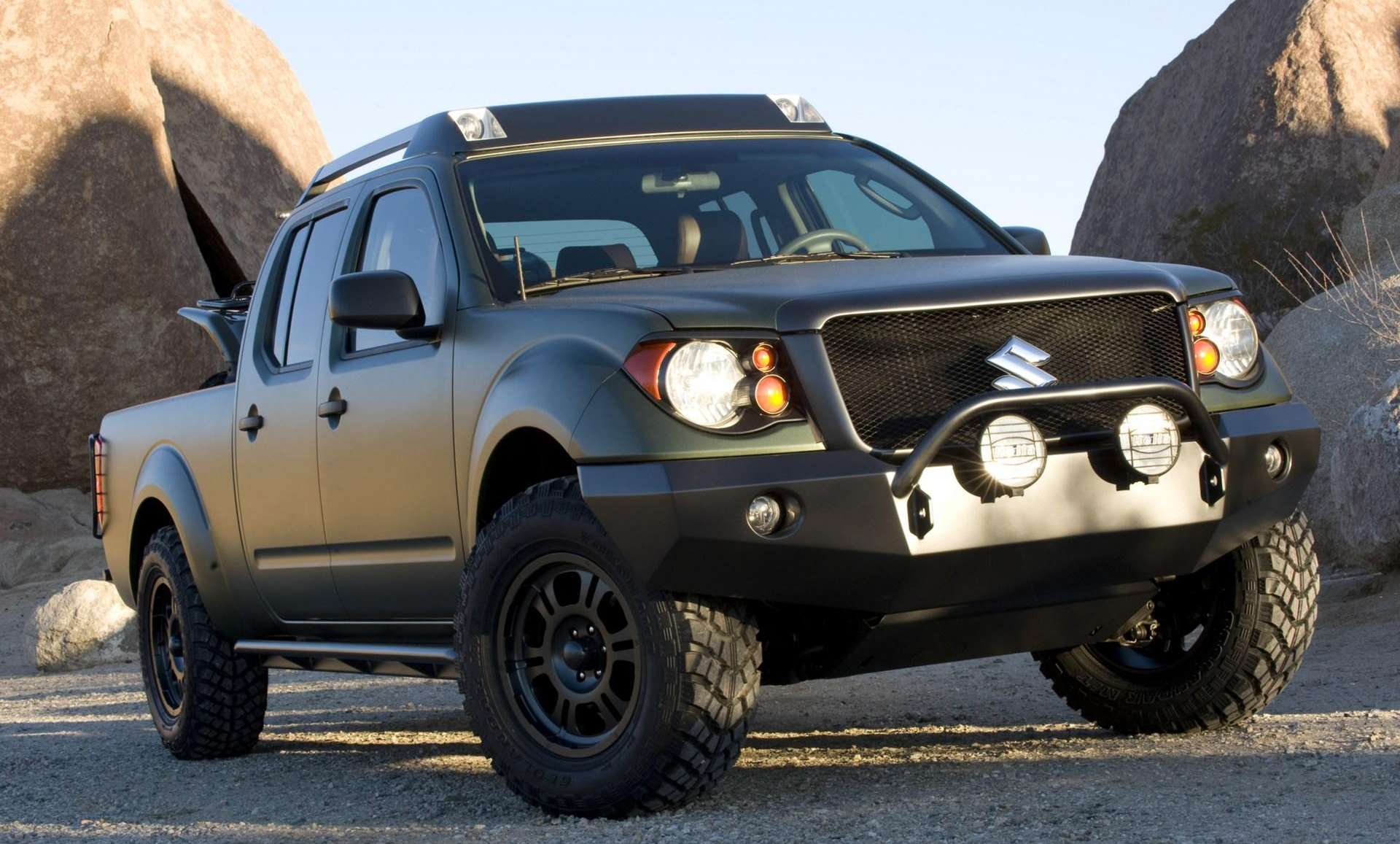
Although the Equator has its own traditional style, it's essentially identical to the 2011 Nissan Frontier on which it's based under the sheet metal. The Equator and Frontier interior treatments are fundamentally similar as well, with just a few badge changes for the Suzuki. Under the hood, you'll even find some traces of Nissan labeling.
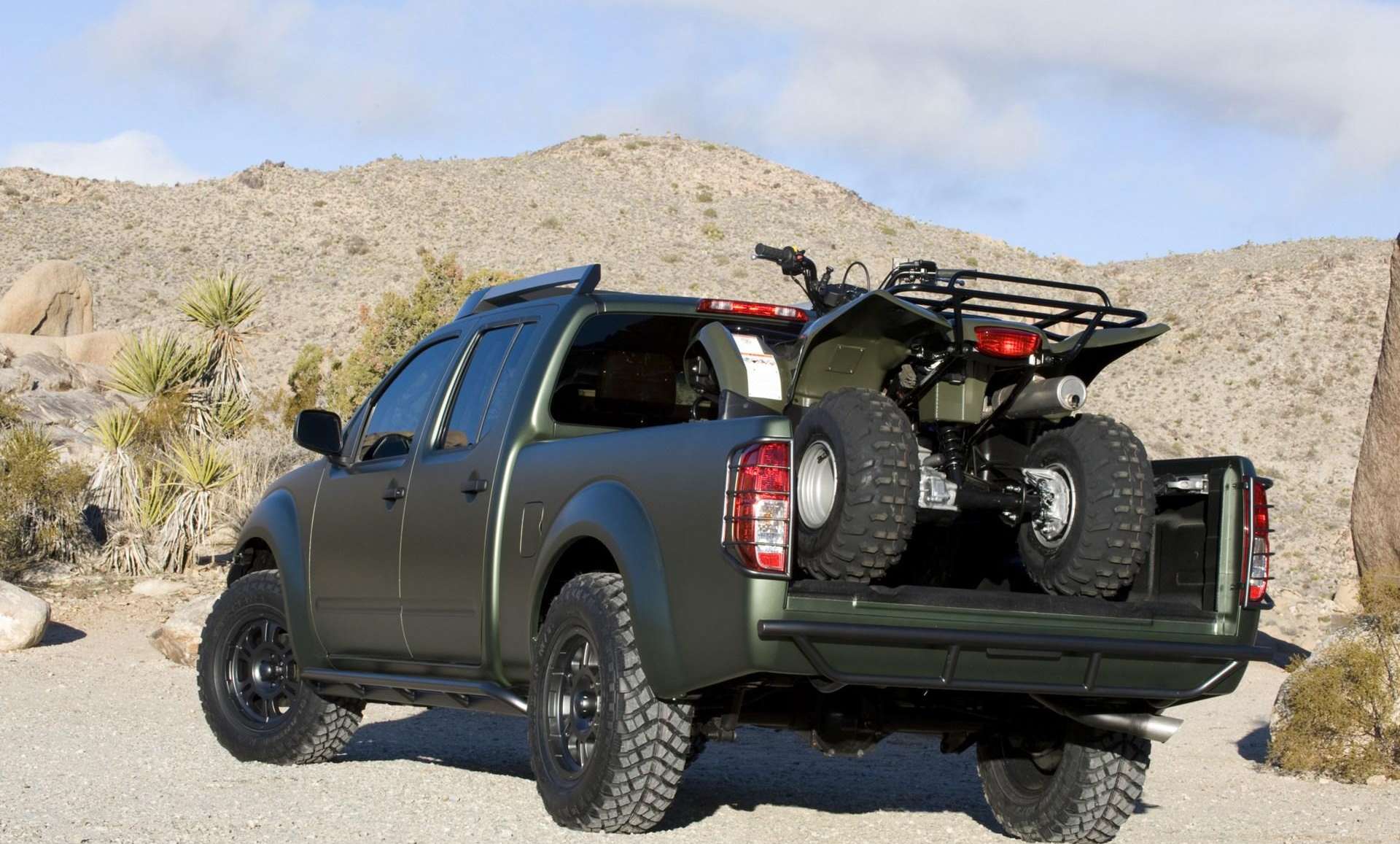
As a result, you get all the advantages and disadvantages that come with the Nissan Frontier. The Equator shares the strength of an optional V6 engine, relatively nimble handling, a manageable size, sturdy construction and respectable off-road performance. Likewise, both trucks suffer from the same cramped quarters in the rear of the crew cab. The Equator also isn't available in the simple standard cab from the Frontier lineup, although this is simply because it has relatively little market appeal.
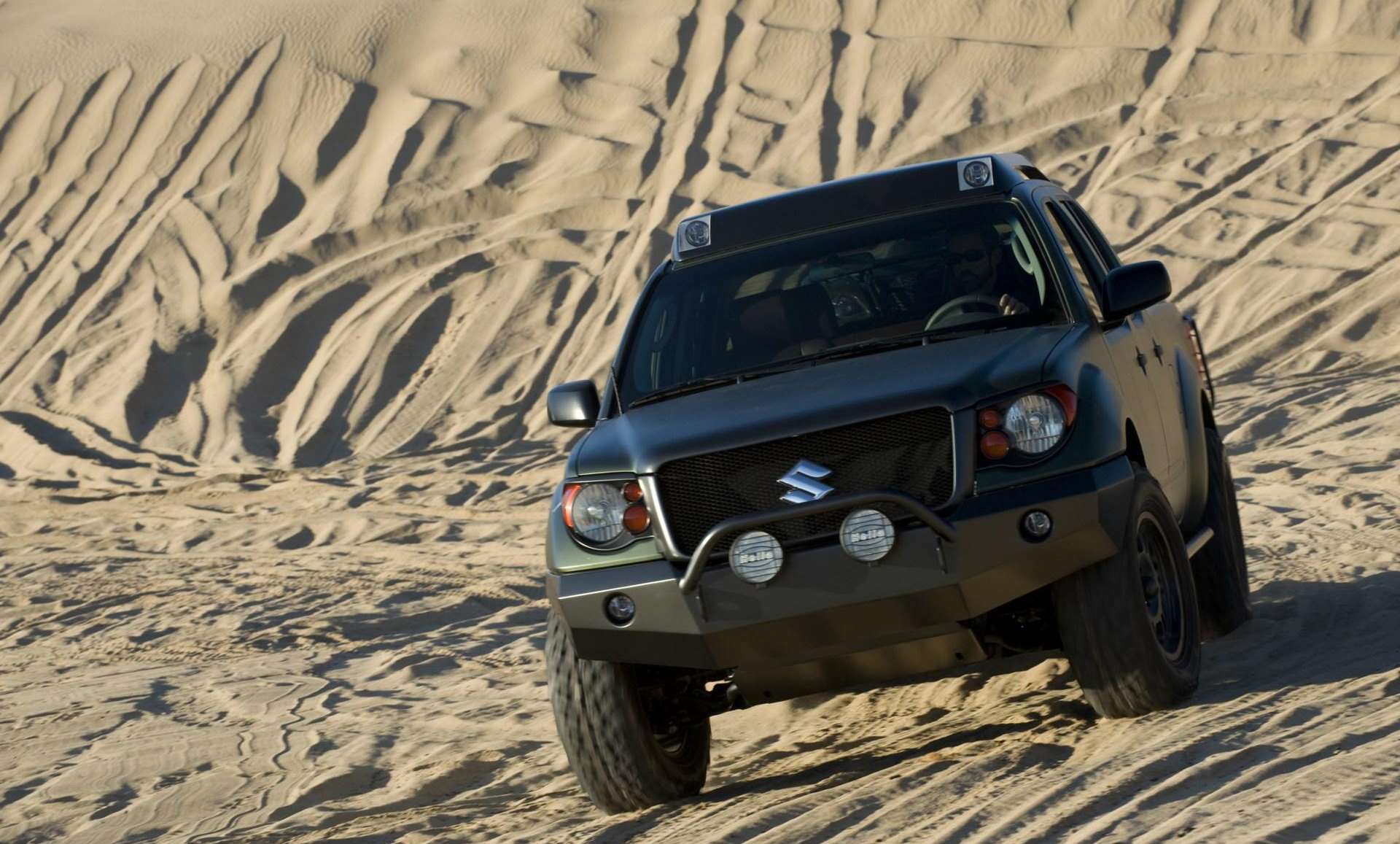
Suzuki offers a seven-year/100,000-mile powertrain warranty, while the Nissan stops at five years and 60,000 miles. The drawback here is that warranty work must be performed at Suzuki dealerships, which are outnumbered considerably by Nissan dealers. If a Suzuki dealer is conveniently close to you, however, the 2011 Equator should be an enticing midsize pickup.
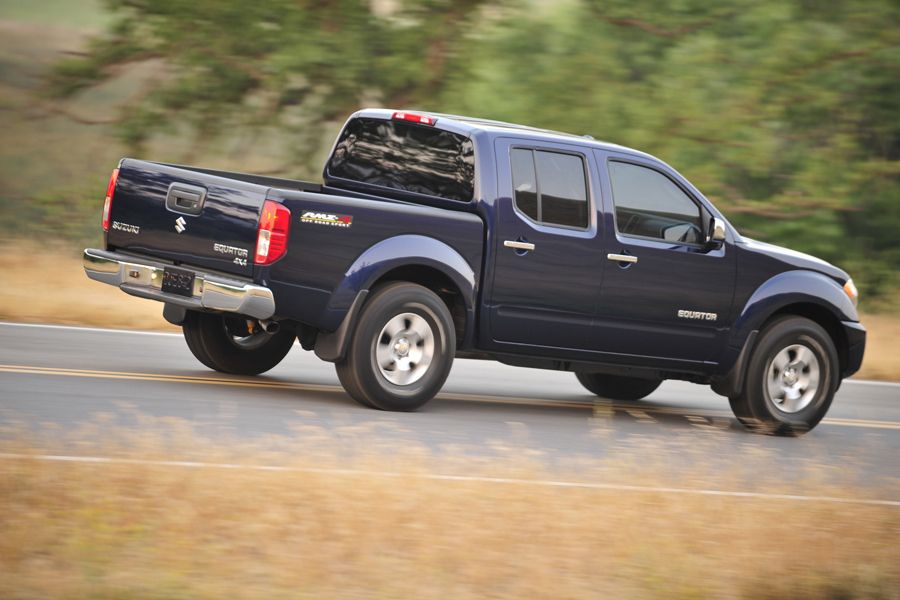
The 2011 Suzuki Equator is a midsize pickup truck that is available in extended- and crew-cab body styles. Extended cabs are available in Comfort, Premium and Sport trims, and all come with a 6-foot bed. Crew cabs are available in Sport and RMZ-4 trims. The Sport comes with either a 5-foot or 6-foot bed, while the RMZ-4 has the short bed only. Rear-wheel drive is standard for the Comfort and Premium trim in the extended cab, while the Sport extended cab and crew cab can be had with either rear or four-wheel drive. Finally, the RMZ-4 crew cab with its short bed is only available with four-wheel drive.
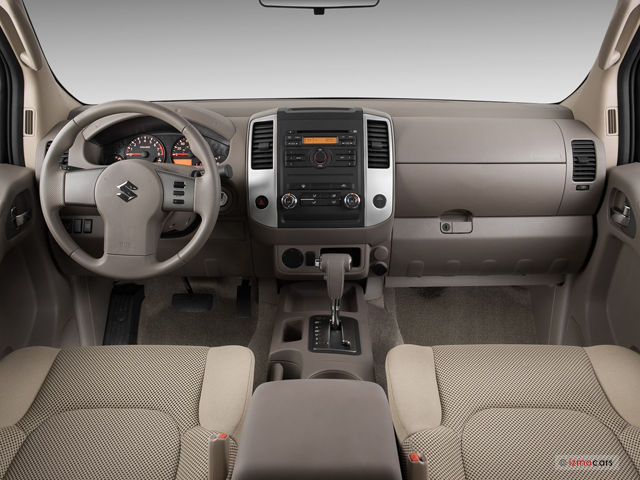
The entry-level Equator with its 15-inch steel wheels has bucket seats and an interior center console, but little else in the way of convenience features. Buyers who desire air-conditioning will have to spring for the optional Comfort package, which also includes a four-speaker sound system with a CD player. The Premium adds 16-inch alloy wheels, a sliding rear window, a tilt steering wheel, keyless entry, full power accessories and upgraded cloth upholstery. Opting for the Sport gets you 17-inch alloy wheels, a spray-in bedliner and movable tie-down cleats in the bed.
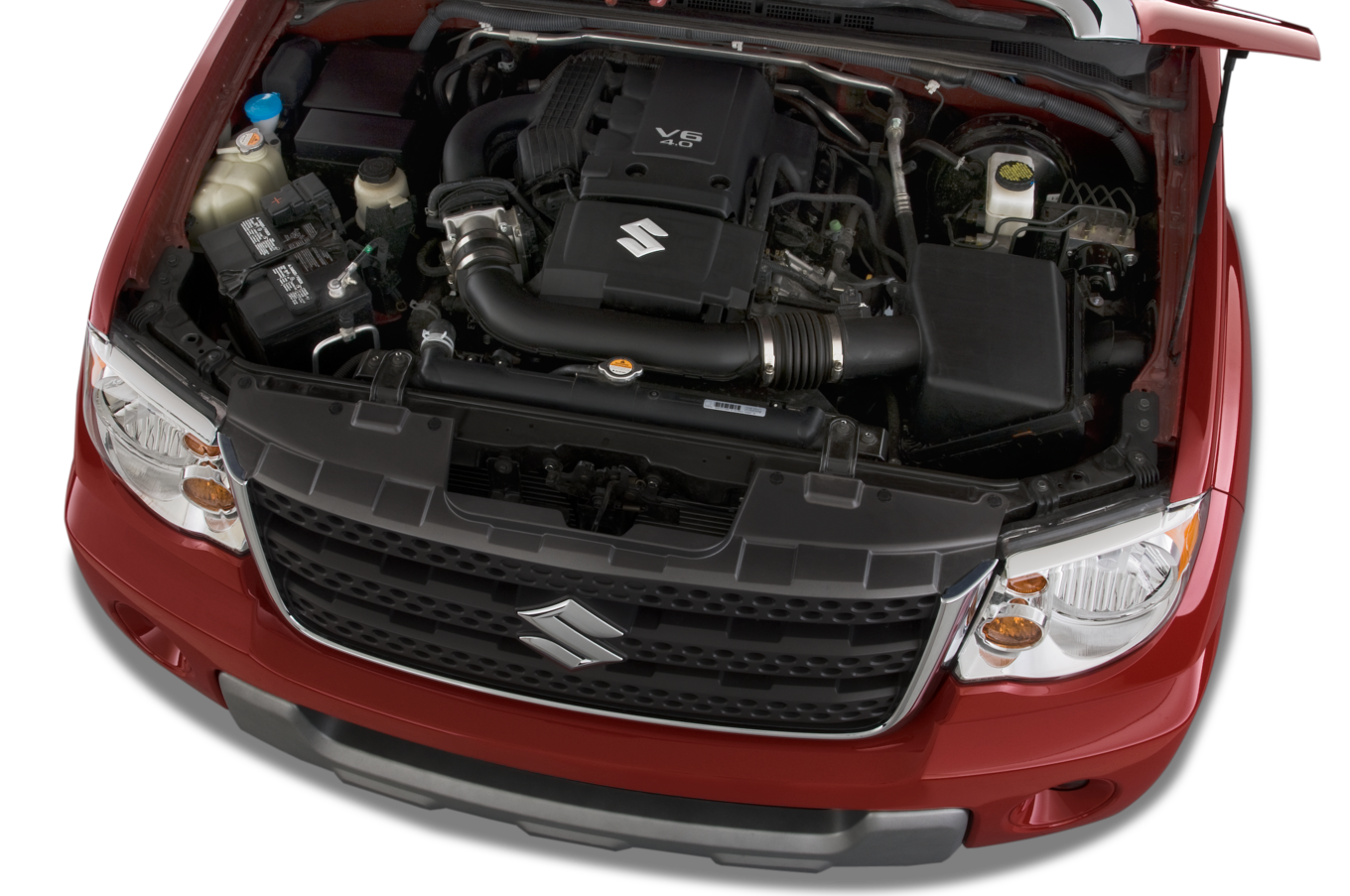
The RMZ-4 adds chrome exterior trim, heavy-duty axles, a locking rear differential, Bilstein dampers, skid plates, hill descent and hold control, 16-inch alloy wheels, off-road-oriented tires, foglamps, unique upholstery, metallic interior accents, and a driver seat with height and lumbar adjustment. A removable Garmin navigation system and a bed extender are optional for the RMZ-4 crew cab.
The 2011 Suzuki Equator comes with a choice of two engines: a 2.5-liter four-cylinder that produces 152 horsepower and 171 pound-feet of torque, and a 4.0-liter V6 that makes 261 hp and 281 lb-ft. The V6 is only available for crew cabs and 4WD variants, while the four-cylinder is available only in the lower-trim extended-cab models. The four-cylinder is matched to either a standard five-speed manual transmission or an optional five-speed automatic (standard on the Premium). The V6 is equipped with a five-speed automatic only.
Properly equipped, the Equator can tow up to 6,300 pounds, while payload maxes out at 1,471 pounds. Fuel economy estimates range from 19 mpg city/23 mpg highway and 21 mpg combined for the rear-drive extended cab with the inline-4 engine to 14/19/16 mpg for the 4WD crew cab with its V6.
In a recent test of a V6-powered Sport model, the Equator accelerated from zero to 60 mph in 8.0 seconds, a suitably quick time for a midsize pickup.
Antilock disc brakes, front side airbags and full-length side curtain airbags are standard on all trims. Traction and stability control are standard on Sport and V6 models. Hill-hold and descent control is standard on the four-cylinder Sport and V6-powered long bed and RMZ-4 models.
The 2011 Equator has not been rated using the government's new, more strenuous 2011 crash testing procedures. Its 2010 ratings (which aren't comparable to 2011 tests) resulted in four stars (out of five) in frontal tests for both driver and passenger and five stars for side impact protection. The extended cab garnered four stars for driver protection in frontal impacts and five stars for frontal-impact passenger protection and driver protection in side impacts. The Insurance Institute for Highway Safety awarded its highest score of "Good" for frontal-offset testing.
In brake testing, a crew cab Equator Sport model came to a stop from 60 mph in 122 feet. It's an admirably short distance, but the soft pedal was far from confidence-inspiring, and sometimes it went all the way to the floor under heavy pressure.
The inexpensive 2011 Suzuki Equator four-cylinder model is well-suited for light-duty work. The models with the hearty Nissan-built V6 with its plentiful low-end torque are worthy of more demanding tasks, whether it's tearing up sand dunes, hauling supplies to a work site or navigating a morning commute -- all while the competent automatic transmission delivers well-timed shifts.
The Equator steers precisely with ample feedback, though effort is a bit on the heavy side. The Equator's ride quality is unexpectedly pleasant for a pickup truck, although the RMZ-4's off-road suspension has a tendency to be too busy on pavement. Understandably, the RMZ model is a prime candidate for drivers with a penchant for serious off-roading. But for the vast majority of truck owners who keep to the pavement, the Sport model will be a wiser choice, with its quieter tires and more compliant suspension.
The 2011 Suzuki Equator makes use of small reverse-opening doors for extended cab models to allow rear passenger access to the fold-up jump seats. As you would expect, rear-seat passenger space is quite cramped. The crew cab has conventional rear doors and a larger rear cabin, but rear cabin space is still smaller than that of a Dodge Dakota or Toyota Tacoma. To the Equator's credit, its cabin features an attractive design, intuitive controls and comfortable front seats. There is an abundance of hard plastic surfaces, but no more than you'll find in other compact/midsize pickups.
Those who frequently haul cargo should consider the Sport trim, which includes the sprayed-in bedliner and movable tie-down system. Using two C-type cross-section channels running the length of the bed floor (one on each side bed rail and one mounted on the rear of the cab), the system employs removable cleats and a host of accessories like dividers, trays, storage bins and bike racks, providing a very flexible cargo storage solution.
We have about one-hundred words, but we could do it in three: it's a truck. With that as a given, the Equator and its Frontier twin are highly regarded for an extremely stiff - albeit heavy - chassis structure. In point of fact, this platform isn't engineered for the mid-size truck segment; rather, it's downsized from the Titan full-size chassis. To that end, it's amazingly capable as a truck, but also rather heavy in its size segment. The suspension, steering and braking, however, do what's expected of them, with no surprises and little to disappoint. The folks at "4-Wheel & Offroad" magazine recognized it as their 4X4 of the Year at the Equator's launch, an accolade rarely given to something that is - at its core - a rebadging of an existing vehicle. We like the attributes of the RMZ-4 off-road more than we like the characteristics of the base RWD models on-road.
RMZ-4 TrimIn a brazen - albeit predictable - attempt to borrow some mojo from its motorcycle brethren, Suzuki takes "RMZ" from the motocross side of the business, adds the numeral "4" and - in the process - turns the Equator into one of the most capable off-roaders available from the showroom. The skid plates, off-road specific rubber, Bilstein shocks and locking rear differential take it to the dirt and allow you to drive out. We like it all, and only wish this trim level were available as an Extended Cab variant.Adjustable Tie-down SystemTaken intact from Nissan, the adjustable tie-down system employs five special "C" cross-section rails mounted in the bed. Removable utility cleats slide into the channels, providing a wide range of attachment points for securing cargo. It's great for securing virtually anything, although state laws will (typically) prevent you from securing a live passenger via a tie-down system.
It's a truck (or sport truck) with a base price of roughly $ 18K, and its interior fully conveys that. A simple dash, buttons and knobs operable (for the most part) with a gloved hand, and adequate room in both the Extended and Crew Cabs make for an interior that neither delights nor offends. Were leather seating offered we'd take it, but given the comparatively low take rate on the pickup itself an interior upgrade hasn't been offered by American Suzuki.
Most observers - and the handful of customers - have liked those changes wrought by Suzuki's design team; in short, they didn't screw it up. And in the front they seemingly improved on the original, which is no mean feat. That said, there's nothing significantly new here - only the basic, honest representation you want from a work or play truck. In its aggressively 4X4, RMZ-4 guise, this is the perfect exclamation point to your off-road pursuits.
Both 2011 Suzuki Equator Extended Cab and Crew Cab models feature flip-up rear seats, a fold-flat front passenger seat and removable storage boxes located beneath the rear seats. Beyond that, the base Extended Cab is appropriately spartan. Opt for the Premium, Sport or RMZ-4 packages and power mirrors, door locks, and windows are built into the base price, as is air conditioning and a 4-speaker AM/FM/CD audio system. The Crew Cab is better equipped in its standard spec, but the base MSRP is several thousand dollars higher. Standard safety equipment in both cabs is more comprehensive, with ABS braking, tire pressure monitoring system and both front seat side-impact airbags and curtain airbags for front and rear outboard passengers.
Most options are tied to the trim levels: Premium, Sport and RMZ-4. Opt for the RMZ-4 with Sport upgrades and you'll enjoy the benefits of Vehicle Dynamic Control, Hill Descent Control and Hill Hold Control. Inside, the Sport package on the RMZ-4 adds 380 watts of Rockford-Fosgate audio, eight high-performance speakers plus subwoofer, an auxiliary input jack and Bluetooth capacity. And while there's little or no aftermarket support specific to the Equator, there is a plentiful number of aftermarket options for the Frontier.
Suzuki offers two engines on the 2011 Equator, but only one real choice. The base 2.5 liter has little to endear it beyond simplicity and longevity. Highway economy gives you a 2-mpg bump over the V6 (both with auto transmissions), but at $ 4/gallon over 15,000 annual miles, that 10 percent improvement represents all of $ 300 in savings over the course of a year. The 4.0 liter V6 gives you smooth, responsive power and the ability to tow some 6,500 pounds. We wouldn't, to be sure, tow that tonnage with a mid-size truck, but it makes towing something (boat, trailer, etc.) weighing 3,000 pounds just that much easier.2.5-liter in-line 4152 horsepower @ 5200 rpm171 lb.-ft. of torque @ 4400 rpmEPA city/highway fuel economy: 19/23 (manual), 17/22 (automatic)4.0-liter V6261 horsepower @ 5600 rpm281 lb.-ft. of torque @ 4000 rpmEPA city/highway fuel economy: 15/20 (2WD), 14/19 (4WD)
For those with a truck budget of under $ 20K, you're in luck! With a base price of just over $ 18,000, adding A/C and AM/FM/CD ($ 1,404) brings you in a few hundred dollars shy of $ 20,000. (You'll save even more, of course, with the almost mandatory incentives typically offered in the mid-size segment.) The typical price point for a moderately equipped 2011 Suzuki Equator Extended Cab Sport with V6 and AWD would be just under $ 27K, and an all-options-on-deck RMZ-4 Crew Cab would hover around $ 30K. An important point for value shoppers: Ultimate value is not here in the mid-size segment. OEMs are tripping over themselves to gain market share in full-size trucks, and in recent years don't seem to care whether you buy a mid-size truck (or not). In short, you'll pay a premium - in relative terms - for this smaller, more maneuverable footprint. Before writing the check, reference kbb.com's Fair Purchase Price.
2011 Suzuki Equator Crew Cab JX Exterior Colors
2011 Suzuki Equator Crew Cab JX Interior Colors
2011 Suzuki Equator Engines
| Engine | Standard in Trim | Power | Torque | Fuel Consumption - City | Fuel Consumption - Highway | 0-100 km/h | Quarter Mile | Half Mile |
|---|
2011 Suzuki Equator Trims
2011 Suzuki Equator Previous Generations
2011 Suzuki Equator Future Generations
Suzuki Equator Overview and History
He turned to car making and in 1937 started developing a prototype. Unlike Toyota, who chose to copy an American six-cylinder engine, Suzuki created their own model, a four-cylinder version which put out 13 horsepower. But as WWII began, production of passenger cars became a luxury so Suzuki turned back to loom-making to support Japan's new cotton industry. All that stopped when the market crashed in 1951.
Versatile and ingenious, Suzuki now turned to making engines for bicycles. Unlike other engines that could be mounted to bikes, his motors had a unique feature that allowed the rider to pedal assisted by the engine or completely disconnect the pedals. This captured the attention of the government who granted funds to Suzuki for research.
During the 50s Suzuki released several models: in 1955 the Suzulight SS, a-2 door sedan, the Suzulight SD, a 2-door wagon, the SL – a 3 door sedan and the SP, a pick-up. Out of all of them, the SP proved to be the most successful, being mass-produced and improved during the 60s. Good sales for the SP which was regarded asa commercial type of vehicle, meant that in 1960 the Suzulight Van, the TL, was introduced. Other models from the 60s include the small Suzuki Fronte 360 and the Suzuki Fronte 500.
The famous off-road Jimny came in 1970, which had several variations of chassis and engine. The other cars from the 70s are the Cervo, Alto and the Fronte, also with a number of variations and improvements along the years.
As the 80s rolled in, Suzuki began expanding across the ocean, thanks to a business agreement with GM (in 1981) which gave them an important niche in the western market. Also, they began a partnership with the Indian car company Maruti in 1983 to produce cars there. A year later, in 1984, Suzuki Motor GmbH Deutchland opens up its doors in Heppenheim, Germany.
The Swift and the Vitara models were introduced in the late 80s and Suzuki reached a production of 10 million units. During the 90s, the company continued to expand with factories all over the world and several other 4x4 models were introduced. Right now, Suzuki is listed as being the 12th biggest automotive manufacturer in the world with 35 production facilities all over the Globe and being present in 192 countries.
2011 Suzuki Equator Consumer Reviews
2011 Suzuki Equator Crew Cab JX Specifications
Crew Cab JX Comfort and Convenience
| AM/FM stereo radio | Yes |
|---|---|
| Air Conditionning | Air conditioning |
| Courtesy Dome Light | Courtesy lights |
| Cruise Control | Yes |
| Driver Vanity Mirror | Driver-side vanity mirror |
| Front Wipers | Intermittent windshield wipers |
| Illuminated Entry | Illuminated entry with fade-out |
| Interior Air Filter | Cabin air filter |
| Multi-CD Changer | In-dash 6-CD changer |
| Passenger Vanity Mirror | Front passenger-side vanity mirror |
| Power Door Locks | Yes |
| Power Outlet | 2 12-volt power outlets |
| Power Windows | Power windows with driver one-touch down feature |
| Reading Light | Front reading lights |
| Rear View Mirror | Day/night rear view mirror |
| Remote Keyless Entry | Yes |
| Steering Wheel Adjustment | Tilt steering wheel |
Crew Cab JX Dimensions
| Front Headroom | 1016 mm |
|---|---|
| Front Legroom | 1076 mm |
| Fuel Tank Capacity | 80 L |
| Height | 1780 mm |
| Length | 5612 mm |
| Maximum Cargo Capacity | 2863 L |
| Rear Headroom | 982 mm |
| Rear Legroom | 854 mm |
| Wheelbase | 3554 mm |
| Width | 1850 mm |
Crew Cab JX Exterior Details
| Bumper Colour | Body-color bumpers |
|---|---|
| Headlight Type | Halogen headlights |
| Heated Exterior Mirrors | Heated outside mirrors |
| Power Exterior Mirrors | Power-adjustable outside mirrors |
| Privacy Glass | Rear privacy glass |
| Rear Window Defroster | Yes |
| Tinted Glass | Yes |
Crew Cab JX Interior Details
| Clock | Digital clock |
|---|---|
| Floor Mats | Front and rear floor mats |
| Folding Rear Seats | 60/40-split folding 2nd-row bench seat |
| Front Center Armrest | Front center armrest with storage |
| Front Seats Active Headrests | Active front and rear headrests |
| Front Seats Front Seat Type | Bucket front seats |
| Number of Cup Holders | 4 cupholders |
| Rear Seat Type | Rear bench seat |
| Seat Trim | Cloth seats |
| Tachometer | Yes |
Crew Cab JX Mechanical
| Drive Train | 4-wheel drive |
|---|---|
| Engine Name | 4.0L V6 DOHC 24-valve |
| Transmission | 5-speed automatic transmission |
Crew Cab JX Overview
| Body | Pick-Up |
|---|---|
| Doors | 4 |
| Engine | 4.0L V6 DOHC 24-valve |
| Fuel Consumption | 14.6 (Automatic City)10.6 (Automatic Highway) |
| Power | 261 hp @ 5600 rpm |
| Seats | 5 |
| Transmission | 5-speed automatic transmission |
| Warranties | Bumper-to-Bumper60000/km, 36/Months Emissions130000/km, 96/Months Powertrain100000/km, 60/Months Roadside AssistanceUnlimited/km, 36/Months Rust-throughUnlimited/km, 60/Months |
Crew Cab JX Safety
| Anti-Lock Brakes | Anti-lock brakes |
|---|---|
| Brake Type | 4-wheel disc |
| Child-proof Locks | Rear-door child safety locks |
| Driver Airbag | Driver-side front airbag |
| Electronic brake force distribution | Electronic brake force distribution |
| Hill Descent Control | Hill descent control system |
| Hill Start Assist | Hill start assist system |
| Ignition Disable | Theft-deterrent engine immobilizer |
| Panic Alarm | Panic alarm |
| Passenger Airbag | Passenger-side front airbag |
| Roof Side Curtain | Side-curtain airbags |
| Side Airbag | Front side airbags |
Crew Cab JX Suspension and Steering
| Front Suspension | Independent front suspension |
|---|---|
| Front Tires | P265/65R17 |
| Power Steering | Electric-assist power rack-and-pinion steering |
| Tire Pressure Monitoring System | Yes |
| Underbody skid plates | Skid plates |
| Wheel Type | 17'' alloy wheels |
Discussion and Comments
Share Your Comments