2010 Subaru Outback PZEV 0-60 Times, Top Speed, Specs, Quarter Mile, and Wallpapers
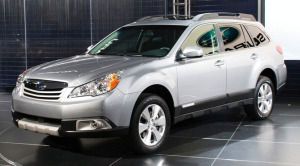
The 2010 Subaru Outback PZEV is a All-wheel drive Wagon. It can accommodate up to 5 passengers. It has 5 Doors and is powered by a 2.5L H4 SOHC 16-valve engine which outputs 170 hp @ 5600 rpm and is paired with 6-speed manual transmission gearbox. The 2010 Subaru Outback PZEV has cargo capacity of 972 Liters and the vehicle weighs 1542 kg. In terms of ride assists, the 2010 Subaru Outback PZEV has stability control and traction control in addition to anti-lock brake system (ABS). The vehicle has an optional engine as well It offers and. Safety features also include Driver-side front airbag and Passenger-side front airbag. The front suspension is Independent front suspension while the rear suspension is Independent rear suspension. The car also features a It has 17'' alloy wheels as standard. Electronic features include Cruise Control. For convenience, the car has Power windows and Power door locks. There is also a remote keyless entry feature. Moreover, the car has. The steering wheel has audio control buttons. In terms of performance, the car has 186 N.m of torque and a top speed of 203 km/h. The 2010 Subaru Outback PZEV accelerates from zero to 60 mph in 8.8 seconds and hits quarter mile at 15 seconds. Fuel consumption is 9.5 L/100km in the city and 6.9 L/100km in the highway. The car price starts at $ 28,995
| Name | PZEV | |
|---|---|---|
| Price | $ 28,995 | |
| Body | Wagon | |
| Doors | 5 Doors | |
| Engine | 2.5L H4 SOHC 16-valve | |
| Power | 170 hp @ 5600 rpm | |
| Number of Seats | 5 Seats | |
| Transmission | 6-speed manual transmission | |
| Cargo Space | 972.0 L | |
| Maximum Cargo Space | 2,019.0 L | |
| Wheel Type | 17'' alloy wheels | |
| Series | Outback IV | |
| Drivetrain | All-wheel drive | |
| Horsepower | 170 HP | |
| Torque | 186 N.m | |
| Top Speed | 203 km/h | |
| Acceleration 0-100 km/h (0-60 mph) | 8.8 s | |
| Fuel Type | Petrol (Gasoline) | |
| Fuel Consumption (City) | 9.5 L/100km | |
| Fuel Consumption (Highway) | 6.9 L/100km | |
| Gear Type | auto | |
| Weight | 1,542 KG | |
| Brand | Subaru | |
| Model | Outback | |
| 0-400m (Quarter Mile) | 15.0 s | |
| 0-400m (Quarter Mile) - Speed | 136.3 km/h | |
| 0-800m (Half Mile) | 28.0 s | |
| 0-800m (Half Mile) - Speed | 153.4 km/h | |
| Modifications (MODS) | ||
| Modifications Cost | $ 0 |
2010 Subaru Outback 3.6R 0-100, 80-120 Acceleration, Kickdown & Manual Mode
2010 Subaru Outback 2.5i Limited 0-60mph CVT Trans
2010 Subaru Outback 3.6R 0-100, 80-120 Acceleration, Kickdown & Manual Mode
Drag Race - 2010 Subaru Outback 3.6R versus 1983 Porsche 911 SC 3.2SS
2010 Subaru Outback 2.5i (167 HP) 140-209 km/h TOP SPEED on GERMAN AUTOBAHN NO SPEED LIMIT
2010 Subaru Outback Used Price Estimates
Estimates based on a driving average of 12,000 miles per year| Used Condition | Trade In Price | Private Party Price | Dealer Retail Price |
|---|---|---|---|
| Outstanding | $ 5,465 | $ 7,680 | $ 9,128 |
| Clean | $ 5,041 | $ 7,093 | $ 8,426 |
| Average | $ 4,195 | $ 5,918 | $ 7,021 |
| Rough | $ 3,348 | $ 4,744 | $ 5,616 |
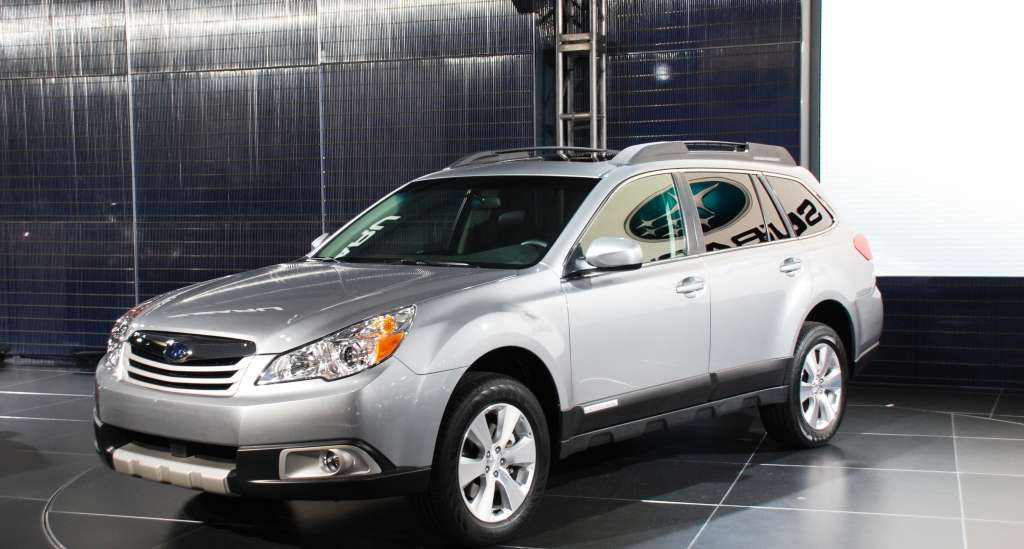
The all-new 2010 Subaru Outback remains an outdoorsman's choice, offering all-weather traction and even more interior space than before. Those in less rugged climes will find it an appealing alternative to conventional wagons and crossovers.
While the Subaru Outback may be named after the flat, desert center of Australia, its past iterations have been most popular in the snowy or more mountainous regions of the United States. Here, the Outback's standard all-wheel drive, rugged nature and general outdoorsy vibe fit right in with typical active lifestyles. However, wagons of any sort have limited appeal in other parts of the country, so Subaru has completely redesigned the 2010 Outback to draw in customers more inclined toward bigger crossovers. The results are mixed.

For one, the 2010 Subaru Outback is much bigger in nearly every dimension. While it may not look that much larger in pictures, park it next to a conventional car or wagon and you'll immediately notice the difference. The Outback is now quite similar to the Toyota Venza, which also bridges the gap between crossover and wagon. Not only does this provide a more visual distinction from traditionally uncool wagons, but it also provides a significant improvement in rear seat space (4 additional inches of legroom) and cargo capacity. Even bigger stuff can be strapped to the roof using the standard, adjustable roof rails that easily swing inward to serve double-duty as cross rails. It's a nifty feature that cuts down on the wind noise and air drag that go along with fixed cross rails.
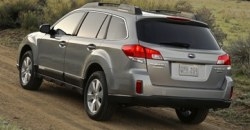
Unfortunately, this added size means that the Outback has lost the relatively nimble handling that previously set it apart from traditional crossovers. It now feels tall and tippy when driving around corners, and numb steering doesn't instill much confidence either when heading through winding mountain passes. An increase in ground clearance (to 8.7 inches) has improved the Outback's ability to make its way through a field or rutted road undamaged, but for daily use the Outback is no more nimble on-road than the average crossover.
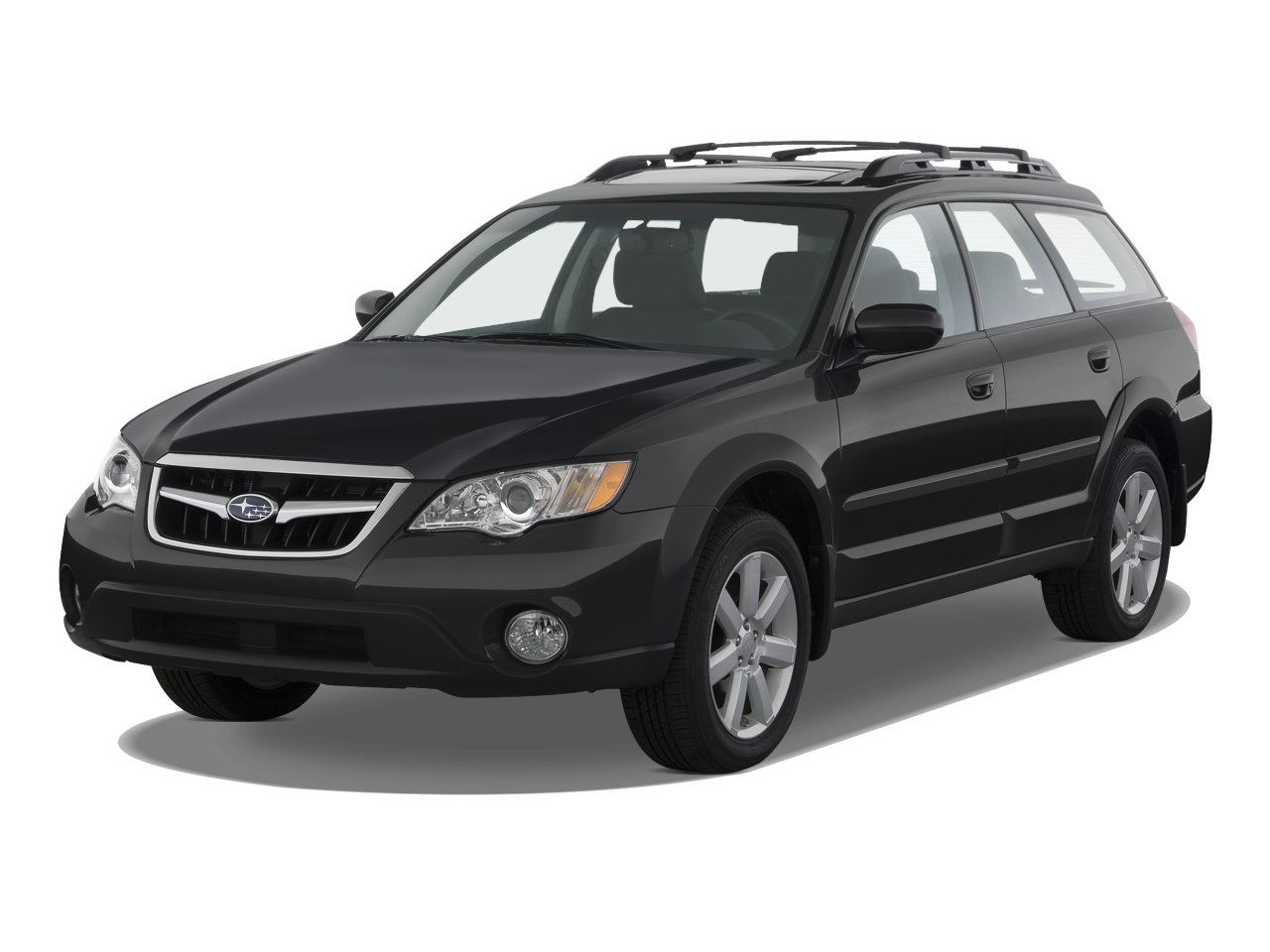
Despite its increased dimensions, the Outback has gained little weight thanks to the added use of lightweight, high-tensile steel. This makes life easier for the four- and six-cylinder "boxer" engines. The four has been mildly revised to improve responsiveness and is matched to a newly optional continuously variable transmission (CVT) that boosts fuel economy. The six-cylinder has also been revised, going from 3.0 liters to 3.6 liters, with horsepower increasing to 256 and torque going up to 247 pound-feet. Unfortunately, a turbocharged engine is no longer available -- the previous Outback's turbo engine helped compensate for the typical power drop in high-altitude environments.
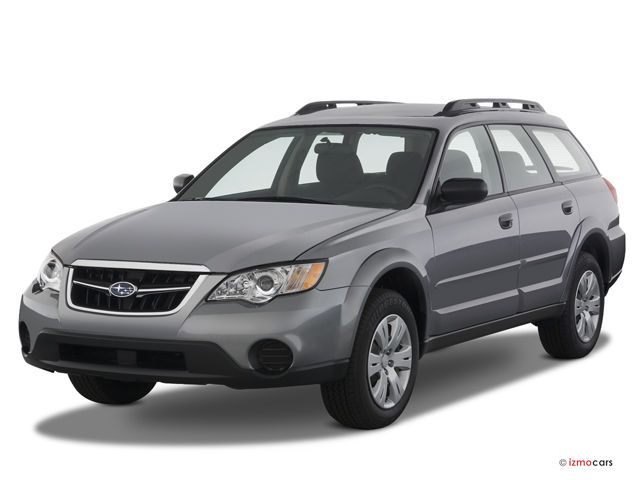
For Subaru loyalists, the 2010 Subaru Outback provides more space and utility to aid in their day-to-day adventures. However, the side effects are disappointing handling, awkward exterior styling and the lack of a mountain-friendly turbo model. General-interest shoppers, meanwhile, will discover a vehicle that is less wagonlike than before and more like the countless crossovers now saturating the market. For either group, we're not sure there's enough of a differentiation between the Outback and Subaru's own Forester, even though the former has a higher-quality interior, a quieter and more comfortable ride, and a more carlike driving position. As such, we'd suggest driving the Forester, as well as the more elegant Toyota Venza. Wagons like the Volvo V50 and VW Passat could also be worth a look if you think the Outback has grown too big for its britches.
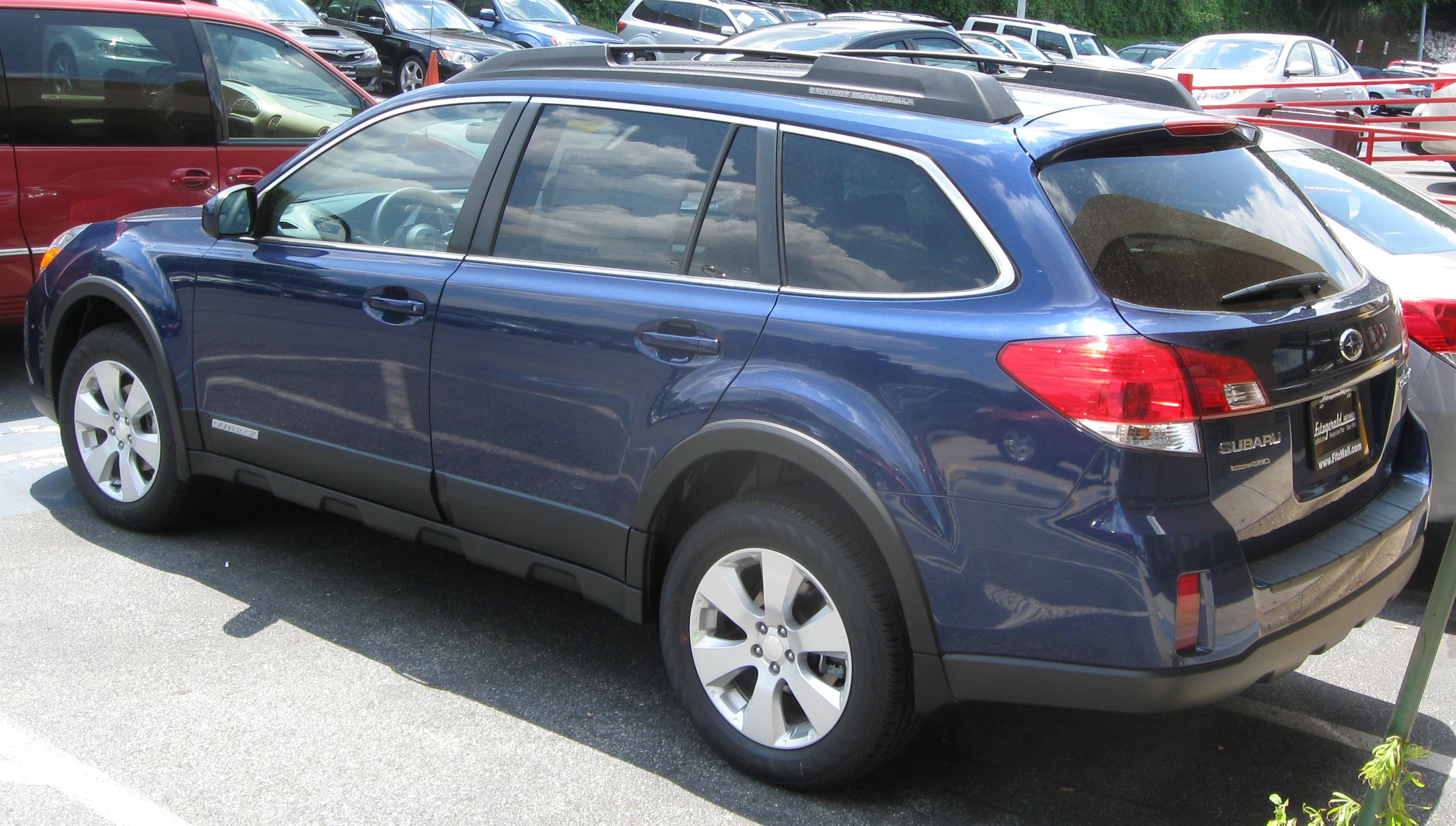
The 2010 Subaru Outback is a five-passenger wagon available in six trim levels: 2.5i, 2.5i Premium, 2.5i Limited, 3.6R, 3.6R Premium and 3.6R Limited.
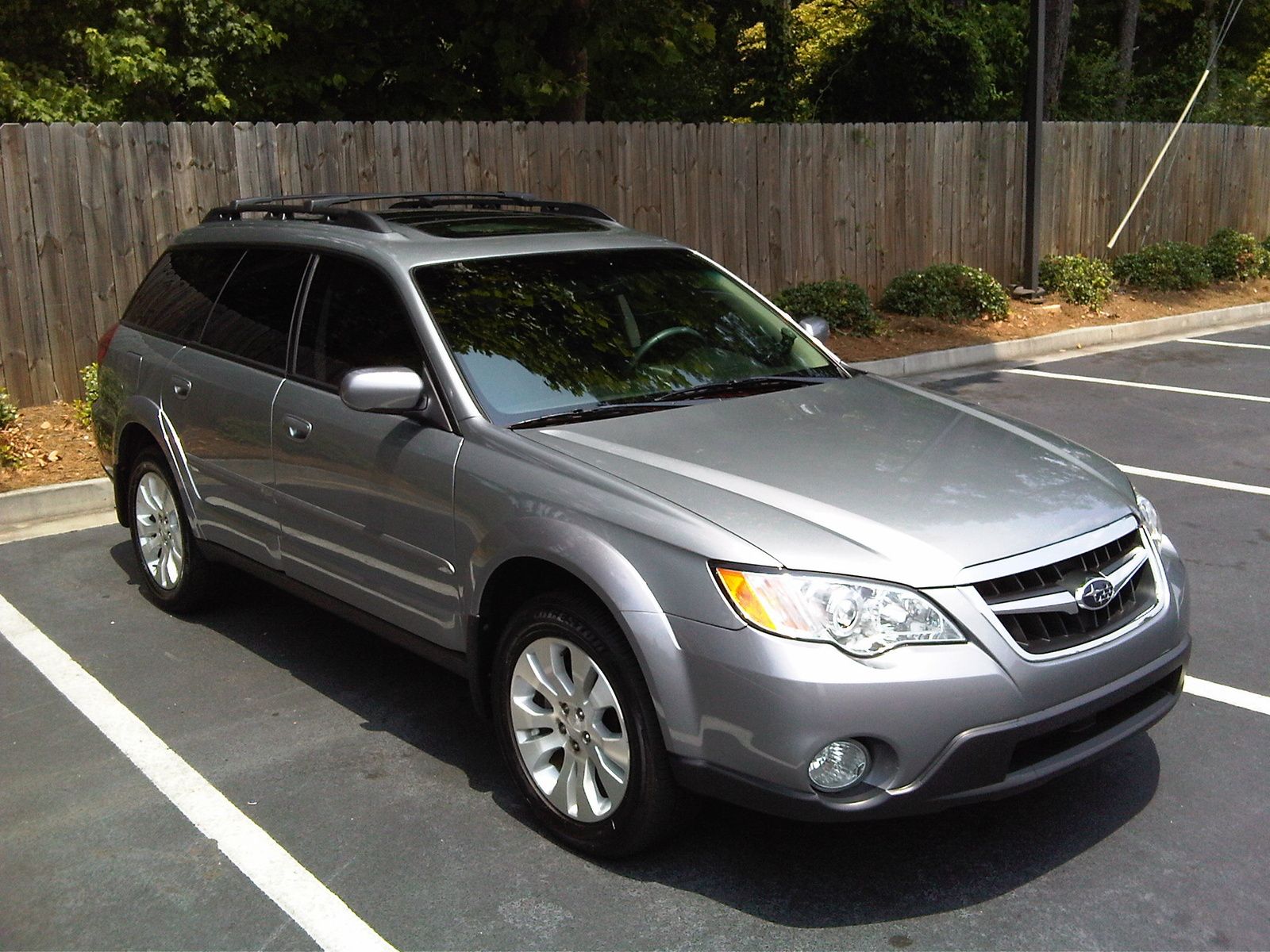
The base 2.5i comes standard with 16-inch steel wheels, automatic headlights, adjustable roof rails and cross bars, full power accessories, cruise control, a tilt-and-telescoping steering column, height-adjustable driver seat and a four-speaker stereo with CD player and an auxiliary audio jack. The 2.5i Premium adds 17-inch alloy wheels, foglights, rear privacy glass, eight-way power driver seat (with power lumbar) and a leather-wrapped steering wheel. Optional on the Premium is an All-Weather package that adds heated side mirrors, a windshield wiper de-icer and heated front seats. The optional Harman Kardon stereo includes nine speakers, a six-CD changer and Bluetooth phone and audio connectivity. The 2.5i Limited adds the All-Weather package, Harman Kardon stereo, CVT, a four-way power passenger seat, dual-zone automatic climate control and leather upholstery.
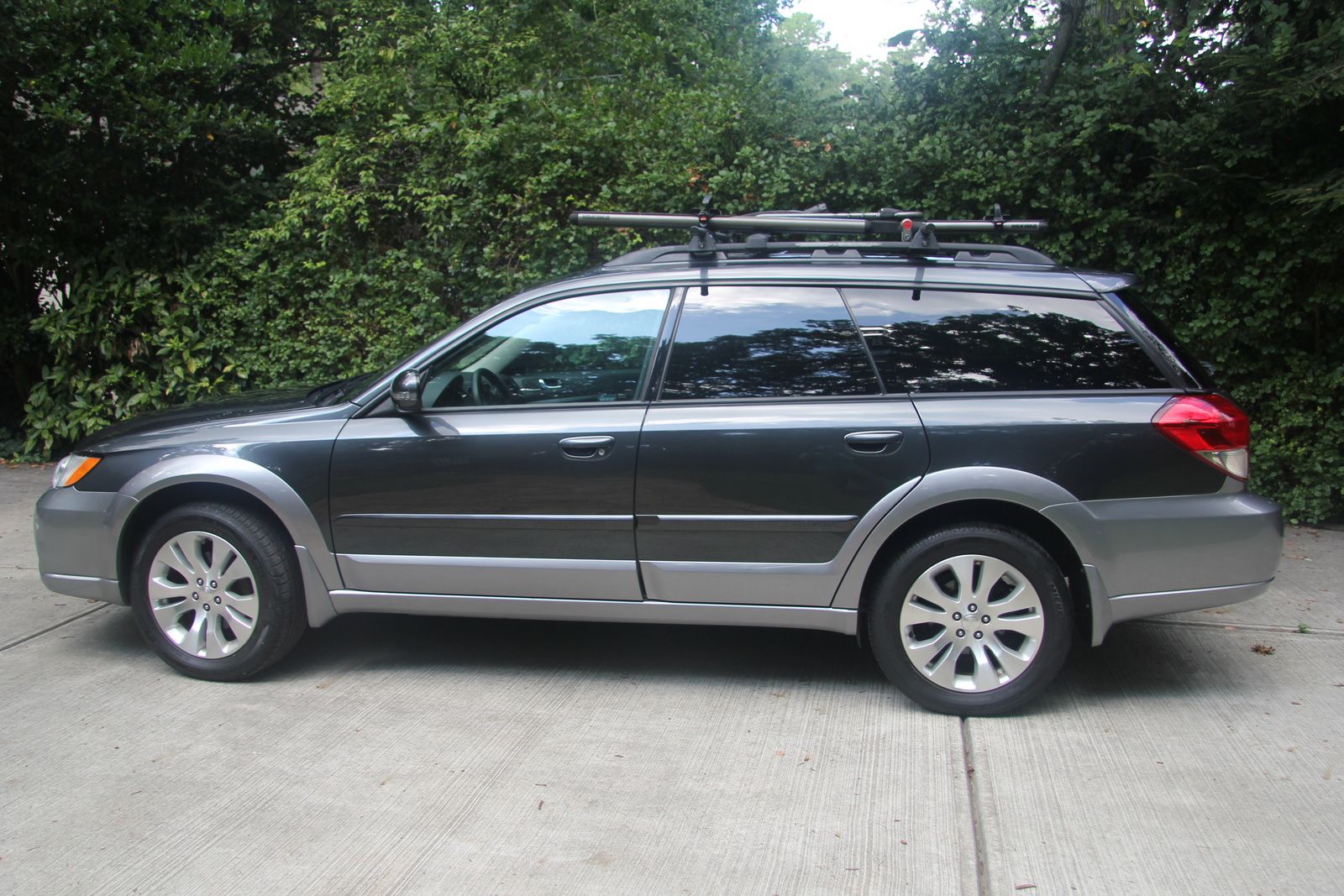
Equipment for the Outback 3.6R trim levels generally mirrors that of the respective 2.5i trims. Optional on all but the base 2.5i is a sunroof. Optional on the Limited models is a navigation system packaged with a back-up camera.
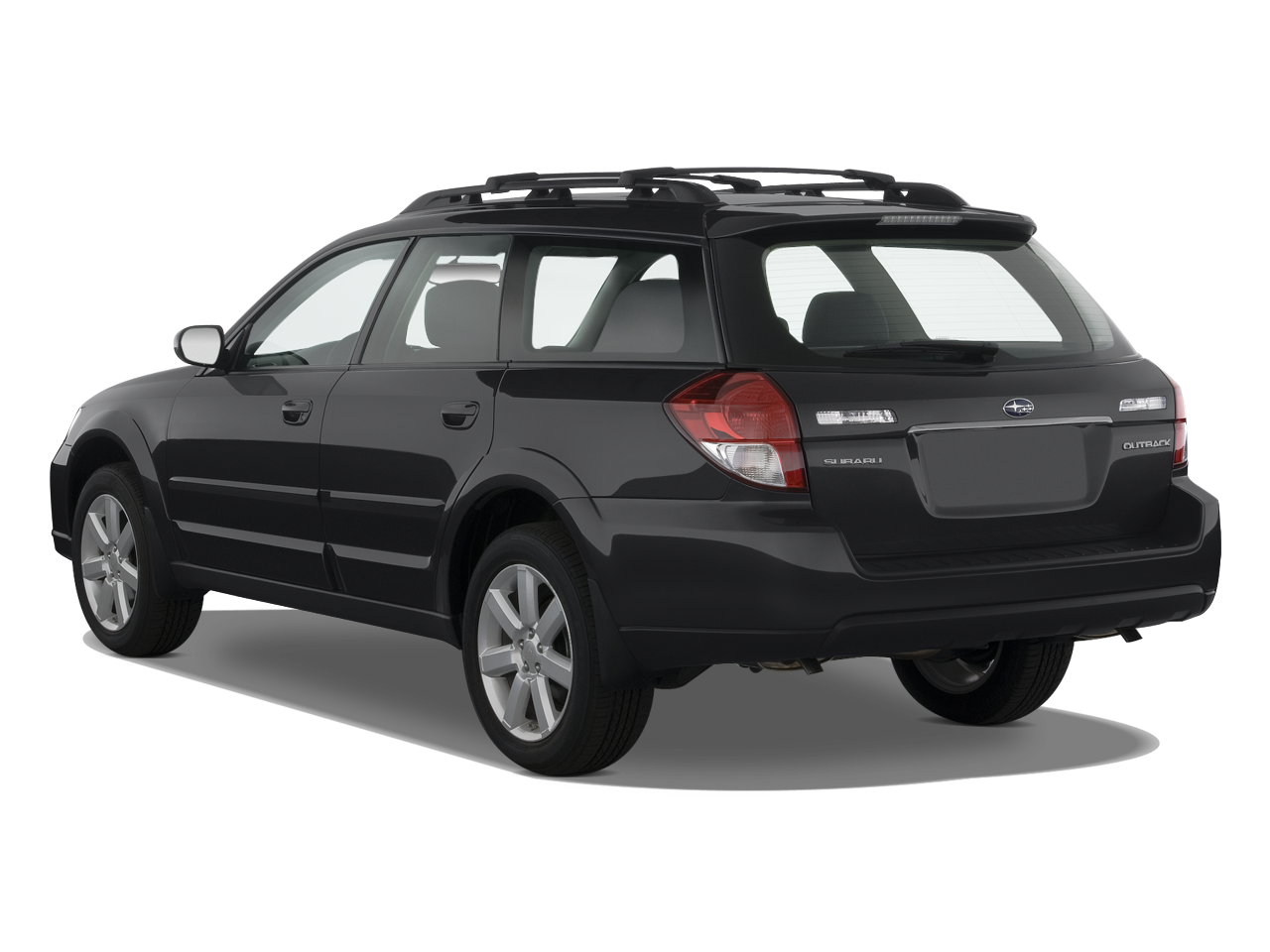
Every 2010 Subaru Outback has all-wheel drive. The 2.5i models come with a 2.5-liter horizontally opposed (aka "boxer" or "flat") four-cylinder engine that produces 170 hp and 170 lb-ft of torque. A six-speed manual is standard on the base and Premium trims, while a CVT is optional on those trims and standard on the Limited. Manual-override shift paddles are included.
In performance testing, the 2.5i with a manual went from zero to 60 mph in 9.4 seconds. With the automatic, EPA estimates are 22 mpg city/29 mpg highway and 24 mpg combined. Sticking with the manual drops those estimates to 19/27/22.
The 3.6R models come with a 3.6-liter flat-6 good for 256 hp and 247 lb-ft of torque. A five-speed automatic with shift paddles is the only transmission available. EPA fuel estimates are 18/25/20.
The 2010 Subaru Outback comes standard with stability and traction control, four-wheel antilock disc brakes, front side airbags and side curtain airbags. In brake testing, a base 2.5i came to a stop from 60 mph in a longer-than-average 133 feet.
In Insurance Institute for Highway Safety crash testing, the Outback scored the top rating of "Good" in both frontal-offset and side-impact tests.
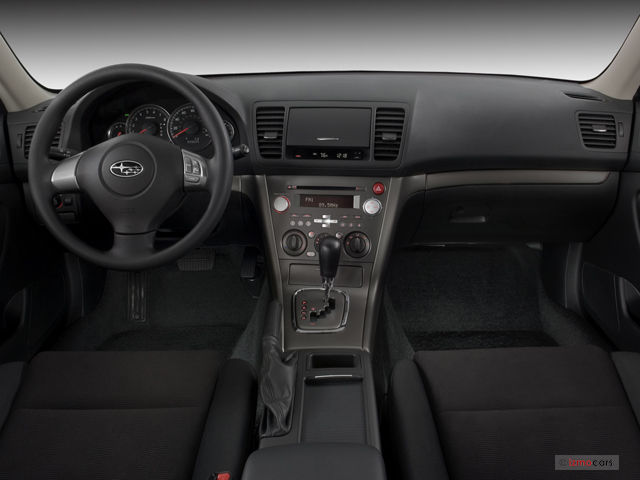
With its increased size and concerted effort to be more of an SUV than a wagon, the 2010 Subaru Outback has lost much of its agility advantage over crossovers. Noticeable body roll and numb steering reduce the driver's confidence when tackling a winding road. The Outback used to be fun to drive -- this one isn't. However, ride quality is better than ever, sopping up bumps in a sophisticated manner that provides comfort without complete isolation.
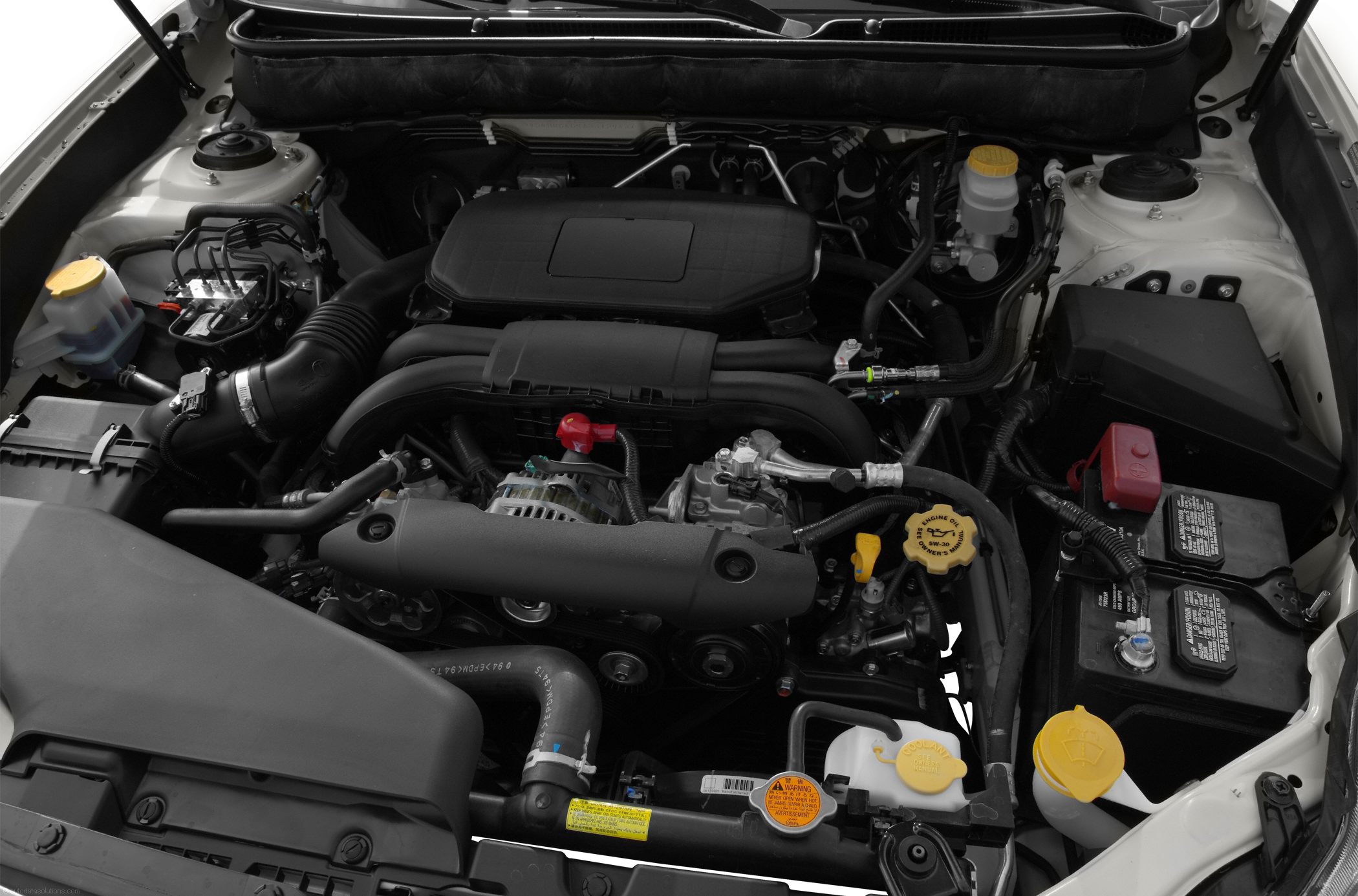
The base 2.5-liter engine provides a punchy power delivery around town whether attached to the pleasant manual gearbox or optional CVT, which is one of the best on the market. If you're frequently carrying lots of passengers or cargo, the 3.6-liter six-cylinder is the better choice, and its increased torque makes it a bit more responsive than last year's smaller 3.0-liter engine.
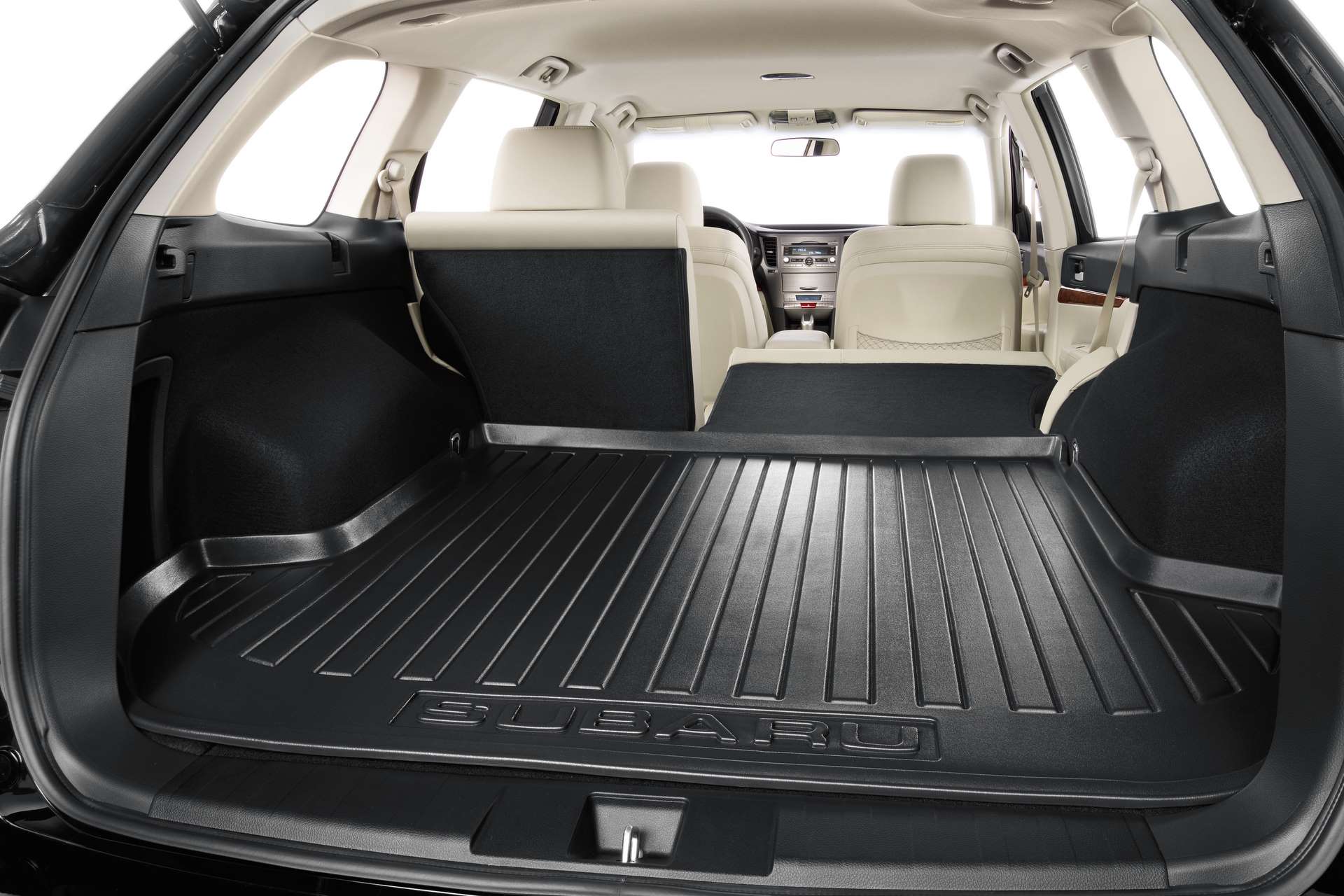
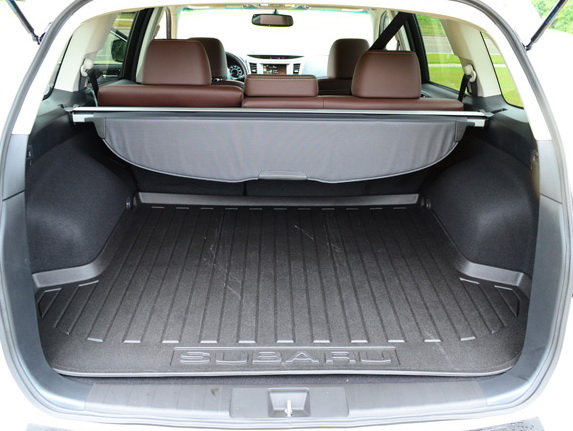
The Outback's increased size is noticed most inside. With the rear seat lowered, cargo capacity tops out at 71.3 cubic feet, which is a bit bigger than the Ford Edge, Subaru Forester and Toyota Venza. The enlarged backseat makes it a more compelling family vehicle, with plenty of legroom and a reclining seatback that make road trips friendlier for those riding in the back.
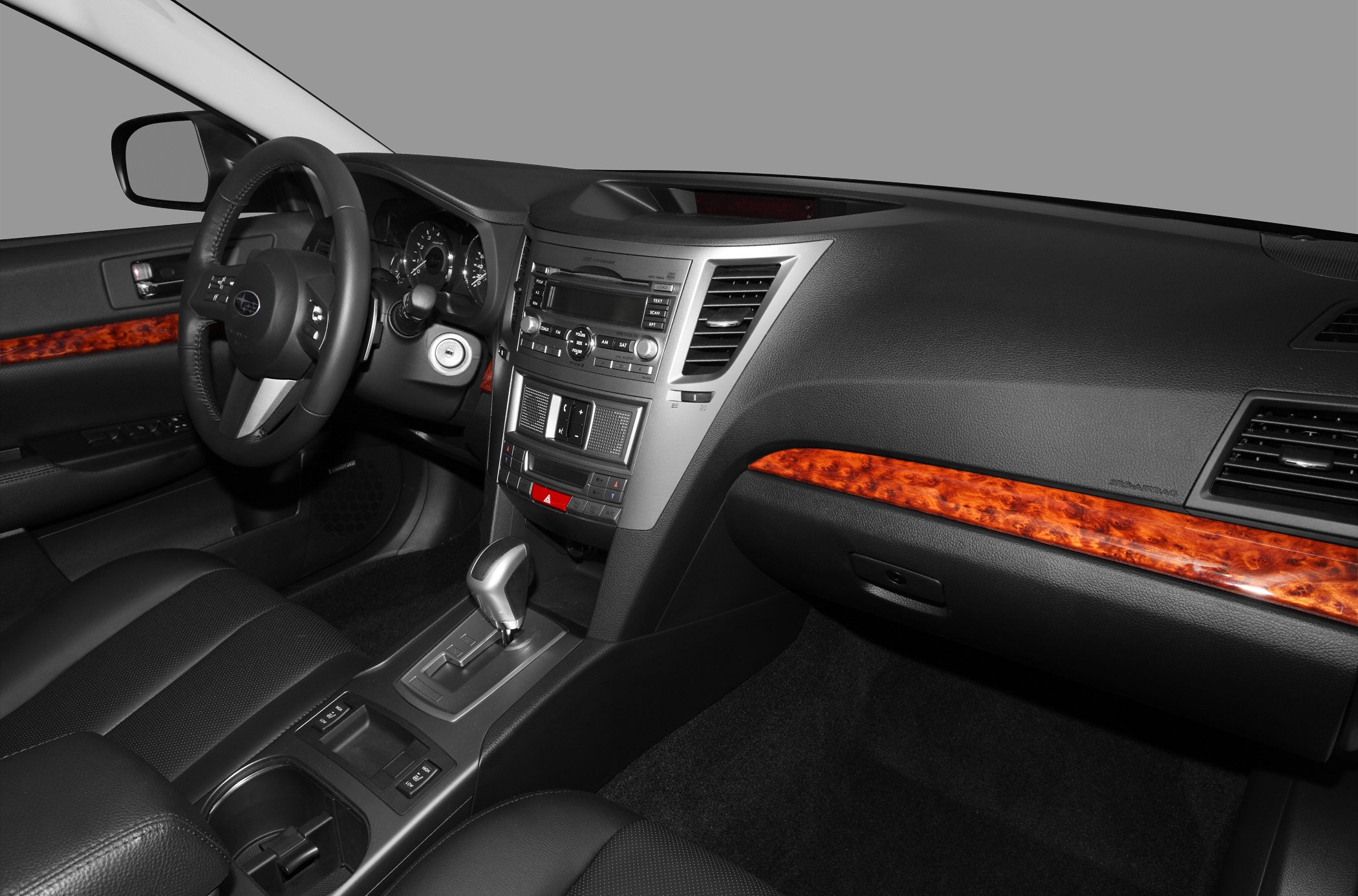
Compared to the last Outback, the 2010 edition seems to have slid a bit in terms of interior materials quality and design. There are a few more hard plastic trim pieces than before, but they are at least low sheen and fit well together. One notable improvement is simpler, easier-to-use audio and climate controls found on models without the optional navigation system. With navigation, the dash is notably different and is dominated by a large LCD screen. The dual-zone climate control system that comes with the Limited trim levels is naturally a bit more complicated than the manual unit, but the buttons are bigger and better differentiated than before.
If maximum fuel economy takes precedence over quick acceleration, the 2.5-liter four with the CVT is your best bet. With 170 horsepower on tap the engine has to work a bit to move the Outback. Once up to speed the CVT finds and holds the engine's maximum torque and horsepower, providing the best acceleration and fuel economy mix. The CVT does take some getting used to as there are no discernable gear shifts such as are common to a traditional automatic. The standard steering wheel-mounted shift paddles, however, allow the driver to select and hold "gears" as with a manual transmission, thus making passing and merging maneuvers a bit quicker. With a projected 29 miles per gallon highway and a new 18-gallon fuel tank, the Outback can cruise over 500 miles before refueling. As for the Outback's driving characteristics, it demonstrates an impressive sedan-like feel, especially surprising considering the car's high center of gravity. The steering is precise and predictable and interior sound levels are much improved over the 2009 Outback.
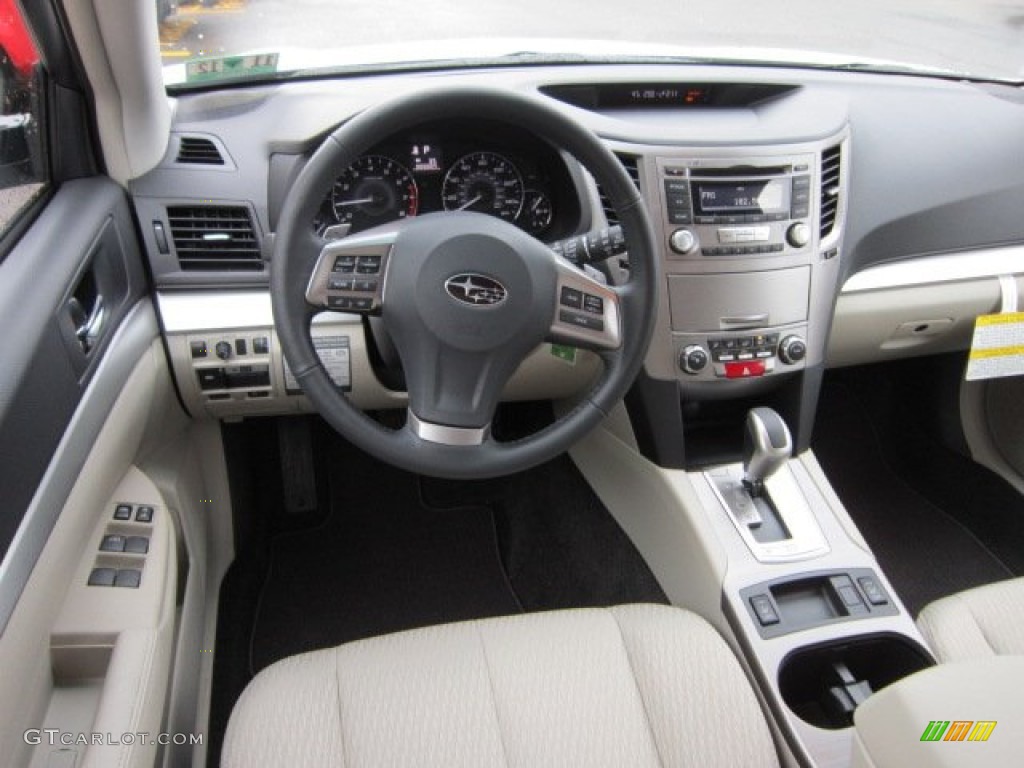
CVT Automatic Subaru's take on this fuel-saving transmission uses a metal band as opposed to a rubber belt, which it claims will improve durability and longevity. The Subaru CVT includes a manual shift mode that mimics the shift points of a manual transmission without the need for a clutch pedal. Best of all, the CVT is expected to return an estimated 22 city and 29 highway, which is better than the six-speed manual.Electronic Parking Brake with Hill HolderNot only does this feature free up more space on the center console, it incorporates an electronic hill holder that, on inclines of more the five percent, holds the vehicle in place until the driver steps on the accelerator.
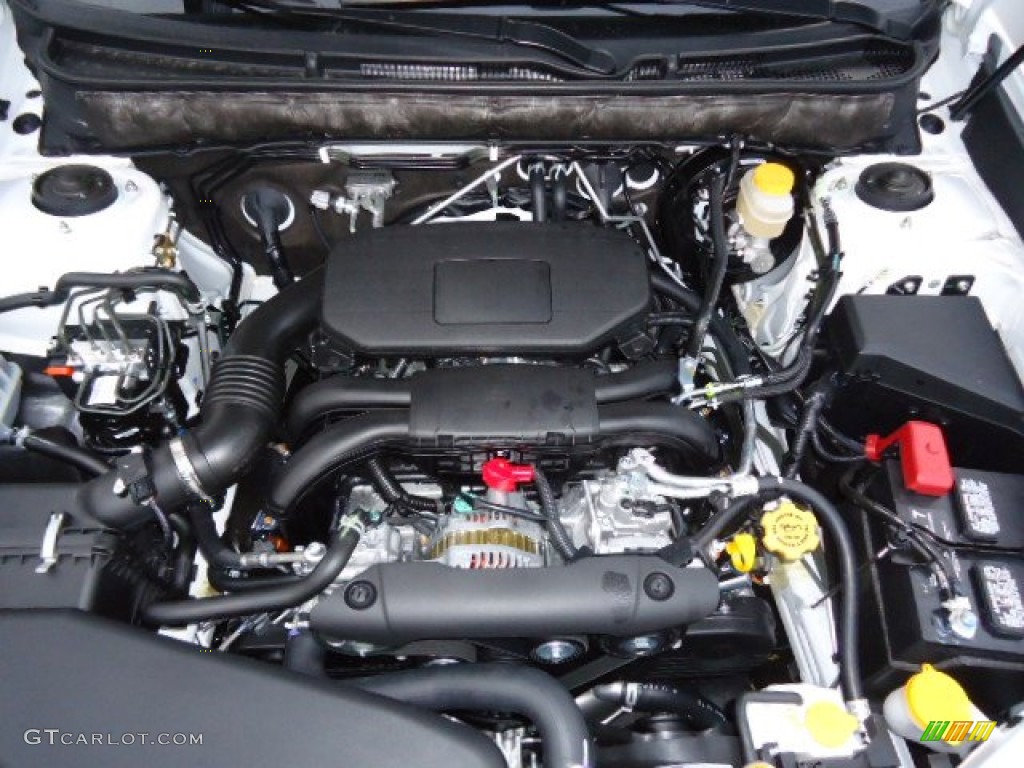
One of the biggest complaints heard by previous Outback owners involved the car's tiny back seat. The new model addresses this concern by adding an additional four inches of legroom and nearly three inches of headroom. During our test drive, we comfortably fit three six-foot-tall adults in the back seat and still had space between their knees and the front seat backs. Wider front seats and a reclining rear seat further improve occupant comfort, while upscale models offer power driver's-side lumbar support and leather seating surfaces. The addition of a dash-mounted electronic parking brake allows Subaru engineers to remove the center-console handbrake handle, creating more space for water bottles and latte cups. Models equipped with automatic transmissions also feature steering wheel-mounted paddle shifters.
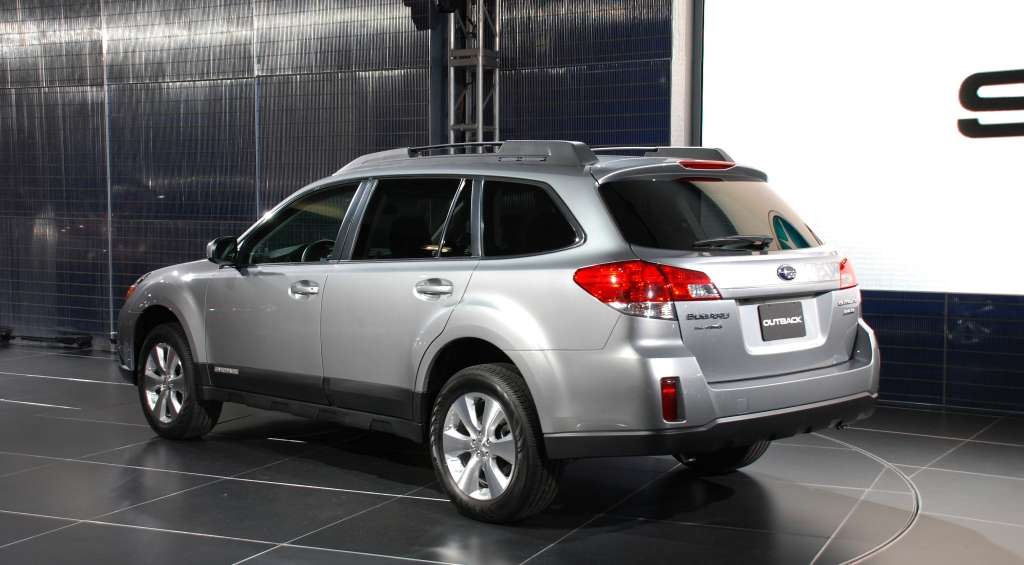
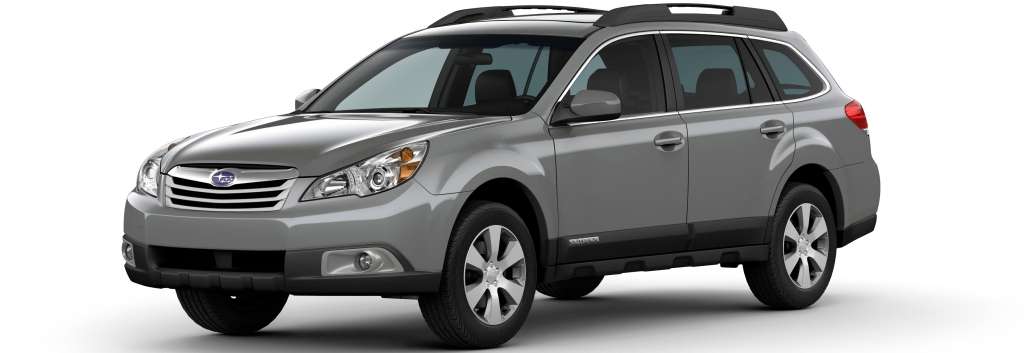
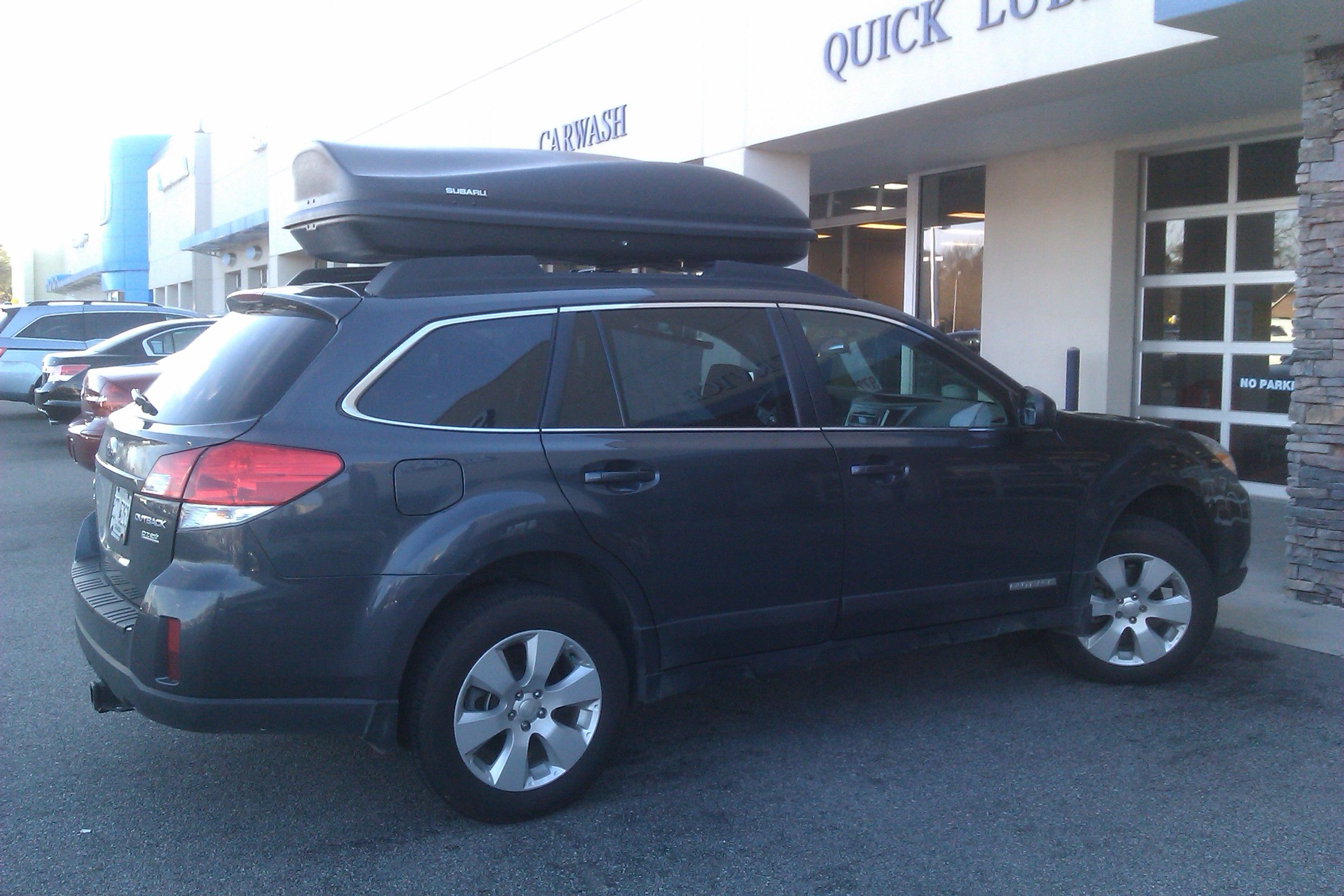
The all-new 2010 Outback is a radical departure from the model it replaces. Gone are the sleek lines, car-like styling and handsome two-tone wheel arches. What's in is a more SUV-like appearance, with thick plastic cladding on the doors, rocker panels and front bumper, as well as larger headlamps and pronounced fender arches. The 2010 Outback is nearly three inches taller and two inches wider than the 2009 model, yet overall length actually shrinks by one inch. Last year's frameless windows are replaced by fully-framed glass, a design that improves body rigidity and reduces wind noise. The rear door openings are much larger, allowing easier entry and exit. Up top is a clever new roof rack with folding cross rails that can be tucked away to reduce wind noise and drag, while down below 8.7-inches of ground clearance assures the new Outback can tackle just about any off-road condition.
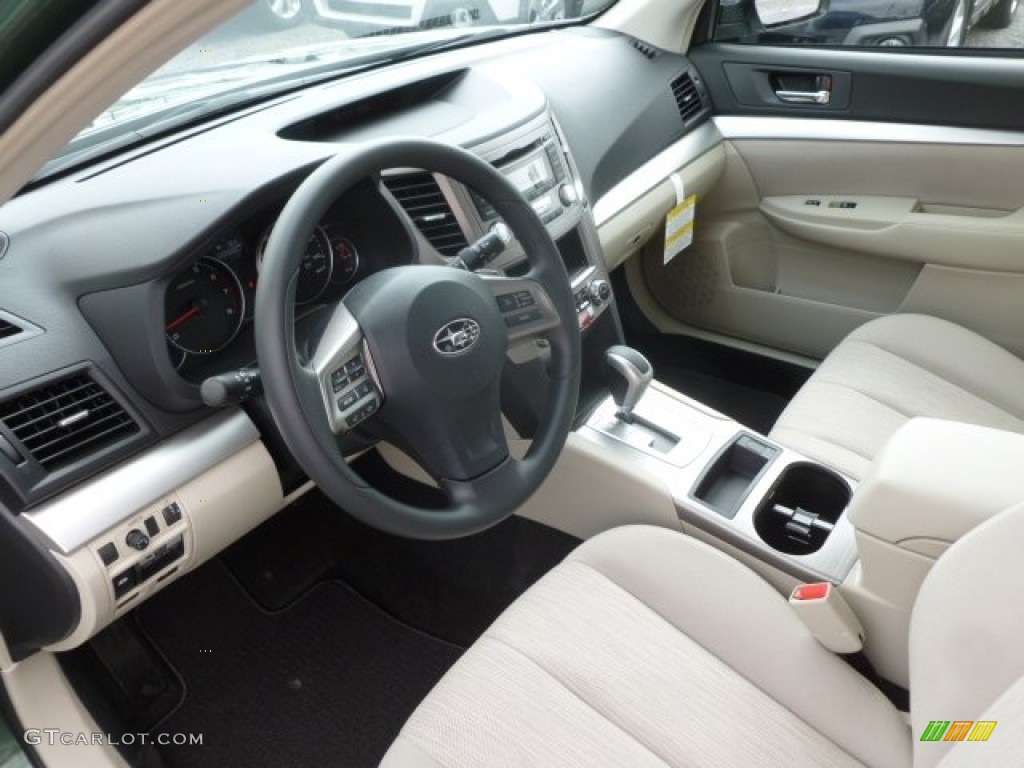
The base Outback 2.5i features a six-speed manual transmission, anti-lock brakes (ABS), stability and traction control, six airbags – including front side-impact and front and rear side-curtain airbags – and Symmetrical All-Wheel Drive. Comfort and convenience features include air conditioning, AM/FM stereo with single CD player, steering wheel controls for the audio and cruise control, rear wiper/washer, remote keyless entry, electronic parking brake with hill-holder feature and the swing-away cross-rail roof rack. The Premium model adds 17-inch alloy wheels, a power driver's seat with power lumbar support, fog lights, leather-wrapped steering wheel and rear privacy glass. To this the Limited trim adds leather seating, four-way power passenger's seat, the All Weather Package (heated seats, side mirrors and windshield wiper de-icers), the Lineartronic CVT automatic transmission, dual-zone automatic temperature control, a 440-watt harman/kardon stereo with six-disc CD/WMA/MP3 changer and Bluetooth hands-free phone connectivity. Six-cylinder models feature the same equipment, but replace the CVT with a traditional five-speed automatic.
Most options are offered according to trim. Base models offer a few dealer-installed items including Bluetooth phone connectivity, exterior puddle lights, cargo organizing systems and fog lights. The Premium models offer a power sunroof, the All-Weather Package (heated seats, mirrors and wiper de-icers) and the 440-watt harman/kardon audio system, while the Limited trims offer a power sunroof and a voice-activated navigation system featuring music streaming (streams music to the car's stereo from a compatible Bluetooth-enabled device), an eight-inch view screen and a rear backup camera. Other stand-alone options include Sirius/XM Satellite Radio, iPod integration system, Media Hub Kit that adds a USB connector, remote start (automatic transmission only), a trailer hitch and an auto-dimming rear-view mirror with built-in compass.
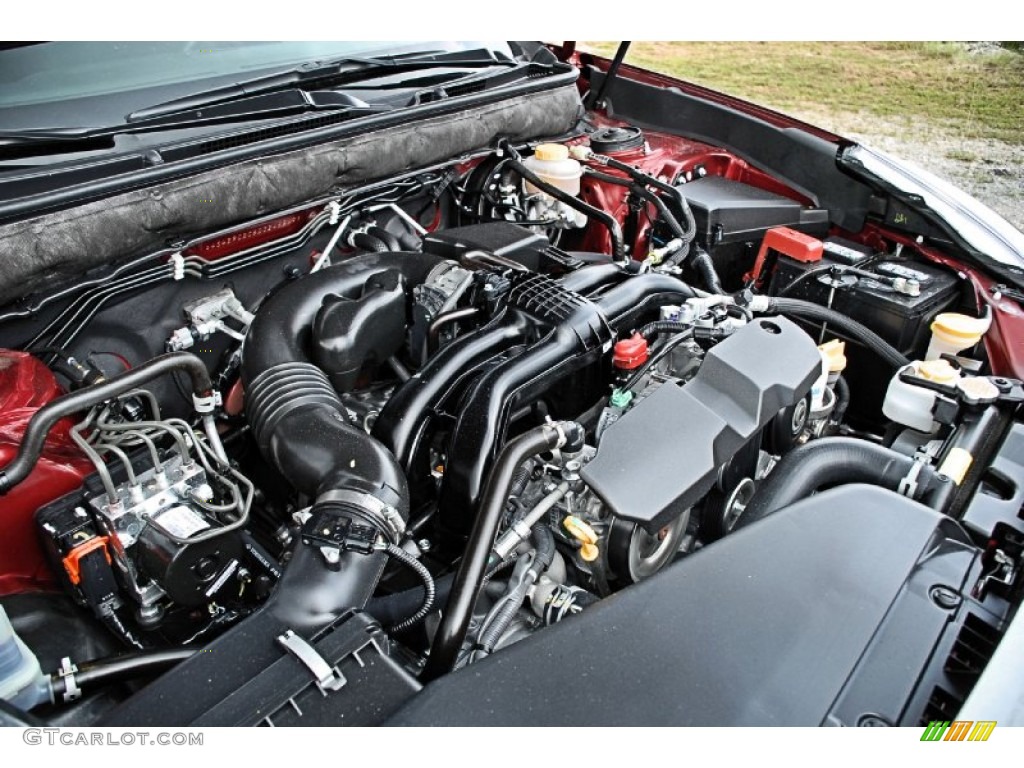
Subaru offers two horizontally-opposed boxer engines in the Outback. The 2.5-liter four-cylinder delivers 170 horsepower, which may not be best in class but does generate enough muscle to provide satisfactory performance. Equipping this engine with the CVT automatic will produce the best fuel economy, but the six-speed manual is a better choice from a performance standpoint. If fuel economy is not a top priority, the best choice for the Legacy is the six-cylinder, which provides much better acceleration and passing power than the four while delivering slightly worse fuel economy (18/25 vs. 22/29). 2.5-liter Boxer four170 horsepower @ 5600 rpm170 lb.-ft. of torque @ 4000 rpmEPA city/highway fuel economy: 19/27 (manual), 22/29 (automatic)3.6-liter Boxer six256 horsepower @ 6000 rpm247 lb.-ft. of torque @ 4400 rpmEPA city/highway fuel economy: 18/25
The 2010 Subaru Outback as Manufacturer's Suggested Retail Price (MSRP) starting just under $ 24,000 for the base 2.5i, jumping to around $ 25,000 for the 2.5i Premium and edging close to $ 29,000 for the Limited trim. Six-cylinder models range from just under $ 29,000 for the base 3.6R to nearly $ 38,000 for a fully-loaded 3.6 Limited. That's a pretty hefty price cut compared to the 2009 models, especially on the higher-end trims. To make your best deal, be sure to check the Fair Purchase Price to see what others in your area might be paying for the Outback. When looking at the Outback's competition, it easily undercuts the Volvo XC70 and a comparably equipped Toyota Venza, is on par with the Honda CR-V, but is a bit more expensive than its own kin, the Subaru Forester. As for resale, we expect the Outback to hold rather high five-year values, a bit below the Honda CR-V, on par with the Toyota Venza and better than the Volvo XC70, Jeep Grand Cherokee and Ford Explorer.
2010 Subaru Outback PZEV Exterior Colors
2010 Subaru Outback PZEV Interior Colors
2010 Subaru Outback Engines
| Engine | Standard in Trim | Power | Torque | Fuel Consumption - City | Fuel Consumption - Highway | 0-100 km/h | Quarter Mile | Half Mile |
|---|---|---|---|---|---|---|---|---|
| 2.5L H4 SOHC 16-valve | 2.5i Convenience | 170 hp @ 5600 rpm | 186 N.m | 9.5 L/100km | 6.9 L/100km | 8.8 s | 15.0 s | 28.0 s |
| 2.5L H4 SOHC 16-valve | 2.5i Convenience Package PZEV | 170 hp @ 5600 rpm | 186 N.m | 9.5 L/100km | 6.9 L/100km | 9.0 s | 15.1 s | 28.3 s |
| 2.5L H4 SOHC 16-valve | 2.5i Convenience Package PZEV | 170 hp @ 5600 rpm | 186 N.m | 9.5 L/100km | 6.9 L/100km | 9.0 s | 15.1 s | 28.3 s |
| 2.5L H4 SOHC 16-valve | 2.5i Limited Package | 170 hp @ 5600 rpm | 186 N.m | 9.5 L/100km | 6.9 L/100km | 8.8 s | 15.0 s | 28.0 s |
| 2.5L H4 SOHC 16-valve | PZEV | 170 hp @ 5600 rpm | 186 N.m | 9.5 L/100km | 6.9 L/100km | 8.8 s | 15.0 s | 28.0 s |
| 2.5L H4 SOHC 16-valve | 2.5i Sport | 170 hp @ 5600 rpm | 186 N.m | 9.5 L/100km | 6.9 L/100km | 8.9 s | 15.0 s | 28.1 s |
| 2.5L H4 SOHC 16-valve | 2.5i Limited | 170 hp @ 5600 rpm | 186 N.m | 9.5 L/100km | 6.9 L/100km | 9.1 s | 15.2 s | 28.4 s |
| 2.5L H4 SOHC 16-valve | 2.5i | 170 hp @ 6000 rpm | 186 N.m | 10.4 L/100km | 7.6 L/100km | 8.7 s | 14.9 s | 27.9 s |
| 2.5L H4 SOHC 16-valve | PZEV Plus | 170 hp @ 6000 rpm | 186 N.m | 10.4 L/100km | 7.6 L/100km | 8.8 s | 15.0 s | 27.9 s |
| 2.5L H4 SOHC 16-valve | 2.5i Limited | 170 hp @ 6000 rpm | 186 N.m | 10.4 L/100km | 7.6 L/100km | 9.0 s | 15.1 s | 28.2 s |
2010 Subaru Outback Trims
2010 Subaru Outback Previous Generations


2010 Subaru Outback Future Generations
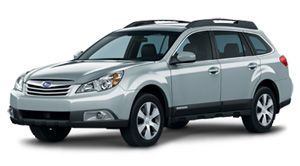
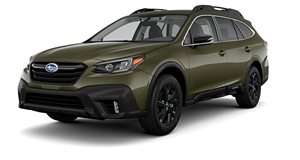
Subaru Outback Overview and History
After WWII, the company created a scooter, the Fuji Rabbit with the spare parts from airplanes. Pretty soon, the company split up into different business that manufactured scooters, coaches, engines and chassis. Then CEO Kenji Kita decided that it would be a good idea to get involved in car making and pretty soon the first Subaru car was created, the Subaru 1500 (1954).
The 1500 or P1 was followed by the 360 in 1958, the Sambar in 1961, the 1000 in 1965, gthe 1100 and the R2 in 1969. During the 70s, the Leone came out and then later, in the 80s, the Alcyclone (1985) and the Legacy (1989) were added to the Subaru line-up.
Slowly, in the 90s, the company moved away from the manufacture of small vehicles and concentrated on rally cars, such as the Vivio and Impreza. Different versions of the Impreza WRX won the world championship several times under drivers such as Colin McRae.
Using the technology from the aeronautical industry, Subaru employed many successful inventions in the automotive industry. One of the first was the us of horizontally opposed “boxer” engines as well as the use of monocoque construction. Also, Subaru is the only car manufacturer to offer all-wheel drive as a standard on most of its models. The Japanese manufacturer was also the first to introduce electronic continuously variable transmission (ECTV) which replaces standard gears and gives smooth acceleration while reducing emissions and fuel consumption.
Subaru also takes a keen interest in environmental protection, having achieved an odd record: 0 landfill status for their plant in Lafayette, Indiana which means that the factory generates no trash. Also, the company has an extensive recycling program for its own cars, not to mention the program for hybrid and fuel efficient cars.
2010 Subaru Outback Consumer Reviews
Compare Against Competitors

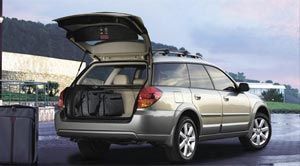
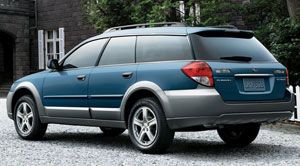

2010 Subaru Outback PZEV Specifications
PZEV Comfort and Convenience
| AM/FM stereo radio | AM/FM stereo radio and auxiliary audio jack |
|---|---|
| Air Conditionning | Air conditioning |
| Antenna | Glass-imprinted antenna |
| Cargo Cover | Yes |
| Cargo Organizer | Underfloor cargo organizer |
| Courtesy Dome Light | Courtesy lights with fade-out |
| Cruise Control | Steering wheel-mounted cruise control |
| Front Wipers | Variable intermittent windshield wipers |
| Illuminated Entry | Yes |
| Interior Air Filter | Yes |
| Number of Speakers | 4 speakers |
| Power Door Locks | Yes |
| Power Outlet | 3 12-volt power outlets |
| Power Windows | Power windows with driver one-touch down feature |
| Reading Light | Reading lights |
| Rear Air Conditionning | Rear-seat air conditioning ducts |
| Rear Heating | Rear-seat ventilation ducts |
| Rear Wipers | Intermittent rear wiper |
| Remote Audio Controls | Audio controls on steering wheel |
| Remote Keyless Entry | Yes |
| Single CD | CD/MP3/WMA player |
| Special Feature | Pre-wired satelite radio |
| Special Features | 2 utility bag hooks |
| Steering Wheel Adjustment | Tilt and telescopic steering wheel |
| Trunk Light | Cargo area light |
PZEV Dimensions
| Cargo Capacity | 972 L |
|---|---|
| Curb Weight | 1542 kg |
| Front Headroom | 1036 mm |
| Front Legroom | 1091 mm |
| Fuel Tank Capacity | 70 L |
| Gross Vehicle Weight | 2080 kg |
| Height | 1670 mm |
| Length | 4780 mm |
| Max Trailer Tongue Weight | 91 kg |
| Max Trailer Weight | 1227 kg |
| Maximum Cargo Capacity | 2019 L |
| Rear Headroom | 999 mm |
| Rear Legroom | 960 mm |
| Wheelbase | 2740 mm |
| Width | 1820 mm |
PZEV Exterior Details
| Bumper Colour | Black bumpers |
|---|---|
| Door Handles | Body-color door handles |
| Exterior Mirror Colour | Body-color outside mirrors |
| Front Fog Lights | Fog lights |
| Grille | Chrome and silver grille |
| Headlight Type | Halogen headlights |
| Headlights Sensor With Auto On | Automatic headlights |
| Heated Exterior Mirrors | Heated outside mirrors |
| Mudguard | Front and rear splash guards |
| Power Exterior Mirrors | Power-adjustable outside mirrors |
| Privacy Glass | Rear privacy glass |
| Rear Spoiler | Roof-mounted spoiler with breaking light |
| Roof Rack | Raised-profile roof rail with integrated swing in place crossbars |
PZEV Interior Details
| Clock | Digital clock |
|---|---|
| Door Ajar Warning | Yes |
| Door Trim | Cloth door trim |
| Driver Info Center | Driver information center |
| Floor Console | Floor console with storage |
| Floor Covering | Carpet floor covering |
| Floor Mats | Front and rear floor mats |
| Folding Rear Seats | 60/40-split folding rear bench seat |
| Front Center Armrest | Yes |
| Front Seats Driver Lombar | Driver's seat power lumbar support |
| Front Seats Driver Power Seats | Power driver's seat |
| Front Seats Front Seat Back Storage | Passenger seatback storage |
| Front Seats Front Seat Type | Front bucket seats |
| Front Seats Heated | Heated front seats |
| Front Seats Passenger Power Seats | 4-way manual front passenger seat |
| Headlight On Warning | Headlights-on warning |
| Instrumentation Type | Analog instrumentation |
| Low Fuel Warning | Yes |
| Low Washer Fluid Warning | Yes |
| Luxury Dashboard Trim | Aluminum interior accent |
| Number of Cup Holders | 4 cupholders |
| Oil Pressure Gauge | Low oil level warning |
| Outside Temperature Gauge | Outside temperature display |
| Overhead Console | Overhead console with storage |
| Rear Center Armrest | Rear-seat fold-down armrest |
| Rear Seat Recline | Reclining rear seatbacks |
| Rear Seat Type | Rear bench seat |
| Seat Trim | Cloth seats |
| Shifter Knob Trim | Leather-wrapped shift knob (only manual) |
| Tachometer | Yes |
| Trip Computer | Yes |
| Water Temperature Gauge | Engine temperature display |
PZEV Mechanical
| Drive Train | All-wheel drive |
|---|---|
| Engine Name | 2.5L H4 SOHC 16-valve |
| Stability Control | Yes |
| Traction Control | Yes |
| Transmission | 6-speed manual transmission |
| Transmission (Option) | Continuously variable transmission with manual mode (Paddle shifter) |
PZEV Overview
| Body | Wagon |
|---|---|
| Doors | 5 |
| Engine | 2.5L H4 SOHC 16-valve |
| Fuel Consumption | 9.5 (Automatic City)6.9 (Automatic Highway)10.6 (Manual City)7.4 (Manual Highway) |
| Power | 170 hp @ 5600 rpm |
| Seats | 5 |
| Transmission | 6-speed manual transmission |
| Warranties | Bumper-to-Bumper60000/km, 36/Months Emissions130000/km, 96/Months Powertrain100000/km, 60/Months Roadside AssistanceUnlimited/km, 36/Months Rust-throughUnlimited/km, 60/Months |
PZEV Safety
| Anti-Lock Brakes | Anti-lock brakes |
|---|---|
| Anti-Theft Alarm | Alarm system |
| Brake Assist | Brake assist |
| Brake Type | 4-wheel disc |
| Child Seat Anchor | LATCH child seat anchors |
| Child-proof Locks | Rear-door child safety locks |
| Driver Airbag | Driver-side front airbag |
| Electronic brake force distribution | Electronic brake force distribution |
| Front Seat Belts | Height adjustable |
| Hill Start Assist | Hill Holder system: driver-selectable |
| Ignition Disable | Theft-deterrent engine immobilizer |
| Panic Alarm | Panic alarm |
| Passenger Airbag | Passenger-side front airbag |
| Rear Seat Belts | Center 3-point |
| Roof Side Curtain | Side-curtain airbags |
| Side Airbag | Front side-impact airbags |
PZEV Suspension and Steering
| Front Anti-Roll Bar | Front stabilizer bar |
|---|---|
| Front Suspension | Independent front suspension |
| Front Tires | 225/60R17 |
| Power Steering | Speed-sensitive power rack-and-pinion steering |
| Rear Anti-Roll Bar | Rear stabilizer bar |
| Rear Suspension | Independent rear suspension |
| Spare Tire | Compact spare tire |
| Turning Circle | 5.6-meter turning circle diameter |
| Wheel Type | 17'' alloy wheels |
Critics Reviews
The 2009 Subaru Legacy Outback boasts more toughness than most wagons and is a good, practical alternative to tall, ungainly SUVs. Find out why the 2009 Subaru Outback is rated 7.2 by The Car ...
The 2009 Subaru Outback ranking is based on its score within the 2009 Wagons category. Currently the Subaru Outback has a score of 8.4 out of 10 which is based on our evaluation of 58 pieces of research and data elements using various sources ...
Motor Trend reviews the 2009 Subaru Outback where consumers can find detailed information on specs, fuel economy, transmission and safety. Find local 2009 Subaru Outback prices online.
Discussion and Comments
Share Your Comments