2010 Lotus Evora Base 0-60 Times, Top Speed, Specs, Quarter Mile, and Wallpapers
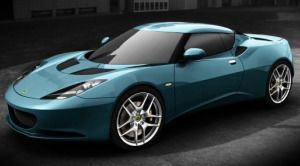
The 2010 Lotus Evora Base is a Coupe. It can accommodate up to 2 passengers. It has 2 Doors and is powered by a 3.5L V6 DOHC 24-valve engine which outputs 276 hp @ 6400 rpm and is paired with 6-speed manual transmission gearbox. The 2010 Lotus Evora Base has cargo capacity of 161 Liters and the vehicle weighs 1382 kg. In terms of ride assists, the 2010 Lotus Evora Base has stability control and traction control in addition to anti-lock brake system (ABS). The vehicle has an optional engine as well It offers Rear park distance sensor and Rear view camera. Safety features also include Driver-side front airbag and Passenger-side front airbag. The front suspension is Independent front suspension while the rear suspension is Independent rear suspension. The car also features a Yes It has Cast alloy wheels as standard. Electronic features include Cruise Control. For convenience, the car has Power windows and Power door locks. There is also a remote keyless entry feature. Moreover, the car has. The steering wheel has audio control buttons. In terms of performance, the car has 301 N.m of torque and a top speed of 239 km/h. The 2010 Lotus Evora Base accelerates from zero to 60 mph in 6 seconds and hits quarter mile at 13.9 seconds. Fuel consumption is 12.4 L/100km in the city and 6.5 L/100km in the highway. The car price starts at $ 84,200
| Name | Base | |
|---|---|---|
| Price | $ 84,200 | |
| Body | Coupe | |
| Doors | 2 Doors | |
| Engine | 3.5L V6 DOHC 24-valve | |
| Power | 276 hp @ 6400 rpm | |
| Number of Seats | 2 Seats | |
| Transmission | 6-speed manual transmission | |
| Cargo Space | 161.0 L | |
| Maximum Cargo Space | 161.0 L | |
| Wheel Type | Cast alloy wheels | |
| Series | Evora | |
| Drivetrain | Rear wheel drive | |
| Horsepower | 276 HP | |
| Torque | 301 N.m | |
| Top Speed | 239 km/h | |
| Acceleration 0-100 km/h (0-60 mph) | 6.0 s | |
| Fuel Type | Petrol (Gasoline) | |
| Fuel Consumption (City) | 12.4 L/100km | |
| Fuel Consumption (Highway) | 6.5 L/100km | |
| Gear Type | manual | |
| Weight | 1,382 KG | |
| Brand | Lotus | |
| Model | Evora | |
| 0-400m (Quarter Mile) | 13.9 s | |
| 0-400m (Quarter Mile) - Speed | 166.1 km/h | |
| 0-800m (Half Mile) | 23.0 s | |
| 0-800m (Half Mile) - Speed | 187.0 km/h | |
| Modifications (MODS) | ||
| Modifications Cost | $ 0 |
2010 Lotus Evora Used Price Estimates
Estimates based on a driving average of 12,000 miles per year| Used Condition | Trade In Price | Private Party Price | Dealer Retail Price |
|---|
The 2010 Lotus Evora is the world's only four-seat midengine sports car. Super-sharp handling and impressive acceleration are the order of the day, but the catch is that the rear seats are essentially there for decoration.
In recent years, Lotus has become synonymous with narrowly focused sports cars that are big on performance and miniscule in size. Comfort and convenience play second fiddle to handling and acceleration. Not surprisingly, the company's cars have had fairly limited appeal. All that looks to change, however, with the introduction of the 2010 Lotus Evora -- the company's kindler, gentler version of the all-out track-tuned Elise and Exige.

The Evora is bigger than the Elise, but that's like comparing subatomic particles -- both are tiny compared to your typical passenger car. Still, the Evora measures 5 inches wider, 4 inches taller and 22 inches longer than the Elise. For the added size, the Evora gains two rear seats, a roomier (though hardly spacious) cabin and a mid-mounted (and Toyota-built) V6 engine. It should be noted, though, that the rear seats are still really small. How small? Well, have you seen a Porsche 911's rear seats? The Evora's are worse.
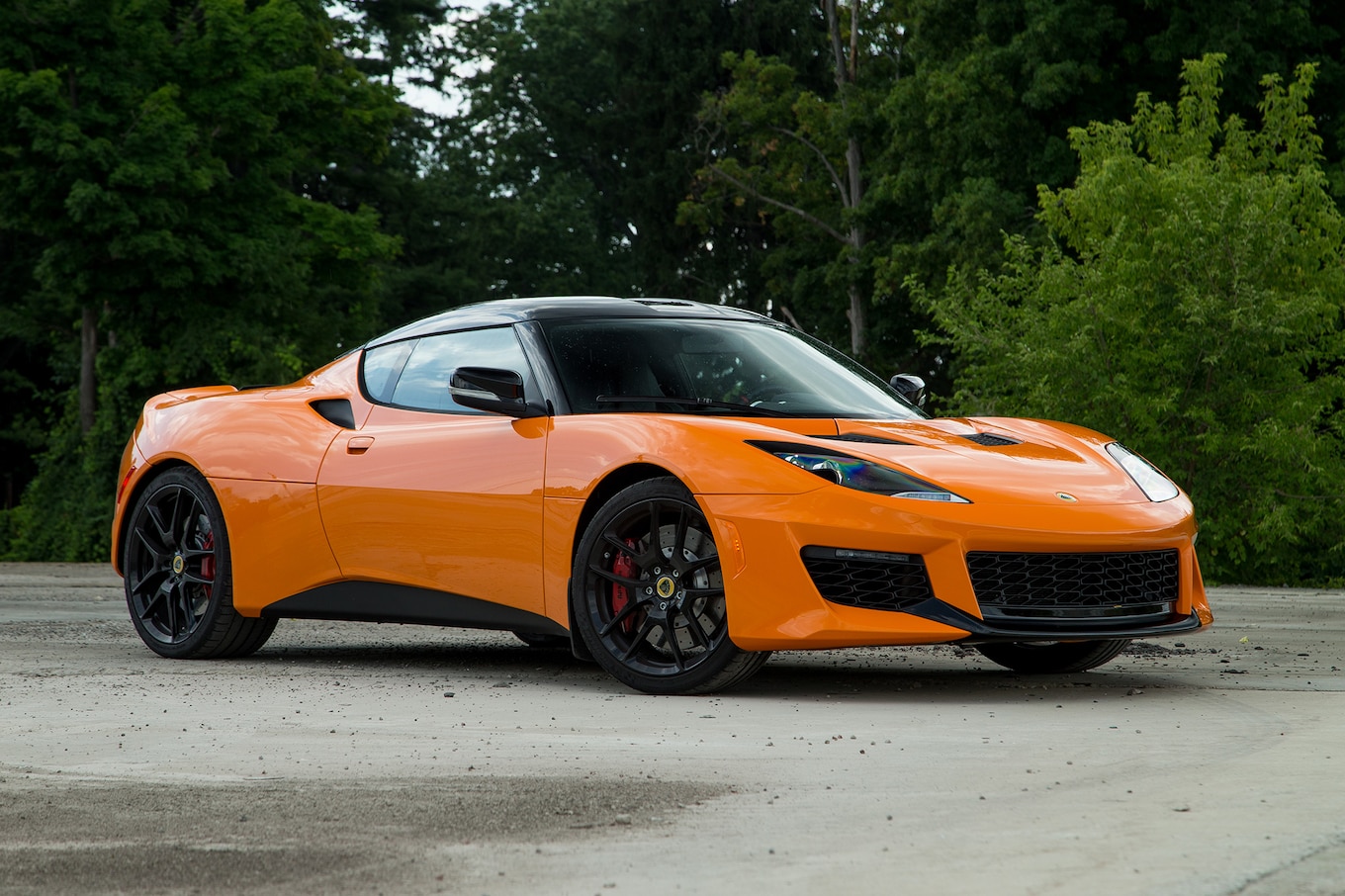
Still, the Evora's larger dimensions and added comfort and convenience make this the first Lotus you won't mind driving every day. A larger door opening and narrower side sill makes getting in or out of the cockpit much more graceful, and the cabin receives a healthy dose of luxury. Leather and carpeting cover the hard plastics and bare metal found in the Elise and the cabin has an upscale, modern appearance. Even power steering (!) is included.
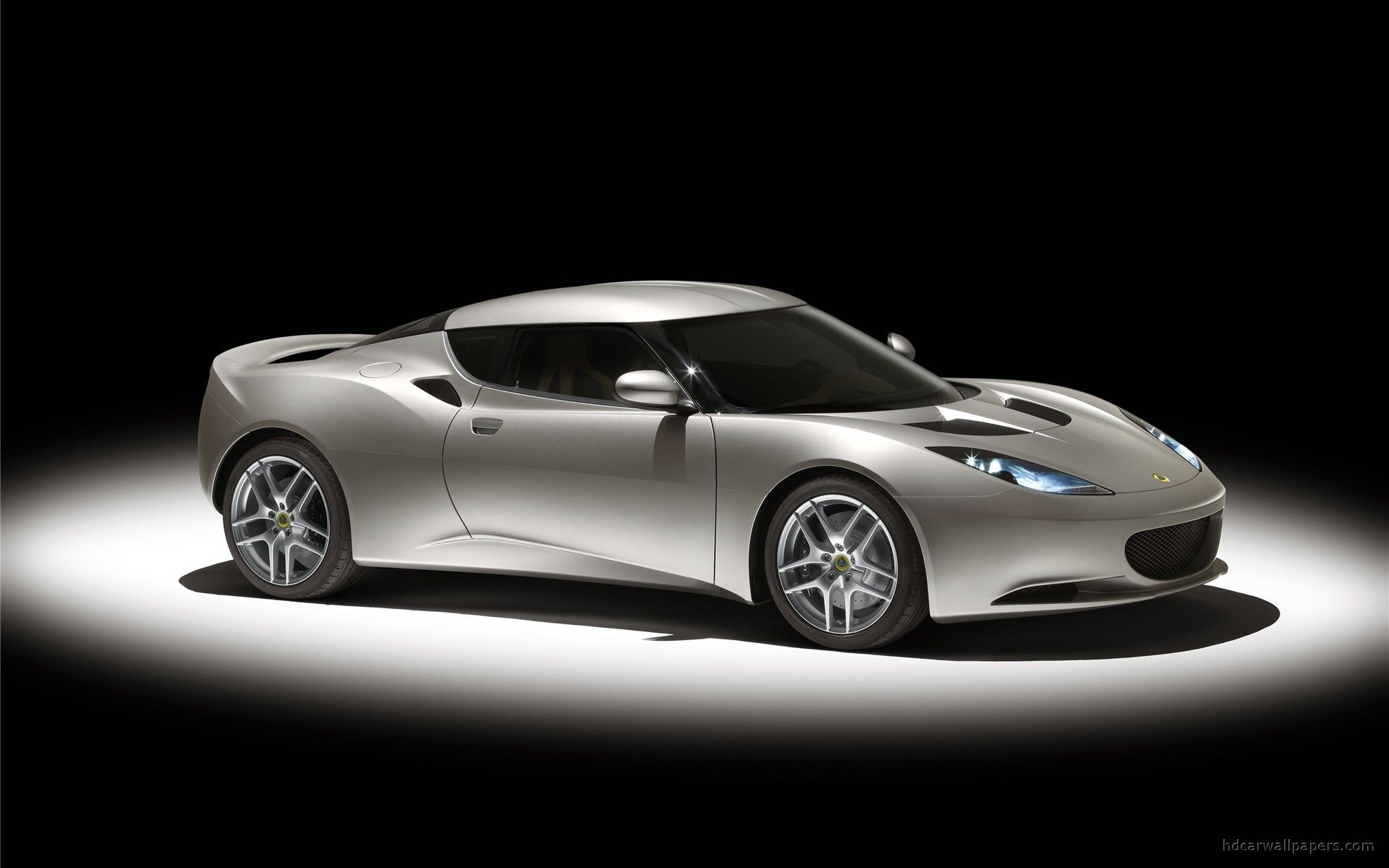
But don't think that this Lotus has gone soft. Lotus says the Evora's new extruded aluminum chassis is 60 percent more rigid than the one it uses for the already unyielding Elise and Exige. This allows for a more compliant suspension without sacrificing too much in the way of performance. To quote Julia Roberts in "Pretty Woman" (also referring to a Lotus), "This baby handles like she's on rails." The 2010 Lotus Evora can change direction in the blink of an eye, all while relaying plenty of feedback through the steering wheel, pedals and seats. Acceleration and braking are also worthy of praise, registering Elise-like performance numbers despite being more than 1,000 pounds heavier.
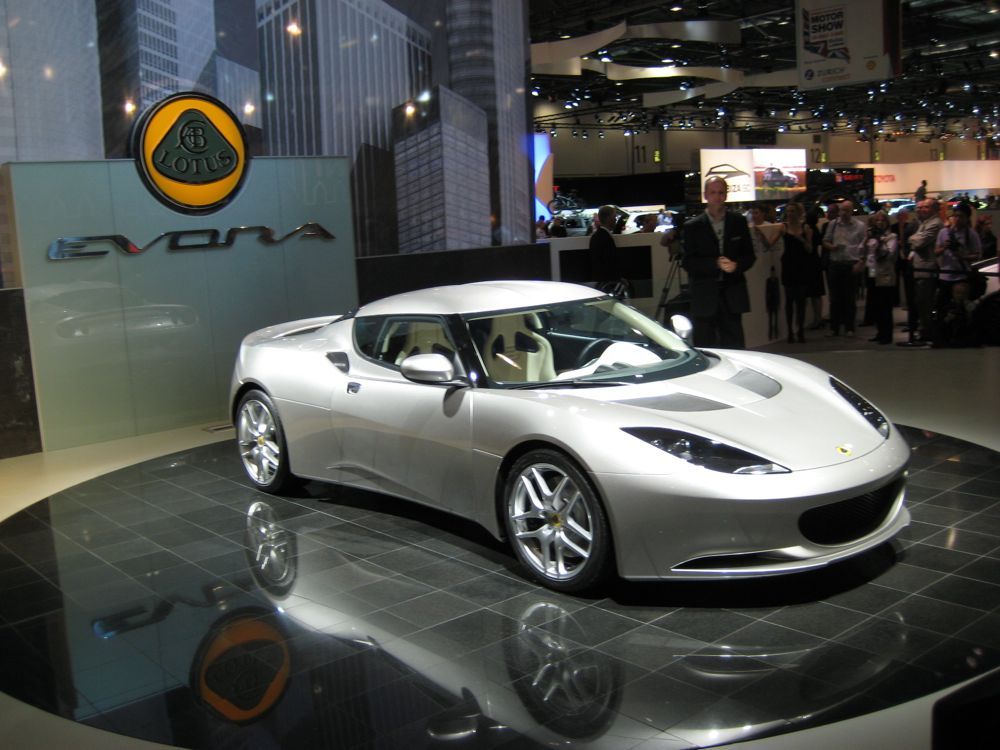
As the world's only midengine four-seat sports car, competition is understandably sparse. Considering the Evora's lack of rear-seat space, a Porsche 911 immediately comes to mind as a more mainstream choice, though it's not as nimble and certainly more expensive. The similarly priced (yet two-seater only) Porsche Cayman S is another enticing choice. For something with truly usable rear seats, the only option currently available is the much larger Porsche Panamera four-door super sport sedan, which will set you back an additional $ 25,000. Overall, Lotus has done a lot right here. For those seeking the type of handling found in the Elise or Exige, but in a much friendlier package, look no further than the 2010 Evora.
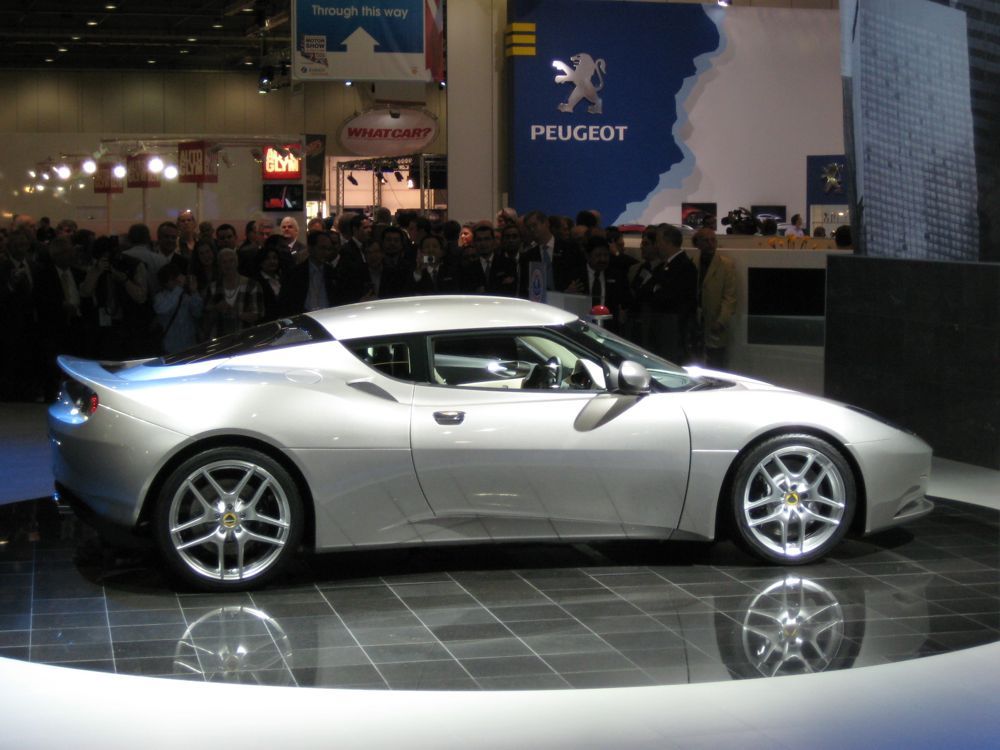
The 2010 Lotus Evora is a four-seat sports car that is offered in only one trim level. Standard equipment includes 18-inch alloy front wheels (19-inch rear wheels), bi-xenon headlights, heated exterior mirrors, air-conditioning, leather front seats, cloth rear seats, a tilt-and-telescoping steering wheel, power windows, a leather-wrapped gearshift knob and handbrake, a trip computer and a CD/MP3 player with iPod integration and auxiliary audio jack.
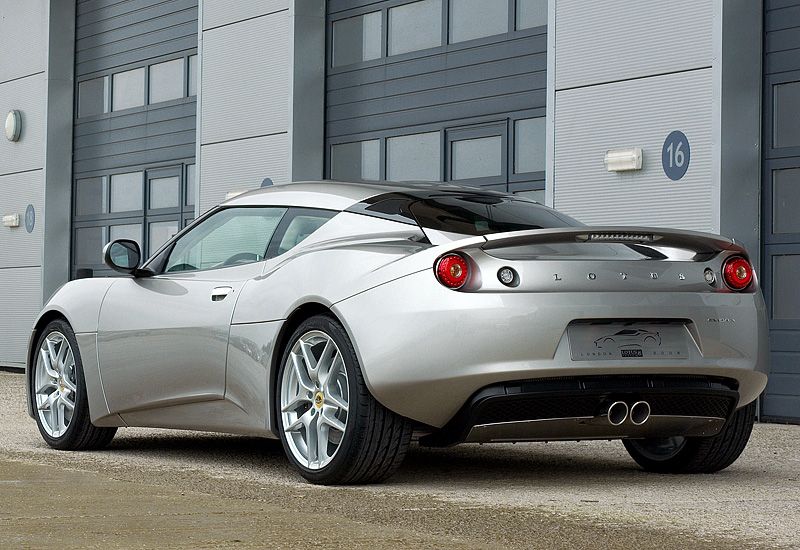
There are three main option groups available. The Premium package adds accent lighting, a center armrest between the front seats, premium floor mats and leather trim throughout the cabin. The Sport package features selectable sport modes, enhanced throttle response, a higher rpm limit, a rear underbody diffuser, titanium exhaust tips and cross-drilled brake rotors with black-painted calipers. The Technology package includes cruise control, rear parking sensors, Bluetooth and an upgraded stereo with DVD playback, a 7-inch touchscreen display, navigation and a USB port.
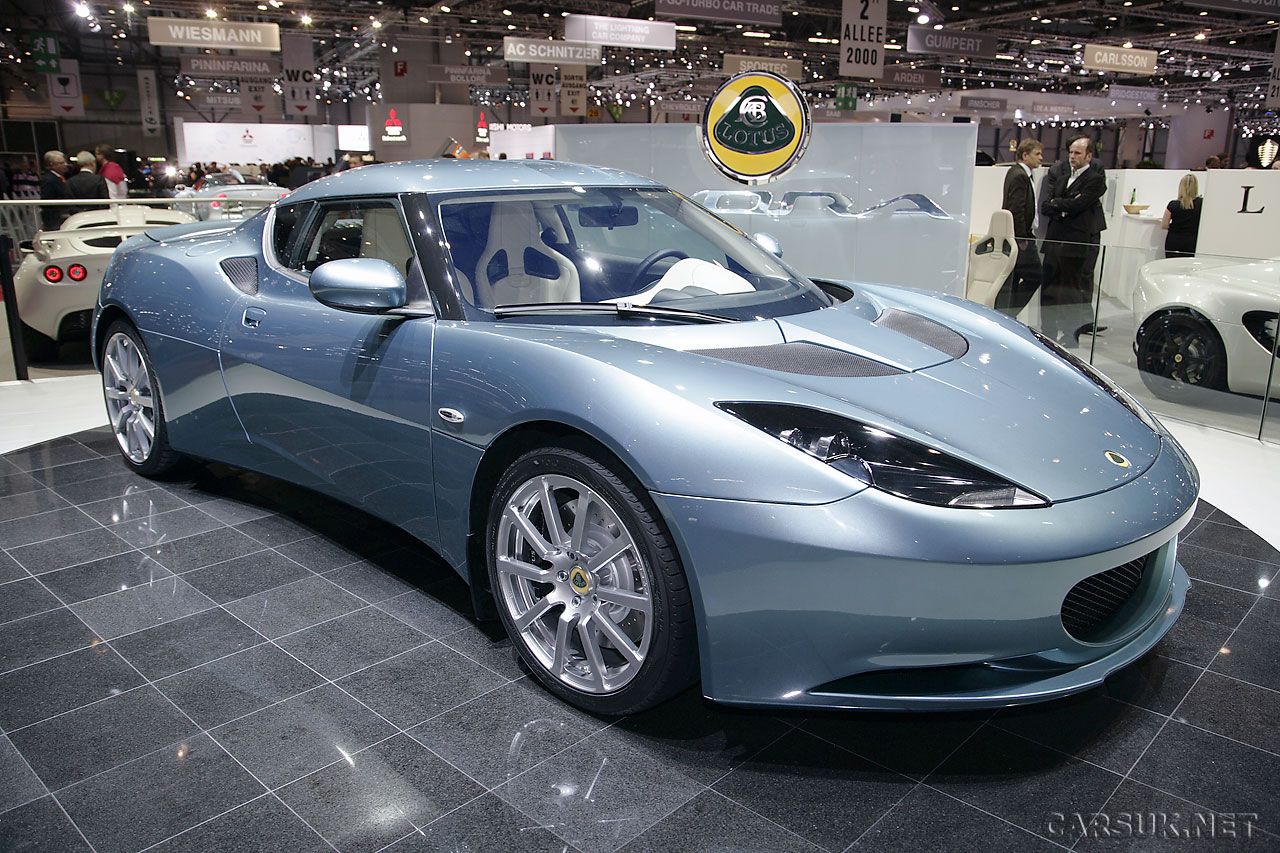
Stand-alone options include a sports ratio gearbox, a rearview camera, power-folding mirrors, various wheel options and clear paint protection film. Buyers can also opt to delete the rear seats in favor of a rear parcel area.
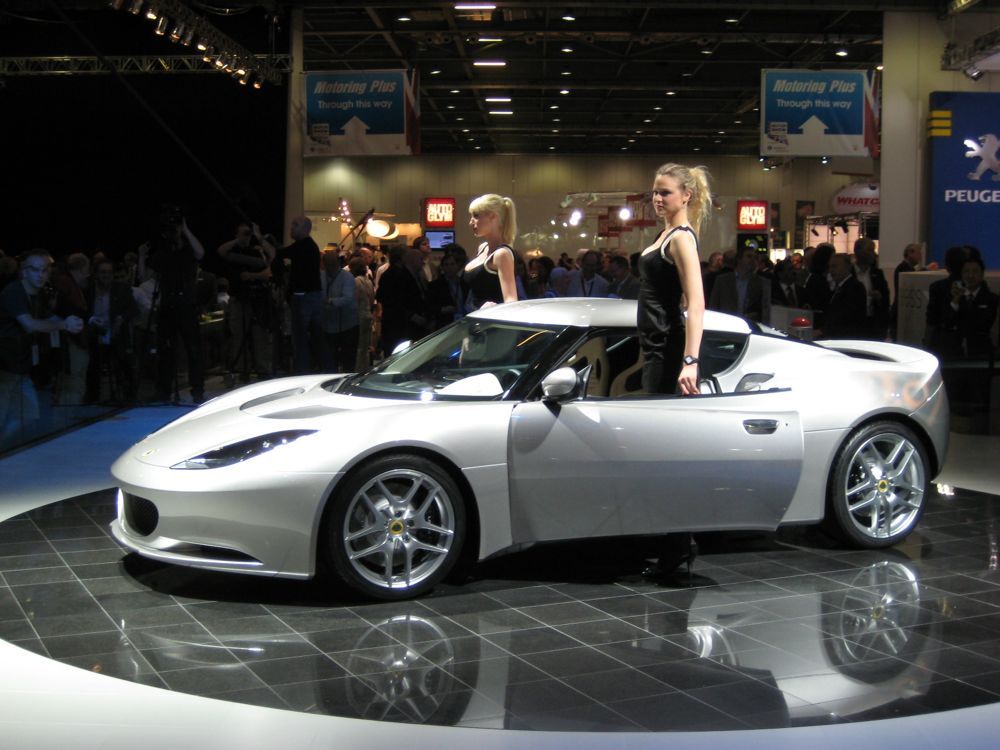
The 2010 Lotus Evora is powered by a mid-mounted 3.5-liter V6 that is sourced from Toyota. The engine produces 276 horsepower and 258 pound-feet of torque. The only transmission available is a traditional six-speed manual, though there are rumors of an upcoming paddle-shift automatic in the works. Lotus estimates the 0-60-mph time at around 4.5 seconds, while top speed is electronically governed at 150 mph. Just as impressive as the performance numbers is the fuel efficiency; the Evora is expected to achieve 26 mpg in highway driving.
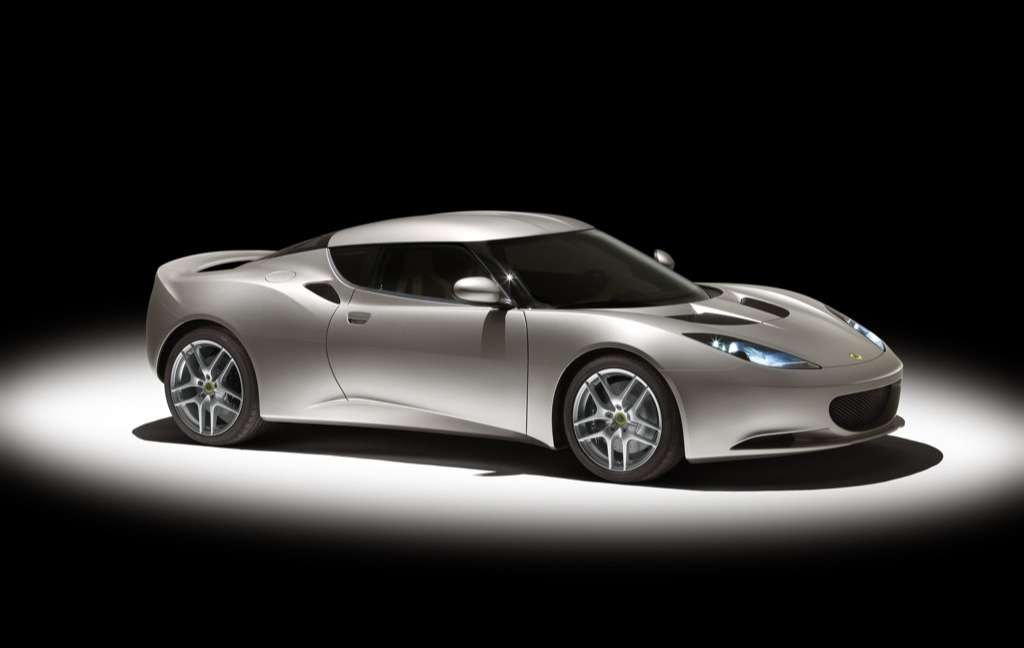
The 2010 Lotus Evora is noticeably sparse when it comes to safety equipment. Antilock brakes and traction/stability control are included, but neither side nor side curtain airbags are available.
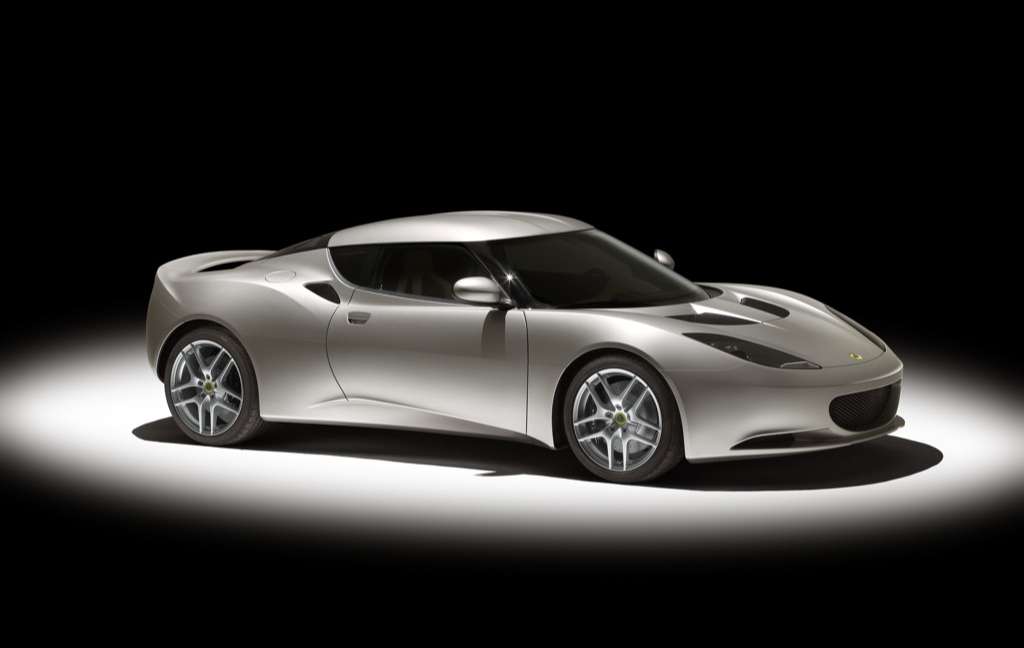
The 2010 Lotus Evora is most at home on tight, twisting roads. Like its smaller Elise and Exige cousins, the Evora knifes through turns with uncommon precision and otherworldly levels of grip. Unlike the Elise, however, the Evora provides a relatively serene cabin, with few squeaks and rattles, plenty of sound insulation and a suspension that reduces pothole effects to "normal" car standards.
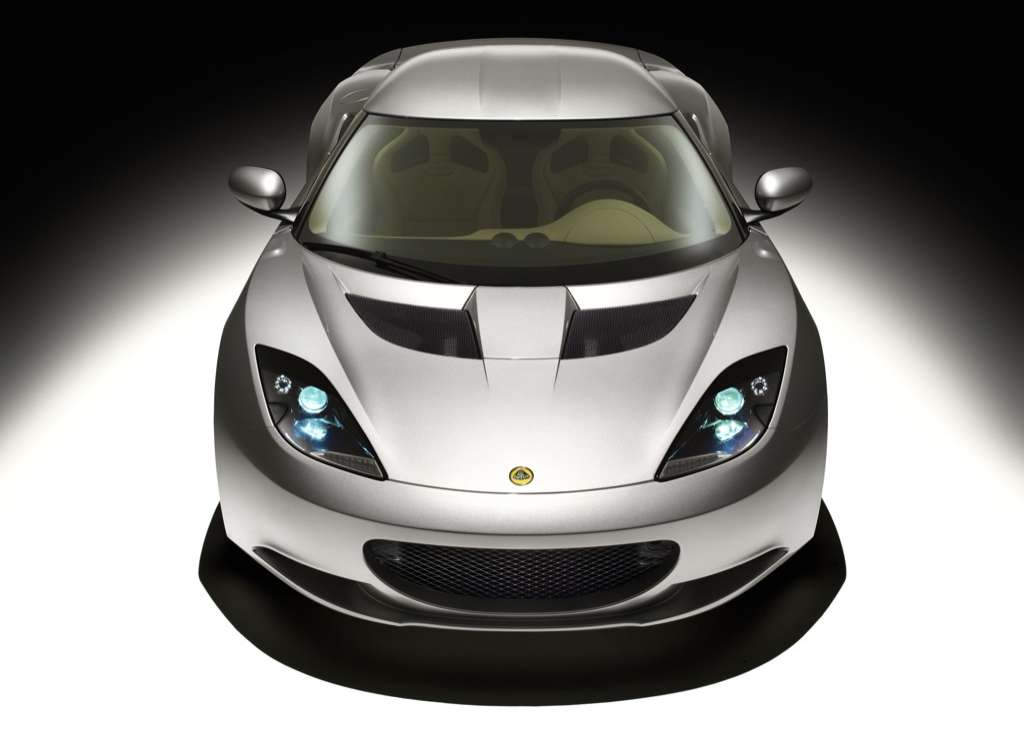
Power is plentiful throughout the rev range and the transmission features well-spaced gears to make the most of the V6's output. Steering feel is as good as it gets for any car, and the power steering makes maneuvering in tight spots effortless.
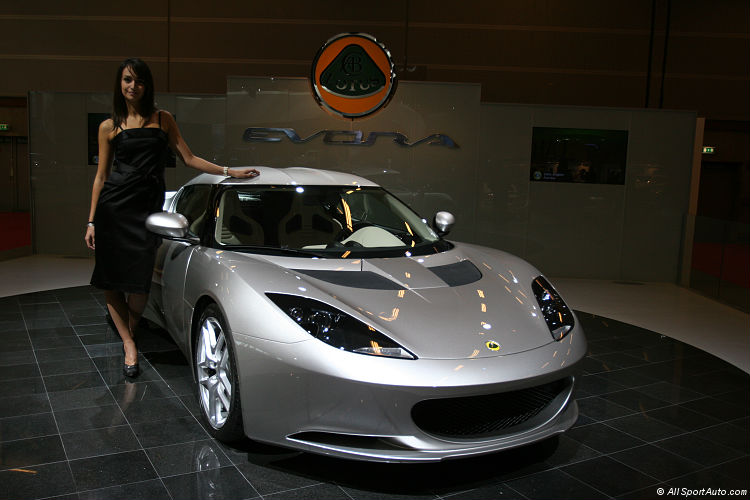
The Evora's interior is quite a departure from the hard-core sports cars in the Lotus lineup, sporting a modern cockpit with rich leather surfaces, carpeting and significantly more creature comforts than what's offered in the Elise and Exige. The relatively few knobs and buttons are within easy reach and are elegantly styled and placed.
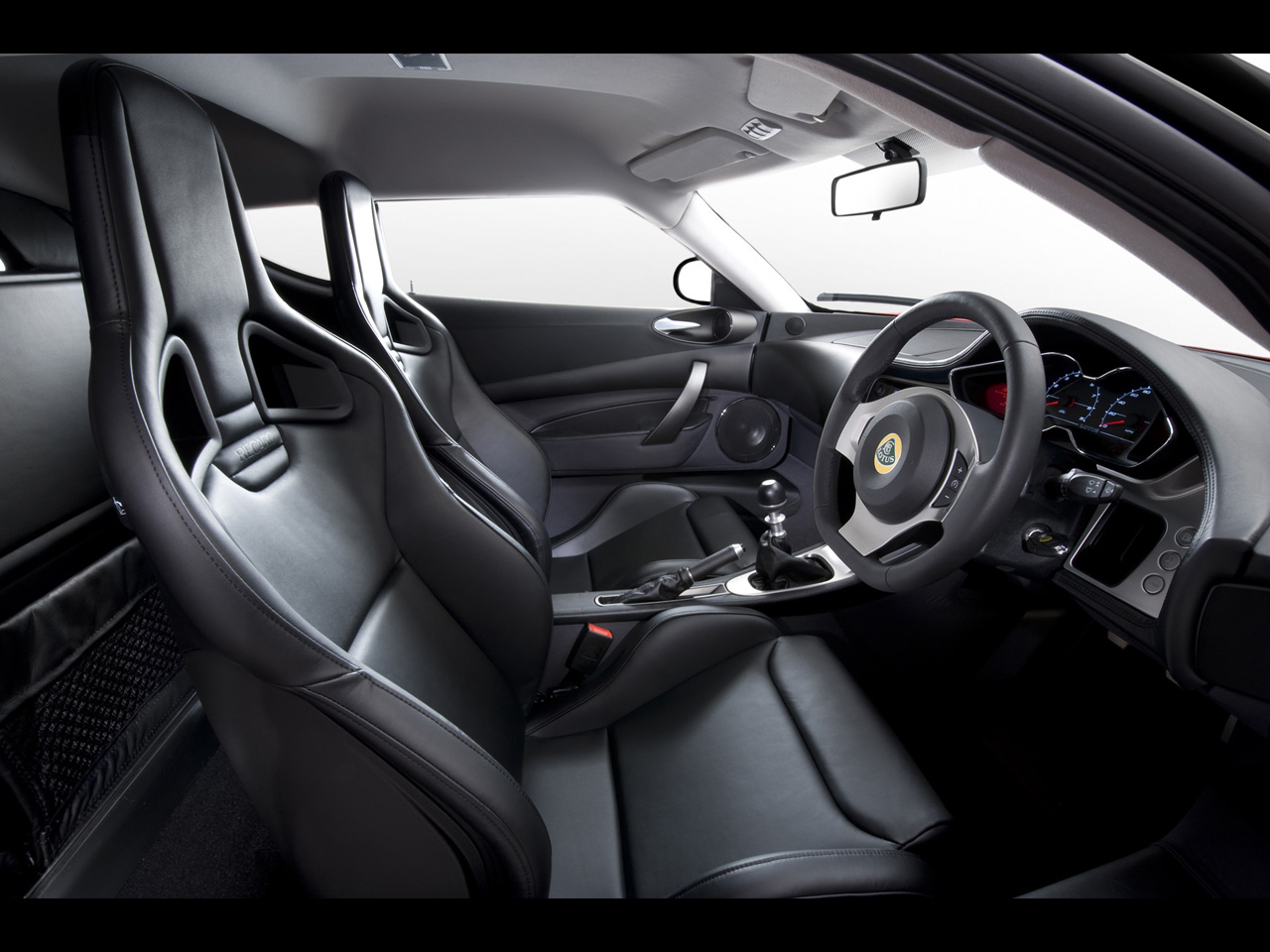
Entry and exit from the front seats are much more civilized than in the Elise or Exige, thanks to a shorter and narrower side sill and larger door openings. Once seated, there is significantly more space up front -- enough to comfortably accommodate 6-foot-plus adults. Unfortunately, though, the front wheelwell intrudes on foot space. As a result, the clutch pedal is shifted an inch or so to the right, which can be awkward for some drivers. We had bigger issues with the lack of a functional dead pedal, however. A small ledge that can only fit a few toes is all that is provided and its placement is painfully uncomfortable.

The rear seats don't fare any better, and are really no more than an upholstered package shelf with seatbelts. Rear space is almost nonexistent, and may even be uncomfortable for small children. In a pinch, these seats may come in handy, but we'd probably opt for the rear-seat delete. Rear visibility is laughable, but fortunately, a rearview camera is available as an option. As for the trunk, Lotus claims the Evora can hold up to 5.7 cubic feet but its narrow shape drastically limits what you can store back there. Strangely enough, the Elise's trunk, which can hold only 4.0 cubes, more easily accommodates bulkier items because of its wider shape.
2010 Lotus Evora Base Exterior Colors
2010 Lotus Evora Base Interior Colors
2010 Lotus Evora Engines
| Engine | Standard in Trim | Power | Torque | Fuel Consumption - City | Fuel Consumption - Highway | 0-100 km/h | Quarter Mile | Half Mile |
|---|---|---|---|---|---|---|---|---|
| 3.5L V6 DOHC 24-valve | Base | 276 hp @ 6400 rpm | 301 N.m | 12.4 L/100km | 6.5 L/100km | 6.0 s | 13.9 s | 23.0 s |
2010 Lotus Evora Trims
2010 Lotus Evora Previous Generations
2010 Lotus Evora Future Generations
Lotus Evora Overview and History
It's a long way for the brand which was first established when Colin Chapman, a graduate of University College, London, built his first car in a lock-up garage behind his girlfriend's car. The year was 1946 and the car was dubbed by its creator as the Austin Seven Special. He entered it in a couple of races in 1948 and managed to snag some victories.
The first car that he called a Lotus was built in 1949 and it had a more powerful Ford engine. While this model was powerful enough to beat a Bugatti Type 37 in the Silverstone race. After this victory Champan decided to focus on sports cars that would run in the Formula 750.
He teamed up with Michael and Nigel Allen and together they formed Lotus Engineering Company in 1952. The first production car was the Lotus Mark VI which was running on the new 1.5 Ford Consul engine. This car too proved successful on the racing circuit and by 1955, enough orders of the car had been made to allow Chapman and his team to fully dedicate themselves to the company.
That same year they entered the Lotus Mark IX at the Le Mans race but they were disqualified when Chapman reversed. Undeterred and ready for bigger things, Chapman created new Lotus models, including the updated version of the Mark VI called The Seven. This car was to achieve cult status, being in production to this day under the name Caterham Seven.
Outgrowing its facilities, Lotus was forced to move to a new facility at Chestnut in 1959.
It was at this factory that the all new Lotus Elite was to be built, with its integral glass fibre body and chassis. Lotus had already entered Formula in 1958 and by 1959 they'd already won their first grand prix with Stirling Moss at the wheel.
Lotus went on to win two world championships with Jim Clark and still had time to develop a car that is thought to be the best sports vehicle of all time - the Ford Cortina.With the introduction of Lotus Europa Chapman was ready to ditch his kit car image (for which reason he sold the Seven model to Caterham).
In the 70s, after the unsuccessful release of the Lotus 30 and 40v almost killed sports car racing for Lotus, but in the F1 circuit Lotus still managed to dominate.. Models from this period include the Eclat, the Esprit (two seat coupe) and the Sumbeam which actually won the World Rally Championship in 1981.
When Colin Chapman died in 1982 at the age of 54, for many car enthusiasts it was the end of an era. The company was bought by GM in 1986 but later sold off to A.C.B.N Holdings of Luxembourg in 1993. In 1996 the Malaysian car maker Proton bought the brand from them and is still controlling it today.
Lotus withdrew from Formula in 1995 but it still manages to maintain its reputation as a sports car builder, with the Lotus Elise, Exige (and its S variant), Europa (also with a turbocharged S variant) and the newly released Evora.
2010 Lotus Evora Consumer Reviews
Compare Against Competitors

2010 Lotus Evora Base Specifications
Base Comfort and Convenience
| AM/FM stereo radio | AM/FM stereo radio with auxiliary input jack |
|---|---|
| Air Conditionning | Air conditioning |
| Bluetooth Wireless Technology (Option) | UConnect hands-free communication system with Bluetooth |
| Courtesy Dome Light (Option) | Accent lighting |
| Cruise Control (Option) | Yes |
| Navigation System (Option) | Navigation system with touch-screen |
| Number of Speakers | 4 speakers |
| Number of Speakers (Option) | 4 speakers including subwoofer |
| Power Door Locks | Yes |
| Power Outlet | 2 12-volt power outlets |
| Power Windows | Yes |
| Premium Sound System | Alpine audio system |
| Premium Sound System (Option) | Alpine Imprint dynamic EQ system |
| Remote Keyless Entry | Yes |
| Single CD | CD/MP3/WMA player |
| Special Feature | IPod integration |
| Special Feature (Option) | Sound system USB port |
| Special Features (Option) | Leather trimmed tailgate insert panel |
| Steering Wheel Adjustment | Tilt steering wheel |
| Trunk/Hatch Operation | Remote trunk release |
Base Dimensions
| Cargo Capacity | 161 L |
|---|---|
| Curb Weight | 1382 kg |
| Fuel Tank Capacity | 60 L |
| Gross Vehicle Weight | 1782 kg |
| Height | 1223 mm |
| Length | 4342 mm |
| Wheelbase | 2575 mm |
| Width | 1848 mm |
Base Exterior Details
| Door Handles | Body-color door handles |
|---|---|
| Exterior Decoration (Option) | Black painted brake calipers |
| Exterior Folding Mirrors (Option) | Power-folding outside mirrors |
| Exterior Mirror Colour | Body-color outside mirrors |
| Front Spoiler | Front spoiler |
| Headlight Type | Bi-xenon headligjhts |
| Headlights Headlight Washers | Headlight washers |
| Heated Exterior Mirrors | Heated outside mirrors |
| Power Exterior Mirrors | Power-adjustable outside mirrors |
| Rear Spoiler | Body-color rear spoiler |
| Rear Window Defroster | Yes |
Base Interior Details
| Door Trim (Option) | Leather door trim |
|---|---|
| Driver Info Center | Driver information center |
| Floor Console (Option) | Leather floor console |
| Floor Mats (Option) | Front floor mats |
| Front Seats Front Seat Type | Sport bucket front seats |
| Hand Brake Leather Trim | Leather-wrapped handbrake lever |
| Number of Cup Holders | 2 cupholders |
| Seat Trim | Recaro Leather seats |
| Shifter Knob Trim | Leather-wrapped shift knob |
| Special Feature (Option) | Leather front center armrest |
| Steering Wheel Trim | Leather-wrapped steering wheel |
| Trip Computer | Yes |
Base Mechanical
| Engine Name | 3.5L V6 DOHC 24-valve |
|---|---|
| Transmission | 6-speed manual transmission |
| Transmission (Option) | Sport 6-speed manual transmission |
Base Overview
| Body | Coupe |
|---|---|
| Doors | 2 |
| Engine | 3.5L V6 DOHC 24-valve |
| Fuel Consumption | |
| Power | 276 hp @ 6400 rpm |
| Seats | 2 |
| Transmission | 6-speed manual transmission |
Base Safety
| Anti-Lock Brakes | Anti-lock brakes |
|---|---|
| Anti-Theft Alarm | Alarm system |
| Brake Assist | Brake assist |
| Brake Type | 4-wheel disc |
| Child Seat Anchor | ISOFIX child seat anchors |
| Driver Airbag | Driver-side front airbag |
| Electronic brake force distribution | Electronic brake force distrbution |
| Parking Distance Sensor | Rear park distance sensor |
| Passenger Airbag | Passenger-side front airbag |
| Rear View Camera | Rear view camera |
| Stolen Vehicle Recovery | Stolen Vehicle Recovery |
Base Suspension and Steering
| Front Anti-Roll Bar | Yes |
|---|---|
| Front Suspension | Independent front suspension |
| Front Tires | 225/40ZR18 |
| Power Steering | Lotus-tuned Power rack-and-pinion steering |
| Rear Anti-Roll Bar | Yes |
| Rear Suspension | Independent rear suspension |
| Rear Tires | 255/35ZR19 rear tires |
| Tire Pressure Monitoring System | Yes |
| Wheel Type | Cast alloy wheels |
| Wheel Type (Option) | Anthricite grey forged wheels |
Critics Reviews
So Lotus is rinsing out another Elise variant, eh? No, the Evora really is new, the first all-new Lotus for nearly 15 years in fact. It’s built to take on the likes of the Porsche Cayman and 911 ...
Review Lotus Evora Coupe (2009 - 2013) review. Read the Lotus Evora coupe (2009 - ) car review by Auto Trader's motoring experts, covering price, specification, running costs, practicality, safety and how it drives.
1.30pm: Lotus Evora: the engine room Lotus and Toyota have been in bed for a while (supplying – most notably of late – the Elise 111R's transplanted 1.8 motor) and the Evora uses another ...
2009 Lotus Cars and Vehicles at Autotrader. Get information and pricing about 2009 Lotus Cars, read reviews and articles, and find inventory near you.
There are really two ways of looking at the Evora: either as a bigger, softer Lotus – kind of like Pink Floyd in the 1990s – or as the lightest, lithest GT car that money can buy Practicality ...
Evora GT Review, Pricing, and Specs. Overview. The Lotus Evora GT is the British automaker's lone American model, but this lightweight sports car has exotic elements and fantastic handling.
Discussion and Comments
Share Your Comments