2011 Ford Explorer Base V6 4WD 0-60 Times, Top Speed, Specs, Quarter Mile, and Wallpapers

The 2011 Ford Explorer Base V6 4WD is a 4-wheel drive Sport Utility. It can accommodate up to 7 passengers. It has 5 Doors and is powered by a 3.5L V6 DOHC 24-valve engine which outputs 290 hp @ 6500 rpm and is paired with 6-speed automatic transmission gearbox. The 2011 Ford Explorer Base V6 4WD has cargo capacity of 595 Liters and the vehicle weighs 2101 kg. In terms of ride assists, the 2011 Ford Explorer Base V6 4WD has stability control and traction control in addition to anti-lock brake system (ABS). The vehicle has an optional engine as well It offers Reverse sensing system and. Safety features also include Driver-side front airbag and Passenger-side front airbag. The front suspension is Independent front suspension while the rear suspension is Independent rear suspension. The car also features a Yes It has 17'' steel wheels with covers as standard. Electronic features include Cruise Control. For convenience, the car has Power windows and Power door locks. There is also a remote keyless entry feature. Moreover, the car has. The steering wheel has audio control buttons. In terms of performance, the car has 317 N.m of torque and a top speed of 243 km/h. The 2011 Ford Explorer Base V6 4WD accelerates from zero to 60 mph in 6.8 seconds and hits quarter mile at 13.3 seconds. Fuel consumption is 11.9 L/100km in the city and 8 L/100km in the highway. The car price starts at $ 32,999
| Name | Base V6 4WD | |
|---|---|---|
| Price | $ 32,999 | |
| Body | Sport Utility | |
| Doors | 5 Doors | |
| Engine | 3.5L V6 DOHC 24-valve | |
| Power | 290 hp @ 6500 rpm | |
| Number of Seats | 7 Seats | |
| Transmission | 6-speed automatic transmission | |
| Cargo Space | 595.0 L | |
| Maximum Cargo Space | 2,285.0 L | |
| Wheel Type | 17'' steel wheels with covers | |
| Series | ||
| Drivetrain | 4-wheel drive | |
| Horsepower | 290 HP | |
| Torque | 317 N.m | |
| Top Speed | 243 km/h | |
| Acceleration 0-100 km/h (0-60 mph) | 6.8 s | |
| Fuel Type | ||
| Fuel Consumption (City) | 11.9 L/100km | |
| Fuel Consumption (Highway) | 8.0 L/100km | |
| Gear Type | auto | |
| Weight | 1,850 KG | |
| Brand | Ford | |
| Model | Explorer | |
| 0-400m (Quarter Mile) | 13.3 s | |
| 0-400m (Quarter Mile) - Speed | 153.3 km/h | |
| 0-800m (Half Mile) | 24.9 s | |
| 0-800m (Half Mile) - Speed | 172.5 km/h | |
| Modifications (MODS) | ||
| Modifications Cost | $ 0 |
Ford Explorer 2011 USA стоковый разгон 0-100
2011 Ford Explorer 0-60 MPH
Ford Explorer Limited 2011 V8 acceleration
2011 Ford Explorer Used Price Estimates
Estimates based on a driving average of 12,000 miles per year| Used Condition | Trade In Price | Private Party Price | Dealer Retail Price |
|---|---|---|---|
| Outstanding | $ 7,917 | $ 10,266 | $ 11,942 |
| Clean | $ 7,511 | $ 9,727 | $ 11,296 |
| Average | $ 6,700 | $ 8,648 | $ 10,004 |
| Rough | $ 5,889 | $ 7,570 | $ 8,711 |
Thanks to improved on-road dynamics, better fuel efficiency and a bigger, high-class cabin, the 2011 Ford Explorer looks as if it can recapture the SUV audience it lost.
Chances are that in some point in your life you've either owned a Ford Explorer or knew somebody who did. For a stretch in the 1990s, it was like a modern-day Moses had trotted out of the Mall of America with an 11th commandment: "Thou shalt own a Ford Explorer." The things were everywhere.
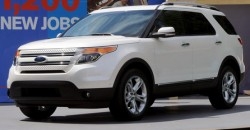
But because of the Firestone tire/rollover debacle and changing consumer desires, Explorer sales oppressively trended downward for the past decade. So for this new decade, the 2011 Ford Explorer has been completely made over with the goal for buyers to warmly remember all the good times they had in the family Explorer back in '98, while correcting the issues that led them to buy something else since then.
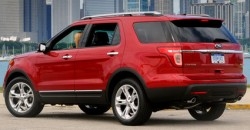
To do so, Ford has replaced the Explorer's truck-related mechanicals with unibody construction similar to that of the Ford Flex. The upside is more carlike driving dynamics and safety; the downside is reduced maximum towing capacity. We don't remember too many of the country's bajillion Explorers hooked up to trailers back in '97, though, so we're thinking most folks won't see this as a problem. In terms of size, the new Explorer is nearly 4 inches longer in overall length and 5 inches wider. The standard 2011 Ford Explorer engine is a new 3.5-liter 290-horsepower V6 that's not only more fuel efficient than the old 292-hp V8 but also able to provide quicker acceleration.
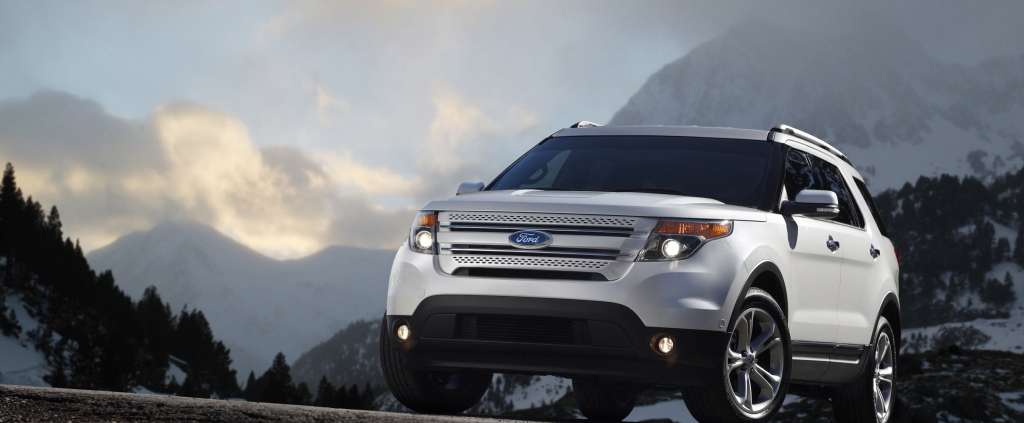
Climb on board the new 2011 Ford Explorer and discover a cabin that is not only roomier, but also considerably more stylish and of higher quality. For good measure, Ford threw in all its latest technological goodies, including Sync, MyFord Touch and MyKey. On the safety front, the Explorer gains inflatable second-row seatbelt airbags (a first for the automotive industry), which promise to improve safety for smaller occupants.
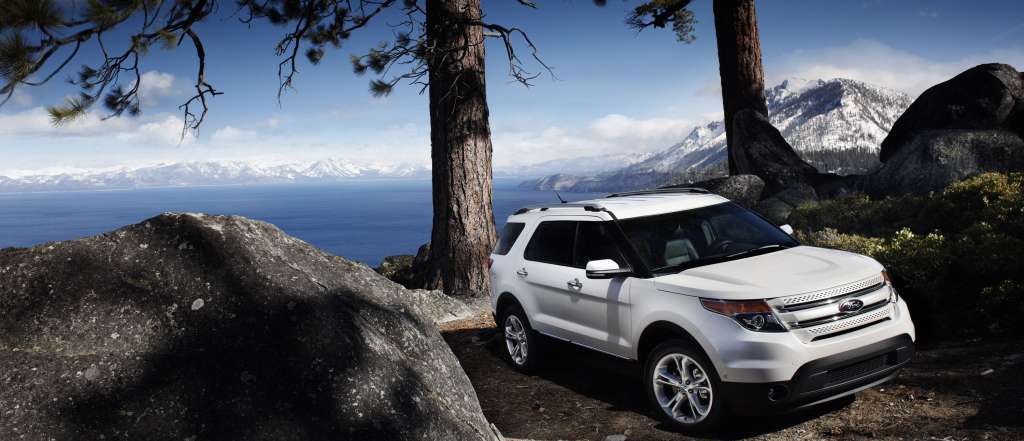
Overall, the new 2011 Ford Explorer is much more in tune with what today's crossover shoppers are looking for. It drives well, gets good fuel economy for its class and still retains the versatility that made people like SUVs in the first place. But of course the Explorer isn't the only game in town and it's been reborn at the same time as some other hits of the '90s.
The 2011 Dodge Durango and 2011 Jeep Grand Cherokee are also fully redesigned and, like the Explorer, re-created for today with an impressive repertoire of talents. Others to consider include Ford's more passenger-friendly Flex, the more engaging to drive 2011 Mazda CX-9 and GM's far more spacious 2011 Buick Enclave, 2011 Chevy Traverse, and 2011 GMC Acadia triplets. They're all really quite desirable, so it just depends on how much space you need, what type of driving experience you prefer and how many high-tech features you desire.
The 2011 Ford Explorer is a large crossover SUV available in base, XLT and Limited trim levels (nope, no more Eddie Bauer). Standard equipment includes 17-inch steel wheels, privacy glass, integrated blind spot mirrors, roof rails, cruise control, a six-way power driver seat (manual recline), a tilt-and-telescoping steering wheel, MyFord advanced trip computer and a six-speaker sound system with a CD player and an auxiliary audio jack.
The XLT adds 18-inch alloy wheels, automatic headlamps, foglamps, rear parking sensors, upgraded cloth upholstery, a leather-wrapped steering wheel and shift knob, a keyless entry code pad and satellite radio (optional on base).
For the Explorer XLT, Ford offers the Rapid Spec Option Group 201A that adds a rearview camera, dual-zone automatic climate control, an eight-speaker sound system and the Driver Connect Package, which includes an auto-dimming rearview mirror, MyFord Touch electronics controls, the Sync telephone and entertainment interface, a display screen, two USB ports and RCA video input jacks. The Rapid Spec 202A has the above equipment plus the Comfort package, which includes leather upholstery, heated front seats, an eight-way power driver seat with power-adjustable lumbar, and a six-way power passenger seat (manual recline).
The Limited includes the XLT's Rapid Spec items, plus 20-inch wheels, keyless ignition/entry, remote engine start, a 110-volt power outlet and a 12-speaker Sony sound system with HD radio. The Rapid Spec 301A package includes a power liftgate and a navigation system, along with the Luxury Seating package that adds an eight-way power passenger seat, ventilated front seats and a power-folding third-row seat. The Rapid Spec 302A package includes an automatic parallel-parking system, adaptive cruise control, collision warning and brake support, a blind-spot warning system, xenon headlamps and automatic wipers.
Stand-alone options on the XLT and Limited include a dual-panel sunroof, the blind-spot warning system, the power liftgate, a tow package, second-row captain's chairs (Limited only), a rear-seat entertainment system, and the navigation system that includes real-time traffic, weather and other information.
The 2011 Ford Explorer comes standard with a 3.5-liter V6 that produces 290 hp and 255 lb-ft of torque. A six-speed automatic transmission and front-wheel drive are standard. Four-wheel drive (there is no low-range gearing) is optional and includes Ford's Terrain Management System, a selectable four-mode system that optimizes traction in different conditions. Hill descent control and hill start assist are also included.
In testing, a 4WD Explorer went from zero to 60 mph in 8.3 seconds -- average for the class. Ford-estimated fuel economy with two-wheel drive is 17 mpg city/25 mpg highway -- also average for the class. Towing capacity is 5,000 pounds.
Every 2011 Ford Explorer comes standard with stability and traction control, trailer sway control, front side airbags, side curtain airbags and MyKey, which allows parents to specify limits for vehicle speed and stereo volume. The Explorer's stability control system also includes Ford's Curve Control, which can reduce the vehicle's speed if it senses that it's travelling too fast for a particular corner.
Optional on the XLT and Limited are a blind-spot warning system (includes cross-traffic alert) and inflatable seatbelts (late availability) for second-row outboard passengers. The Limited can be equipped with collision warning and brake support.
In brake testing, a 4WD Explorer came to a stop from 60 mph in 122 feet -- an average distance for the class.
The 2011 Ford Explorer no longer drives like a truck and that's a great thing. Its structure feels rock-solid, it's well-damped over bumps and there's a confidence to the way it negotiates a corner. The responsive steering is another example of Ford knowing how to tune electric power steering (which improves fuel economy and allows for an automatic parking system).
The new Explorer may not have a V8, but its new V6 is quicker and more efficient, so only the few folks who used their Explorers to tow a boat may be disappointed.
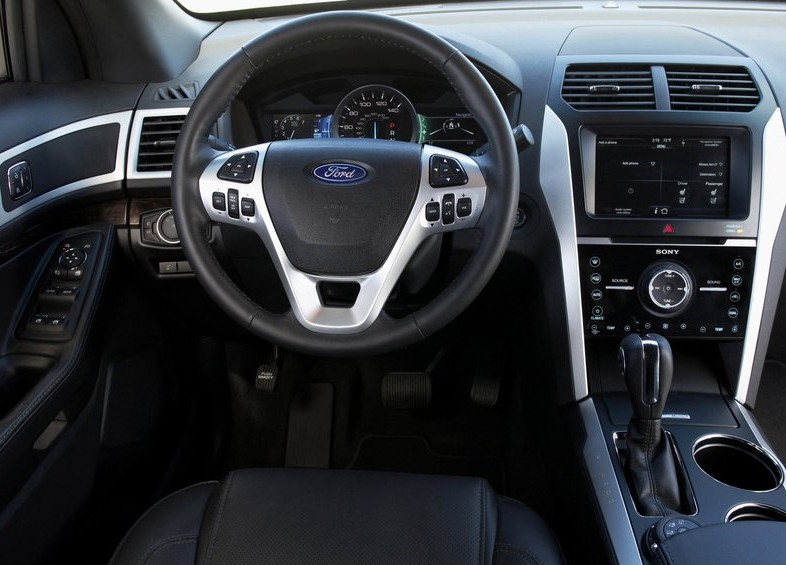
The 2011 Ford Explorer ushers in a new era of interior quality for not only the Explorer, but for the Ford brand entirely. The dash is soft to the touch, the switchgear operates with precision (or is touch-operated with the optional MyFord Touch) and the overall look is quite upscale. In fact, a loaded Explorer is nicer inside than just about every Lincoln.
We have mixed feelings about MyFord Touch, however, as those touch buttons can be difficult to identify at a glance and the corresponding touchscreen suffers from small button icons on a black background. The redundant steering wheel controls and speedometer-flanking LCD screens could also use a bit of fine-tuning. All together, it works better when stationary than when on the move.
The Explorer's cabin is more spacious than before, but it's not quite as roomy as those of the Dodge Durango, Ford Flex and especially the Chevy Traverse. Its 80 cubic feet of maximum cargo space is the smallest of the group and the third row is a bit cramped by comparison -- though it does accommodate children with ease. The driving position is spot-on for most drivers, though the Explorer's wide pillars and high dash make the car seem bigger when maneuvering through tight places.
For all of the noteworthy changes Ford wrought on the 2011 Explorer, the transformation in its dynamic character is arguably the most profound. Moving to a unit-body configuration endows this SUV/crossover with a far smoother, more compliant yet better-controlled ride. Match that with a bounty of standard computer-controlled handling aids, impressively weighted electrically-boosted power steering, capable anti-lock disc brakes and its world-exclusive Curve Control system and the new Explorer takes on any travel assignment with newfound confidence that belies its scale. Although ground clearance is a fairly modest 7.6 inches, our off-road experience in a four-wheel-drive variant proved conclusively that the new Terrain Management system will ensure the average Explorer owner successful access – and egress – when venturing into unpaved territory, as well. Factor in outstanding fuel economy, exceptional cabin comfort, user-focused functionality plus class-leading connectivity, and the 2011 Ford Explorer emerges as a most accommodating travelmate for its driver and passengers, alike.
My Ford TouchThis latest and most capable version of Ford's driver-connect technology is standard on the Explorer Limited and available on the XLT. It utilizes an even more advanced and expanded version of the automaker's SYNC voice-command system to allow and facilitate a broader range of input commands for the audio, navigation, climate control and phone systems.Curve Control A world-exclusive, this standard safety enhancement automatically senses when the vehicle is entering a given corner to quickly and automatically engage throttle and braking intervention to help keep it maintain the desired driving path.
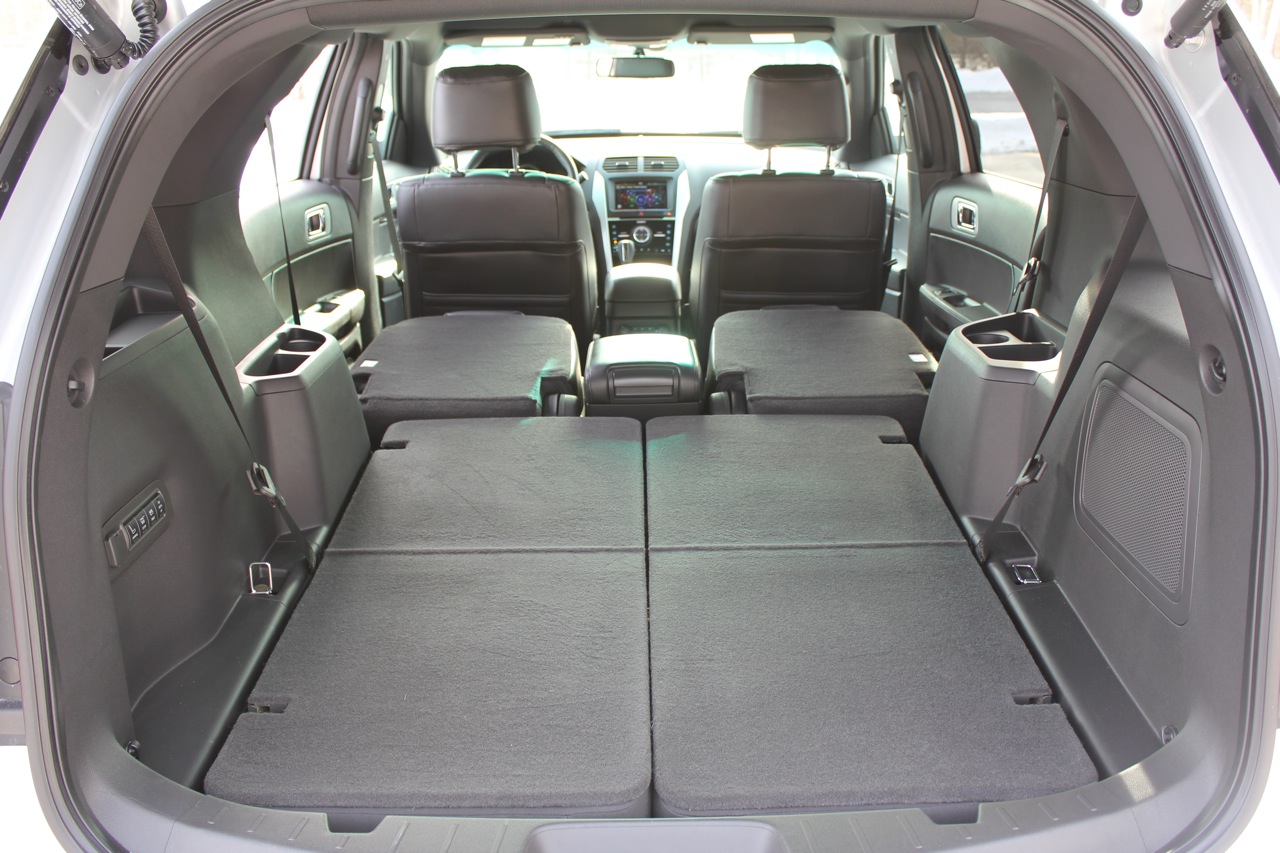
A complete cabin recast puts even greater emphasis on style and comfort thanks to upgraded materials, exceptional fit/finish, lots more soft-touch surfaces and enhanced trim elements. The new instrument package, MyFord Connect (base) or available MyFord Touch (XLT/Limited) systems, a media hub, four 12V powerpoints and multiple stow cubbies add to the ambiance while decently supportive front buckets team with an adult-friendly 60/40 second-row bench and an adult-accepting 50/50 third tier across the line. Popping the Explorer's one-piece liftgate facilitates easy access to its 15.7 cubic-foot cargo bay, which can be expanded to a maximum of 80.7 cubic-feet by folding down both rows of rear seats.
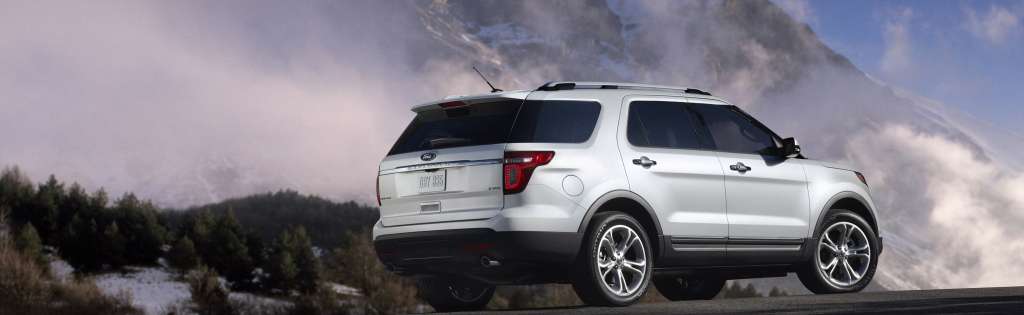
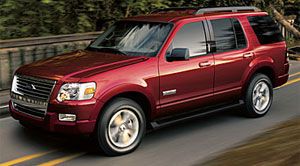
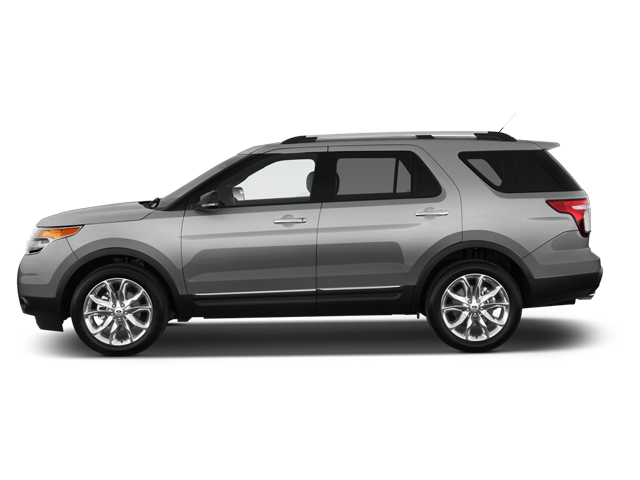
Although its overall shape and scale carry over, the fully restyled 2011 Ford Explorer boasts a cleaner and classier appearance – along with 12-percent better aerodynamics. Slightly longer and lower with a significantly wider track, it backs that more assertive stance with greater flair thanks to more prominent body sculpting complemented by a rakish C-pillar and drama-boosting blackout A-, B- and D-pillar treatments. Slicker front and rear fascias gain higher-profile headlamp and tail lamp fitments while smartly flared fenderwells on the base, XLT and Limited trims are filled by 245/65, 245/60 and 255/50 tires on 17-inch steel wheels, 18-inch aluminum rims and 20-inch alloys, respectively.
In addition to its 290-horsepower V6/six-speed automatic transmission, the base Explorer boasts numerous power assists, MyFord driver connectivlty, AM/FM/CD/MP3 audio with media hub, air conditioning, cruise control, tilt/telescoping steering column and more. The XLT adds interior/exterior trim embellishments, auto headlamps, fog lights, 18-inch wheels/tires, rearview camera with zoom function, premium cloth upholstery, SIRIUS Satellite Radio, SecuriCode keyless-entry pad and the SelectShift feature. Leather-upholstered, the Limited gets all that and the XLT's Driver Connect and Comfort Packages –plus a Sony premium audio system with HD Radio. Safety items include AdvanceTrak with Roll Stability Control and Curve Control, Hill Start Assist, antilock brakes, front/front-side/side-curtain airbags and a rollover sensor.
All Explorers offer four-wheel drive with multi-mode Terrain Management System and Hill Descent Control. Base model upgrades include SIRIUS Satellite Radio and a tow-prep package while XLT buyers can add the Driver Connect (MyFord Touch/SYNC, premium audio, dual-zone climate control and rear-view camera) and Comfort Packages (all that plus heated leather seats). The Limited's Luxury Seating Package (perforated leather, heated/cooled front buckets, power-folding third-row seat, power lift gate and voice-activated navigation system) is available with/without the 302A Group (Blind Spot Information System, adaptive cruise control, Auto Park, HID headlamps and rain-sensing wipers). Single XLT/Limited options include navigation, dual-panel power moonroof, power liftgate, inflatable second-row outboard seatbelts and the blind spot system.
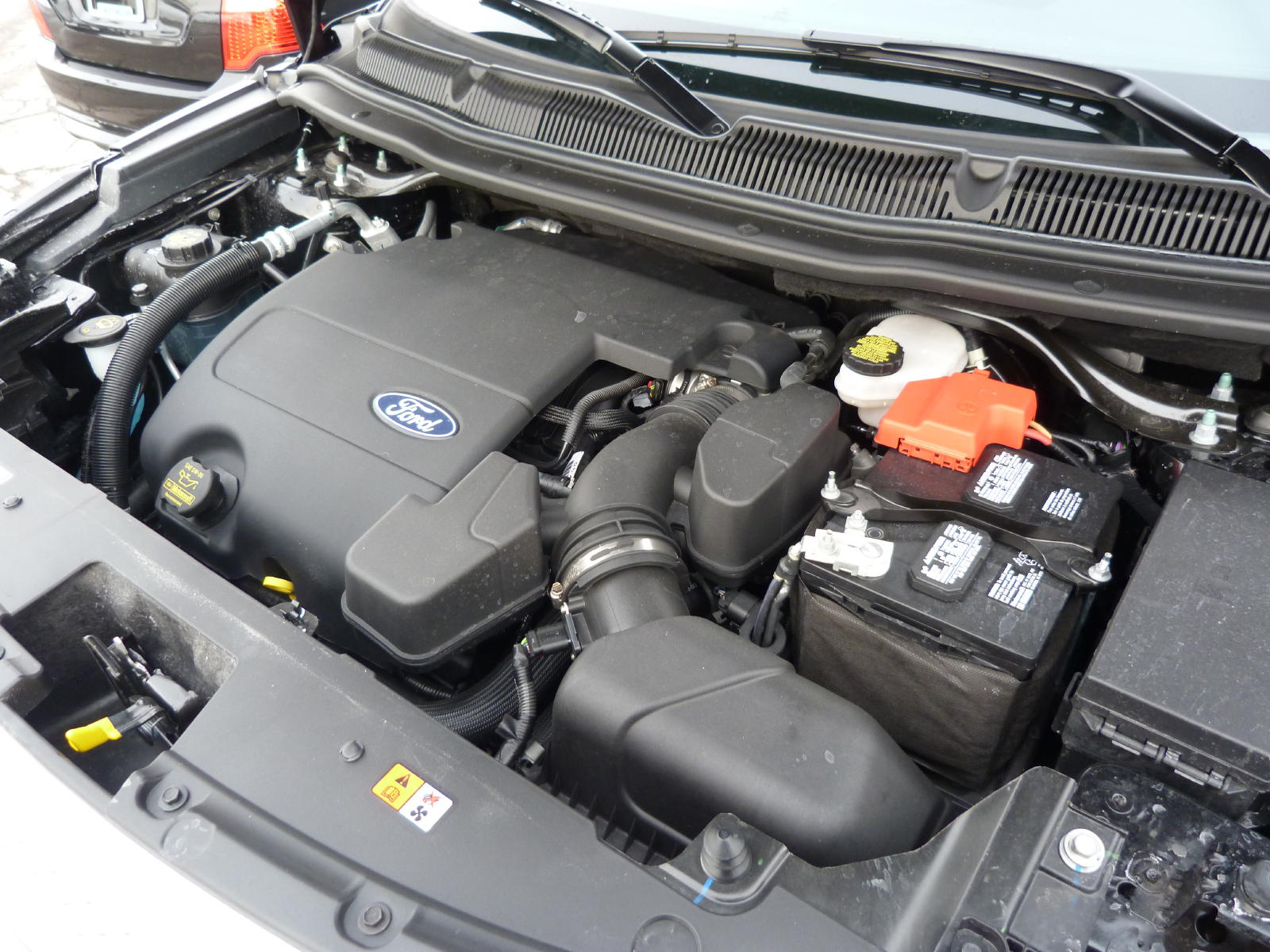
The 2011 Explorer's standard engine is Ford's high-tech 3.5-liter Ti-VCT (twin-independent variable camshaft timing) V6 that makes 290 horsepower and 255 pound-feet of torque. Despite 80 more ponies than the outgoing 4.0-liter six – and just two less than the 4.6-liter V8 – it's also 25 percent more fuel efficient. Backed by a six-speed automatic, it earns class-leading 17/25 mpg city/highway EPA numbers in front-drive Explorers and 17/23 mpg marks in the 4WD versions, serves up 60 mph in roughly 8.0 seconds and gives the Explorer a 5,000-pound max-tow rating. "Some time next year," Ford will offer an optional 2.0-liter EcoBoost four-cylinder that churns out 237 ponies and 250 pound-feet of twist. While limited to front-drive models, Ford anticipates this lighter-duty alternative will deliver 30-percent better fuel economy that the old V6. 3.5-liter naturally aspirated V6290 horsepower @ 6000 rpm255 lb-ft of torque @ 4000 rpmEPA city/highway fuel economy: 17/25 (FWD), 17/23 (4WD)
The Manufacturer's Suggested Retail Price (MSRP) on the 2011 Ford Explorer starts at just under $ 29,000 for a base model with an Explorer XLT opening near $ 32,000 and the top-line Explorer Limited commanding close to $ 38,000. Opting for four-wheel drive will add another $ 2,000, but even a fully-loaded base Explorer should still slip in below $ 35,000. Although more extensive personalization choices on the XLT and Limited can add $ 4,000-$ 5,000 to their bottom lines, they remain solid buys relative to their peers when new. Before you head to the dealership to sure to check the Fair Purchase Price on kbb.com to ensure that you're getting the best deal at your local Ford dealership. When it comes to resale, KBB projects they'll also retain better-than-average residual values over time.
2011 Ford Explorer Base V6 4WD Exterior Colors
2011 Ford Explorer Base V6 4WD Interior Colors
2011 Ford Explorer Engines
| Engine | Standard in Trim | Power | Torque | Fuel Consumption - City | Fuel Consumption - Highway | 0-100 km/h | Quarter Mile | Half Mile |
|---|
2011 Ford Explorer Trims
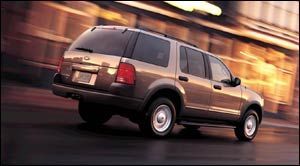
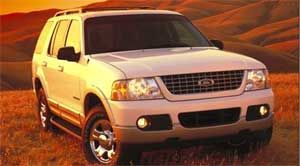
2011 Ford Explorer Previous Generations


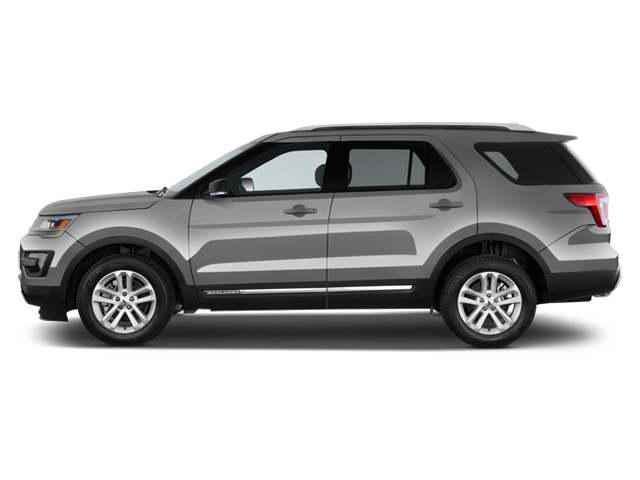
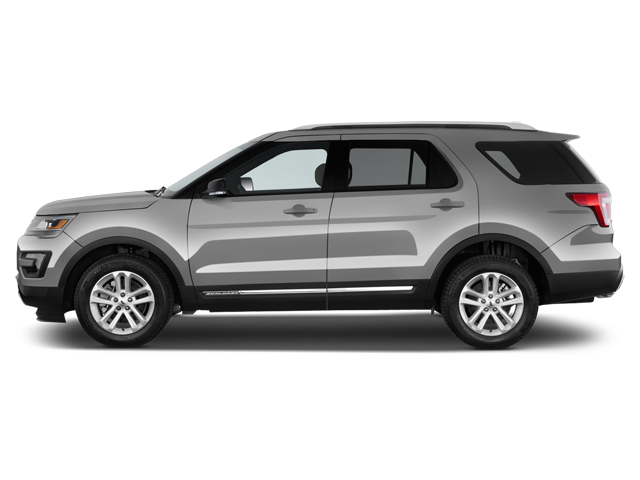
2011 Ford Explorer Future Generations

Ford Explorer Overview and History
He would later incorporate the firm on June 16, 1903. Ford Motor Company would go on and label their models chronologically in alfabetical order, starting with the Model A to the Model K and Model S, which was Ford's last right-hand steering vehicle. Then, in 1908 Ford introduced the Model T, which was designed by Childe Harold Wills and two Hungarian immigrants, Joseph A. Galamb and Eugene Farkas. This model proved to be of quintessential Ford vehicle, placing the company among the most influential automotive brands in history.
The Ford Model T was reliable, practical and affordable, which made it a big hit in the US, where it was advertised as the middle-class man's vehicle. The car's success compelled Ford to expand his business and layout the basics of mass production principles in 1913 with the introduction of the world's first vehicle assembly line. By 1912, production figures for the Model T alone reached nearly 200,000 units.
This organizational innovation brought in the vehicle construction field allowed Ford to reduce chassis assembly time by as much as 10 hours, dropping from 12 ½ h to 2h 40 min.
Besides ensuring the efficiency of the production process, Ford turned his company into an interactive entity by announcing a new profit-sharing policy. This would grant buyers a cut of profits if sales reached 300,000. As expected, sales effortlessly reached the 300k threshold and went even further to hit a record 501,000 in 1915.
As part of a new set of financial tactics, Ford provided working places for the disabled who otherwise had a hard time finding a job, reduced work shifts and doubled all employee's salaries. Changes like these sparked a tremendous sales increase while also setting the base of modern working conditions.
Still, the US and Canadian market would prove to be too small to fit Ford's plans. By the mid 20's, the Ford label had crossed the ocean and reached England, France, Germany, Denmark, Austria as well as distant Australia. The company's activity on European grounds further helped the brand's revenue growth.
War would not shake the Ford company as bad as other car makers. Post WWI improvements include the introduction of four-wheel brakes and a series of new vehicle releases to match new consumer demands. In 1922 Ford entered the luxury car segment with the acquisition of the Lincoln Motor Company, named after Abraham Lincoln whom Henry Ford admired.
Ford Motor Co. was one of the few big American corporations to survive the Great Depression, although the plummeting automotive sales led the company to scale down its operations and lay off many workers. In May 1929, Ford Motor Co. signed an agreement with the Soviet Union to provide technical assistance until 1938 to construct an integrated automobile-manufacturing plant at Nizhny Novgorod, in exchange for the Soviets purchasing $ 13 million worth of automobiles and parts. Under this agreement many American engineers and skilled auto workers went in 1932 to work on the Gorkovsky Avtomobilny Zavod (GAZ), or Gorki Automotive Plant. The few who remained in the Soviet Union after the completion of the plant fell victims to Stalin's Great Terror, ending either shot or exiled to Soviet gulags.
With the arrival of WWII Ford increased its influence on the global stage becoming an active player in the war effort, a thing underlined by US President Franklin Roosevelt referring to Detroit as the "Arsenal of Democracy." When the US War Department handed production of B-24 Liberator airplanes to Ford, the output rose to 20 airplanes per day instead of only one per day managed by the Consolidated Aircraft Corporation.
After WWII Ford continued its passenger vehicle operations and in 1955 introduced the iconic Thunderbird model. Then it introduced the Edsel brand in 1958, which proved to be a failure and was dissolved in 1960. Part Edsel's failure as an automotive brand resided in the onset of the 1957 recession in the States and the vehicle's high price tag.
Ford Motor Co. managed to get back up from its Edsel failure with the introduction of the Falcon model in 1960 and the Mustang in 1964. The company's next major step was represented by the formation of Ford Europe division in 1967.
Ford plunged into a state of brand-fatigue that would bring the company to the point of near bankruptcy. Following major sales losses in the 2000's, Ford was pinned against the wall by debts and the imminence of closing down.
Preferring to make it back on its own, Ford mortgaged all of its assets in 2006. As of then, the company has releases a variety of new models both under the Ford brand name and the rest of the sub-brands it owns such as fresher and edgier Mercuries and flashier Lincolns, Ford's luxury division. Business in Europe has also been good for Ford, especially after the introduction of the Focus model in 1997 and although it hasn't fully recovered, it's definitely on the way to regaining popularity.
2011 Ford Explorer Consumer Reviews
Compare Against Competitors



2011 Ford Explorer Base V6 4WD Specifications
Base V6 4WD Comfort and Convenience
| 3rd Row Reading Light | 3rd-row reading lights |
|---|---|
| AM/FM stereo radio | AM/FM stereo radio with auxiliary input jack |
| Air Conditionning | Air conditioning |
| Antenna | Roof-mounted antenna |
| Courtesy Dome Light | Courtesy lights with fade-out |
| Cruise Control | Yes |
| Driver Vanity Mirror | Driver-side vanity mirror |
| Engine Block Heater | Yes |
| Front Wipers | Intermittent speed-sensitive windshield wipers |
| Fuel Door Operation | Capless refuelling easy fuel |
| Illuminated Entry | Yes |
| Intelligent Key System | MyKey system |
| Interior Air Filter | Cabin air filter |
| Number of Speakers | 6 speakers |
| Passenger Vanity Mirror | Front passenger-side vanity mirror |
| Power Door Locks | Yes |
| Power Outlet | 4 12-volt power outlets |
| Power Windows | Power windows with driver one-touch down feature |
| Reading Light | Front and rear reading lights |
| Rear Heating | Rear-seat ventilation ducts |
| Rear View Mirror | Day/night rearview mirror |
| Rear Wipers | Rear window wiper |
| Remote Audio Controls | Steering wheel-mounted audio controls |
| Remote Keyless Entry | Yes |
| Single CD | CD/MP3 player |
| Special Feature (Option) | SIRIUS satellite radio (requires subscription) |
| Special Features | Grocery bag hooks in trunk |
| Steering Wheel Adjustment | Tilt and telescopic steering wheel |
| Trunk/Hatch Operation | Power-opening tailgate |
Base V6 4WD Dimensions
| Cargo Capacity | 595 L |
|---|---|
| Fuel Tank Capacity | 70 L |
| Gross Vehicle Weight | 2794 kg |
| Height | 1788 mm |
| Length | 5006 mm |
| Max Trailer Weight | 907 kg |
| Maximum Cargo Capacity | 2285 L |
| Wheelbase | 2860 mm |
| Width | 2291 mm |
Base V6 4WD Exterior Details
| Bumper Colour | Body-color bumpers |
|---|---|
| Door Handles | Black door handles |
| Driving Lights | Daytime running lights |
| Exterior Decoration | Chrome exhaust tip |
| Exterior Folding Mirrors | Folding outside mirrors |
| Exterior Mirror Colour | Black outside mirrors |
| Grille | Foundry Grey Painted Grille |
| Headlight Type | Halogen headlights |
| Power Exterior Mirrors | Power-adjustable outside mirrors |
| Privacy Glass | Rear privacy glass |
| Rear Spoiler | Body-color rear spoiler |
| Rear Window Defroster | Yes |
| Roof Rack | Black Roof rails |
| Side-Body Trim | Black side mouldings |
| Tinted Glass | Solar tinted glass |
Base V6 4WD Interior Details
| Driver Info Center | MyFord Driver information center |
|---|---|
| Floor Console | Yes |
| Floor Covering | Carpet floor covering |
| Floor Mats | Front and rear floor mats |
| Floor Mats (Option) | Front and rear all-season floor mats |
| Folding 3rd Row Seats | 50/50-split folding 3rd-row bench seat |
| Folding Rear Seats | 60/40-split folding 2nd-row bench seat |
| Front Center Armrest | Front center armrest with storage |
| Front Seats Driver Lombar | Driver's seat lumbar support |
| Front Seats Driver Power Seats | 6-way power driver's seat |
| Front Seats Front Seat Type | Bucket front seats |
| Front Seats Passenger Power Seats | 2-way manual front passenger seat |
| Instrumentation Type | Analog instrumentation |
| Overhead Console | Overhead console with sunglasses holder |
| Seat Trim | Cloth seats |
| Special Feature | Scuff Plates |
| Tachometer | Yes |
Base V6 4WD Mechanical
| Drive Train | 4-wheel drive |
|---|---|
| Engine Name | 3.5L V6 DOHC 24-valve |
| Stability Control | Yes |
| Traction Control | Yes |
| Transmission | 6-speed automatic transmission |
| Transmission (Option) | SelecShift 6-speed automatic transmission |
Base V6 4WD Overview
| Body | Sport Utility |
|---|---|
| Doors | 5 |
| Engine | 3.5L V6 DOHC 24-valve |
| Fuel Consumption | 11.9 (Automatic City)8.0 (Automatic Highway) |
| Power | 290 hp @ 6500 rpm |
| Seats | 7 |
| Transmission | 6-speed automatic transmission |
| Warranties | Bumper-to-Bumper60000/km, 36/Months Powertrain100000/km, 60/Months Roadside Assistance100000/km, 60/Months Rust-throughUnlimited/km, 60/Months |
Base V6 4WD Safety
| Anti-Lock Brakes | Anti-lock brakes |
|---|---|
| Brake Type | 4-wheel disc |
| Child Seat Anchor | LATCH child seat anchors |
| Driver Airbag | Driver-side front airbag |
| Front Seat Belts | Height adjustable |
| Hill Start Assist | Hill start assist system |
| Ignition Disable | SecuriLock Theft-deterrent engine immobilizer |
| Parking Distance Sensor | Reverse sensing system |
| Passenger Airbag | Passenger-side front airbag |
| Side Airbag | Front side airbags |
Base V6 4WD Suspension and Steering
| Front Suspension | Independent front suspension |
|---|---|
| Front Tires | 245/65R17 |
| Power Steering | Electric-assist power rack-and-pinion steering |
| Rear Suspension | Independent rear suspension |
| Spare Tire | Compact spare tire |
| Tire Pressure Monitoring System | Yes |
| Wheel Type | 17'' steel wheels with covers |
Discussion and Comments
Share Your Comments