2006 Saturn ION 3 0-60 Times, Top Speed, Specs, Quarter Mile, and Wallpapers
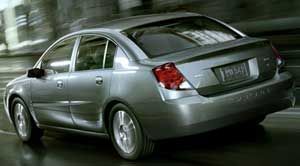
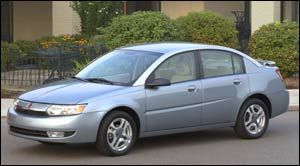
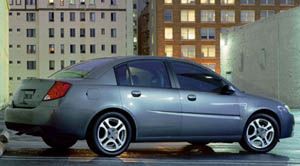
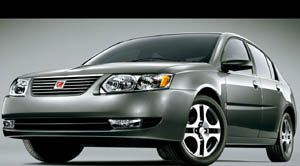
The 2006 Saturn ION 3 is a Front-wheel drive Sedan. It can accommodate up to 5 passengers. It has 4 Doors and is powered by a 2.4L L4 DOHC 16 valves engine which outputs 170 hp @ 6200 rpm and is paired with 4 speed automatic transmission gearbox. The 2006 Saturn ION 3 has cargo capacity of 416 Liters and the vehicle weighs 1221 kg. In terms of ride assists, the 2006 Saturn ION 3 has stability control and traction control in addition to anti-lock brake system (ABS). The vehicle has an optional engine as well It offers and. Safety features also include Driver side front airbag and Passenger side front airbag. The front suspension is Front independent suspension while the rear suspension is Rearsemi-independent suspension. The car also features a It has 16'' alloy wheels as standard. Electronic features include Cruise Control. For convenience, the car has Power windows and Power door locks. There is also a remote keyless entry feature. Moreover, the car has. The steering wheel has audio control buttons. In terms of performance, the car has 186 N.m of torque and a top speed of 203 km/h. The 2006 Saturn ION 3 accelerates from zero to 60 mph in 7.9 seconds and hits quarter mile at 15.6 seconds. Fuel consumption is 9.3 L/100km in the city and 6.6 L/100km in the highway. The car price starts at $ 18,945
| Name | 3 | |
|---|---|---|
| Price | $ 18,945 | |
| Body | Sedan | |
| Doors | 4 Doors | |
| Engine | 2.4L L4 DOHC 16 valves | |
| Power | 170 hp @ 6200 rpm | |
| Number of Seats | 5 Seats | |
| Transmission | 4 speed automatic transmission | |
| Cargo Space | 416.0 L | |
| Maximum Cargo Space | 416.0 L | |
| Wheel Type | 16'' alloy wheels | |
| Series | ION | |
| Drivetrain | Front-wheel drive | |
| Horsepower | 170 HP | |
| Torque | 186 N.m | |
| Top Speed | 203 km/h | |
| Acceleration 0-100 km/h (0-60 mph) | 7.9 s | |
| Fuel Type | Petrol (Gasoline) | |
| Fuel Consumption (City) | 9.3 L/100km | |
| Fuel Consumption (Highway) | 6.6 L/100km | |
| Gear Type | auto | |
| Weight | 1,221 KG | |
| Brand | Saturn | |
| Model | ION | |
| 0-400m (Quarter Mile) | 15.6 s | |
| 0-400m (Quarter Mile) - Speed | 147.4 km/h | |
| 0-800m (Half Mile) | 25.9 s | |
| 0-800m (Half Mile) - Speed | 165.8 km/h | |
| Modifications (MODS) | ||
| Modifications Cost | $ 0 |
2006 Saturn ion 2.2 40-100 pull
2006 Saturn Ion 2.2 0-60
2006 Saturn ION Used Price Estimates
Estimates based on a driving average of 12,000 miles per year| Used Condition | Trade In Price | Private Party Price | Dealer Retail Price |
|---|---|---|---|
| Outstanding | $ 1,383 | $ 1,880 | $ 2,170 |
| Clean | $ 1,254 | $ 1,707 | $ 1,966 |
| Average | $ 997 | $ 1,360 | $ 1,557 |
| Rough | $ 739 | $ 1,014 | $ 1,148 |
With its solid performance and affordable pricing, the 2006 Saturn Ion is worth a look if you're shopping for an economy sedan or coupe. Bear in mind, though, that newer peers are more refined and more fun to drive.
A replacement for the aged S-Series, the Saturn Ion arrived as a new model in 2003. It's built on GM's "Delta" vehicle platform, which is shared with the Cobalt. Compared to the S-Series, the Saturn Ion benefits from its increased structural stiffness, an ability to accommodate multiple engine/transmission combinations and a larger overall size. Styling is increasingly important in this vehicle class as manufacturers court younger buyers, so Saturn engineers came up with a few innovative tricks to catch the attention of potential buyers. Interchangeable trim panels that reside along the exterior roofline and around the instrument cluster allow owners to quickly and easily transform the look of their Ion to suit their mood. Ion "coupes" actually have four doors -- two traditional openings in front and a set of rear-hinged doors for easier access to the rear seats. Both the sedan and coupe offer spacious cabins and one of the largest trunks in the class at 14.7 cubic feet. Unfortunately, as roomy as the cabin feels from the front seats, legroom is pretty tight in the backseat. A center-mounted instrument cluster gives the interior a unique look as well as offers more room for the driver to adjust the steering wheel, but in terms of functionality we prefer the "old-fashioned" location -- in front of the driver. Like other Saturn cars, the Ion offers buyers the no-hassle buying experience, a pull so strong it keeps almost half of all previous Saturn customers coming back. And in a society that seems to have forgotten about the idea of customer service, not having to dread each trip to the dealer is a feature no army of engineers could have possibly tackled.

Unfortunately, the Ion hasn't turned out to be the slam-dunk Saturn had hoped for. The car suffered from too much engine noise and vibration, a poorly calibrated electric power steering system, cheap interior materials and uncomfortable seating. Interestingly, Saturn listened to the complaints and did something about it. Most dramatic were the changes for 2005, which the front and rear seats were redesigned for long-haul comfort and interior materials were upgraded. Additionally, the Saturn Ion was fitted with noise-dampening steel for the dash and plenum, an acoustic cover for the engine, and a new exhaust down pipe to reduce noise and vibration. Finally, engineers retuned the electric steering for better feel and did some work on the car's suspension.
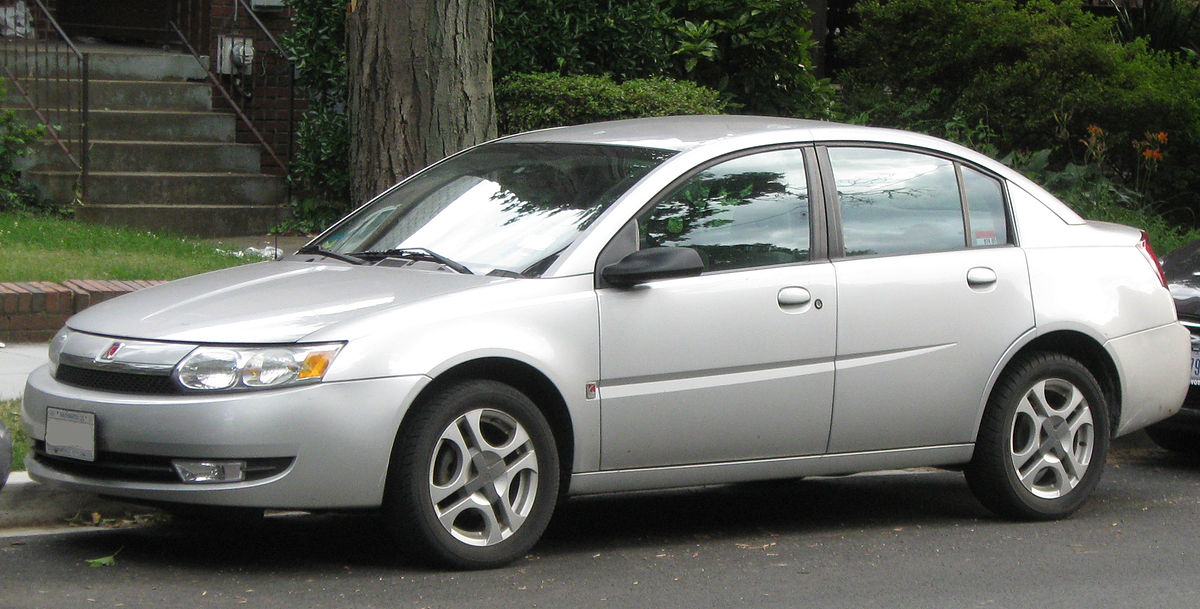
As a result, the 2006 Saturn Ion is now up to par in most areas, and it's worth a look if you're shopping for a budget sedan or coupe, particularly if a low out-the-door price is your main priority. Unfortunately, competitors like the Spectra, Mazda3, tC and Civic keep raising the bar even higher when it comes to value, performance, features and refinement, so you'd be wise to explore your options before buying one of these Saturn cars.
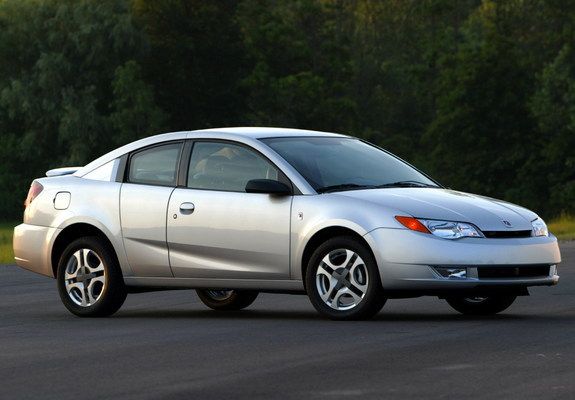
The Saturn Ion is available in two body styles: a regular sedan and "quad coupe" that combines coupelike styling with dual rear-access doors. The sedan and quad coupe are available in two numerical trim levels -- 2 and 3. The Ion 2 includes basic comfort options like power locks, OnStar and a CD player. Add the Preferred package to get power windows and mirrors, cruise control, a driver-seat height adjuster and keyless entry. The Ion 3 takes a sportier step forward adding 16-inch alloy wheels, air conditioning, full power accessories and an anti-theft system. The Enhanced Performance package includes a more powerful engine, sport-tuned suspension, antilock brakes and traction control.
Both the sedan and coupe feature a standard 2.2-liter, four-cylinder engine rated for 140 horsepower and 145 pound-feet of torque. A 2.4-liter four-cylinder with 170 hp and 162 lb-ft of torque is included in the Enhanced Performance package. Both Saturn Ion models come standard with a five-speed manual transmission, with a four-speed automatic available as an option.
Antilock brakes with traction control are optional, as is a side curtain airbag system that unfolds from the roof rail to provide head protection for both front and rear outboard occupants. GM's OnStar communication system, which can summon aid automatically if the airbags deploy, is standard on all models. In government crash testing, both the coupe and sedan earned a perfect five stars for driver and front-passenger protection in frontal impacts. In side-impact testing, an Ion sedan without side curtain airbags earned three stars for the protection of front occupants and four stars for the rear; the coupe received four stars across the board. In IIHS testing, the Saturn Ion earned an "Acceptable" rating (second highest) for frontal-offset crash safety and a "Poor" rating for side-impact protection, even with the optional airbags.
The engine provides adequate, if not entirely refined, power throughout the rev range. The four-speed automatic transmission is responsive, but the manual box is still a little rough through the gates. Built on a completely different platform than its S-Series predecessor, the 2006 Saturn Ion displays commendable ride and handling characteristics. It's soft enough to soak up rough roads, yet it still handles itself well in tight turns and freeway off-ramps. We've previously criticized the Ion's steering, which never seemed to provide the right amount of power assist, but recent revisions have yielded much improved road feel.
The speedometer and other related instruments are housed in a center-mounted pod, freeing up space in front of the driver for better sight lines and more steering wheel adjustability. Nevertheless, this unusual layout of the Saturn Ion takes some getting used to. The quad coupe's additional dual rear-access doors open rearward to make it easier for rear passengers to get in and out. Unfortunately, rear legroom is tight in both the coupe and sedan, so passengers aren't likely to be happy back there for long.
2006 Saturn ION 3 Exterior Colors
2006 Saturn ION 3 Interior Colors
2006 Saturn ION Engines
| Engine | Standard in Trim | Power | Torque | Fuel Consumption - City | Fuel Consumption - Highway | 0-100 km/h | Quarter Mile | Half Mile |
|---|---|---|---|---|---|---|---|---|
| 2.0L L4 DOHC 16-valve Supercharged | Red Line | 205 hp @ 5600 rpm | 186 N.m | 10.5 L/100km | 7.1 L/100km | 7.5 s | 15.2 s | 25.2 s |
| 2.0L L4 DOHC 16-valve Supercharged | Red Line | 205 hp @ 5600 rpm | 186 N.m | 10.2 L/100km | 7.4 L/100km | 7.5 s | 15.2 s | 25.2 s |
| 2.0L L4 DOHC 16 valves Supercharged | Red Line | 205 hp @ 5600 rpm | 186 N.m | 10.2 L/100km | 7.4 L/100km | 7.5 s | 15.2 s | 25.2 s |
| 2.0L L4 DOHC 16 valves Supercharged | Red Line | 205 hp @ 5600 rpm | 186 N.m | 8.1 L/100km | 6.3 L/100km | 7.5 s | 15.2 s | 25.2 s |
| 2.4L L4 DOHC 16-valve | 3 | 170 hp @ 6200 rpm | 186 N.m | 9.3 L/100km | 6.7 L/100km | 7.9 s | 15.6 s | 25.9 s |
| 2.4L L4 DOHC 16-valve | 3 | 170 hp @ 6200 rpm | 186 N.m | 9.4 L/100km | 6.7 L/100km | 8.6 s | 16.2 s | 26.9 s |
| 2.4L L4 DOHC 16 valves | 3 | 170 hp @ 6200 rpm | 186 N.m | 9.3 L/100km | 6.6 L/100km | 7.9 s | 15.6 s | 25.9 s |
| 2.4L L4 DOHC 16 valves | 3 | 170 hp @ 6200 rpm | 186 N.m | 9.3 L/100km | 6.6 L/100km | 8.6 s | 16.2 s | 26.9 s |
| 2.2L L4 DOHC 16-valve | 2 Midlevel | 140 hp @ 5800 rpm | 186 N.m | 9.6 L/100km | 6.6 L/100km | 9.2 s | 16.7 s | 27.6 s |
| 2.2L L4 DOHC 16-valve | 2 Midlevel | 140 hp @ 5800 rpm | 186 N.m | 9.6 L/100km | 6.6 L/100km | 9.9 s | 17.3 s | 28.7 s |
2006 Saturn ION Trims
2006 Saturn ION Previous Generations
2006 Saturn ION Future Generations
Saturn ION Overview and History
An interesting fact is represented by the number who started out this company: 99 people from all backgrounds: design, production, marketing etc. known from that day on as “the 99”. OK, they started out as 100, but one of them dropped early on hence the 99.
Production of Saturn cars began in the early 90s and the purpose from the get-go was to emulate foreign marketing strategies such as the Japanese ones in order to put up a fight on the American market. Such strategies included better quality control which translated into better reliability of the finished product and more control for the workers in the plant.
Soon after the first cars hit the streets of America, favorable reviews start pouring in. Sales go well as Saturn cars start earning one award after another. In 1993, Saturn reported it's first profitable year and everything seemed to be going well for the small GM-owned brand. By 1995 they had made their first million cars. A unique feature on Saturn cars in the beginning were dent-proof body panels (Z-Body) but after 2000, they were slowly put out of production.
Also after 2000 GM starting taking a more active interest in Saturn as a company and interfered with its line-up and general policies. Today, most models in the Saturn line-up are copied after Opel cars, just like Vauxhalls are in the UK.
Starting with 2003, sales for Saturns began to dwindle which forced GM to retire several models like the L- series and the Ion. Latest reports say that GM is now looking to sell or even shut down Saturn in order to alleviate the financial pressure it's under at the moment.
2006 Saturn ION Consumer Reviews
Compare Against Competitors
2006 Saturn ION 3 Specifications
3 Comfort and Convenience
| AM/FM stereo radio | Yes |
|---|---|
| AM/FM stereo radio (Option) | Advance audio system with 160 Watt amplifier and 6 premium speakers |
| Air Conditionning | Manual air conditioning |
| Antenna | Fixed antena |
| Communication System (Option) | OnStar communication system |
| Cruise Control | Yes |
| Driver Vanity Mirror | Yes |
| Front Wipers | Intermittent wipers |
| Illuminated Entry | Yes |
| Interior Air Filter | Dust and pollen air filter |
| Number of Speakers | 4 speakers |
| Passenger Vanity Mirror | Yes |
| Power Door Locks | Yes |
| Power Outlet | 2 power outlets |
| Power Windows | Yes |
| Reading Light (Option) | Front map lights |
| Rear Heating | Rear heater ducts |
| Rear View Mirror | Day/night rear view mirror |
| Rear View Mirror (Option) | Autodimming interior mirror |
| Remote Keyless Entry | Yes |
| Single CD | CD/MP3 player |
| Single CD (Option) | In-dash 6 CD/MP3 changer |
| Steering Wheel Adjustment | Tilt steering wheel |
| Trunk Light | Yes |
| Trunk/Hatch Operation | Remote trunk release |
3 Dimensions
| Cargo Capacity | 416 L |
|---|---|
| Curb Weight | 1221 kg |
| Front Headroom | 1016 mm |
| Front Legroom | 1072 mm |
| Fuel Tank Capacity | 49.2 L |
| Height | 1458 mm |
| Length | 4686 mm |
| Max Trailer Weight | 454 kg |
| Rear Headroom | 940 mm |
| Rear Legroom | 845 mm |
| Wheelbase | 2621 mm |
| Width | 1707 mm |
3 Exterior Details
| Bumper Colour | Body-color bumpers |
|---|---|
| Door Handles | Body-color door handles |
| Exterior Mirror Colour | Black exterior mirrors |
| Front Fog Lights | Front fog lamps |
| Grille | Chrome grille |
| Headlight Type | Halogen headlamps |
| Headlights Sensor With Auto On | Auto-on headlamps |
| Power Exterior Mirrors | Yes |
| Rear Spoiler | Rear decklid spoiler |
| Rear Spoiler (Option) | Delete rear decklid spoiler |
| Sunroof (Option) | Power tilting and sliding glass sunroof |
| Tinted Glass | Yes |
3 Interior Details
| Clock | Digital clock |
|---|---|
| Compass (Option) | Yes |
| Door Trim | Cloth door trim |
| Floor Console | Yes |
| Floor Covering | Carpet floor covering |
| Floor Mats | Front and rear floor mats |
| Folding Rear Seats | 60/40 rear split folding bench |
| Front Center Armrest | Front armrest with storage |
| Front Seats Driver Lombar | Driver seat with manual support |
| Front Seats Front Seat Type | Front bucket seats |
| Headliner | Cloth headliner |
| Instrumentation Type | Analog instrumentation |
| Number of Cup Holders | 2 cup holders |
| Outside Temperature Gauge (Option) | Outside temperature display |
| Seat Trim | Cloth seats |
| Seat Trim (Option) | Leather seats |
| Tachometer | Yes |
3 Mechanical
| Drive Train | Front-wheel drive |
|---|---|
| Engine Name | 2.4L L4 DOHC 16 valves |
| Traction Control | Yes |
| Transmission | 5 speed manual transmission |
| Transmission (Option) | 4 speed automatic transmission |
3 Overview
| Body | Sedan |
|---|---|
| Doors | 4 |
| Engine | 2.4L L4 DOHC 16 valves |
| Fuel Consumption | 9.3 (Automatic City)6.6 (Automatic Highway)9.4 (Manual City)6.3 (Manual Highway) |
| Power | 170 hp @ 6200 rpm |
| Seats | 5 |
| Transmission | 4 speed automatic transmission |
| Warranties | Bumper-to-Bumper60000/km, 36/Months Powertrain100000/km, 60/Months Roadside Assistance60000/km, 36/Months Rust-through160000/km, 72/Months |
3 Safety
| Anti-Lock Brakes | Anti-lock brakes |
|---|---|
| Anti-Theft Alarm | Alarm system |
| Brake Type | Front disc/rear drum |
| Child Seat Anchor | None |
| Child-proof Locks | None |
| Driver Airbag | Driver side front airbag |
| Front Seat Belts | Height adjustable, pre-tensioner |
| Ignition Disable | None |
| Panic Alarm | Panic alarm |
| Passenger Airbag | Passenger side front airbag |
| Rear Seat Belts | Center 3-point |
| Roof Side Curtain | Roof mounted side head curtain airbags |
3 Suspension and Steering
| Front Anti-Roll Bar | Front stabilizer bar |
|---|---|
| Front Suspension | Front independent suspension |
| Front Tires | P205/55R16 |
| Power Steering | Electrical power assited rack-and-pinion steering |
| Rear Anti-Roll Bar | Rear stabilizer bar |
| Rear Suspension | Rearsemi-independent suspension |
| Spare Tire | Compact spare tire |
| Suspension Category | Sport suspension |
| Wheel Type | 16'' alloy wheels |
Discussion and Comments
Share Your Comments