2002 Lamborghini Murciélago Base 0-60 Times, Top Speed, Specs, Quarter Mile, and Wallpapers

The 2002 Lamborghini Murciélago Base is a All-wheel drive Coupe. It can accommodate up to 2 passengers. It has 2 Doors and is powered by a 6.2L V12 DOHC 48 valves engine which outputs 580 hp @ 7500 rpm and is paired with 6 speed automatic gearbox. The 2002 Lamborghini Murciélago Base has cargo capacity of Liters and the vehicle weighs 1650 kg. In terms of ride assists, the 2002 Lamborghini Murciélago Base has stability control and traction control in addition to anti-lock brake system (ABS). The vehicle has an optional engine as well It offers and. Safety features also include None and None. The front suspension is while the rear suspension is. The car also features a It has as standard. Electronic features include Cruise Control. For convenience, the car has Power windows and Power door locks. There is also a remote keyless entry feature. Moreover, the car has. The steering wheel has audio control buttons. In terms of performance, the car has 634 N.m of torque and a top speed of 306 km/h. The 2002 Lamborghini Murciélago Base accelerates from zero to 60 mph in 3.7 seconds and hits quarter mile at 10.2 seconds. Fuel consumption is 32.6 L/100km in the city and 15.1 L/100km in the highway. The car price starts at $ 374,000
| Name | Base | |
|---|---|---|
| Price | $ 374,000 | |
| Body | Coupe | |
| Doors | 2 Doors | |
| Engine | 6.2L V12 DOHC 48 valves | |
| Power | 580 hp @ 7500 rpm | |
| Number of Seats | 2 Seats | |
| Transmission | 6 speed automatic | |
| Cargo Space | L | |
| Maximum Cargo Space | L | |
| Wheel Type | ||
| Series | Murcielago | |
| Drivetrain | All-wheel drive | |
| Horsepower | 580 HP | |
| Torque | 634 N.m | |
| Top Speed | 306 km/h | |
| Acceleration 0-100 km/h (0-60 mph) | 3.7 s | |
| Fuel Type | Petrol (Gasoline) | |
| Fuel Consumption (City) | 32.6 L/100km | |
| Fuel Consumption (Highway) | 15.1 L/100km | |
| Gear Type | manual | |
| Weight | 1,650 KG | |
| Brand | Lamborghini | |
| Model | Murciélago | |
| 0-400m (Quarter Mile) | 10.2 s | |
| 0-400m (Quarter Mile) - Speed | 200.5 km/h | |
| 0-800m (Half Mile) | 19.0 s | |
| 0-800m (Half Mile) - Speed | 225.8 km/h | |
| Modifications (MODS) | ||
| Modifications Cost | $ 0 |
2002 Lamborghini Murciélago Used Price Estimates
Estimates based on a driving average of 12,000 miles per year| Used Condition | Trade In Price | Private Party Price | Dealer Retail Price |
|---|
Although we were worried that Audi's adoption of Lamborghini would dilute the Italian supercar's pizzazz, it has actually resulted in a much improved road burner that sports cleaner styling, more sensible ergonomics and better all-around performance.
Once again, Lamborghini changes hands. Formerly owned by Chrysler and later an Indonesian company named Megatech, the Italian exotic car company is now owned by Audi. And along with this new parent comes a new child, a high-strung yet well-mannered bambino called Murcielago. As with some past Lambos, this car gets its name from a legendary fighting bull, in this case, one whose life was spared because of the extraordinary courage he displayed while in the ring.
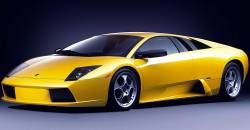
Not one to mess with tradizione, the Murcielago keeps the mid-mounted V12 architecture of its predecessors: the Diablo, Countach and Miura. With an increase of 0.2 liters over the Diablo's V12 and a gaggle of high-tech engineering features, such as variable valve timing and variable intake manifold volume, the mighty 12 now makes 572 horsepower and 479 pound-feet of torque. Redline is set at 7,500 rpm, making for a scintillating soundtrack when conditions allow.
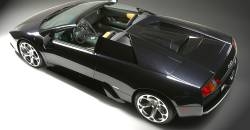
As with the Diablo VT, the Murcielago sends this stampede to all four wheels, (70 percent to the rear and 30 percent to the front) although it is now done via a six-speed gearbox that replaces the former five-cog unit. Charged with getting the power to the pavement are 18-inch wheels that wear Pirelli P-Zeros measuring 245/35 front and 335/30 rear. An electronically controlled suspension, traction control and massive antilock disc brakes do their part to keep things under control.
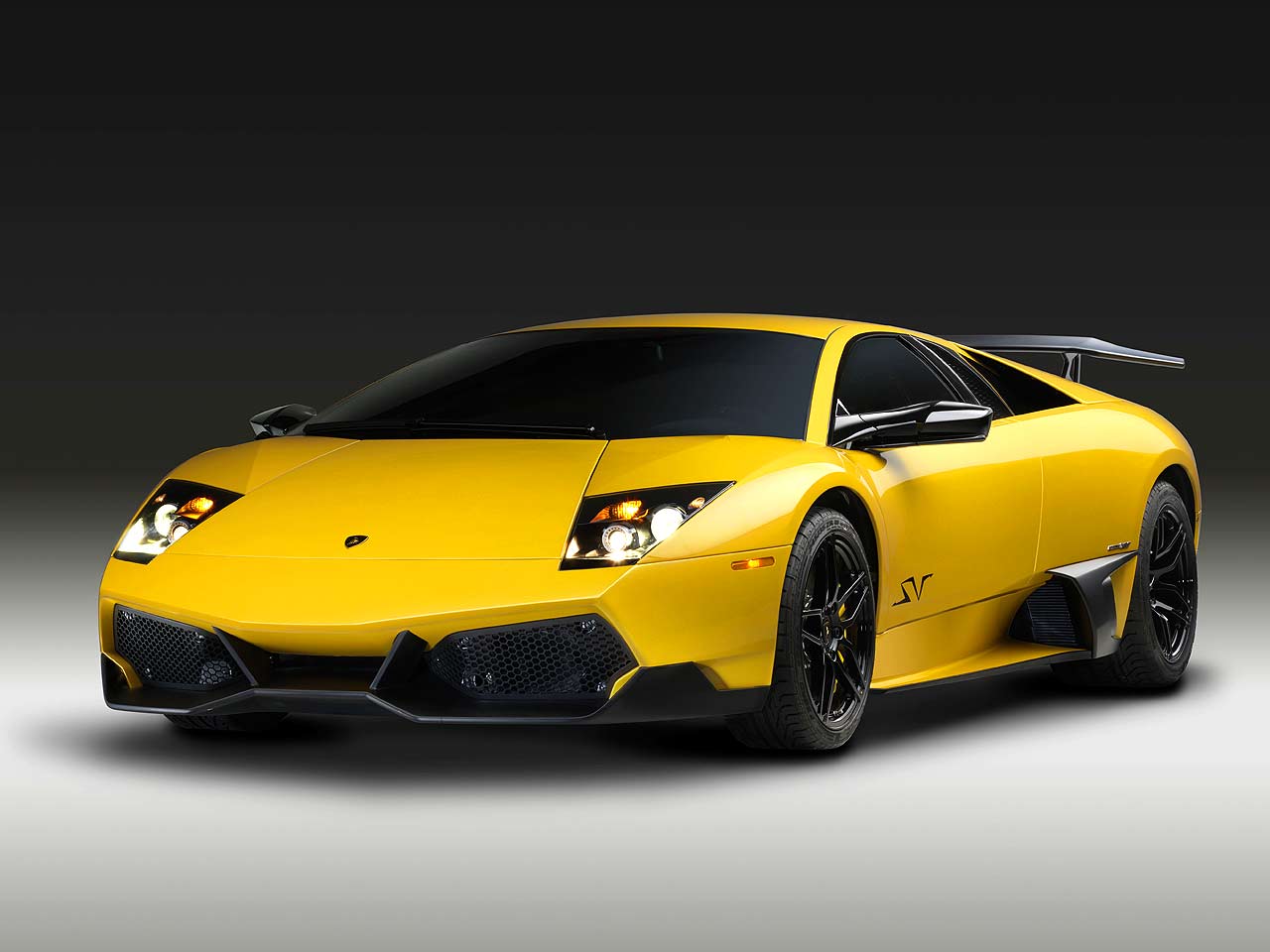
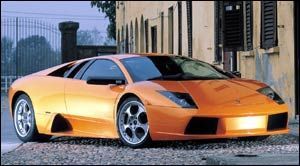
A smoother skin, comprised chiefly of carbon fiber, covers all that muscle, presenting a more balanced and cleaner look than the Diablo. Air scoops located behind the side windows are invisible as they lie flush with the body until more cooling is needed, at which point they automatically pivot open to feed more air to the beast. Likewise, a rear spoiler hides within the rear deck, ready to flip up 50 degrees when the Lambo's velocity exceeds 81 mph. When this land-locked missile passes the 137 mph mark, the spoiler increases its angle of attack to 70 degrees in order to supply more downforce, and hence, greater stability. Even the more mundane aspect of parking has been considered, as the Murcielago has the ability to raise its front suspension 45mm so as to avoid scraping its (normally) low-slung chin on driveway aprons and the like.
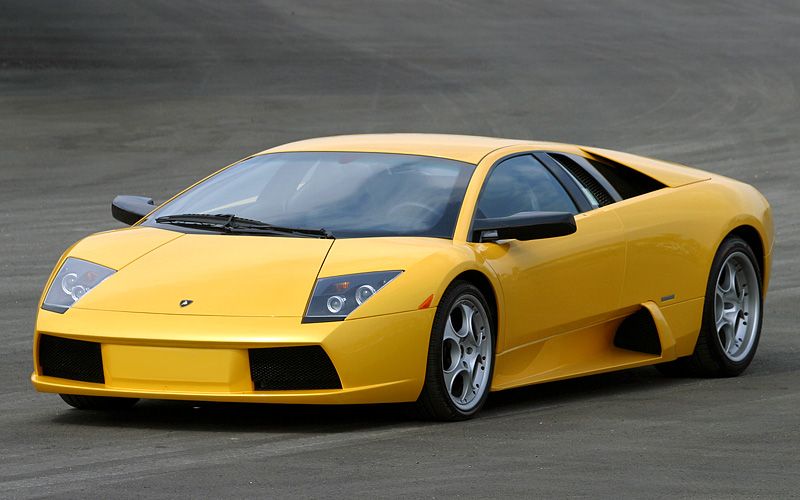
Audi's biggest influence has been on the interior. It is much improved over the Diablo's, designed for more comfort and efficiency. The seats offer more support, the footwells won't cramp your Nikes and the controls are more intuitive -- all good ideas considering that distractions could be dangerous in a car that can move as quickly as this one.
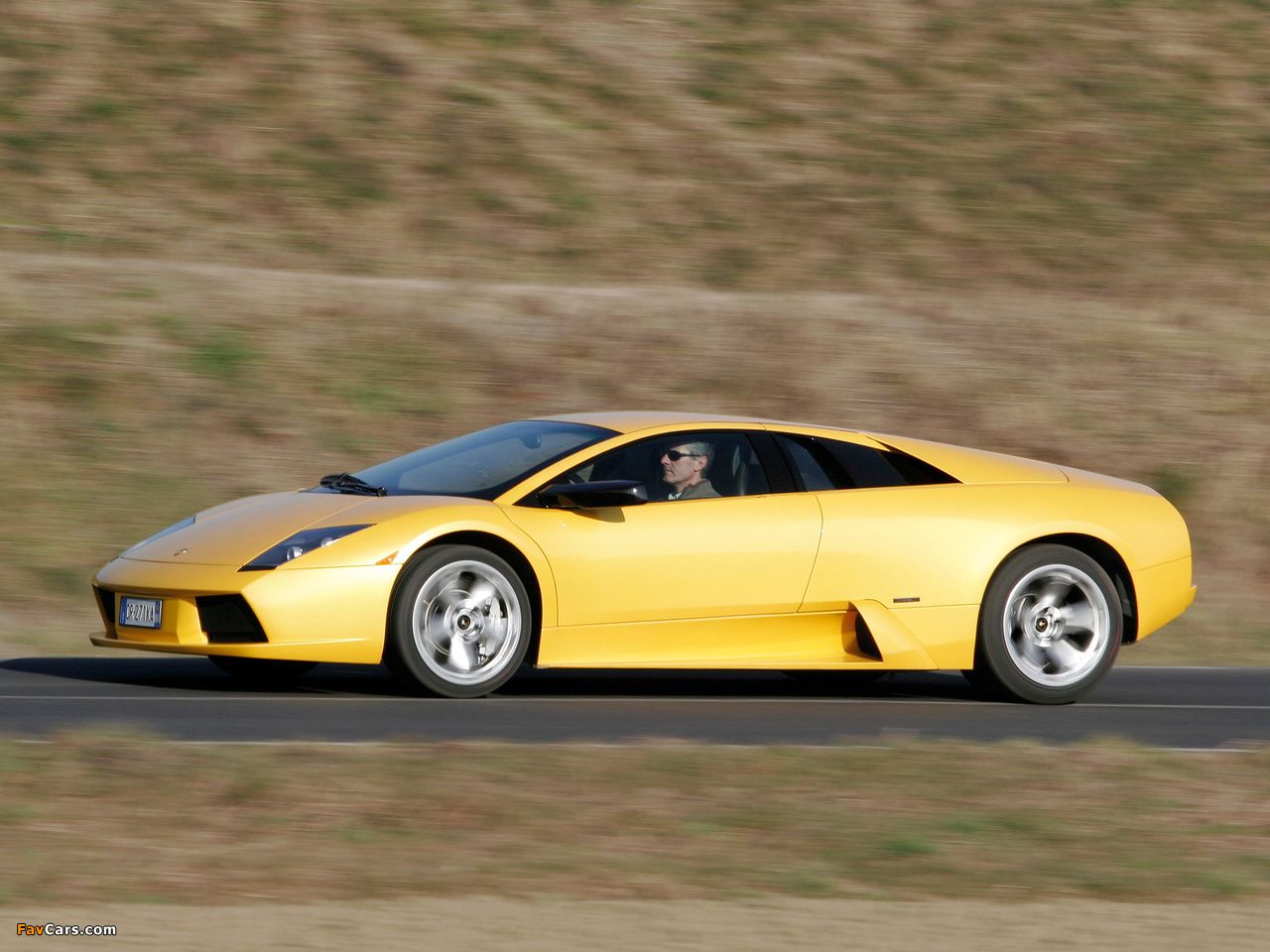
To answer the burning questions of "how much?" "how quick?" and "how fast?" we offer the following numbers: $ 273,000, under 4 seconds from 0 to 60 mph and around 205 mph. All but the first one work for us.
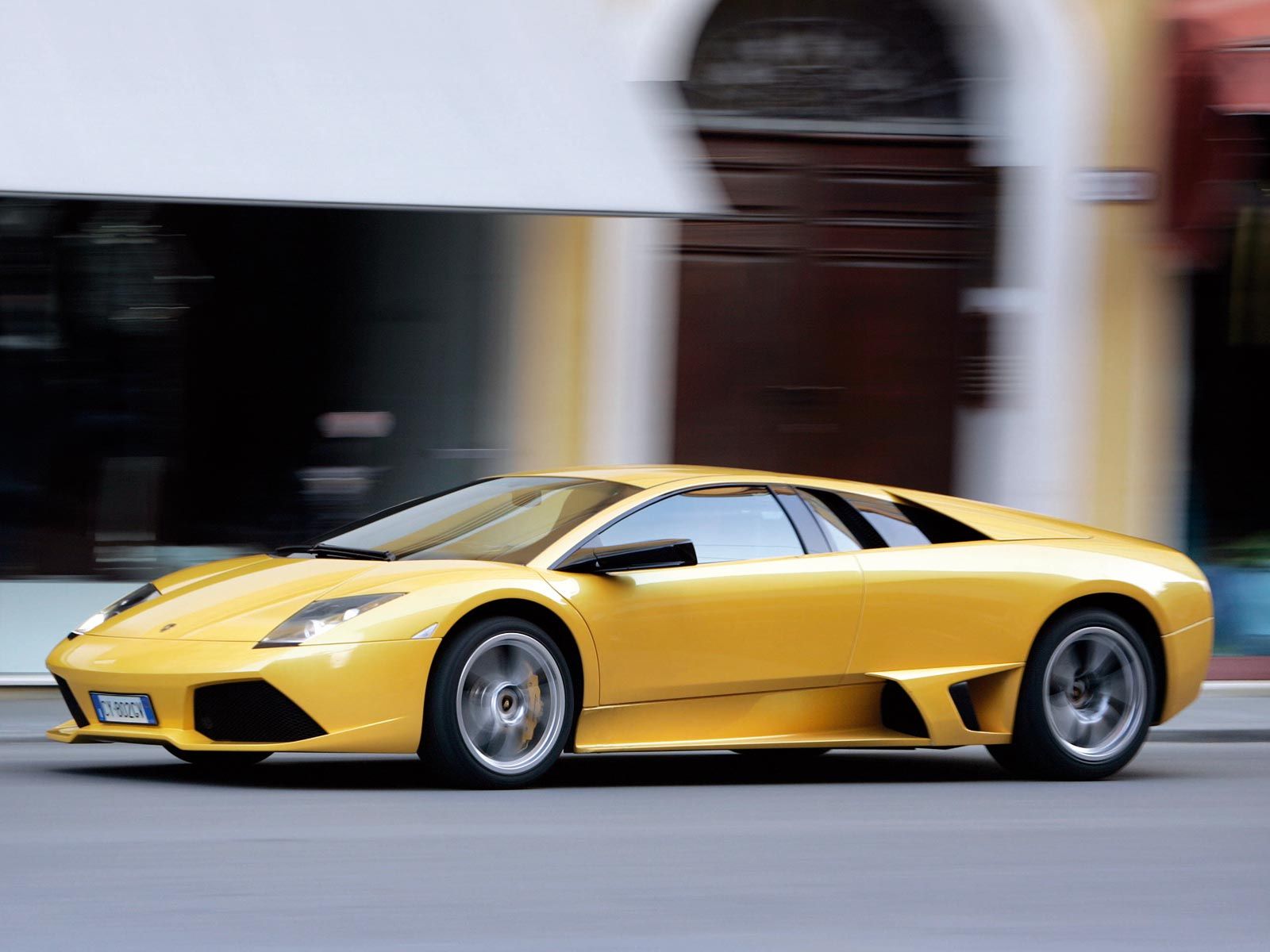
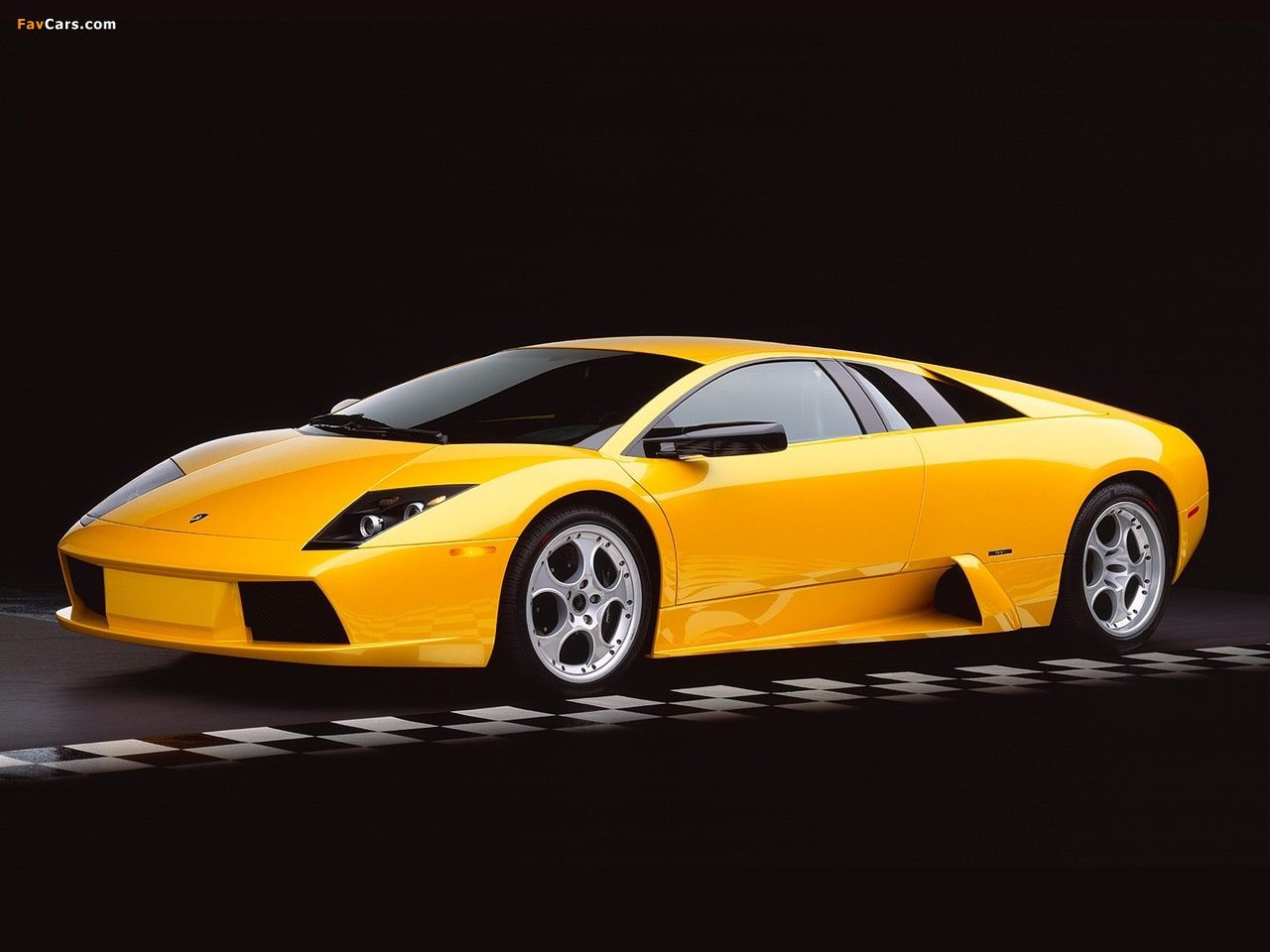
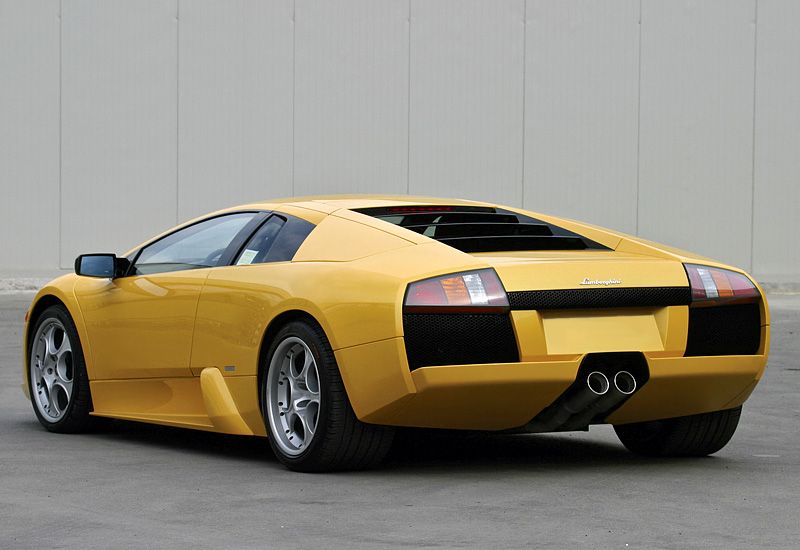
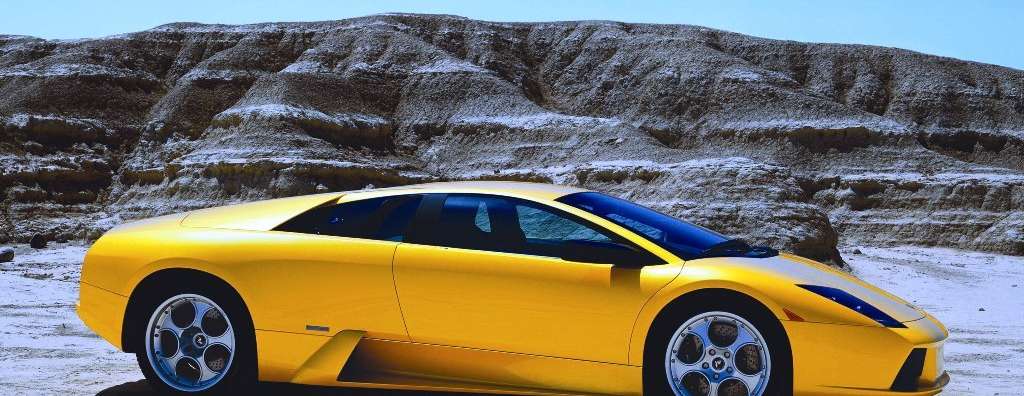
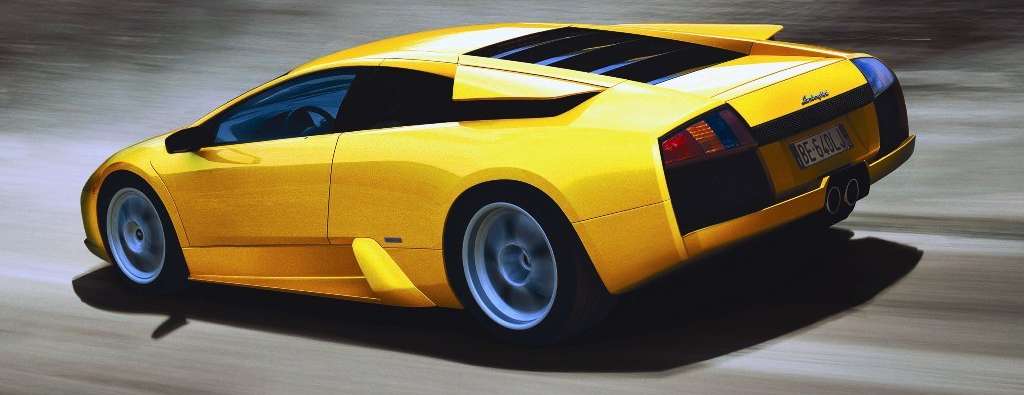
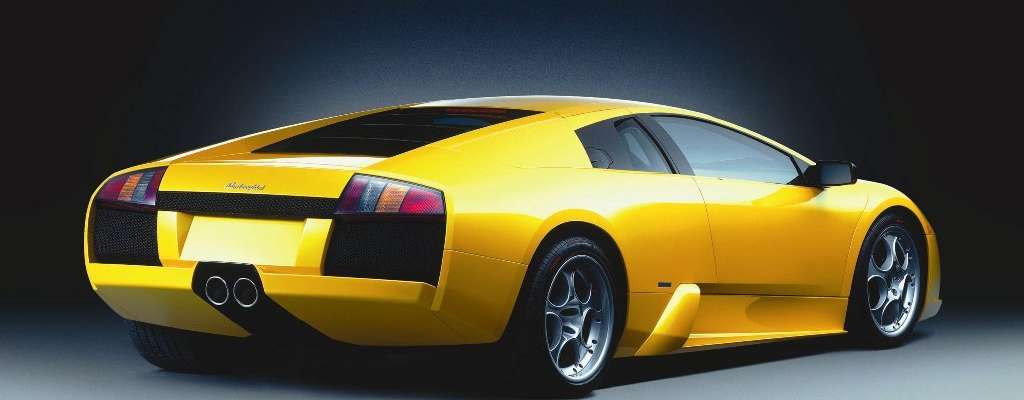
2002 Lamborghini Murciélago Base Exterior Colors
2002 Lamborghini Murciélago Base Interior Colors
2002 Lamborghini Murciélago Engines
| Engine | Standard in Trim | Power | Torque | Fuel Consumption - City | Fuel Consumption - Highway | 0-100 km/h | Quarter Mile | Half Mile |
|---|---|---|---|---|---|---|---|---|
| 6.2L V12 DOHC 48 valves | Base | 580 hp @ 7500 rpm | 634 N.m | 32.6 L/100km | 15.1 L/100km | 3.7 s | 10.2 s | 19.0 s |
2002 Lamborghini Murciélago Trims
2002 Lamborghini Murciélago Previous Generations
2002 Lamborghini Murciélago Future Generations


Lamborghini Murciélago Overview and History
Born in 1916 in Italy, Feruccio's talent was first noticed during the First World War. Through a fortunate twist of fate he was stationed on the island of Rhodes which, because of its positioning, was a rather peaceful place compared to the mainland. His primary job was that of fixing broken engines task that he effortlessly completed, garnering the respect and admiration of his colleagues.
Upon returning to his home near Modena after the war, the mechanical whiz though of establishing his own business. He established a small motorcycle and repair shop that turned out to be a very profitable endeavor. Feruccio had become a somewhat prominent figure due to his mechanical skill which attracted most of clients.
His business later expanded with Feruccio setting a tractor manufacturing facility in response to Italy's great demand of farming implements. His tractors were built from war-waste and parts taken from derelict vehicles, wreckage, basically every piece of metal that could be saved and used for production.
By 1960, he had expanded in the heating and air conditioning business as well, both having turned out very successful. Feruccio's entry in the car-making business would soon come after he had build wealth. Connoisseur of everything mechanical, Ferrucio became disappointed with some of Italy's top car brands for the vehicles they delivered, particularly with their engines. Former owner of Oscas, Ferraris and Maseratis, Feruccio was well aware of car engineering at the time.
One day, Ferrucio decided to pay a visit to Fetrari owner, Enzo, following clutch-related issues he had encountered on one of his models. Enzo, who was not exactly known for his poise and diplomatic abilities, simply sent Feruccio for a walk. Enzo's behavior triggered Feruccio's ardent desire to build his own sports car, as an example of what one should really be built like. Fueled by rivalry and passion, the Automobili Lamborghini SpA was founded in 1963.
The plant was built in Sant'Agata near Bologna on a 90,000 square ft area. Employees were soon found to fill the factory that took only 8 months to erect. Among the people brought on the team were top engineers and former Ferrari-workers like Giotto Bizzarrini, Giampaolo Dallara and Giampaolo Stanzani. The first V12 Lamborghini engine was soon designed and became the basis of an ulterior very successful range of cars.
Housed by a Scaglione-Touring body, the engine delivered a spectacular 350 HP. Called the 350 GTV, the prototype was first revealed ate the Turin Autoshow the same Feruccio had founded his company. The car was a hit and orders started pouring in. The GT, as it was called once it entered mass production, was followed by the 450 GT and the four-seater 450 2+2.
All three cars garnered enough funds to allow Feruccio the development a new vehicle that would be the most famous Lamborghini model until the release of the Countach in 1973. The Miura was a very egotistic car: it shared its features with no other cars. Its uniqueness stretched from front to rear bumper and from top to bottom over a beautifully designed Marcello Gandini body. Sporting a transversal mid-mounted engine, the Miura looked like a cross between a mechanical bull and a racing car.
The next successor in the Lambo dynasty was the space-ship shaped Countach which premiered at the Geneva Auto Show in 1975. The Countach was an outrageously appealing display of drawing board brutality. Its futuristic look was further endorsed by the famous telephone-dial rims, 4-liter engine bristling with bull-inspired power and swing-up doors. Although it has an impact hard to comprehend nowadays, the car did have its flaws: high interior noise levels and complete lack of rear view. One could only park the Countach by hanging half outside the car and steer while looking back.
Despite its prestige, Lamborghini would soon be struck by financial-trouble driven orphanage. Following a major set-back of his tractor business in 1974, Feruccio sold the controlling interest (51%) of the Auto Lamborghini SpA to wealthy Swiss industrialist Georges-Henri Rossetti. Further issues causes by the 70's oil crisis forced the Italian no-longer-owner to sell the remaining interest to a second Swiss businessman, Rene Leimer.
Shortly after the ownership change, Lamborghini was declared bankrupt. Fortunately, help from racing team owner Walter Wolf came right in time and after a series of tests, an improved version of the Countach was developed, the 400S. Wolf's plans of buying the factory were rejected by the Italian Court who gave it to Giorgio Mirone on February 28ty, 1980. The new owner offered the plant back to Feruccio for a small amount of money but surprisingly, he refused the deal.
Following Feruccio's refusal, the company would find Swiss tutelage once more, under the Mimram brothers. Under their reign, the company saw a second coming to life, gaining enough resources to resume the development of the Countach with the LP500 S and QuattroValvole being later released. Until 1984, the Mimran brother shad not yet fully acquired the company, having been granted temporary administration of the facility as proof of their skill. The Mimran takeover was the beginning of an extensive healing and later development process, the company having produced a variety of new models such as the gas-guzzling LM004 and 002 off-roaders as well as the exotic Jalpa.
As good as things may have been under Mimran ownership, the company was sold to the Chrysler Corp. in 1987, who would sell it to to a group made of three Far-Eastern companies in 1994 one year after Feruccio's demise. All three companies were part of a holding owned by Indonesians Tommy Suharto and Setjawan Djody. After a series of complications, the small Italian super car manufacturer was taken over by Audi AG. The German investor resuscitated Lamborghini by focusing its resources into the development of a newer models. Audi played a major role in designing the Murcielago, the car that trumpeted Lamborghini's comeback. Models such as the Gallardo and the latest jet-fighter inspired Reventon followed. Only 20 something units of the latter were built so far, all of them having already been purchased for a “paltry” + $ 1,300,000 per unit.
2002 Lamborghini Murciélago Consumer Reviews
2002 Lamborghini Murciélago Base Specifications
Base Dimensions
| Curb Weight | 1650 kg |
|---|---|
| Fuel Tank Capacity | 100 L |
| Height | 1135 mm |
| Length | 4580 mm |
| Wheelbase | 2665 mm |
| Width | 2045 mm |
Base Mechanical
| Drive Train | All-wheel drive |
|---|---|
| Engine Name | 6.2L V12 DOHC 48 valves |
| Traction Control | Yes |
| Transmission | 6 speed automatic |
Base Overview
| Body | Coupe |
|---|---|
| Doors | 2 |
| Engine | 6.2L V12 DOHC 48 valves |
| Fuel Consumption | |
| Power | 580 hp @ 7500 rpm |
| Seats | 2 |
| Transmission | 6 speed automatic |
| Warranties | Bumper-to-BumperUnlimited/km, 24/Months PowertrainUnlimited/km, 24/Months Roadside AssistanceUnlimited/km, 24/Months Rust-throughUnlimited/km, 24/Months |
Base Safety
| Anti-Lock Brakes | Std |
|---|---|
| Brake Type | 4 wheel disc |
| Driver Airbag | None |
| Passenger Airbag | None |
| Side Airbag | None |
Base Suspension and Steering
| Front Tires | P245/35ZR18 |
|---|
Discussion and Comments
Share Your Comments