2019 Hyundai Veloster Turbo Tech Performance Package 0-60 Times, Top Speed, Specs, Quarter Mile, and Wallpapers
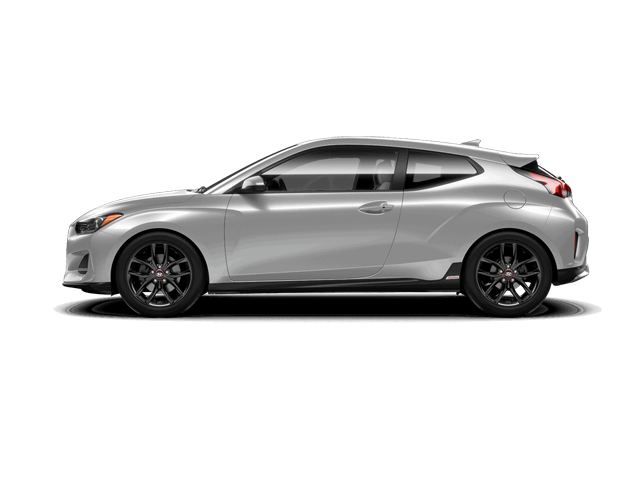
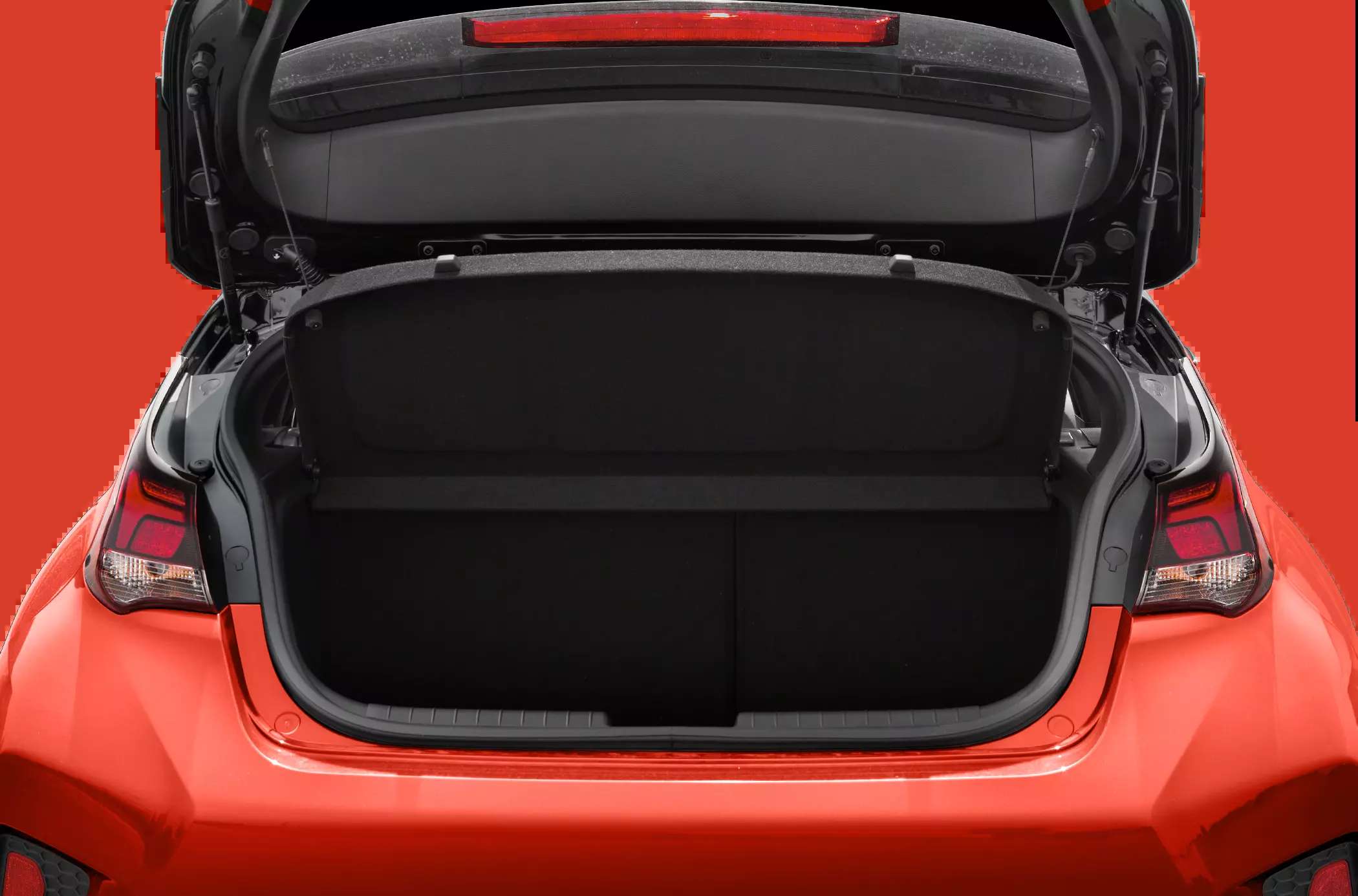
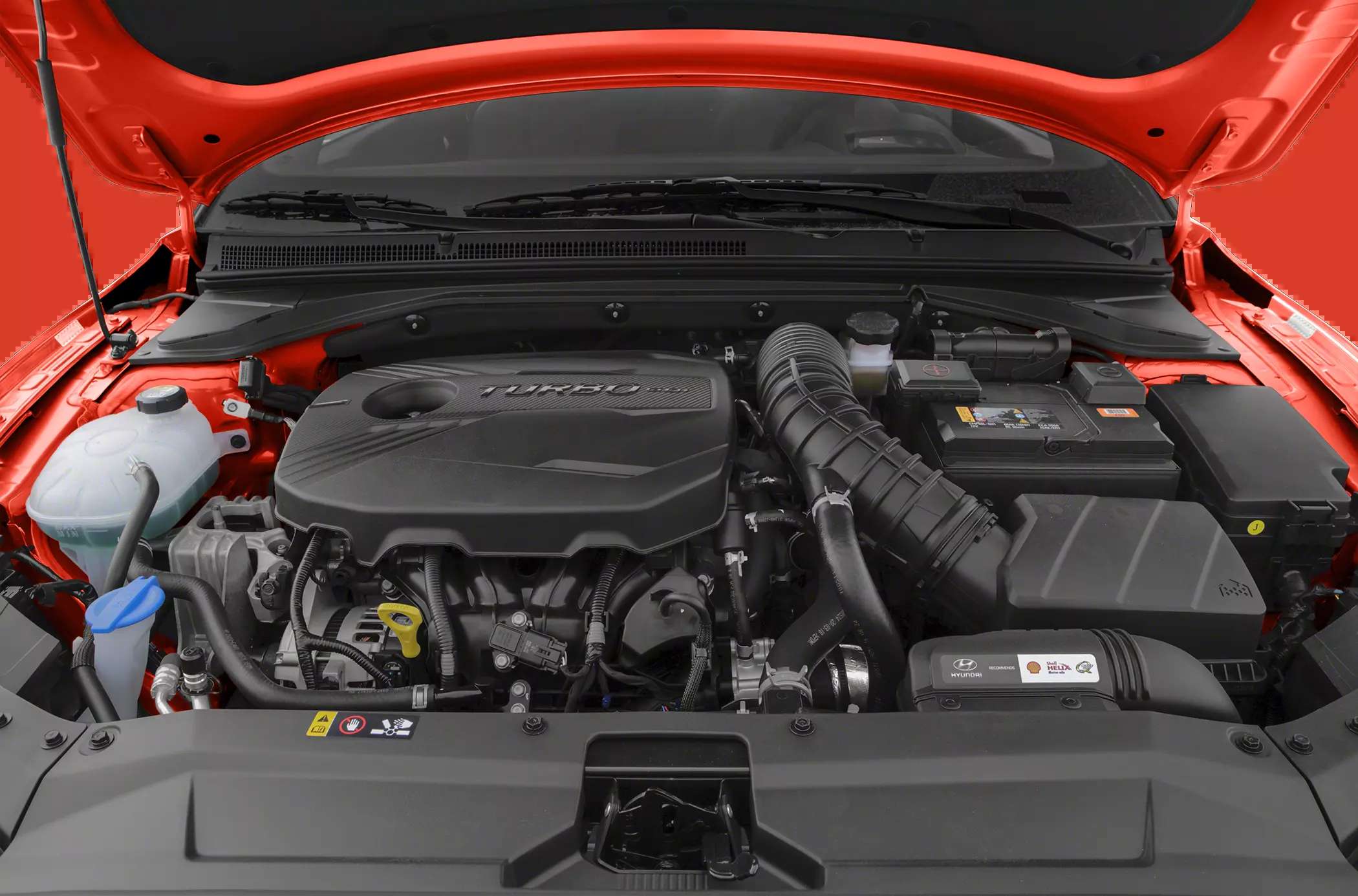
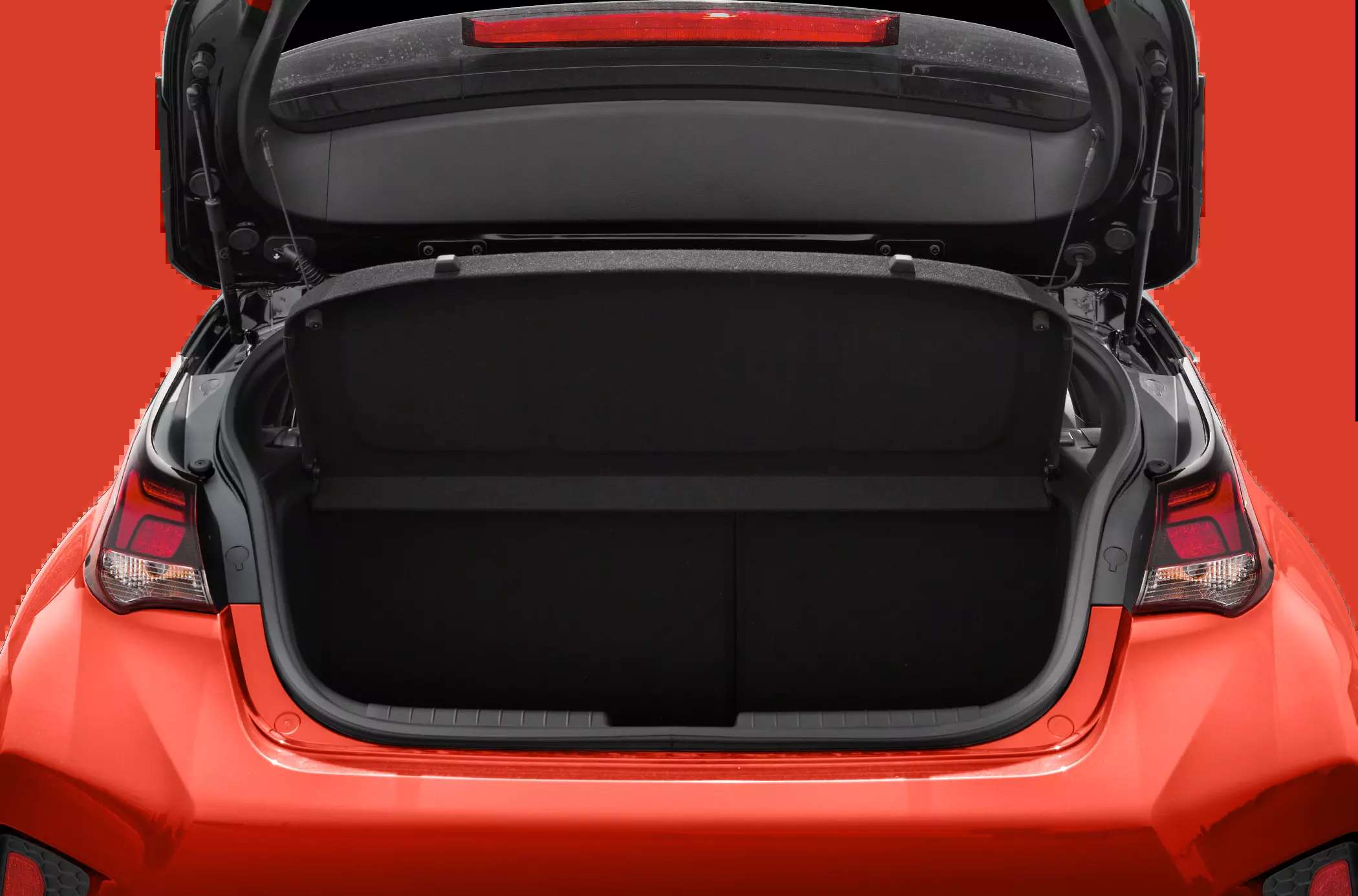
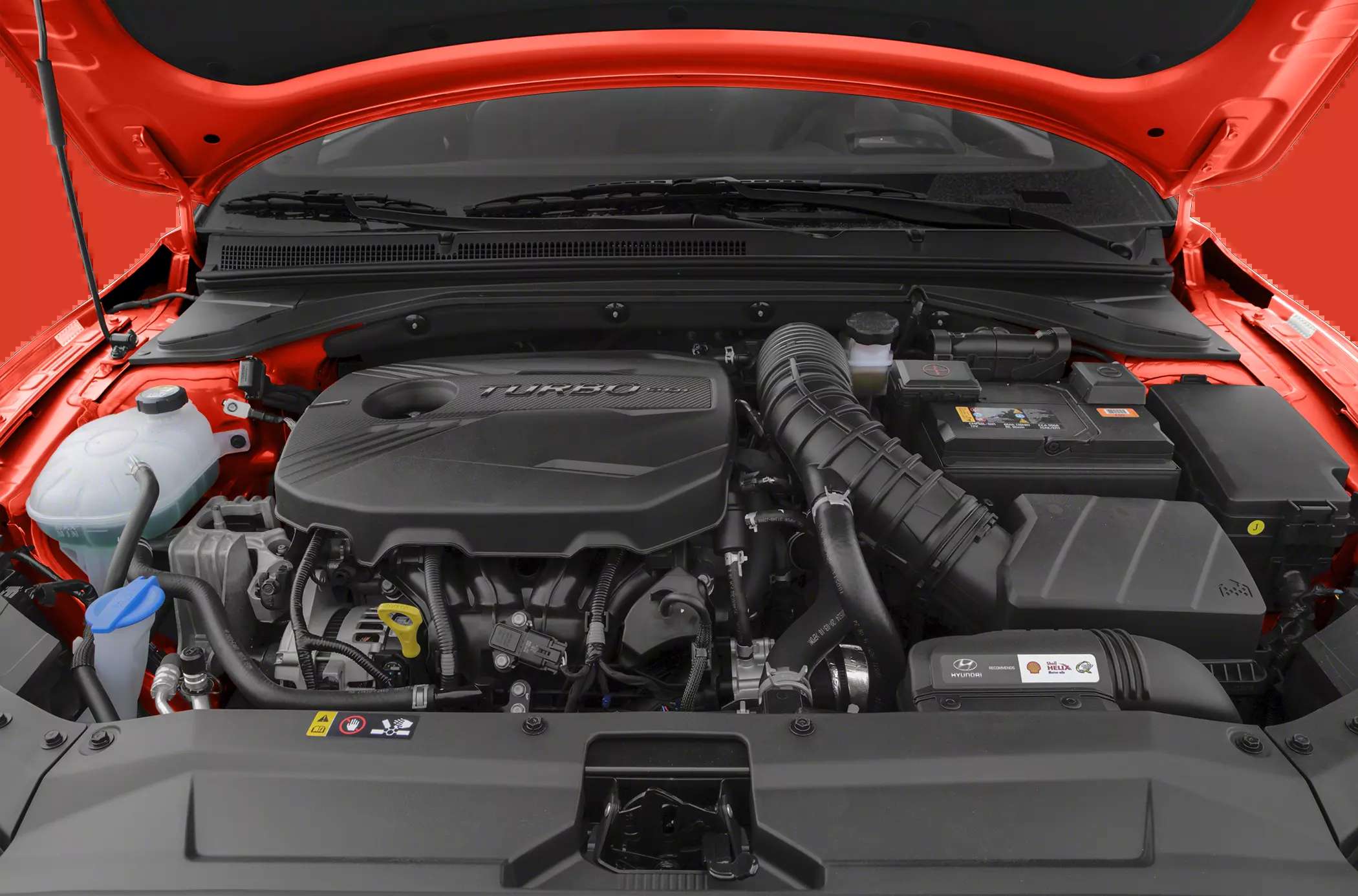
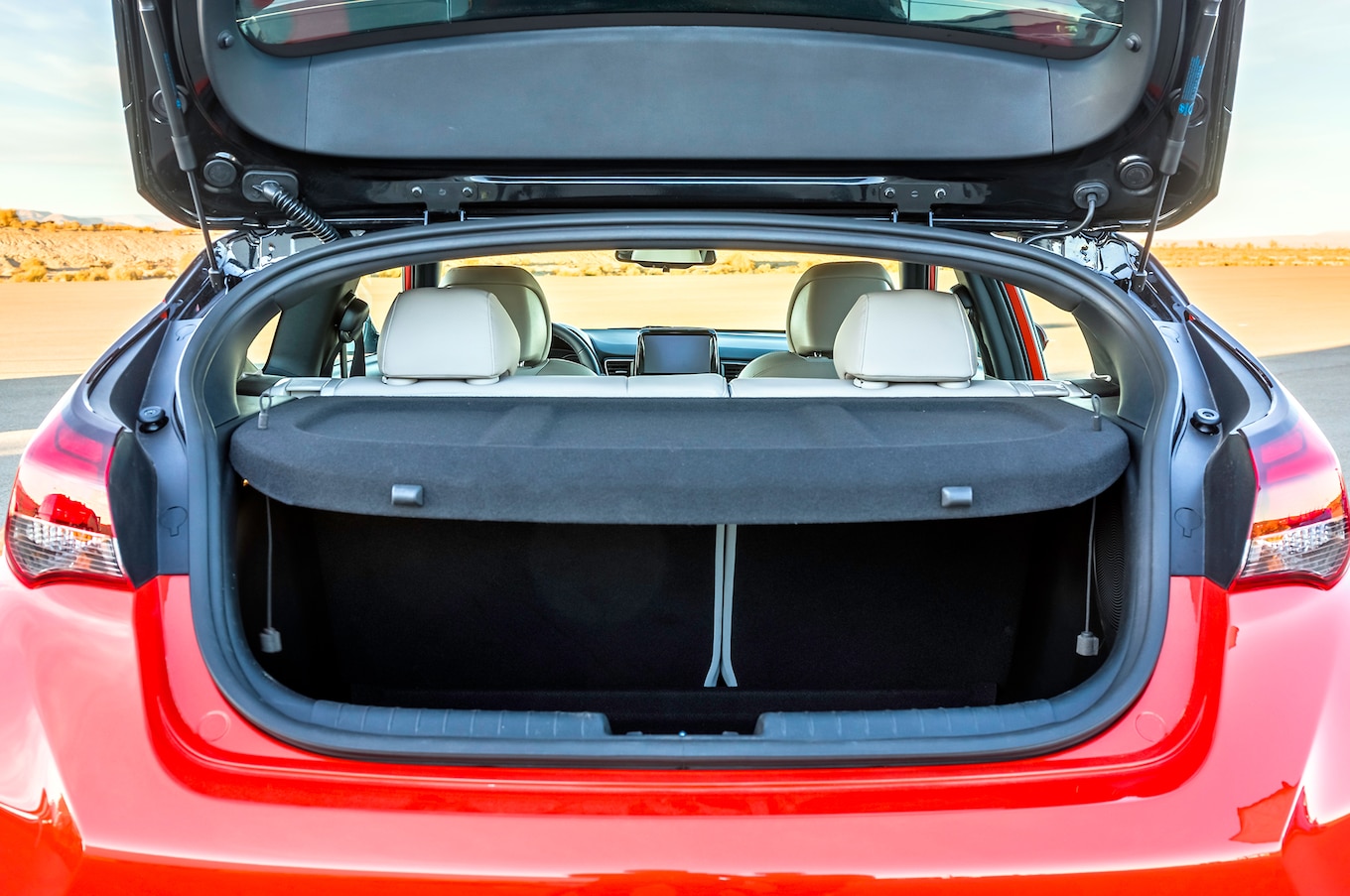
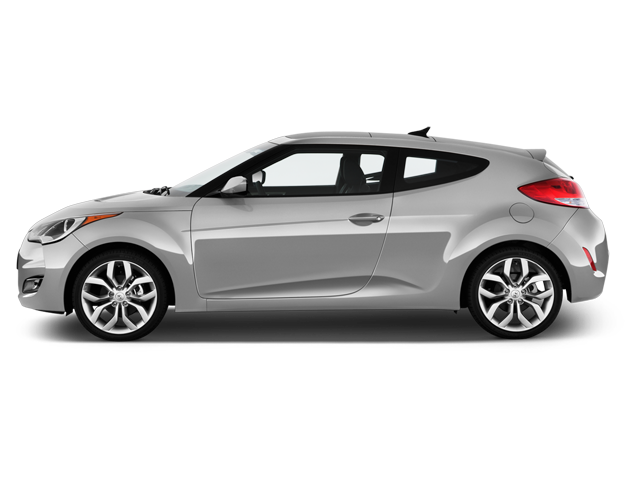
The 2019 Hyundai Veloster Turbo Tech Performance Package is a Front-wheel drive Hatchback. It can accommodate up to 4 passengers. It has 3 Doors and is powered by a 1.6L L4 turbo DOHC 16-valve engine which outputs 201 hp @ 6000 rpm and is paired with 6-speed manual transmission gearbox. The 2019 Hyundai Veloster Turbo Tech Performance Package has cargo capacity of 565 Liters and the vehicle weighs 1240 kg. In terms of ride assists, the 2019 Hyundai Veloster Turbo Tech Performance Package has stability control and traction control in addition to anti-lock brake system (ABS). The vehicle has an optional engine as well It offers Rear park assist system and Rearview camera with dynamic guidelines. Safety features also include Driver-side front airbag and Passenger-side front airbag. The front suspension is Front independant suspension while the rear suspension is Solid axle rear suspension. The car also features a It has 18-inch aluminum alloy wheels (B-Type) as standard. Electronic features include Cruise Control. For convenience, the car has Power windows and Power door locks. There is also a remote keyless entry feature. Moreover, the car has. The steering wheel has audio control buttons. In terms of performance, the car has 219 N.m of torque and a top speed of 215 km/h. The 2019 Hyundai Veloster Turbo Tech Performance Package accelerates from zero to 60 mph in 7.1 seconds and hits quarter mile at 14.8 seconds. Fuel consumption is 9.7 L/100km in the city and 7 L/100km in the highway. The car price starts at $ 29,399
| Name | Turbo Tech Performance Package | |
|---|---|---|
| Price | $ 29,399 | |
| Body | Hatchback | |
| Doors | 3 Doors | |
| Engine | 1.6L L4 turbo DOHC 16-valve | |
| Power | 201 hp @ 6000 rpm | |
| Number of Seats | 4 Seats | |
| Transmission | 6-speed manual transmission | |
| Cargo Space | 565.0 L | |
| Maximum Cargo Space | 565.0 L | |
| Wheel Type | 18-inch aluminum alloy wheels (B-Type) | |
| Series | Veloster II | |
| Drivetrain | Front-wheel drive | |
| Horsepower | 201 HP | |
| Torque | 219 N.m | |
| Top Speed | 215 km/h | |
| Acceleration 0-100 km/h (0-60 mph) | 7.1 s | |
| Fuel Type | Petrol (Gasoline) | |
| Fuel Consumption (City) | 9.7 L/100km | |
| Fuel Consumption (Highway) | 7.0 L/100km | |
| Gear Type | auto | |
| Weight | 1,240 KG | |
| Brand | Hyundai | |
| Model | Veloster | |
| 0-400m (Quarter Mile) | 14.8 s | |
| 0-400m (Quarter Mile) - Speed | 154.9 km/h | |
| 0-800m (Half Mile) | 24.6 s | |
| 0-800m (Half Mile) - Speed | 174.4 km/h | |
| Modifications (MODS) | ||
| Modifications Cost | $ 0 |
2019 Hyundai Veloster Acceleration test 0-100kmh ( 0-60mph ) | Review part 2/2
2019 Hyundai Veloster Acceleration test 0-100kmh ( 0-60mph ) | Review part 2/2
2019 Hyundai Veloster Acceleration test 0-100kmh ( 0-60mph ) | Review part 2/2
2019 Hyundai Veloster N Nürburgring Autobahn (Top Speed 155 MPH)
2019 Hyundai Veloster Used Price Estimates
Estimates based on a driving average of 12,000 miles per year| Used Condition | Trade In Price | Private Party Price | Dealer Retail Price |
|---|---|---|---|
| Outstanding | $ 14,375 | $ 16,247 | $ 18,604 |
| Clean | $ 14,111 | $ 15,954 | $ 18,252 |
| Average | $ 13,584 | $ 15,368 | $ 17,549 |
| Rough | $ 13,057 | $ 14,782 | $ 16,845 |
The other big change to the 2019 Hyundai Veloster is the switch from a twist-beam rear axle to a multi-link independent rear suspension. The car has a more planted feel when you’re pushing it. Other improvements include better steering response, though it still could be sharpened to European levels. The Turbo models pump out 201 horsepower from 1.6-liter turbocharged 4-cylinder engines, while the standard normally aspirated 2.0-liter models make 147 horsepower. The Turbo models aren’t that much more expensive and offer levels of performance more in line with the vehicle’s looks.Overall, the Veloster feels light on its feet and is easy to drive quickly, but also has a stiff feel to the body and chassis. Hyundai has done an excellent job of controlling noise, vibration and harshness. There’s very little wind or tire noise that’s transmitted to the cabin. Given its price point, if you had your eyes closed, you’d swear you were in a class-above car. The Turbo R-Spec model comes with the much-improved 6-speed manual transmission, while higher-spec Turbo models are equipped with a 7-speed dual-clutch automatic transmission that has both paddles for shifting and a sequential mode on the gear selector. The new Veloster features Normal, Sport and Smart driving modes -- in Sport, the exhaust note is a bit louder and amplified through the sound system. The drive modes make a noticeable difference in throttle response and the shift points of the dual-clutch automatic.The new Veloster N, particularly when equipped with the optional Performance package and its electronic limited-slip differential, feels totally at home on a racetrack, yet it does not beat you up with overly stiff suspension in everyday driving. This is a car that has been tuned on the famous Nürburgring in Germany, and it shows. Each downshift of the 6-speed manual transmission is accompanied by an automatic throttle blip, and the chassis responds beautifully to steering inputs. Perhaps most important, the electronically controlled differential allows the driver to power out of tight corners without inducing any of the wild inside wheelspin so common with other powerful front-wheel-drive cars.
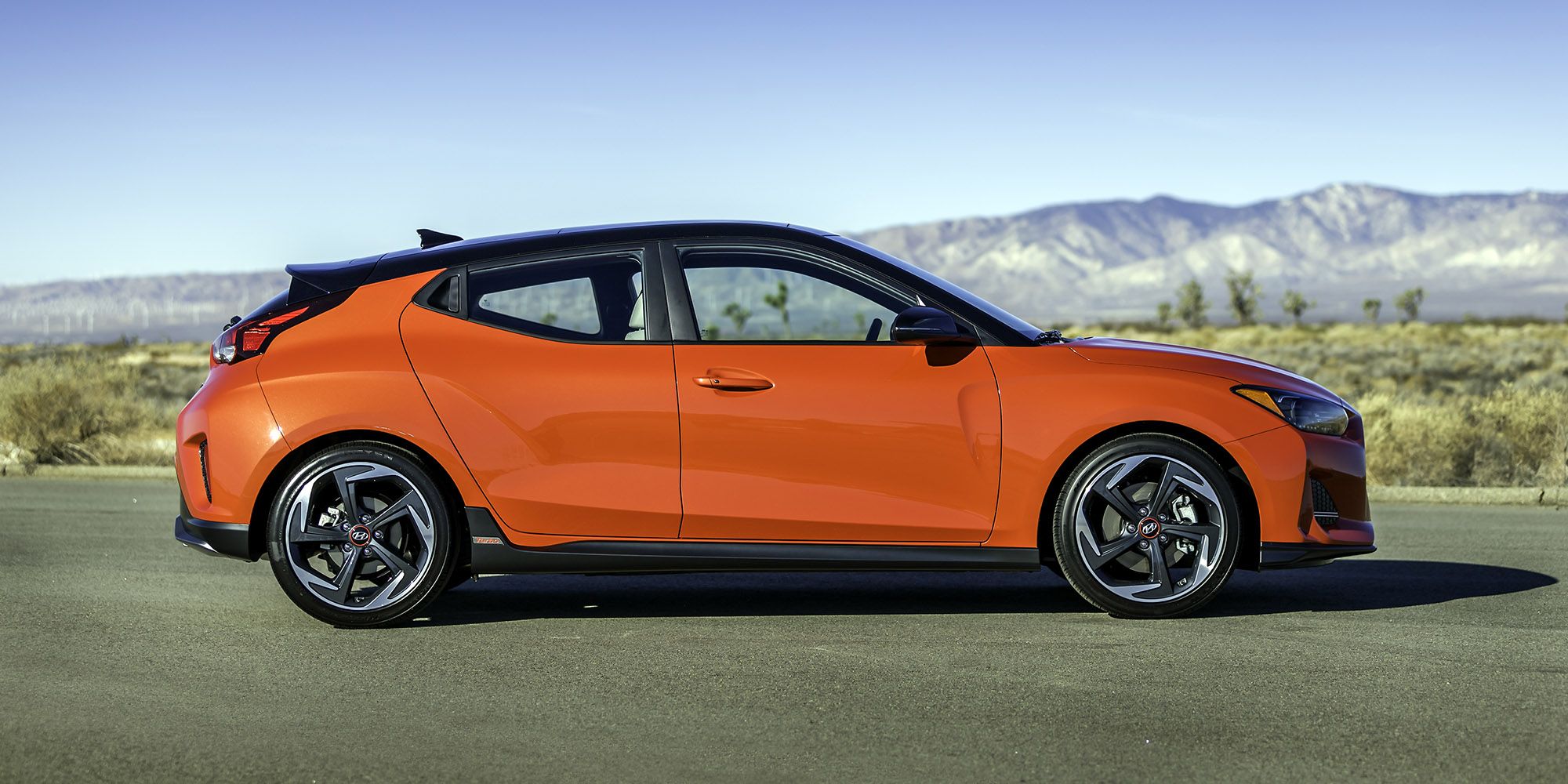
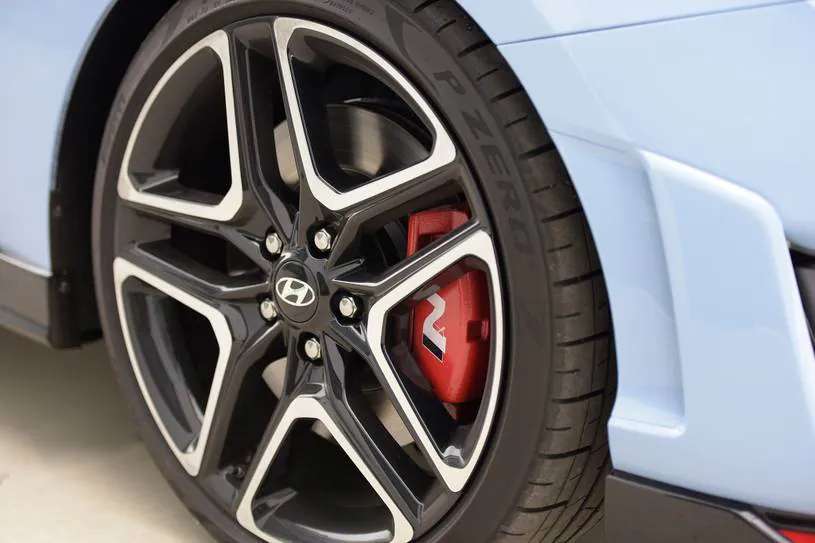
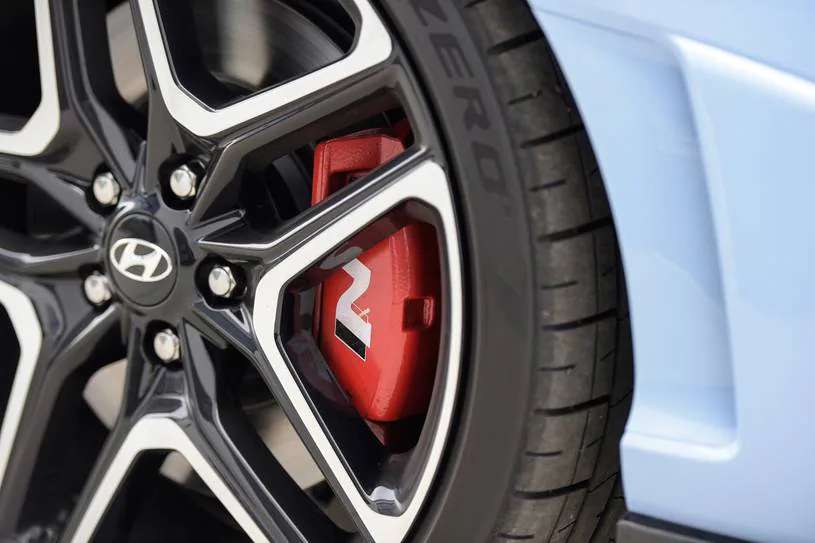
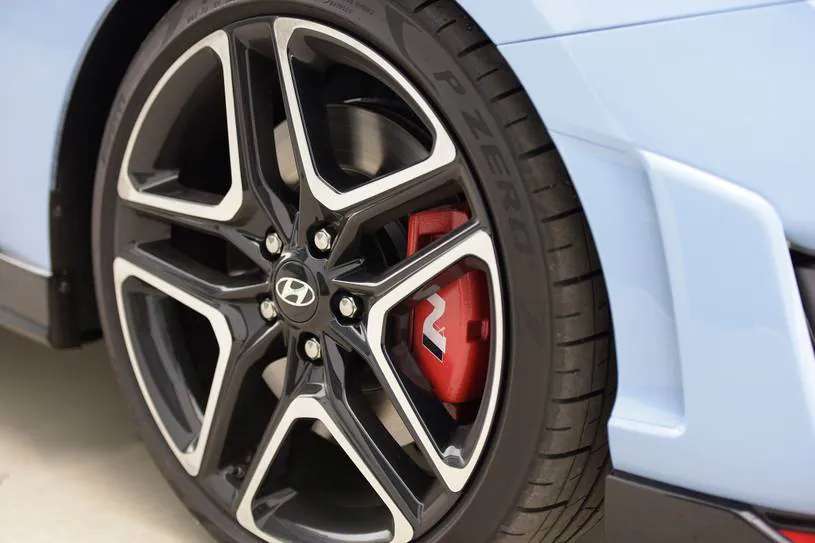
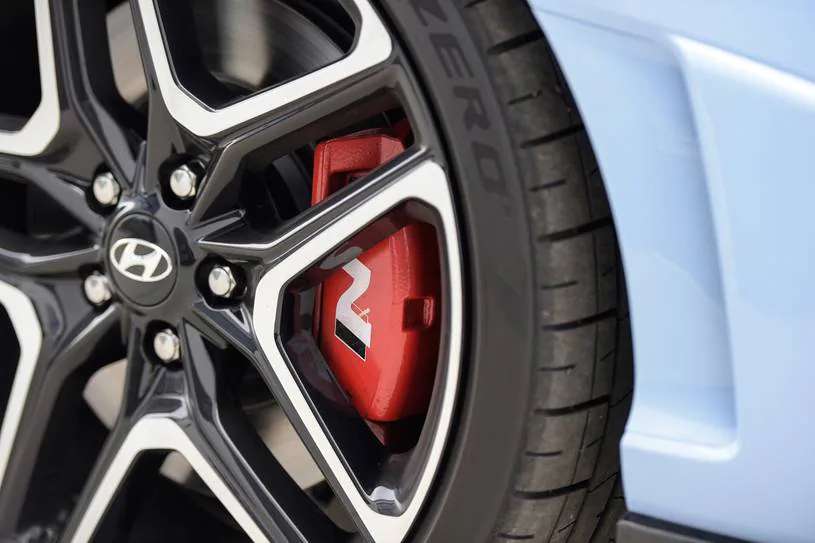
DOOR CONFIGURATION While the 3-door layout may seem odd, you never look at both sides of the car at the same time. So, when you walk up on the driver’s side, it looks like a coupe. Come at it from the passenger side and it looks like a 4-door hatch. That extra portal makes a huge difference in the usability of the rear seating area. And the hatch adds additional functionality to a sporty looking package. THE N PERFORMANCE PACKAGEAt $ 2,100, the optional N Performance package is a bargain. With its extra 25 horsepower, its electronic limited-slip differential, its 19-inch alloy wheels (shod with 235/35R-19 Pirelli P Zero summer tires), and its larger brakes (vented front and rear), the Performance package transforms the Veloster N from a good track car into a great one.
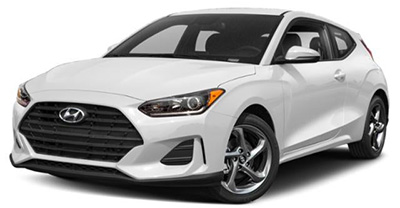
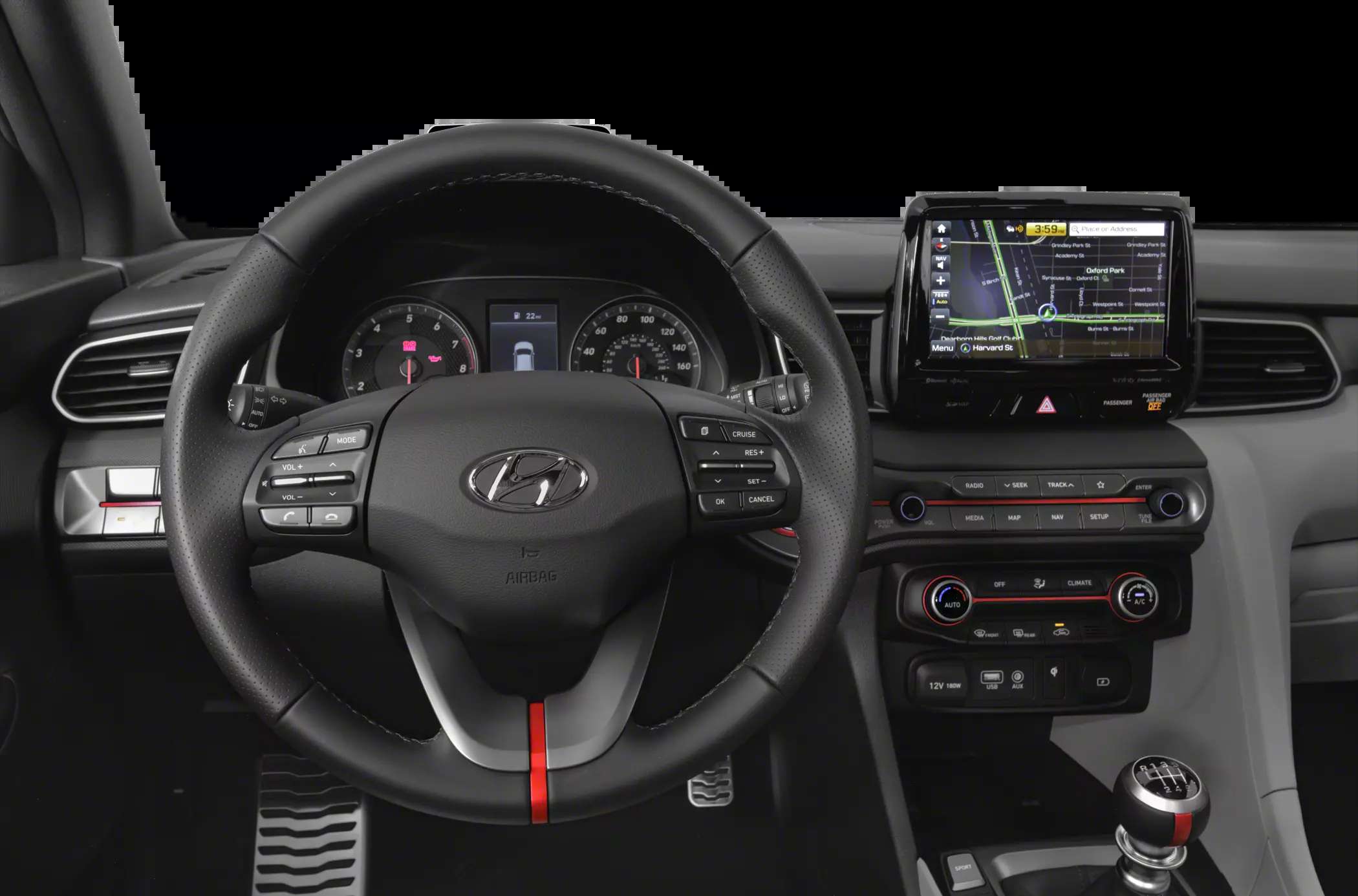
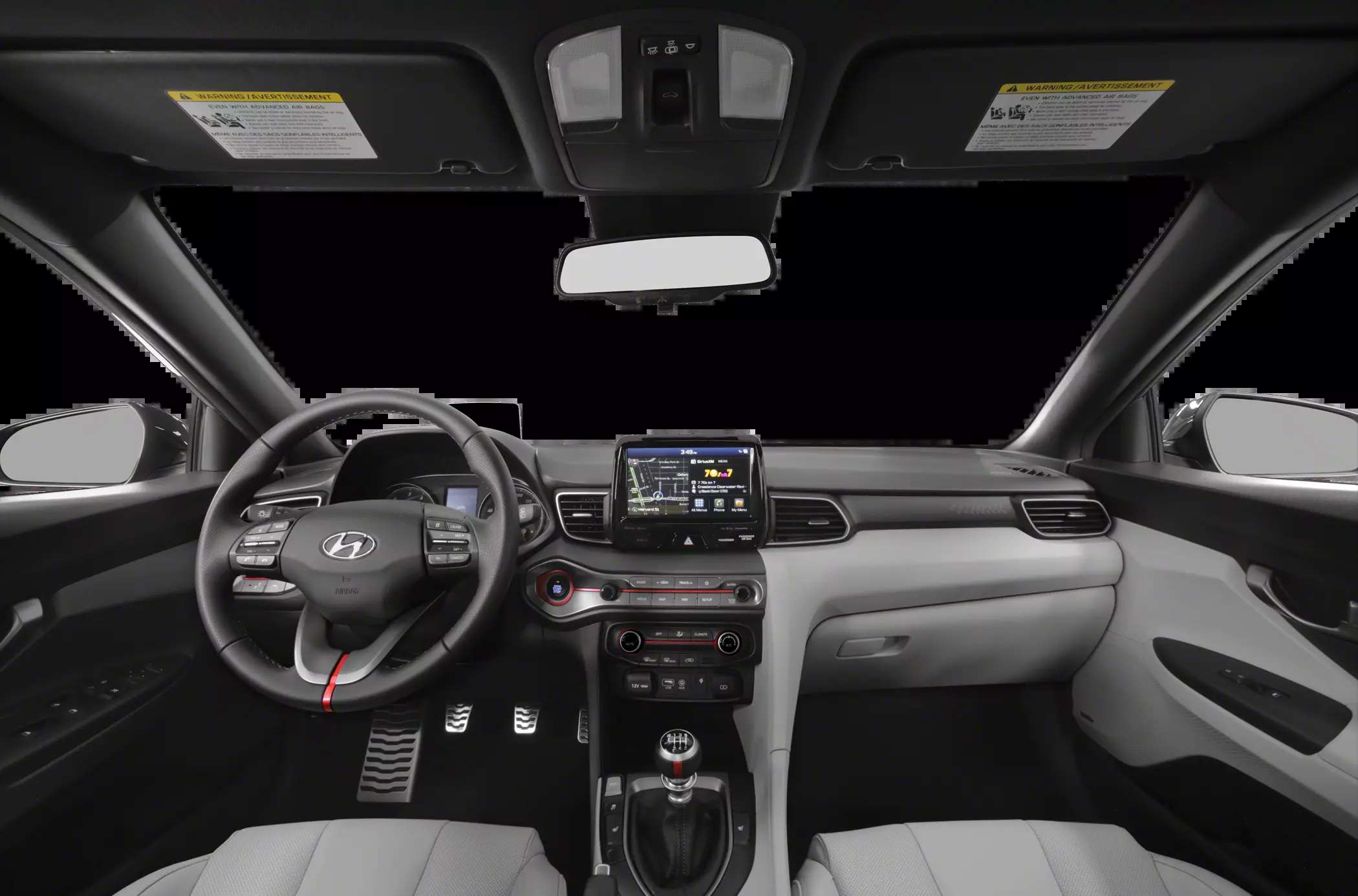
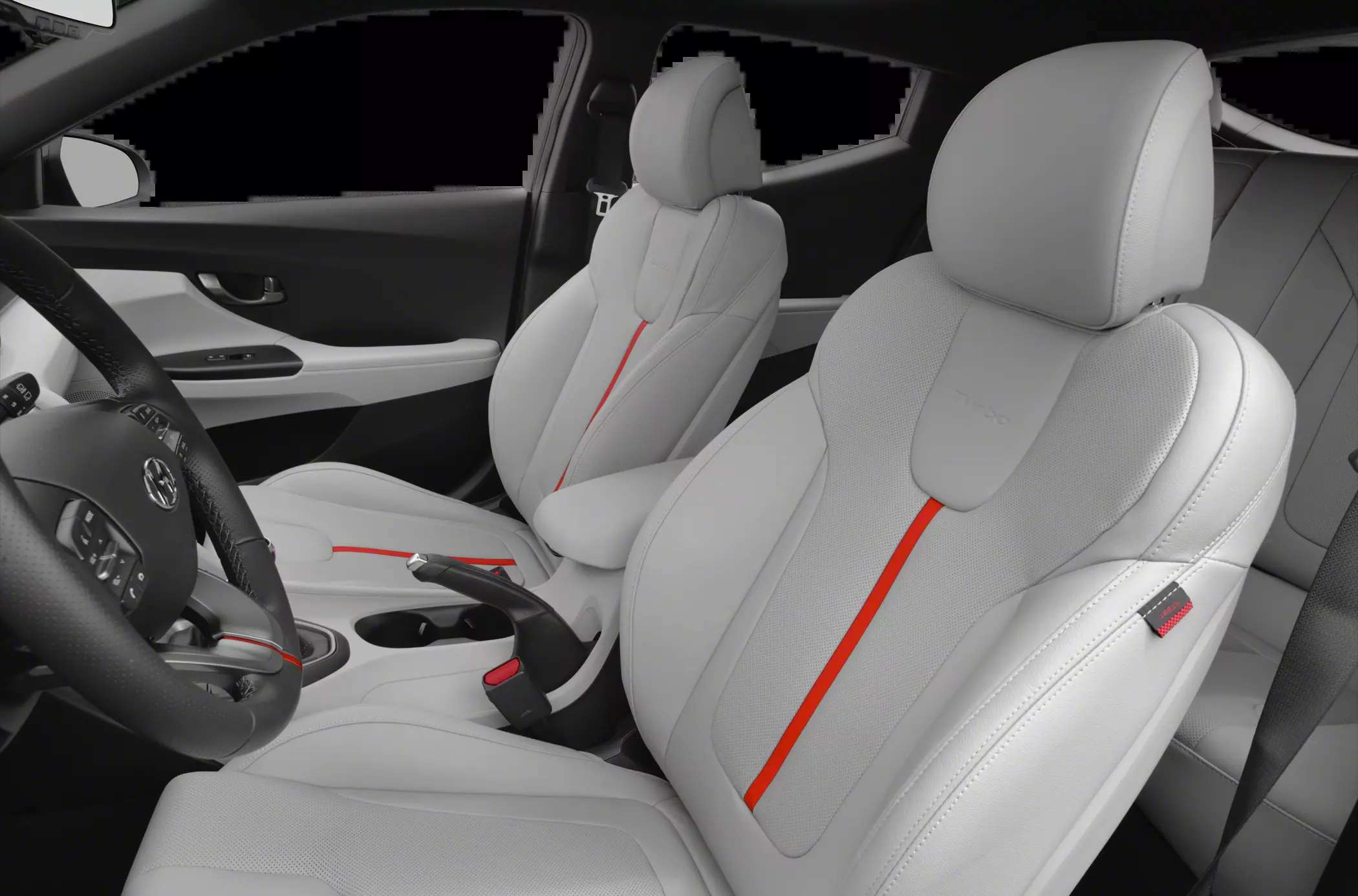
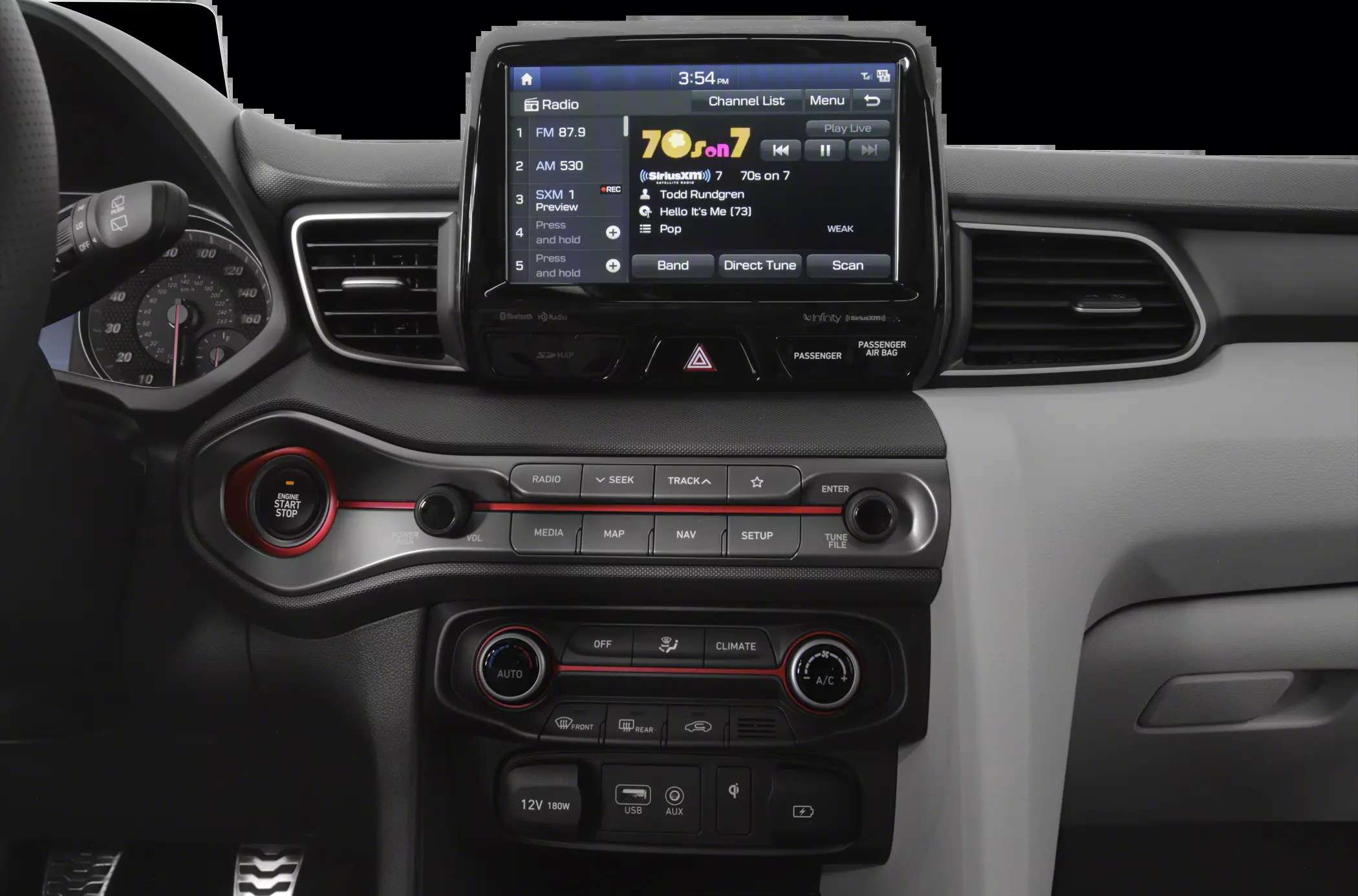
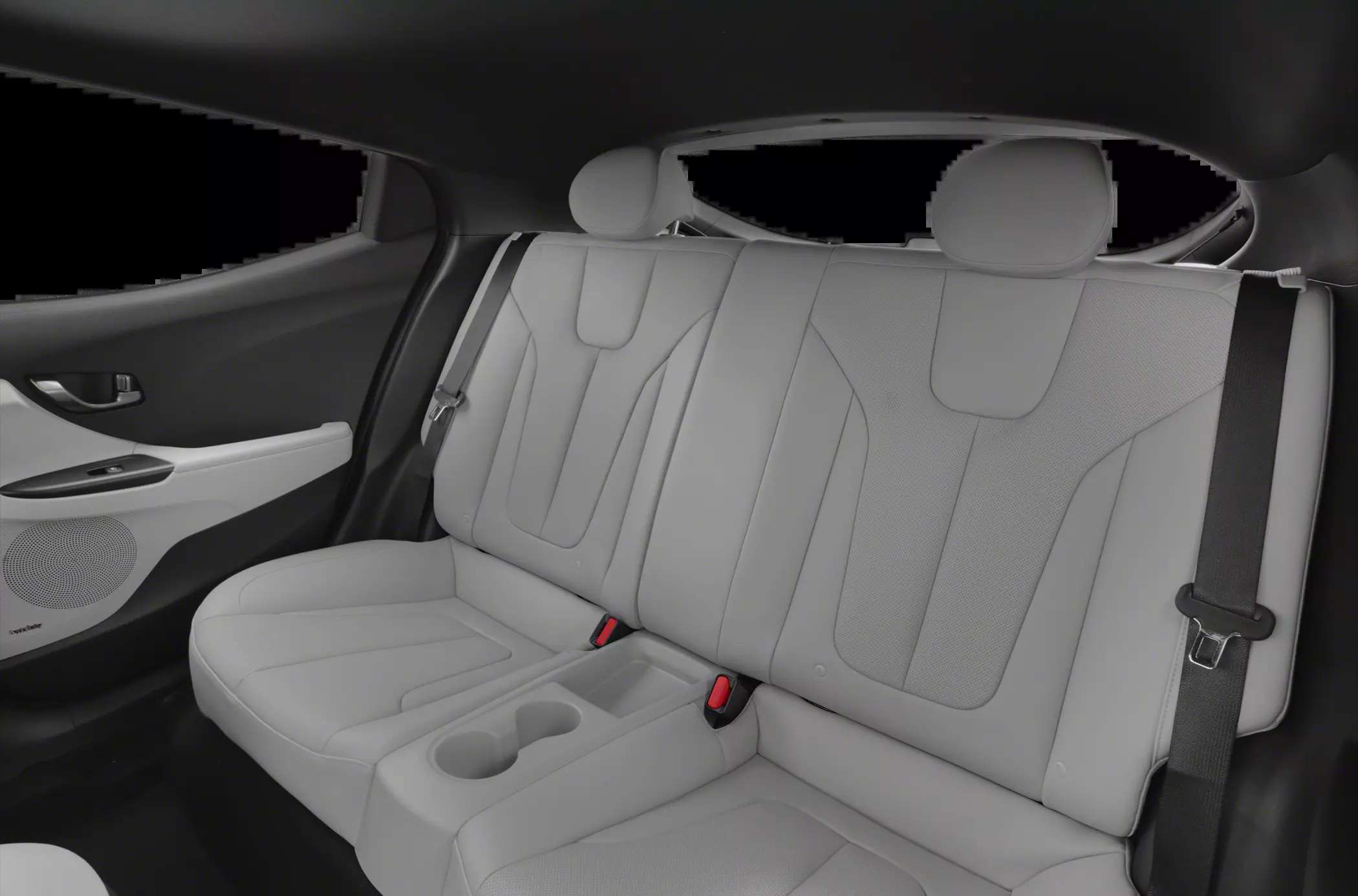
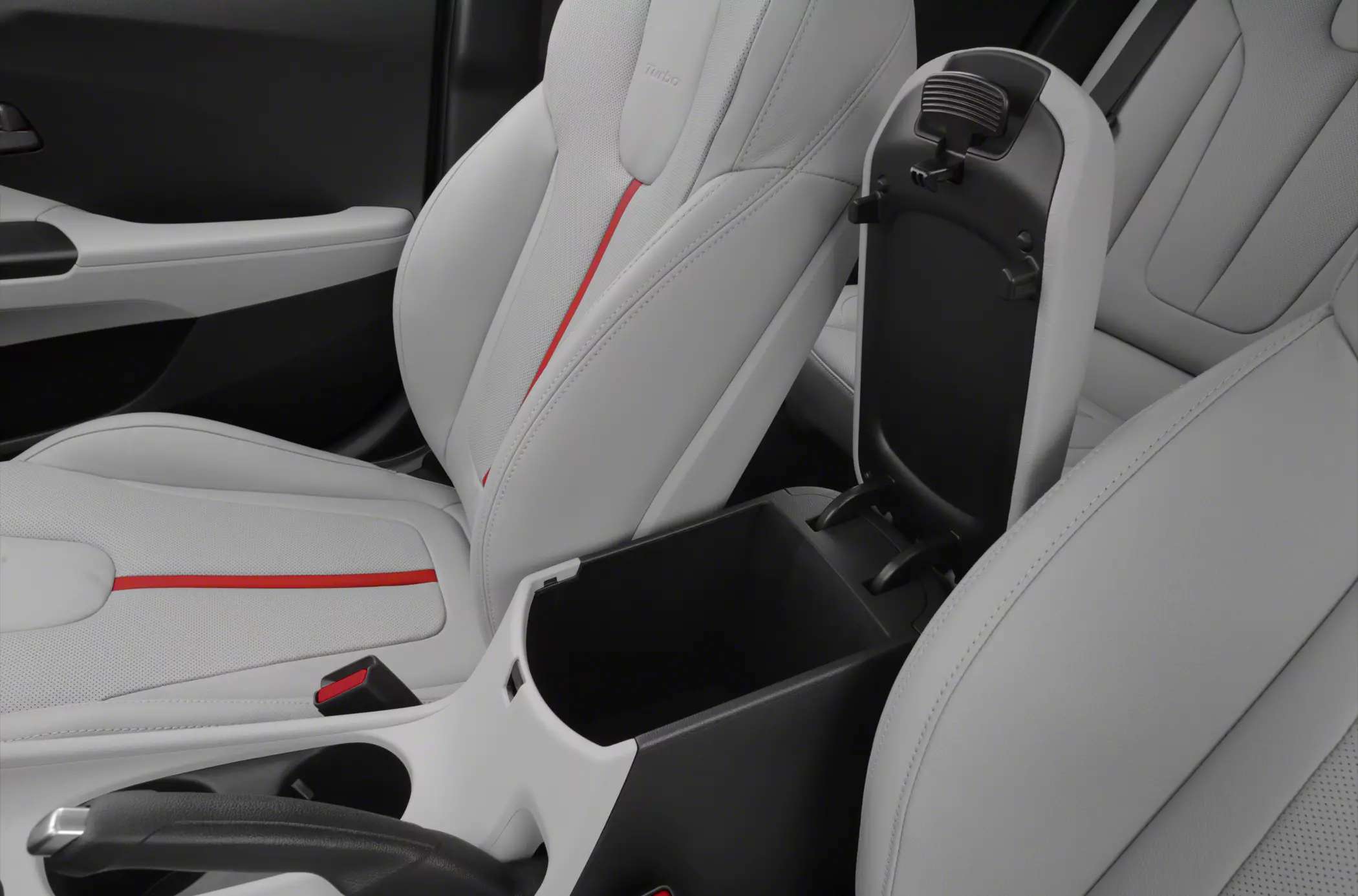
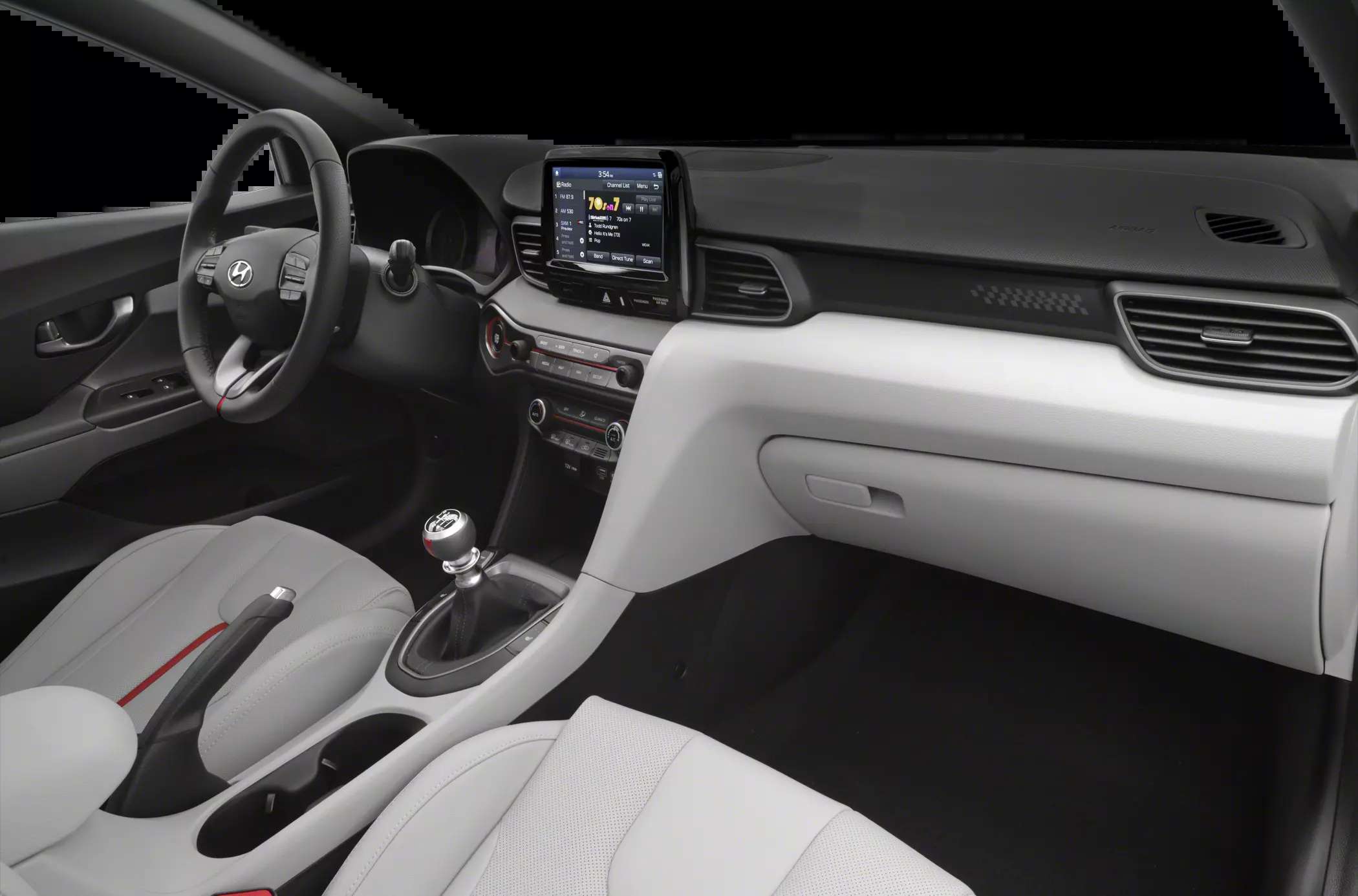
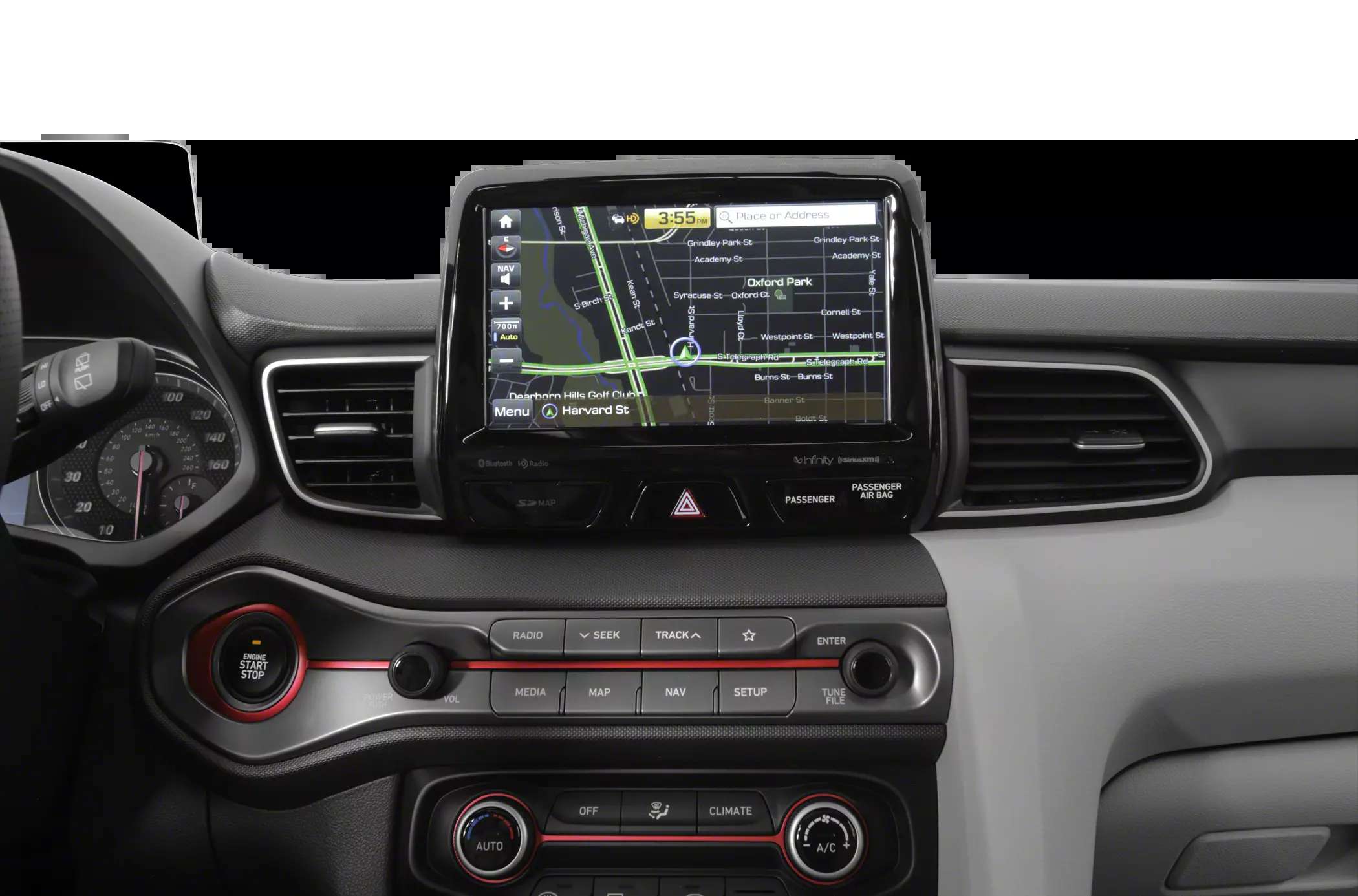
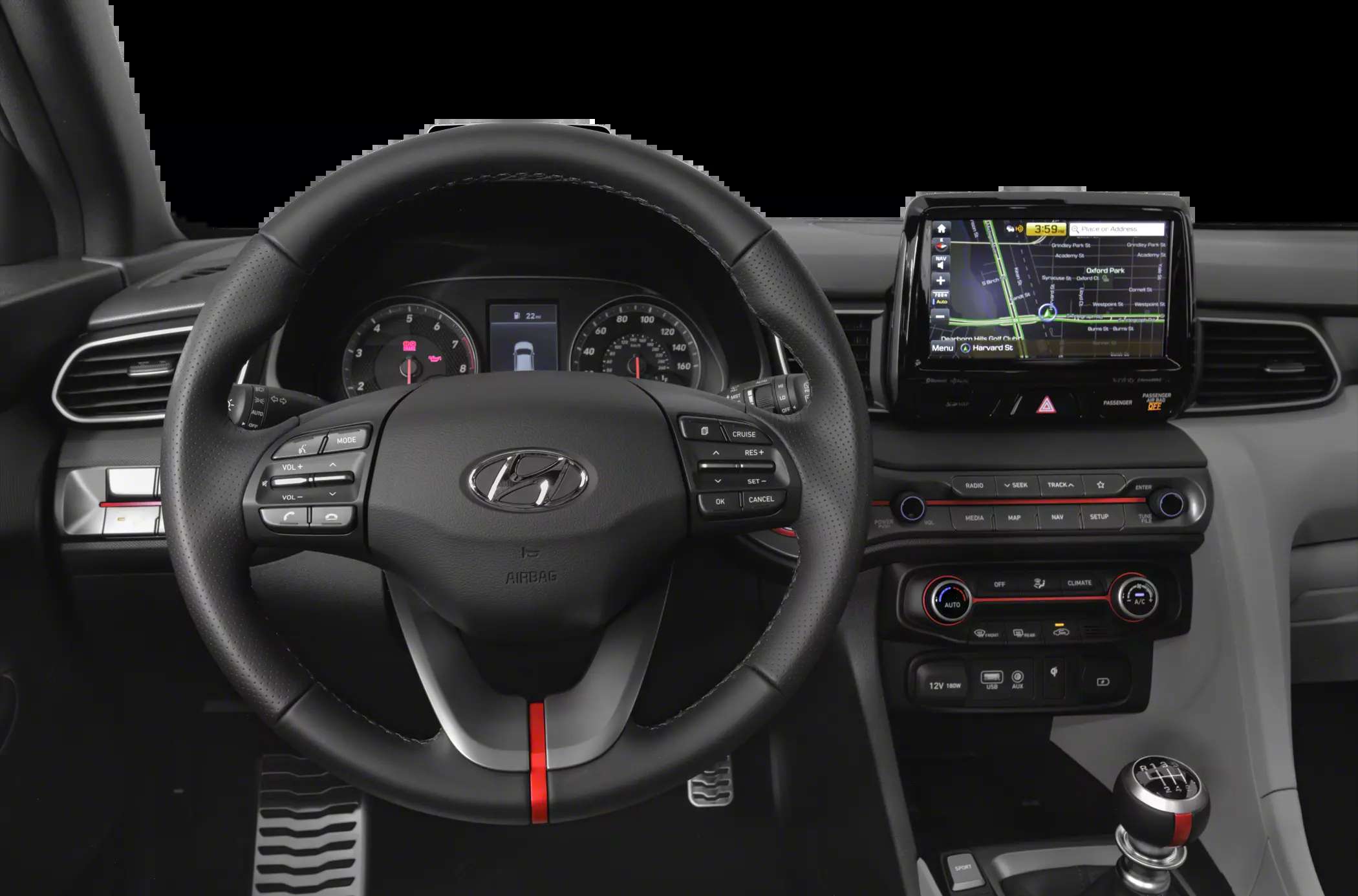
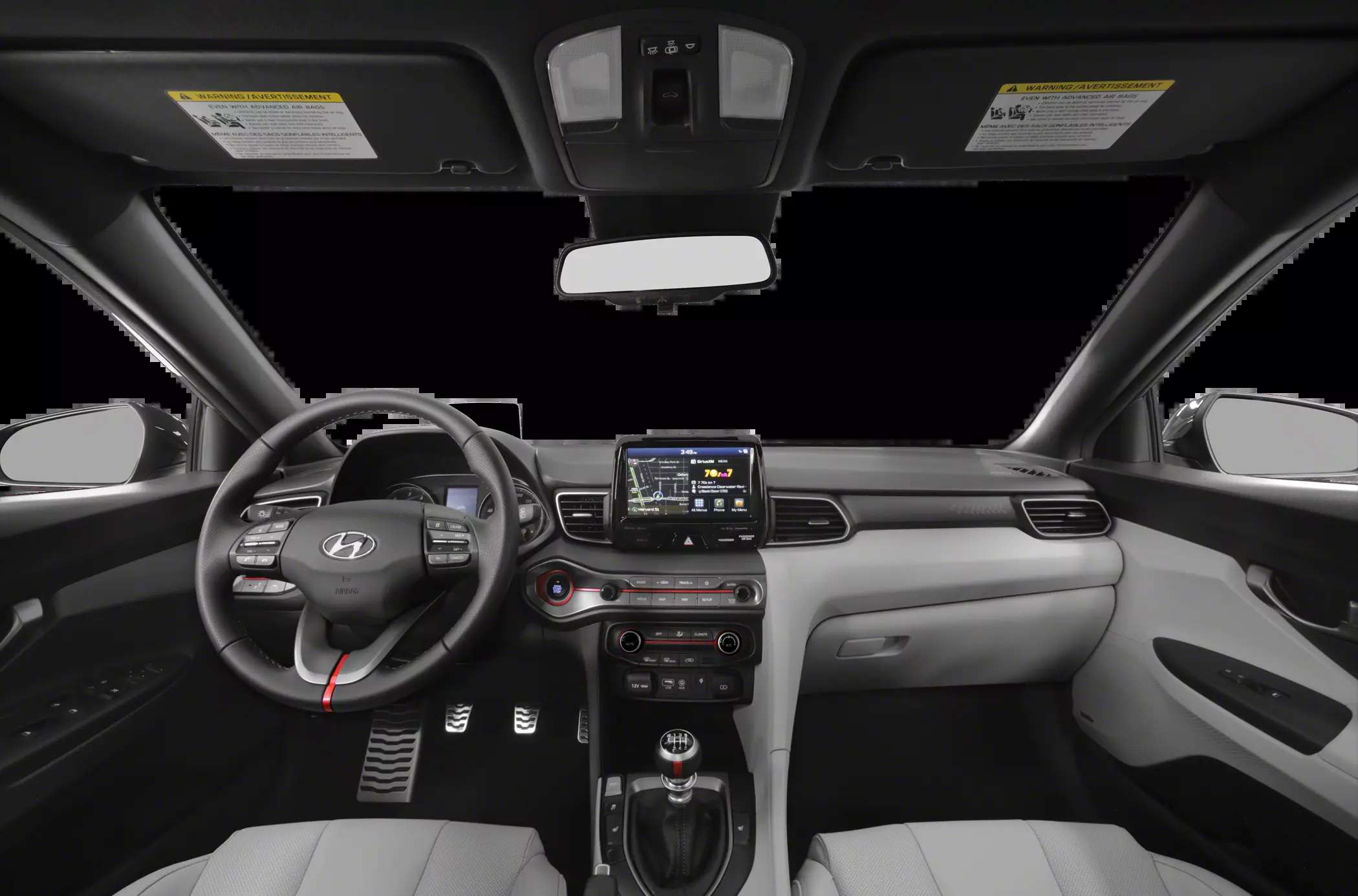
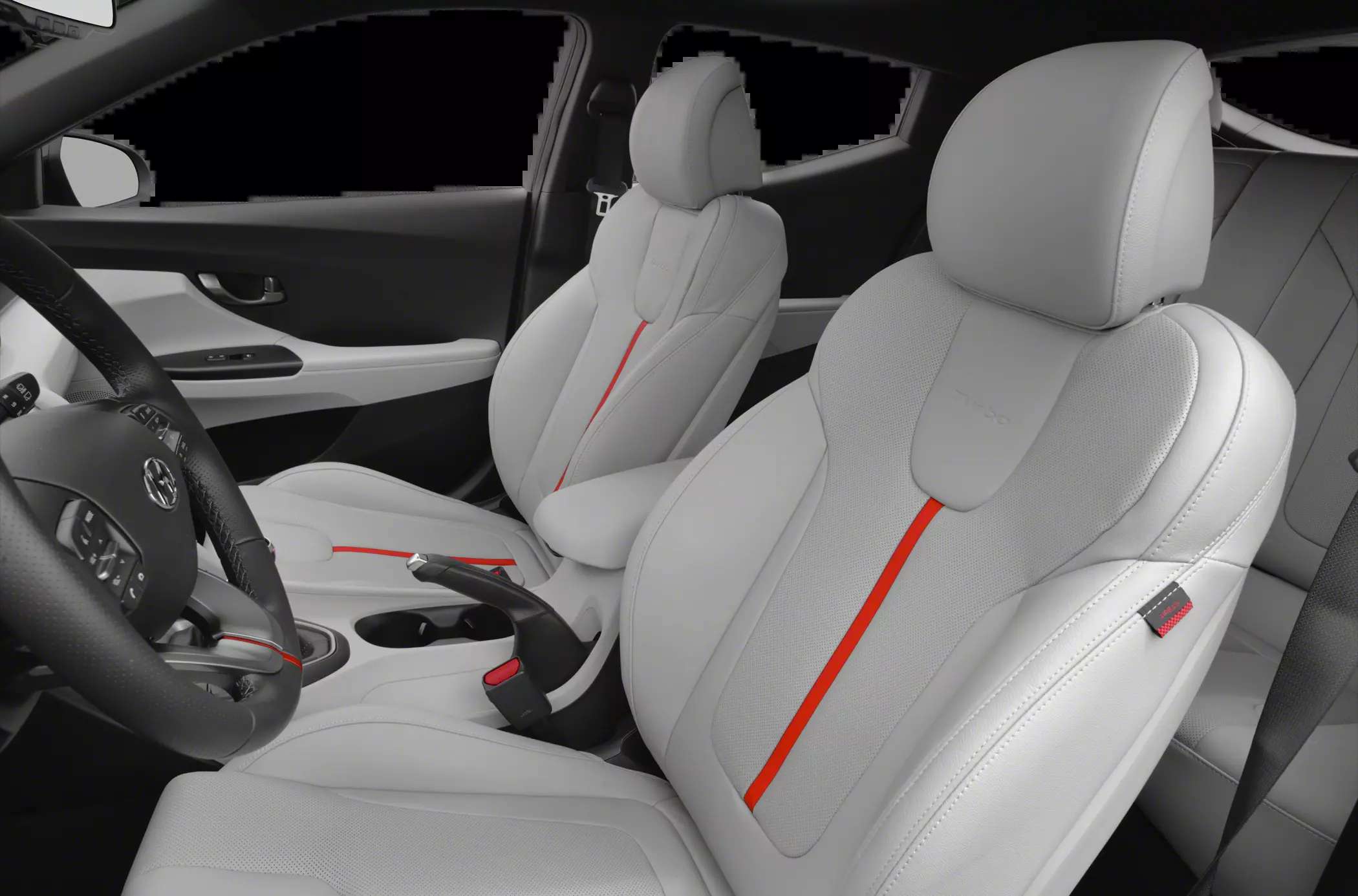
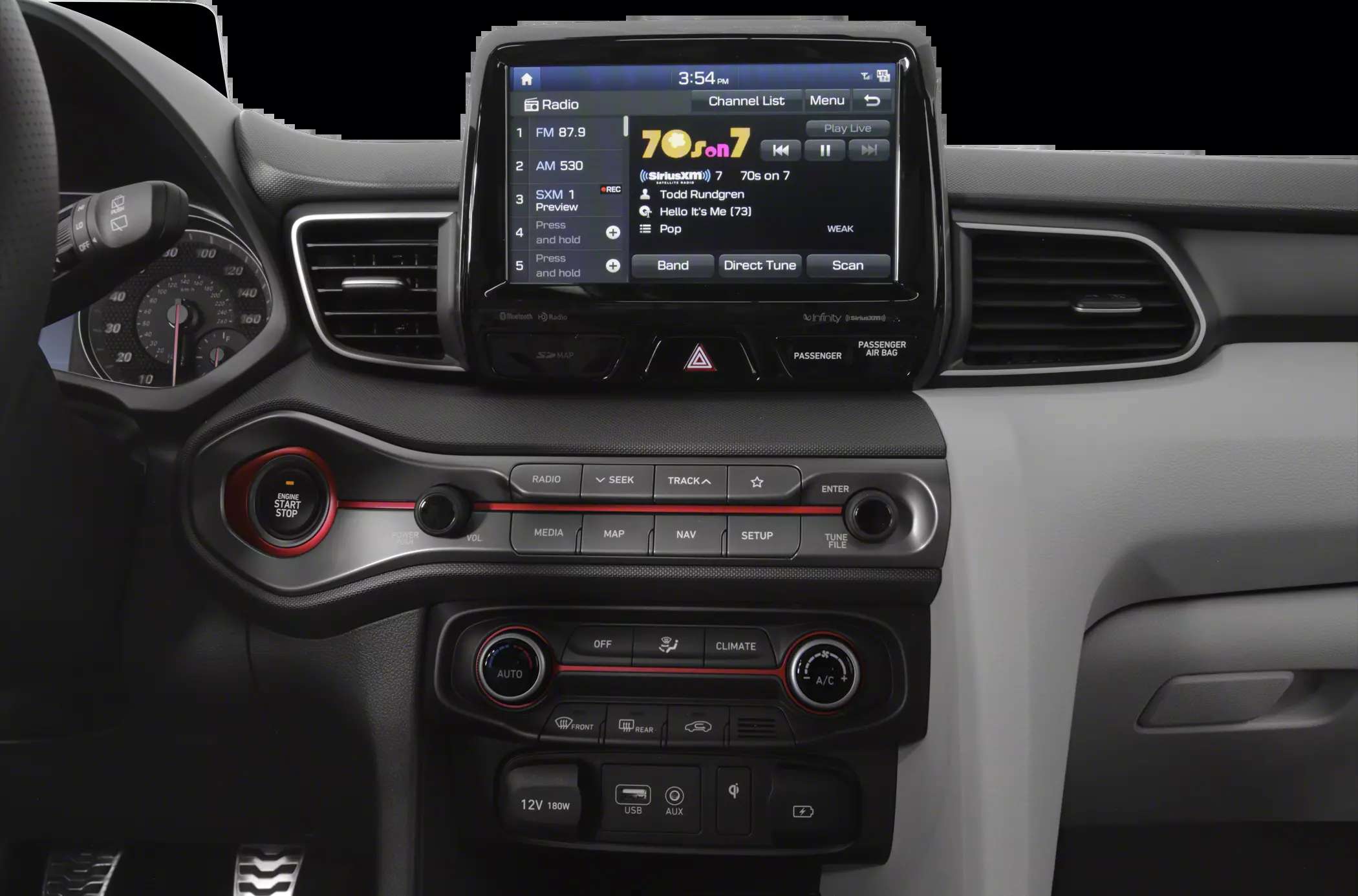
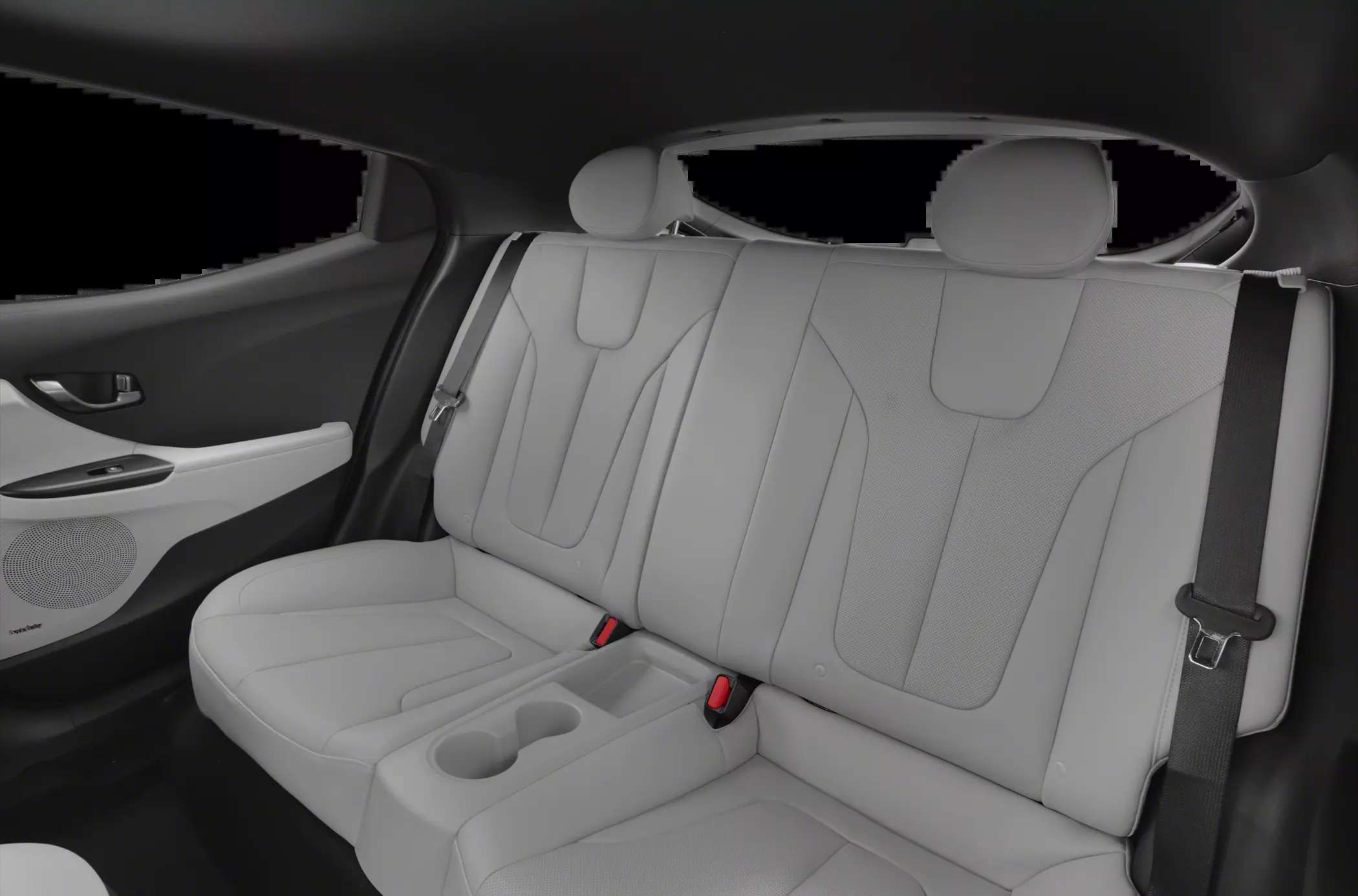
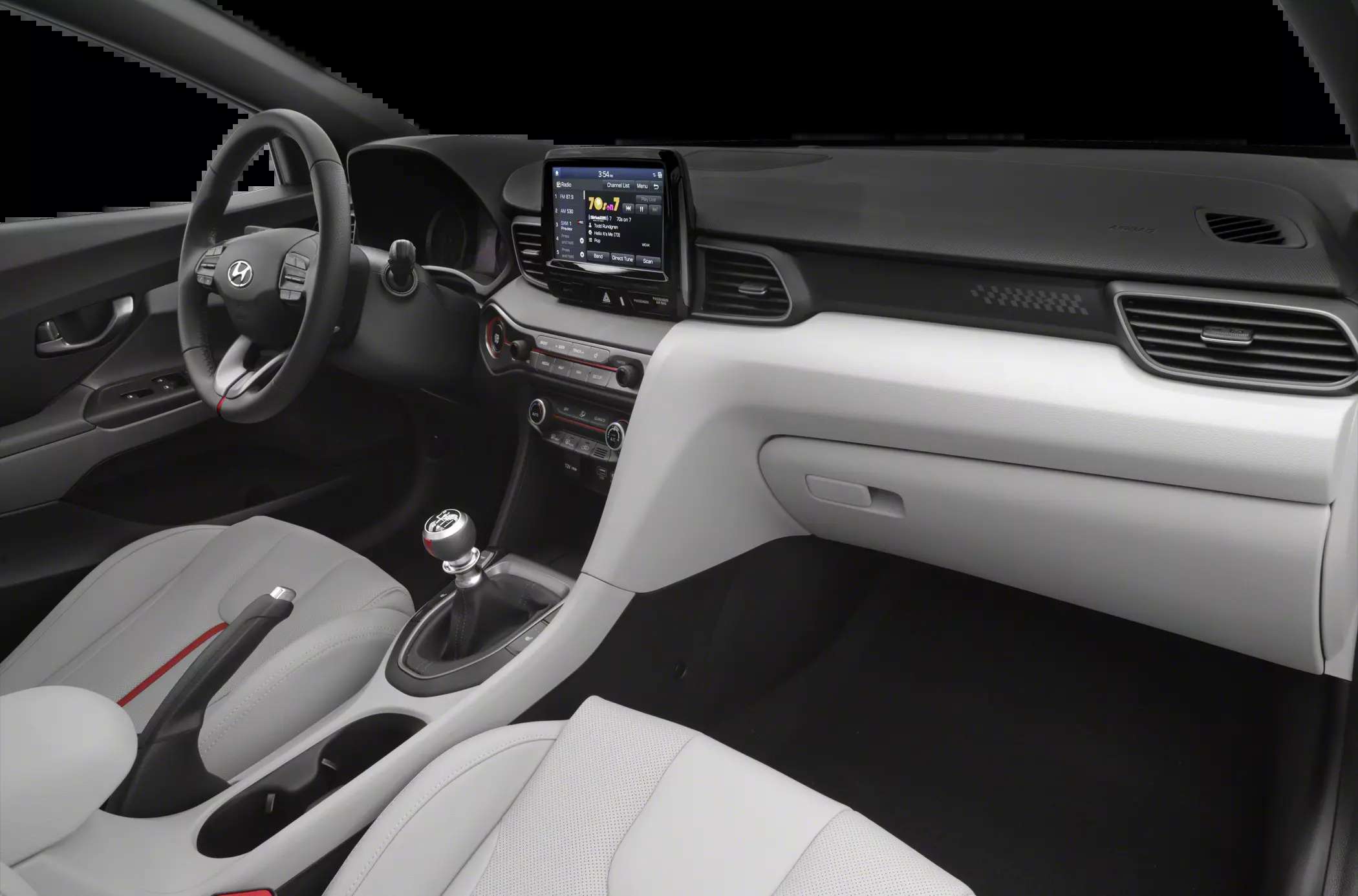
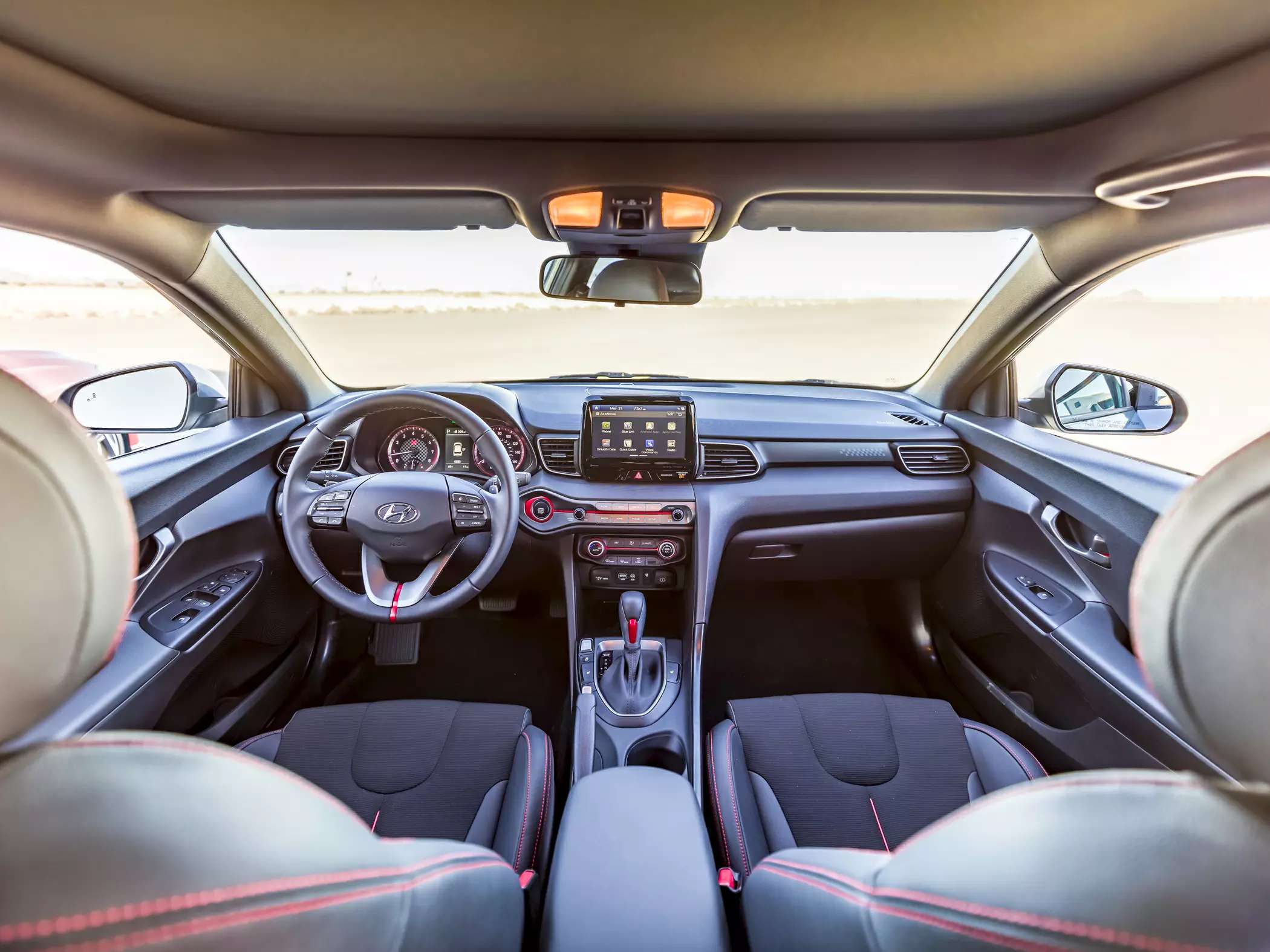
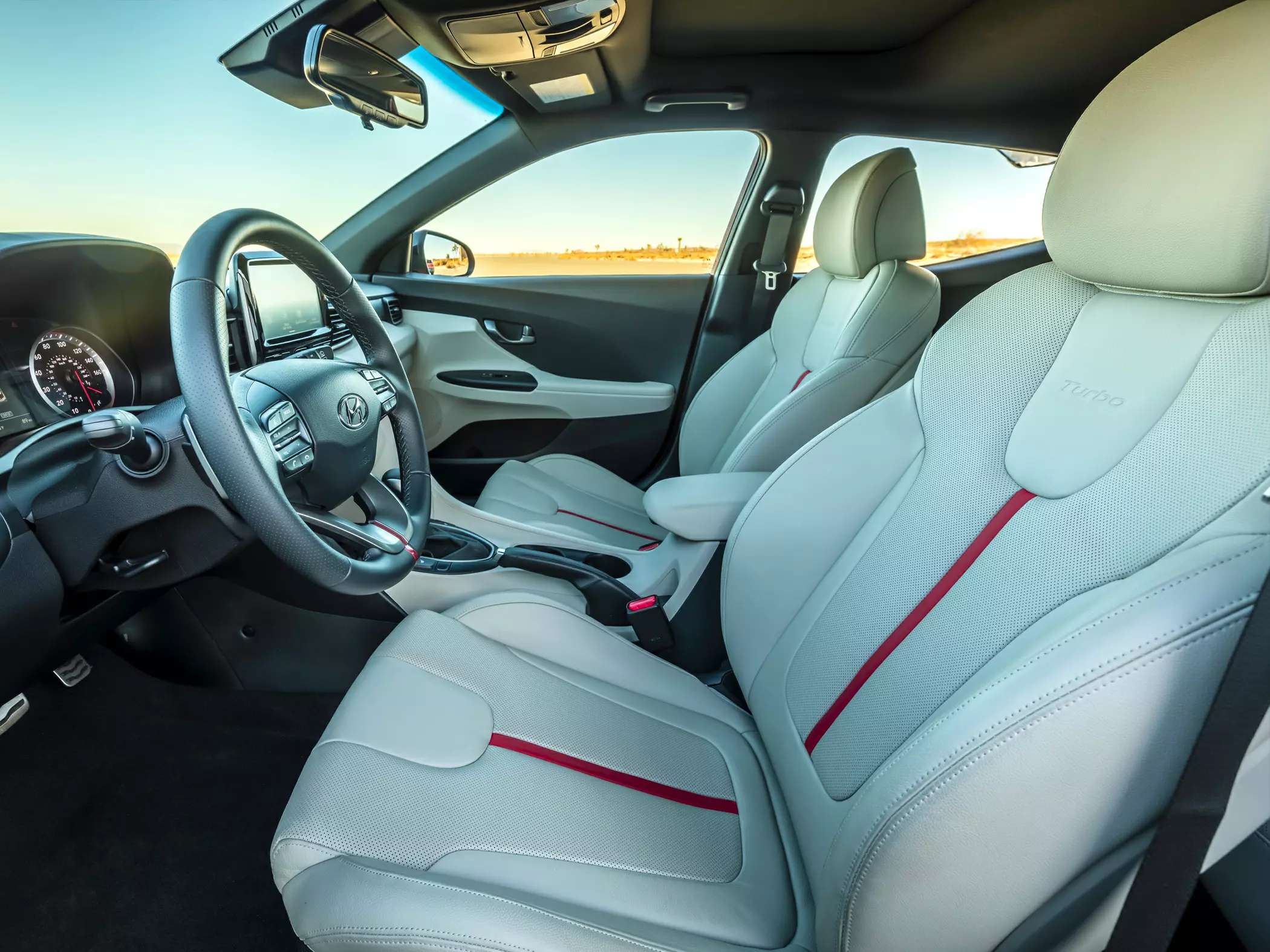
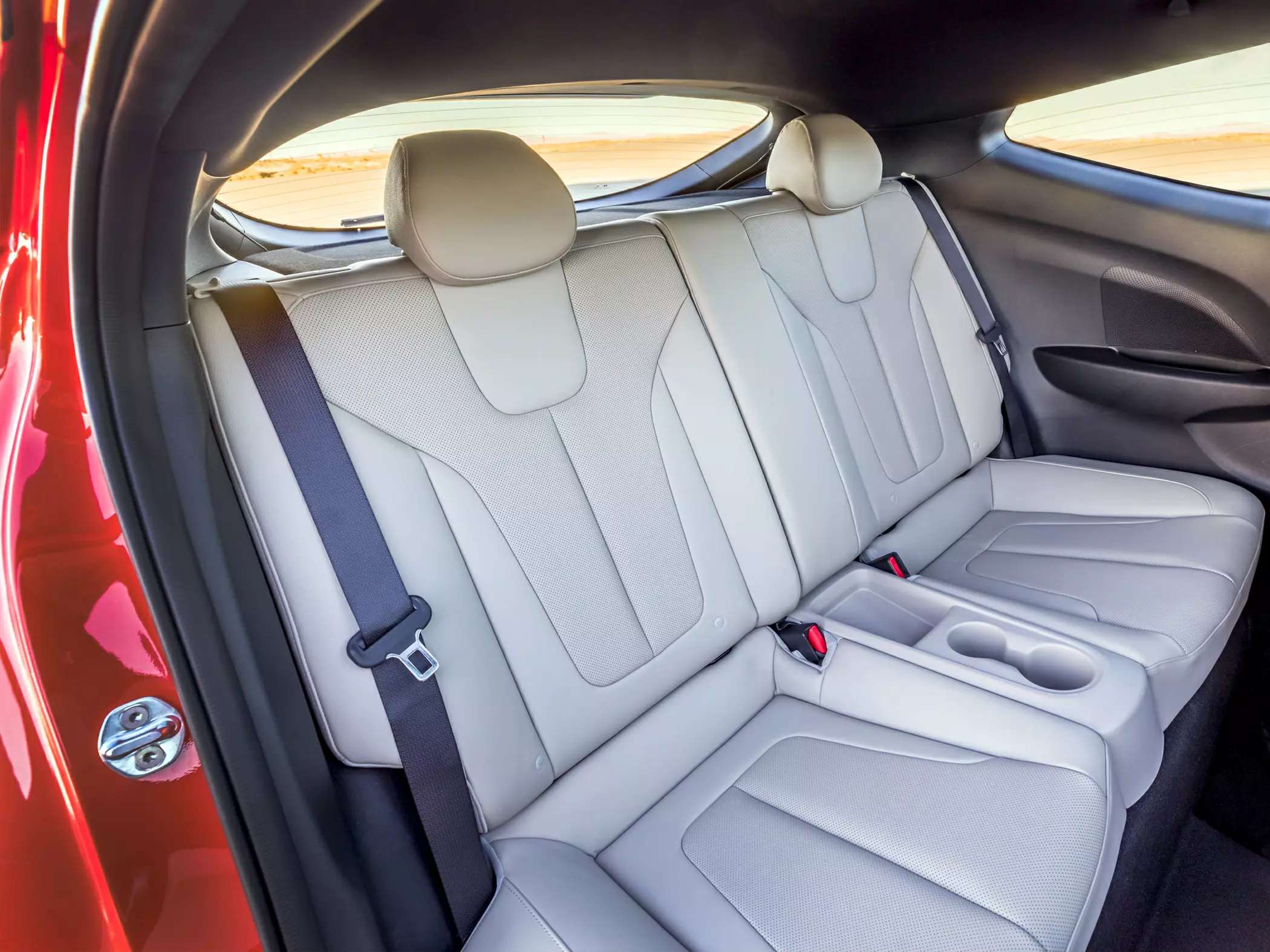
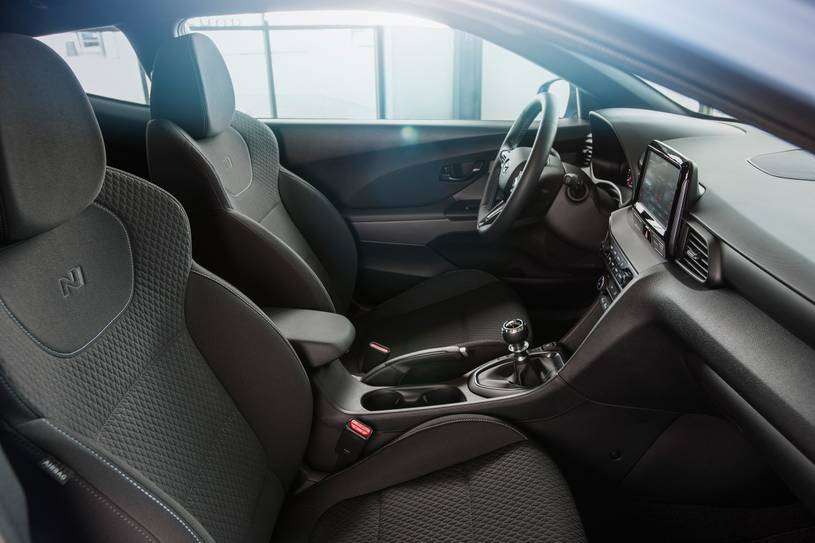
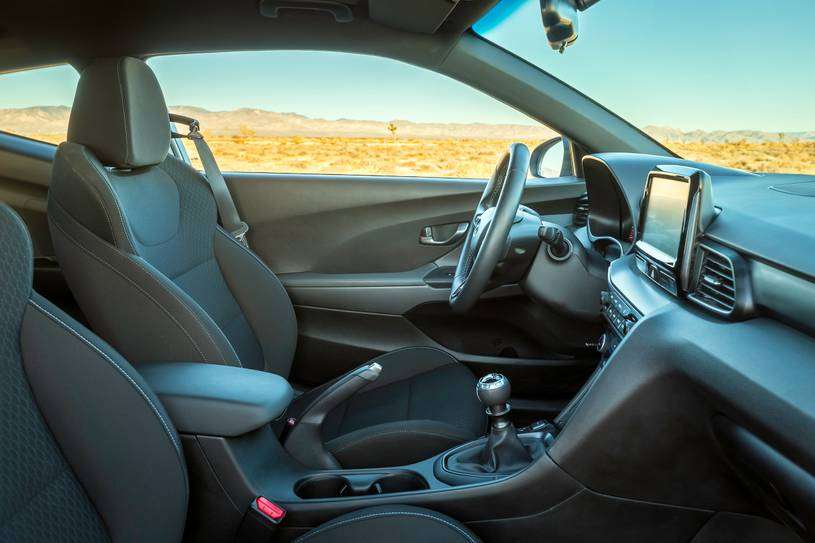
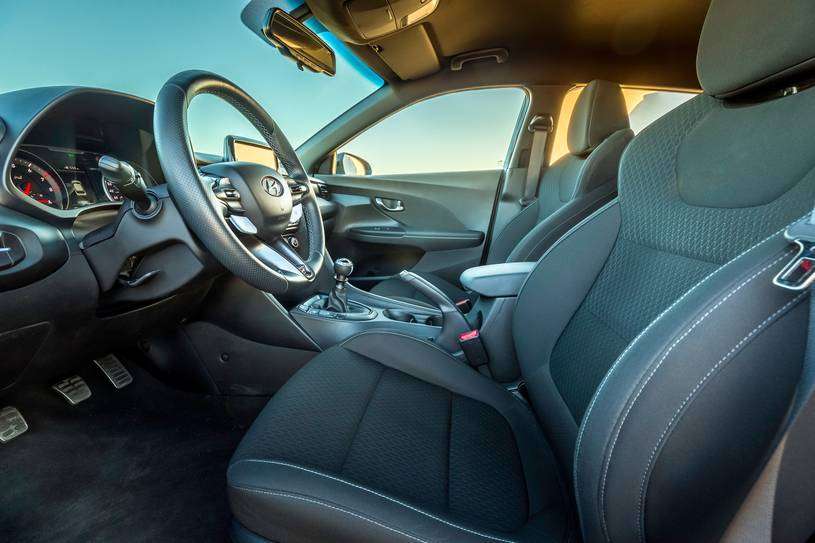
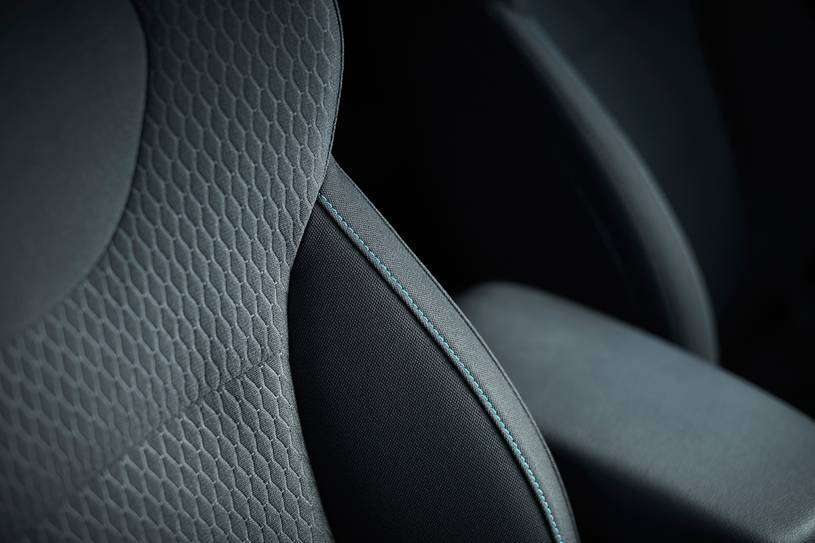
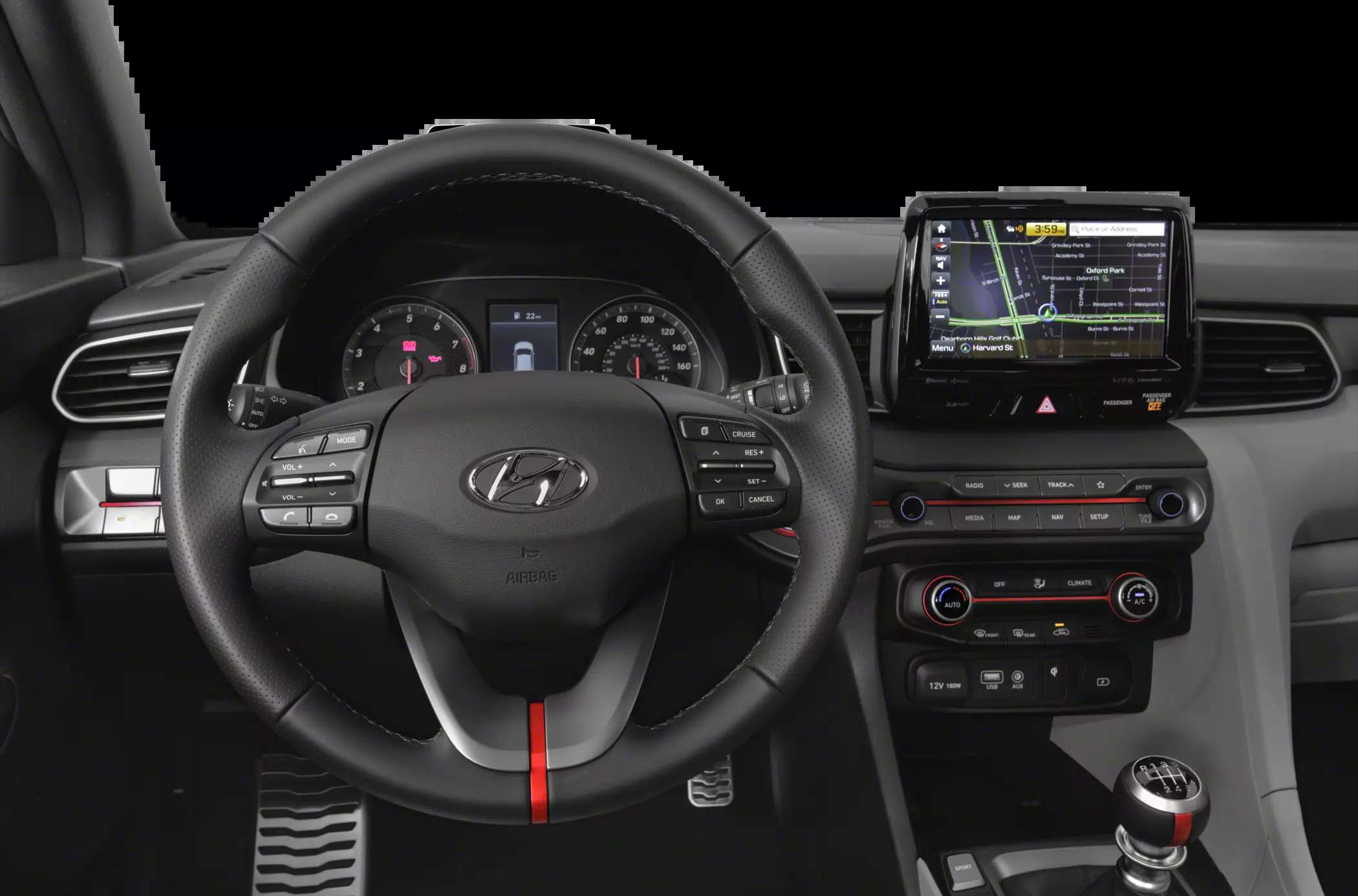
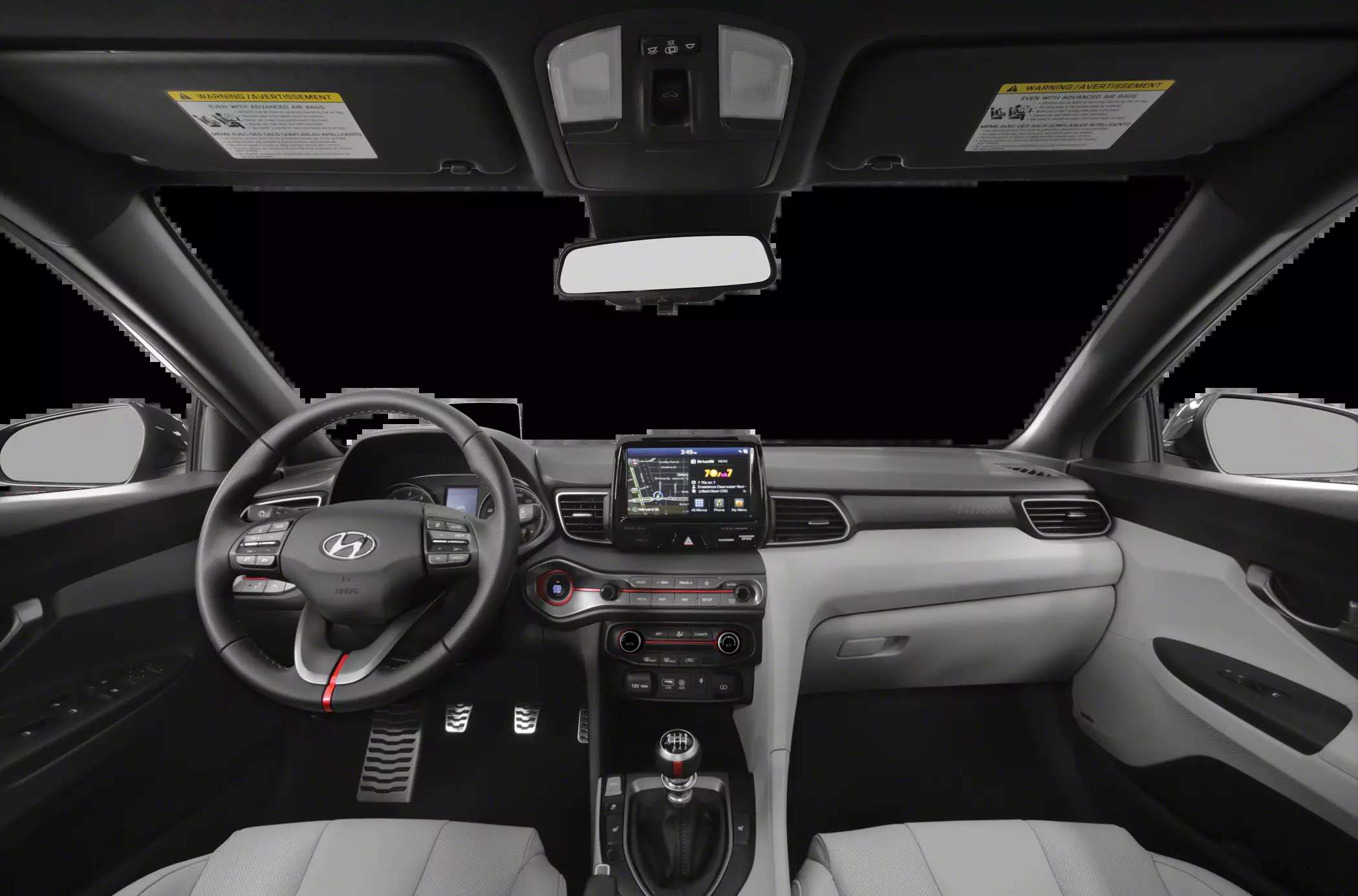
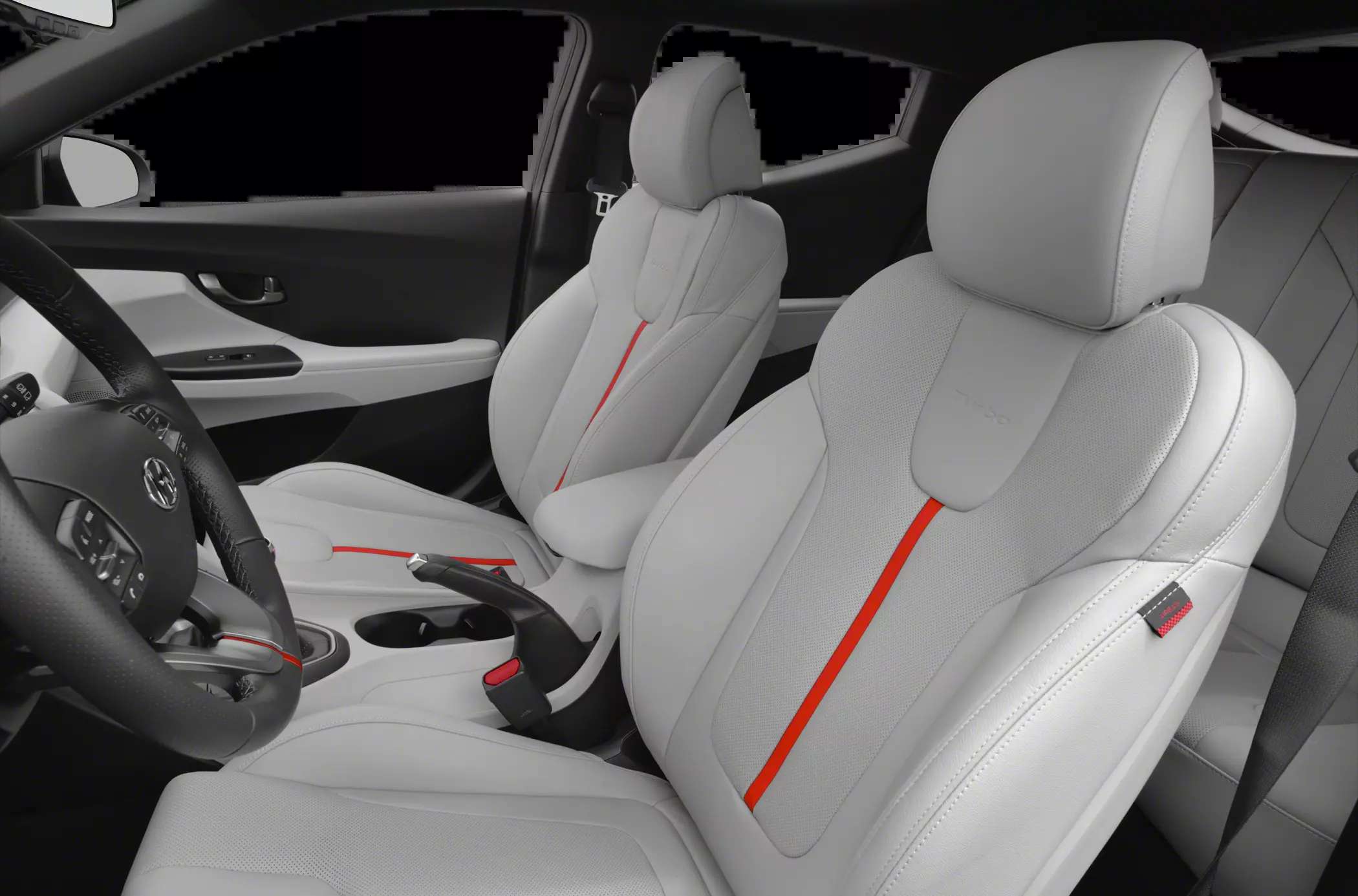
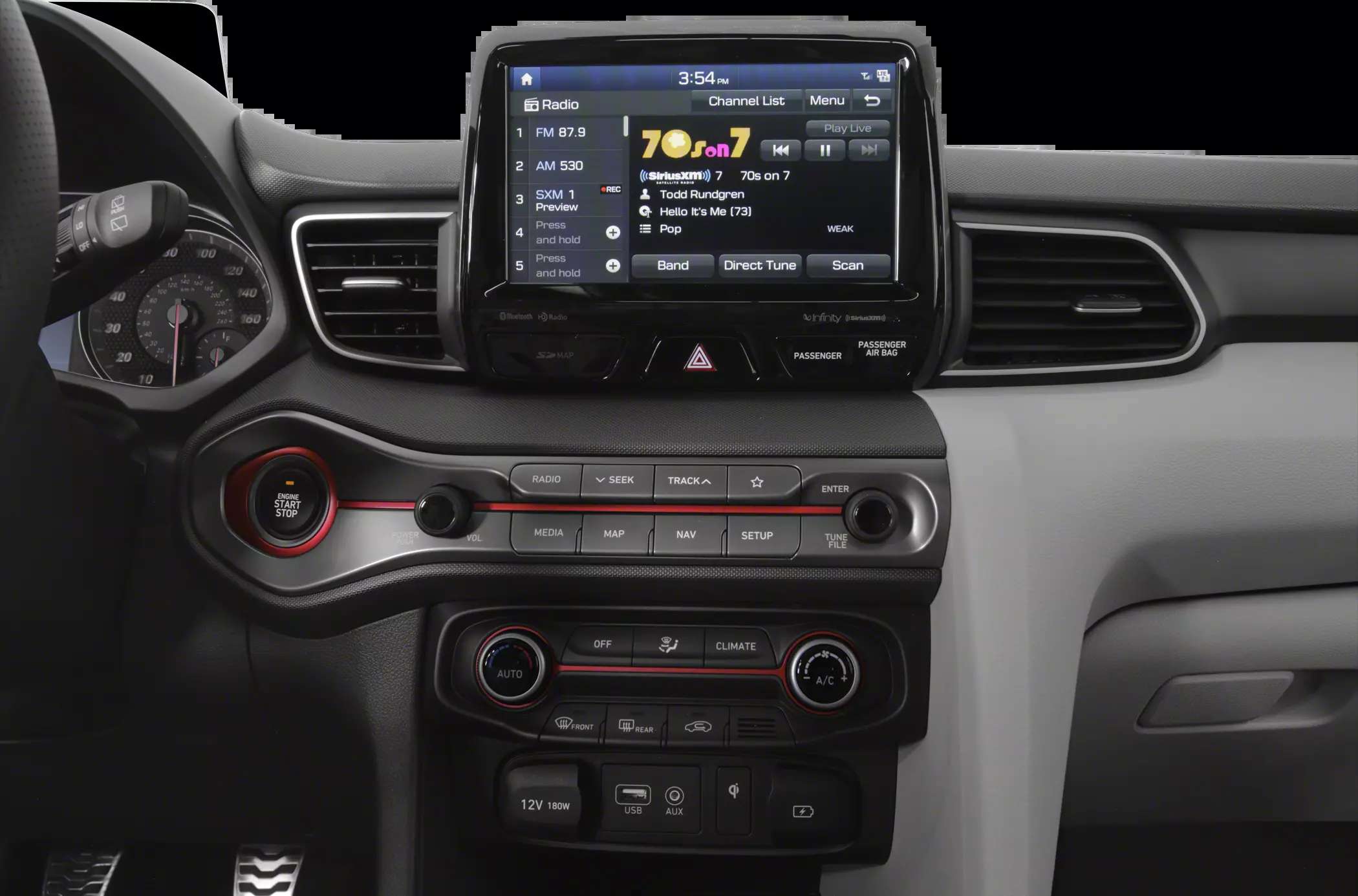
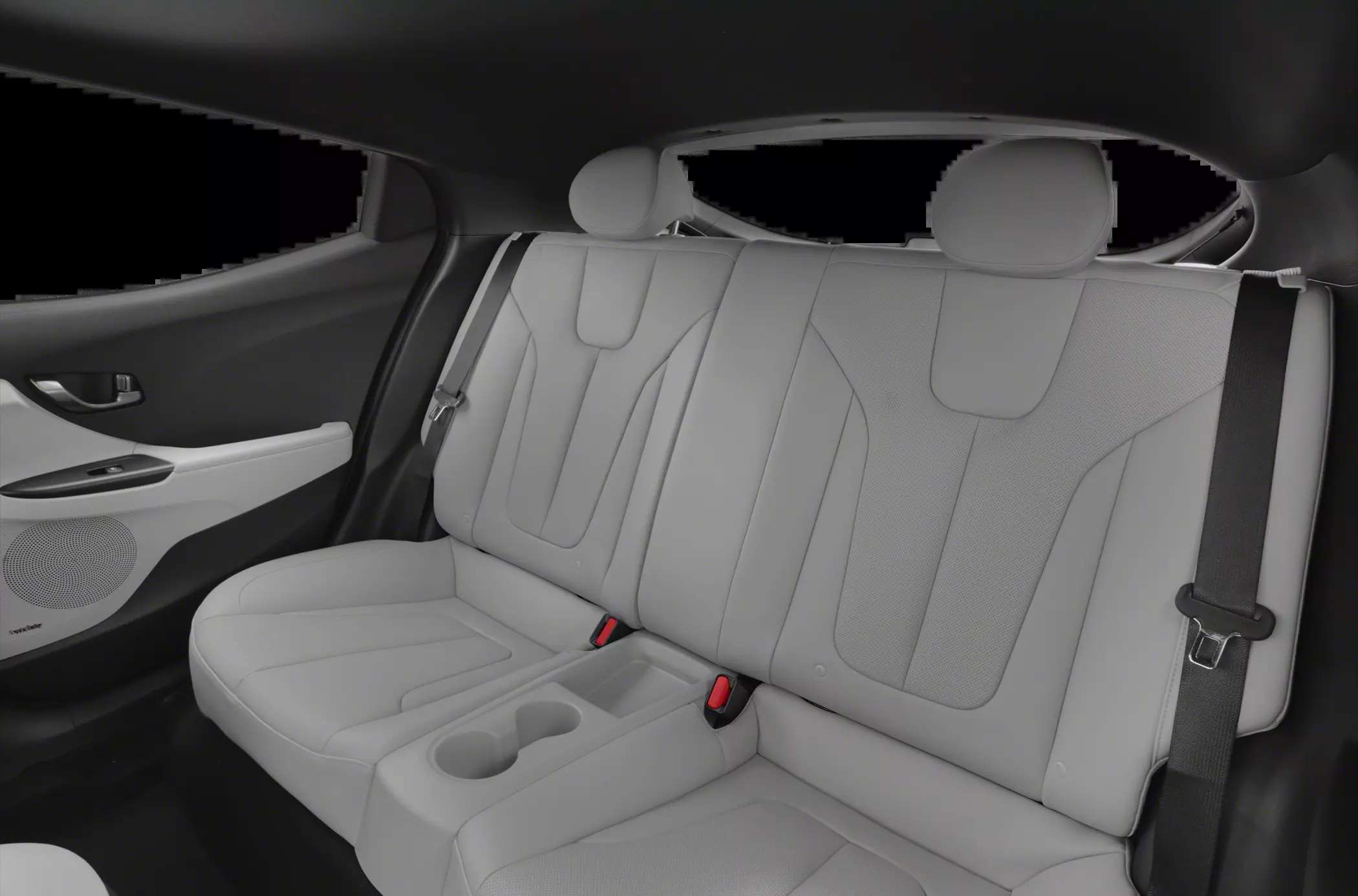
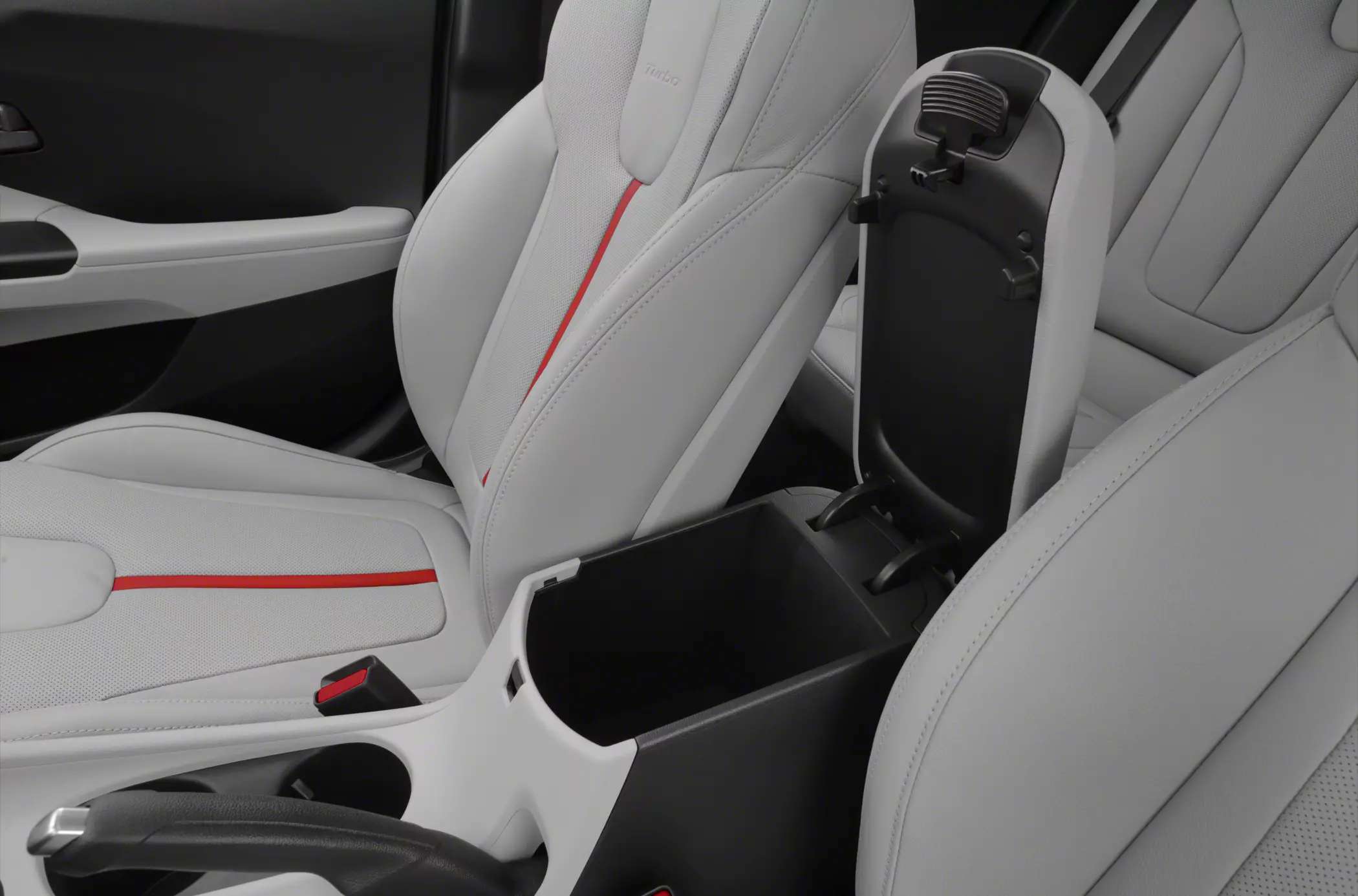
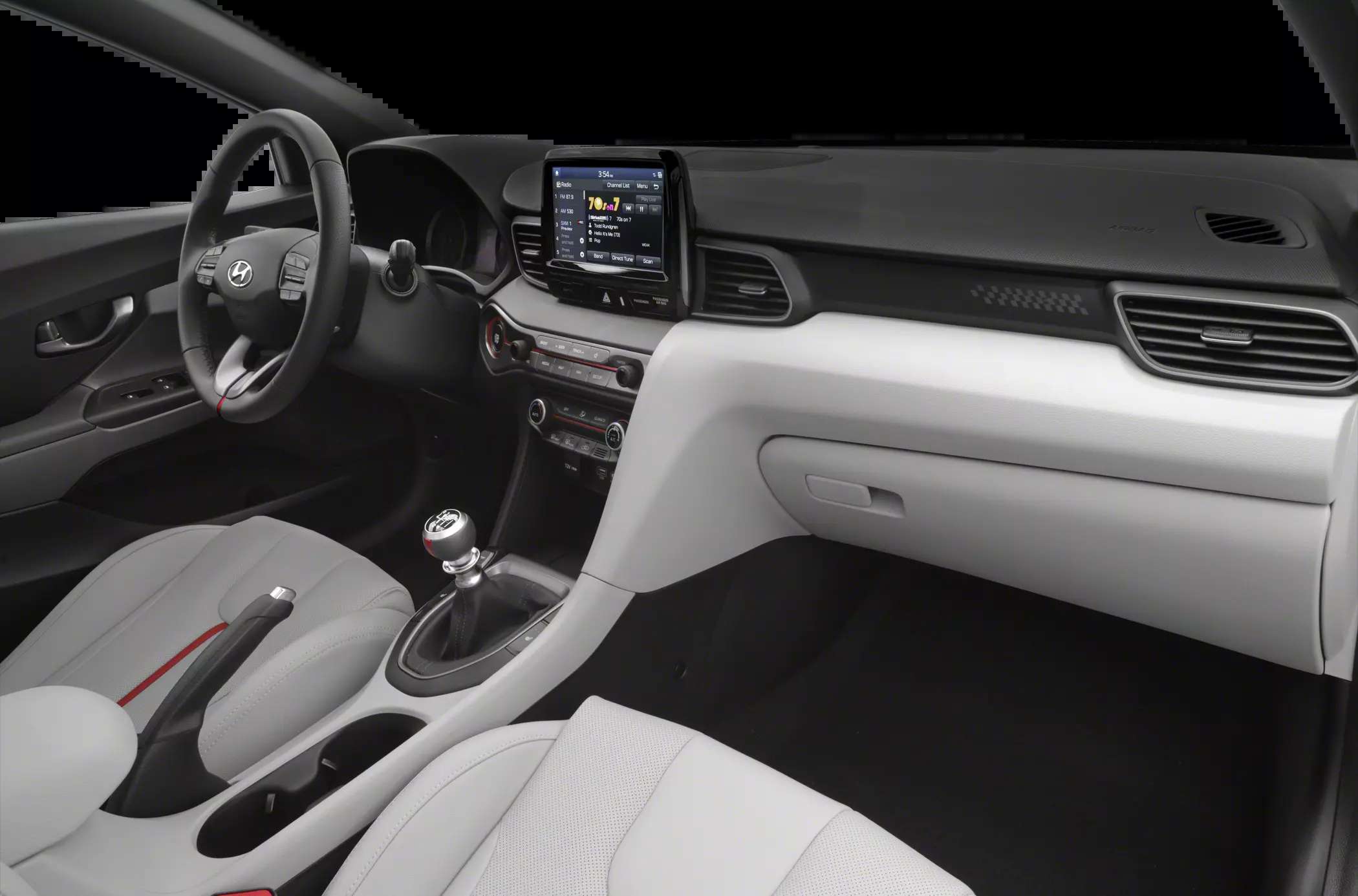
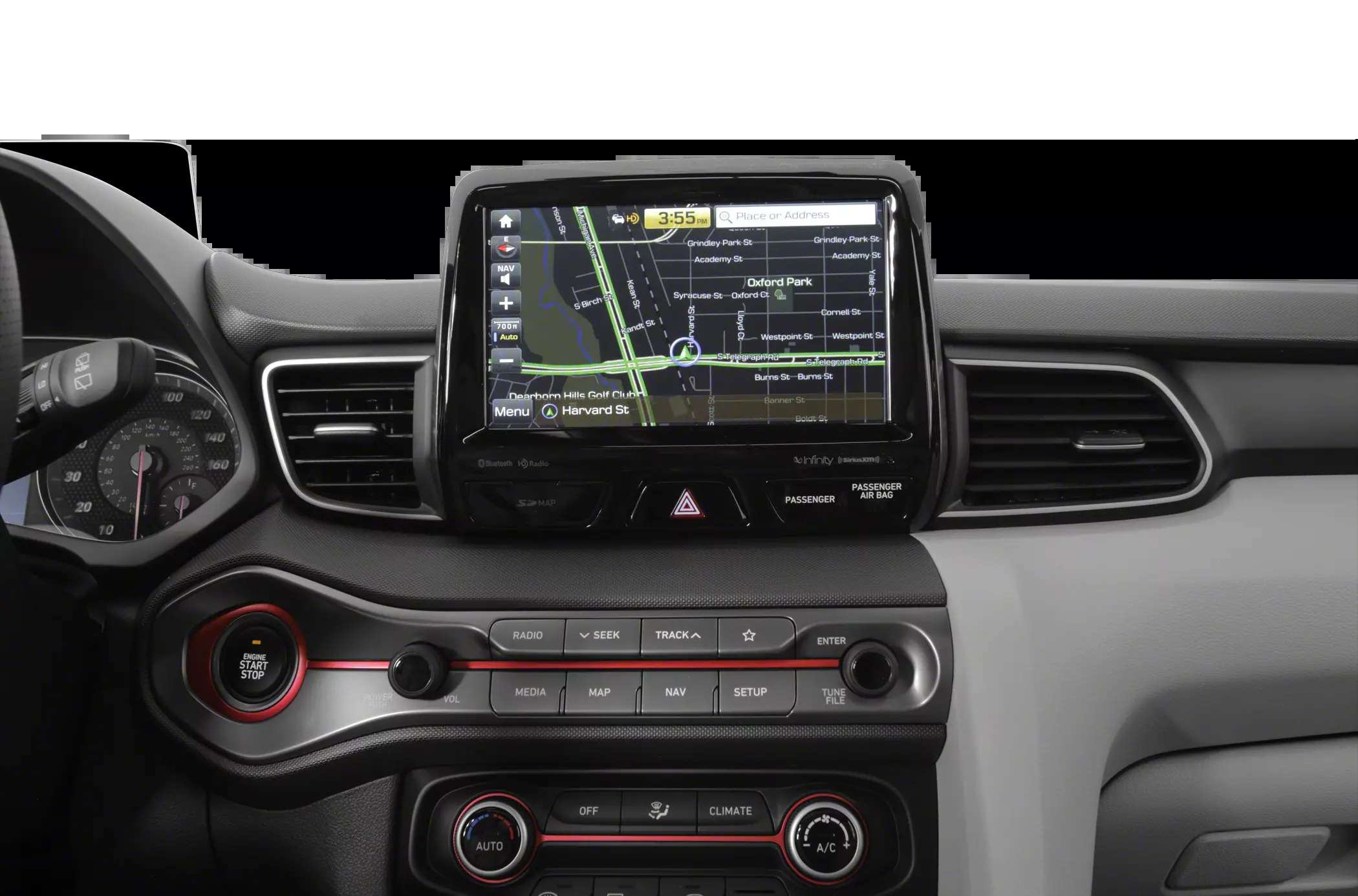
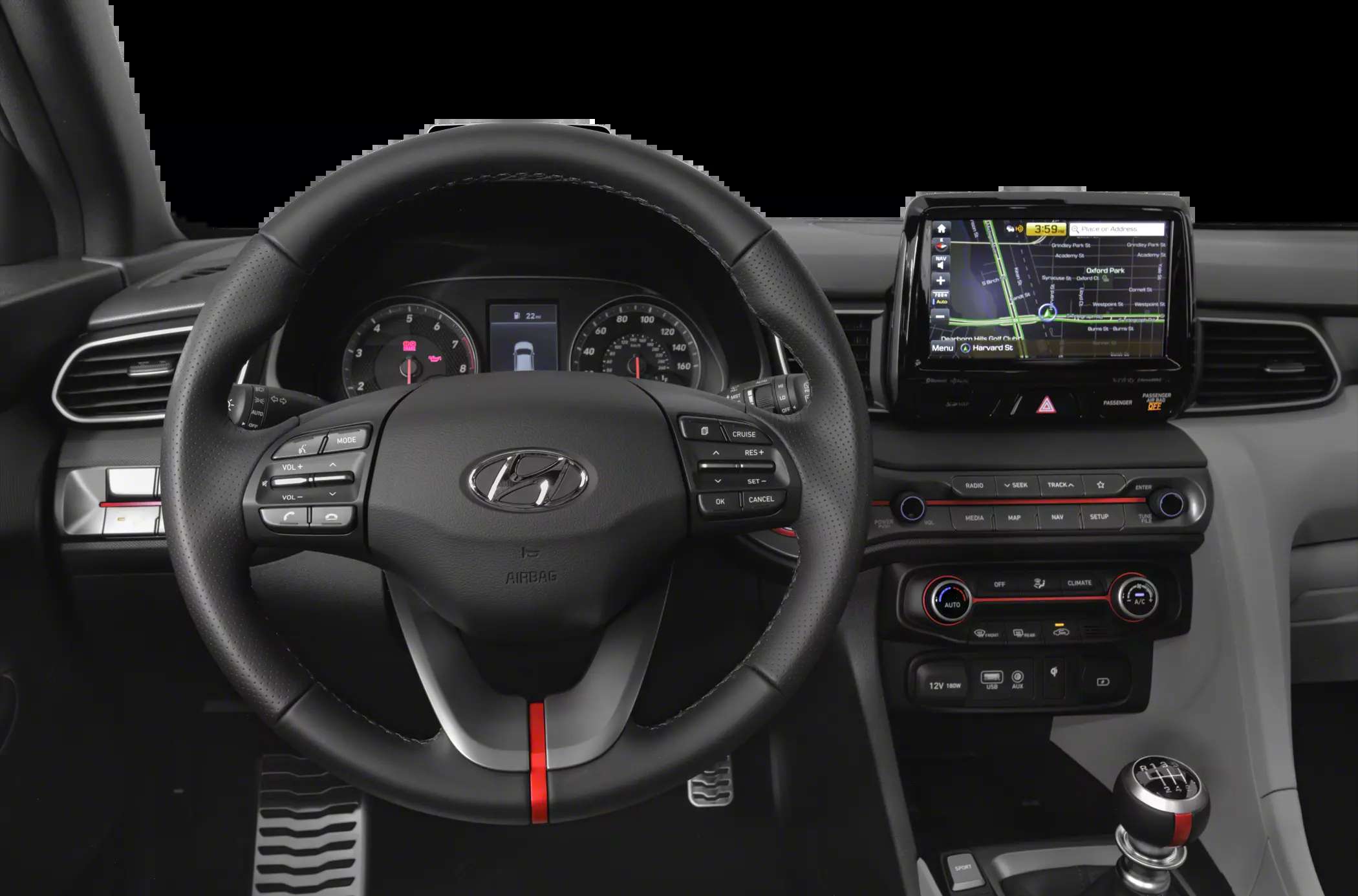
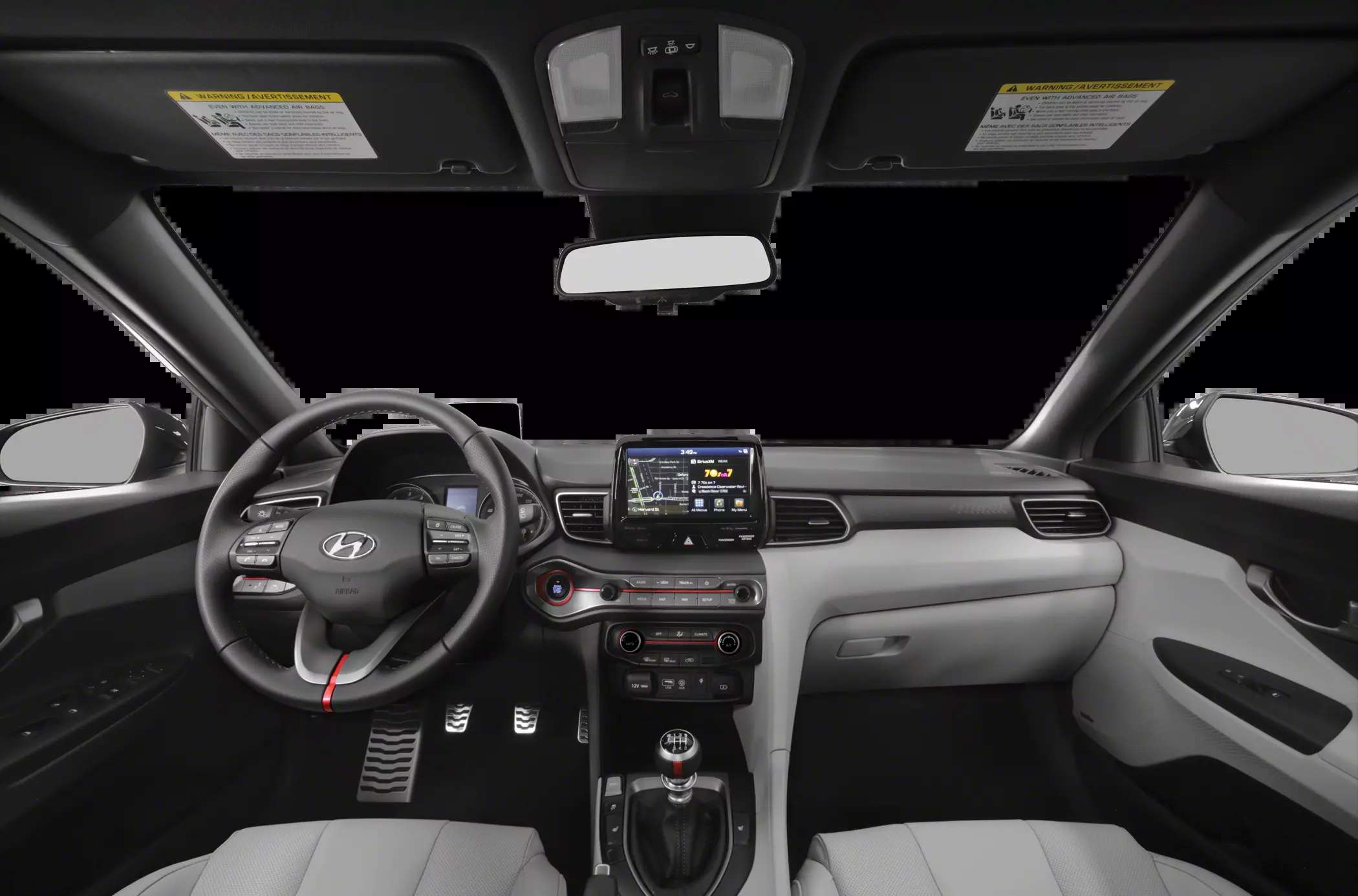
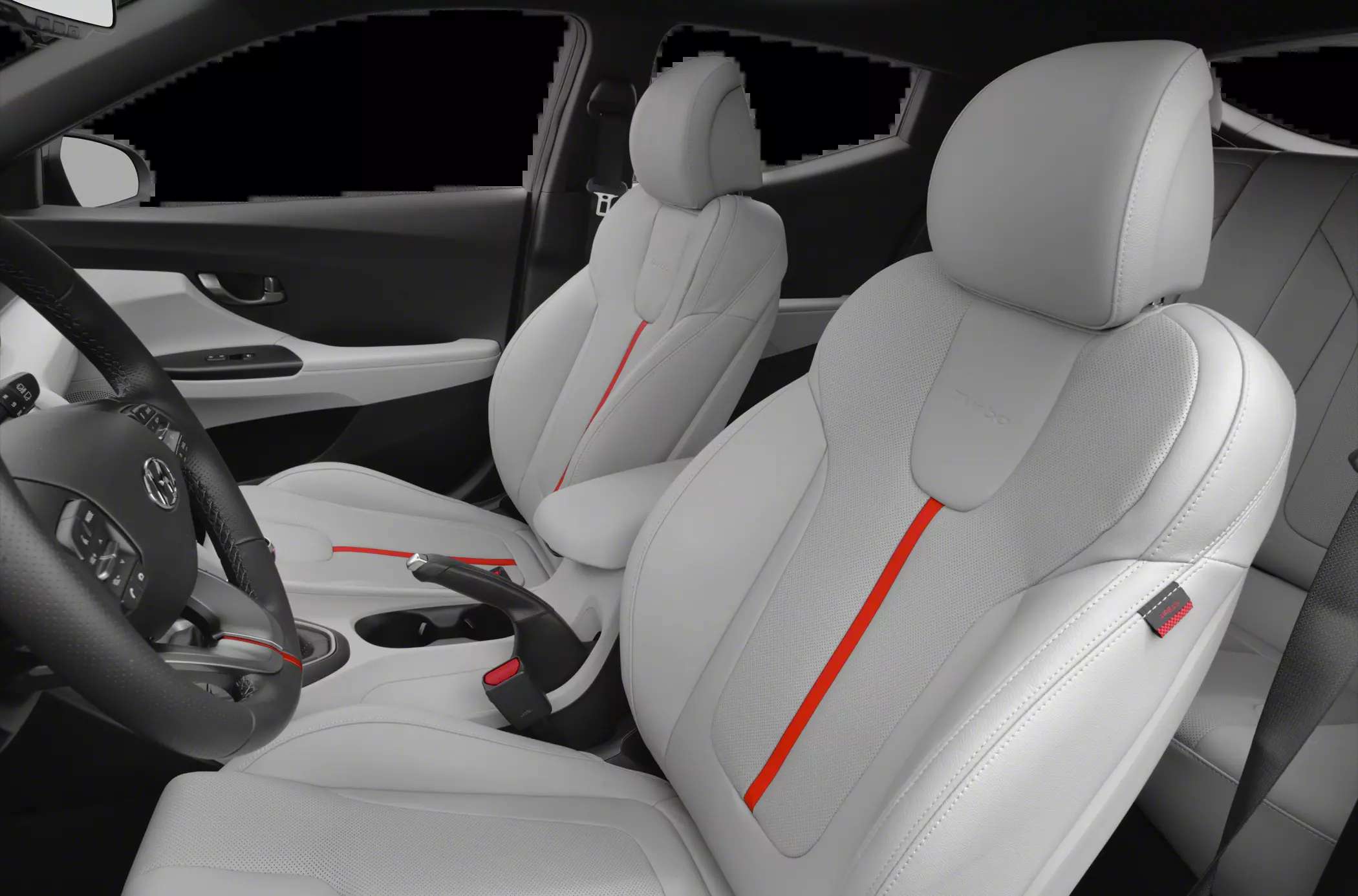
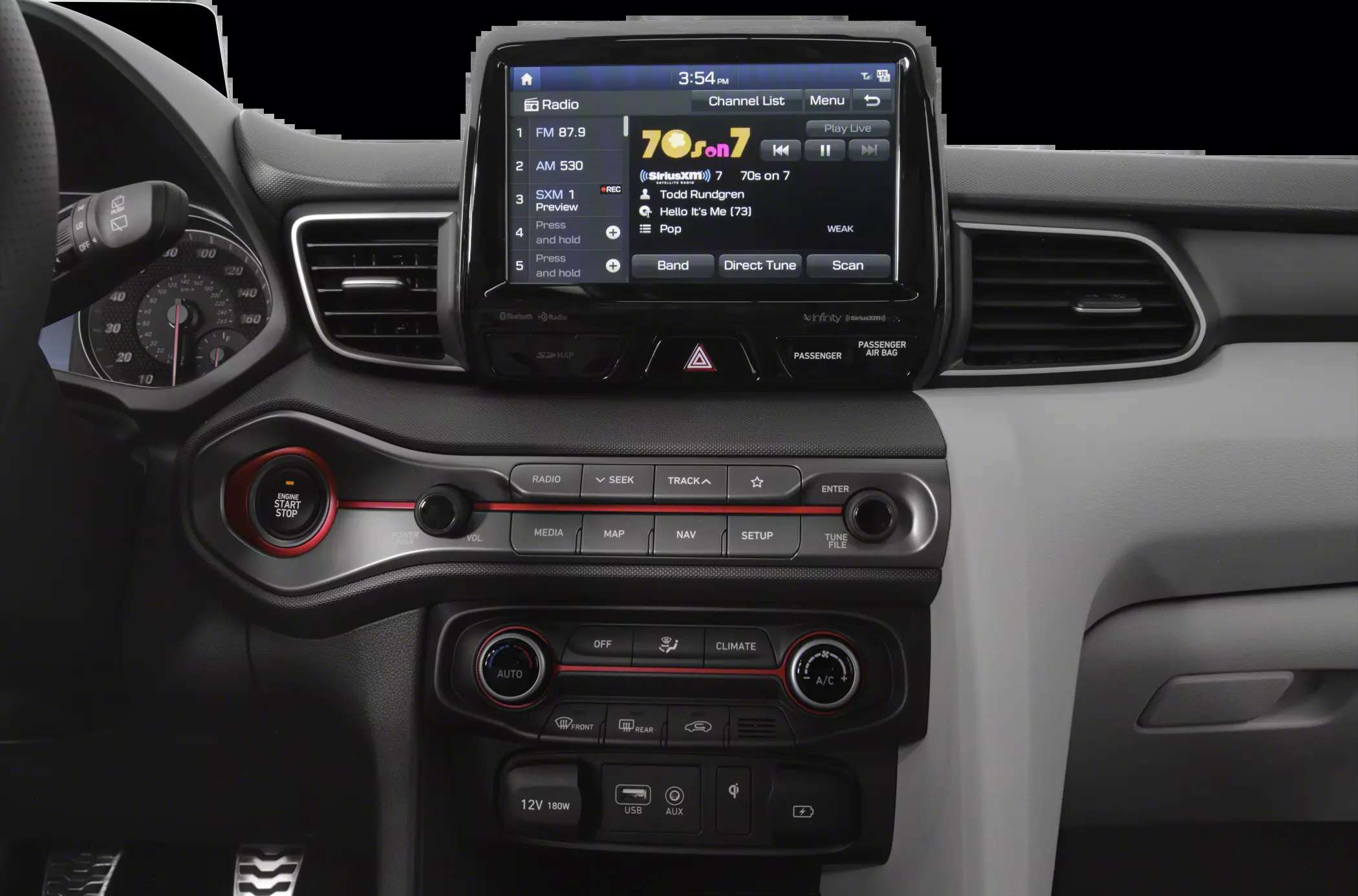
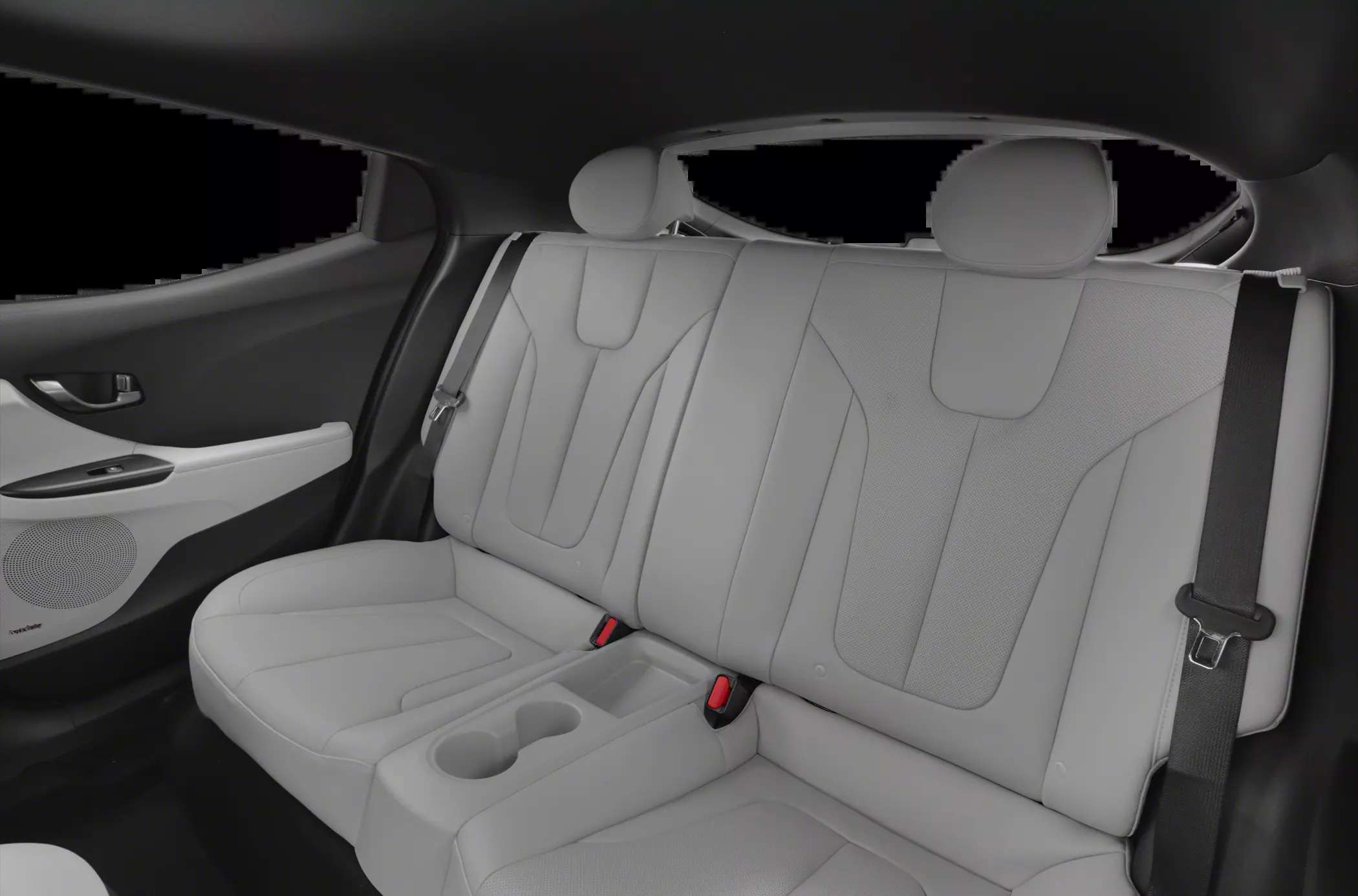
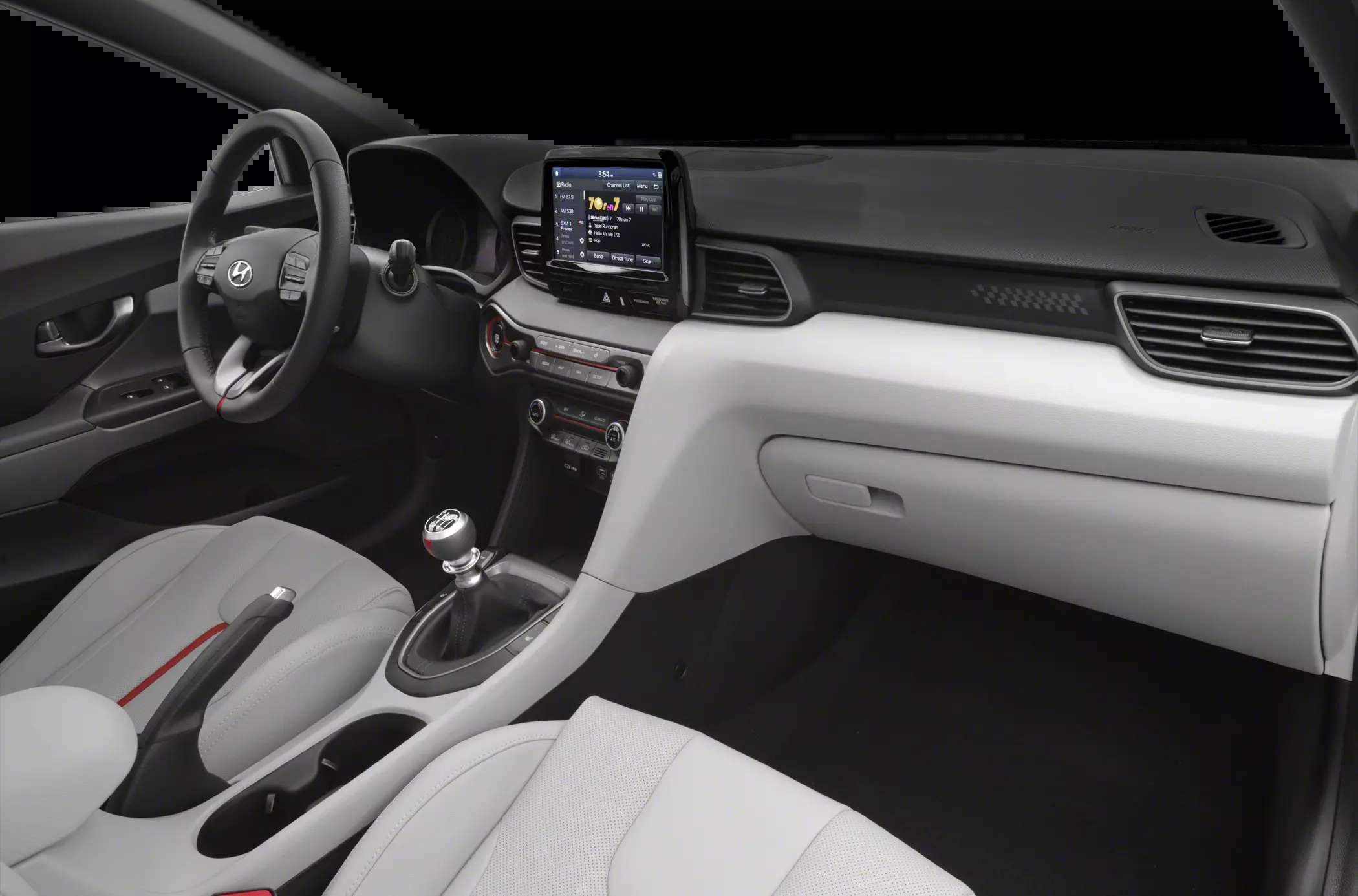
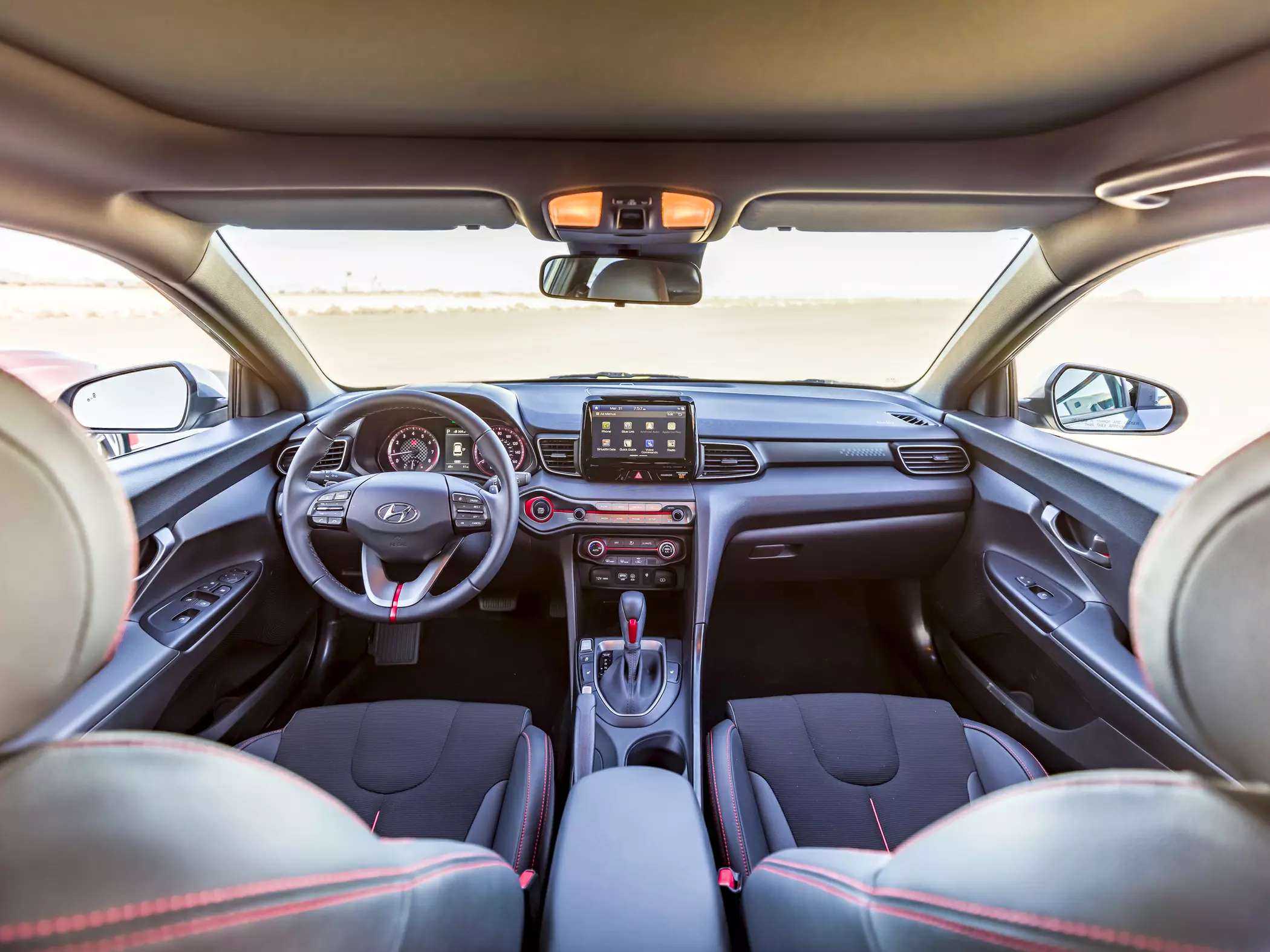
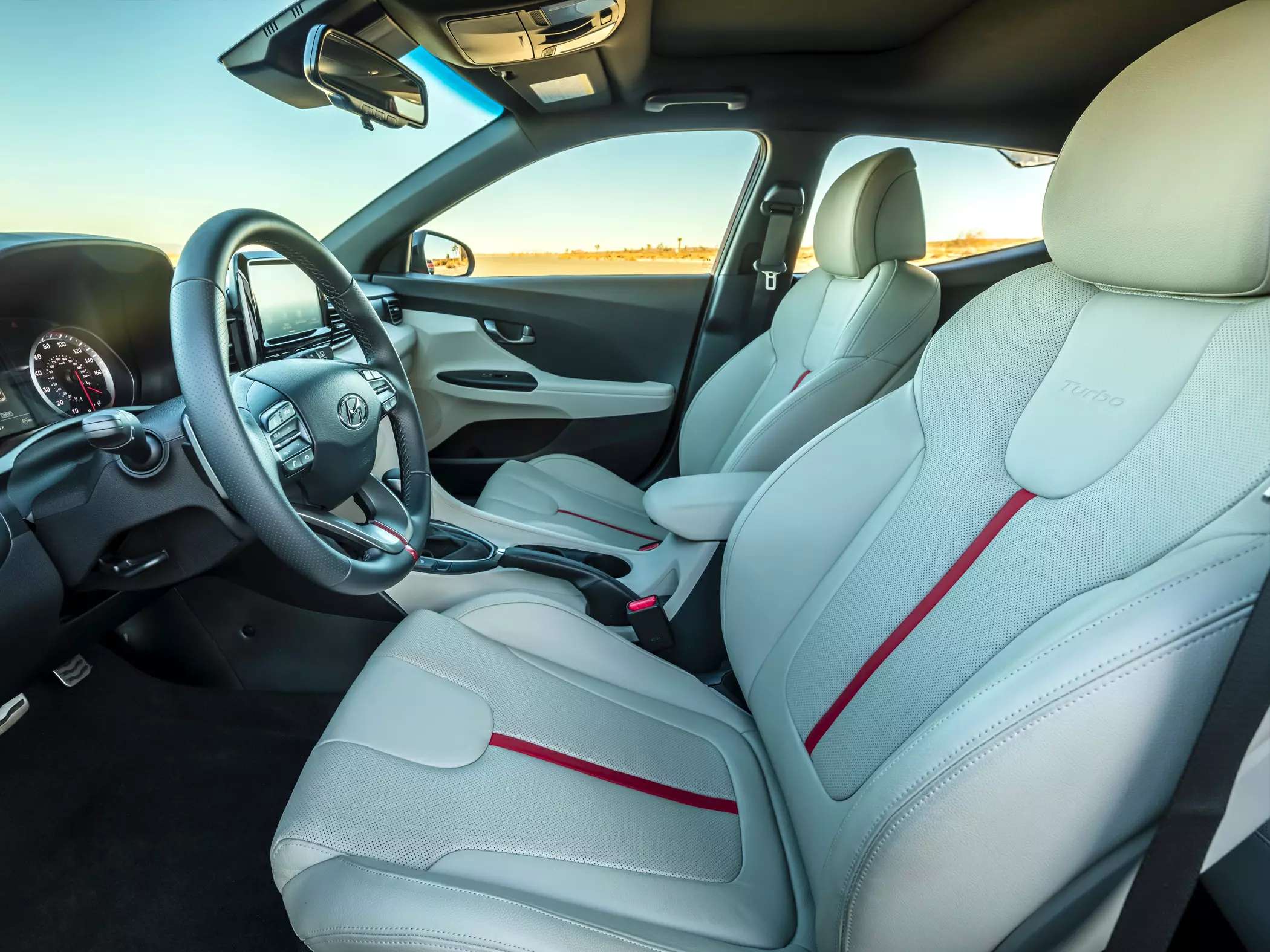
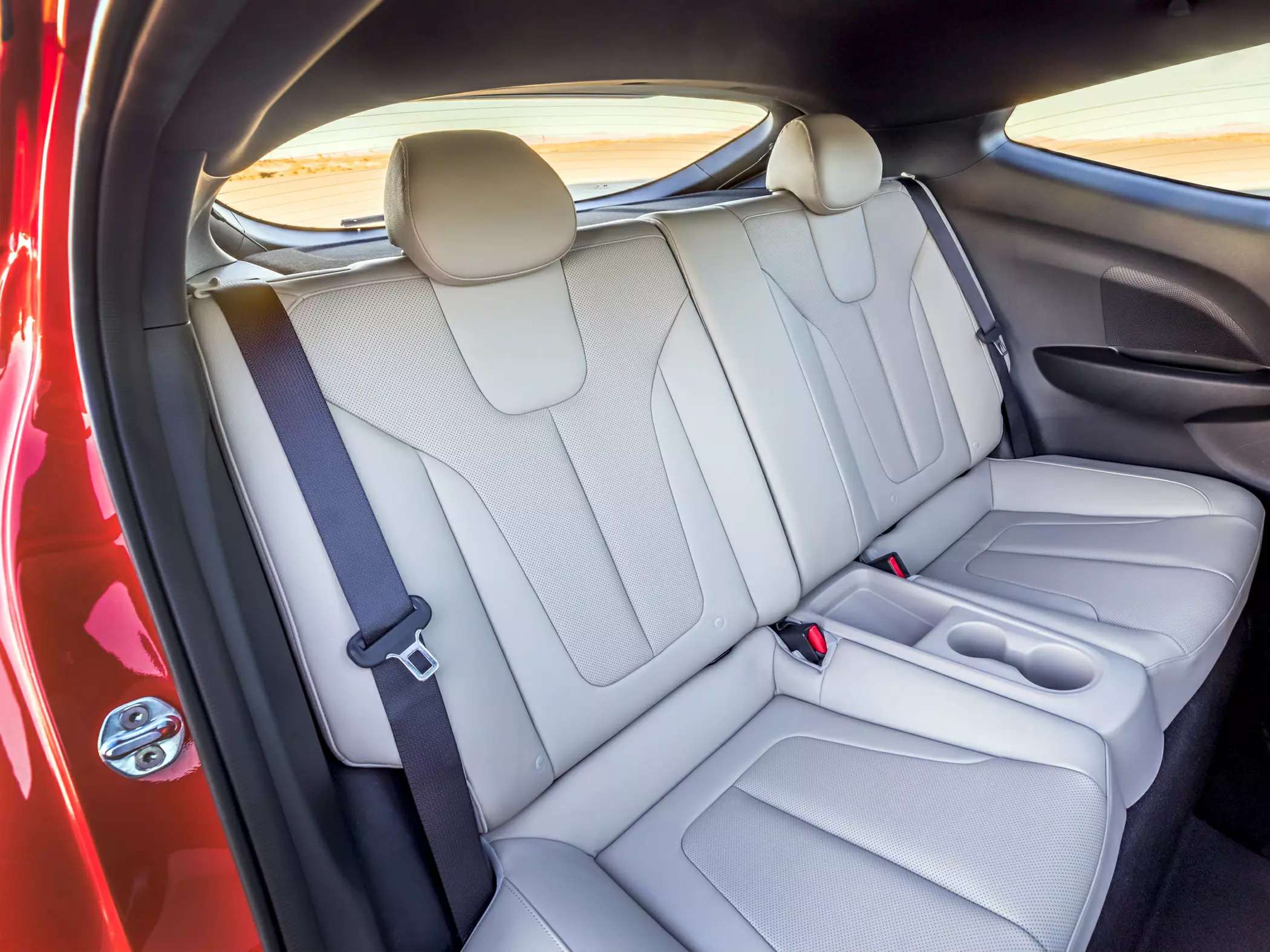
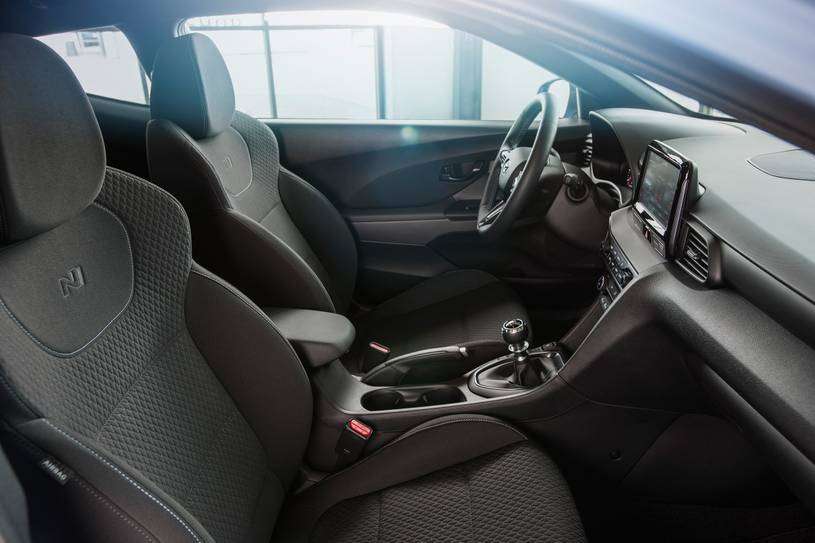
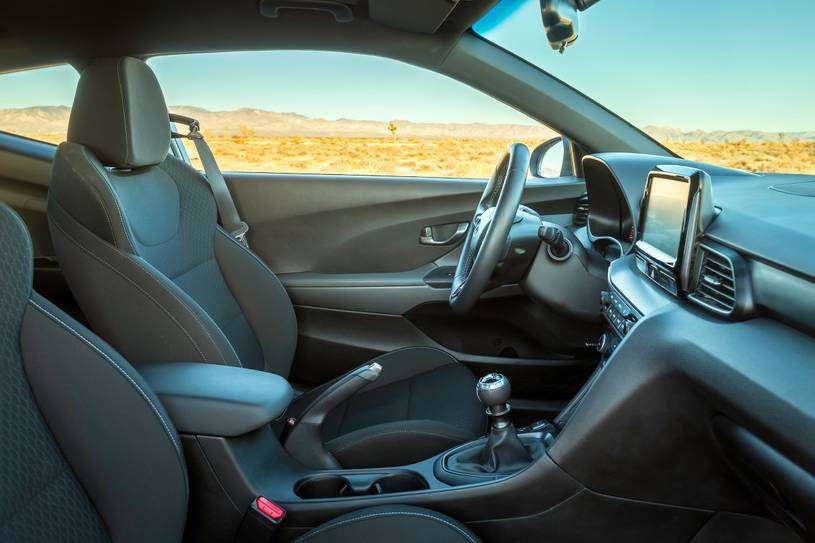
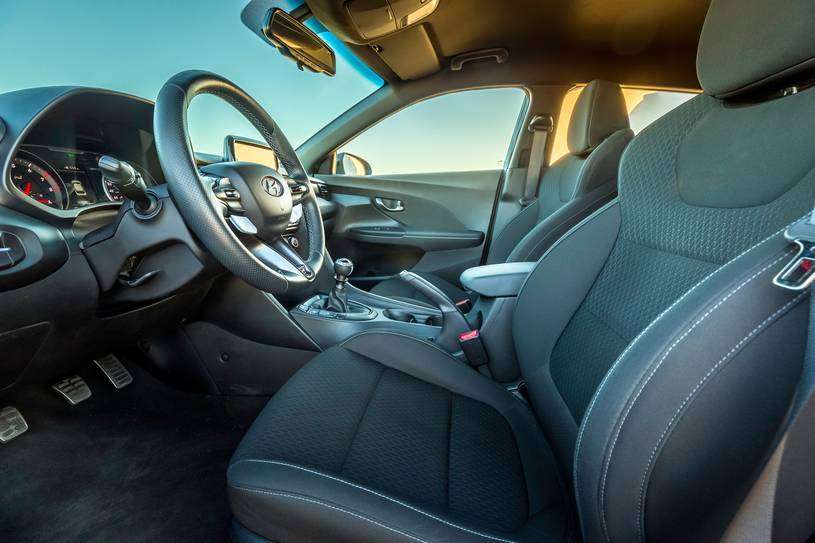
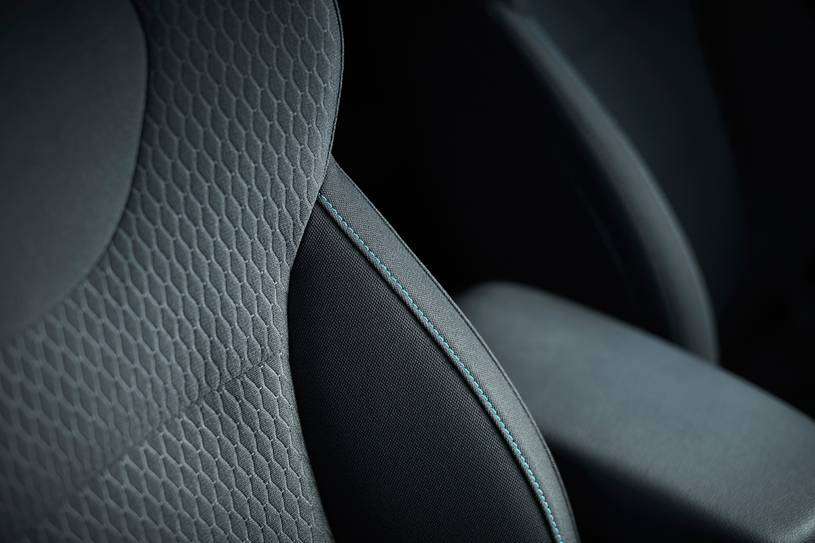
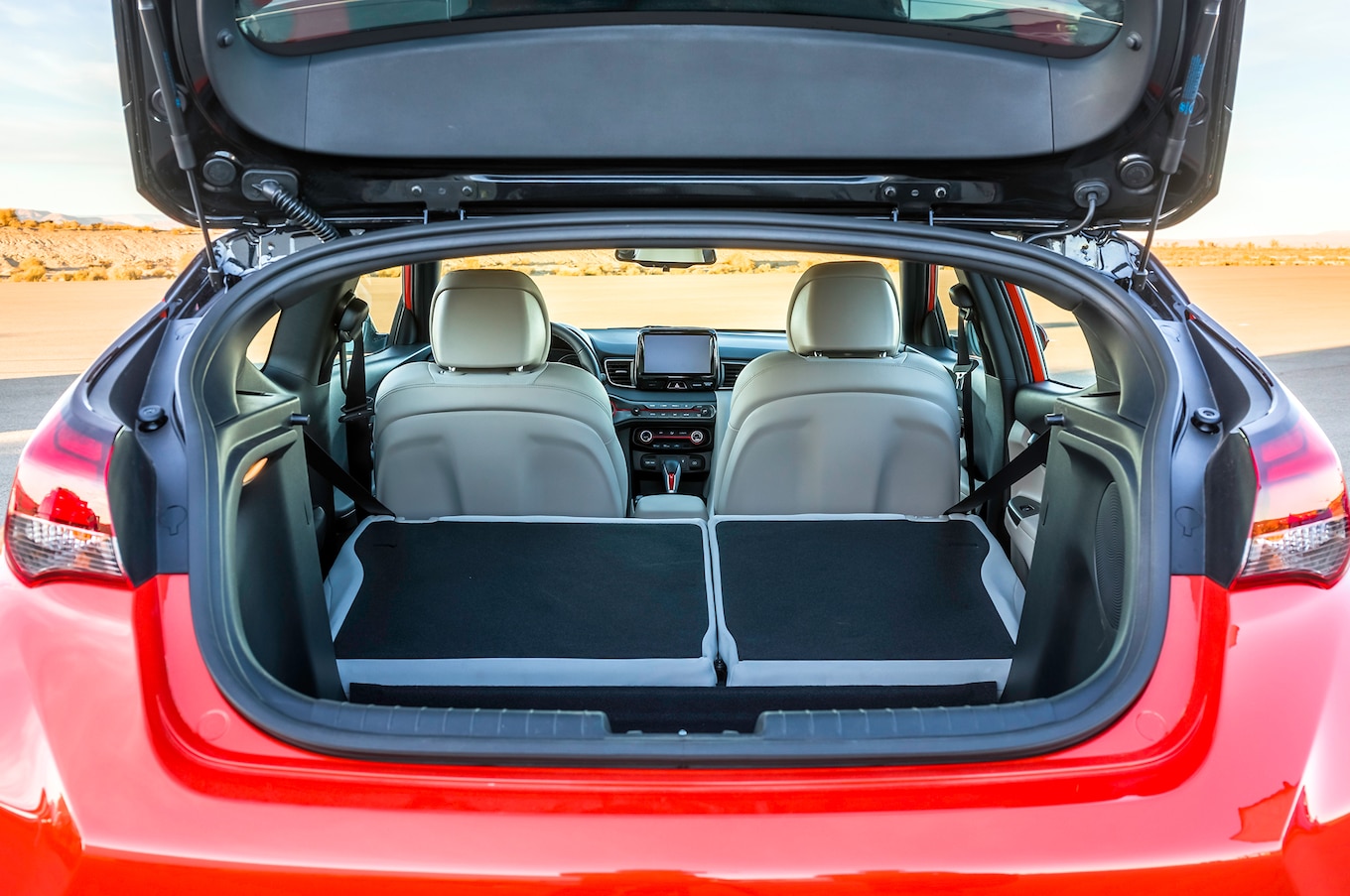
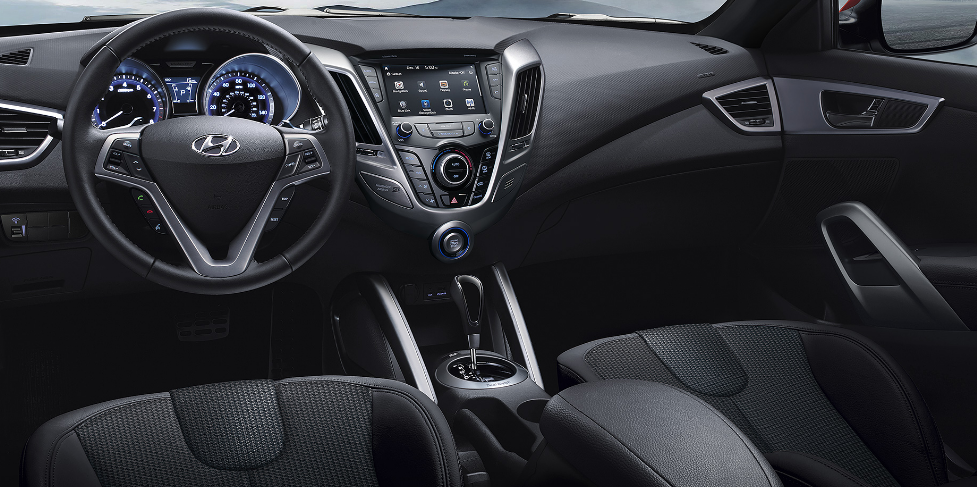
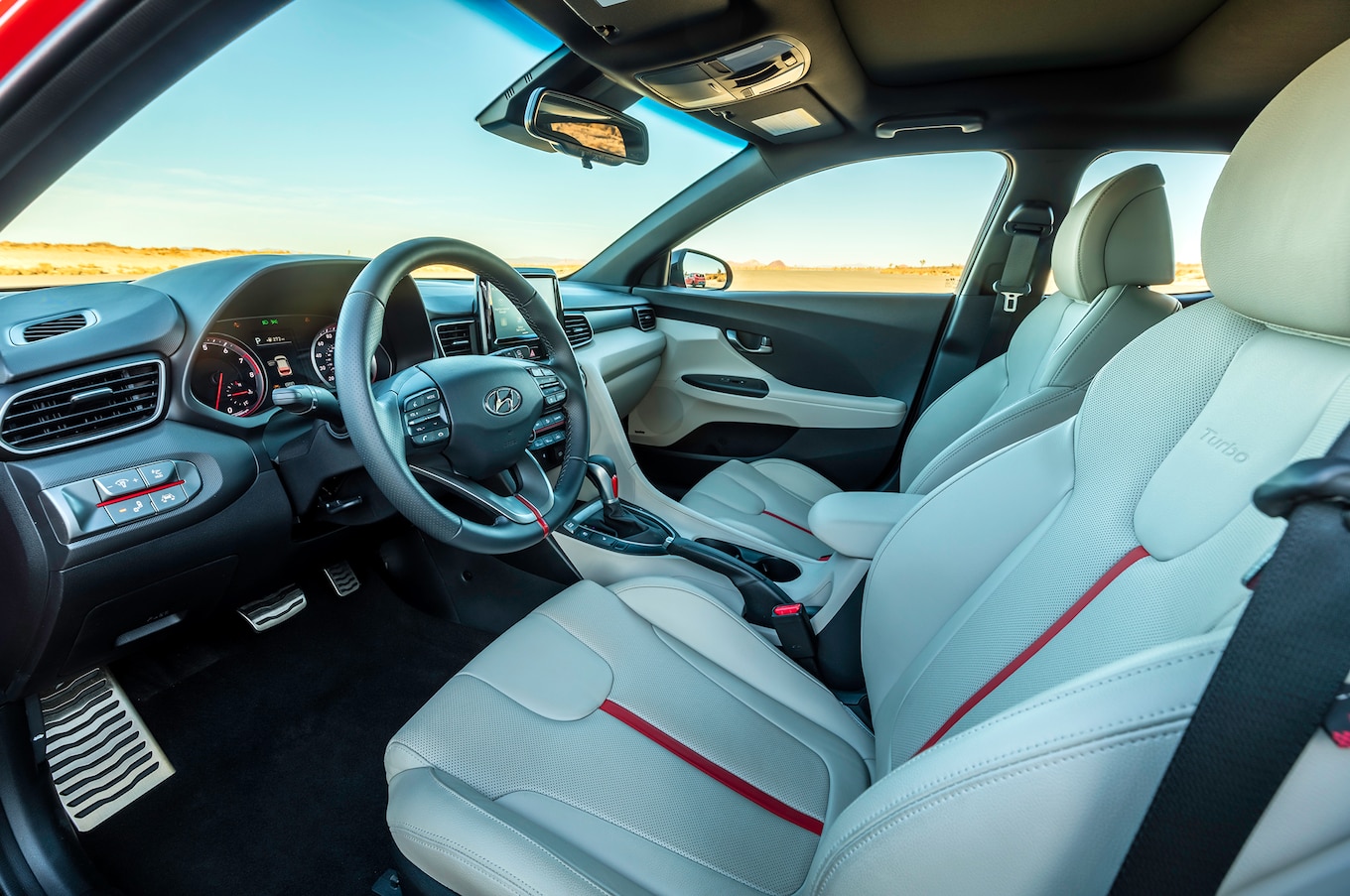
Hyundai has come a long way in improving the interiors of its products, and the Veloster is no exception. There are plenty of soft-touch surfaces and a twin-cockpit design to the cabin that separates the driver and front passenger spaces. Base and Turbo R-Spec models come with cloth seats while Premium and Turbo models sport leather and cloth upholstery, while the top line Turbo Ultimate has full leather. The rear seat has functional 60/40-split fold-down capability. Hyundai has resisted the trend towards huge touch screens controlling all functions, and does a masterful job of blending traditional buttons and switches for the climate control and sound systems. The center infotainment display is a 7.0-inch screen on base models, while the uplevel Premium and all Turbo models come with an 8.0-inch unit. A new 8.0-inch head-up display is also offered as an option, and it shows safety, navigation and audio information, and switches over to an analog tach and digital speed display when Sport mode is engaged.
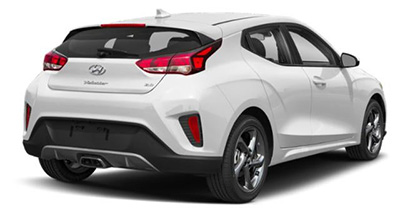
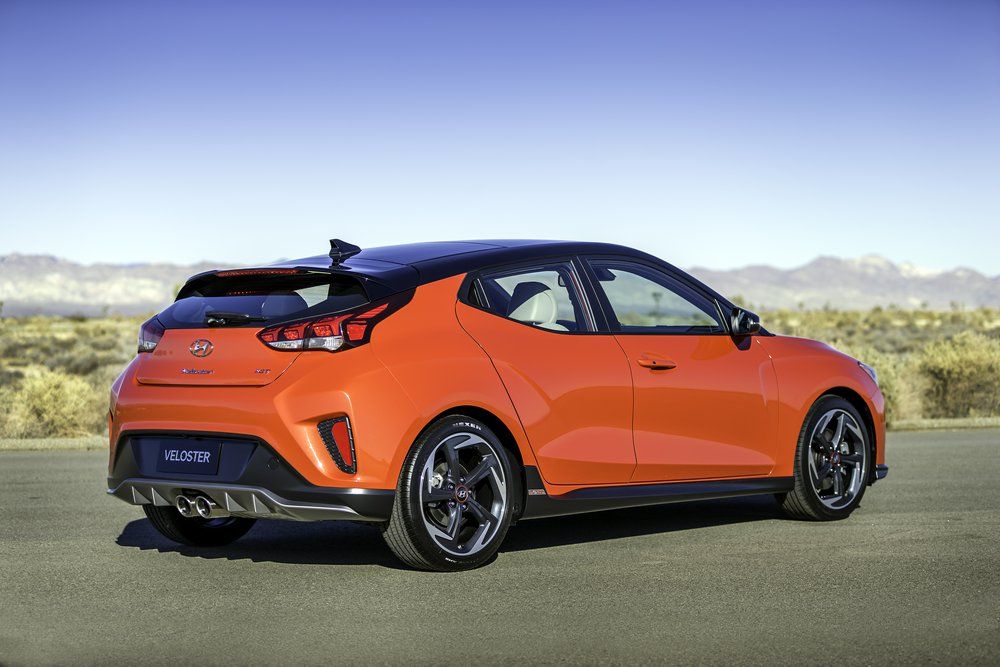
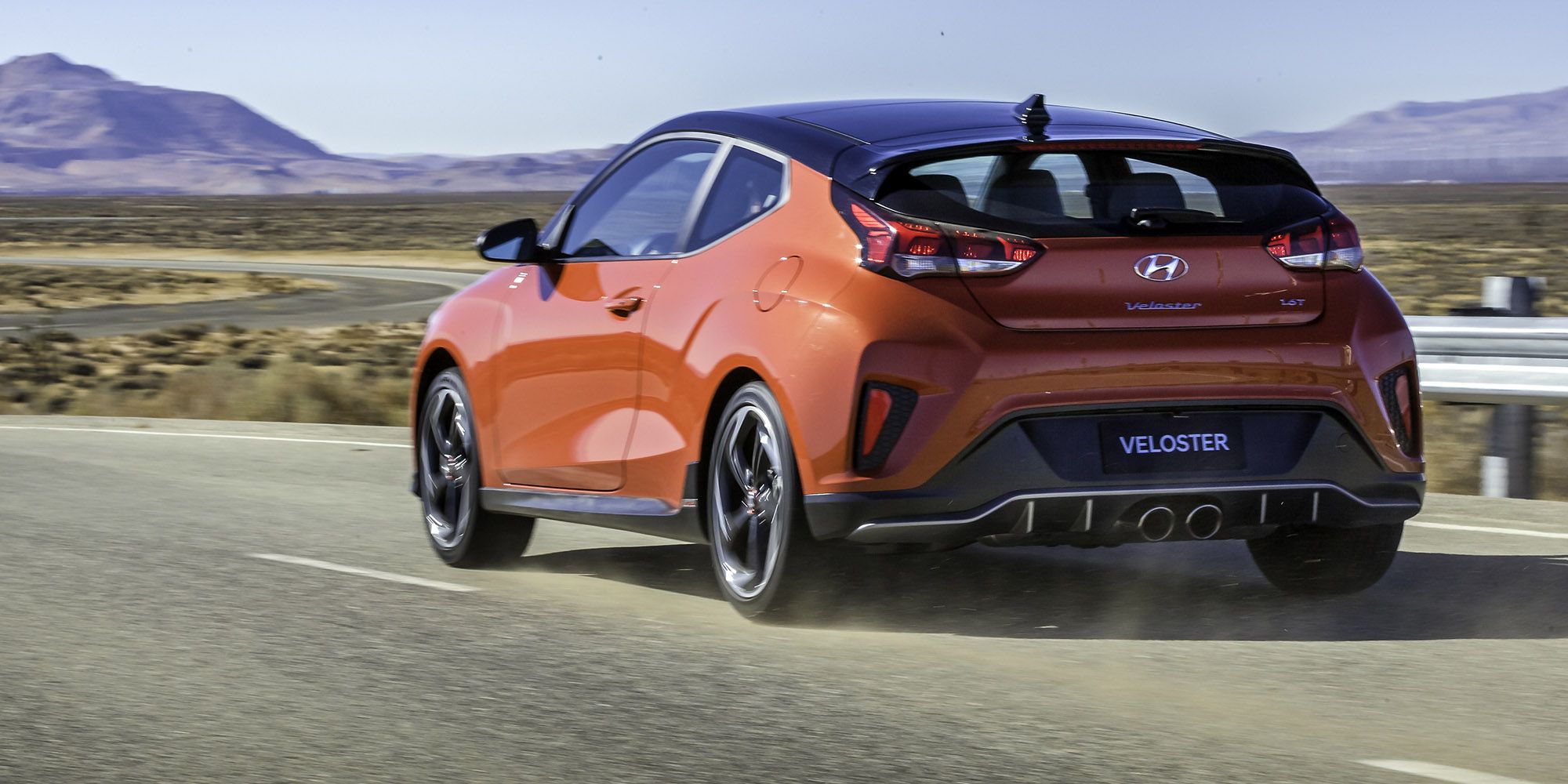
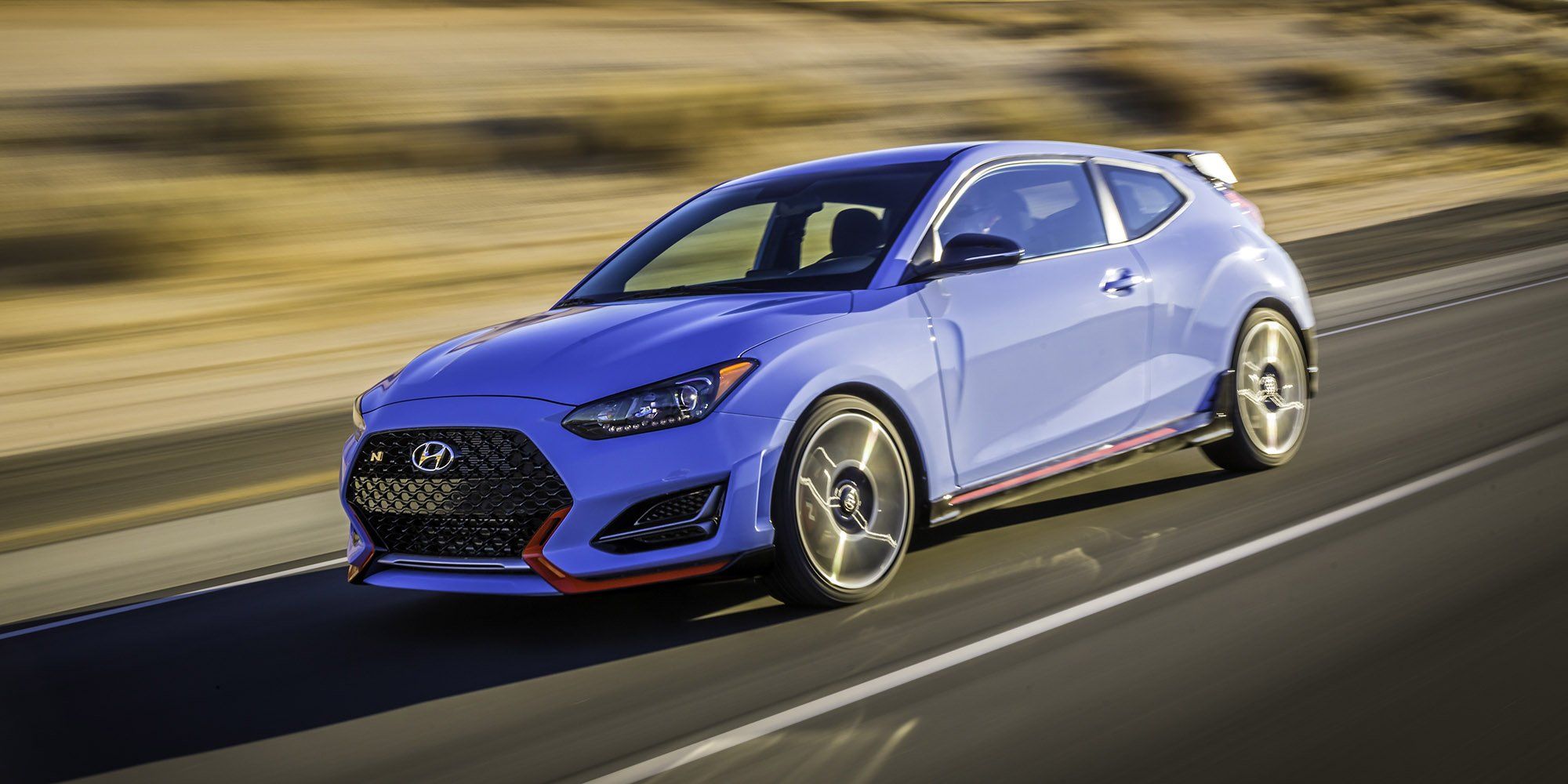
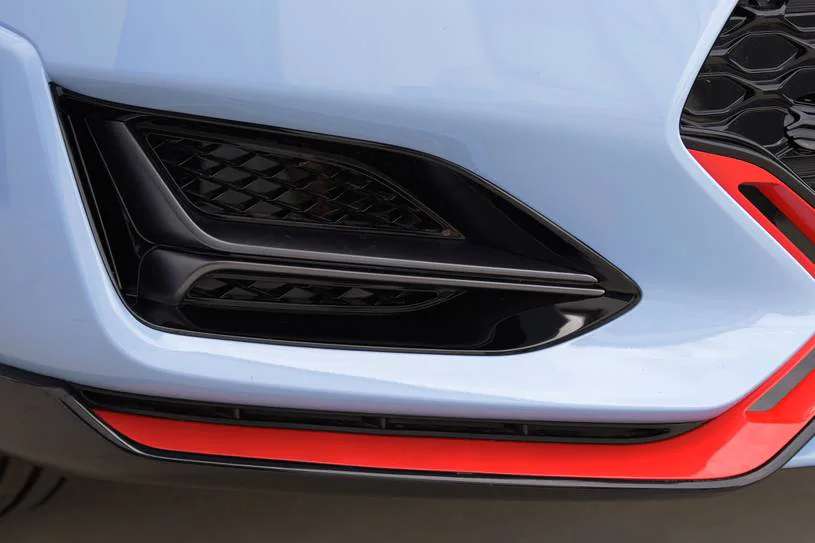
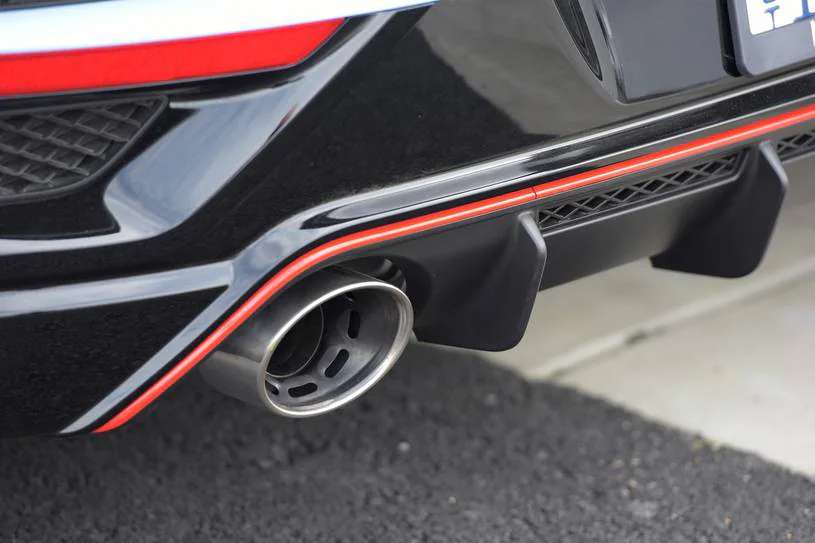
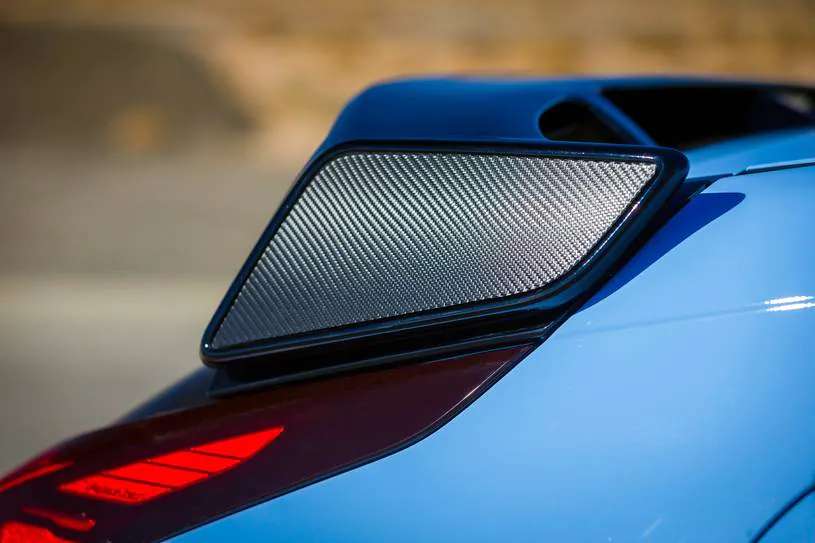
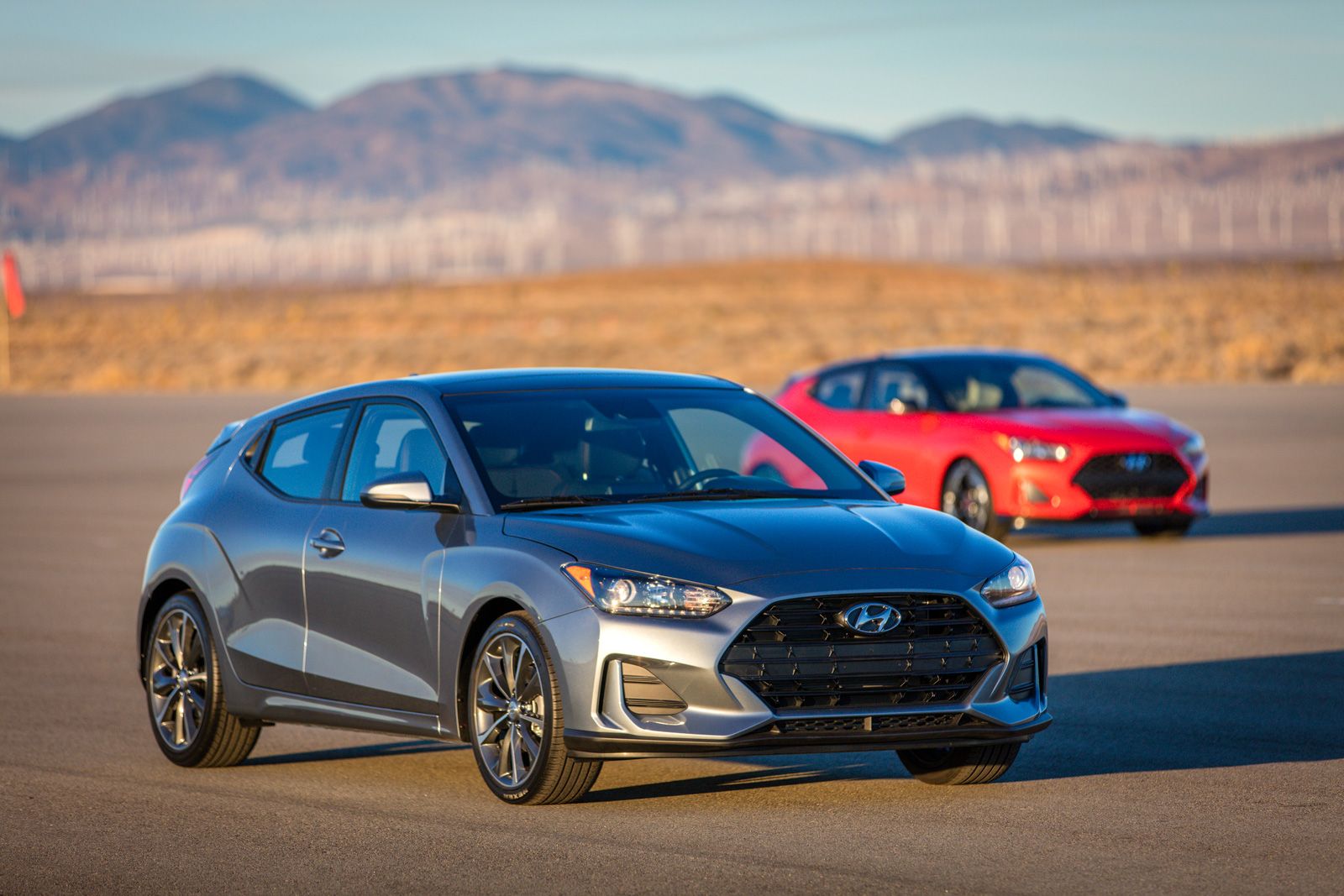
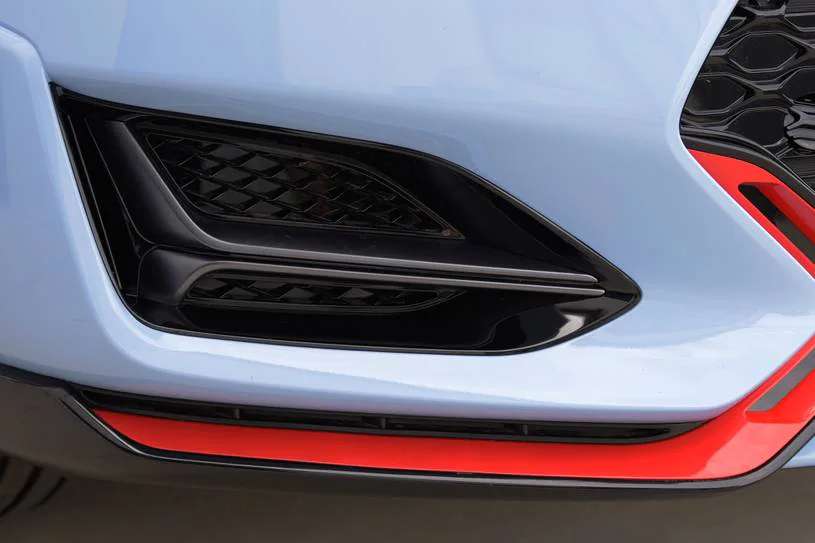
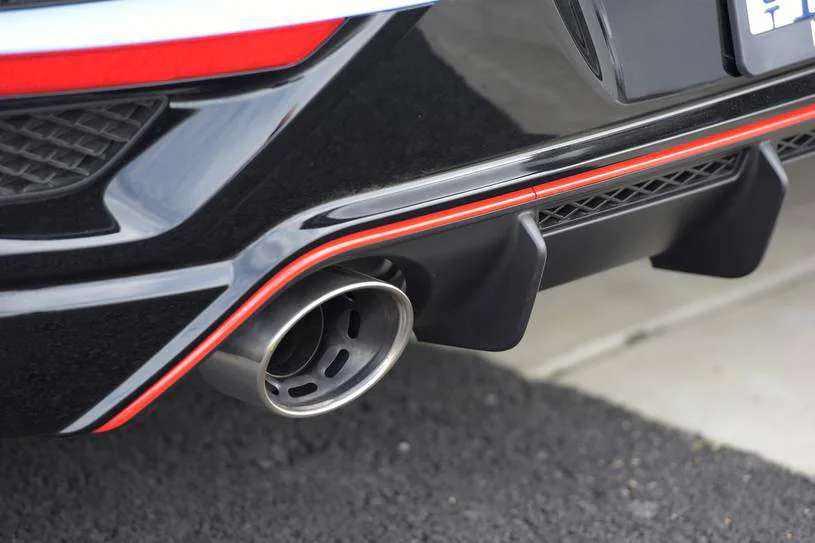
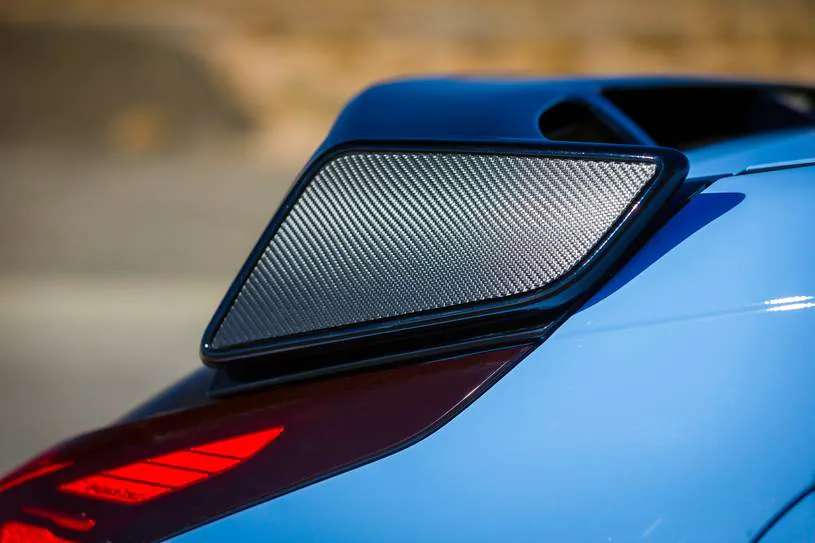
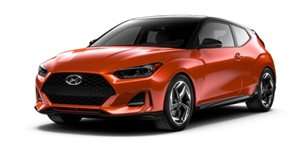
Compared to the previous model, the 2019 Hyundai Veloster has a much bolder and aggressive look thanks to its larger, cascading grille design that features a mesh insert. There are also larger lower inlets and supplemental slots to improve front wheel-arch aerodynamics that also add to the more muscular appearance. The Veloster also sports a more sharply raked roofline, a rear deck top spoiler, and a more pronounced rear diffuser and twin round center-mounted exhaust tips. There are LED daylight running lamps and taillights, while LED main lighting is an option. Beefy 18-inch aluminum-alloy wheels contribute to the Veloster’s hunkered-down stance. The Turbo Ultimate model is further distinguished by a black roof.The new Veloster N is distinguished by its N-design front fascia and grille with brake-cooling ducts, along with LED headlights, unique rocker sills, and ultra-high-performance tires – 225/40R-18 Michelin Pilot SuperSport on the standard N and 235/35R-19 Pirelli P-Zeros on the N with the Performance package. In back, the N sports LED taillights, a large rear spoiler, an integrated diffuser and high-flow dual exhaust. The N is available in black, white, red or blue, the last a light hue that reminds of the famous Gulf Oil livery of the legendary Porsche 917 racecar.
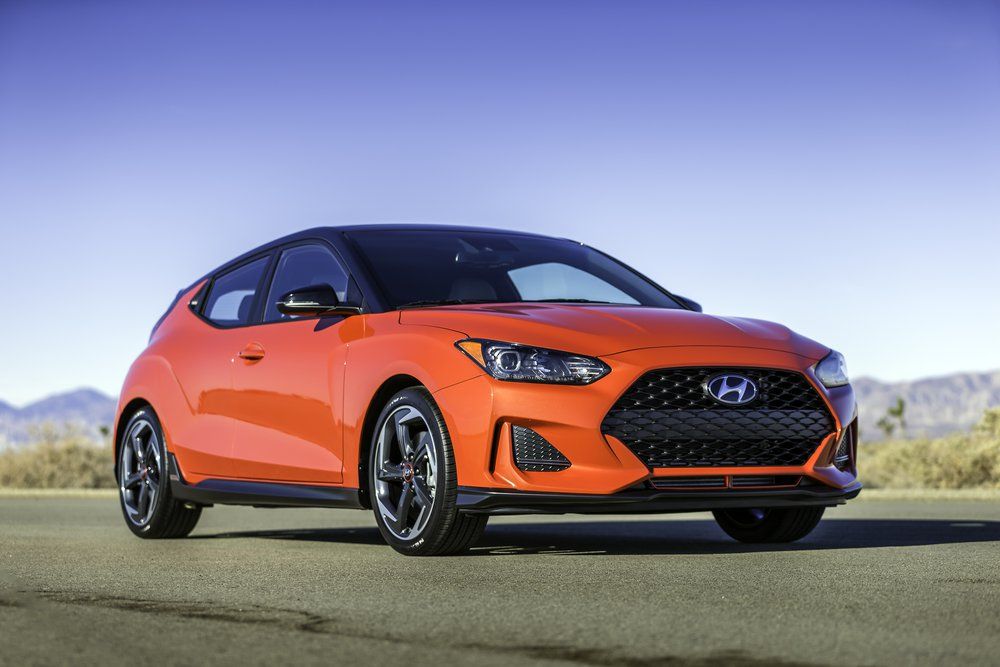
There are six trim levels: 2.0 Base, 2.0 Premium, Turbo R-Spec, Turbo, Turbo Ultimate and N. Even Base models benefit from such upscale safety features as forward-collision avoidance with automatic braking, lane-keeping assist, and automatic headlights. Premium and up models get blind-spot collision warning as well as rear cross-traffic collision warning. A Drive Attention Warning system is standard on all models, monitoring your driving and alerting you when it’s time to take a break. Apple CarPlay and Android Auto compatibility comes with all models, as well as cruise control, Bluetooth connectivity, and LCD touch screens. Base models come with 17-inch alloys on Base while all other models have 18-inch rims.
Uplevel models can be had with features like wireless charging, proximity keys with push-button start, Infinity premium audio with 8-speakers, a sunroof, heated seats, automatic climate control, rain-sensing wipers and LED headlights. Also available are Michelin Pilot Sport 4 summer tires on the 6-speed manual Turbo R-Spec and Turbo Ultimate models, smart cruise control on 7-speed automatic models, a 4.2-inch TFT digital display in the instrument cluster and the 8.0-inch head-up display.
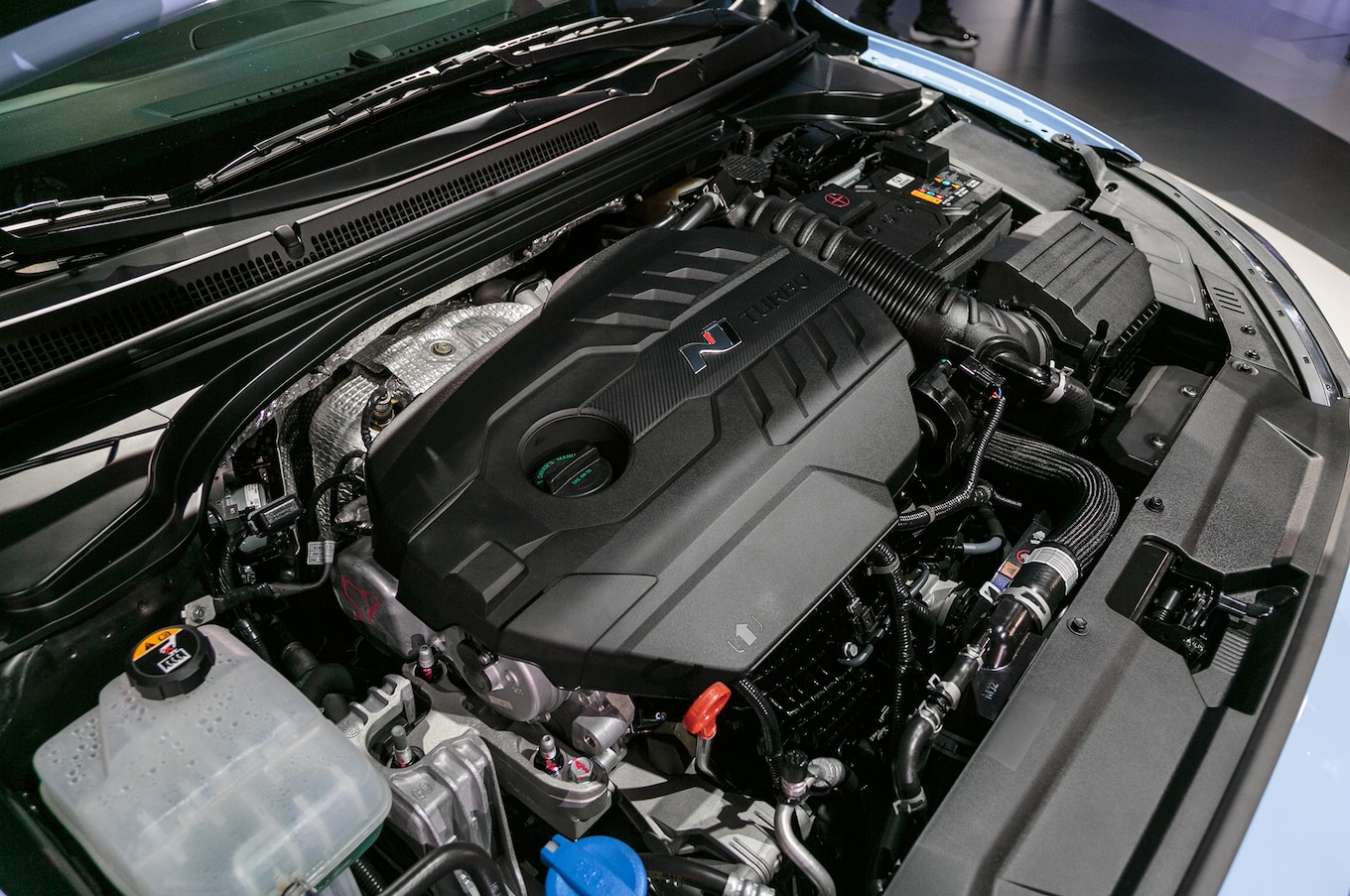
The 2019 Hyundai Veloster is powered by a normally aspirated 2.0-liter 4-cylinder engine making 147 horsepower in Base and Premium trims. The uplevel Turbo motor pushes out 201 horsepower from its 1.6-liter turbocharged 4-cylinder, as does the Turbo R-Spec model. Base and Turbo R-Spec models come with a 6-speed manual, while 6-speed automatic is available on the former and standard on Premium trim models. Turbo and Turbo Ultimate models come with 7-speed dual-clutch automatic transmissions. The 2019 Hyundai Veloster N is available with only one powertrain: a turbocharged 2.0-liter 4-cylinder engine (with 250 or 275 horsepower) and a 6-speed manual transmission. All Velosters are front-wheel drive only. Combined fuel economy for the 2.0-liter model is 28 mpg for the 6-speed manual gearbox, 30 mpg with the automatic, while the Turbo models are 29 mpg combined with the manual and 30 mpg with the 7-speed automatic. Naturally, the powerful N suffers a bit at the pump, returning an EPA combined rating of 25 mpg.2.0-liter inline 4-cylinder (Veloster Base & Premium models)147 horsepower @ 6,200 rpm132 lb-ft @ 4,500 rpmEPA city/highway fuel economy: 27/34 mpg (automatic), 25/33 mpg (manual)1.6-liter turbocharged 4-cylinder (Veloster Turbo R-Spec & Turbo models)201 horsepower @ 6,000 rpm195 lb-ft of torque @ 1,500-4,500 rpmEPA city/highway fuel economy: 28/34 mpg (automatic), 26/33 mpg (manual)2.0-liter turbocharged 4-cylinder (Veloster N)250 horsepower @ 6,000 rpm (275 horsepower @ 6,000 rpm with Performance package)260 lb-ft of torque @ 1,450-4,000 rpm (260 lb-ft @ 1,450-4,700 rpm with Performance package)EPA city/highway fuel economy: 22/28 mpg
The 2019 Hyundai Veloster 2.0 Base starts at $ 18,500. The 2.0 Premium trim level begins at $ 22,750, while the more powerful Turbo R-Spec is a relative deal at just $ 150 more, clocking in at $ 22,900. Turbo models are priced from $ 25,400, while the Turbo Ultimate starts at $ 26,650. The 2019 Hyundai Veloster N starts at $ 26,900. When ordered with the $ 2,100 Performance package, the new N climbs to $ 29,000, which is still thousands less expensive than its obvious competitor, the Honda Civic Type R. All Hyundais have an $ 885 destination charge.There’s plenty of value in this sport hatch that’s only further enhanced by Hyundai’s 5-year/60,000-mile bumper-to-bumper warranty and 10-year/100,000-mile powertrain guarantee. Before buying, be sure to check the Fair Purchase Price to see what others in your area are paying. It's too early to assess the resale strength of the new Veloster, but our last calculation had the car performing at about average for the class.OK, so what's next? I'm interested in the newest version of this car. What's for sale near me?I'm interested in this car, and I'd like to trade in my current car while I'm at it.Then again, maybe I should be thinking about a used car.
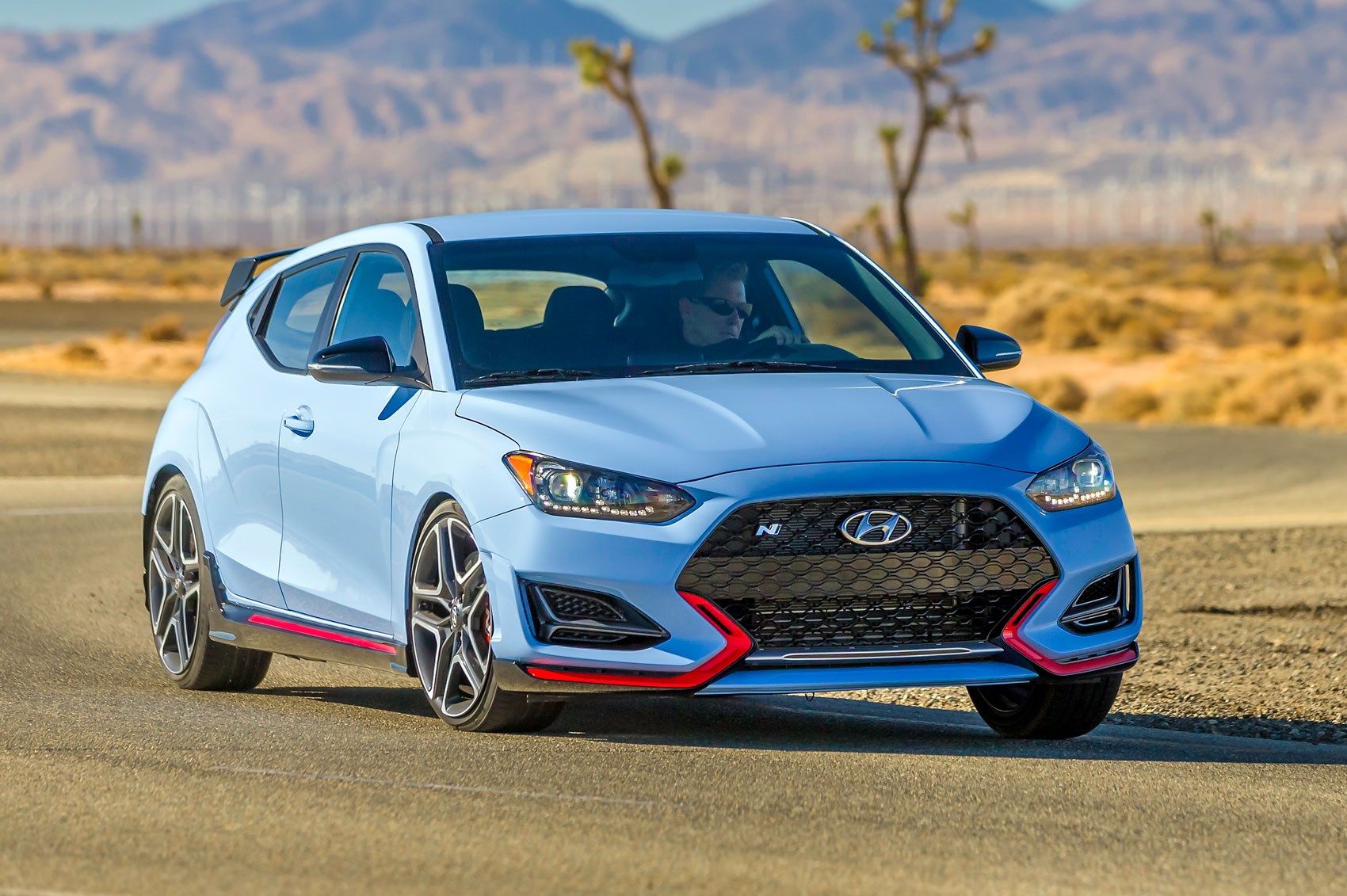
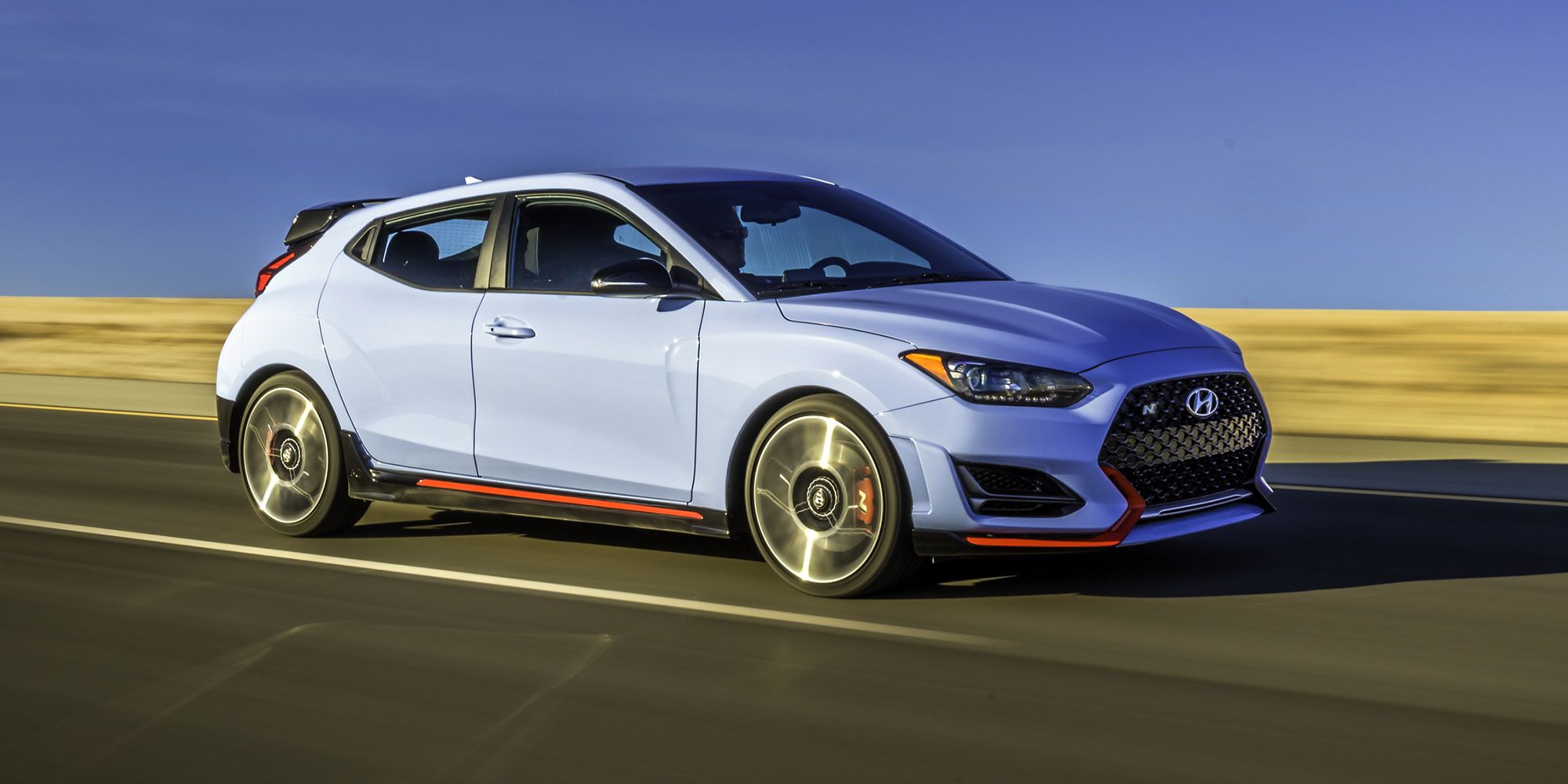


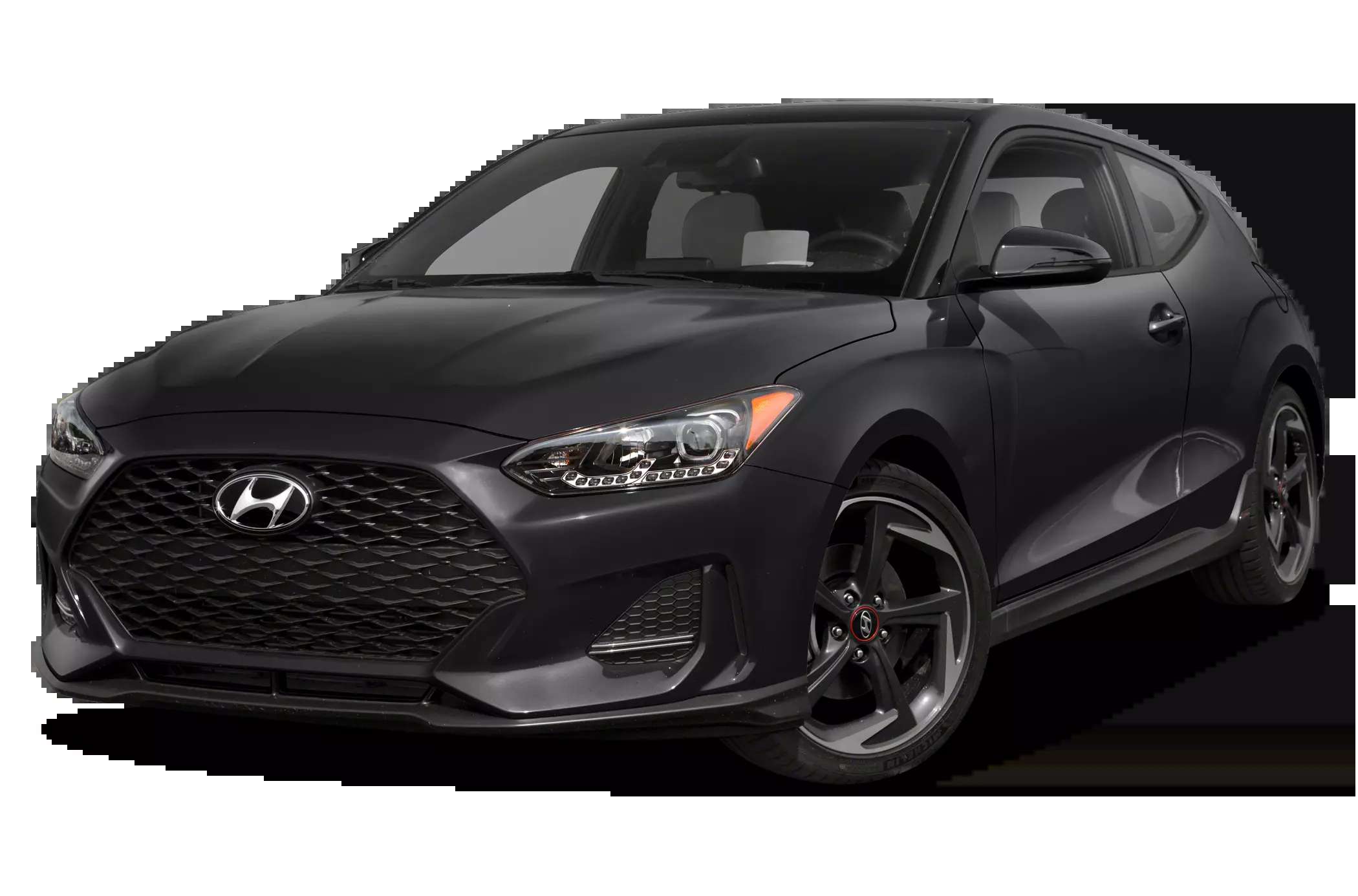
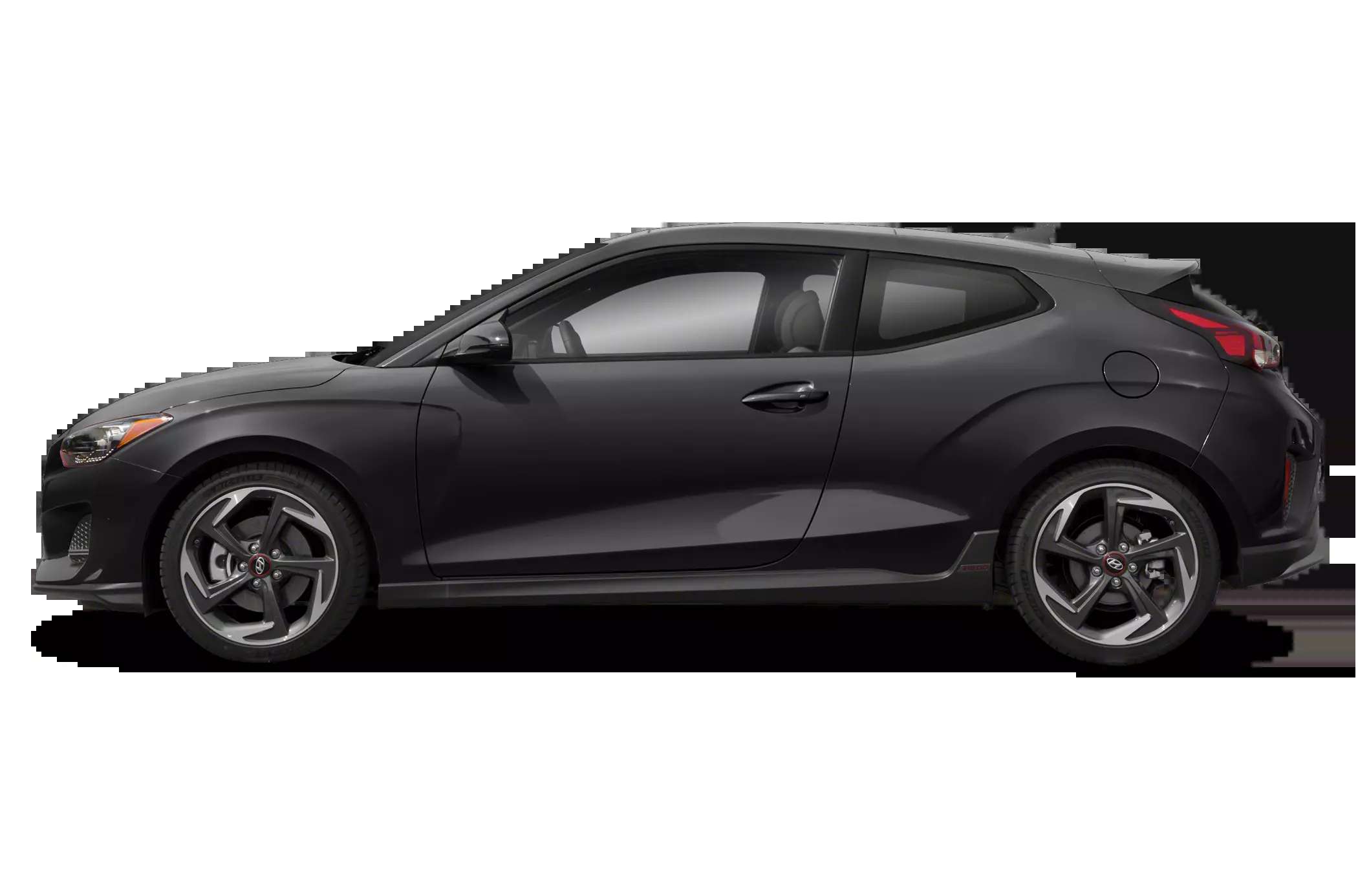
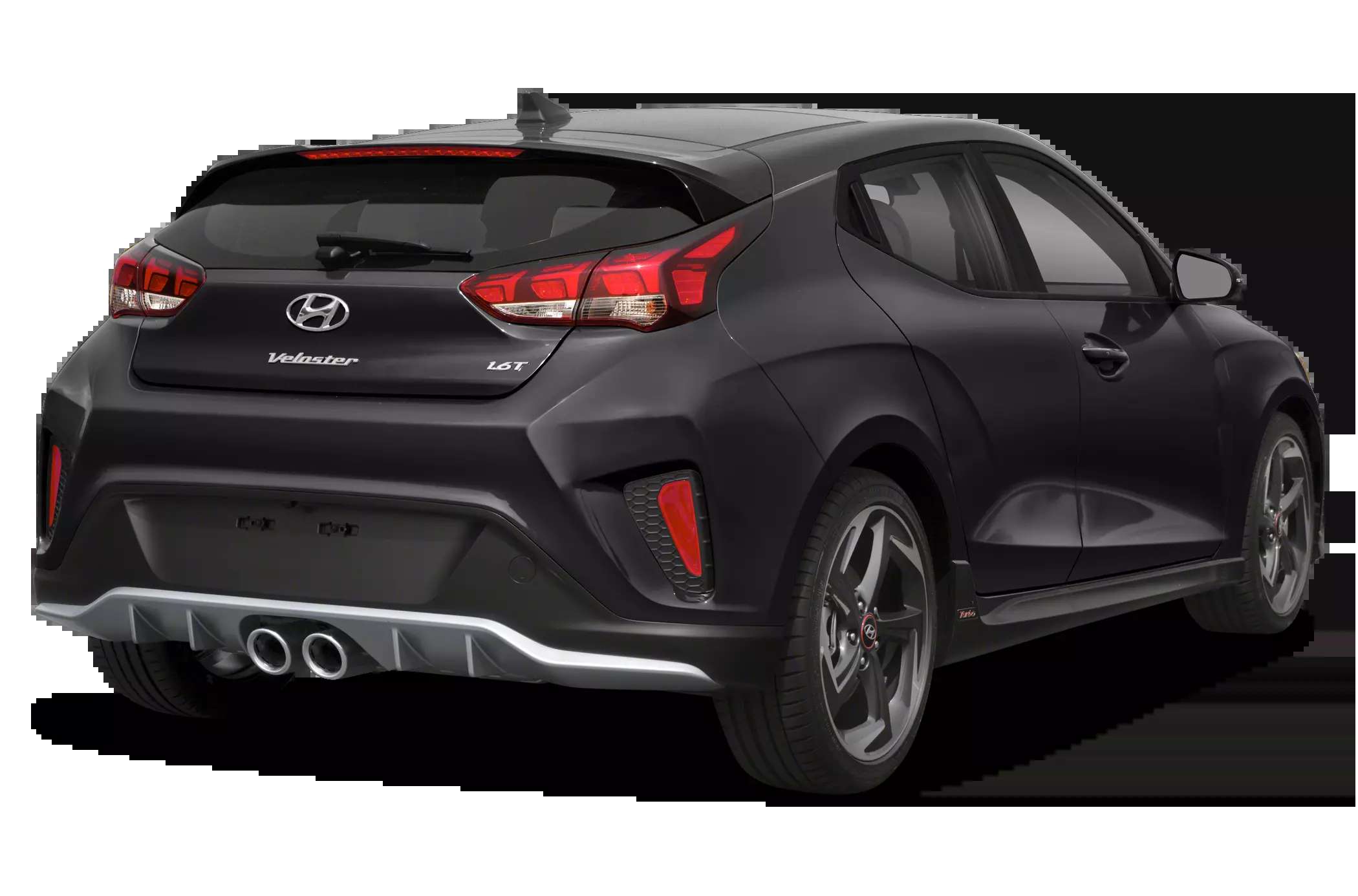

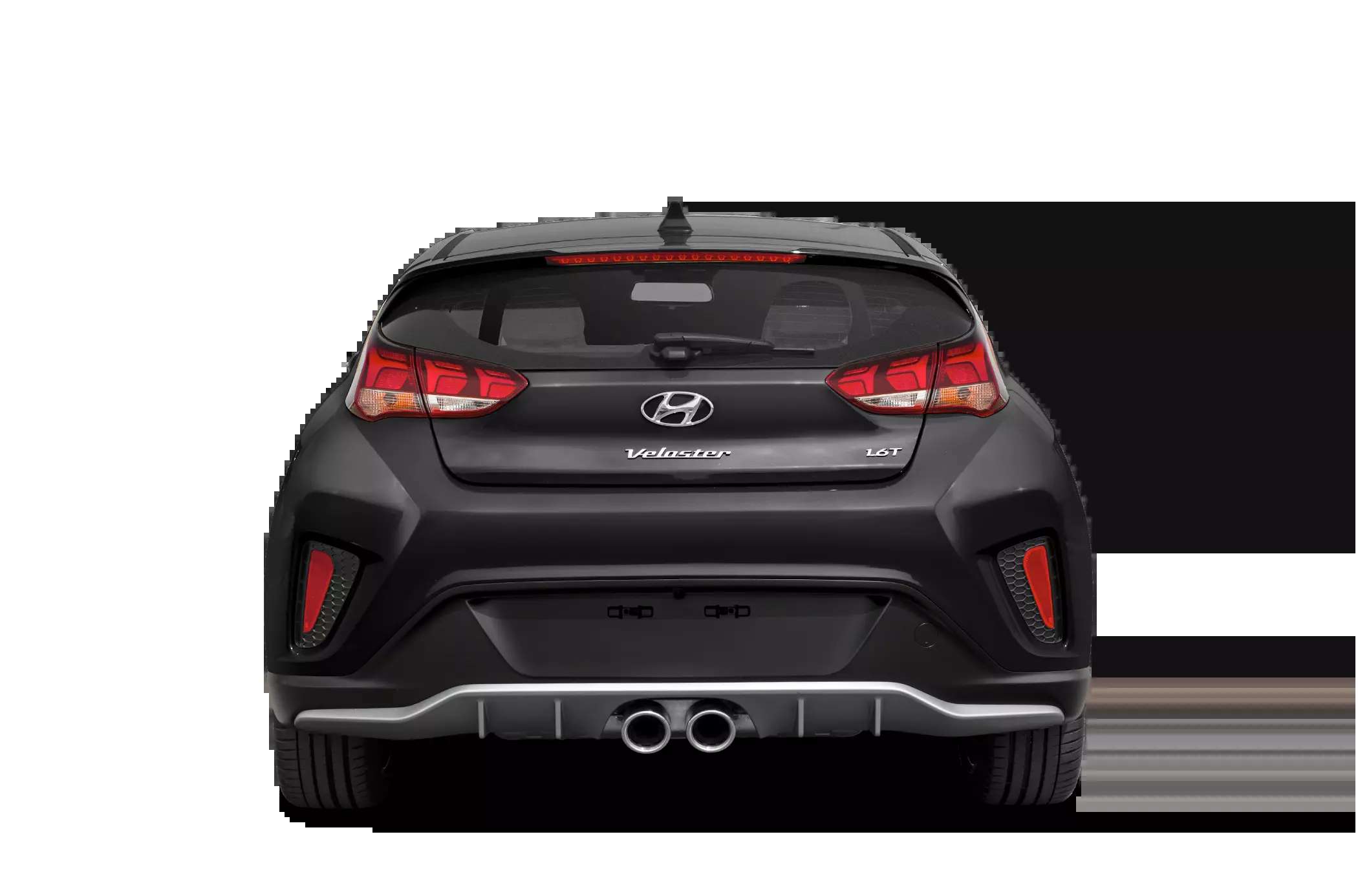

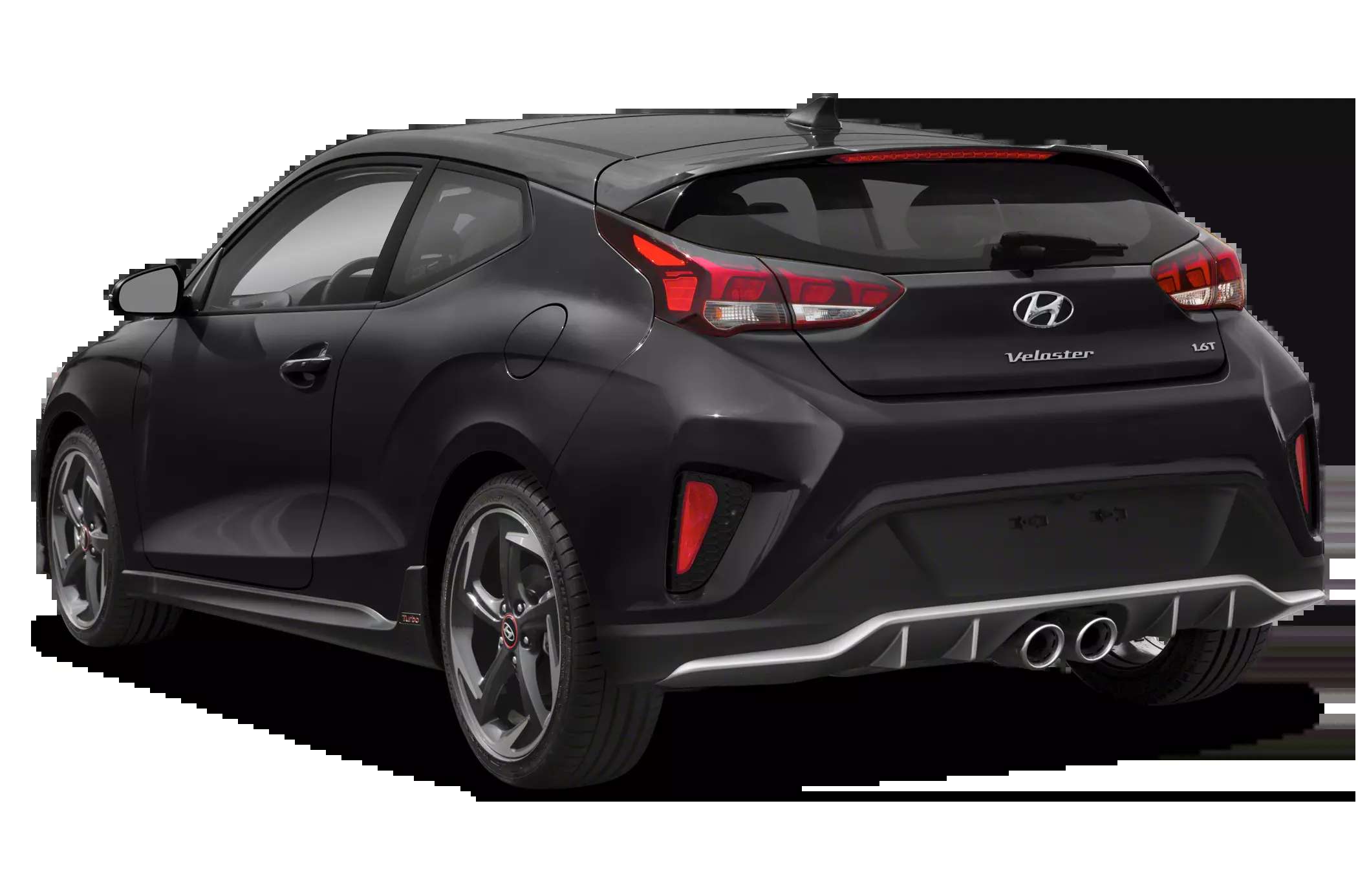
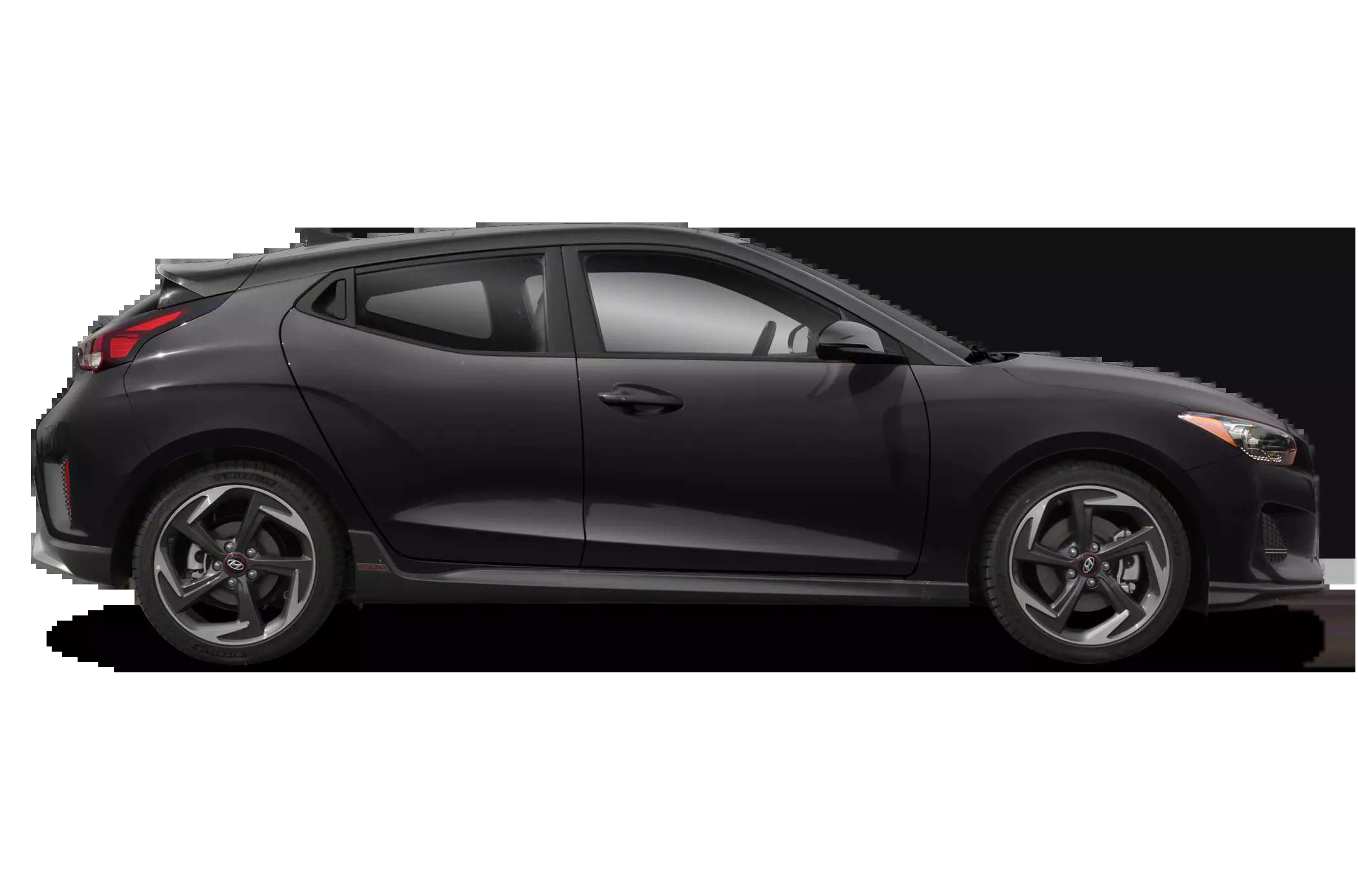
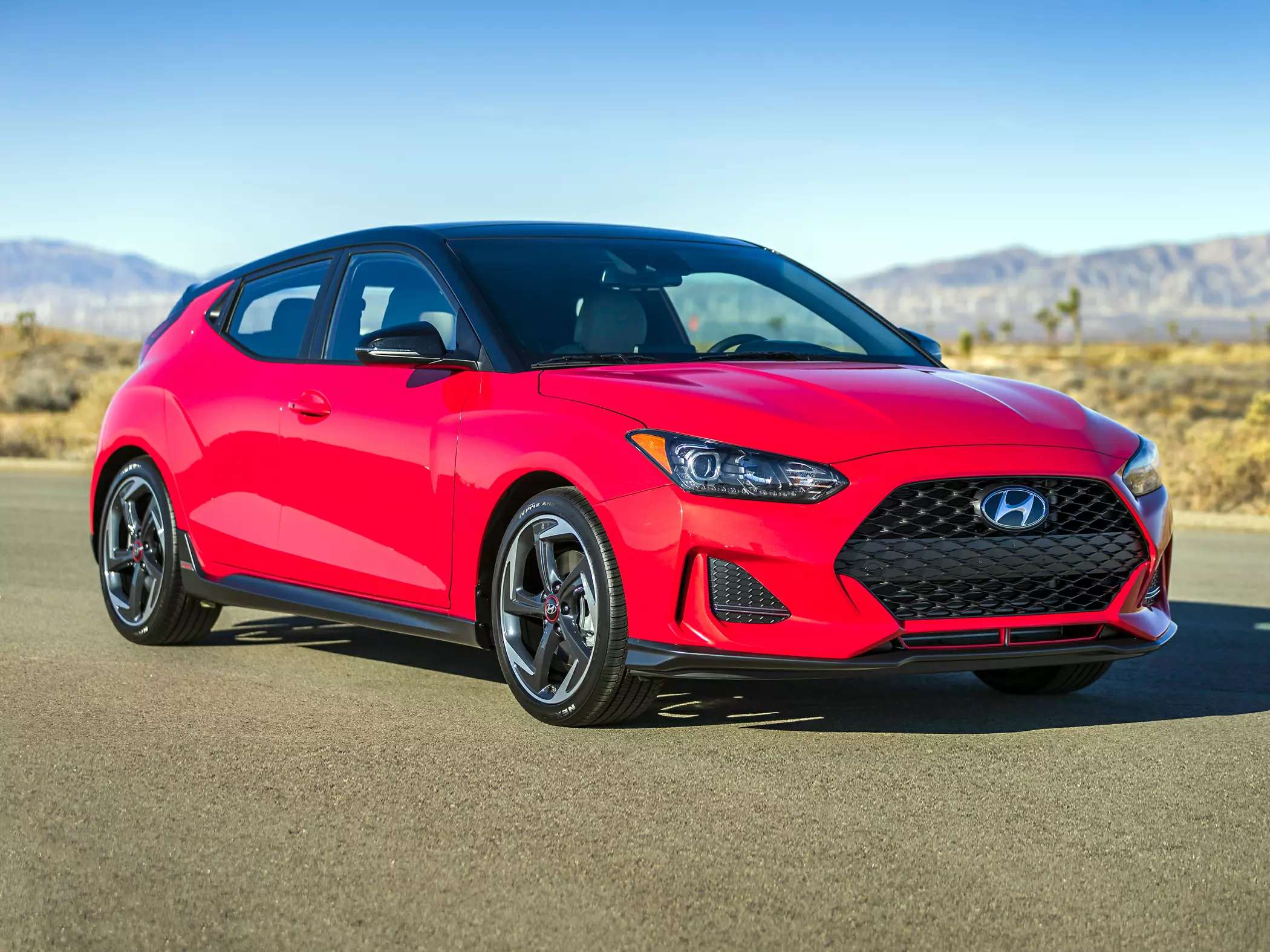
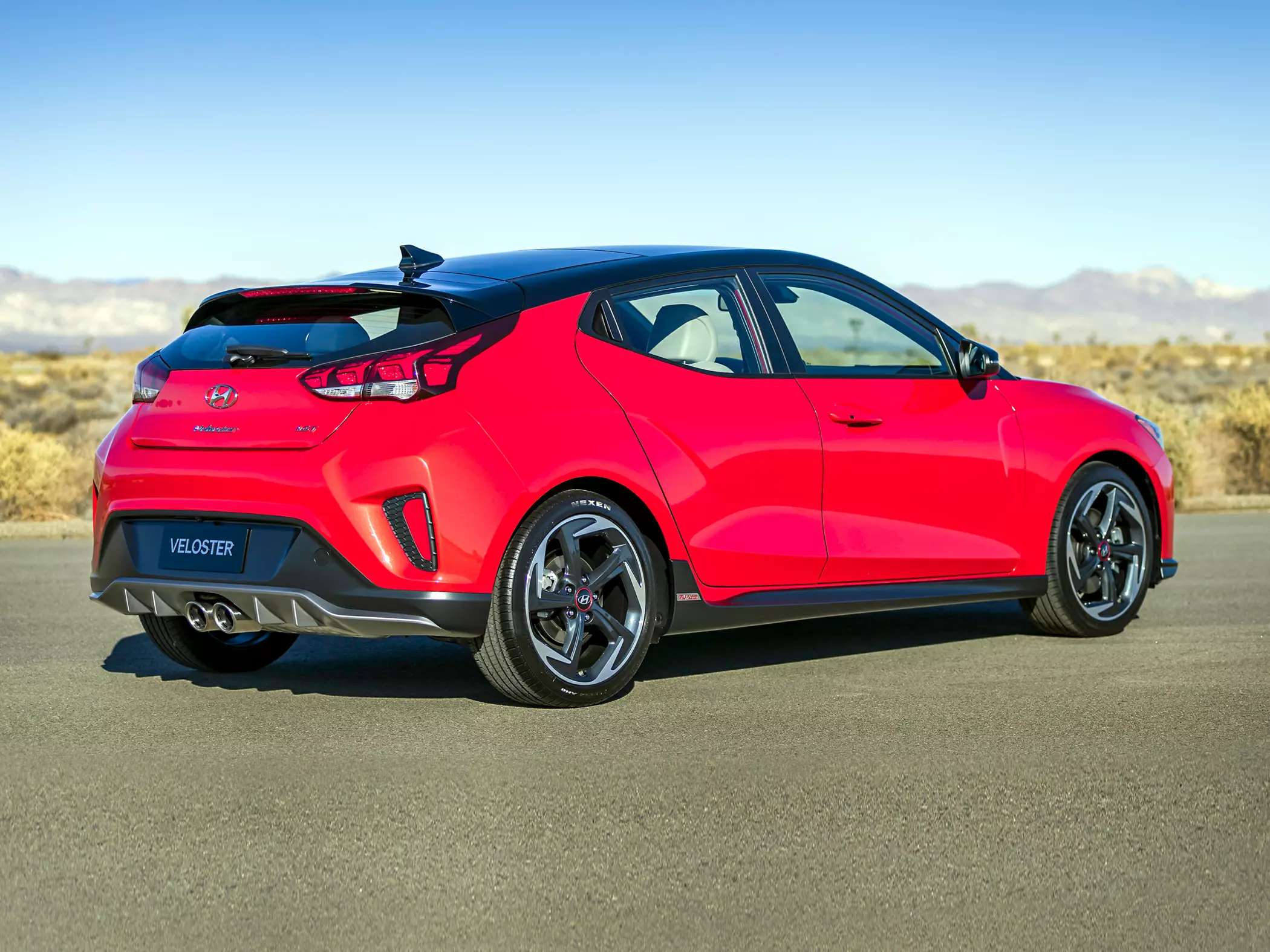
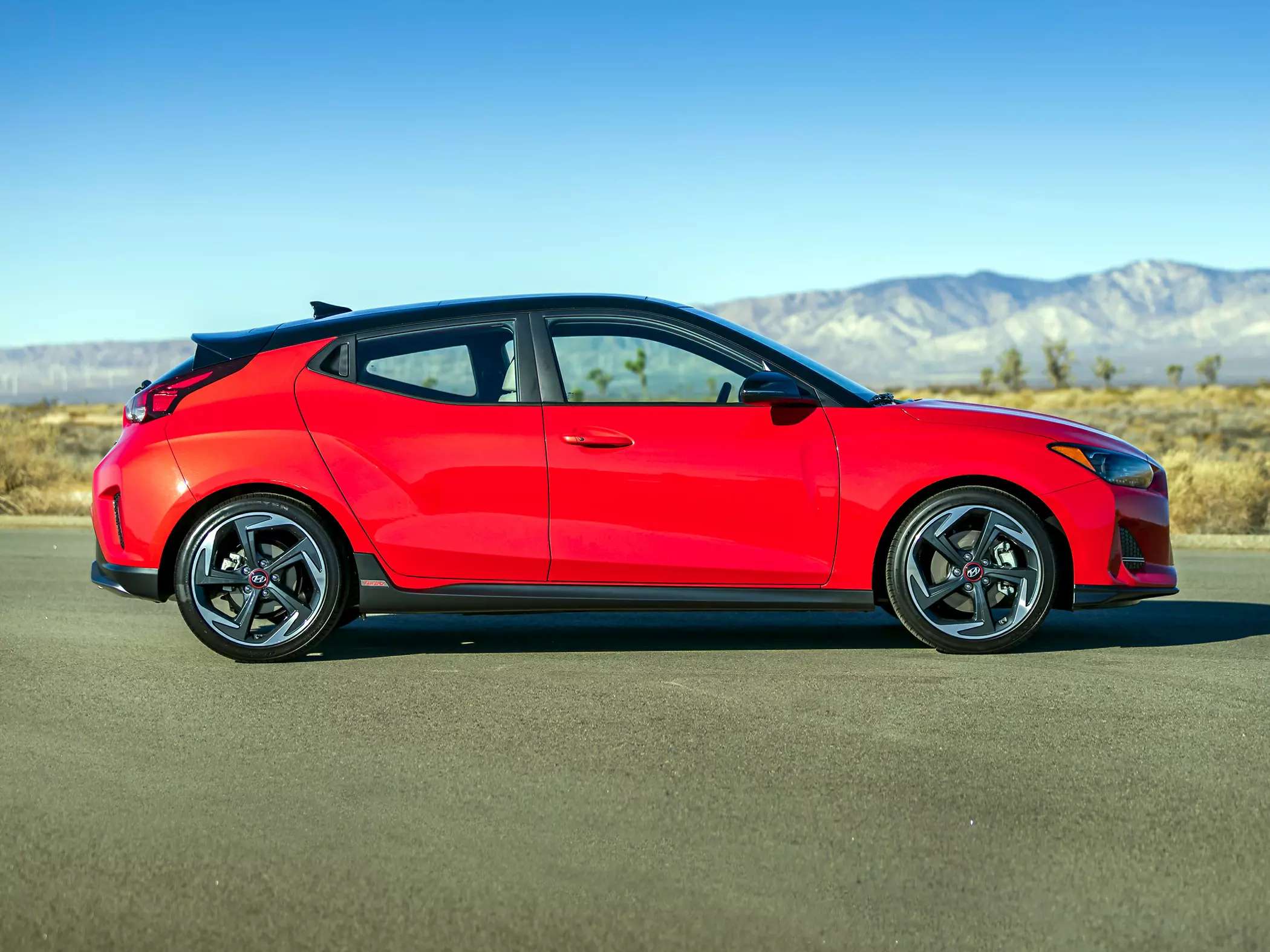
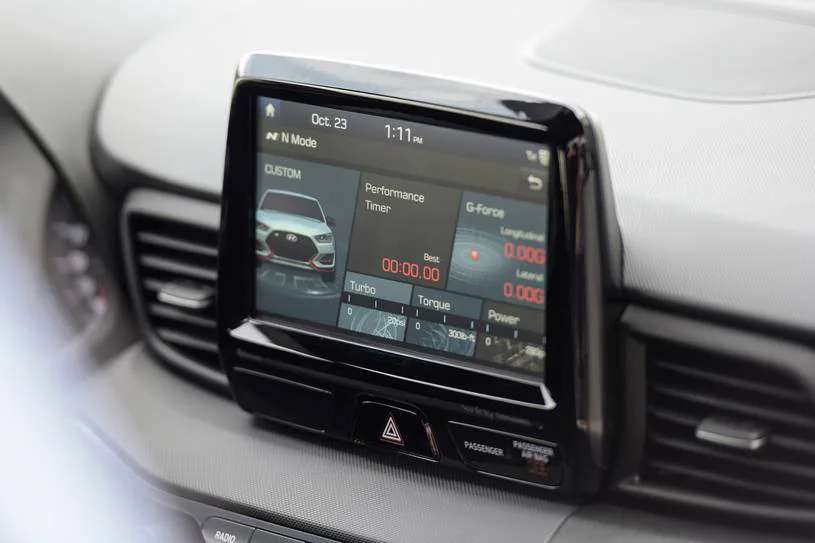
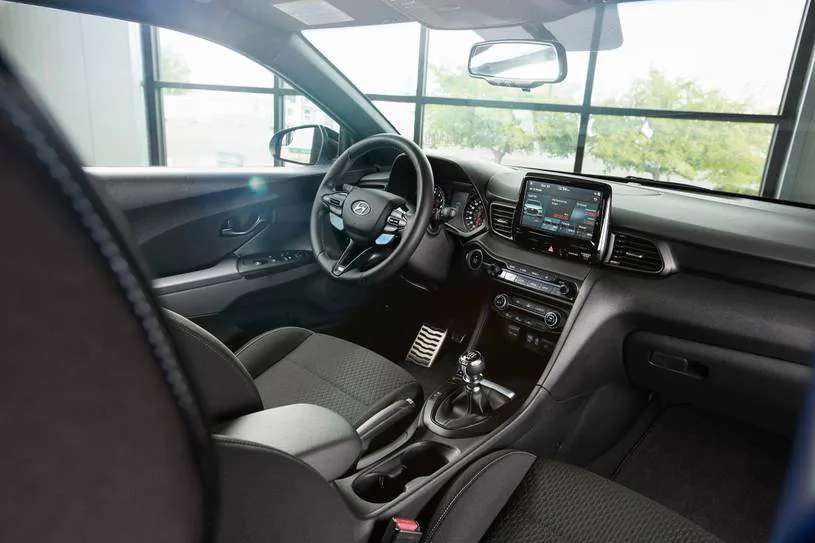
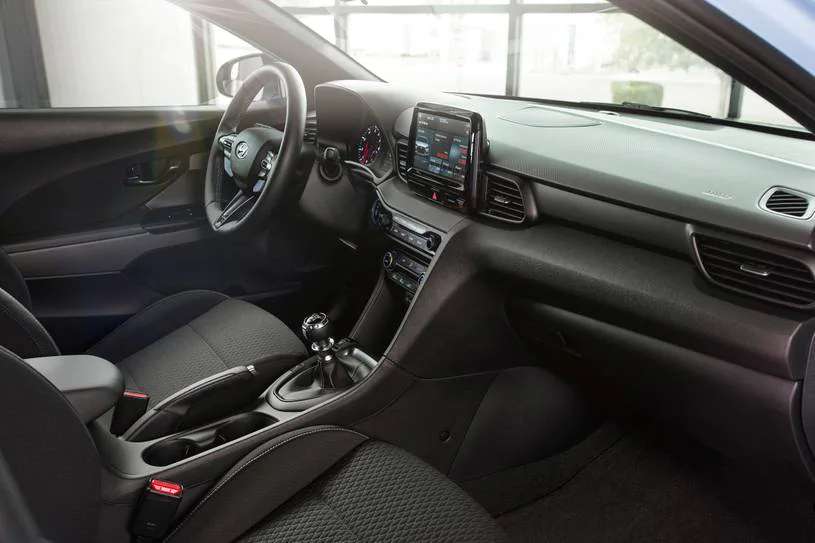
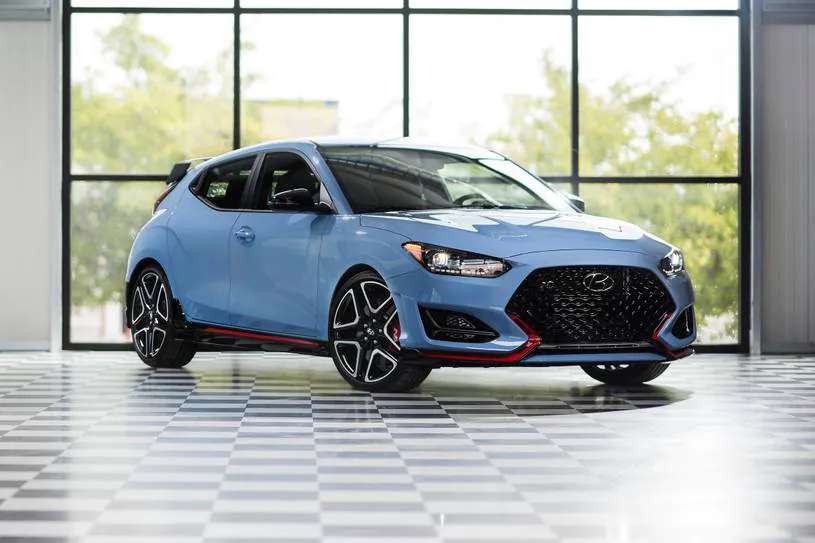
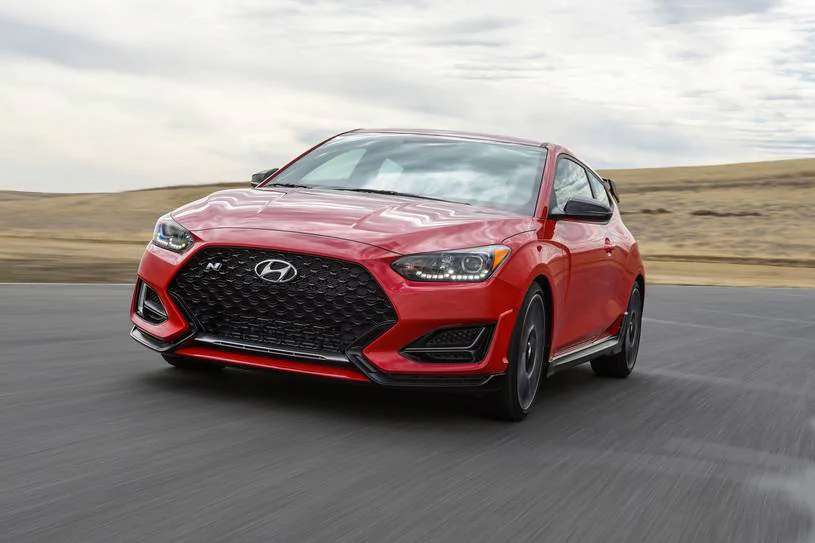
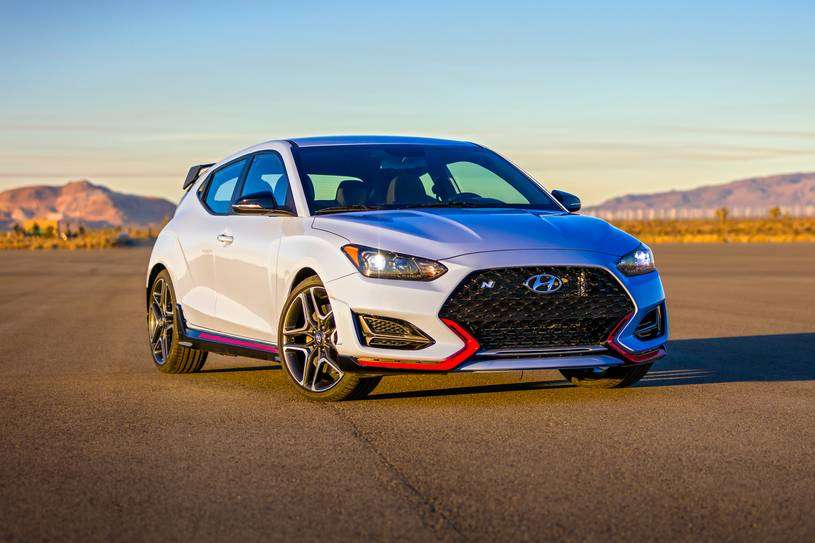
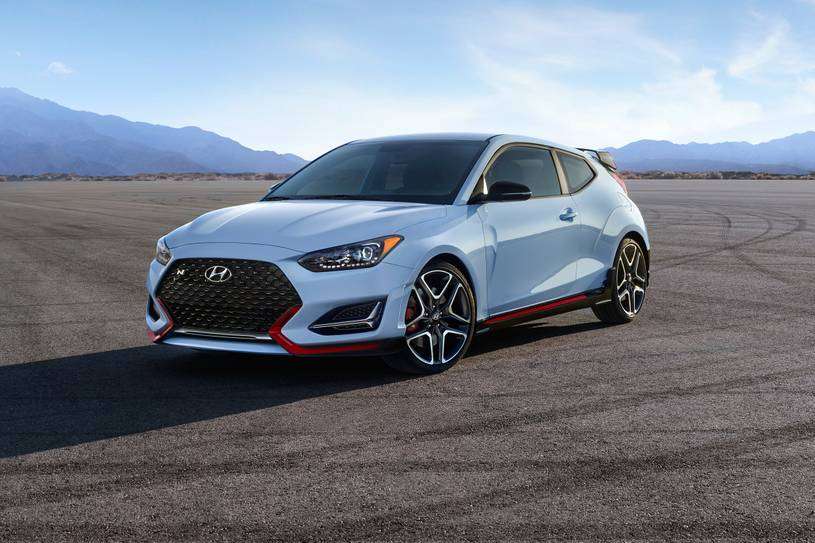
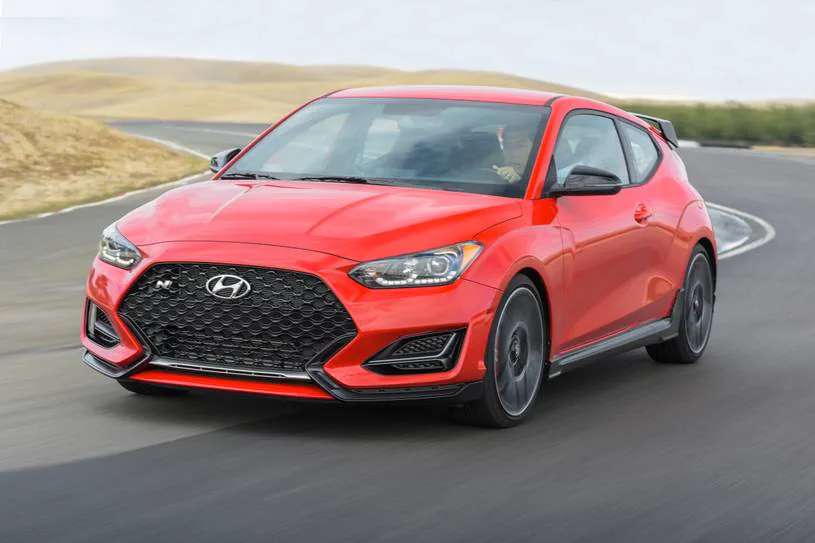
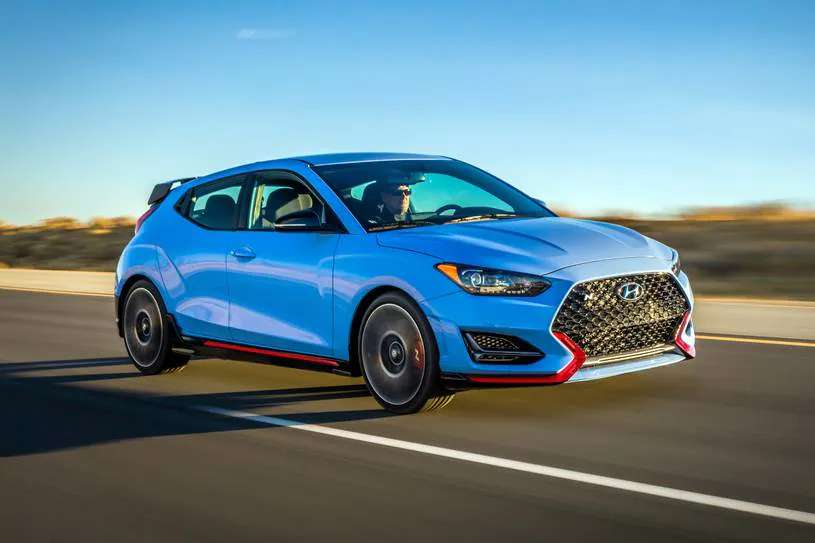
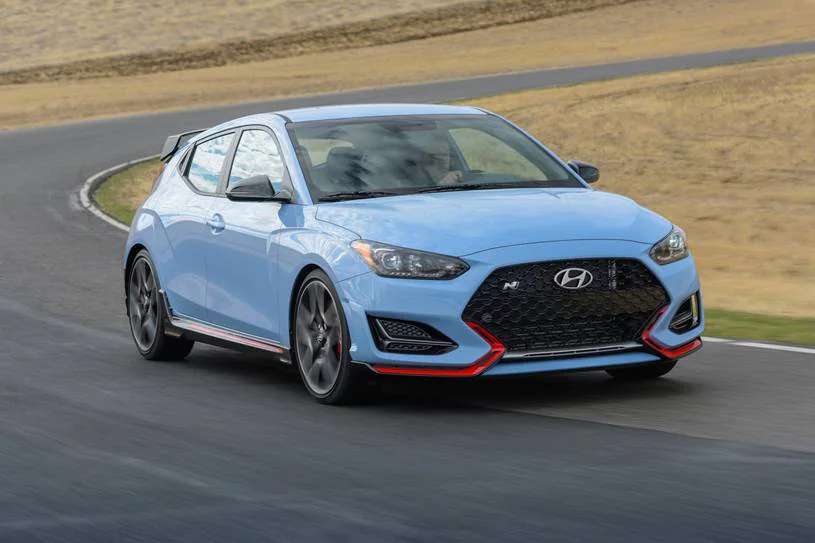
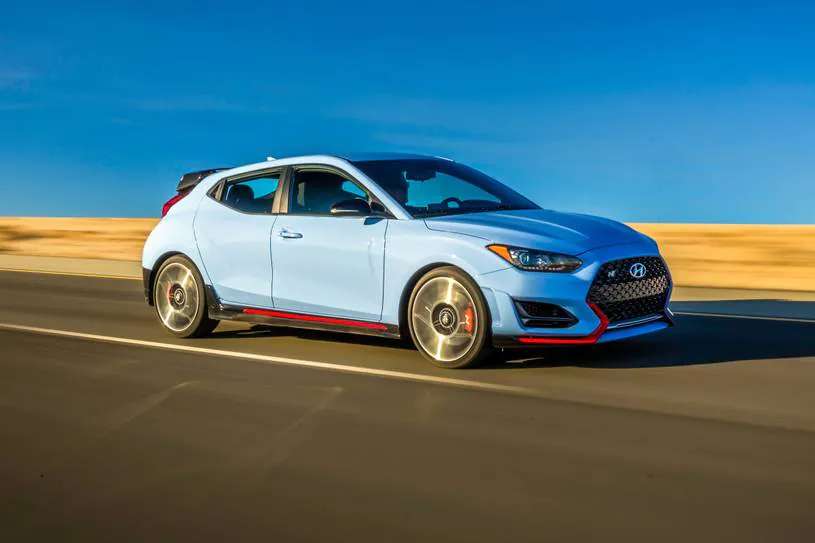
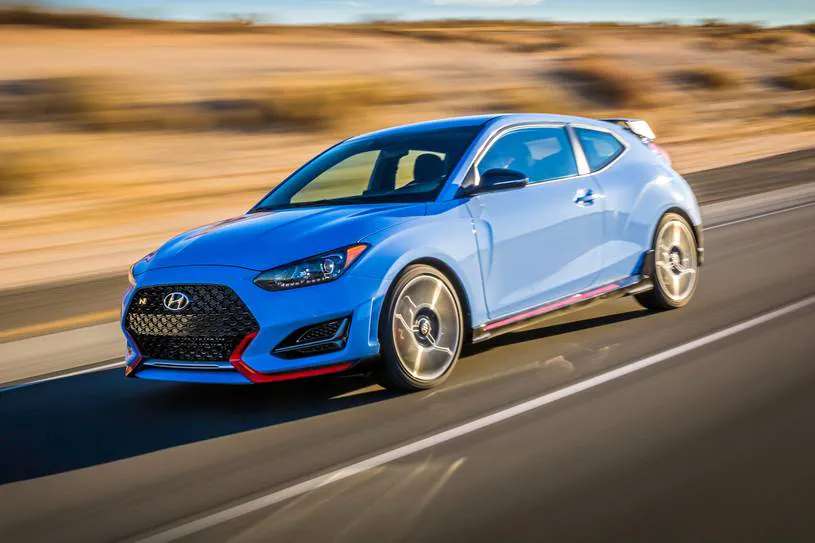
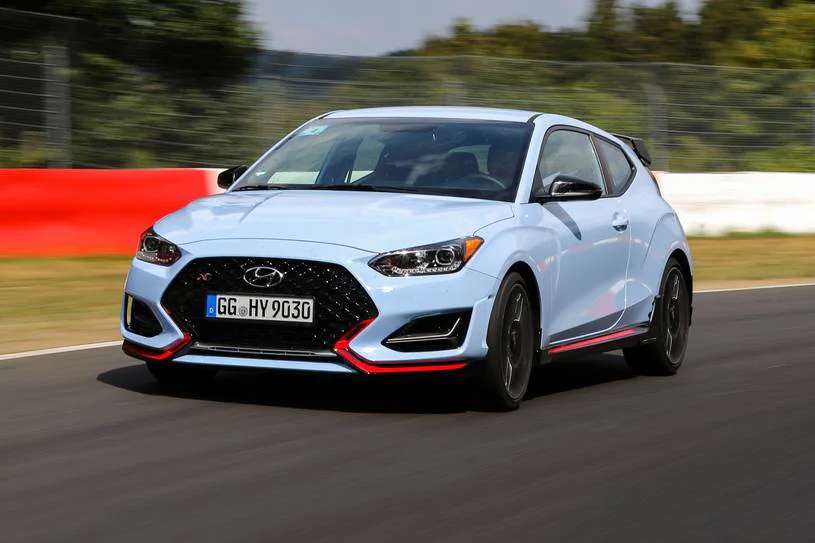
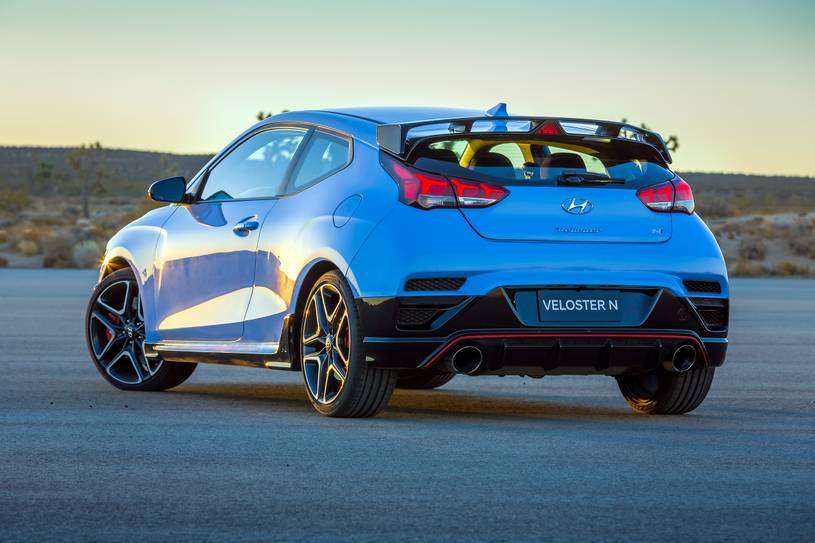
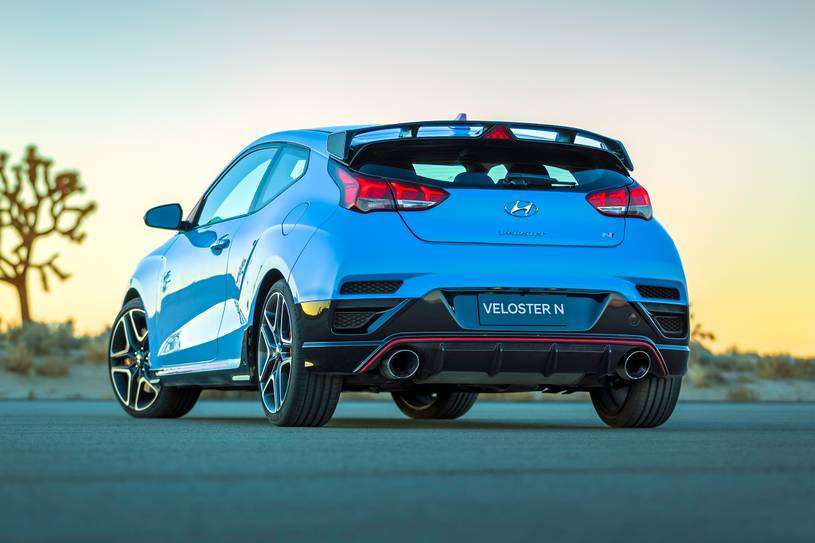
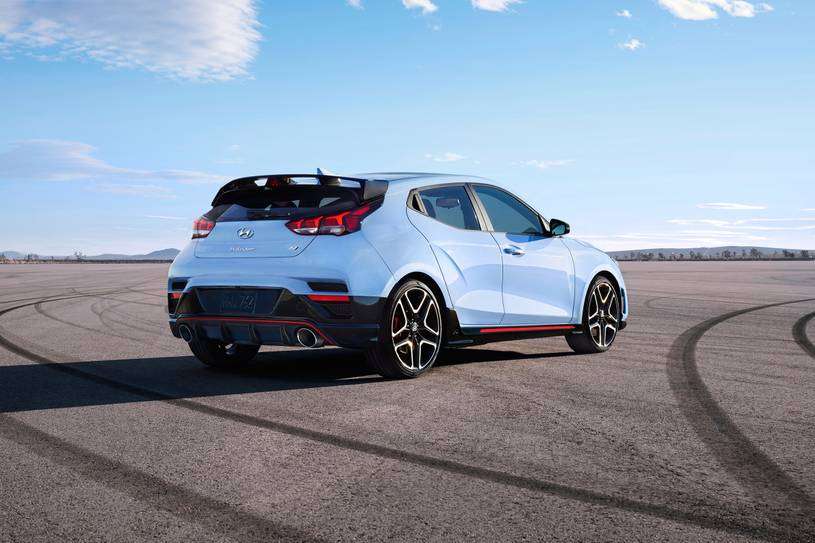
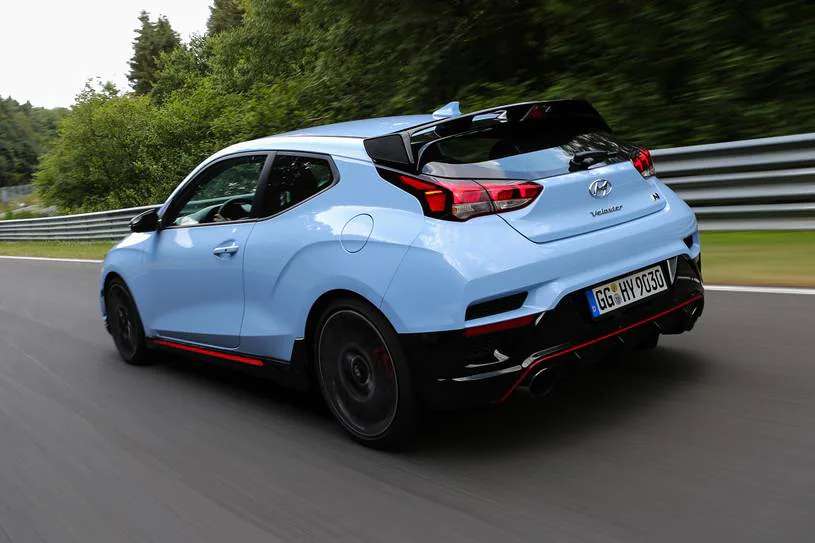
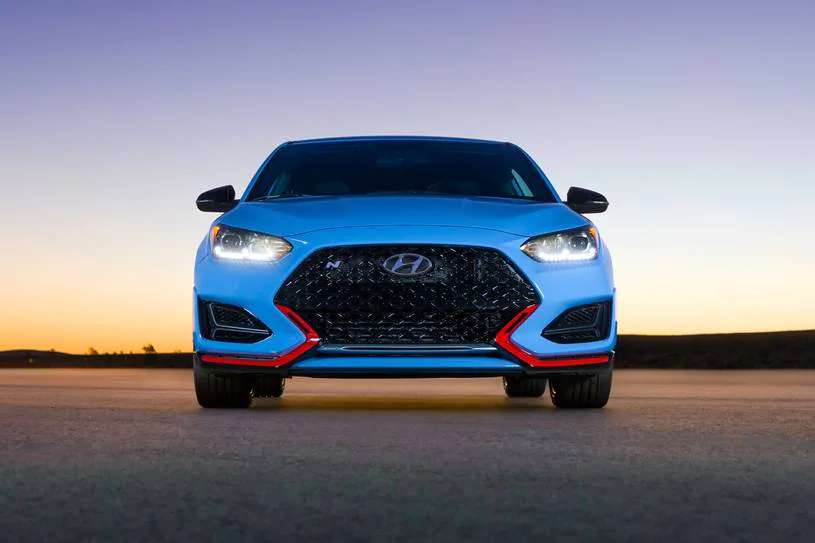
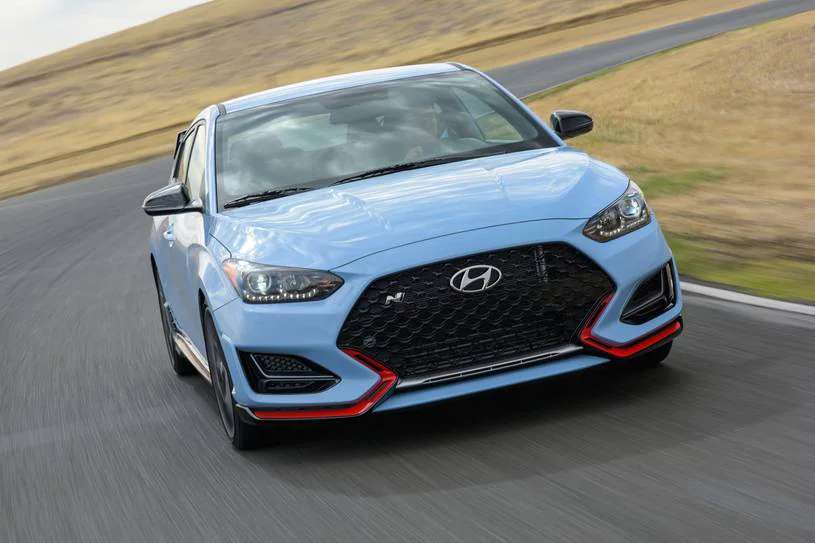
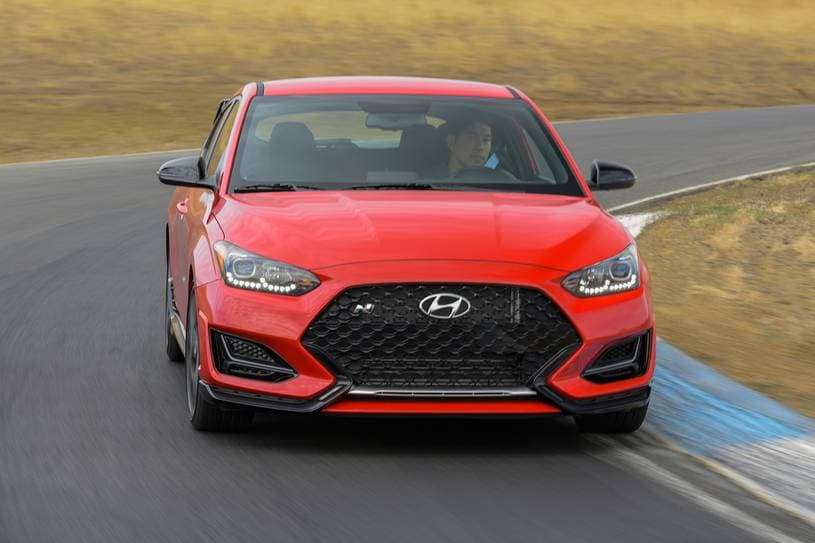
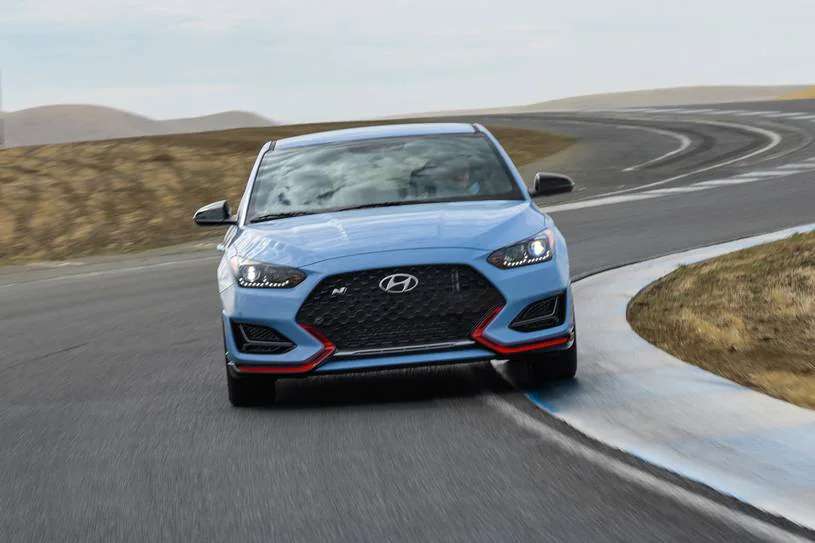
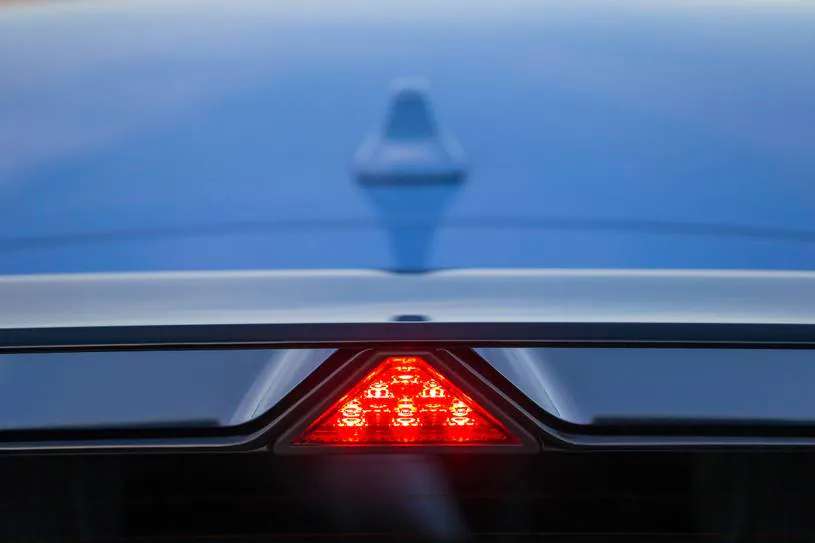
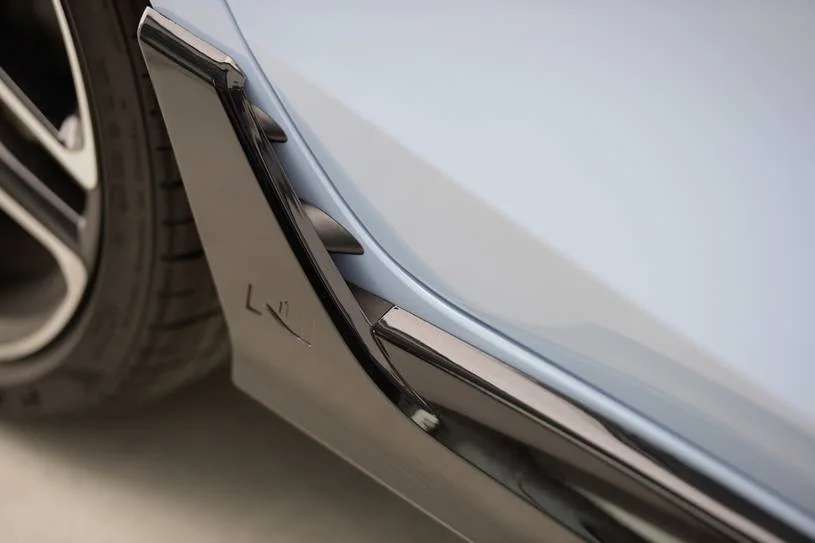
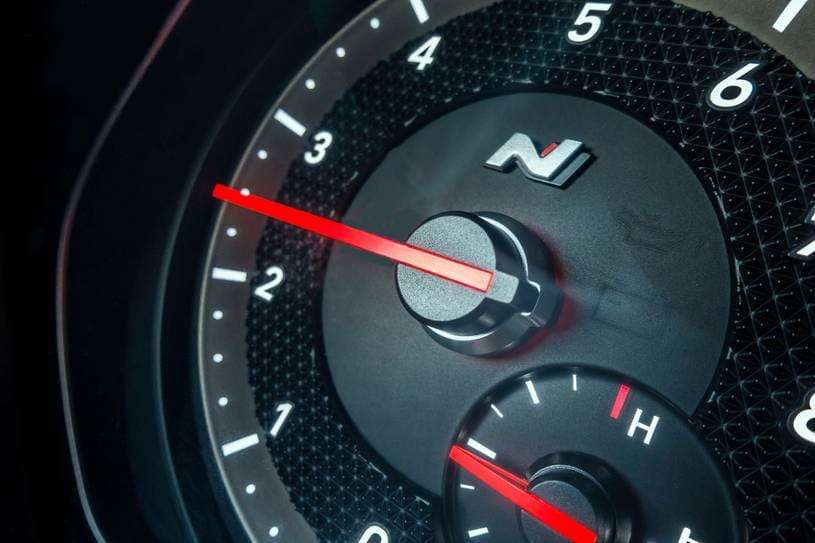
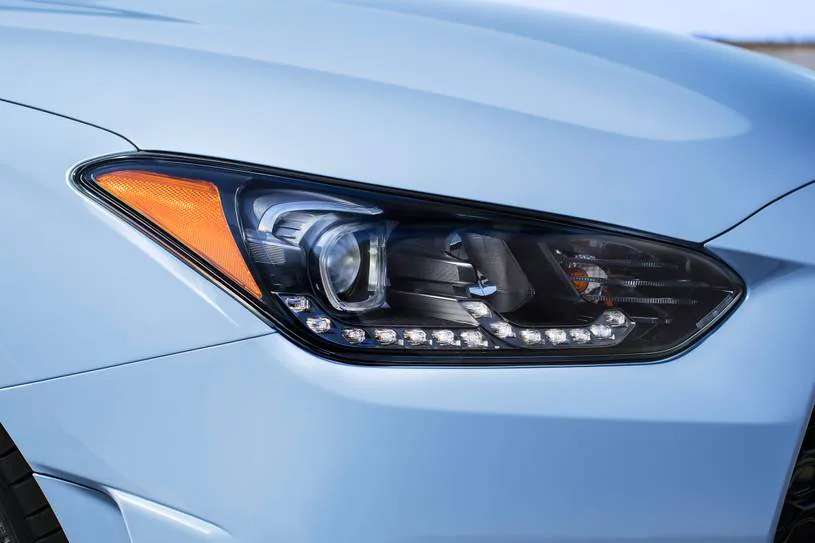
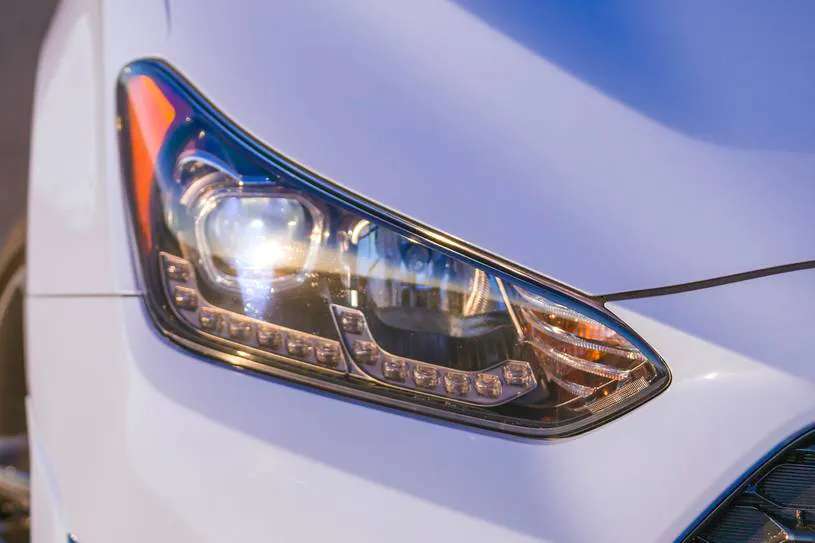
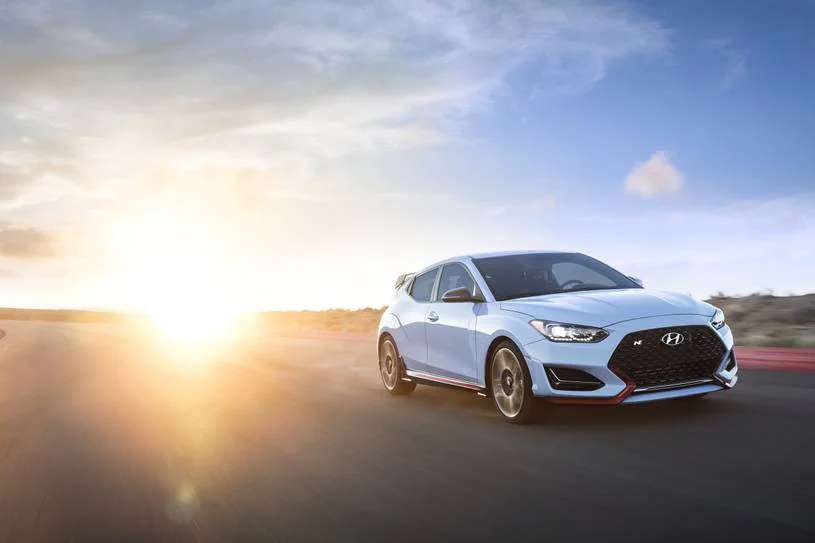
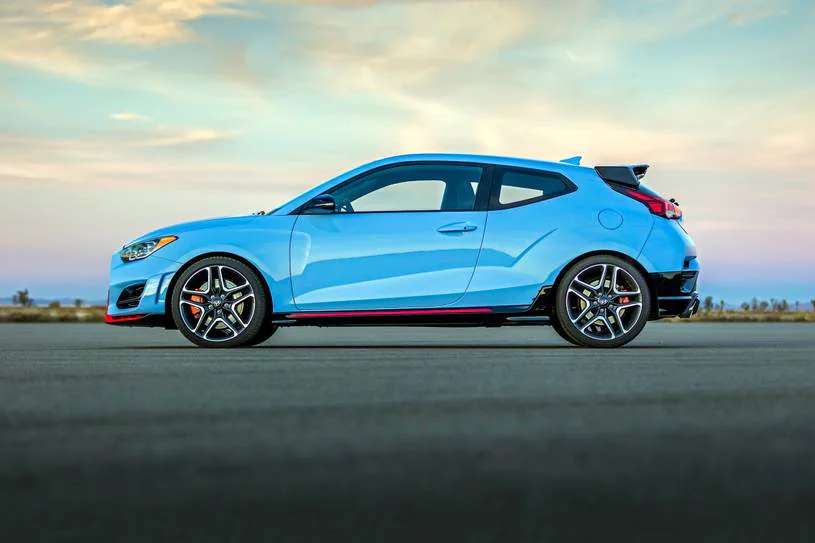
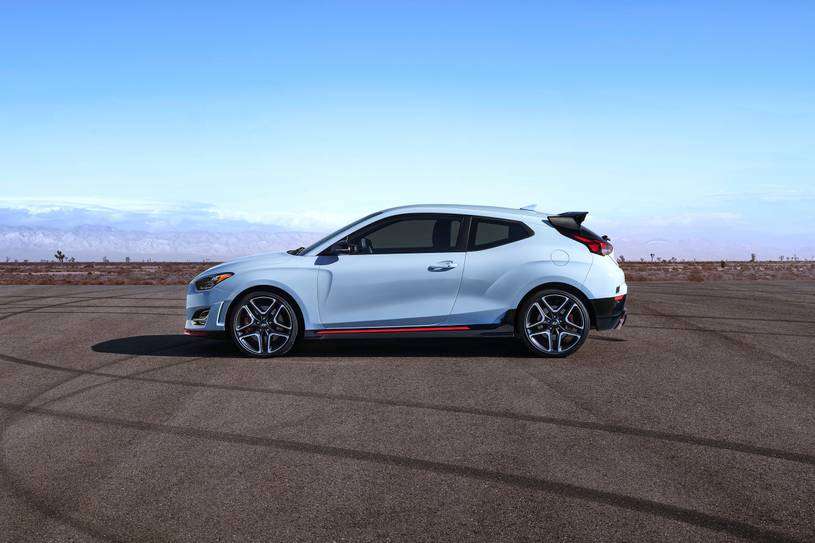
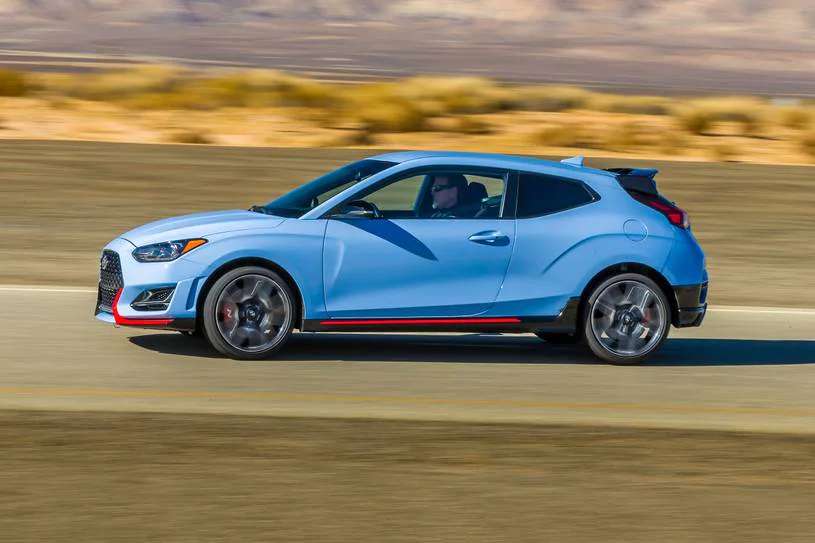
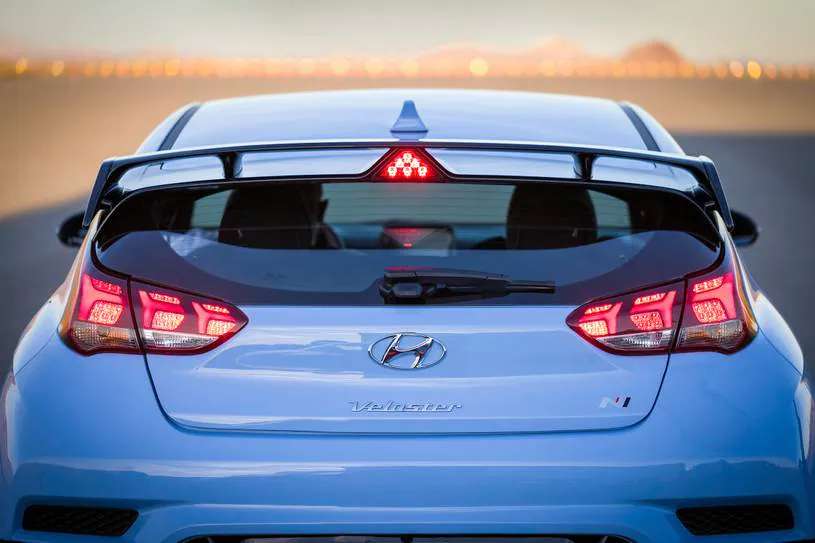
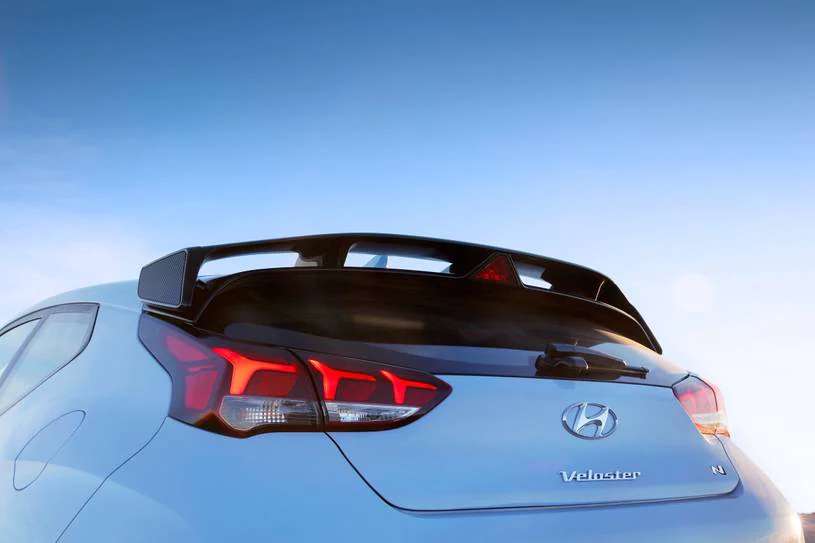
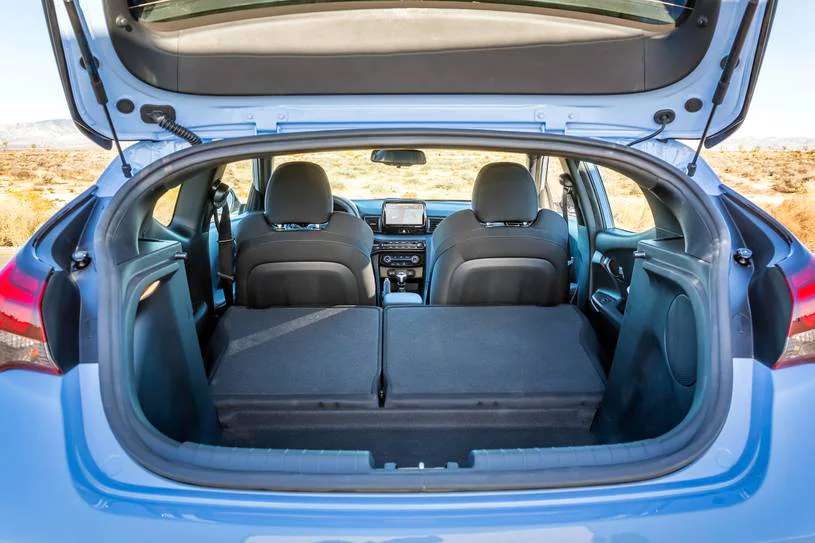
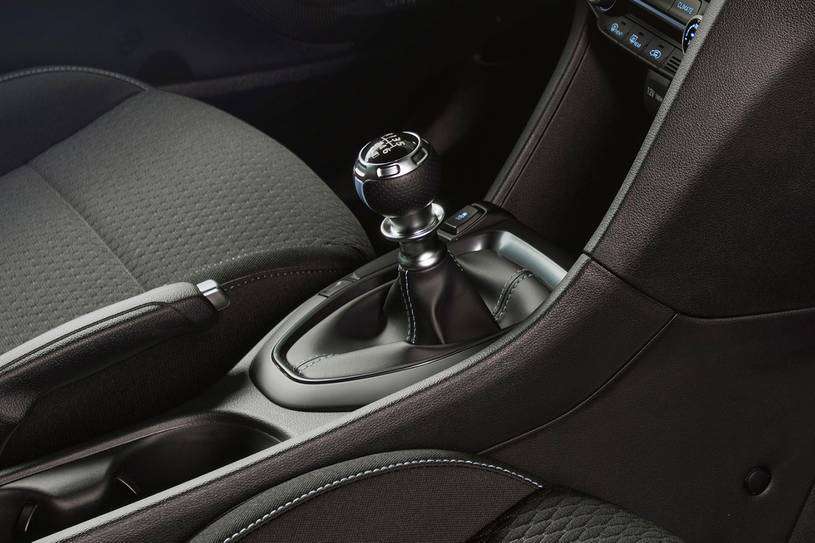
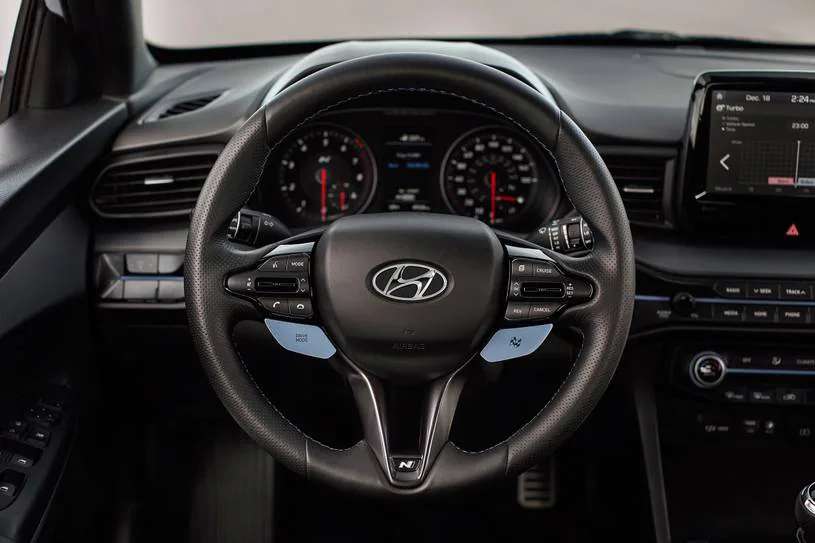
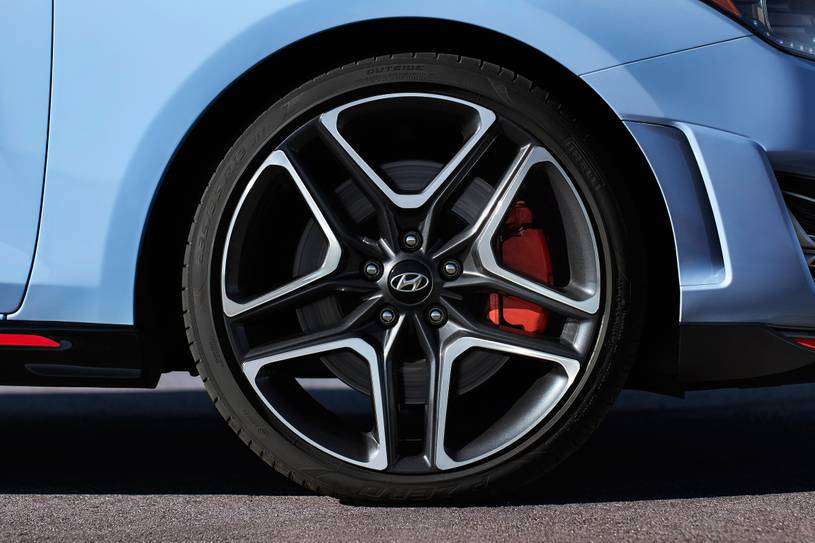
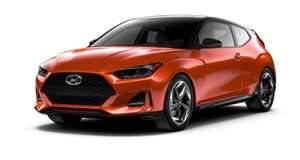
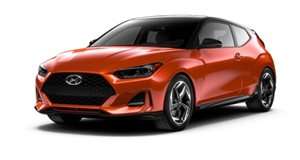
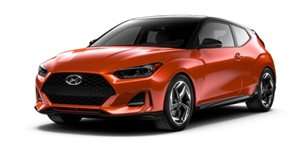
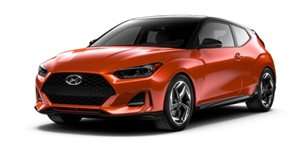
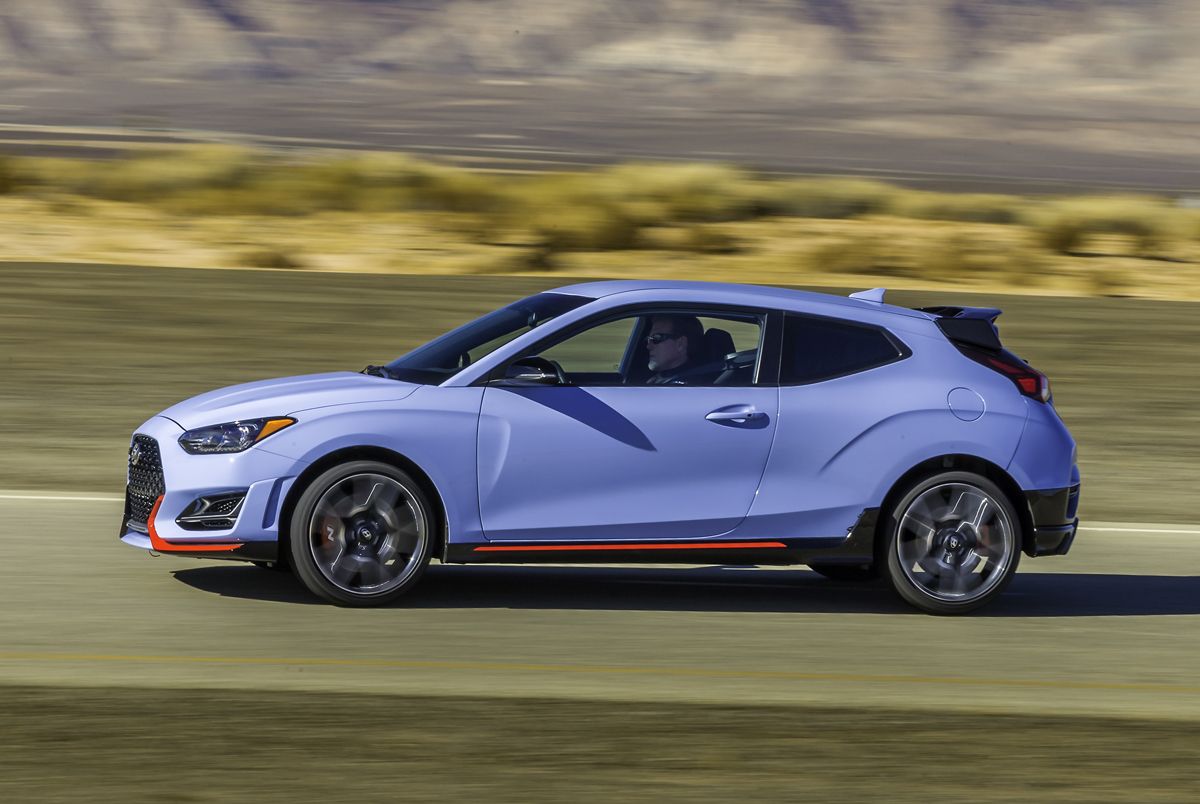
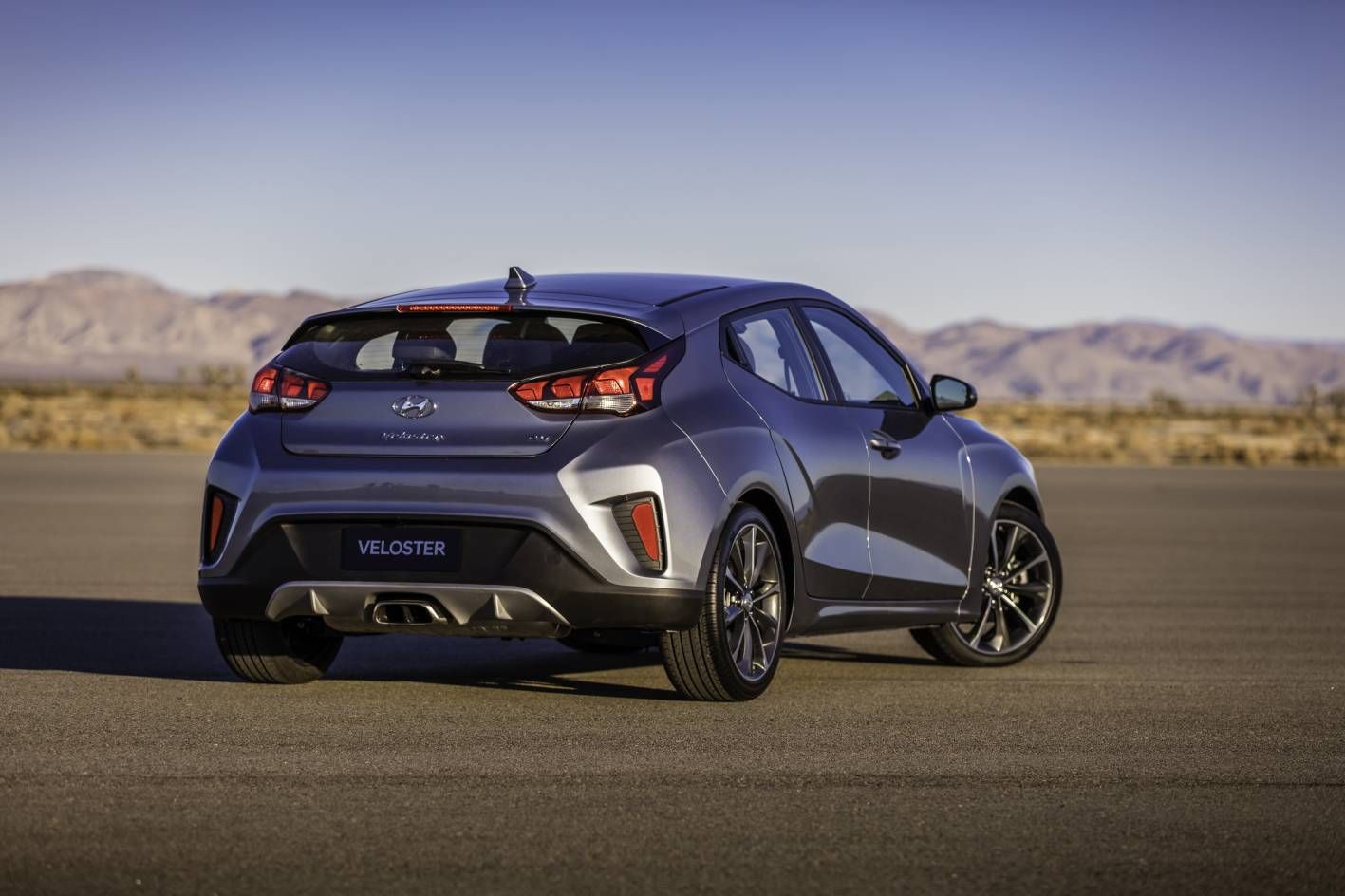
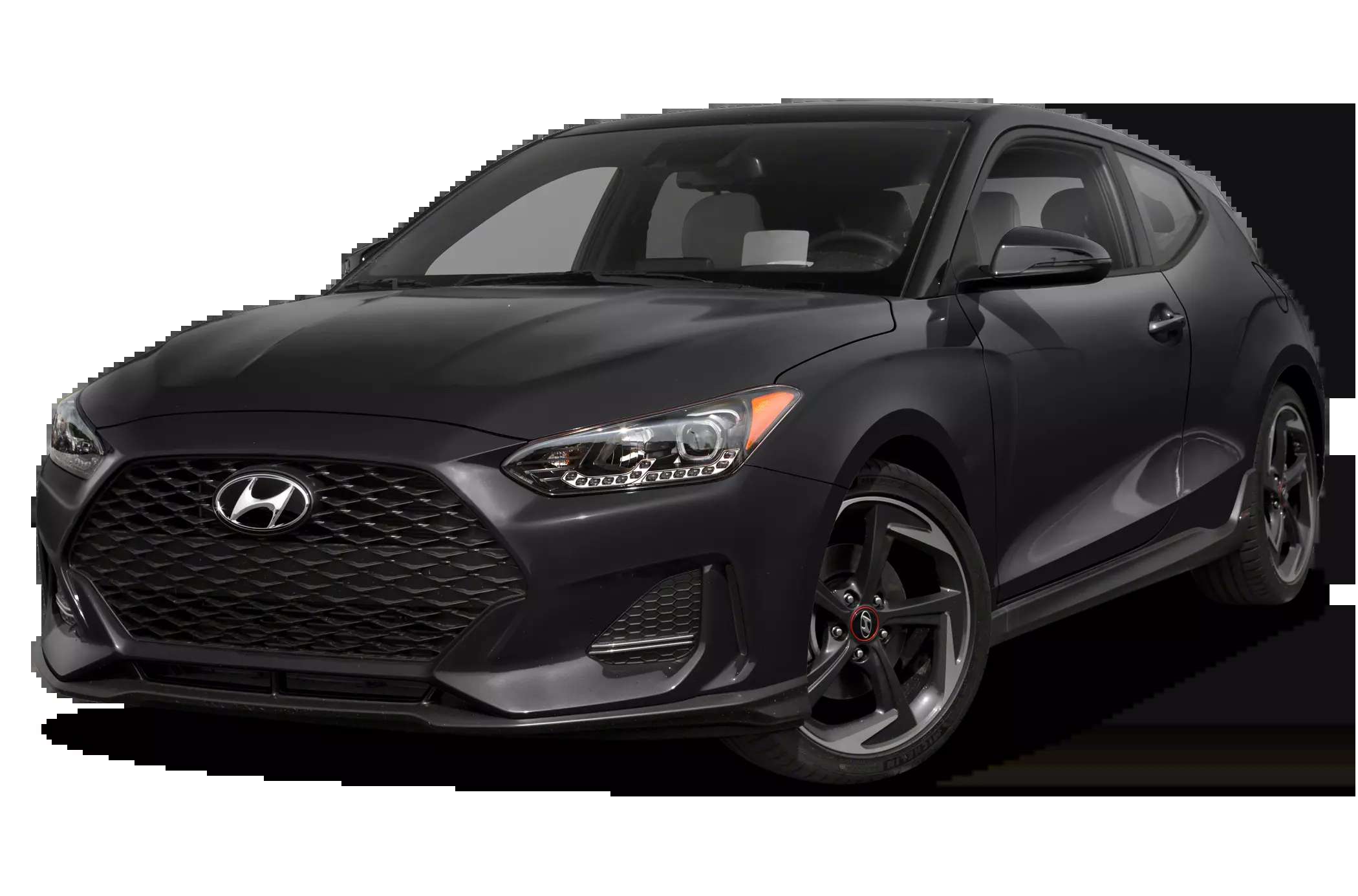
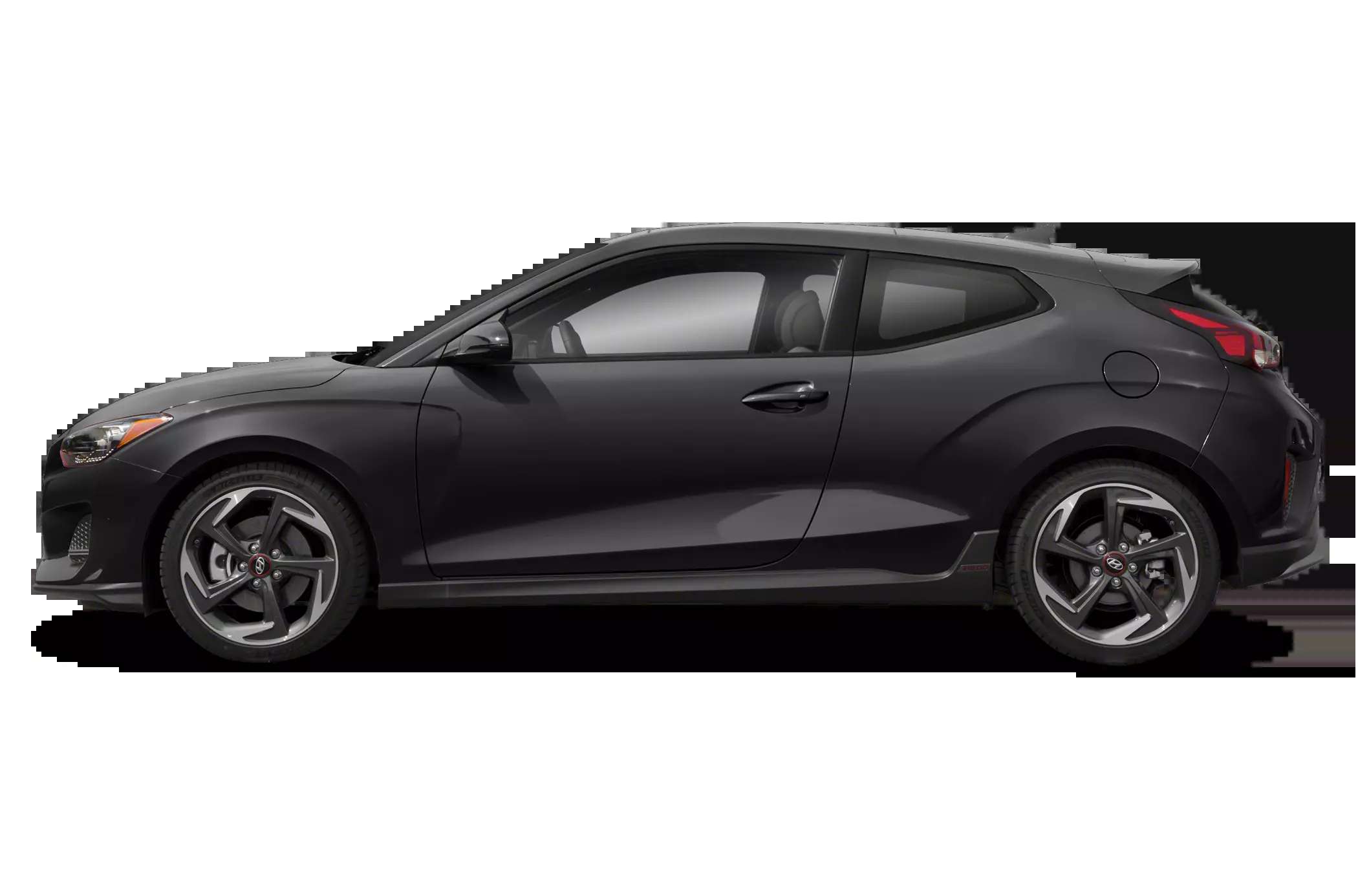
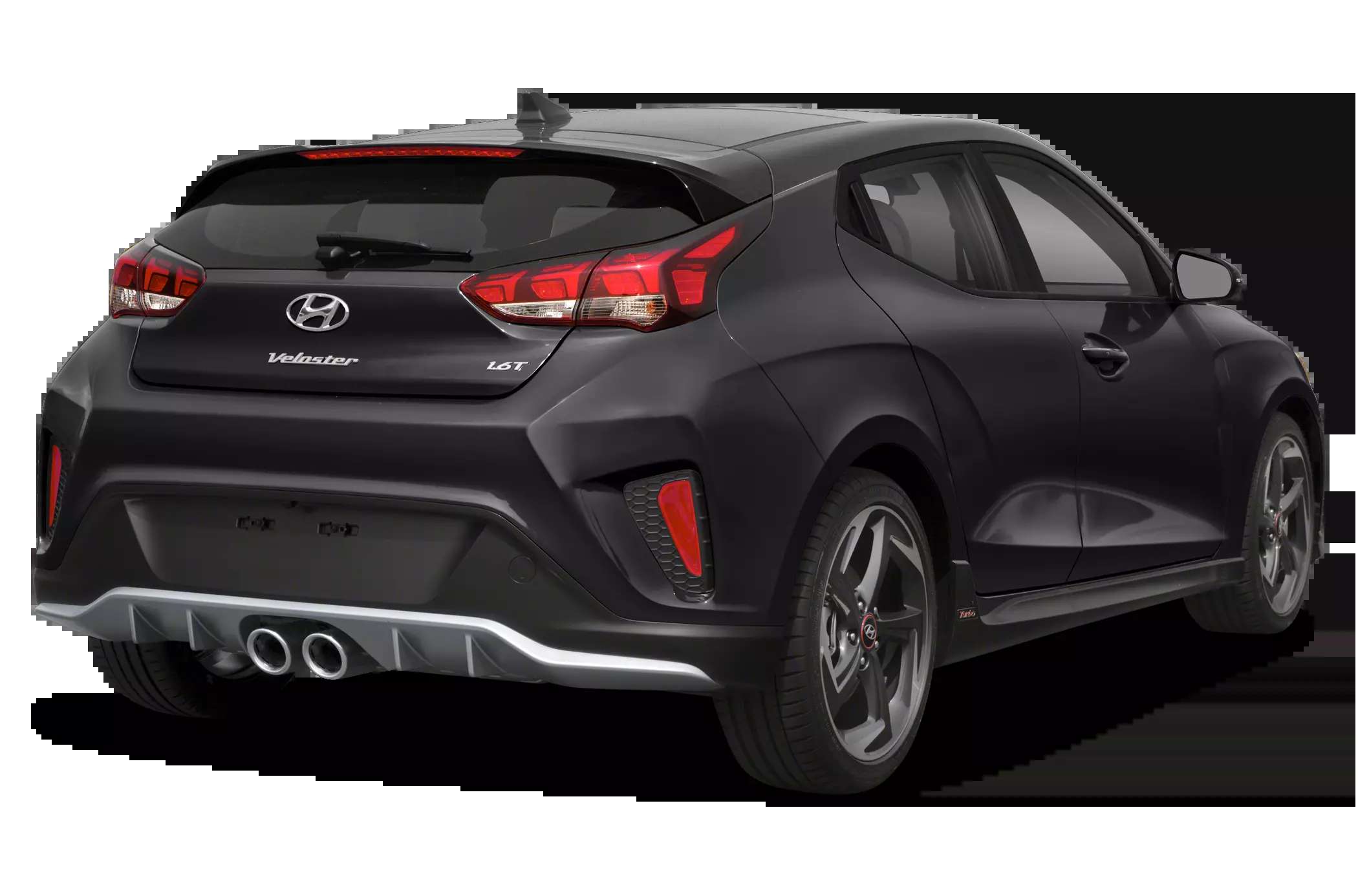

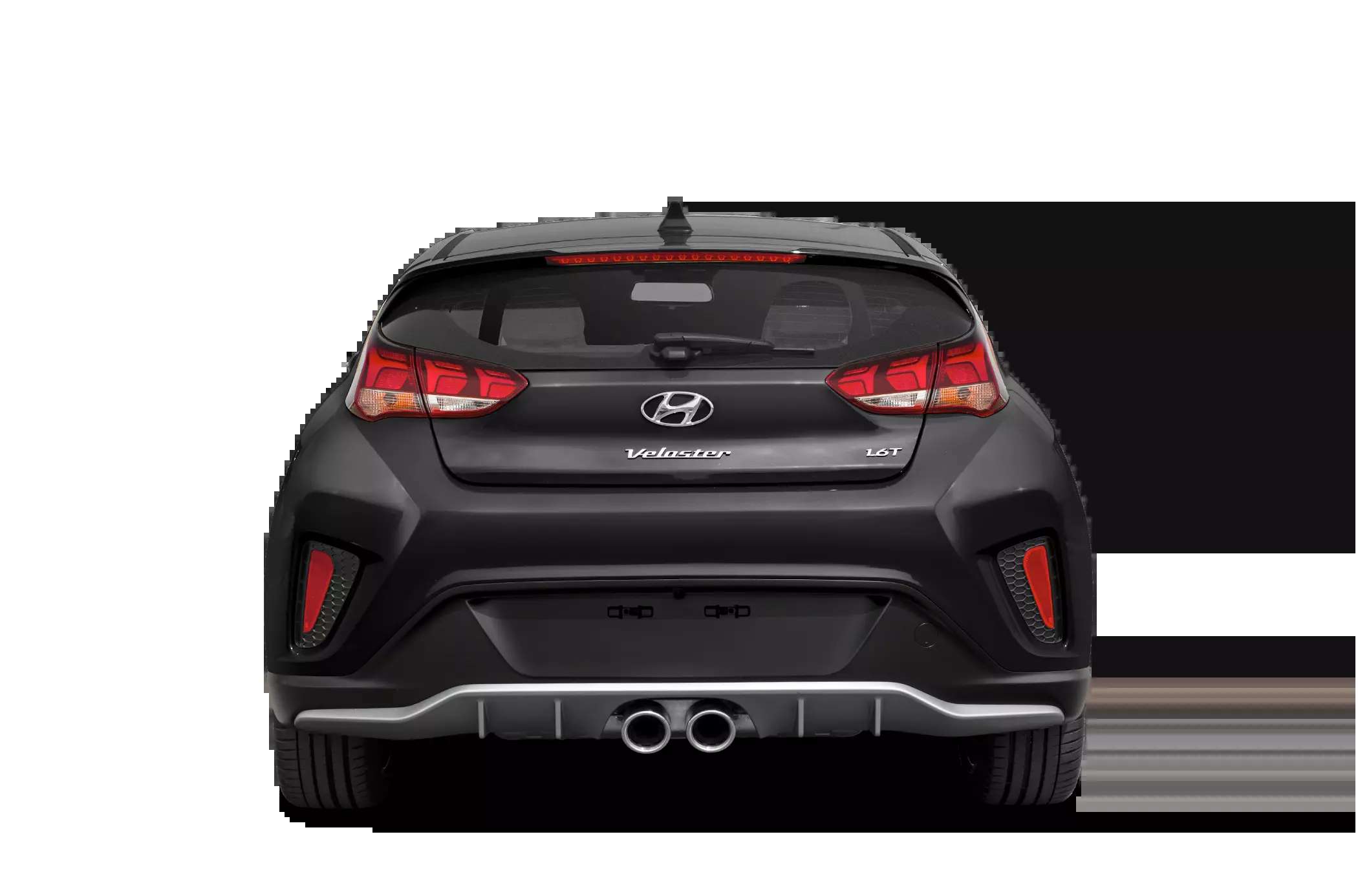

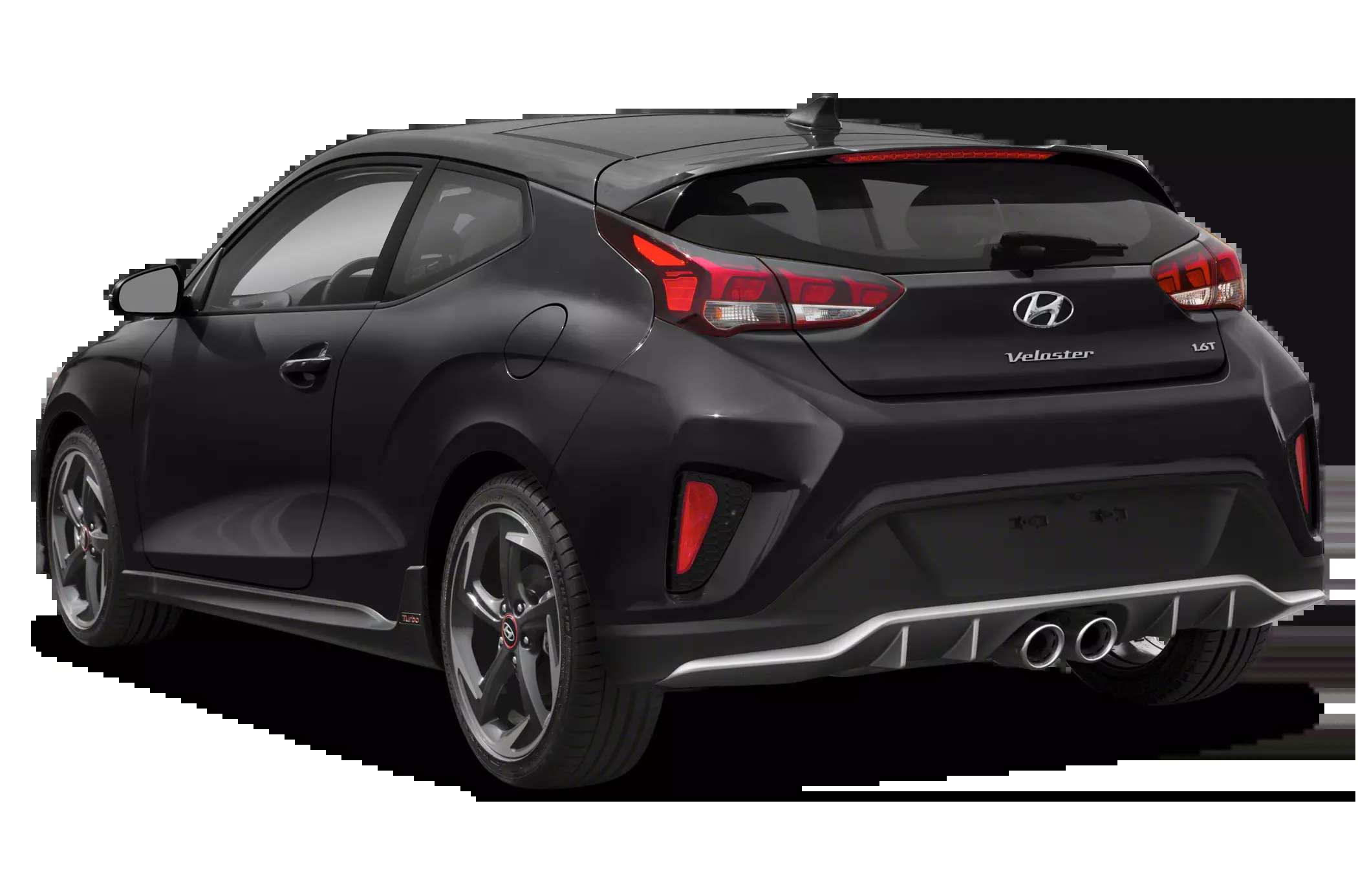
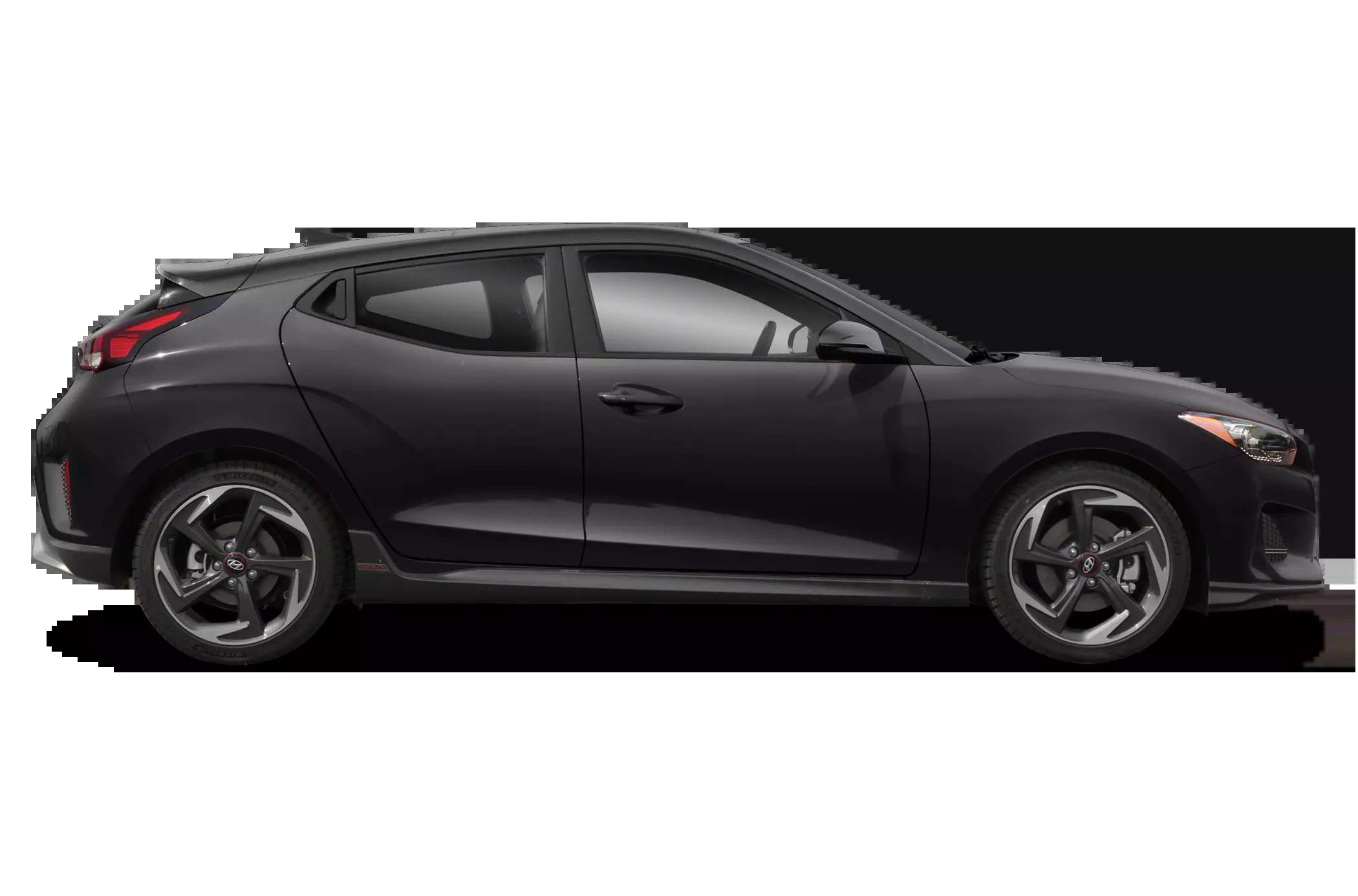
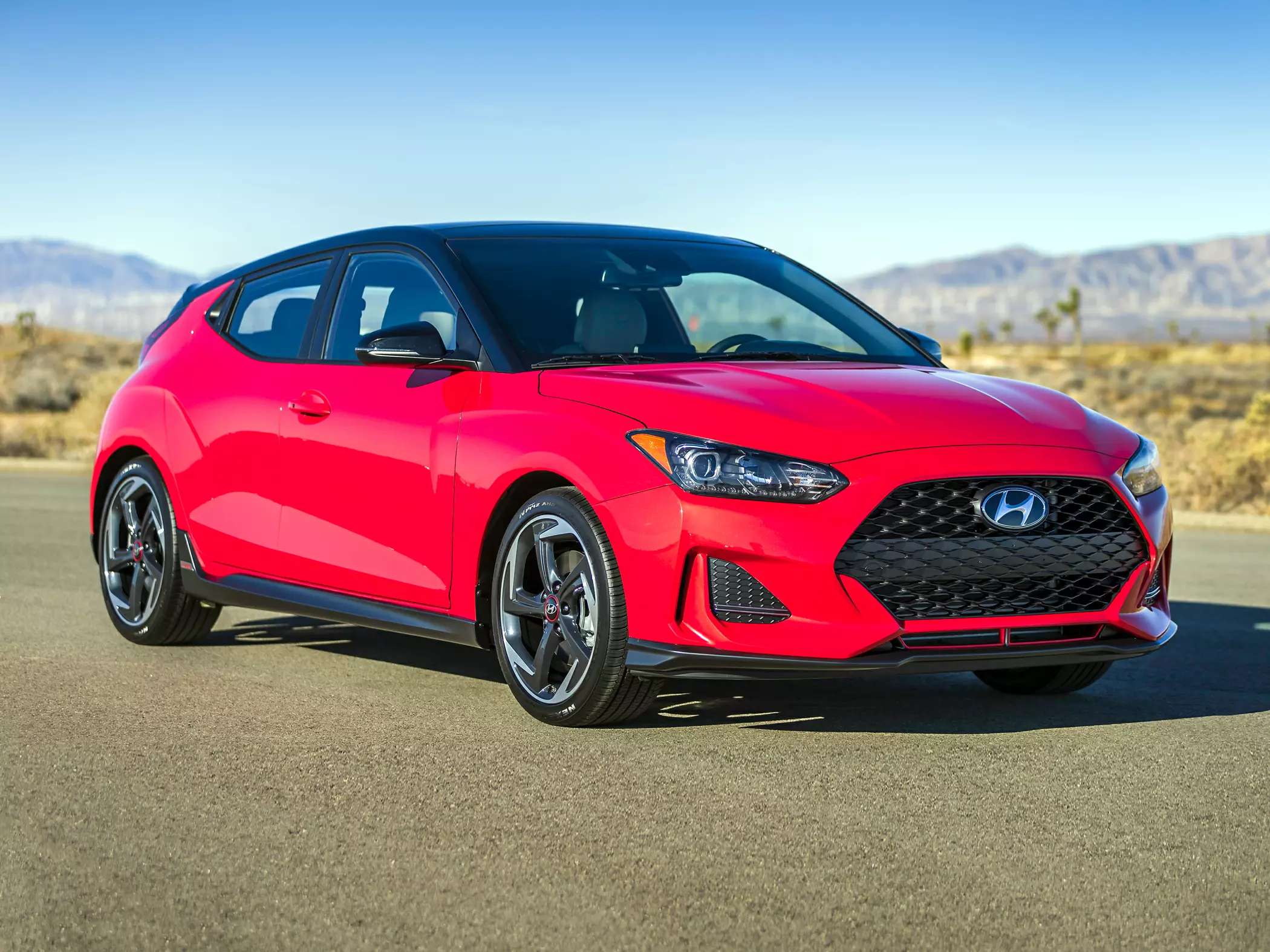
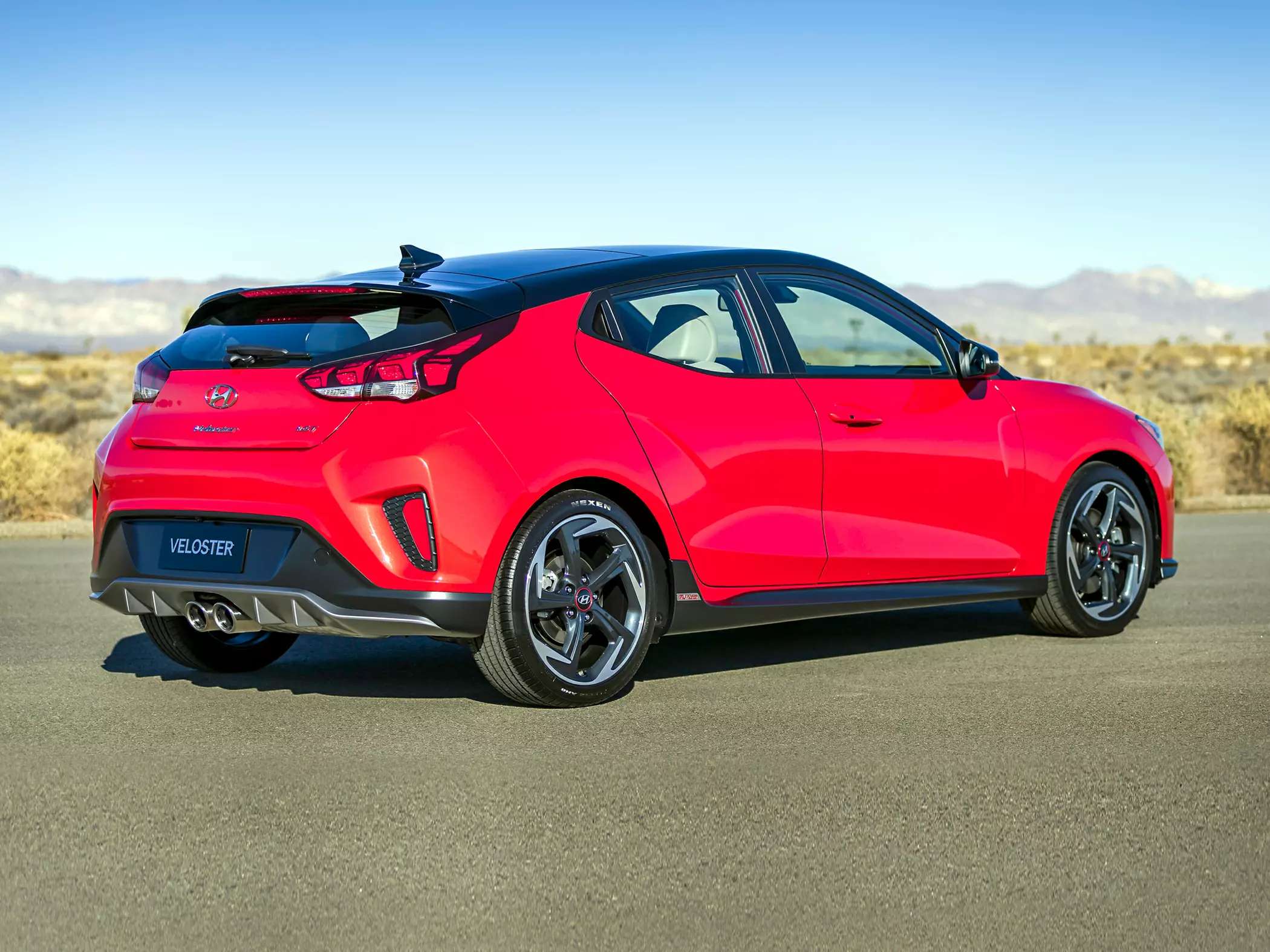
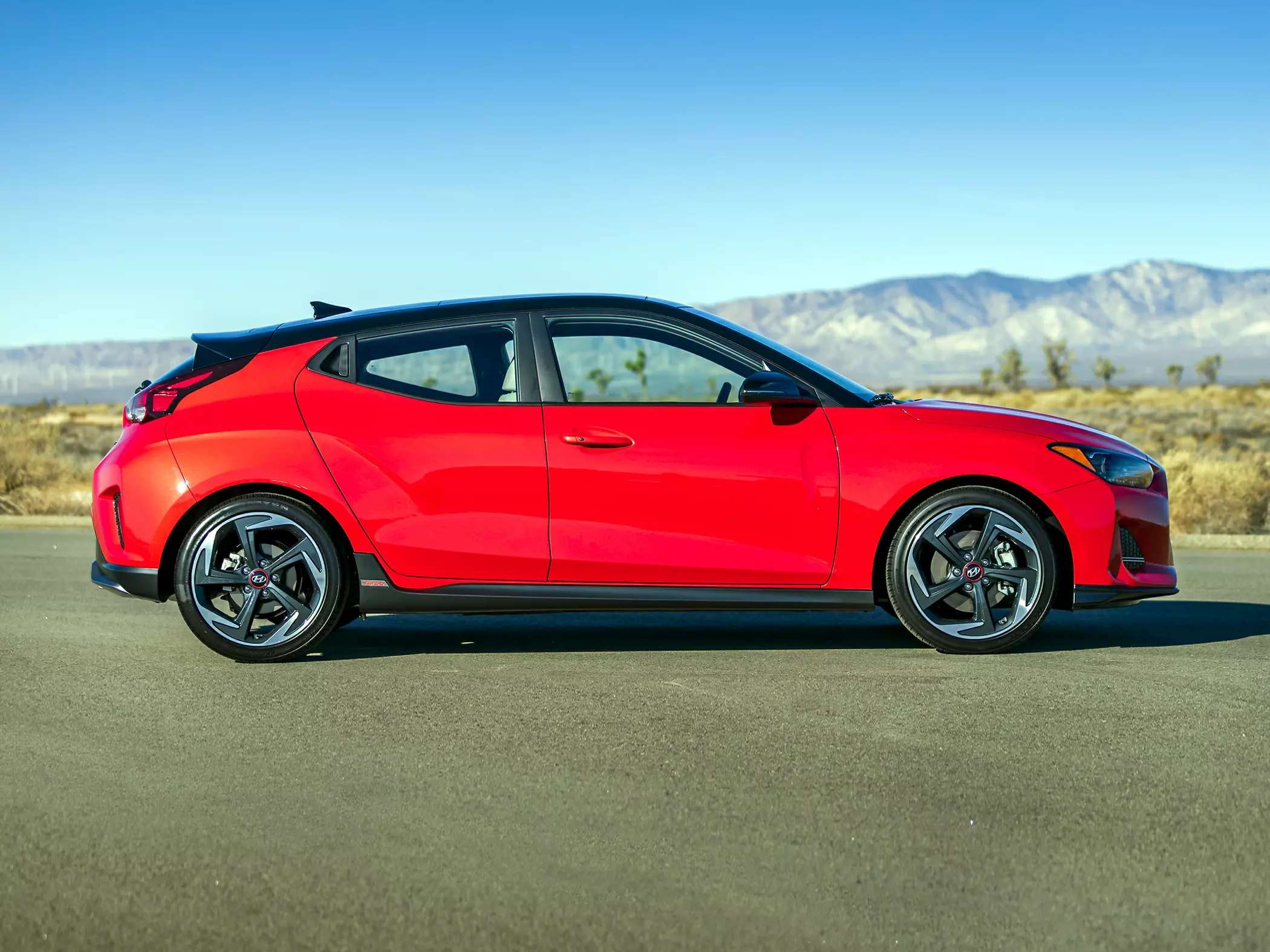
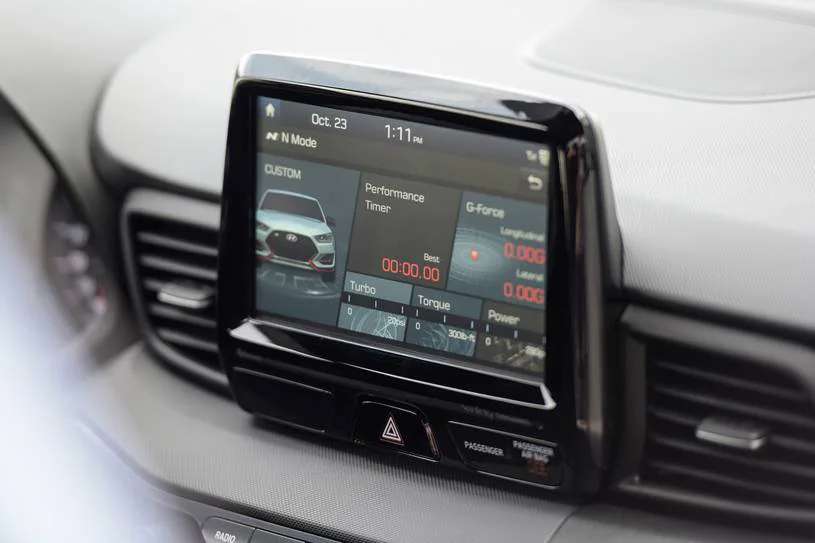
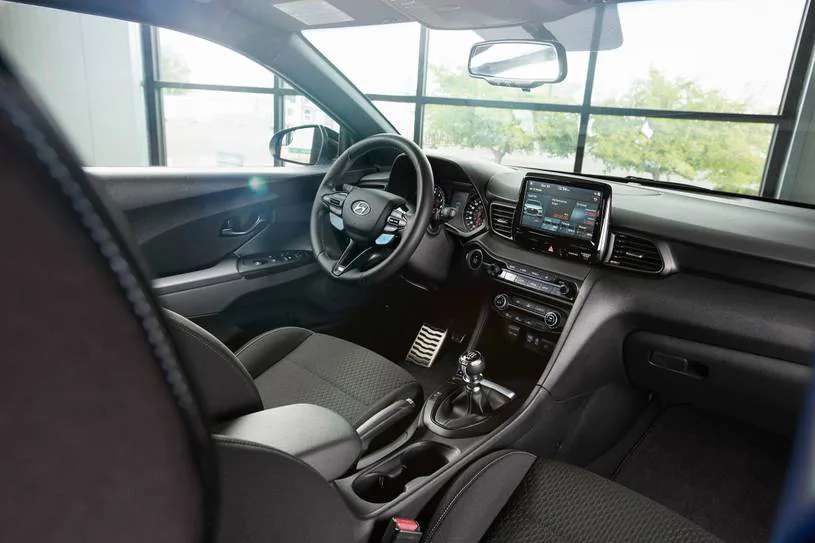
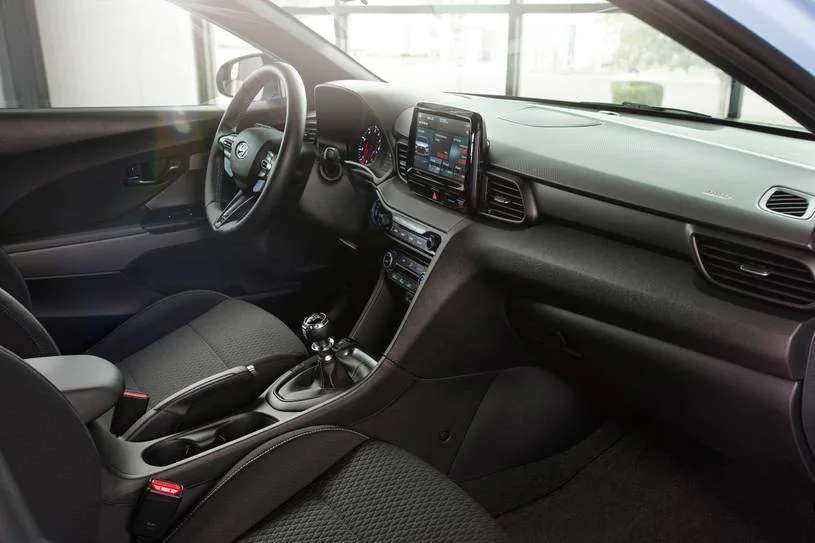
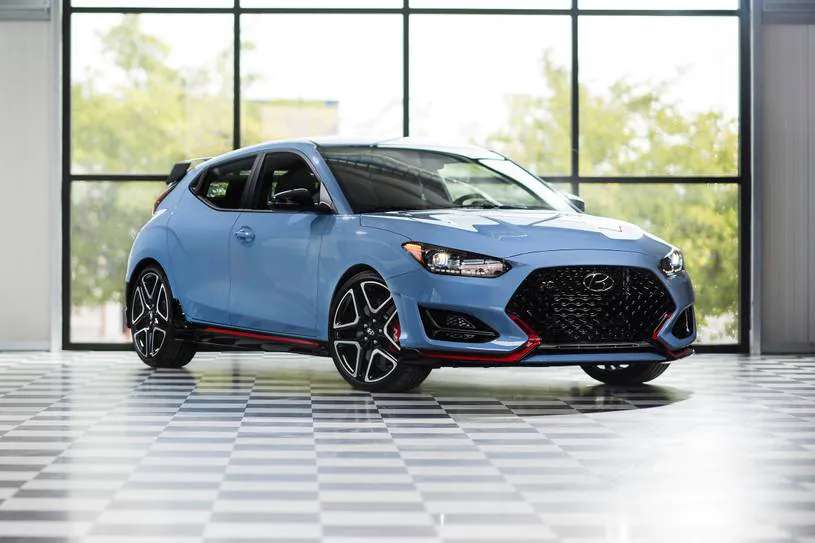
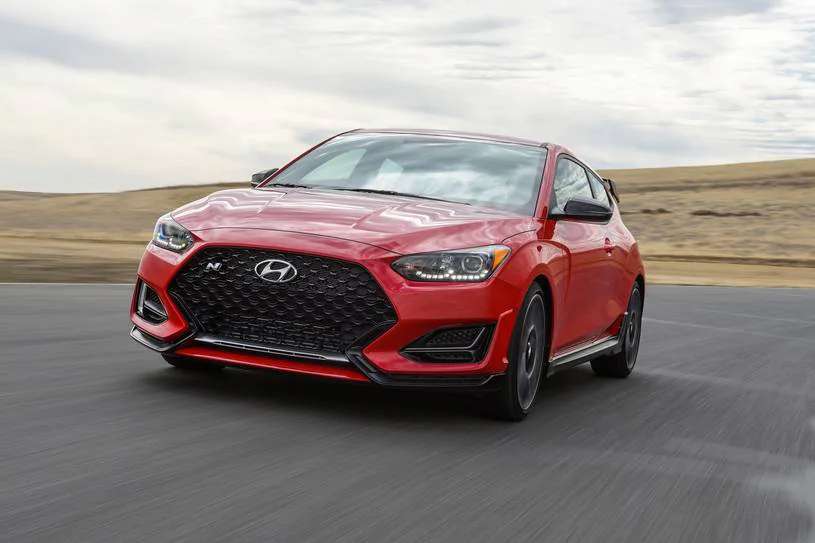
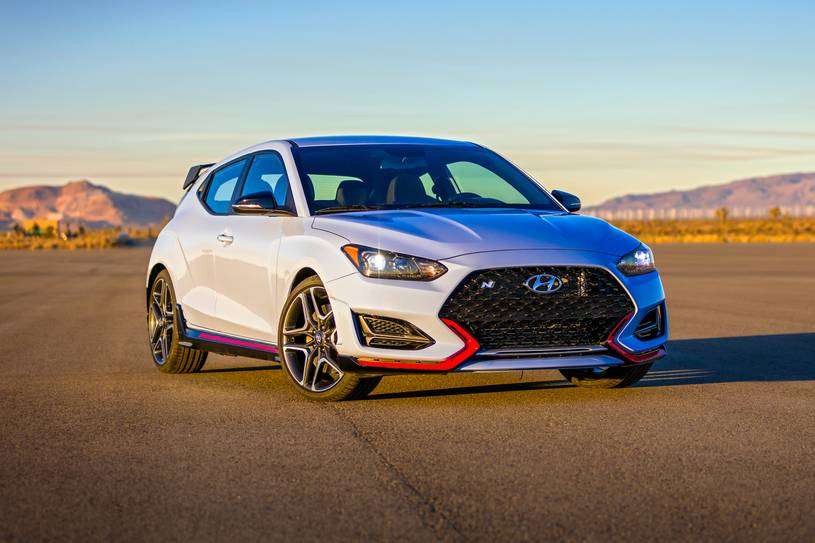
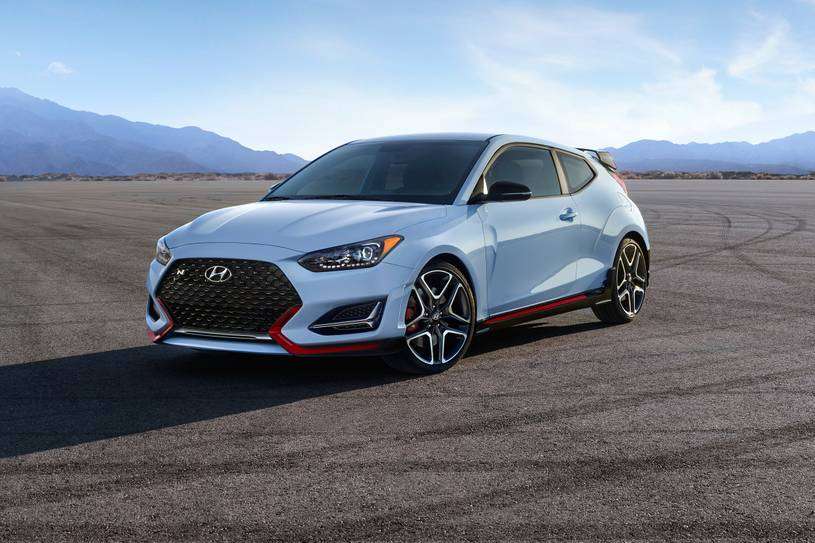
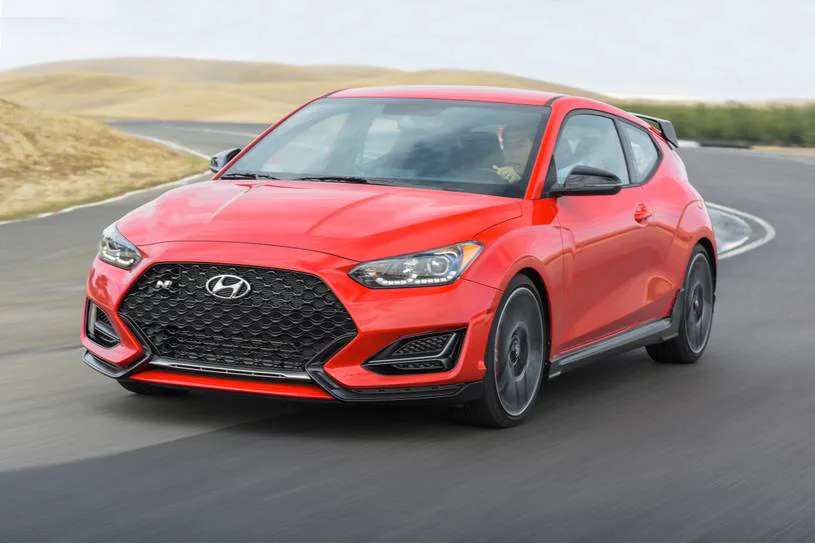
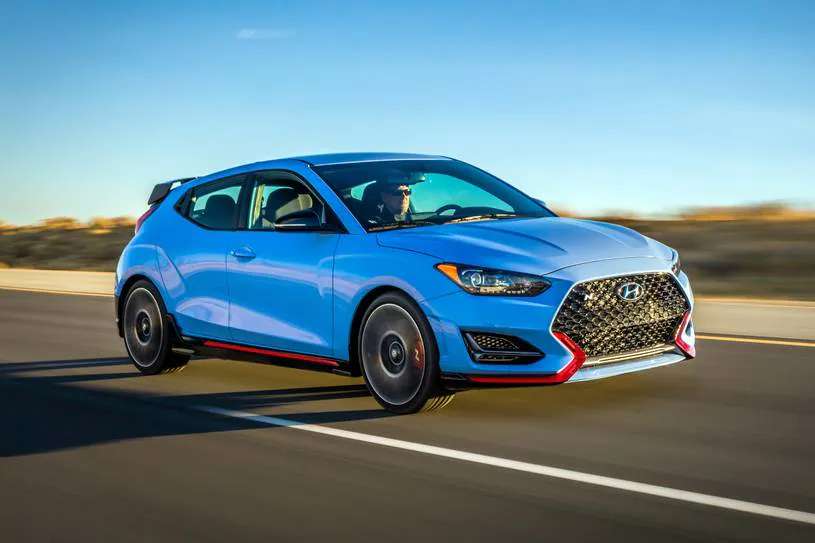
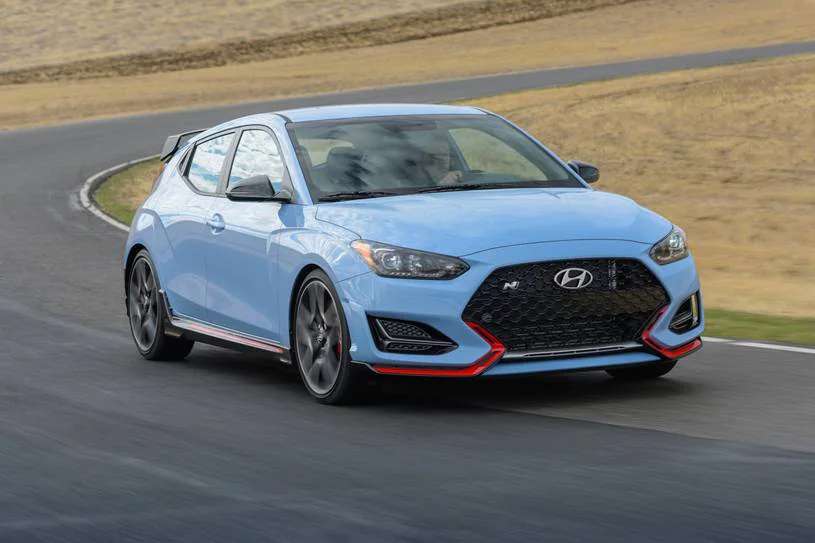
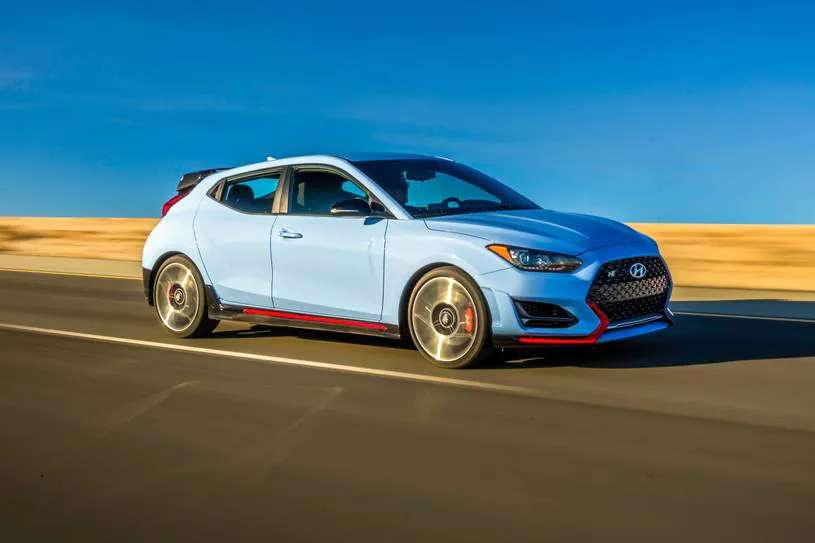
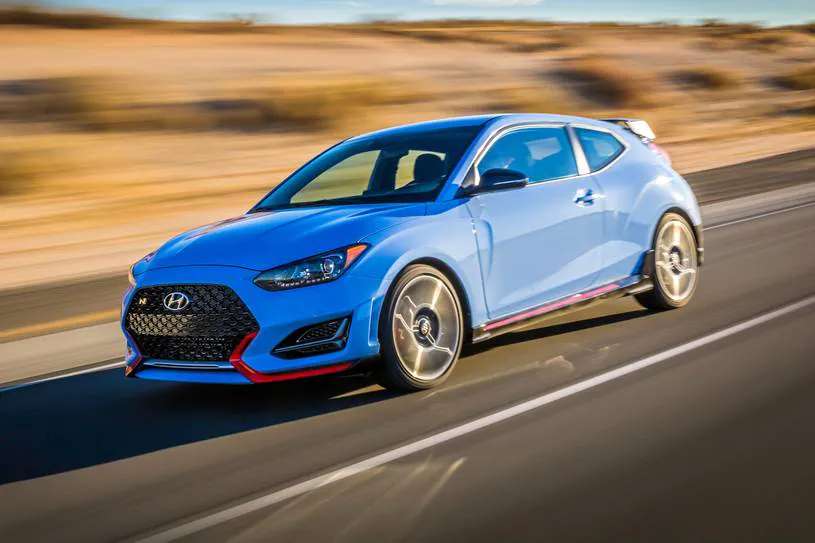
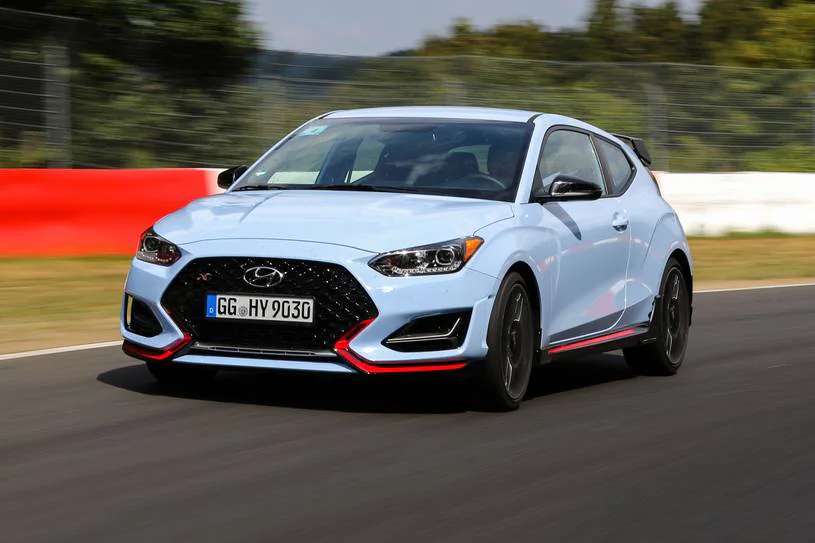
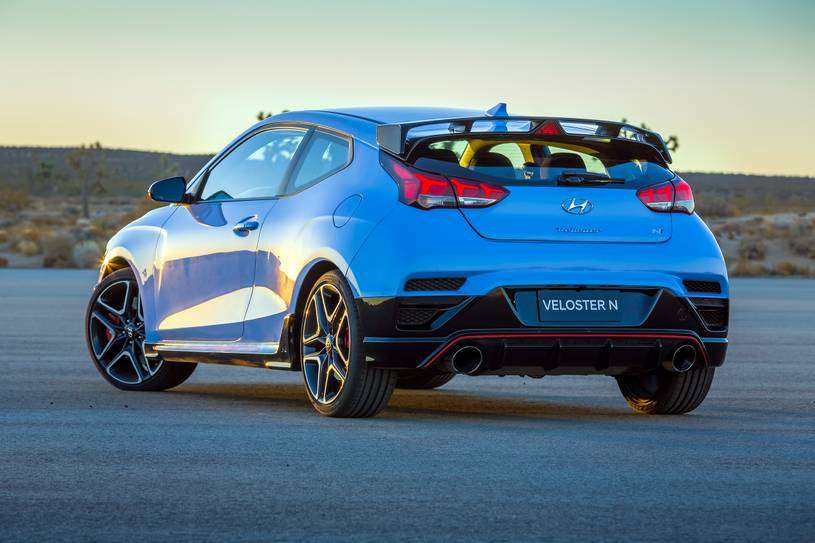
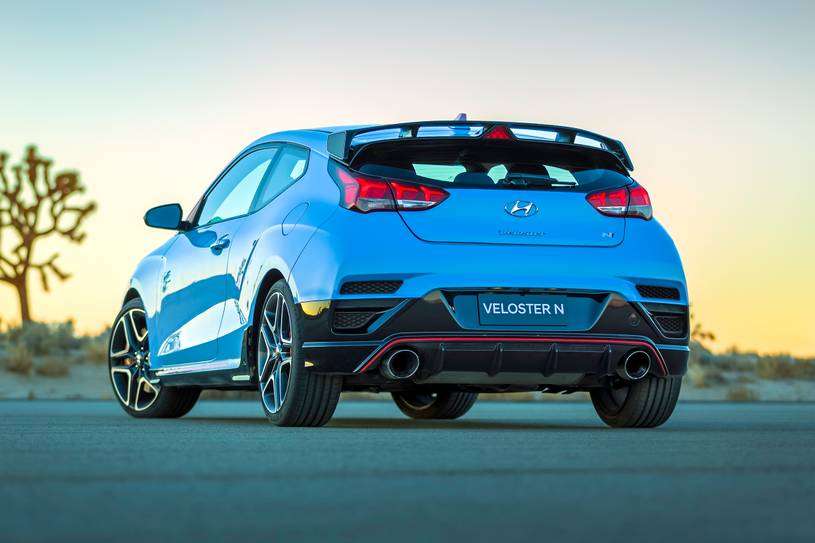
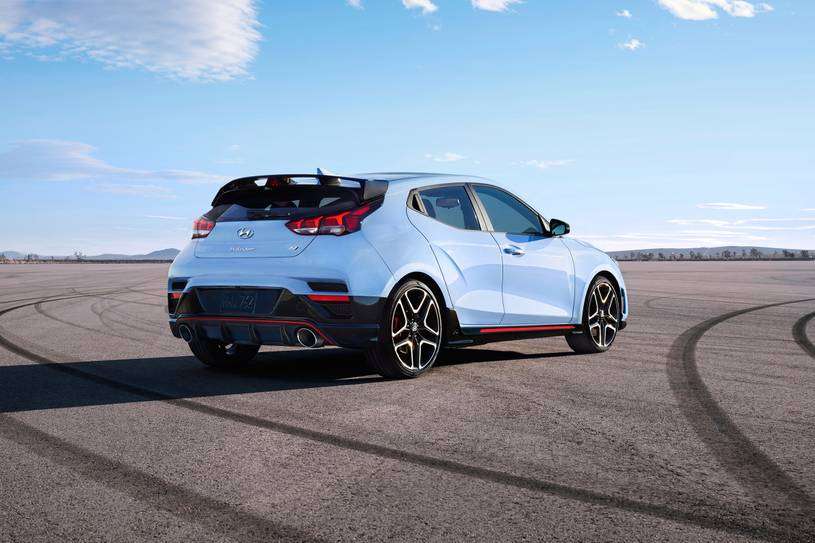
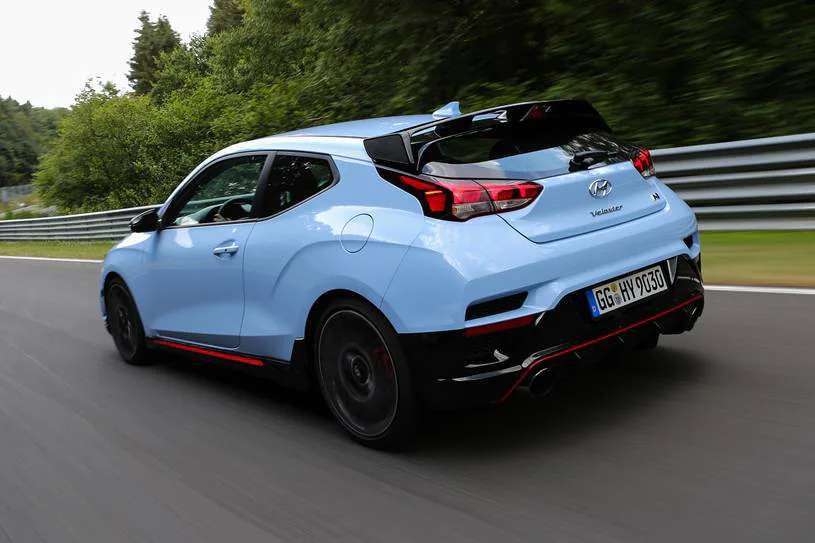
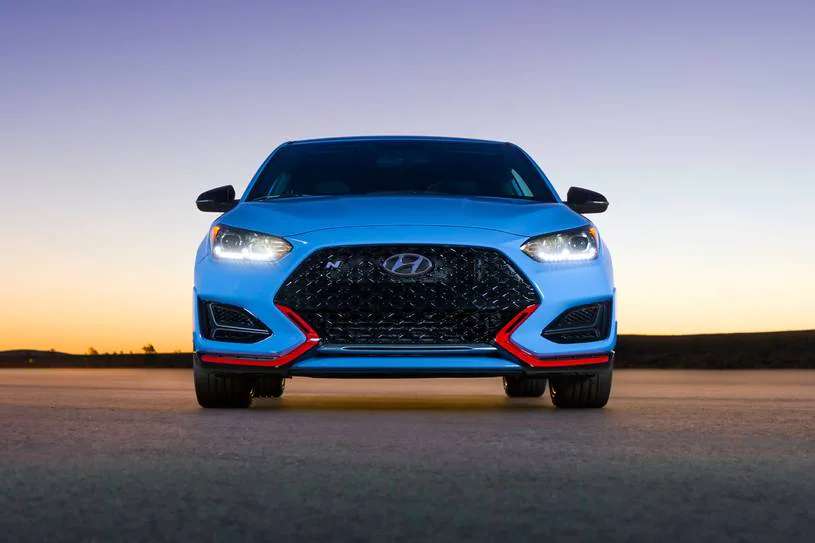
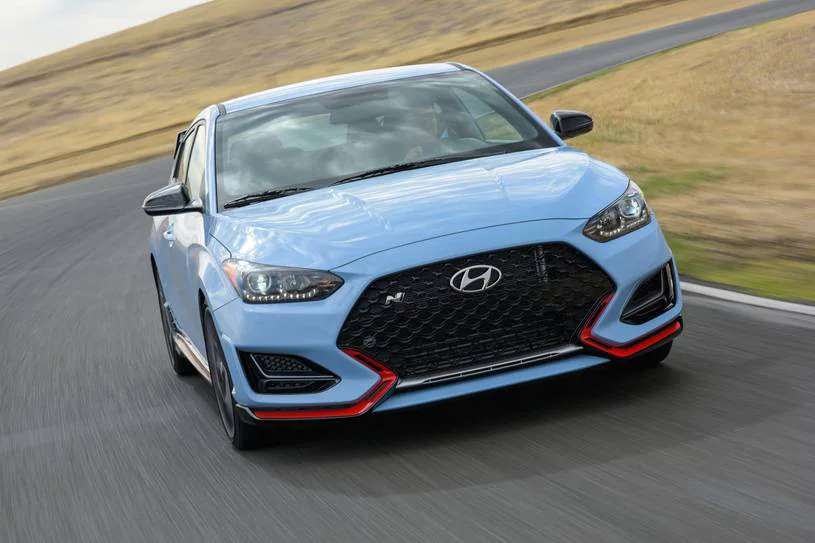
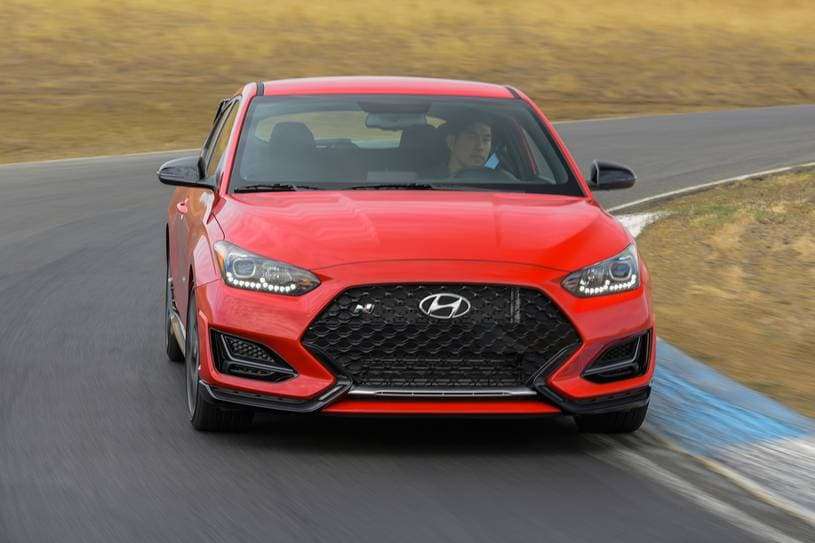
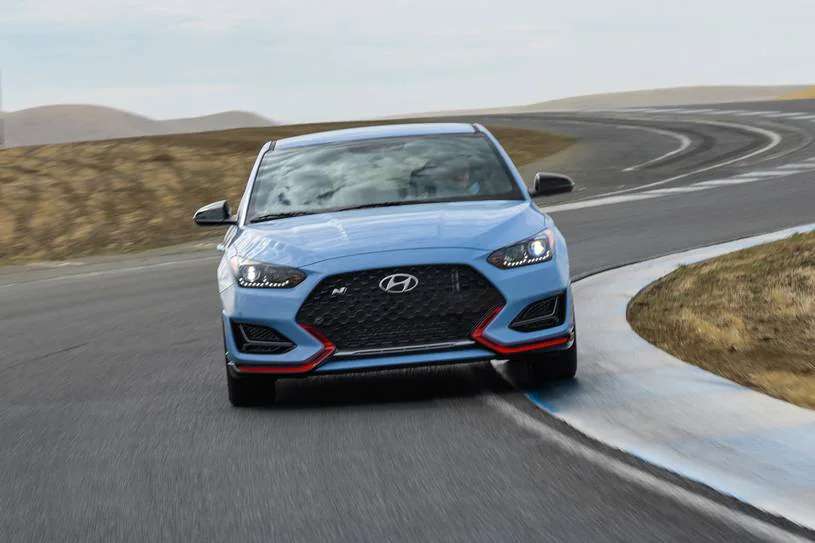
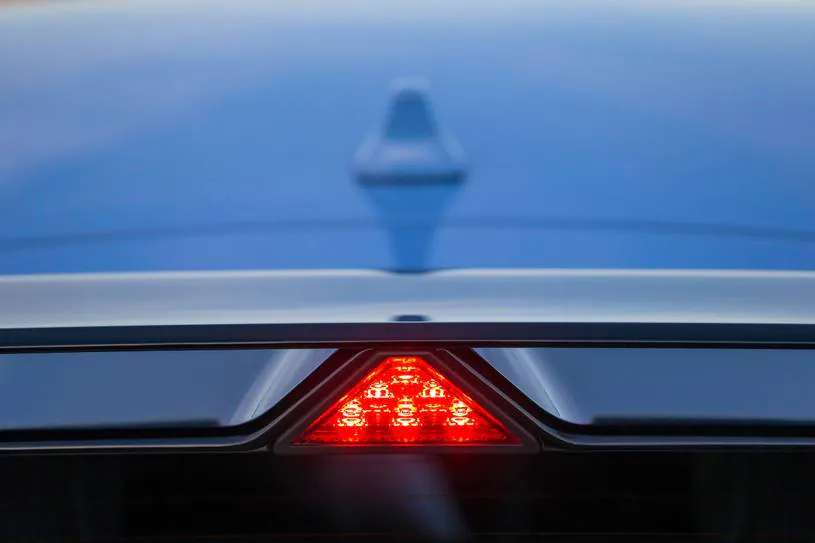
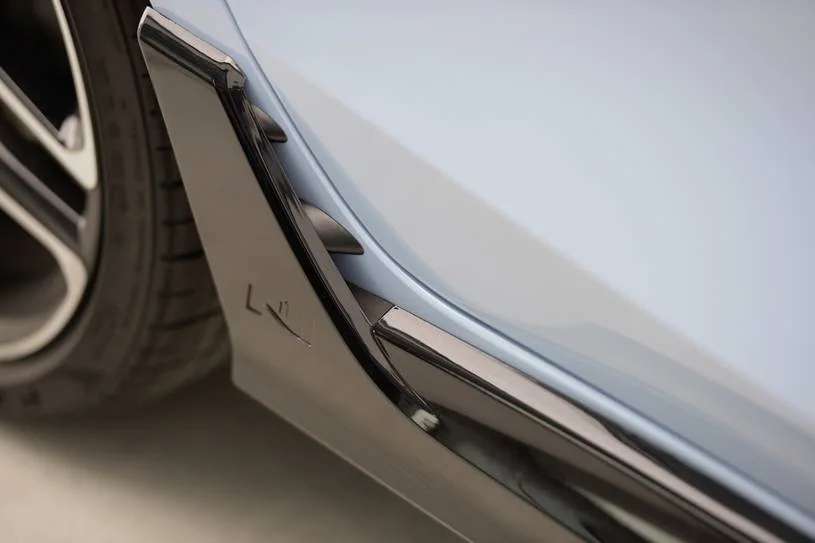
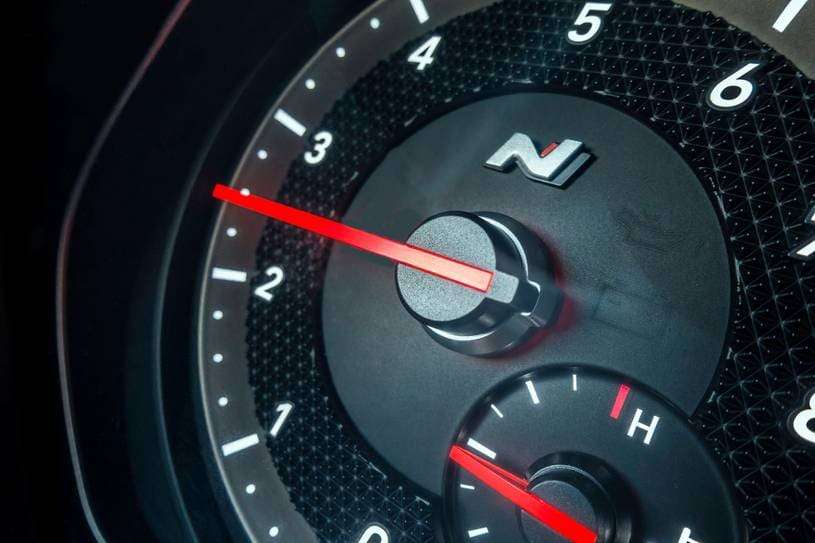
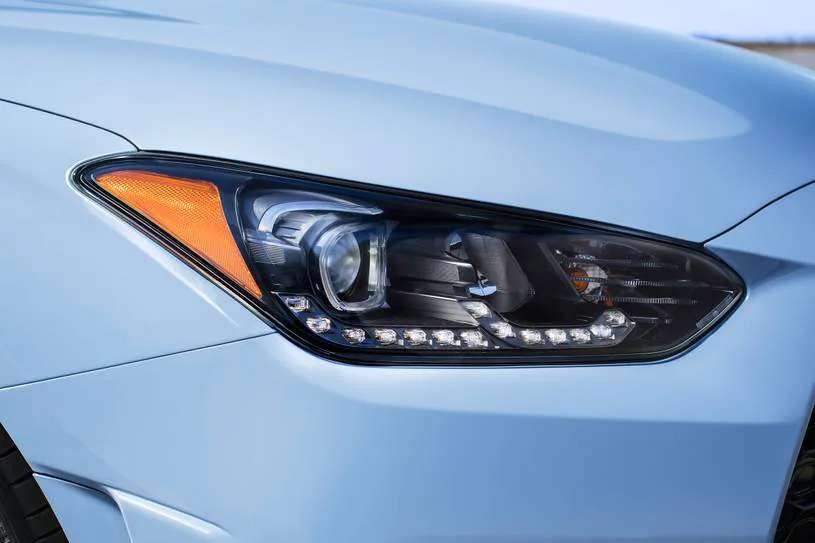
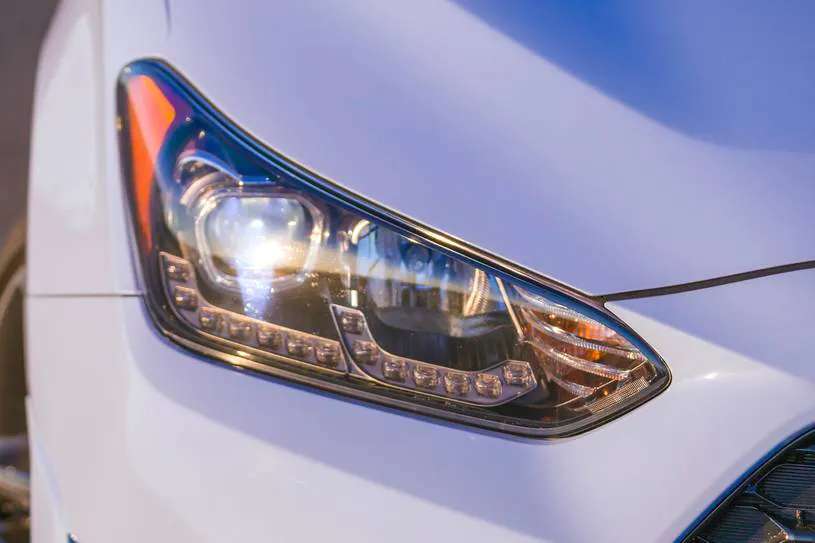
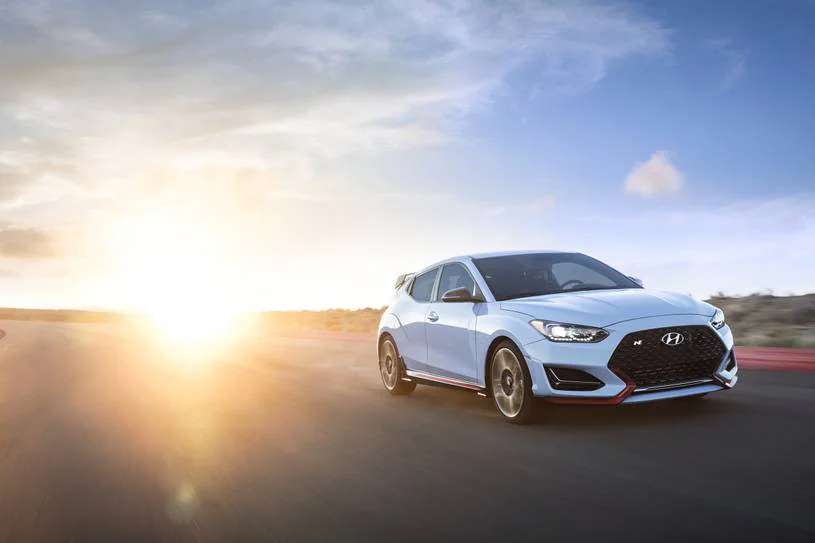
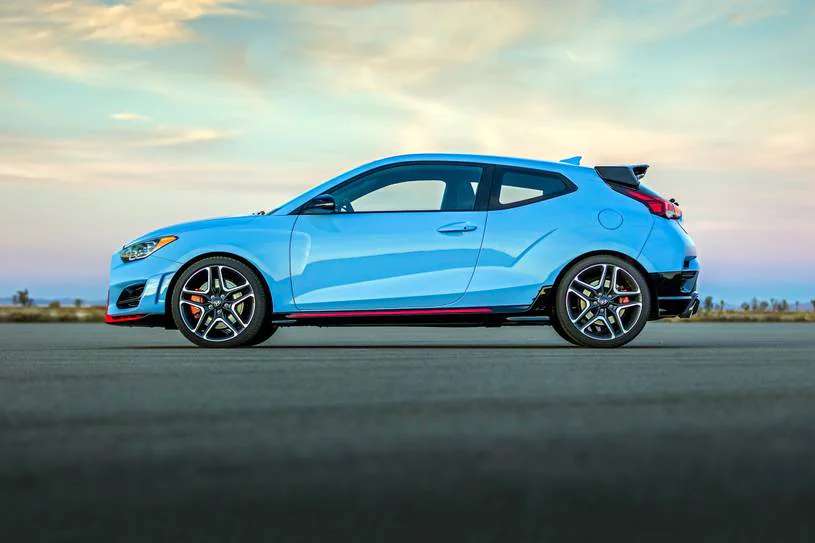
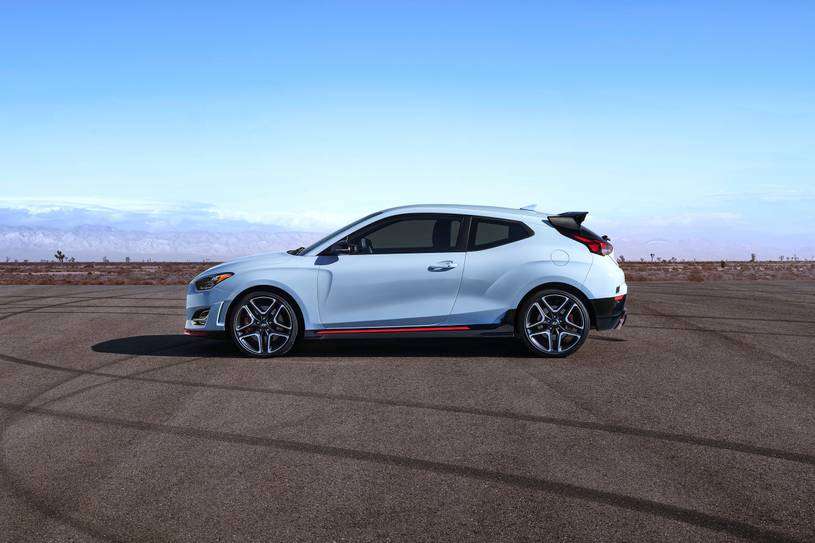
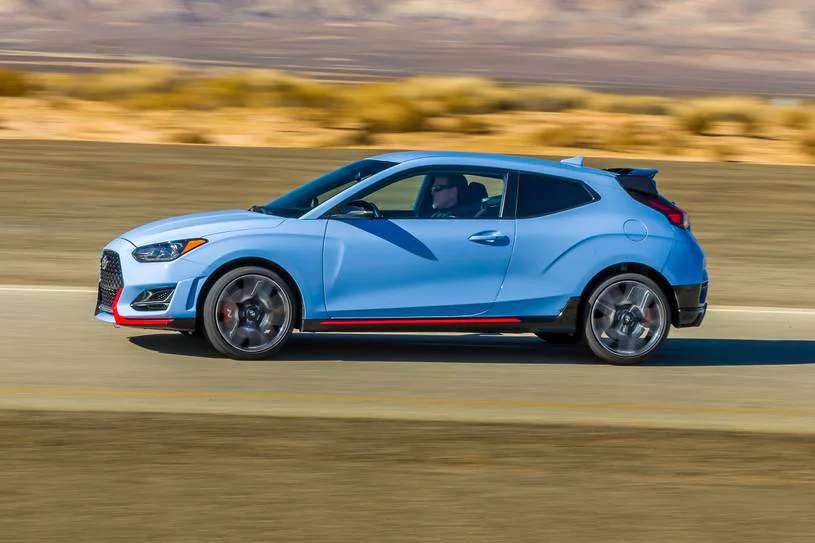
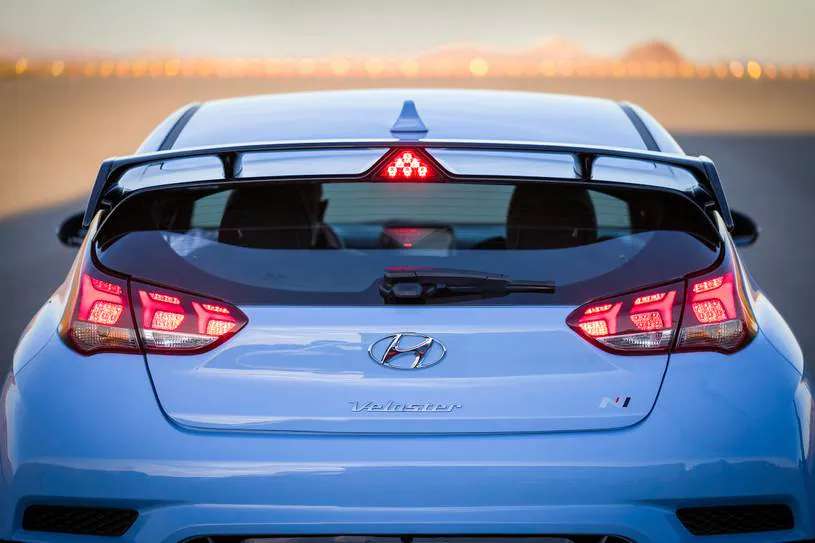
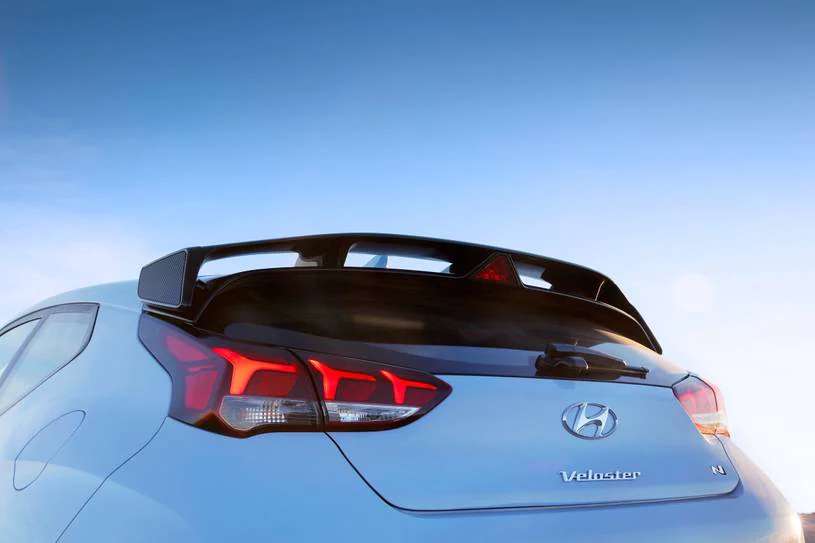
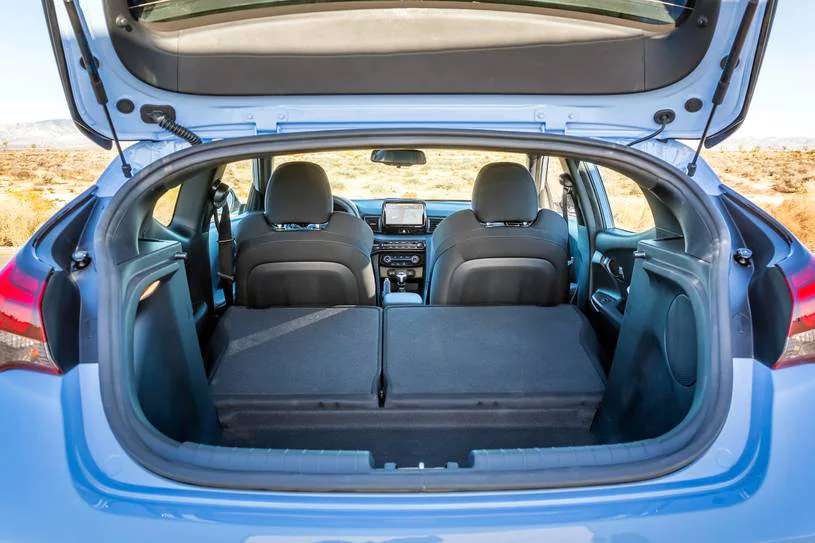
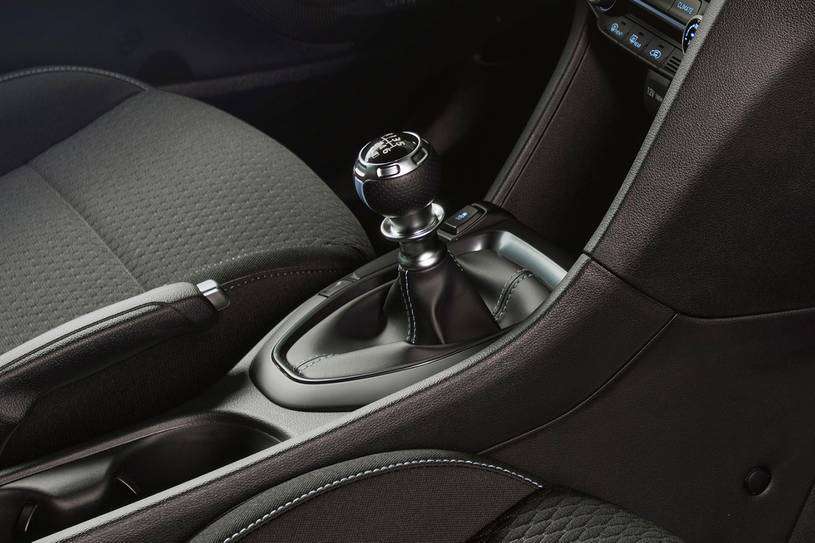
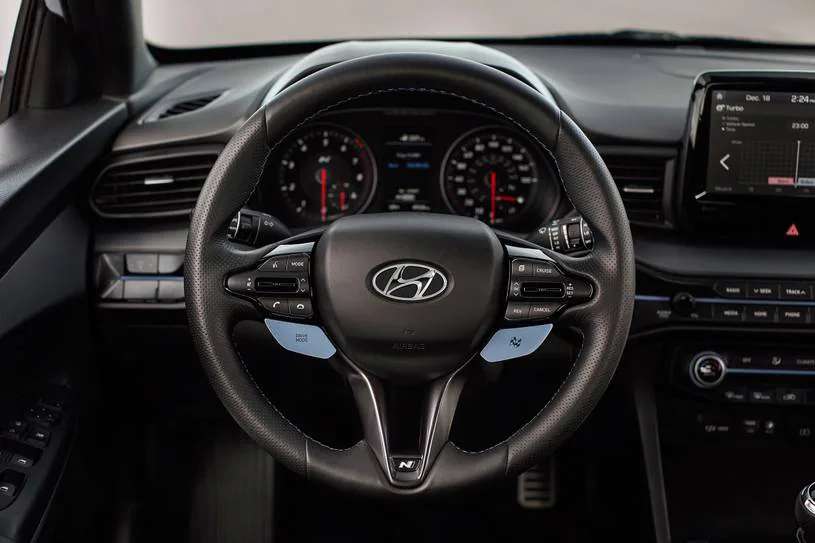
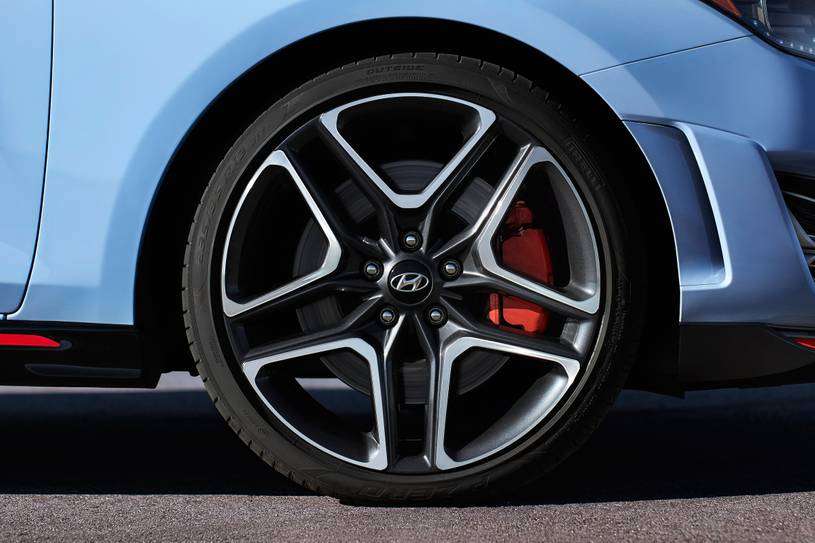
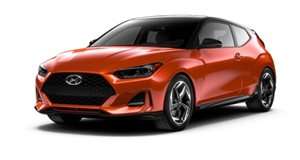
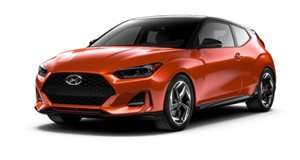
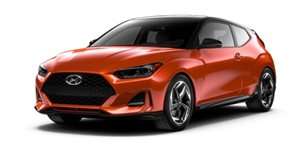
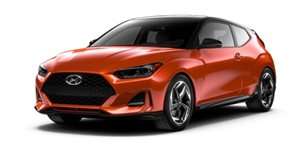

2019 Hyundai Veloster Turbo Tech Performance Package Exterior Colors
2019 Hyundai Veloster Turbo Tech Performance Package Interior Colors
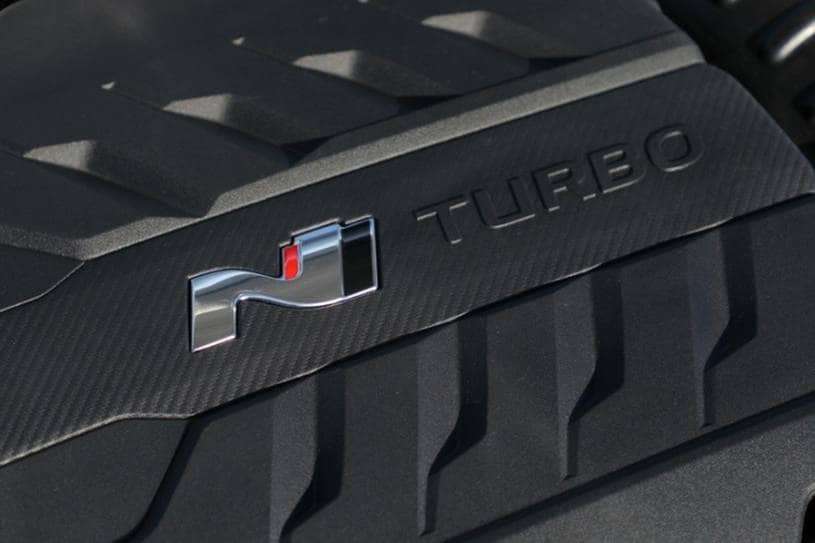
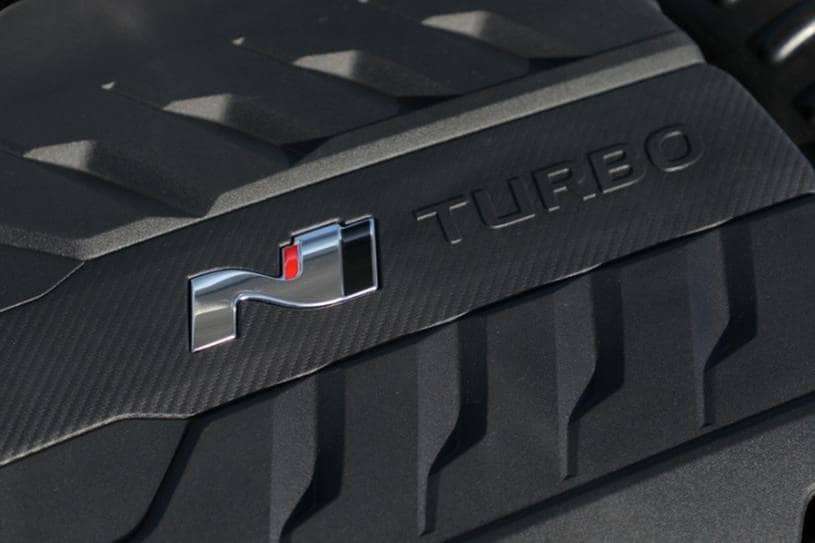
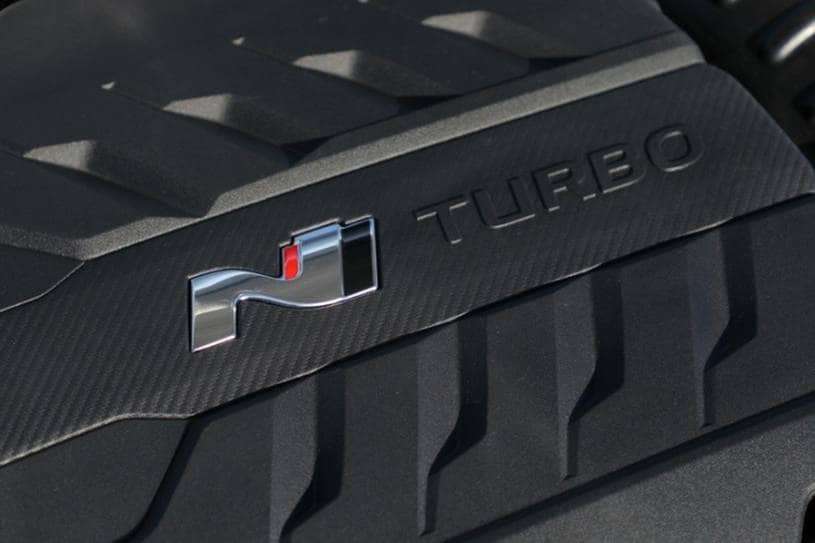
2019 Hyundai Veloster Engines
| Engine | Standard in Trim | Power | Torque | Fuel Consumption - City | Fuel Consumption - Highway | 0-100 km/h | Quarter Mile | Half Mile |
|---|---|---|---|---|---|---|---|---|
| 2.0 L 4 cyl. DOHC 16 Valves | Base | 140 hp @ 6000 rpm | 219 N.m | 11.1 L/100km | 7.2 L/100km | 9.3 s | 16.8 s | 27.8 s |
| 1.6L L4 turbo DOHC 16-valve | Turbo Tech Performance Package | 201 hp @ 6000 rpm | 219 N.m | 9.7 L/100km | 7.0 L/100km | 7.1 s | 14.8 s | 24.6 s |
2019 Hyundai Veloster Trims
2019 Hyundai Veloster Previous Generations
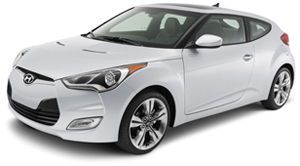
2019 Hyundai Veloster Future Generations
Hyundai Veloster Overview and History
Founded by Chung Ju Yung, born into a poor family of farmers, the Hyundai Motor Company became the first Korean car producer. The grounds for founding a car company could not have been more welcoming since post-war years in Korea brought forth a series of odd politics one of which stated that automobile imports were better than having a Korean car brand.
Yung was quick to fill the void, having raised enough capital for the investment from his very profitable construction business, opened in 1947. One year after its birth, the Hyundai Motor Company signed a technology-share agreement with Ford in 1968. Soon after Hyundai's access to Ford's resources, the first Hyundai car was developed: the Cortina. This model was quickly followed by the release of the Pony, Hyundai's first entirely Korean designed and built model. Its blueprints however, were not all-Korean, the company having used Japanese technology from Mitsubishi to develop the car.
Japanese constructors at the time had already developed wide range of models, many of which were exported worldwide, mainly to the US and South America. The Pony model was the first Hyundai to be shipped overseas in 1975.
However, Hyundai would only cross US borders later, in 1986, with the release of the Excel. The subcompact car was an instant hit with its fairly small price tag accounting for most of its popularity. The Excel was such a hit that it sold in over 100,00 units in the first seven months.
This was the last automobile that Hyundai produced before resorting to their own technology in 1988. The Sonata was their first born, a mid-seize car that marked the beginning of a new era. Despite the steps the company had taken into building a strong brand image, the reputation Hyundai had previously collected was lost because of poor quality and reliability complaints.
As soon as the 90's came, Hyundai was short of air on American territory, struggling for one last gasp. Instead of retreating, the company made massive investments in new design and technology. By the time the new millennium came, the company had already reinstated as one quality car manufacturer.
Sales increased once more and with them so did the buyer's confidence in Hyundai. The sudden shift in consumer behavior was made possible by eliminating all worries regarding the vehicle's reliability through the introduction of a 10 year warranty to US sold vehicles only. Since few companies could top that, Hyundai quickly earned a spot in the world's top -10 car manufacturers.
Hyundai is currently operating in 193 countries, selling vehicles through approximately 5,000 showrooms and dealerships. Sales have also aided image growth, the brand having entered the first 100 most valuable brands of the world. Its recent history is strongly connected to investments in technology and ample advertising campaigns. Indeed, communication is one of Hyundai's inherent elements, best described by their logo: the stylized H is in fact a representation of two men (brand-buyer) shaking hands.
2019 Hyundai Veloster Consumer Reviews
Compare Against Competitors
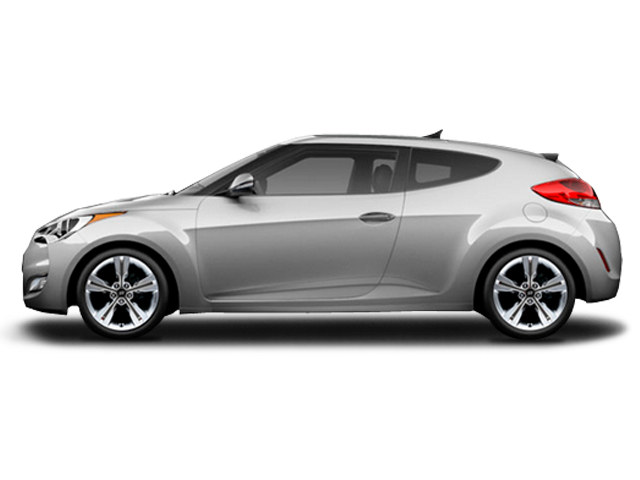
2019 Hyundai Veloster Turbo Tech Performance Package Specifications
Turbo Tech Performance Package Comfort and Convenience
| AM/FM stereo radio | Yes |
|---|---|
| Air Conditionning | Automatic temperature control |
| Antenna | Roof-mounted shark fin antenna (body colour) |
| Audio Amplifier | External amplifie |
| Audio Monitor | 8-inch touch-screen |
| Audio Volume | Speed-sensitive automatic volume control |
| Auxiliary input jack | Yes |
| Bluetooth Wireless Technology | Yes |
| Cargo Cover | Yes |
| Courtesy Dome Light | Dome light |
| Cruise Control | Yes |
| Driver Vanity Mirror | Driver-side illuminated vanity mirror |
| Engine Block Heater | Yes |
| Front Wipers | Rain sensing wipers |
| Fuel Door Operation | Remote fuel filler door release |
| Heated Steering Wheel | Heated steering wheel |
| Illuminated Entry | Yes |
| Interior Air Filter | Cabin air filter |
| MP3 Capability | Yes |
| Navigation System | Yes |
| Number of Speakers | 8 speakers |
| Passenger Vanity Mirror | Illuminated passenger-side vanity mirror |
| Power Door Locks | Yes |
| Power Outlet | 2 12-volt power outlets |
| Power Windows | Power windows driver's auto-up with pinch protection |
| Premium Sound System | Infinity audio system |
| Rear View Mirror | Day/night rear view mirror |
| Rear Wipers | Rear window wiper 1-speed |
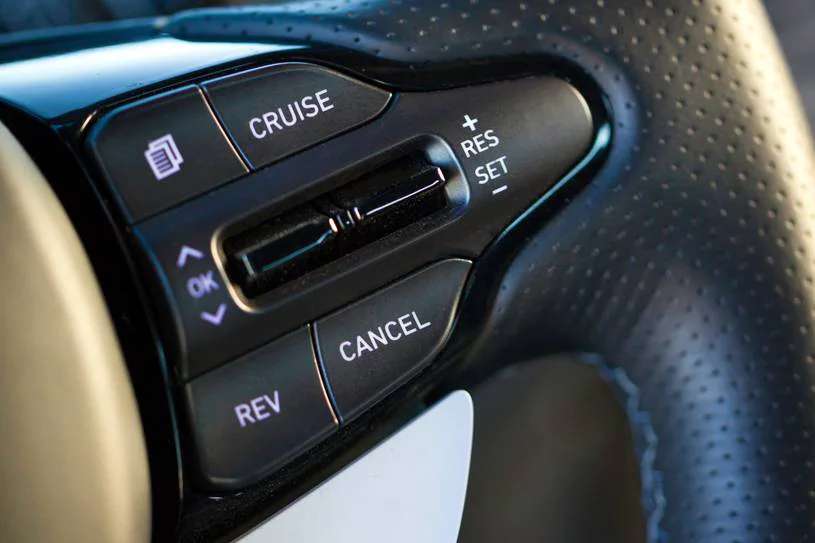
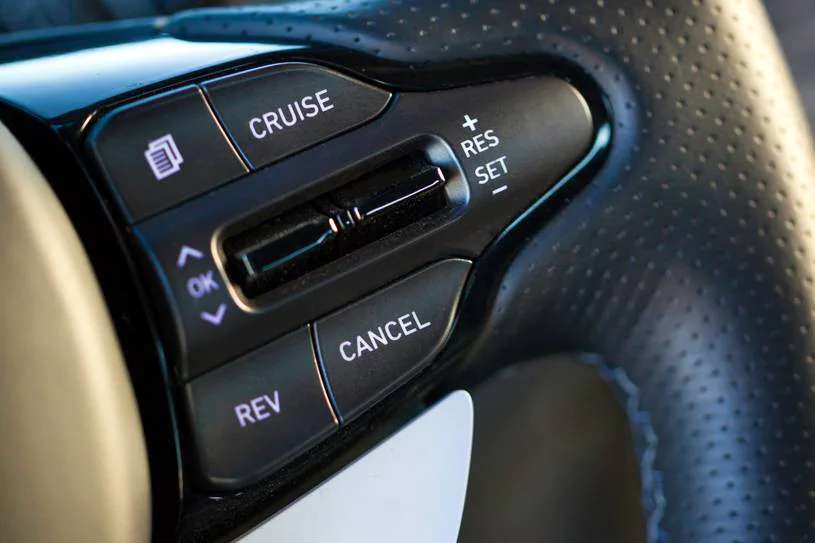
| Remote Audio Controls | Steering wheel-mounted audio controls |
| Remote Keyless Entry | Remote keyless entry system with alarm and panic |
| Single CD | CD player |
| Steering Wheel Adjustment | Tilt and telescopic steering wheel |
| Trunk Light | Cargo area light |
| USB i Pod Connector | USB/iPod connector |
| Voice Recognition System | Yes |
| Wiper Defroster | Auto defogger |
| Wireless Charging | Yes |
Turbo Tech Performance Package Dimensions
| Cargo Capacity | 565 L |
|---|---|
| Curb Weight | 1240 kg |
| Front Headroom | 967 mm |
| Front Legroom | 1081 mm |
| Fuel Tank Capacity | 50 L |
| Gross Vehicle Weight | 1700 kg |
| Ground Clearance | 141 mm |
| Height | 1399 mm |
| Length | 4240 mm |
| Rear Headroom | 911 mm |
| Rear Legroom | 865 mm |
| Wheelbase | 2650 mm |
| Width | 1800 mm |
Turbo Tech Performance Package Exterior Details
| Automatic Headlights | Yes |
|---|---|
| Bumper Colour | Front and rear body colour bumper |
| Door Handles | Body-color door handles |
| Exhaust | Centre chrome twin tip exhaust |
| Exterior Decoration | Black belt window moulding |
| Exterior Mirror Colour | Body-color exterior mirrors |
| Exterior Mirrors Turn Signals | LED side mirror turn signal repeaters |
| Front Fog Lights | Fog lights |
| Grille | Turbo unique black grille |
| Headlight Type | LED headlights |
| Headlights Daytime Running Lights | LED daytime running lights |
| Headlights Leveling Headlights | Headlights escort function |
| Heated Exterior Mirrors | Yes |
| Power Exterior Mirrors | Power-adjustable outside mirrors |
| Rear Window Defroster | Rear window defroster with timer |
| Side-Body Trim | Turbo side sill mouldings |
| Sunroof | Power tilt-and-slide power tilt-and-slide |
| Taillights | LED tail lights |
| Tinted Glass | Tinted glass and windshield shade band |
Turbo Tech Performance Package Interior Details
| Brake Pad Wear Warning | Yes |
|---|---|
| Clock | Digital clock |
| Door Ajar Warning | Yes |
| Door Trim | Leatherette inserts door trim |
| Driver Info Center | 4.2-inch Colour TFT cluster display |
| ECO Shift Indicator | Ecoshift indicator (MT) |
| Floor Console | Front centre console with storage compartment with artificial leather armrest |
| Floor Mats | Carpeted floor mats |
| Folding Rear Seats | 60/40 split folding rear bench seat |
| Front Center Armrest | Front centre armrest with dual-tier storage box |
| Front Seats Driver Headrest | Adjustable driver headrest |
| Front Seats Driver Height | Height-adjustable driver's seat |
| Front Seats Driver Lombar | 2-way power adjustable lumbar support for driver's seat |
| Front Seats Front Seat Back Storage | Front passenger seatback pocket |
| Front Seats Heated | Heated front seats |
| Front Seats Passenger Headrest | Front passenger adjustable headrest |
| Glove Box | Glove compartment |
| Head-Up Display | Head-up display with sport function |
| Headliner | Cloth headliner |
| Inner Door Handle Trim | Chrome door handles |
| Instrumentation Type | Analog and digital instrumentation |
| Interior Accents | Metal paint interior accents |
| Interior Trim Doorsills | Door scuff step plate |
| Low Fuel Warning | Yes |
| Luxury Dashboard Trim | Silver vent rings and checker dash |
| Number of Cup Holders | 4 cup holders |
| Oil Pressure Gauge | Oil pressure display |
| Outside Temperature Gauge | Outside temperature display |
| Overhead Console | Sunglasses holder |
| Seat Trim | Leather seating surfaces |
| Shifter Knob Trim | Leather wrapped shift knob |
| Steering Wheel Trim | Leather wrapped steering wheel |
| Trip Computer | Yes |
Turbo Tech Performance Package Mechanical
| Drive Train | Front-wheel drive |
|---|---|
| Engine Name | 1.6L L4 turbo DOHC 16-valve |
| Stability Control | Yes |
| Start button | Yes |
| Traction Control | Yes |
| Transmission | 6-speed manual transmission |
Turbo Tech Performance Package Overview
| Body | Hatchback |
|---|---|
| Doors | 3 |
| Engine | 1.6L L4 turbo DOHC 16-valve |
| Fuel Consumption | 9.7 (Manual City)7.0 (Manual Highway) |
| Power | 201 hp @ 6000 rpm |
| Seats | 4 |
| Transmission | 6-speed manual transmission |
| Warranties | Bumper-to-Bumper100000/km, 60/Months Emissions130000/km, 96/Months Powertrain100000/km, 60/Months Roadside AssistanceUnlimited/km, 36/Months Rust-throughUnlimited/km, 60/Months |
Turbo Tech Performance Package Safety
| Anti-Lock Brakes | ABS brakes |
|---|---|
| Anti-Theft Alarm | Alarm system |
| Blind Spot Warning | Yes |
| Brake Assist | Brake assist |
| Brake Type | 4-wheel disc |
| Child Seat Anchor | LATCH child seat anchors |
| Child-proof Locks | Rear child safety door locks |
| Driver Airbag | Driver-side front airbag |
| Driver Assistance | Hill start assist control |
| Electronic brake force distribution | Electronic brake force distribution |
| Front Seat Belts | pre-tensioner |
| Ignition Disable | Anti-theft engine immobilizer |
| Panic Alarm | Panic alarm |
| Parking Brake | Hand-pull |
| Parking Distance Sensor | Rear park assist system |
| Passenger Airbag | Passenger-side front airbag |
| Rear Collision Warning | Yes |
| Rear Seat Belts | Regular |
| Rear View Camera | Rearview camera with dynamic guidelines |
| Roof Side Curtain | Side-curtain airbags |
| Side Airbag | Front side airbags |
Turbo Tech Performance Package Suspension and Steering
| Front Anti-Roll Bar | Front stabilizer bar |
|---|---|
| Front Suspension | Front independant suspension |
| Front Tires | P225/40R18 Michelin Pilot 4 summer-performance tires |
| Power Steering | Power rack-and-pinion steering |
| Rear Anti-Roll Bar | Rear stabilizer bar |
| Rear Suspension | Solid axle rear suspension |
| Spare Tire | Spare tire mounted under cargo floor |
| Turning Circle | 10.4-meter turning circle diameter |
| Wheel Type | 18-inch aluminum alloy wheels (B-Type) |
Critics Reviews
Previously a wacky-shaped also-ran in the sport-compact world, the Veloster’s newfound driving verve and low price make it a hot-hatch bargain. A stiff structure, great steering, and a well ...
2020 Hyundai Veloster Review by Jasmine Moses | October 11, 2019 The 2020 Hyundai Veloster has an engaging ride and a user-friendly infotainment system. However, it sits midpack in our compact car rankings because some competitors offer slightly better performance and nicer interiors. Pros & Cons. Fun to drive
Discussion and Comments
Share Your Comments