2017 Mitsubishi Lancer GTS 0-60 Times, Top Speed, Specs, Quarter Mile, and Wallpapers
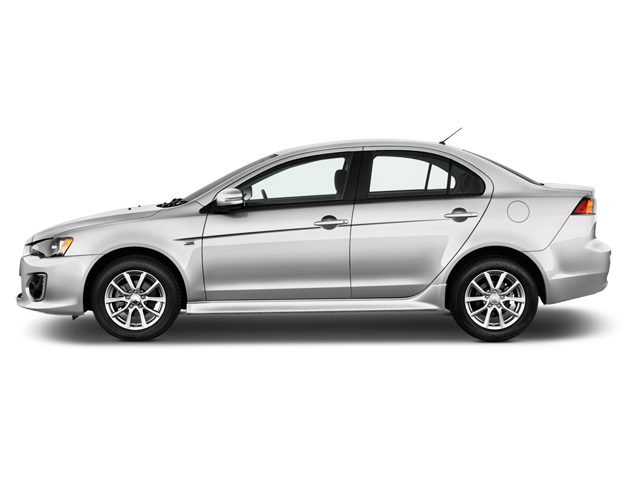
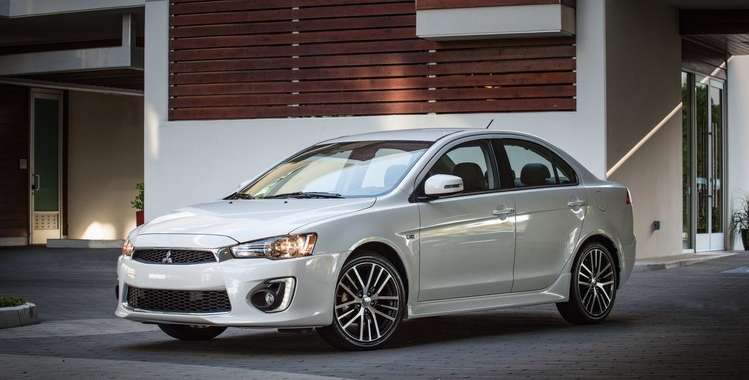
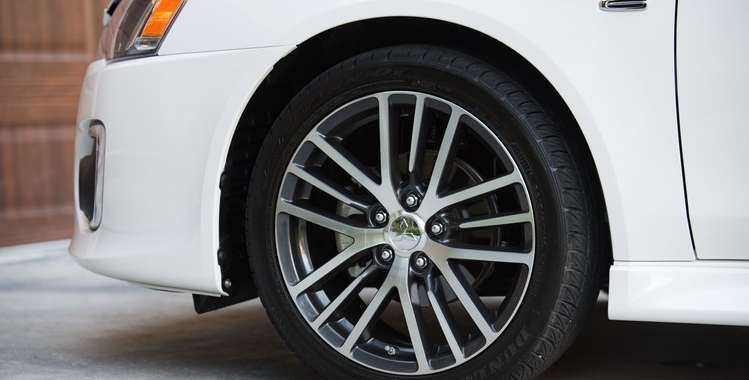
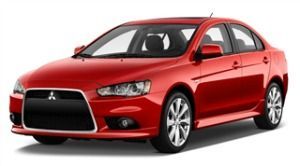
The 2017 Mitsubishi Lancer GTS is a Front-wheel drive Sedan. It can accommodate up to 5 passengers. It has 4 Doors and is powered by a 2.4L L4 DOHC 16-valve engine which outputs 168 hp @ 6000 rpm and is paired with Sportronic CVT with paddle shifters (CVT-8) gearbox. The 2017 Mitsubishi Lancer GTS has cargo capacity of 348 Liters and the vehicle weighs 1345 kg. In terms of ride assists, the 2017 Mitsubishi Lancer GTS has stability control and traction control in addition to anti-lock brake system (ABS). The vehicle has an optional engine as well It offers and Rearview camera. Safety features also include Driver-side front airbag and Passenger-side front airbag. The front suspension is Front independent suspension while the rear suspension is Rear independent suspension. The car also features a Yes It has 18-inch machine finish alloy wheels as standard. Electronic features include Cruise Control. For convenience, the car has Power windows and Power door locks. There is also a remote keyless entry feature. Moreover, the car has. The steering wheel has audio control buttons. In terms of performance, the car has 183 N.m of torque and a top speed of 203 km/h. The 2017 Mitsubishi Lancer GTS accelerates from zero to 60 mph in 8.5 seconds and hits quarter mile at 16.2 seconds. Fuel consumption is 9.9 L/100km in the city and 6.9 L/100km in the highway. The car price starts at $ 23,298
| Name | GTS | |
|---|---|---|
| Price | $ 23,298 | |
| Body | Sedan | |
| Doors | 4 Doors | |
| Engine | 2.4L L4 DOHC 16-valve | |
| Power | 168 hp @ 6000 rpm | |
| Number of Seats | 5 Seats | |
| Transmission | Sportronic CVT with paddle shifters (CVT-8) | |
| Cargo Space | 348.0 L | |
| Maximum Cargo Space | 348.0 L | |
| Wheel Type | 18-inch machine finish alloy wheels | |
| Series | Lancer X (facelift 2016) | |
| Drivetrain | Front-wheel drive | |
| Horsepower | 168 HP | |
| Torque | 183 N.m | |
| Top Speed | 203 km/h | |
| Acceleration 0-100 km/h (0-60 mph) | 8.5 s | |
| Fuel Type | Petrol (Gasoline) | |
| Fuel Consumption (City) | 9.9 L/100km | |
| Fuel Consumption (Highway) | 6.9 L/100km | |
| Gear Type | auto | |
| Weight | 1,335 KG | |
| Brand | Mitsubishi | |
| Model | Lancer | |
| 0-400m (Quarter Mile) | 16.2 s | |
| 0-400m (Quarter Mile) - Speed | 142.4 km/h | |
| 0-800m (Half Mile) | 26.8 s | |
| 0-800m (Half Mile) - Speed | 160.3 km/h | |
| Modifications (MODS) | ||
| Modifications Cost | $ 0 |
2017 Mitsubishi Lancer GTS 0-60 (AEM CAI update)
Mitsubishi lancer vs. Alfa Romeo Drag Race 1/4M (402m), Kámen u Pacova, 27.5.2017,
TOP SPEED MITSUBISHI LANCER 2017
2017 Mitsubishi Lancer Used Price Estimates
Estimates based on a driving average of 12,000 miles per year| Used Condition | Trade In Price | Private Party Price | Dealer Retail Price |
|---|---|---|---|
| Outstanding | $ 8,127 | $ 10,195 | $ 12,429 |
| Clean | $ 7,880 | $ 9,889 | $ 12,036 |
| Average | $ 7,384 | $ 9,277 | $ 11,249 |
| Rough | $ 6,889 | $ 8,665 | $ 10,463 |
A compact sedan with available all-wheel drive, the 2017 Mitsubishi Lancer might seem appealing at first. Just last year, it received a front-end styling refresh, updated tuning for its continuously variable automatic transmission (CVT) and several new standard features. And this year, Mitsubishi has made the previously optional 6.1-inch touchscreen and rearview camera standard as well. But in our opinion these updates are just glossy updates on what is a fundamentally outdated car.
Compare it to the competition in the compact sedan segment and you'll see how the Lancer is well behind the curve. Daily driving is one of its biggest shortfalls as both of the Lancer's available engines are tough to live with, especially paired with the CVT. The optional 2.4-liter motor is strong, sure, but it really only performs well when you've got the gas pedal pinned — real-world acceleration lacks the urgency of many competitors. Poor fuel economy and a lack of desirable tech features are also notable drawbacks.

For a superior small sedan, check out the Honda Civic. It offers stellar fuel economy, class-leading acceleration and midsize sedan-like levels of comfort. Other refined and fun-to-drive competitors include the sporty Mazda 3 and the well-equipped Ford Focus. We also highly recommend the redesigned Hyundai Elantra and the updated Kia Forte. If you're looking for all-wheel drive, we'd point you in the direction of the Subaru Impreza, which has a more modern interior and a superior driving experience.
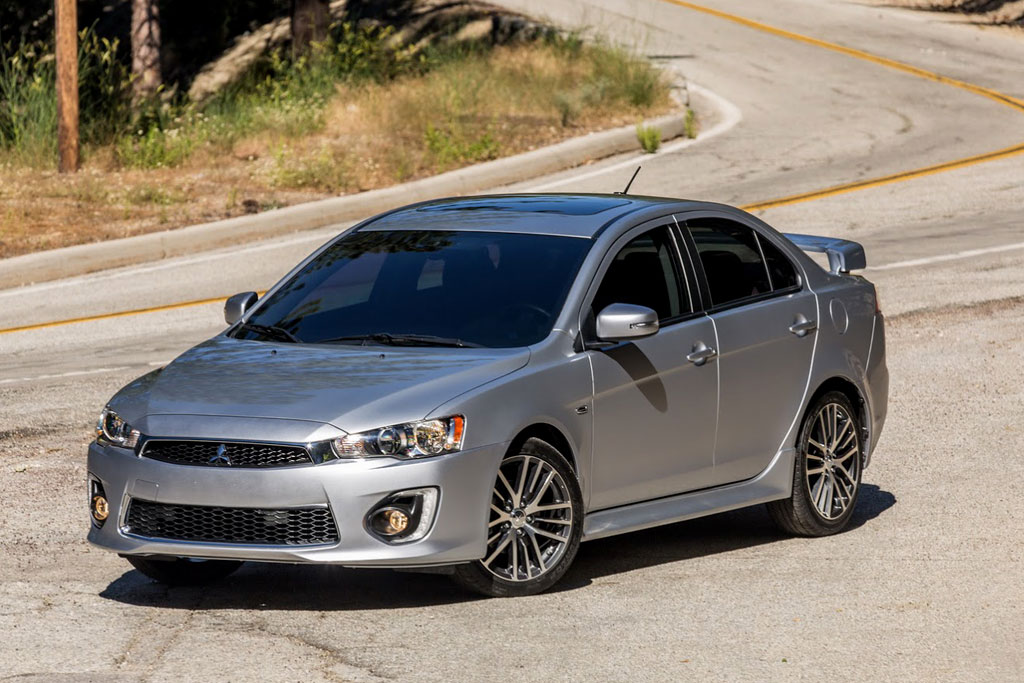
There are a few tricks up the Lancer's sleeve, including the aforementioned all-wheel drive and quick acceleration with the optional engine, but if you're looking for good value in a modern compact car, we'd recommend going elsewhere.
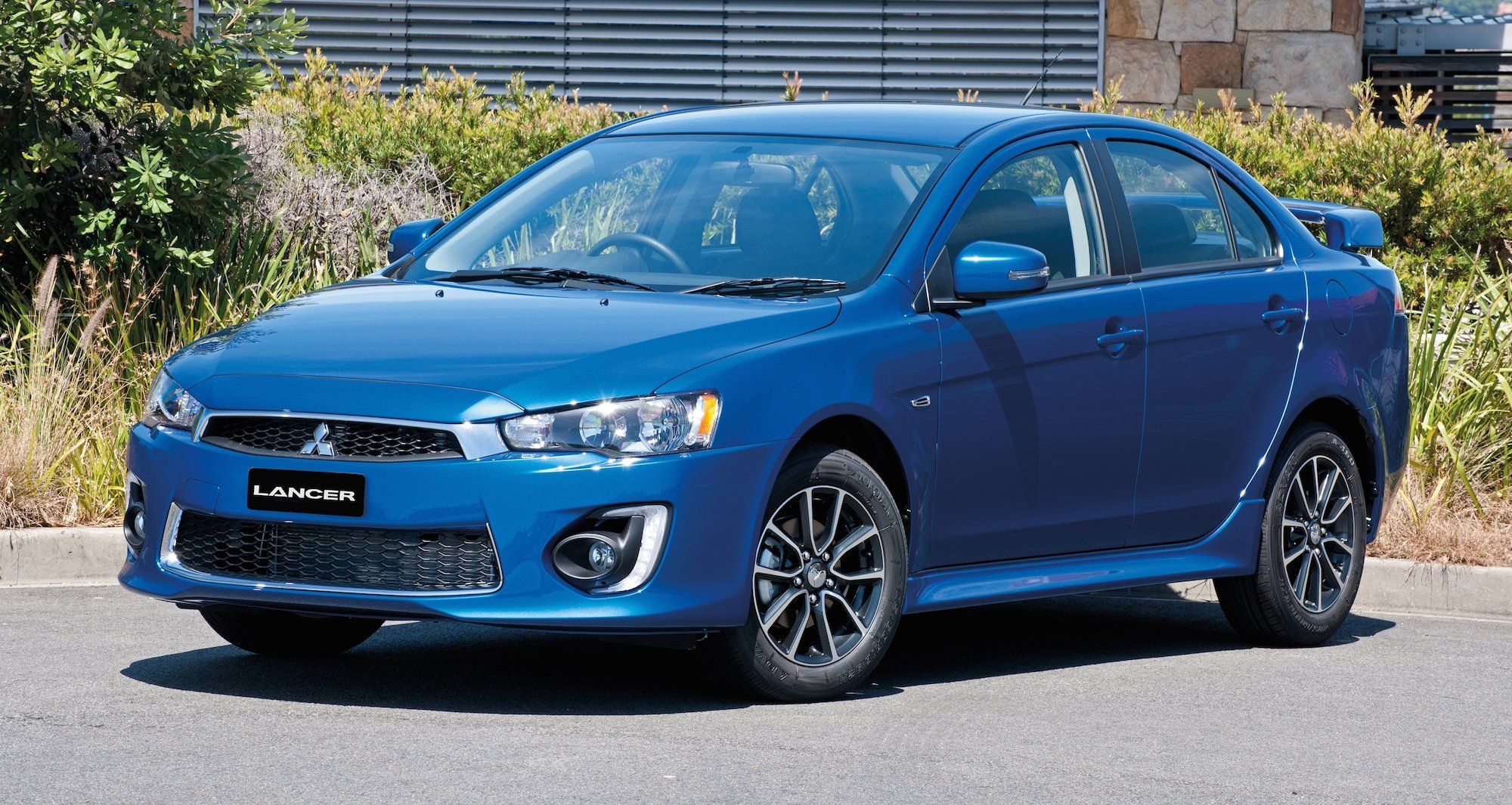
Standard safety features on all 2017 Mitsubishi Lancers include antilock disc brakes, traction and stability control, a rearview camera, front seat side airbags, full-length side curtain airbags and a driver knee airbag. Rear parking sensors are optional on all trim levels, but other advanced driver aids, such as blind-spot monitoring and lane departure warning, aren't available.
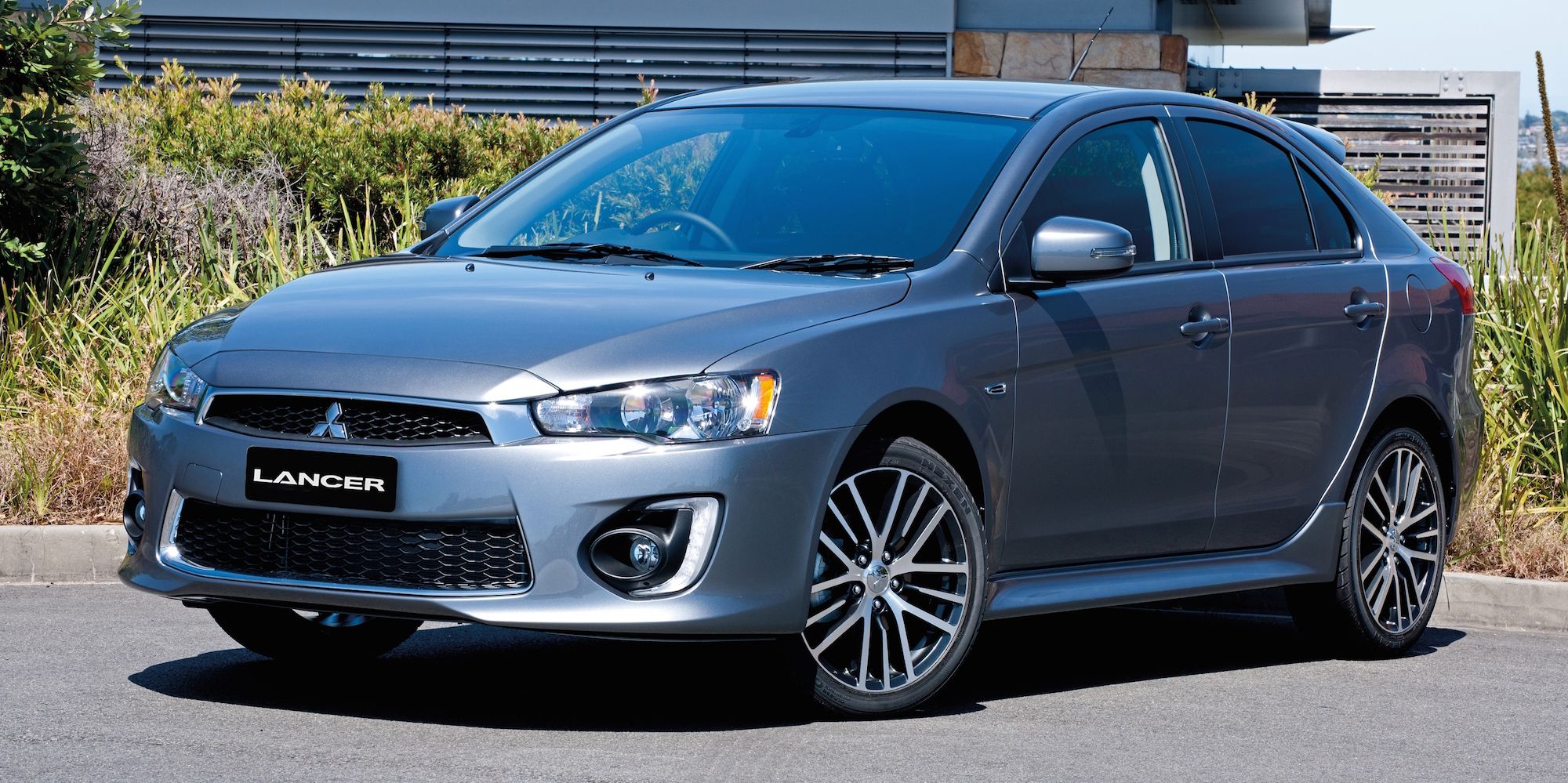
In government crash tests, the Lancer received four out of five stars for overall crashworthiness, including four stars for frontal protection and four stars for side protection. The Insurance Institute for Highway Safety awarded the Lancer its top score of Good in moderate-overlap front-impact, side-impact, roof strength and head restraint (whiplash protection) tests. In the small-overlap front-impact test, the Lancer earned the second-highest rating of Acceptable.
The 2017 Mitsubishi Lancer is a small sedan available in three trim levels: ES, SE and SEL.
The entry-level ES comes standard with 16-inch alloy wheels, foglights, LED running lights, heated mirrors with integrated turn signals, remote keyless entry, automatic climate control, a height-adjustable driver seat, 60/40-split folding rear seatbacks, a tilt-only steering wheel, power accessories, cruise control, a 6.1-inch touchscreen interface, a rearview camera, Bluetooth, voice controls, and a four-speaker sound system with a CD player and a USB port.
The SE adds 18-inch wheels, a sport-tuned suspension, keyless entry and ignition, heated front seats, and a six-speaker sound system with satellite radio and HD radio.
Step up to the SEL trim level and you get the SE's equipment plus automatic headlights, automatic wipers, an auto-dimming rearview mirror, upgraded interior trim, leather upholstery and a leather-wrapped steering wheel and shift knob.
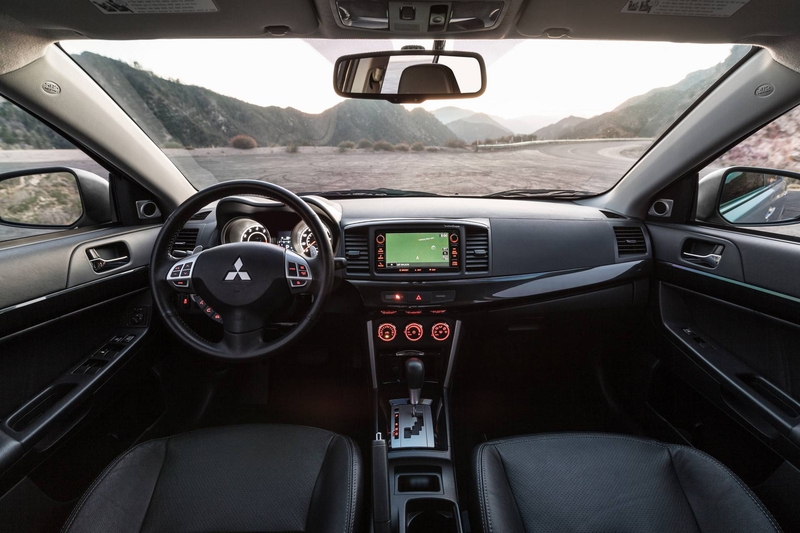
Optional for the ES with the CVT and the SEL is a Sun and Sound package that adds a sunroof and a nine-speaker Rockford Fosgate audio system with satellite and HD radio.
Optional on every Lancer trim is a Navigation System package that includes navigation and a 7-inch touchscreen. Accessory options include LED foglights, a rear spoiler, chrome accents and rear parking sensors.
The base-level 2017 Mitsubishi Lancer ES is powered by a 2.0-liter four-cylinder engine that produces 148 horsepower and 145 pound-feet of torque. Power is sent to the front wheels through a five-speed manual transmission or an optional CVT. EPA-estimated fuel economy for 2017 wasn't available at publishing time, but last year's car earned 28 mpg combined (24 city/33 highway) with the manual transmission and 30 mpg combined (27 city/35 highway) with the CVT.
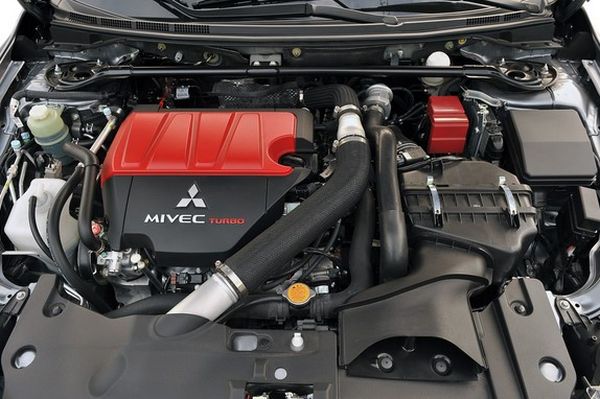
Optional on the ES and standard on the SE and SEL is a 2.4-liter four-cylinder engine (optional on the ES) that makes 168 hp and 167 lb-ft of torque. The SE and SEL come exclusively with the CVT and all-wheel drive, and the ES also gets the CVT-AWD pairing when optioned with the larger engine. This powertrain achieves an EPA-estimated 26 mpg combined (23 city/31 highway). Most compact sedans do much better. The Civic for example, a class leader, is rated as high as 35 mpg combined and one of the Mazda 3's powertrains is right up there at 32 mpg combined.
During performance testing, a Lancer SEL with all-wheel drive and the 2.4-liter engine accelerated from zero to 60 mph in 7.7 seconds. That's pretty quick by class standards.
Equipped with the 2.4-liter engine, the Lancer is one of the quicker small sedans available. Unfortunately, fuel economy suffers. We're not fond of the CVT, either; it is slow to respond when you want to merge or make a pass on the highway. The engine also sounds loud and boisterous during hard acceleration, which is another drawback.
The Lancer goes down smooth roads just fine, but driving over potholes and broken pavement causes plenty of unsettling shock and impact shudder to enter the cabin. It's just not a very comfortable car to drive. The Lancer can zip around turns with a pleasing amount of stability, especially with the sport-tuned suspension on the SE, but the trade-off is an even greater deficit in ride quality. The SE's larger wheels and tires generate more noise on certain types of pavement too.
Simple, plain gauges and controls populate the interior of the 2017 Mitsubishi Lancer. While that isn't inherently displeasing, many of the surfaces you come in contact regularly are made from cheap, hard plastics. As a result, it all feels a bit bare-bones, even at higher trim levels. Mitsubishi's voice activation system, Fuse, makes it possible to control the audio and navigation systems, but it doesn't respond as quickly to commands as competing systems. The same is true of the newly standard 6.1-inch touchscreen this year, which also suffers from poor graphics.
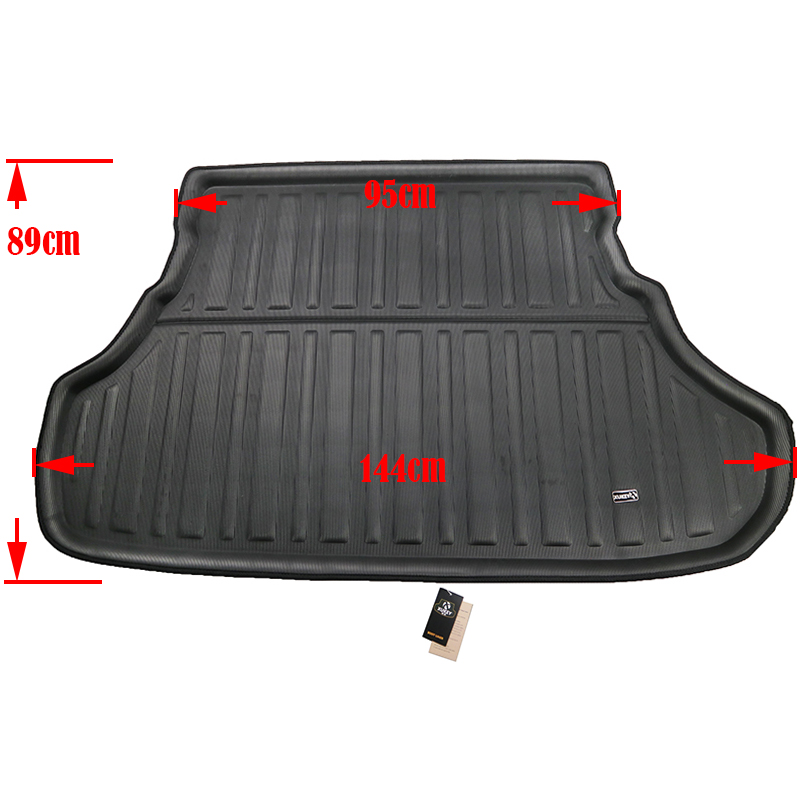
Up front, seat comfort is generally good, though tall drivers will likely wish for more thigh support and a telescoping steering wheel. The backseat is spacious, at least, and provides quite a bit of legroom. By class standards, the trunk is relatively small, with just 12.3 cubic feet of cargo capacity, a number that drops to 11.8 cubic feet with the Rockford Fosgate audio system's subwoofer installed. The 60/40-split rear seatbacks fold down to help with carrying longer items.
The Mitsubishi Lancer has always been on the sportier side compared to more well-known competitors like the Toyota Corolla and Nissan Sentra, and that remains true. While the base 2.0-liter engine is rather anemic, the more recommendable 168-horsepower 2.4-liter moves the Lancer better than expected. All 2.4-liter models come with a selectable All Wheel Control system that lets you choose between front-wheel drive (FWD) or all-wheel drive (AWD) for better traction on slippery roads. The Lancer is moderately fun in corners and its continuously variable automatic transmission does a decent job mimicking a conventional automatic. But more flingable fun can be had in a Mazda3, and a Honda Civic's CVT feels more natural. Unfortunately the Lancer still uses a tilt-only steering wheel. Without the ability to telescope, it can compromise driving position. Outward visibility is good, but interior noise levels remind you you're in a dated compact car.
ROCKFORD FOSGATE SOUND SYSTEM This 9-speaker, 710-watt audio system available in a package brings some much-needed premium-quality fare to the 2017 Lancer. It also sounds really good. ALL-WHEEL CONTROL Mitsubishi calls the Lancer’s electronically controlled all-wheel-drive system All-Wheel Control. It includes a mode selector for front-wheel drive, all-wheel-drive "Auto" or all-wheel-drive "Lock," to maintain optimum traction in all kinds of weather or driving conditions. It is now standard on all 2.4-liter Lancer models.
Even in top form, the 2017 Lancer's 5-passenger interior is pretty drab and dated. Hard plastics, minimal controls and a steering wheel that doesn't even telescope are what you'll have to live with in Mitsubishi's small sedan. Among the few bright spots is the now-standard 6.1-inch touch-screen display that controls audio functions and the optional navigation system. We hope you like black, as that's the only interior color available, whether you go with the standard cloth seating or available leather. The rear seat folds in a 60/40-split for added cargo flexibility.
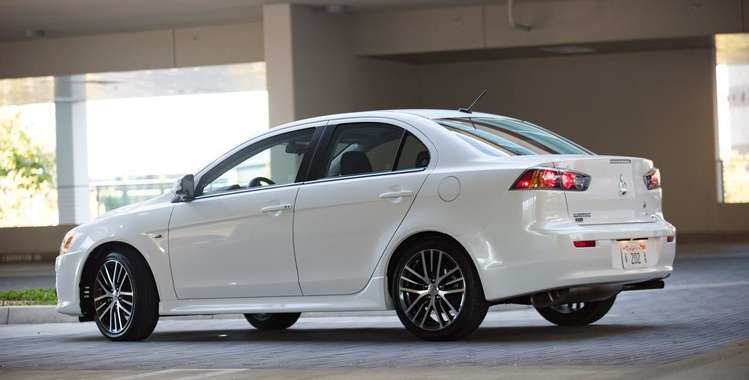
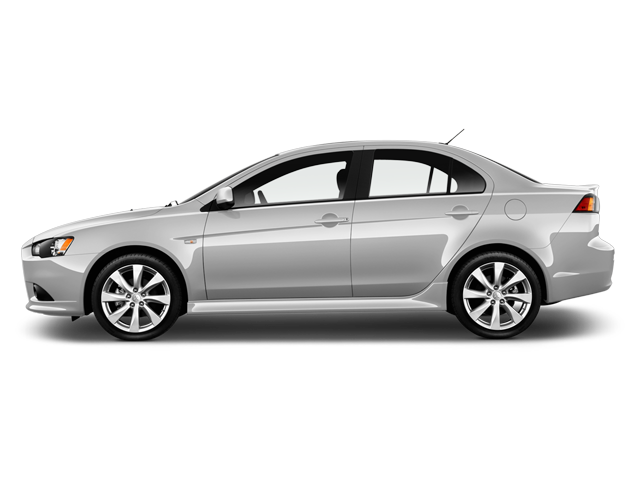
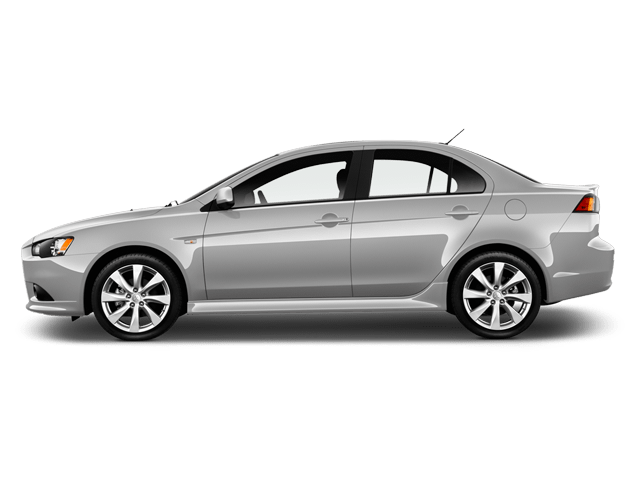
The Mitsubishi's exterior style is among its best attributes. Despite its age, this small sedan still looks sharp with its nose-down, tail-up sporty stance. We especially like these when outfitted with a rear spoiler -- don't worry, it’s far more subtle than the boy-racer wing festooned on past Evos. Base models of the 2017 Lancer roll on new 16-inch 2-tone alloy wheels, while higher models get 18-inch alloy wheels. Top-line SEL models have a chrome beltline.
In its most basic form, as a Lancer 2.0 ES, this Mitsubishi sedan now comes better equipped for 2017 with standard features like a 6.1-inch touch-screen audio display, rearview camera, alloy wheels, Fuse Bluetooth hands-free phone connectivity and 4-speaker AM/FM/CD audio system with HD Radio and USB input. All Lancers include seven airbags and traction/stability-control systems. Of note is Mitsubishi's warranty, which covers 10 years/100,000 miles for the powertrain, a fully transferrable 5-year/60,000-mile basic warranty, and five years/unlimited miles of roadside assistance.
Stepping up to a 2.4-liter Lancer brings the larger, more powerful and more recommendable engine, automatic transmission, and all-wheel-drive system. SE and SEL models have sport-tuned suspension, heated front seats and upgraded audio system, while topline SEL models come with leather interior, rain-sensing windshield wipers and automatic headlights. The Lancer's lone major package, called "Sun & Sound," includes a sunroof and the premium Rockford Fosgate audio system. A navigation system is also available, as are rear parking sensors and roof-rack crossbars.
The latest Lancer is available with just two engines, and only one of them is really recommendable. Base models use a 2.0-liter 4-cylinder that puts out a just-adequate 148 horsepower. The more recommendable choice is the 168-horsepower 2.4-liter. For 2017, all 2.0-liter models are front-wheel drive (FWD), while all 2.4-liter versions are all-wheel drive (AWD). A manual transmission is used only in the base 2.0 model. All others use a continuously variable transmission (CVT). Note: As with other 2017 cars, the Lancer's fuel-economy ratings are slightly lower this year due to a change in EPA testing.2.0-liter inline-4148 horsepower @ 6,000 rpm145 lb-ft of torque @ 4,200 rpmEPA city/highway fuel economy: 24/33 mpg (manual), 27/34 mpg (automatic)2.4-liter inline-4168 horsepower @ 6,000 rpm167 lb-ft of torque @ 4,100 rpmEPA city/highway fuel economy: 23/30 mpgNote: Due to changes in EPA testing to more effectively reflect real-world conditions, some 2017 models show slightly lower fuel-economy scores than their 2016 versions.
The 2017 Mitsubishi Lancer has a Manufacturer's Suggested Retail Price (MSRP) around $ 18,630 for an ES 2.0 model with the 5-speed manual transmission. Adding an automatic transmission is another $ 1,000. At the top of the Lancer lineup, an SEL model is just under $ 23,000 and can climb another few thousand with a navigation system and the sunroof/audio package. These prices are certainly enticing, but in reality aren't that far below better rivals like the Honda Civic or Mazda3. In the case of the Hyundai Elantra and Kia Forte, which are fresher, more efficient and match Mitsubishi's 10-year/100,000-mile powertrain warranty, those competitors start for less than the less-recommendable Lancer. Before buying, check the Fair Purchase Price to see what others in your area are paying for their new Mitsubishi. As you've probably surmised, the Lancer's resale value is yet another area in which it trails the competition.
2017 Mitsubishi Lancer GTS Exterior Colors
2017 Mitsubishi Lancer GTS Interior Colors
2017 Mitsubishi Lancer Engines
| Engine | Standard in Trim | Power | Torque | Fuel Consumption - City | Fuel Consumption - Highway | 0-100 km/h | Quarter Mile | Half Mile |
|---|---|---|---|---|---|---|---|---|
| 2.4L L4 DOHC 16-valve | GTS | 168 hp @ 6000 rpm | 183 N.m | 9.9 L/100km | 6.9 L/100km | 8.5 s | 16.2 s | 26.8 s |
| 2.4L L4 DOHC 16-valve | SE AWC LTD | 168 hp @ 6000 rpm | 183 N.m | 8.7 L/100km | 6.9 L/100km | 8.0 s | 14.3 s | 26.8 s |
| 2.4L L4 DOHC 16-valve | SE Black Edition AWC | 168 hp @ 6000 rpm | 183 N.m | 10.2 L/100km | 6.9 L/100km | 8.0 s | 14.3 s | 26.8 s |
| 2.4L L4 DOHC 16-valve | GTS AWC | 168 hp @ 6000 rpm | 183 N.m | 8.7 L/100km | 7.9 L/100km | 8.0 s | 14.3 s | 26.8 s |
| 2.4L L4 DOHC 16-valve | GTS | 168 hp @ 6000 rpm | 183 N.m | 10.5 L/100km | 7.7 L/100km | 8.5 s | 16.2 s | 26.8 s |
| 2.4L L4 DOHC 16-valve | SE AWC Limited Edition | 168 hp @ 6000 rpm | 183 N.m | 9.8 L/100km | 7.6 L/100km | 8.0 s | 14.3 s | 26.8 s |
| 2.4L L4 DOHC 16-valve | GTS AWC | 168 hp @ 6000 rpm | 183 N.m | 9.8 L/100km | 7.7 L/100km | 8.0 s | 14.3 s | 26.8 s |
| 2.0L L4 DOHC 16-valve | SE LTD | 148 hp @ 6000 rpm | 183 N.m | 8.7 L/100km | 6.9 L/100km | 9.4 s | 16.9 s | 28.0 s |
| 2.0L L4 SOHC 16 valves | SE Black Edition | 148 hp @ 5500 rpm | 183 N.m | 8.7 L/100km | 6.9 L/100km | 9.4 s | 16.9 s | 28.0 s |
| 2.0L L4 DOHC 16-valve | GT | 148 hp @ 6000 rpm | 183 N.m | 9.3 L/100km | 7.2 L/100km | 9.2 s | 16.7 s | 27.7 s |
2017 Mitsubishi Lancer Trims
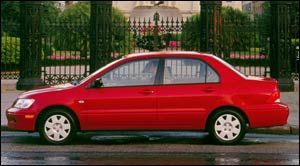
2017 Mitsubishi Lancer Previous Generations
2017 Mitsubishi Lancer Future Generations
Mitsubishi Lancer Overview and History
True production begins after the merger of Mitsubishi Shipbuilding and Mitsubishi Aircraft Co. in 1934. Concentrated on building aircraft, ships, and railroad cars, the company found time to make a prototype sedan in 1937 which it called the PX33. Sadly, it was mainly for military use as the war approached.
Only after the war did the company really got into car production with a small three-vehicle vehicle, the Mizushima and a scooter with a funny name, the Silver Pigeon. Then came the split of the former conglomerate, because the conquering Allies did not see with favorable eyes Japan's industrial development.
A decade later, things in Japan were looking up and personal transportation became an issue again as more and more families afforded cars. Enter the Mitsubishi 500, a sedan for the masses, and later the Minica small car and the Colt 1000 in 1963. With sales rising, the remnants of the Mitsubishi conglomerate were united once again in 1970.
The next step for the company was to ally itself with a foreign company, Chrysler in this case, which bought 15% of the Mitsubishi, which afforded the Japanese manufacturer the license to sell rebadged Galants as Dodge Colts in the States and as Chrysler Scorpions in Australia.
In this way, Mitsubishi was able to raise numbers in production and set up a series of dealerships around Europe. But if for Mitsubishi things were looking up, the same could not be said about its American partner which was forced to sell the Australian manufacturing division in 1980.
Two years later, Mitsubishi would enter the American market under its own name with the Tredia sedan, the Cordia and the Starion coupe. The car quota was established at 30,000 vehicles but the Japanese were keen to increase that number and they began a campaign of active advertising. By the end of the 80s, Mitsubishi had achieved 1,5 million units produced worldwide.
In order to bypass the strict import regulations and to ease the tensions between the two companies, Mitsubishi and Chrysler founded a new vehicle manufacturing company in Normal, Illinois under the name Diamond-Star Motors which started production in 1987. The models that came out of this plant include the Mitsubishi Eagle, the Eagle Talon and the Plymouth Laser.
In 1988 the company changed its status from being privately owned to public. Mitsubishi industries remained the largest stockholder with 25% of the company, while Chrysler upped its share to 20 %. Later, in 1992, it reduced the equity to just 3% and even sold its interest in Diamond-Star Motors, leaving Mitsubishi as the sole owner.
In 1995, Mitsubishi Motors changed its name to the current on from DSM as it was previously known on the American market. Also, it opened up a new North American Manufacturing Division in 2002.
In 2000, Mitsubishi sought a new partnership with the newly formed Daimler-Chrysler concern which cost the German-American group $ 1.9 billion, $ 200 million less than the original price once the defect cover-up scandal came out. It seems that Mitsubishi had systematically covered up defects in its production cars as far back as 1977, involving anything from failing brakes to faulty clutch systems. When the news was disclosed, the company was forced to recall 163,707 vehicles for free repairs.
That, coupled with a economic crisis in the Asian region caused Mitsubishi a loss in profit and even the need to downsize in order to cope with falling demand. A new breed of cars, revitalized models and forward thinking was what brought Mitsubishi back on track. The Mitsubishi i, a small car perfect for the Asian market and the new Lancer and Outlander were enough to put the company back on the market. This lead to the first profitable quarter at Mitsubishi in four year to be declared in 2006.
2017 Mitsubishi Lancer Consumer Reviews
Compare Against Competitors

2017 Mitsubishi Lancer GTS Specifications
GTS Comfort and Convenience
| AM/FM stereo radio | 140-watt AM/FM stereo radio |
|---|---|
| Air Conditionning | Auto climate control |
| Antenna | Roof-mounted antenna |
| Bluetooth Wireless Technology | Bluetooth hands-free cellular phone interface |
| Cruise Control | Yes |
| Driver Vanity Mirror | Driver-side sun visor with vanity mirror |
| Front Wipers | Variable intermittent windshield wipers and washer |
| Fuel Door Operation | Remote fuel release |
| Intelligent Key System | FAST-key entry |
| Interior Air Filter | Micron air filtration |
| MP3 Capability | Yes |
| Number of Speakers | 6 speakers |
| Passenger Vanity Mirror | Front passenger-side sun visor with vanity mirror |
| Power Door Locks | Yes |
| Power Outlet | 2 12-volt power outlets |
| Power Windows | Power windows with auto-up and down driver's window |
| Premium Sound System (Option) | 710-watt Rockford Fosgate Punch display audio system with 9 speakers including 10-inch subwoofer |
| Reading Light | Front map lights |
| Rear Heating | Rear heater floor ducts |
| Rear View Mirror | Day/night rear view mirror |
| Remote Audio Controls | Steering wheel-mounted cruise and audio audio controls |
| Remote Keyless Entry | Yes |
| Single CD | CD player |
| Sirius XM satellite radio (Option) | SiriusXM satellite radio with 3 months complimentary service |
| Steering Wheel Adjustment | Tilt and telescopic steering wheel |
| Streaming Audio | Streaming audio via Bluetooth |
| Trunk Light | Yes |
| Trunk/Hatch Operation | Remote trunk release |
| USB Connector | USB input |
| Voice Recognition System | Voice control |
GTS Dimensions
| Cargo Capacity | 348 L |
|---|---|
| Curb Weight | 1345 kg |
| Front Headroom | 980 mm |
| Front Legroom | 1075 mm |
| Fuel Tank Capacity | 59 L |
| Gross Vehicle Weight | 1850 kg |
| Ground Clearance | 140 mm |
| Height | 1490 mm |
| Length | 4626 mm |
| Rear Headroom | 935 mm |
| Rear Legroom | 915 mm |
| Wheelbase | 2635 mm |
| Width | 1760 mm |
GTS Exterior Details
| Door Handles | Body-colour door handles |
|---|---|
| Exhaust | Exhaust finisher |
| Exterior Decoration | Green laminated windshield |
| Exterior Folding Mirrors | Folding outside mirrors |
| Exterior Mirror Colour | Body-color exterior mirrors |
| Exterior Mirrors Lamp | Side-view mirrors with integrated turn signal lamp |
| Front Fog Lights | Front fog lamps |
| Front Air Deflector | Integrated front airdam / Lower side airdam |
| Grille | Black mesh grille with chrome surround (upper and lower) |
| Headlight Type | Halogen headlights |
| Headlight Type (Option) | Auto-off xenon high intensity discharge (HID) headlamps |
| Headlights Auto Off | Auto-off headlights |
| Headlights Daytime Running Lights | LED daytime running lights |
| Heated Exterior Mirrors | Yes |
| Power Exterior Mirrors | Power-adjustable outside mirrors |
| Rear Spoiler | Rear wing spoiler |
| Rear Window Defroster | Rear window defroster with timer |
| Sunroof | Power glass sunroof with sunshade |
GTS Interior Details
| Door Trim | Door trim inserts and soft pad trim |
|---|---|
| Driver Info Center | Colour multi-information display |
| Floor Console | Floor centre console with armrest and cup holders |
| Floor Mats | Yes |
| Folding Rear Seats | 60/40 rear split folding bench |
| Front Center Armrest | Leatherette armrest |
| Front Seats Front Seat Back Storage | Front seatback pocket (driver's side) |
| Front Seats Front Seat Type | Front sport bucket seats |
| Front Seats Heated | Heated front seats |
| Headlight On Warning | Headlights-on warning |
| Inner Door Handle Trim | Chrome plated interior door handles |
| Low Fuel Warning | Yes |
| Luxury Dashboard Trim | Gloss black with diamond pattern instrument panel and front door accents |
| Maintenance Interval Reminder | Maintenance reminder |
| Number of Cup Holders | Front and rear cupholders |
| Outside Temperature Gauge | Outside temperature display |
| Rear Center Armrest | Yes |
| Rear Seat Type | Rear bench seat |
| Seat Trim | Sport fabric seats |
| Seat Trim (Option) | Leather seating surfaces |
| Shifter Knob Trim | Leather-wrapped shift knob |
| Steering Wheel Trim | Leather-wrapped steering wheel |
GTS Mechanical
| Drive Train | Front-wheel drive |
|---|---|
| Engine Name | 2.4L L4 DOHC 16-valve |
| Stability Control | Yes |
| Start button | Yes |
| Traction Control | Yes |
| Transmission | 5-speed manual transmission |
| Transmission (Option) | Sportronic CVT with paddle shifters (CVT-8) |
GTS Overview
| Body | Sedan |
|---|---|
| Doors | 4 |
| Engine | 2.4L L4 DOHC 16-valve |
| Fuel Consumption | 9.9 (Automatic City)6.9 (Automatic Highway)10.5 (Manual City)7.8 (Manual Highway) |
| Power | 168 hp @ 6000 rpm |
| Seats | 5 |
| Transmission | Sportronic CVT with paddle shifters (CVT-8) |
| Warranties | Bumper-to-Bumper100000/km, 60/Months Powertrain160000/km, 120/Months Roadside AssistanceUnlimited/km, 60/Months |
GTS Safety
| Anti-Lock Brakes | Anti-lock brakes |
|---|---|
| Anti-Theft Alarm | Anti-theft alarm system |
| Brake Assist | Brake assist |
| Brake Type | 4-wheel disc |
| Child Seat Anchor | LATCH child seat anchors |
| Child-proof Locks | Child safety rear door locks |
| Driver Airbag | Driver-side front airbag |
| Electronic brake force distribution | Electronic brake force distribution |
| Front Seat Belts | Height adjustable |
| Ignition Disable | Anti-theft engine immobilizer |
| Knee Airbags | Driver-side knee airbag |
| Passenger Airbag | Passenger-side front airbag |
| Rear Seat Belts | Center 3-point |
| Rear View Camera | Rearview camera |
| Roof Side Curtain | Side-curtain airbags |
| Side Airbag | Side airbags |
GTS Suspension and Steering
| Front Anti-Roll Bar | Front stabilizer bar |
|---|---|
| Front Suspension | Front independent suspension |
| Front Tires | P215/45R18 |
| Power Steering | Hydraulic power assisted rack and pinion steering |
| Rear Anti-Roll Bar | Rear stabilizer bar |
| Rear Suspension | Rear independent suspension |
| Spare Tire | Compact spare tire |
| Suspension | Sport-tuned suspension |
| Tire Pressure Monitoring System | Yes |
| Turning Circle | 10-meter turning circle diameter |
| Wheel Type | 18-inch machine finish alloy wheels |
Critics Reviews
The 2016 Mitsubishi Lancer shows its 10 years of age, with a noisy ride and a low-quality interior, which will limit shoppers' interest unless value for money trumps all. Find out why the 2016 ...
Motor Trend reviews the 2016 Mitsubishi Lancer where consumers can find detailed information on specs, fuel economy, transmission and safety. Find local 2016 Mitsubishi Lancer prices online.
The 2016 Mitsubishi Lancer ranking is based on its score within the 2016 Compact Cars category. Currently the Mitsubishi Lancer has a score of 7.2 out of 10 which is based on our evaluation of 87 pieces of research and data elements using various sources. Critics' Rating: 6.6 Performance: 7.1 ...
Discussion and Comments
Share Your Comments