2011 Mitsubishi Lancer Evolution GSR 0-60 Times, Top Speed, Specs, Quarter Mile, and Wallpapers
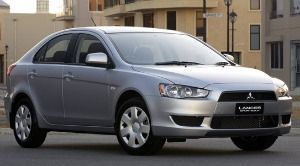
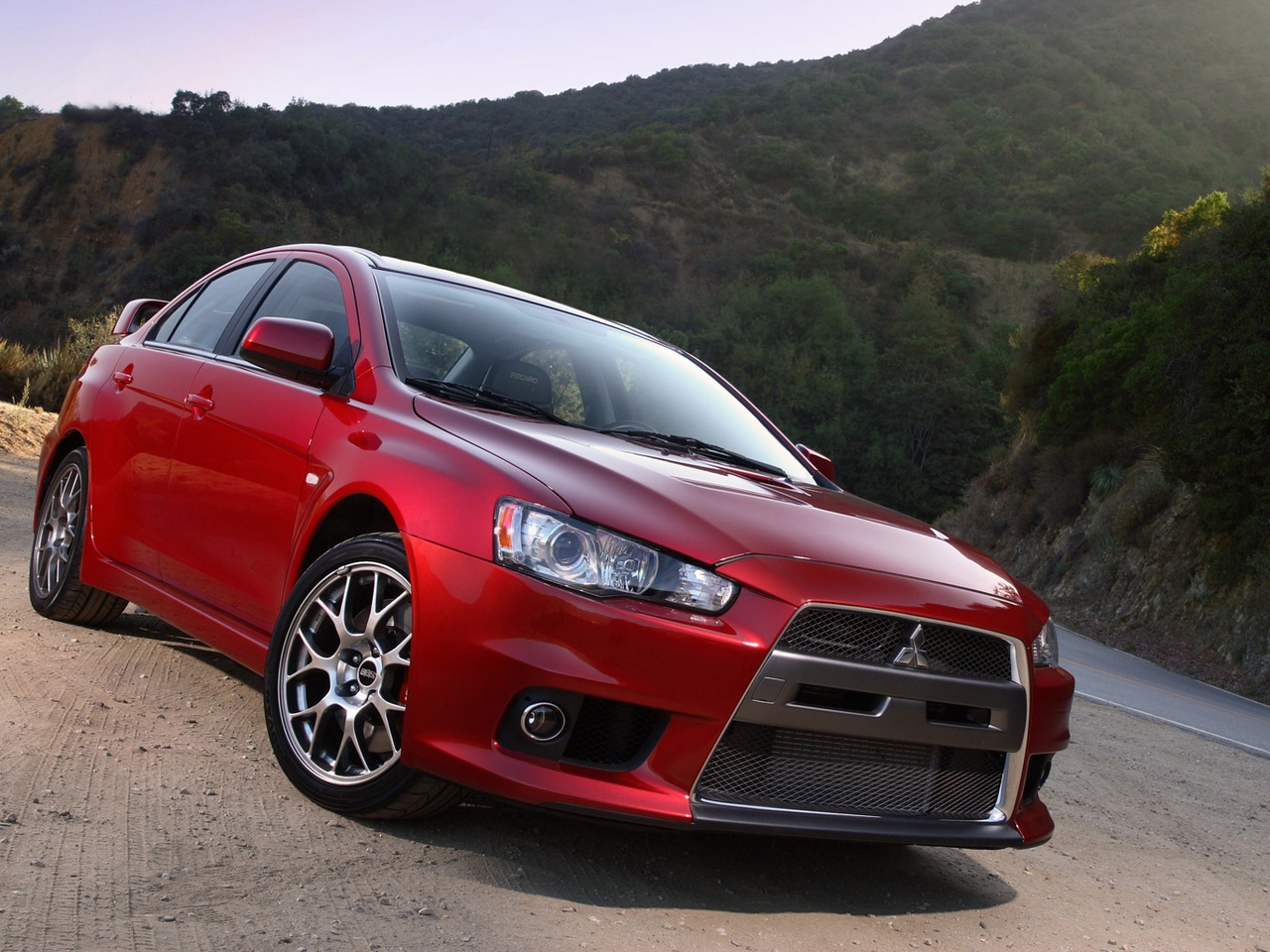
The 2011 Mitsubishi Lancer Evolution GSR is a All-wheel drive Sedan. It can accommodate up to 5 passengers. It has 4 Doors and is powered by a 2.0L L4 DOHC 16-valve engine which outputs 291 hp @ 6500 rpm and is paired with 5-speed manual transmission gearbox. The 2011 Mitsubishi Lancer Evolution GSR has cargo capacity of 195 Liters and the vehicle weighs 1595 kg. In terms of ride assists, the 2011 Mitsubishi Lancer Evolution GSR has stability control and traction control in addition to anti-lock brake system (ABS). The vehicle has an optional engine as well It offers and. Safety features also include Driver-side front airbag and Passenger-side front airbag. The front suspension is Independent front suspension while the rear suspension is Independent rear suspension. The car also features a Yes It has 18'' alloy wheels as standard. Electronic features include Cruise Control. For convenience, the car has Power windows and Power door locks. There is also a remote keyless entry feature. Moreover, the car has. The steering wheel has audio control buttons. In terms of performance, the car has 318 N.m of torque and a top speed of 243 km/h. The 2011 Mitsubishi Lancer Evolution GSR accelerates from zero to 60 mph in 5.1 seconds and hits quarter mile at 11.7 seconds. Fuel consumption is 12.4 L/100km in the city and 8.7 L/100km in the highway. The car price starts at $ 41,998
| Name | GSR | |
|---|---|---|
| Price | $ 41,998 | |
| Body | Sedan | |
| Doors | 4 Doors | |
| Engine | 2.0L L4 DOHC 16-valve | |
| Power | 291 hp @ 6500 rpm | |
| Number of Seats | 5 Seats | |
| Transmission | 5-speed manual transmission | |
| Cargo Space | 195.0 L | |
| Maximum Cargo Space | 195.0 L | |
| Wheel Type | 18'' alloy wheels | |
| Series | Lancer X | |
| Drivetrain | All-wheel drive | |
| Horsepower | 291 HP | |
| Torque | 318 N.m | |
| Top Speed | 243 km/h | |
| Acceleration 0-100 km/h (0-60 mph) | 5.1 s | |
| Fuel Type | Petrol (Gasoline) | |
| Fuel Consumption (City) | 12.4 L/100km | |
| Fuel Consumption (Highway) | 8.7 L/100km | |
| Gear Type | auto | |
| Weight | 1,260 KG | |
| Brand | Mitsubishi | |
| Model | Lancer | |
| 0-400m (Quarter Mile) | 11.7 s | |
| 0-400m (Quarter Mile) - Speed | 174.4 km/h | |
| 0-800m (Half Mile) | 21.9 s | |
| 0-800m (Half Mile) - Speed | 196.3 km/h | |
| Modifications (MODS) | ||
| Modifications Cost | $ 0 |
Mitsubishi lancer 2011 0-100 Test.
2011 Mitsubishi Lancer GTS 0-60 MPH
2011 Mitsubishi Lancer Used Price Estimates
Estimates based on a driving average of 12,000 miles per year| Used Condition | Trade In Price | Private Party Price | Dealer Retail Price |
|---|---|---|---|
| Outstanding | $ 3,030 | $ 4,438 | $ 5,467 |
| Clean | $ 2,820 | $ 4,136 | $ 5,084 |
| Average | $ 2,398 | $ 3,531 | $ 4,319 |
| Rough | $ 1,977 | $ 2,927 | $ 3,554 |
The 2011 Mitsubishi Lancer represents a sporty alternative to economy sedans, yet doesn't deliver when it comes to refinement or fuel economy.
Are you bored of humdrum economy sedans? Are you looking for a little excitement without breaking the bank? The 2011 Mitsubishi Lancer could be a remedy worth checking out. When used as directed, the Lancer can elevate your heart rate and generally enhance your mood. But it's not without a few side effects.
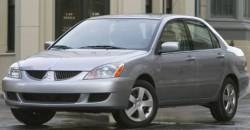
The Lancer is offered in three varying doses, from the commonplace DE and ES base trim levels to the more potent GTS and prescription-strength Ralliart. Depending on the seriousness of your ailment, there seems to be a Lancer for every taste. Its sharp exterior styling and lively performance (in higher trim levels) are sure to have you back to your old self in no time.
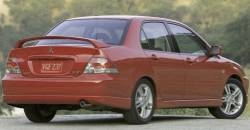
The downsides, though, could give you second thoughts. The base 2.0-liter engine lacks power and, if combined with the continuously variable automatic transmission (CVT), leads to rather anemic acceleration. Stepping up to the more powerful GTS and Ralliart engines helps immensely, but an increased appetite for fuel also results. The Lancer also has a rather plain interior design and subpar interior materials.
Fortunately for the Lancer, Mitsubishi has tinkered with the 2011 formula to eliminate some of the side effects that plagued previous versions. The addition of electric-assist power steering and brake regeneration serve to increase fuel economy for the base models while the optional Fuse voice-activation feature reduces frustration when controlling phone, navigation and entertainment functions.
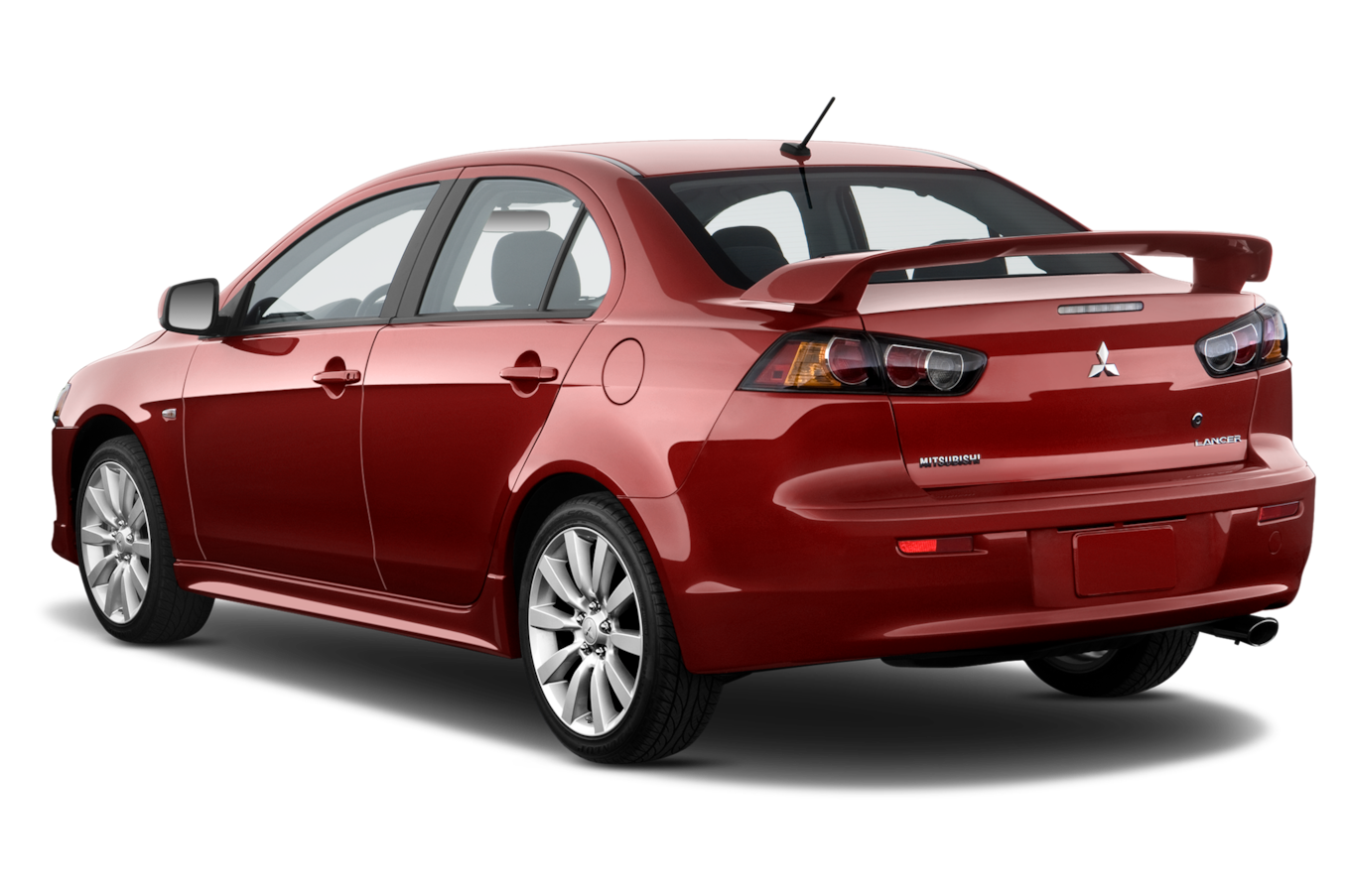
The Lancer isn't the only antidote for the economy sedan doldrums; the 2011 Mazda 3 and 2011 Subaru Impreza deliver similarly effective results. Both competitors are also available in varying potencies in the form of the Mazdaspeed 3 and Impreza WRX. The Impreza provides a bit more enticement with all-wheel drive for all models, while the Mazda 3 scores points with its more attractive interior. You could also check out the Kia Forte, which presents a better value proposition. In the final analysis, the 2011 Mitsubishi Lancer is a worthy habit-forming cure to the econo-sedan blahs, but we recommend trying out the alternatives first.
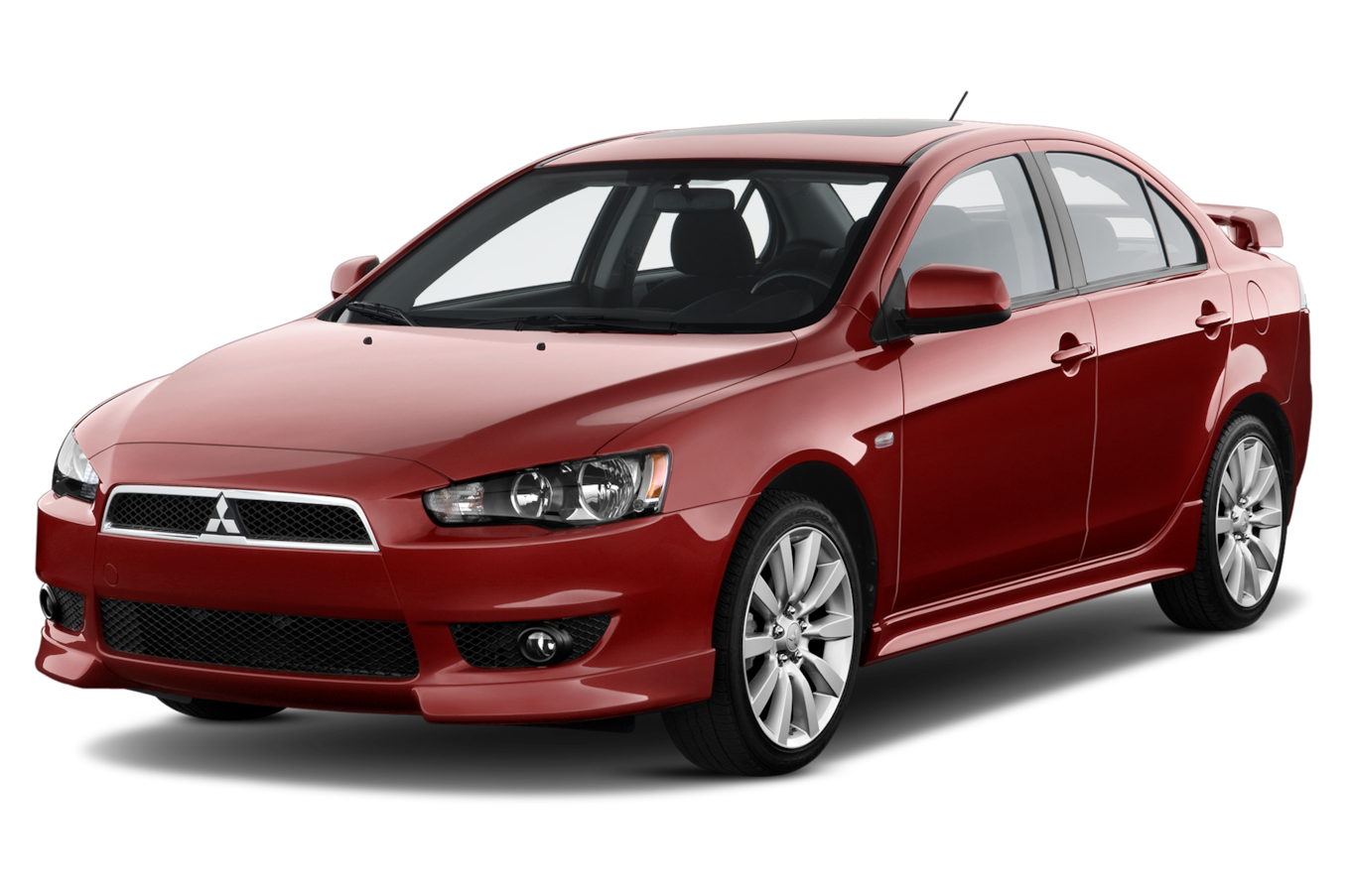
The 2011 Mitsubishi Lancer is a compact sedan available in DE, ES, GTS and Ralliart trim levels (the Lancer Evolution is reviewed separately).
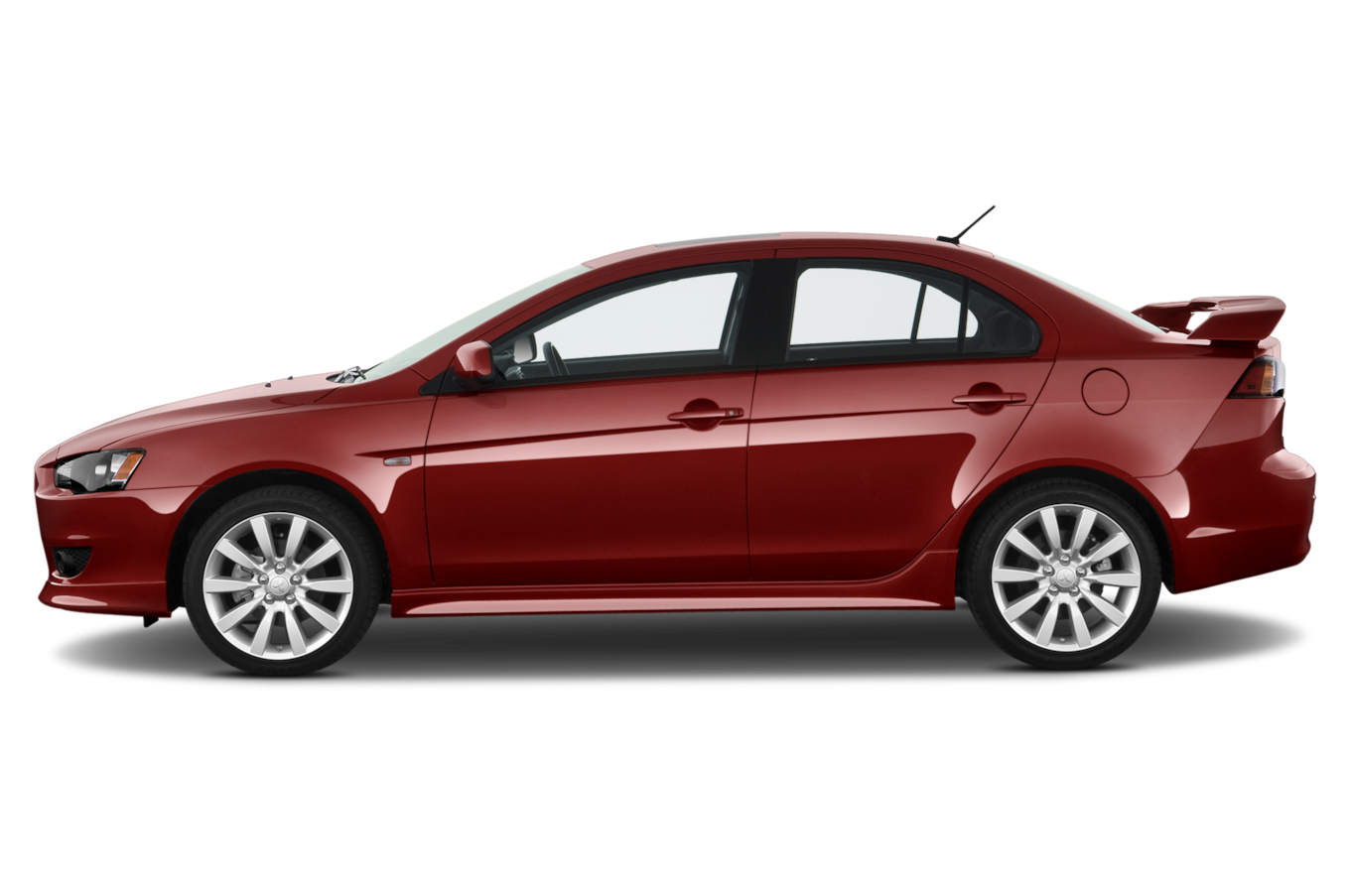
The base DE comes with 16-inch steel wheels, rocker-sill bodywork extensions, a tilt-only steering wheel, full power accessories, a trip computer and a four-speaker CD/MP3 stereo. The ES comes with all the aforementioned items and adds air-conditioning, cruise control, keyless entry, upgraded upholstery, a 60/40-split rear seat with a center armrest, manual driver-seat height adjustment, steering-wheel audio controls and an auxiliary audio jack for the stereo.
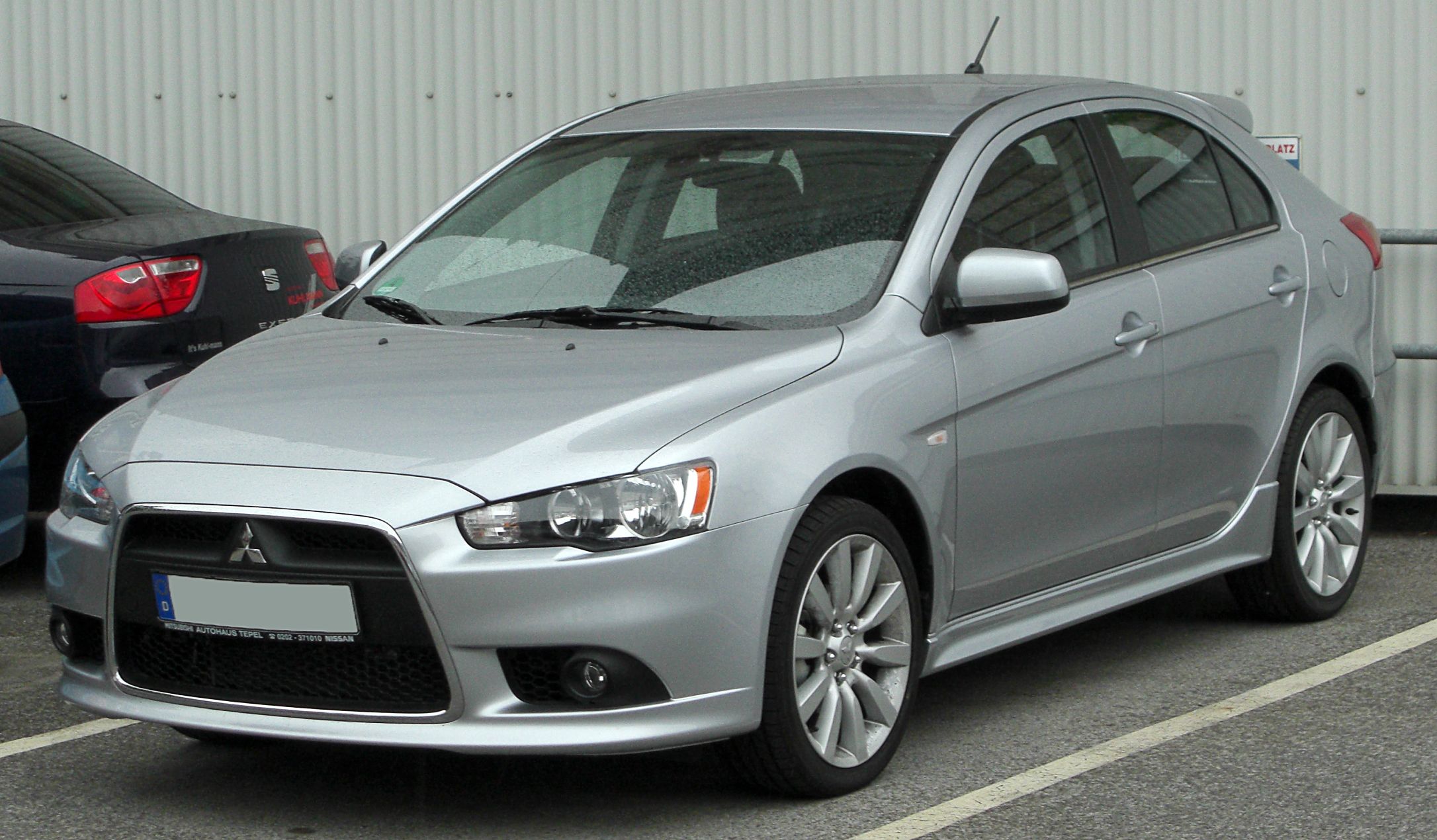
The GTS gains a more powerful engine, 18-inch alloy wheels, foglights, a rear spoiler, a sport-tuned suspension, keyless ignition/entry, automatic climate control, sport bucket front seats with upgraded fabric, the Fuse voice-activation system, Bluetooth and a six-speaker stereo with a USB port. The Ralliart ups the performance ante with a turbocharged engine, an automated dual-clutch manual transmission (with shift paddles) and all-wheel drive. Also included is satellite radio.
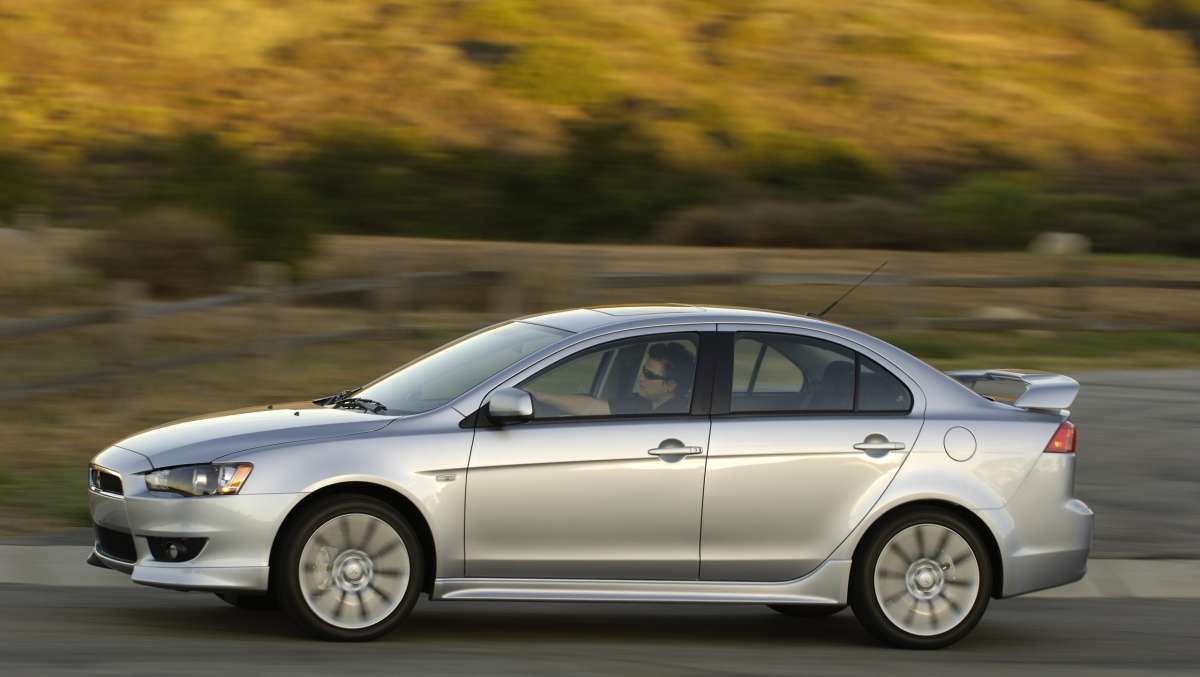
Many features listed are also available on lower trim cars as stand-alone options or as part of bundled packages. The Alloy Wheel package adds 16-inch alloy wheels to the ES trim along with rear disc brakes (instead of drums) and a rear stabilizer bar. Several cosmetic and aerodynamic enhancement options are also available for the DE and ES trims.
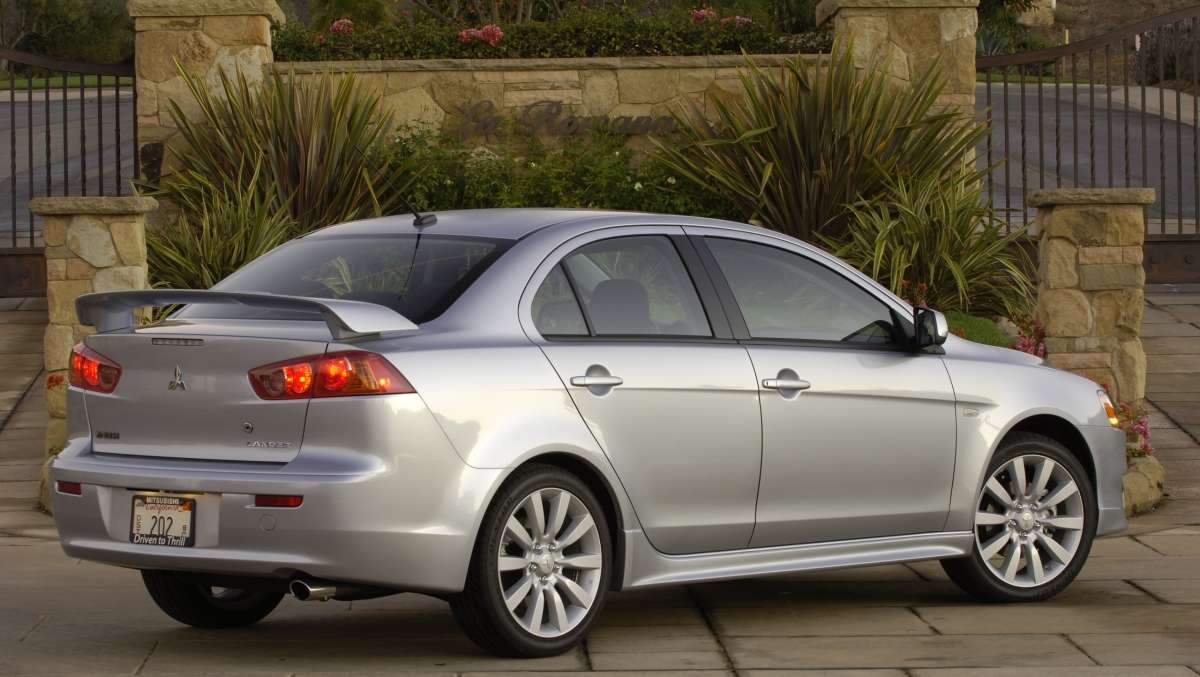
A Touring package is available for GTS and Ralliart trims and features xenon headlights, a sunroof, a smaller rear spoiler, rain-sensing wipers, leather seats and a nine-speaker Rockford Fosgate sound system with an in-dash six-CD changer and satellite radio. Also optional on all but the DE trim is a navigation system that features a 30GB hard drive capable of storing digital music files.
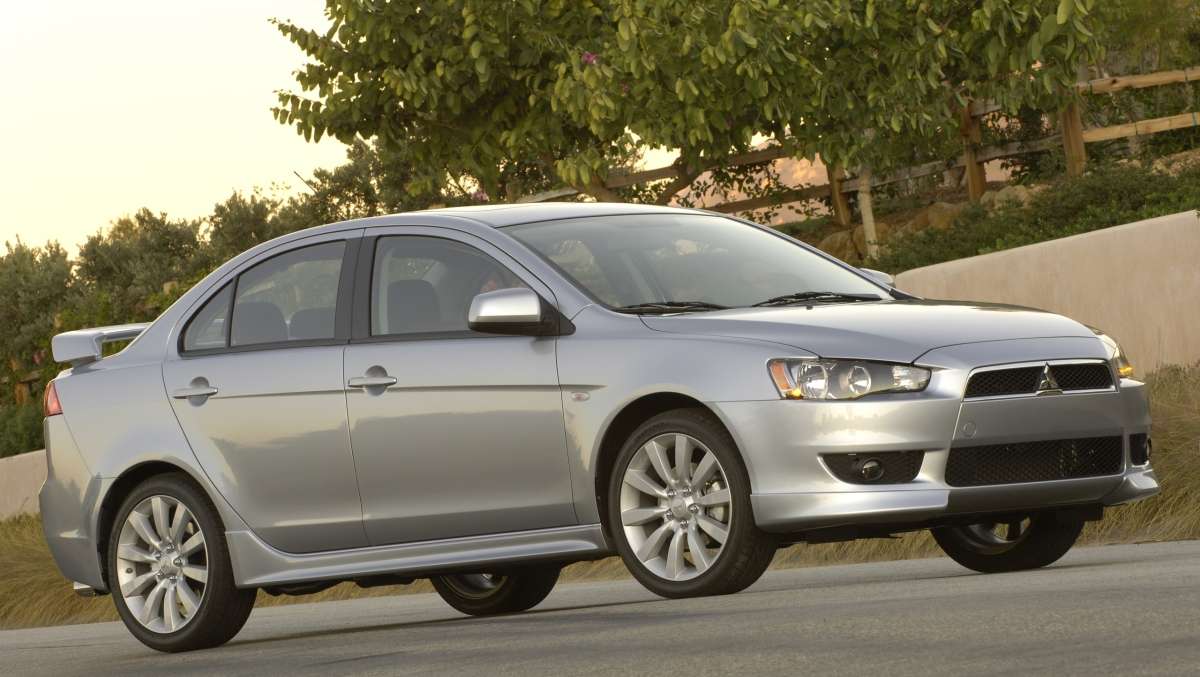
The 2011 Mitsubishi Lancer DE and ES are powered by a 2.0-liter four-cylinder engine that produces 148 horsepower and 146 pound-feet of torque. In California-emissions states, this engine earns Partial Zero-Emissions Vehicle (PZEV) certification but it's also down on power a bit with 143 hp and 143 lb-ft of torque. The Lancer GTS upgrades to a 2.4-liter four that makes 168 hp and 167 lb-ft of torque.
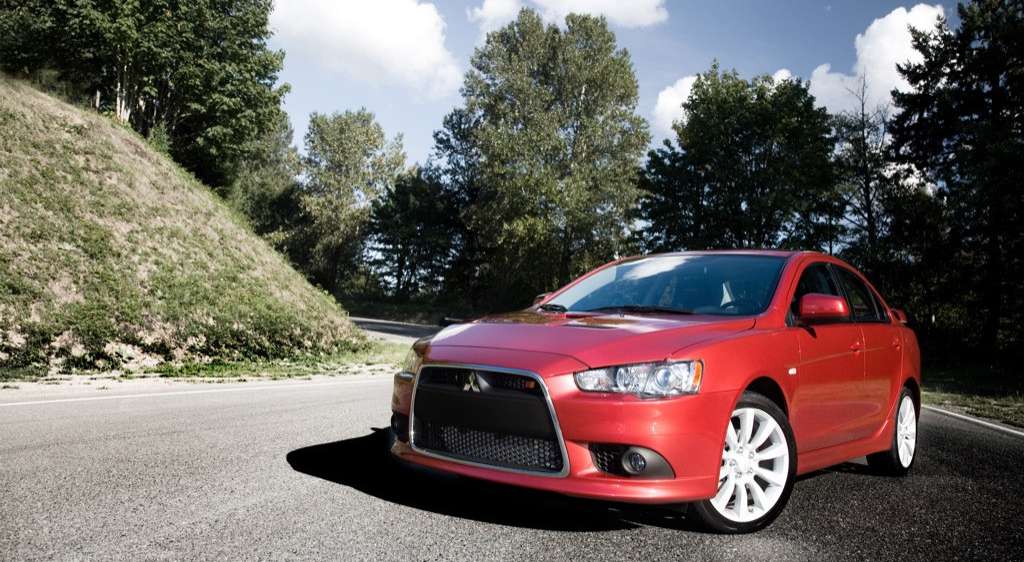
A five-speed manual transmission is standard for both engines, and a CVT is optional on the ES and GTS. The GTS also includes a CVT manual mode with simulated gear ratios operated via shift paddles on the steering wheel. The Ralliart features a turbocharged 2.0-liter inline-4 that thumps out 237 hp and 253 lb-ft. Power is sent to all four wheels through an automated dual-clutch manual transmission with shift paddles.

In testing, a GTS with a manual transmission accelerated from zero to 60 mph in 7.7 seconds, which is quick for this class. The combination of the base engine and five-speed delivers a time of 8.8 seconds to 60 mph, while the CVT can muster only a performance of 9.1 seconds. The Ralliart dispatches the 0-60 dash in a sizzling 5.8 seconds.
In terms of fuel economy, the 2.0-liter achieves an EPA-estimated 25 mpg city/33 mpg highway and 28 mpg combined with the automatic transmission, an average rating for this class of car. The 2.4-liter gets 23 city/30 highway and 26 combined with the automatic. The manual transmission delivers nearly identical fuel efficiency. The high-performance Ralliart has notably poorer fuel efficiency, with a rating of 17/25/20.
The Mitsubishi Lancer comes standard with front-seat side airbags, full-length head curtain airbags and a driver knee airbag. Antilock brakes and stability control are standard across the board, but four-wheel disc brakes are standard only on the GTS and Ralliart. The DE and ES trims get by with rear drum brakes. In recent brake testing, a Lancer GTS stopped from 60 mph in a scant 115 feet.
In government crash testing, the Lancer received a five-star rating for driver frontal crash protection and front-seat side crash protection. It earned four stars for passenger frontal crash protection and for rear-seat side protection. In the Insurance Institute for Highway Safety's frontal-offset, side-impact and roof-strength tests, the Lancer achieved the best rating of "Good."
With a decent amount of comfort and a quiet cabin, a 2011 Mitsubishi Lancer equipped with the base 2.0-liter engine is fine for the daily commute. Unfortunately, this engine seems to also generate more noise than horsepower, especially when saddled with the CVT. For those seeking a bit more excitement on a budget, the GTS is a better alternative thanks to more low-end engine power and a suspension that responds better to spirited driving.
The Ralliart bridges the gap to the high-performance Lancer Evolution model with turbocharged power, sharp handling and rapid-fire gearchanges from the dual-clutch transmission. Mechanically, the Ralliart provides plenty of thrills in the curves, but in our testing we've found its tires to be a bit too economy-minded considering the car's strong performance potential.
While the 2011 Mitsubishi Lancer's chiseled exterior lends an air of aggression, its interior design and materials tend to drag down the vehicle's overall appeal. On the whole, the cabin design is uninspiring and rife with hard plastic elements. Taller drivers will likely bemoan the lack of a telescoping steering wheel and the lack of under-thigh support. On the other hand, the rear seats are quite comfortable, with a generous amount of legroom. These 60/40-split seats fold flat to accommodate bulky items, which is advantageous considering the Lancer's rather small 11.6-cubic-foot trunk.
One item of contention from last year, the operation of the touchscreen navigation unit, looks to be remedied by Mitsubishi's Fuse voice-activation system. Much like Ford's Sync system, selecting a destination or your favorite music is only a voice command away. The Mitsubishi system lacks some of the Sync's functions and commands, but we still prefer it to the tricky touchscreen layout in any case.
In order to make a small car ride as well as it handles, engineers must sometimes manhandle the laws of physics; judging by our brief test drive in the 2011 Mitsubishi Lancer GTS, it would appear the engineers have won the battle. On twisting mountain roads, we were impressed by the GTS' composure, as well as its tenacious ability to cling to the pavement. Although Lancers equipped with manual transmissions are a second quicker to 60 mph than their automatic counterparts, we truly came to prefer the fast shifts afforded by the steering wheel-mounted paddle shifters. When not tearing through unpopulated mountain passes, we found the smooth and considerably less noisy ES trim to be far more compatible with daily driving needs. Although the ES' cabin is less raucous than in the GTS, it still allows in a fair amount of wind and tire noise.
40-Gigabyte Hard DriveLancer's hard drive-based navigation system responds more quickly than more common DVD-based units. It also allows you to store up to six gigabytes of digital music taken directly from CDs, or about 1,200 songs. Keyless Entry and StartThe available FAST Key system lets you unlock and start the Lancer without ever touching the key/transmitter.
If we had to describe the 2011 Mitsubishi Lancer interior in two words, we'd choose minimalist and contemporary. Sure, the design is clean, but the abundance of mid-grade plastics is a bit of turn off, lacking in both richness (see Volkswagen) and refinement (see Mazda). Seat fabric, seat design and interior features vary by trim level, successively growing nicer as the dollar signs move upward. The GTS features the most appealing interior, with a leather-wrapped steering wheel and shift knob, deeply bolstered front seats, chrome interior door handles, and high-contrast gauge faces.
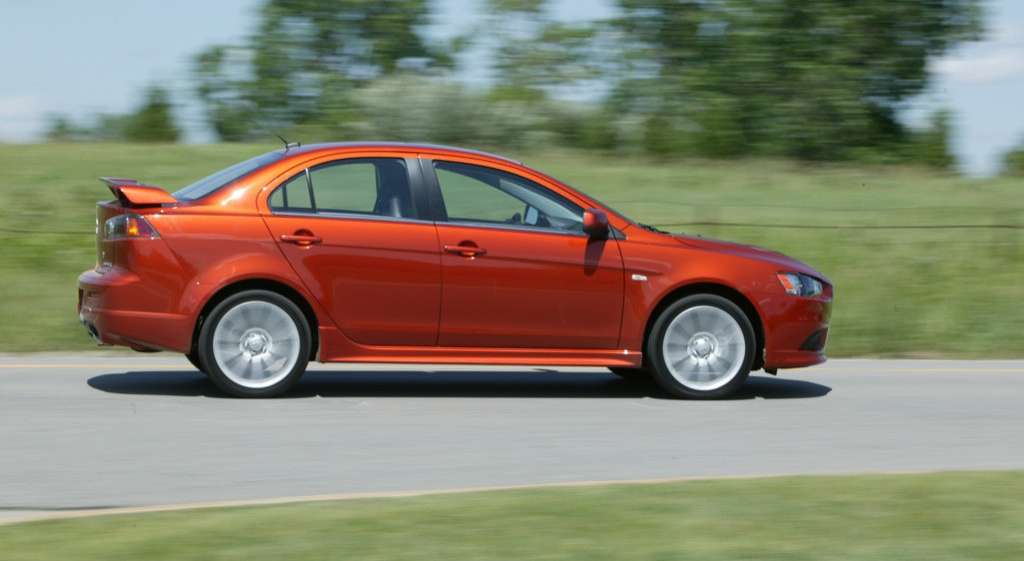
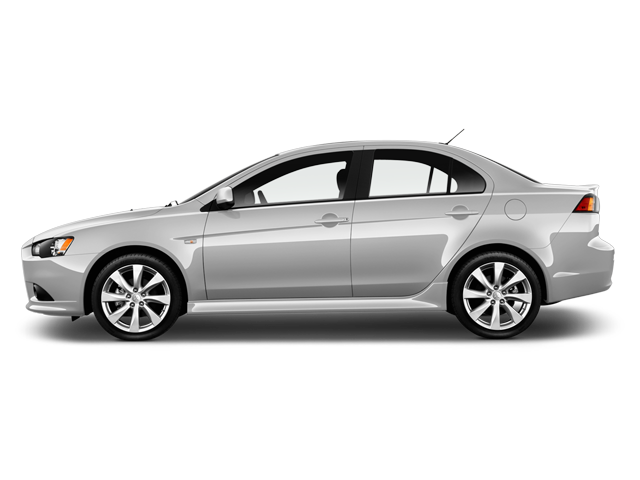
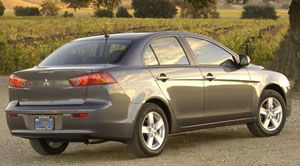
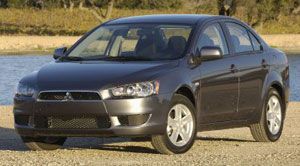
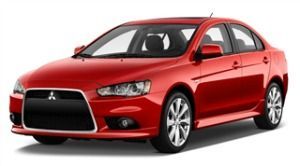
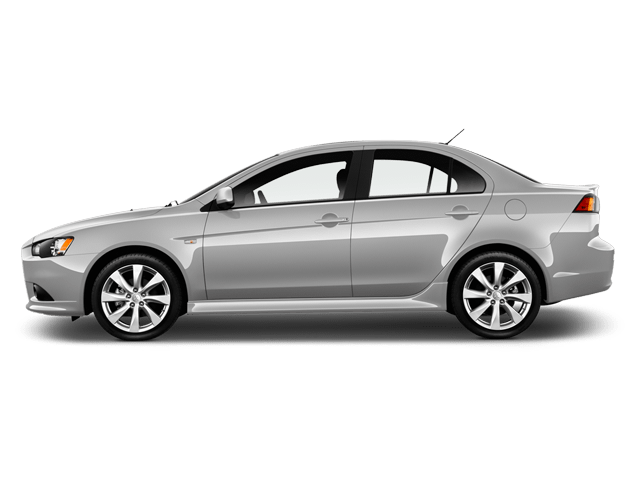
The 2011 Mitsubishi Lancer distances itself from the common compact with its wide stance, tall roof, and rally car inspired styling. Mitsubishi says the massive front grille was inspired by the air intakes found on fighter jets - an interesting source of inspiration, but one that works quite nicely in this instance. While the base DE, with its black trim and 16-inch wheel covers, doesn't inspire much enthusiasm for driving, the ES projects a far more appealing image, wearing 16-inch alloy wheels, a chrome grille and colored door handles and mirrors in place of the DE's black plastic. GTS and Ralliart trims stand out ever further, with 18-inch styled wheels, a rear spoiler, chrome exhaust outlets, and front and side body extensions.
A base Lancer DE includes a four-speaker, 140-watt CD/MP3 sound system, power windows, side-curtain airbags, driver's knee airbag, electronic stability control, anti-lock brakes (ABS), tilt wheel and a trip computer. If the ES model is within your reach, we'd recommend taking that step up, as it adds air conditioning, power locks, steering wheel mounted controls for the cruise control and audio, pre-wiring for a Bluetooth hands-free phone connectivity option, an auxiliary audio input jack and remote keyless entry. GTS models gain 18-inch alloy wheels, a sport suspension, bigger brakes, a 2.4-liter engine, automatic climate control, FUSE with Bluetooth hands-free communication, a USB port, and sport bucket seats. The Ralliart adds a 237-horsepower turbocharged engine, all-wheel drive and a six-speed twin-clutch Sportronic Shift automatic transmission.
Some of the Lancer's most desirable options are a hard drive-based navigation and audio system, and the Sun and Sound Package, which includes FAST Key keyless entry and start, a 710-Watt Rockford-Fosgate audio system, FUSE hands-free linking system and a sunroof. A continuously variable transmission (CVT) serves as the automatic transmission option.
For 2011 Mitsubishi Lancer DE and ES trims, the only powertrain decision facing a buyer is whether to stick with the five-speed manual or go for the continuously variable transmission (CVT). The GTS, however, gets a more robust 2.4-liter engine, which shows noticeable improvements over the 2.0-liter in the areas of vibration and low-end torque. The CVT-equipped GTS model includes steering wheel-mounted paddle shifters and six simulated gears that effectively give the driver control of a quick-shifting manu-matic. The Ralliart trim gains a turbocharged 2.0-liter engine good for 237 horsepower and all-wheel drive. Lancer DE and ES models sold in California are PZEV-rated and deliver 143 horsepower and 143 pound-feet of torque.2.0-liter in-line 4148 horsepower @ 6000 rpm146 lb.-ft. of torque @ 4200 rpmEPA city/highway fuel economy: 24/33 (manual), 25/33 (automatic)2.4-liter in-line 4168 horsepower @ 6000 rpm167 lb.-ft. of torque @ 4100 rpmEPA city/highway fuel economy: 22/31 (manual), 23/30 (automatic)2.0-liter turbocharged in-line 4237 horsepower @ 6000 rpm253 lb.-ft. of torque @ 2500-4750 rpmEPA city/highway fuel economy: 17/25
The 2011 Lancer DE carries a Manufacturer's Suggested Retail Price (MSRP) of around $ 16,000 with destination fee, while the ES starts close to $ 17,500. The CVT automatic adds about $ 900. GTS models are priced just over $ 20,000 and top out around $ 27,000 fully loaded. The Ralliart trim starts around $ 28,500. We expect our Fair Purchase Price to reflect real-world transaction prices not far below those MSRPs. The Honda Civic and Mazda Mazda3 start closer to $ 17,000, and both top out near $ 25,000. We don't expect the Lancer to retain its value as well as the exceptionally resilient Civic or the Mazda3.
2011 Mitsubishi Lancer Evolution GSR Exterior Colors
2011 Mitsubishi Lancer Evolution GSR Interior Colors
2011 Mitsubishi Lancer Engines
| Engine | Standard in Trim | Power | Torque | Fuel Consumption - City | Fuel Consumption - Highway | 0-100 km/h | Quarter Mile | Half Mile |
|---|---|---|---|---|---|---|---|---|
| 2.0L L4 DOHC 16-valve | DE | 148 hp @ 6000 rpm | 318 N.m | 9.6 L/100km | 6.9 L/100km | 9.0 s | 16.5 s | 27.4 s |
| 2.0L L4 DOHC 16-valve | GT | 148 hp @ 6000 rpm | 318 N.m | 9.2 L/100km | 6.9 L/100km | 9.0 s | 16.5 s | 27.4 s |
| 2.0L L4 turbo DOHC 16-valve | GSR | 291 hp @ 6500 rpm | 318 N.m | 14.0 L/100km | 10.3 L/100km | 5.1 s | 11.7 s | 21.9 s |
| 2.0L L4 turbo DOHC 16-valve | Final Edition | 303 hp @ 6500 rpm | 318 N.m | 14.0 L/100km | 10.3 L/100km | 4.9 s | 11.6 s | 21.6 s |
| 2.0L L4 turbo DOHC 16-valve | MR | 291 hp @ 6500 rpm | 318 N.m | 14.2 L/100km | 10.5 L/100km | 5.1 s | 11.7 s | 21.9 s |
| 2.0L I4 turbo DOHC 16-valve | Base | 237 hp @ 6000 rpm | 318 N.m | 13.4 L/100km | 9.4 L/100km | 5.9 s | 12.5 s | 23.4 s |
| 2.0L L4 DOHC 16-valve | GT | 148 hp @ 6000 rpm | 318 N.m | 9.6 L/100km | 7.3 L/100km | 9.5 s | 16.9 s | 28.1 s |
2011 Mitsubishi Lancer Trims
2011 Mitsubishi Lancer Previous Generations
2011 Mitsubishi Lancer Future Generations

Mitsubishi Lancer Overview and History
True production begins after the merger of Mitsubishi Shipbuilding and Mitsubishi Aircraft Co. in 1934. Concentrated on building aircraft, ships, and railroad cars, the company found time to make a prototype sedan in 1937 which it called the PX33. Sadly, it was mainly for military use as the war approached.
Only after the war did the company really got into car production with a small three-vehicle vehicle, the Mizushima and a scooter with a funny name, the Silver Pigeon. Then came the split of the former conglomerate, because the conquering Allies did not see with favorable eyes Japan's industrial development.
A decade later, things in Japan were looking up and personal transportation became an issue again as more and more families afforded cars. Enter the Mitsubishi 500, a sedan for the masses, and later the Minica small car and the Colt 1000 in 1963. With sales rising, the remnants of the Mitsubishi conglomerate were united once again in 1970.
The next step for the company was to ally itself with a foreign company, Chrysler in this case, which bought 15% of the Mitsubishi, which afforded the Japanese manufacturer the license to sell rebadged Galants as Dodge Colts in the States and as Chrysler Scorpions in Australia.
In this way, Mitsubishi was able to raise numbers in production and set up a series of dealerships around Europe. But if for Mitsubishi things were looking up, the same could not be said about its American partner which was forced to sell the Australian manufacturing division in 1980.
Two years later, Mitsubishi would enter the American market under its own name with the Tredia sedan, the Cordia and the Starion coupe. The car quota was established at 30,000 vehicles but the Japanese were keen to increase that number and they began a campaign of active advertising. By the end of the 80s, Mitsubishi had achieved 1,5 million units produced worldwide.
In order to bypass the strict import regulations and to ease the tensions between the two companies, Mitsubishi and Chrysler founded a new vehicle manufacturing company in Normal, Illinois under the name Diamond-Star Motors which started production in 1987. The models that came out of this plant include the Mitsubishi Eagle, the Eagle Talon and the Plymouth Laser.
In 1988 the company changed its status from being privately owned to public. Mitsubishi industries remained the largest stockholder with 25% of the company, while Chrysler upped its share to 20 %. Later, in 1992, it reduced the equity to just 3% and even sold its interest in Diamond-Star Motors, leaving Mitsubishi as the sole owner.
In 1995, Mitsubishi Motors changed its name to the current on from DSM as it was previously known on the American market. Also, it opened up a new North American Manufacturing Division in 2002.
In 2000, Mitsubishi sought a new partnership with the newly formed Daimler-Chrysler concern which cost the German-American group $ 1.9 billion, $ 200 million less than the original price once the defect cover-up scandal came out. It seems that Mitsubishi had systematically covered up defects in its production cars as far back as 1977, involving anything from failing brakes to faulty clutch systems. When the news was disclosed, the company was forced to recall 163,707 vehicles for free repairs.
That, coupled with a economic crisis in the Asian region caused Mitsubishi a loss in profit and even the need to downsize in order to cope with falling demand. A new breed of cars, revitalized models and forward thinking was what brought Mitsubishi back on track. The Mitsubishi i, a small car perfect for the Asian market and the new Lancer and Outlander were enough to put the company back on the market. This lead to the first profitable quarter at Mitsubishi in four year to be declared in 2006.
2011 Mitsubishi Lancer Consumer Reviews
Compare Against Competitors

2011 Mitsubishi Lancer Evolution GSR Specifications
GSR Comfort and Convenience
| AM/FM stereo radio | AM/FM stereo radio with auxiliary input jack |
|---|---|
| Air Conditionning | Automatic climate control |
| Antenna | Roof-mounted antenna |
| Bluetooth Wireless Technology | Yes |
| Courtesy Dome Light | Courtesy lights |
| Front Wipers | Variable intermittent windshield wipers |
| Fuel Door Operation | Remote fuel-filler door release |
| Graphic Equalizer | Speed compensated volume control |
| Interior Air Filter | Cabin air filter |
| Number of Speakers | 6 speakers |
| Power Door Locks | Yes |
| Power Outlet | 2 12-volt power outlets |
| Power Windows | Power windows with driver one-touch up/down feature |
| Reading Light | Front reading lights |
| Rear Heating | Rear heater floor ducts |
| Remote Keyless Entry | Yes |
| Single CD | CD/MP3 player |
| Smoking Convenience | Ashtray |
| Special Feature | Auxiliary audio input jack and USB port |
| Steering Wheel Adjustment | Tilt and telescopic steering wheel |
| Trunk Light | Yes |
| Trunk/Hatch Operation | Remote trunk release |
GSR Dimensions
| Cargo Capacity | 195 L |
|---|---|
| Curb Weight | 1595 kg |
| Front Headroom | 1031 mm |
| Front Legroom | 1079 mm |
| Fuel Tank Capacity | 55 L |
| Gross Vehicle Weight | 2060 kg |
| Height | 1480 mm |
| Length | 4495 mm |
| Rear Headroom | 937 mm |
| Rear Legroom | 846 mm |
| Wheelbase | 2650 mm |
| Width | 1810 mm |
GSR Exterior Details
| Door Handles | Body-color door handles |
|---|---|
| Driving Lights | Daytime running lights |
| Exterior Folding Mirrors | Folding outside mirrors |
| Exterior Mirror Colour | Body-color outside mirrors |
| Front Fog Lights | Fog lights |
| Grille | Black grille |
| Headlight Type | Halogen headlights |
| Headlights Auto Off | Auto-off headlights |
| Power Exterior Mirrors | Power-adjustable outside mirrors |
| Rear Spoiler | Body-color rear spoiler |
| Rear Spoiler (Option) | Large rear spoiler |
| Rear Window Defroster | Yes |
| Side Turn-signal Lamps | Side marker flashers |
| Tinted Glass | Yes |
GSR Interior Details
| Driver Info Center | Driver information center |
|---|---|
| Floor Mats | Front floor mats |
| Front Center Armrest | Front center armrest with storage |
| Front Seats Driver Power Seats | 4-way power driver's seat |
| Front Seats Front Seat Type | Sport bucket front seats |
| Hand Brake Leather Trim | Leather-wrapped handbrake lever |
| Instrumentation Type | Analog instrumentation |
| Low Fuel Warning | Yes |
| Maintenance Interval Reminder | Maintenance reminder system |
| Number of Cup Holders | 2 front cupholders |
| Outside Temperature Gauge | Outside temperature display |
| Rear Center Armrest | Rear center armrest with cupholders |
| Rear Seat Type | Rear bench seat |
| Seat Trim | Cloth seats |
| Shifter Knob Trim | Leather-wrapped shift knob |
| Special Feature | Aluminum pedals |
| Steering Wheel Trim | Leather-wrapped steering wheel |
| Tachometer | Yes |
| Water Temperature Gauge | Engine temperature display |
GSR Mechanical
| Drive Train | All-wheel drive |
|---|---|
| Engine Name | 2.0L L4 DOHC 16-valve |
| Stability Control | Yes |
| Traction Control | Yes |
| Transmission | 5-speed manual transmission |
GSR Overview
| Body | Sedan |
|---|---|
| Doors | 4 |
| Engine | 2.0L L4 DOHC 16-valve |
| Fuel Consumption | 12.4 (Manual City)8.7 (Manual Highway) |
| Power | 291 hp @ 6500 rpm |
| Seats | 5 |
| Transmission | 5-speed manual transmission |
| Warranties | Bumper-to-Bumper60000/km, 36/Months Powertrain100000/km, 60/Months Roadside AssistanceUnlimited/km, 60/Months Rust-throughUnlimited/km, 60/Months |
GSR Safety
| Anti-Lock Brakes | Anti-lock brakes |
|---|---|
| Anti-Theft Alarm | Alarm system |
| Brake Type | 4-wheel disc |
| Child Seat Anchor | LATCH child seat anchors |
| Child-proof Locks | Rear-door child safety locks |
| Driver Airbag | Driver-side front airbag |
| Electronic brake force distribution | Electronic brake force distrbution |
| Front Seat Belts | Height adjustable |
| Ignition Disable | Anti-theft engine immobilizer |
| Knee Airbags | Driver-side knee airbag |
| Panic Alarm | Panic alarm |
| Passenger Airbag | Passenger-side front airbag |
| Roof Side Curtain | Side-curtain airbags |
| Side Airbag | Front side airbags |
GSR Suspension and Steering
| Front Anti-Roll Bar | Front stabilizer bar |
|---|---|
| Front Suspension | Independent front suspension |
| Front Tires | P245/45R18 |
| Power Steering | Power rack-and-pinion steering |
| Rear Anti-Roll Bar | Rear stabilizer bar |
| Rear Suspension | Independent rear suspension |
| Spare Tire | Compact spare tire |
| Special feature (Option) | Eibach coil springs |
| Suspension Category | Sport suspension |
| Tire Pressure Monitoring System | Yes |
| Turning Circle | 11.8-meter turning circle diameter |
| Wheel Type | 18'' alloy wheels |
| Wheel Type (Option) | 18'' forged steel wheels |
Critics Reviews
Motor Trend reviews the 2009 Mitsubishi Lancer where consumers can find detailed information on specs, fuel economy, transmission and safety. Find local 2009 Mitsubishi Lancer prices online.
The 2009 Mitsubishi Lancer Ralliart is essentially the daily-driving Evo, with every bit the racy look but not the jarring ride and peaky powertrain. Find out why the 2009 Mitsubishi Lancer is ...
Discussion and Comments
Share Your Comments