2018 Hyundai Accent Sedan GLS 0-60 Times, Top Speed, Specs, Quarter Mile, and Wallpapers
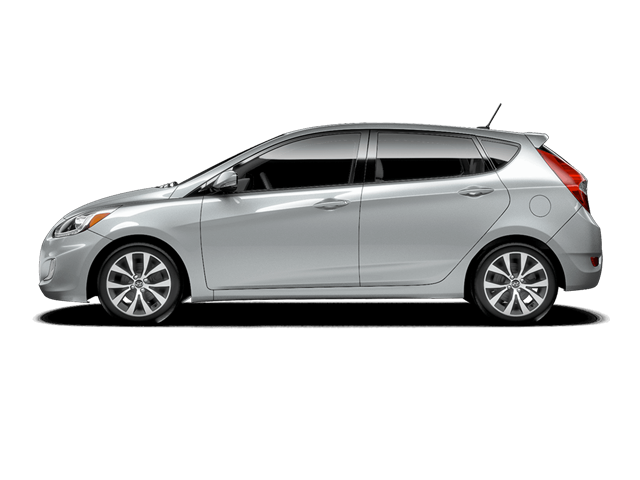
The 2018 Hyundai Accent Sedan GLS is a Front-wheel drive Sedan. It can accommodate up to 5 passengers. It has 4 Doors and is powered by a 1.6L L4 DOHC 16-valve engine which outputs 137 hp @ 6300 rpm and is paired with 6-speed automatic transmission gearbox. The 2018 Hyundai Accent Sedan GLS has cargo capacity of 387 Liters and the vehicle weighs 1215 kg. In terms of ride assists, the 2018 Hyundai Accent Sedan GLS has stability control and traction control in addition to anti-lock brake system (ABS). The vehicle has an optional engine as well It offers and Rearview camera. Safety features also include Driver-side front airbag and Passenger-side front airbag. The front suspension is Independent front suspension while the rear suspension is Solid axle rear suspension. The car also features a It has 17-inch aluminium alloy wheels as standard. Electronic features include Cruise Control. For convenience, the car has Power windows and Power door locks. There is also a remote keyless entry feature. Moreover, the car has Remote engine starter. The steering wheel has audio control buttons. In terms of performance, the car has 149 N.m of torque and a top speed of 189 km/h. The 2018 Hyundai Accent Sedan GLS accelerates from zero to 60 mph in 9.3 seconds and hits quarter mile at 16.8 seconds. Fuel consumption is 8.9 L/100km in the city and 6.6 L/100km in the highway. The car price starts at $ 21,099
| Name | GLS | |
|---|---|---|
| Price | $ 21,099 | |
| Body | Sedan | |
| Doors | 4 Doors | |
| Engine | 1.6L L4 DOHC 16-valve | |
| Power | 137 hp @ 6300 rpm | |
| Number of Seats | 5 Seats | |
| Transmission | 6-speed automatic transmission | |
| Cargo Space | 387.0 L | |
| Maximum Cargo Space | 387.0 L | |
| Wheel Type | 17-inch aluminium alloy wheels | |
| Series | Accent V | |
| Drivetrain | Front-wheel drive | |
| Horsepower | 137 HP | |
| Torque | 149 N.m | |
| Top Speed | 189 km/h | |
| Acceleration 0-100 km/h (0-60 mph) | 9.3 s | |
| Fuel Type | Diesel | |
| Fuel Consumption (City) | 8.9 L/100km | |
| Fuel Consumption (Highway) | 6.6 L/100km | |
| Gear Type | auto | |
| Weight | 1,215 KG | |
| Brand | Hyundai | |
| Model | Accent | |
| 0-400m (Quarter Mile) | 16.8 s | |
| 0-400m (Quarter Mile) - Speed | 137.3 km/h | |
| 0-800m (Half Mile) | 27.8 s | |
| 0-800m (Half Mile) - Speed | 154.6 km/h | |
| Modifications (MODS) | ||
| Modifications Cost | $ 0 |
2018 Hyundai Accent : Acceleration test 0-60 / 0-100 | Quick Review
2018 Hyundai Accent : Acceleration test 0-60 / 0-100 | Quick Review
2018 Hyundai Accent : Acceleration test 0-60 / 0-100 | Quick Review
2018 Hyundai Accent Used Price Estimates
Estimates based on a driving average of 12,000 miles per year| Used Condition | Trade In Price | Private Party Price | Dealer Retail Price |
|---|---|---|---|
| Outstanding | $ 11,048 | $ 12,913 | $ 15,093 |
| Clean | $ 10,787 | $ 12,613 | $ 14,724 |
| Average | $ 10,267 | $ 12,014 | $ 13,985 |
| Rough | $ 9,746 | $ 11,415 | $ 13,247 |
The new Hyundai Accent certainly shares the nicely dressed style of its Elantra and Sonata sedan siblings, but not quite their ride quality. This is a reality of cars in this subcompact class. Like others in this segment, the 2018 Accent has a short wheelbase and smaller dimensions, and is powered by an engine that favors fuel efficiency over gusto. As such, the Accent is more than adequate for in-town driving. It’s best for shorter commutes and easily slotting into parking spots where larger vehicles would be squeezed. On the open highway, the Accent can hold its own, but the engine tends to drone when pushed, and the ride quality isn’t as supple at higher speeds as that of a larger car, though neither is it jittery unless pushed past legal limits. The rear suspension, though still a basic torsion beam, has been reworked for smoothness. Likewise, the 6-speed automatic transmission goes about its business with certainty and is eager to kick down when needed. There’s a button to engage Sport mode, but even when activated can’t magically make the Accent dynamic.
ANDROID AUTO AND APPLE CARPLAY These two smartphone systems are quickly moving from “nice to have” to “must have” in cars, and once you experience their seamless integration it’s hard to go back. While other automakers are still implementing them even in larger and more expensive models, Hyundai makes it readily available in its least expensive car. AUTOMATIC EMERGENCY BRAKING Here’s another system becoming more common in cars, and it has the ability to prevent accidents and even save lives. Through the use of radar, it can warn a driver if a collision appears likely. If the driver doesn’t take action, the car can ultimately apply the brakes to lessen or prevent a collision.
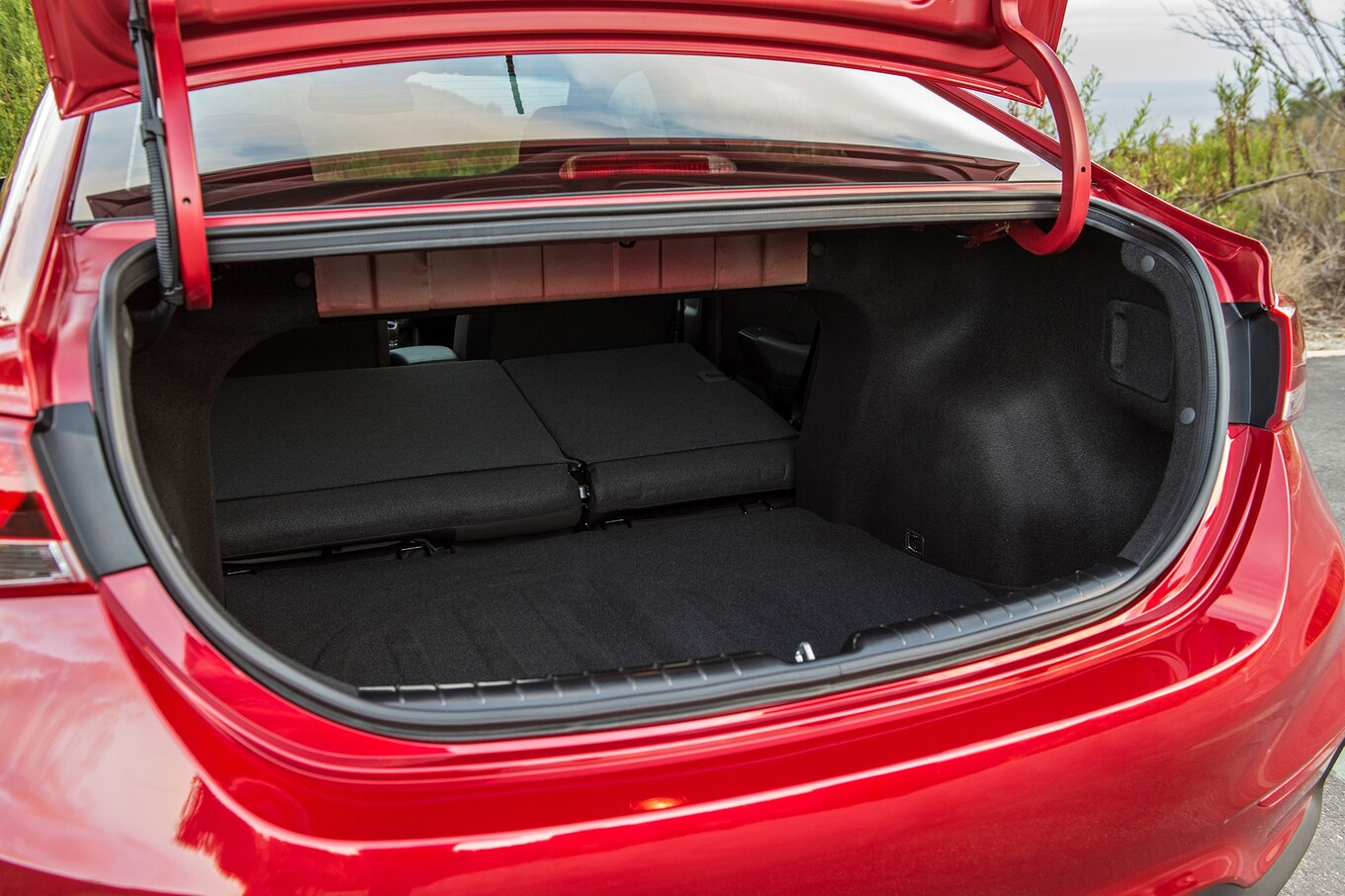
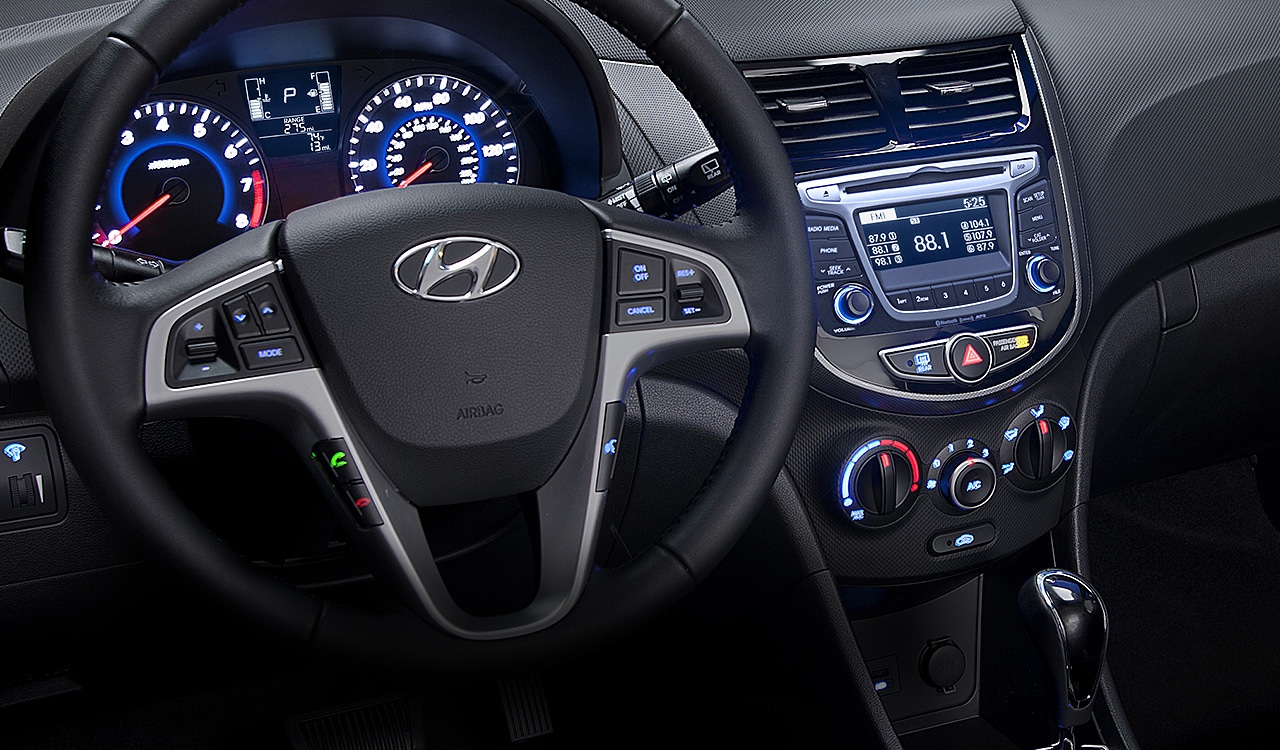
The 2018 Accent’s 5-passenger cabin is nicely laid out and, like its exterior, appears nicer than its price implies. It’s not until you start sitting in the seats and feeling the material that you’ll realize this is still a value-oriented car. There is plenty of hard plastic, and if we had a couple of requests it would be for more bolstering of the front seats and an armrest for rear passengers. Those nits aside, we appreciate the central touch screen that controls audio and phone functions, and the easy-to-reach dials for climate. We suggest skipping the base SE model for several reasons, among them that the steering wheel only tilts on that model and doesn’t telescope like it does in the SEL and Limited variants. Not surprisingly, rear legroom is at a premium. At 13.7 cubic feet, trunk capacity is better than expected, and the rear seats fold in a 60/40-split for added cargo-carrying versatility.
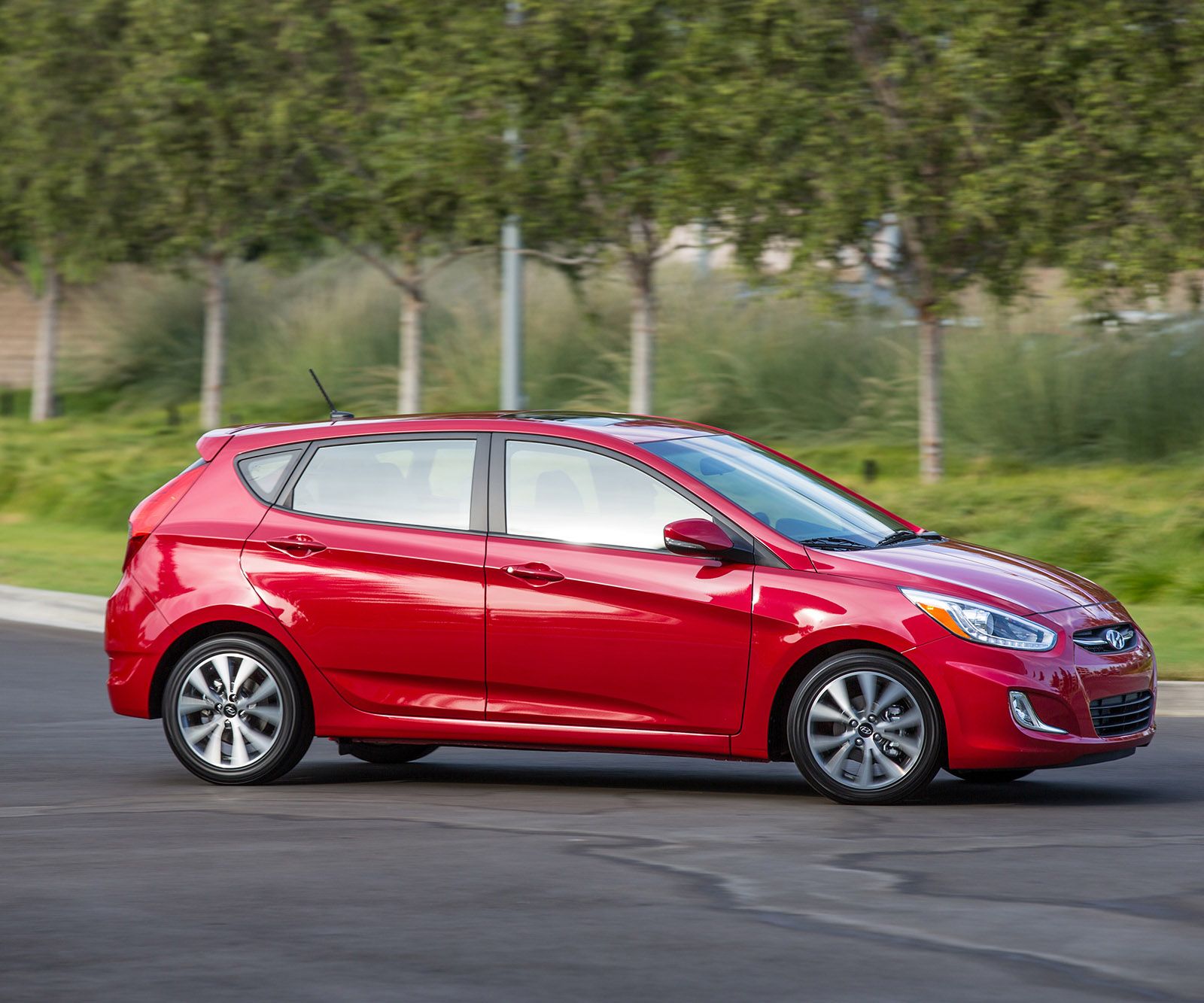
Here’s one of the best parts of Hyundai’s new Accent. Look at that large (but not obtrusive) grille, crisp lines and taut metal. If this were solely a beauty contest, we think the Accent is at the top of the class. As we mentioned, this all-new Accent is only available as a sedan, and not with a hatchback variant as before. By default, the Accent is longer than hatch-only rivals like the Honda Fit. Opt for the top-line Limited trim, and you’ll get an even more dapper-looking Accent that has turn signals integrated into the side mirrors, chrome grille surround and door handles, and 17-inch alloy wheels. The Limited model also features a hands-free trunk that automatically unlatches if you approach with the key.
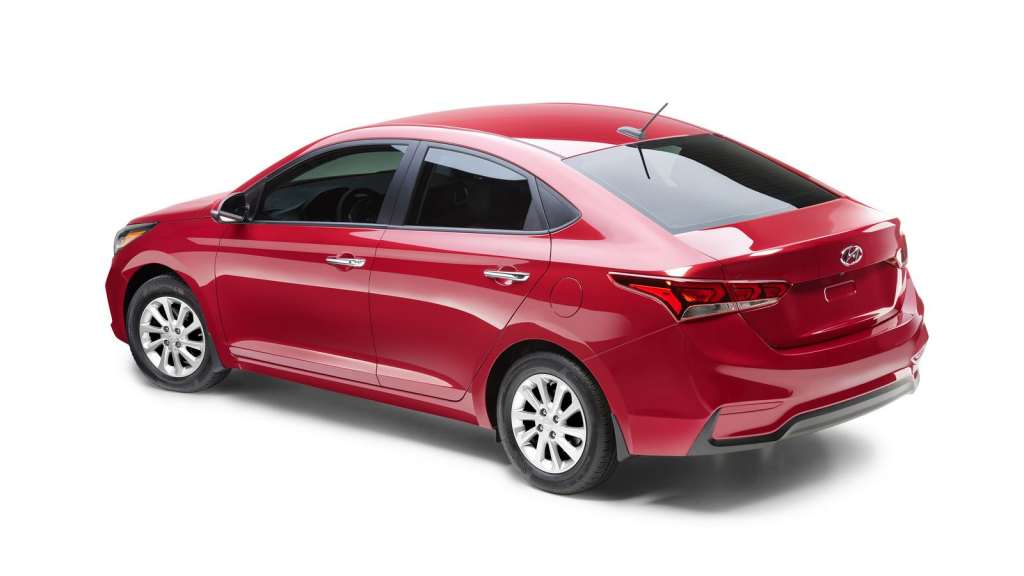
The 2018 Hyundai Accent is offered in three trims: SE, SEL and Limited. Other than an automatic transmission on base SE models, there are no major options or packages. This makes it blessedly simple for choosing the right Accent for you: Just look at what each has and determine if that’s what you want and can afford. The least expensive Accent includes the basics like air conditioning, power windows and door locks, plus cruise control and a rearview camera. Its infotainment system features a 5-inch touch screen and a 4-speaker AM/FM radio with Bluetooth connectivity and USB/auxiliary ports. Like all new Hyundais, the Accent has an excellent warranty: a 5-year/60,000-mile transferable new-vehicle warranty, plus a powertrain that’s guaranteed for 10 years or 100,000 miles.
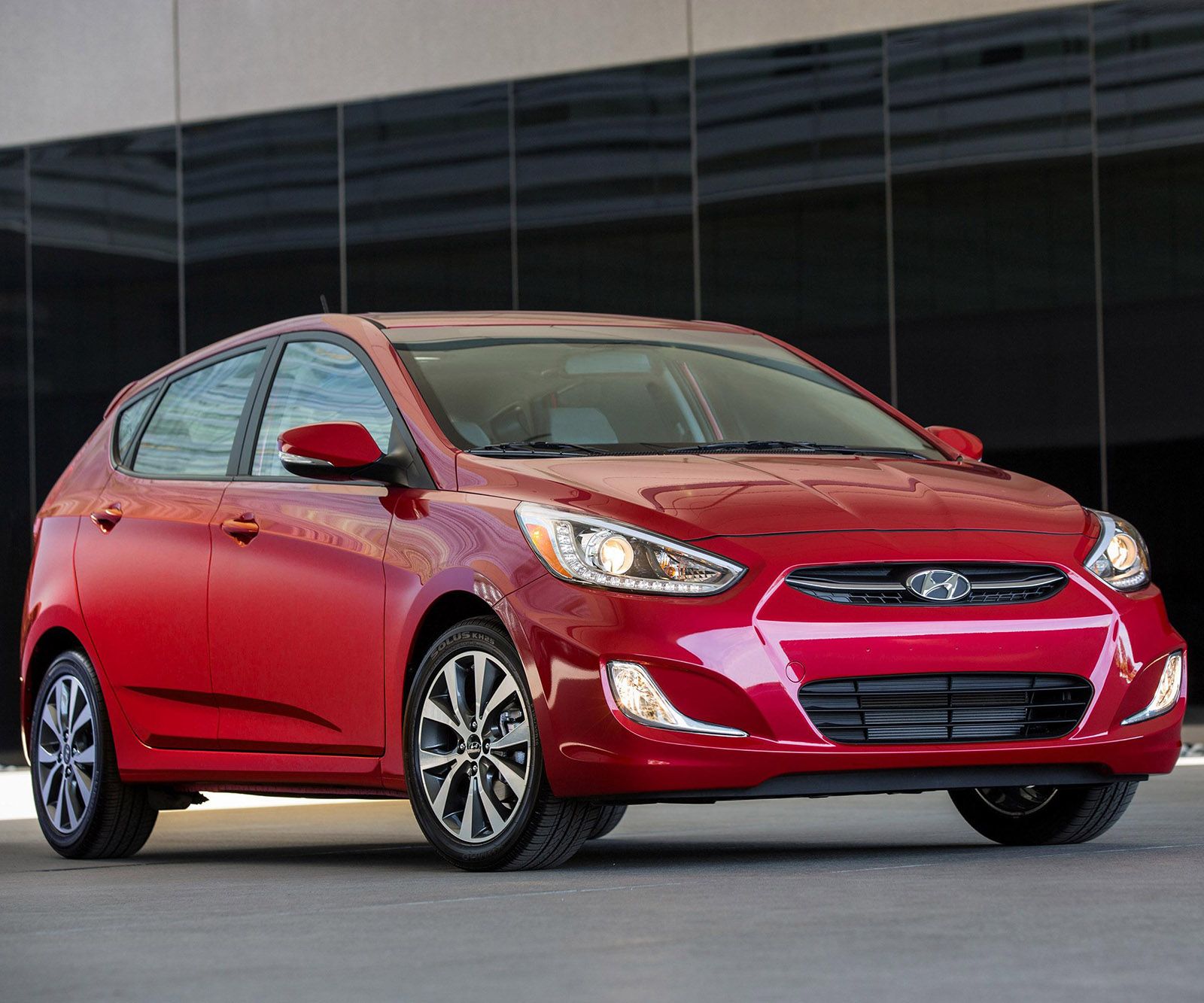
Unless your budget has you tied to the base model or you really want a manual transmission, we suggest skipping the Accent SE and stepping up to the SEL or Limited. Mid-trim SEL models gain important features like an upgraded 7-inch infotainment system with CarPlay/Android Auto and voice recognition, rear disc brakes, automatic headlights, alloy wheels, heated side mirrors, and a steering wheel that tilts and telescopes. The top-line Accent Limited adds a sunroof, LED daytime running lights and taillights, automatic climate control, heated front seats, proximity key with push-button start, and leather-wrapped steering wheel and shift knob. If you want the forward-collision warning system with automatic braking, the Limited trim is the only way to get it. The Limited model is also the only trim to offer the Blue Link smartphone-enabled connected-services system (3-year subscription is standard).
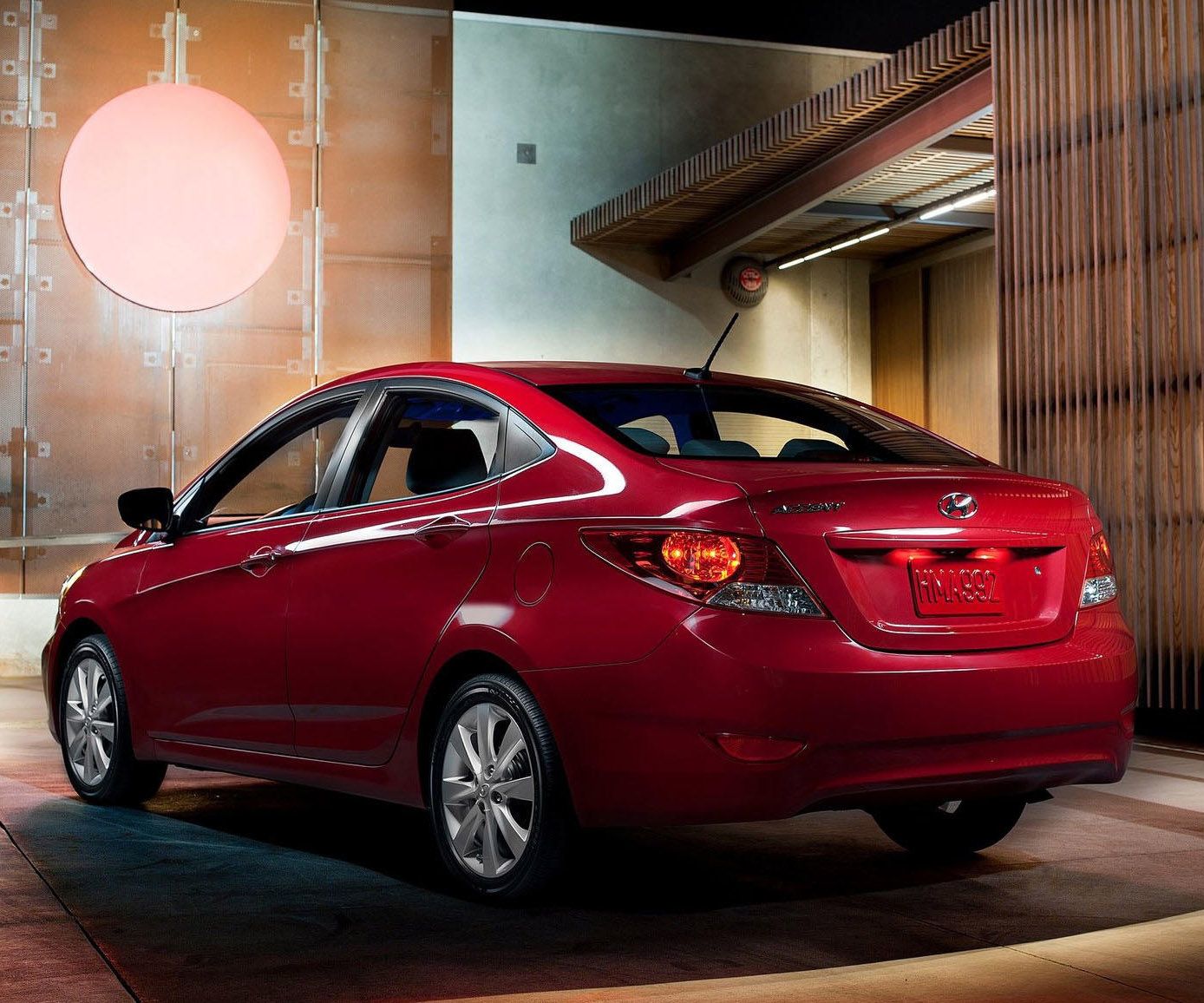
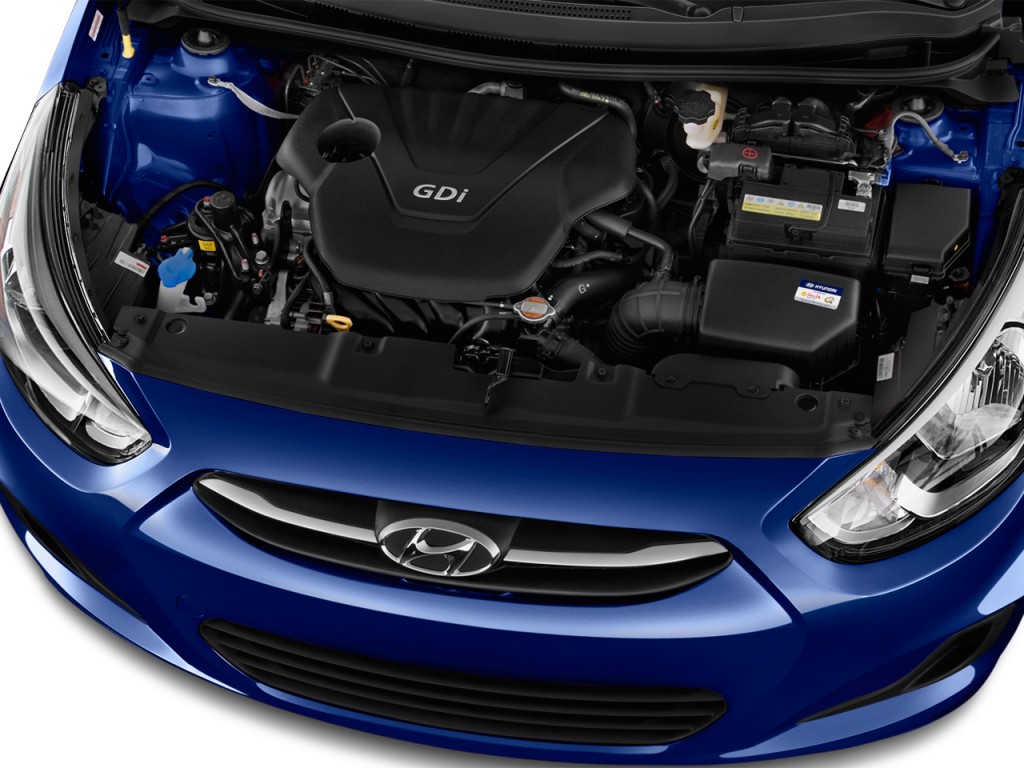
All 2018 Hyundai Accents use a 1.6-liter 4-cylinder engine. For this latest generation, it makes slightly less power than that of the outgoing model, but conversely is slightly more efficient. Base SE models use a 6-speed manual transmission. Most buyers, however, will opt for the 6-speed automatic that is optional on SE trims and standard on the SEL and Limited.1.6-liter inline-4 130 horsepower @ 6,300 rpm 119 lb-ft of torque @ 4,850 rpm EPA city/highway fuel economy: 28/37 mpg (manual), 28/38 mpg (automatic)
With a Manufacturer’s Suggested Retail Price (MSRP) starting at $ 15,880 including destination, the 2018 Accent is Hyundai’s least expensive vehicle. In reality, expect to pay at least $ 1,000 more, as you’ll probably want an automatic transmission. Most buyers will want to step up to the SEL or Limited model, with prices of $ 18,180 and $ 19,780, respectively. In an age where the average new car retails for well over $ 30,000, the Accent’s price remains on the very desirable end of the spectrum. Even among rivals, the Accent is still quite a value. Rivals like the Toyota Yaris and Chevy Sonic begin near the same price, while the Honda Fit hatchback has a higher starting price. The Accent’s cousin, the Kia Rio, starts a little lower but is less well-equipped in base trim. The same holds for the Nissan Versa sedan, which still claims the spot of the least expensive new car. Before buying, be sure to check the Fair Purchase Price to see what others in your area are paying. The Hyundai Accent’s resale value has traditionally trailed leaders like the Honda Fit and Toyota Yaris iA.
2018 Hyundai Accent Sedan GLS Exterior Colors
2018 Hyundai Accent Sedan GLS Interior Colors
2018 Hyundai Accent Engines
| Engine | Standard in Trim | Power | Torque | Fuel Consumption - City | Fuel Consumption - Highway | 0-100 km/h | Quarter Mile | Half Mile |
|---|---|---|---|---|---|---|---|---|
| 1.6L L4 DOHC 16-valve | Ultimate | 130 hp @ 6300 rpm | 149 N.m | 8.2 L/100km | 6.3 L/100km | 9.7 s | 17.1 s | 28.3 s |
| 1.6L L4 DOHC 16-valve | GLS | 137 hp @ 6300 rpm | 149 N.m | 8.2 L/100km | 6.3 L/100km | 8.8 s | 16.4 s | 27.1 s |
| 1.6L L4 DOHC 16-valve | GLS | 137 hp @ 6300 rpm | 149 N.m | 8.9 L/100km | 6.6 L/100km | 9.3 s | 16.8 s | 27.8 s |
| 1.6L L4 DOHC 16-valve | L | 137 hp @ 6300 rpm | 149 N.m | 8.8 L/100km | 6.5 L/100km | 8.8 s | 16.4 s | 27.1 s |
| 1.6L L4 DOHC 16-valve | SE | 137 hp @ 6300 rpm | 149 N.m | 8.9 L/100km | 6.6 L/100km | 9.0 s | 16.5 s | 27.4 s |
| 1.6L L4 DOHC 16-valve | GLS | 137 hp @ 6300 rpm | 149 N.m | 8.9 L/100km | 6.6 L/100km | 8.8 s | 16.4 s | 27.1 s |
| 1.6L L4 DOHC 16-valve | L | 137 hp @ 6300 rpm | 149 N.m | 8.8 L/100km | 6.5 L/100km | 8.8 s | 16.3 s | 27.1 s |
| 1.6L L4 DOHC 16-valve | GLS | 137 hp @ 6300 rpm | 149 N.m | 8.9 L/100km | 6.6 L/100km | 8.9 s | 16.5 s | 27.3 s |
2018 Hyundai Accent Trims
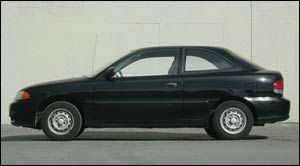
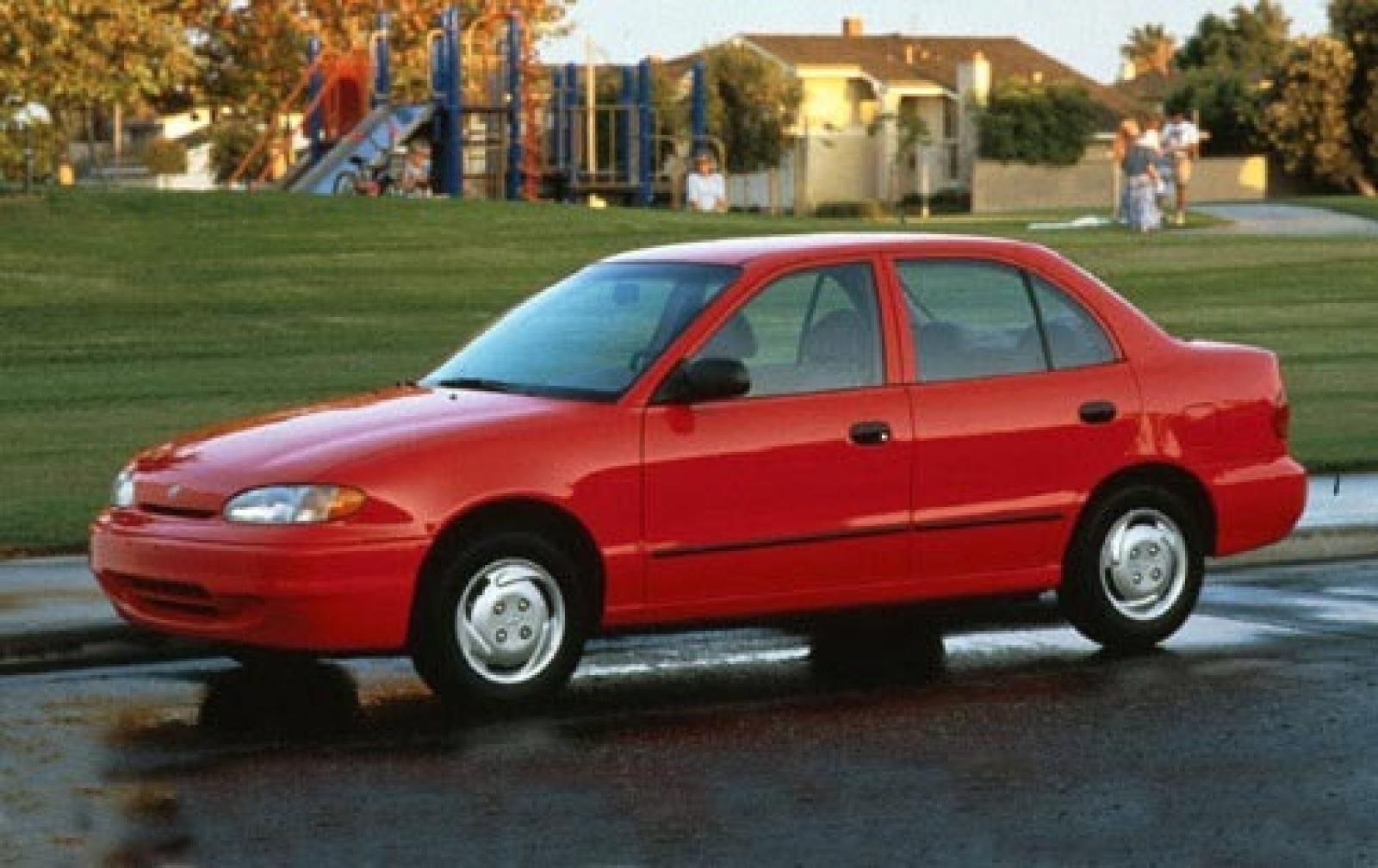
2018 Hyundai Accent Previous Generations
2018 Hyundai Accent Future Generations

Hyundai Accent Overview and History
Founded by Chung Ju Yung, born into a poor family of farmers, the Hyundai Motor Company became the first Korean car producer. The grounds for founding a car company could not have been more welcoming since post-war years in Korea brought forth a series of odd politics one of which stated that automobile imports were better than having a Korean car brand.
Yung was quick to fill the void, having raised enough capital for the investment from his very profitable construction business, opened in 1947. One year after its birth, the Hyundai Motor Company signed a technology-share agreement with Ford in 1968. Soon after Hyundai's access to Ford's resources, the first Hyundai car was developed: the Cortina. This model was quickly followed by the release of the Pony, Hyundai's first entirely Korean designed and built model. Its blueprints however, were not all-Korean, the company having used Japanese technology from Mitsubishi to develop the car.
Japanese constructors at the time had already developed wide range of models, many of which were exported worldwide, mainly to the US and South America. The Pony model was the first Hyundai to be shipped overseas in 1975.
However, Hyundai would only cross US borders later, in 1986, with the release of the Excel. The subcompact car was an instant hit with its fairly small price tag accounting for most of its popularity. The Excel was such a hit that it sold in over 100,00 units in the first seven months.
This was the last automobile that Hyundai produced before resorting to their own technology in 1988. The Sonata was their first born, a mid-seize car that marked the beginning of a new era. Despite the steps the company had taken into building a strong brand image, the reputation Hyundai had previously collected was lost because of poor quality and reliability complaints.
As soon as the 90's came, Hyundai was short of air on American territory, struggling for one last gasp. Instead of retreating, the company made massive investments in new design and technology. By the time the new millennium came, the company had already reinstated as one quality car manufacturer.
Sales increased once more and with them so did the buyer's confidence in Hyundai. The sudden shift in consumer behavior was made possible by eliminating all worries regarding the vehicle's reliability through the introduction of a 10 year warranty to US sold vehicles only. Since few companies could top that, Hyundai quickly earned a spot in the world's top -10 car manufacturers.
Hyundai is currently operating in 193 countries, selling vehicles through approximately 5,000 showrooms and dealerships. Sales have also aided image growth, the brand having entered the first 100 most valuable brands of the world. Its recent history is strongly connected to investments in technology and ample advertising campaigns. Indeed, communication is one of Hyundai's inherent elements, best described by their logo: the stylized H is in fact a representation of two men (brand-buyer) shaking hands.
2018 Hyundai Accent Consumer Reviews
Compare Against Competitors
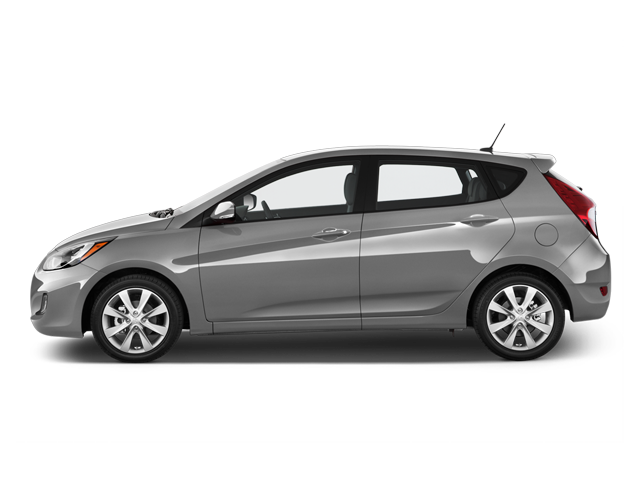
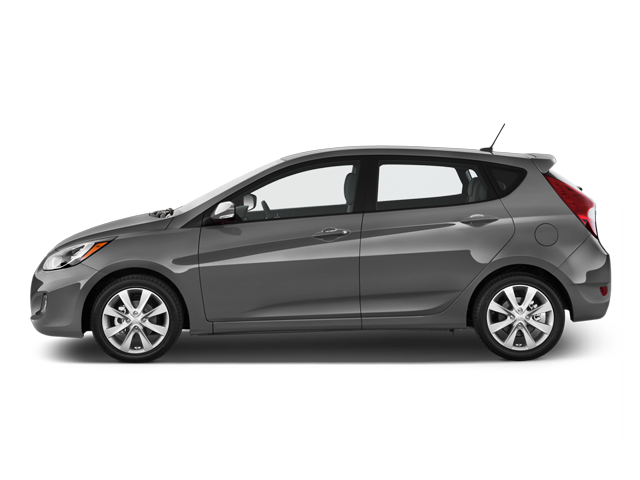
2018 Hyundai Accent Sedan GLS Specifications
GLS Comfort and Convenience
| AM/FM stereo radio | Yes |
|---|---|
| Air Conditionning | Automatic climate control |
| Antenna | Roof-mounted micro antenna |
| Audio Interface | Android Auto and Apple CarPlay |
| Audio Monitor | 7-inch colour touchscreen |
| Auxiliary input jack | Yes |
| Bluetooth Wireless Technology | Bluetooth hands-free phone system with voice recognition |
| Cruise Control | Yes |
| Driver Vanity Mirror | Driver's side sun visor with extension |
| Engine Block Heater (Option) | Block heater |
| Front Wipers | Variable intermittent windshield wipers |
| Fuel Door Operation | Remote fuel door release |
| Heated Steering Wheel | Heated steering wheel |
| Intelligent Key System | Proximity keyless entry system |
| Interior Air Filter | Cabin air filter |
| MP3 Capability | Yes |
| Number of Speakers | 6 speakers |
| Passenger Vanity Mirror | Passenger's side sun visors with extension |
| Power Door Locks | Yes |
| Power Outlet | 12-volt power outlet |
| Power Windows | Power windows with driver's auto-down |
| Reading Light | Front reading lights |
| Rear View Mirror | Day/night rear view mirror |
| Remote Audio Controls | Audio and Bluetooth controls on steering wheel |
| Remote Keyless Entry | Remote keyless entry system with panic alert |
| Remote Starter | Remote engine starter |
| Single CD | CD player |
| Sirius XM satellite radio | Yes |
| Steering Wheel Adjustment | Tilt/ telescopic steering wheel |
| Trunk/Hatch Operation | Remote trunk lid release |
| Trunk Cargo Power Trunk Tailgate | Smart trunk |
| USB Connector | USB connector, USB charging outlet (for rear seats) |
| USB i Pod Connector | IPod connector |
GLS Dimensions
| Cargo Capacity | 387 L |
|---|---|
| Curb Weight | 1215 kg |
| Front Headroom | 989 mm |
| Front Legroom | 1070 mm |
| Fuel Tank Capacity | 45 L |
| Gross Vehicle Weight | 1650 kg |
| Ground Clearance | 140 mm |
| Height | 1450 mm |
| Length | 4385 mm |
| Rear Headroom | 948 mm |
| Rear Legroom | 850 mm |
| Wheelbase | 2580 mm |
| Width | 1729 mm |
GLS Exterior Details
| Automatic Headlights | Yes |
|---|---|
| Bumper Colour | Body-colour bumpers |
| Door Handles | Chrome door handles |
| Driving Lights | Yes |
| Exhaust | Single exhaust |
| Exterior Mirror Colour | Body-colour exterior mirrors |
| Exterior Mirrors Turn Signals | Exterior mirrors with integrated turn signal indicators |
| Front Fog Lights | Fog lights |
| Grille | Chrome grille accents |
| Headlight Type | Projection headlights with LED accents |
| Headlights Leveling Headlights | Headlights with escort function |
| Heated Exterior Mirrors | Heated outside mirrors |
| Power Exterior Mirrors | Power-adjustable outside mirrors |
| Rear Window Defroster | Rear window defroster with timer |
| Side-Body Trim | Chrome window belt moulding |
| Sunroof | Power glass sunroof, tilt and slide, safety one-touch |
| Tinted Glass | Yes |
GLS Interior Details
| Clock | Digital clock |
|---|---|
| ECO Shift Indicator | Ecoshift indicator |
| Floor Console | Front center console |
| Floor Covering | Needle punch carpeting |
| Floor Mats | Yes |
| Folding Rear Seats | 60/40-split folding rear bench seat |
| Front Seats Active Headrests | Front active headrests |
| Front Seats Driver Height | Driver's seat height adjuster (pump device) |
| Front Seats Driver Power Seats | 6-way manual driver's seat |
| Front Seats Front Seat Back Storage | Front seatback map pockets |
| Front Seats Front Seat Type | Bucket front seats |
| Front Seats Heated | Heated front seats |
| Front Seats Passenger Power Seats | 4-way manual passenger's seat |
| Headliner | Cloth headliner |
| Inner Door Handle Trim | Metal paint door handles |
| Instrumentation Type | Digital instrumentation |
| Number of Cup Holders | 2 cup holders |
| Oil Pressure Gauge | Oil pressure display |
| Rear Seat Headrest | Manual adjustable rear headrests |
| Rear Seat Type | Rear bench seat |
| Seat Trim | Premium cloth seating surfaces |
| Shifter Knob Trim | Leather-wrapped shift knob |
| Steering Wheel Trim | Leather-wrapped steering wheel |
| Tachometer | Yes |
| Trip Computer | Yes |
| Water Temperature Gauge | Coolant temperature gauge |
GLS Mechanical
| Drive Train | Front-wheel drive |
|---|---|
| Engine Name | 1.6L L4 DOHC 16-valve |
| Stability Control | Yes |
| Start button | Yes |
| Traction Control | Yes |
| Transmission | 6-speed automatic transmission |
GLS Overview
| Body | Sedan |
|---|---|
| Doors | 4 |
| Engine | 1.6L L4 DOHC 16-valve |
| Fuel Consumption | 8.9 (Automatic City)6.6 (Automatic Highway) |
| Power | 137 hp @ 6300 rpm |
| Seats | 5 |
| Transmission | 6-speed automatic transmission |
| Warranties | Bumper-to-Bumper100000/km, 60/Months Emissions100000/km, 60/Months Powertrain100000/km, 60/Months Roadside AssistanceUnlimited/km, 36/Months Rust-throughUnlimited/km, 60/Months |
GLS Safety
| Anti-Lock Brakes | Anti-lock braking system |
|---|---|
| Brake Assist | Brake assist |
| Brake Type | 4-wheel disc |
| Child Seat Anchor | LATCH child seat anchors |
| Child-proof Locks | Rear-door child safety locks |
| Driver Airbag | Driver-side front airbag |
| Electronic brake force distribution | Electronic brake force distribution |
| Forward collision warning | Yes |
| Front Seat Belts | pre-tensioner |
| Parking Brake | Electric |
| Passenger Airbag | Passenger-side front airbag |
| Rear Seat Belts | Center 3-point |
| Rear View Camera | Rearview camera |
| Roof Side Curtain | Side air curtain airbags |
| Side Airbag | Seat-mounted side-impact airbags |
GLS Suspension and Steering
| Front Anti-Roll Bar | Front stabilizer bar |
|---|---|
| Front Suspension | Independent front suspension |
| Front Tires | P205/45R17 |
| Power Steering | Power rack-and-pinion steering |
| Rear Suspension | Solid axle rear suspension |
| Spare Tire | Compact spare tire |
| Turning Circle | 10.2-meter turning circle diameter |
| Wheel Type | 17-inch aluminium alloy wheels |
Critics Reviews
The 2017 Hyundai Accent is the smallest and most affordable vehicle in the automaker’s lineup and comes with a host of standard features and equipment.
The 2017 Hyundai Accent has a bargain pricetag and lots of space, but its safety scores aren't competitive. Find out why the 2017 Hyundai Accent is rated 4.7 by The Car Connection experts.
2017 Hyundai Accent Overview Is the 2017 Hyundai Accent a Good Used Car? A 2017 Accent is a decent used car. Like most subcompact cars, it doesn’t have flashy features or outstanding performance. There's sufficient room for passengers and a good amount of cargo space, whether you go with the sedan or hatchback version.
Discussion and Comments
Share Your Comments