2018 Audi RS 7 Sportback Performance 0-60 Times, Top Speed, Specs, Quarter Mile, and Wallpapers
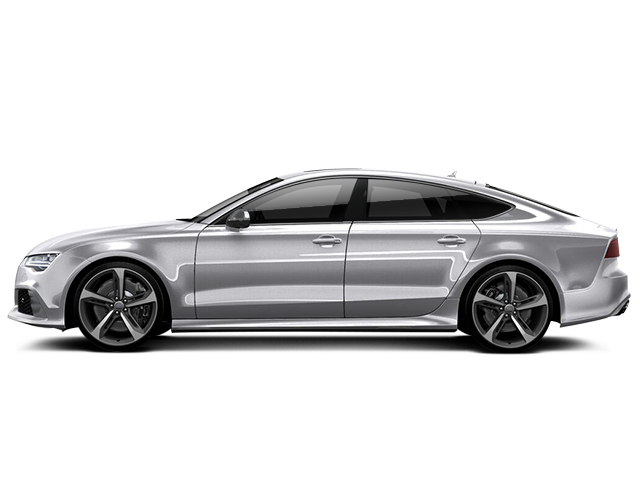
The 2018 Audi RS 7 Sportback Performance is a All-wheel drive Sedan. It can accommodate up to 4 passengers. It has 4 Doors and is powered by a 4.0L V8 Turbocharged DOHC 32-valve engine which outputs 605 hp @ 6100 rpm and is paired with 8-speed automatic transmission with manual mode gearbox. The 2018 Audi RS 7 Sportback Performance has cargo capacity of Liters and the vehicle weighs 2060 kg. In terms of ride assists, the 2018 Audi RS 7 Sportback Performance has stability control and traction control in addition to anti-lock brake system (ABS). The vehicle has an optional engine as well It offers Front and rear parking system and Front and rear view camera. Safety features also include Driver-side front airbag and Passenger-side front airbag. The front suspension is Front independent suspension while the rear suspension is Rear independent suspension. The car also features a Yes It has 21-inch 5-double-arm design wheels with matt titanium finish as standard. Electronic features include Cruise Control. For convenience, the car has Power windows and Power door locks. There is also a remote keyless entry feature. Moreover, the car has. The steering wheel has audio control buttons. In terms of performance, the car has 661 N.m of torque and a top speed of 311 km/h. The 2018 Audi RS 7 Sportback Performance accelerates from zero to 60 mph in 3.9 seconds and hits quarter mile at 10.4 seconds. Fuel consumption is 17 L/100km in the city and 9.6 L/100km in the highway. The car price starts at $ 143,600
| Name | Sportback Performance | |
|---|---|---|
| Price | $ 143,600 | |
| Body | Sedan | |
| Doors | 4 Doors | |
| Engine | 4.0L V8 Turbocharged DOHC 32-valve | |
| Power | 605 hp @ 6100 rpm | |
| Number of Seats | 4 Seats | |
| Transmission | 8-speed automatic transmission with manual mode | |
| Cargo Space | L | |
| Maximum Cargo Space | L | |
| Wheel Type | 21-inch 5-double-arm design wheels with matt titanium finish | |
| Series | RS 7 Sportback (C7) | |
| Drivetrain | All-wheel drive | |
| Horsepower | 605 HP | |
| Torque | 661 N.m | |
| Top Speed | 311 km/h | |
| Acceleration 0-100 km/h (0-60 mph) | 3.9 s | |
| Fuel Type | Petrol (Gasoline) | |
| Fuel Consumption (City) | 17.0 L/100km | |
| Fuel Consumption (Highway) | 9.6 L/100km | |
| Gear Type | auto | |
| Weight | 1,850 KG | |
| Brand | Audi | |
| Model | RS 7 | |
| 0-400m (Quarter Mile) | 10.4 s | |
| 0-400m (Quarter Mile) - Speed | 195.8 km/h | |
| 0-800m (Half Mile) | 19.5 s | |
| 0-800m (Half Mile) - Speed | 220.3 km/h | |
| Modifications (MODS) | ||
| Modifications Cost | $ 0 |
2018 Audi S8 Plus vs. Audi RS7 - Acceleration Sound 0-100, 0-300 km/h | APEX
2018 Audi S8 Plus vs. Audi RS7 - Acceleration Sound 0-100, 0-300 km/h | APEX
13.05.2018 Audi RS7 1/4 mile World Record (full interior) 10.113
2018 Audi RS7 quattro | trackday brutal revs acceleration top speed onboard ride
2018 Audi RS 7 Used Price Estimates
Estimates based on a driving average of 12,000 miles per year| Used Condition | Trade In Price | Private Party Price | Dealer Retail Price |
|---|---|---|---|
| Outstanding | $ 69,822 | $ 73,501 | $ 77,938 |
| Clean | $ 68,315 | $ 71,939 | $ 76,219 |
| Average | $ 65,300 | $ 68,815 | $ 72,781 |
| Rough | $ 62,285 | $ 65,692 | $ 69,343 |
In either version of the 2018 Audi RS 7 (560 or 605 horsepower), drivers will be awed by the acceleration. This Audi plants you in your seat like few other cars, yet the quattro all-wheel-drive system keeps these sprints remarkably composed. Audi says the RS 7 Performance hits 60 mph in only 3.6 seconds, and has a top speed of 190 mph (the standard RS 7 tops out at 174). But there’s more to these Audis than just raw speed. They exude luxury inside, their build quality is stellar, and they have a comfortable ride that can be adjusted via Audi Drive Select, which allows the driver to choose among Dynamic, Comfort and Auto modes, or select an Individual setting that lets the driver tailor steering effort, transmission shift points and throttle response. While the RS 7 is well suited for the high speeds of the German Autobahnen, it feels totally relaxed and refined in the city and on the daily commute, where it pleases drivers with neat technologies such a head-up display, adaptive cruise control, a night-vision camera, corner-view camera, active lane assist, and MMI touch, which lets drivers “write” an entry by moving their fingers across a touchpad. While this the RS 7 doesn’t quite have the agility of, say, a BMW M5 or an E 63 AMG Mercedes, it relishes sweeping mountain roads, where the comfortable seats, beautifully sculpted dash, sumptuous leather and powerful audio system combine to make that ski trip to Colorado feel much shorter than it actually is.
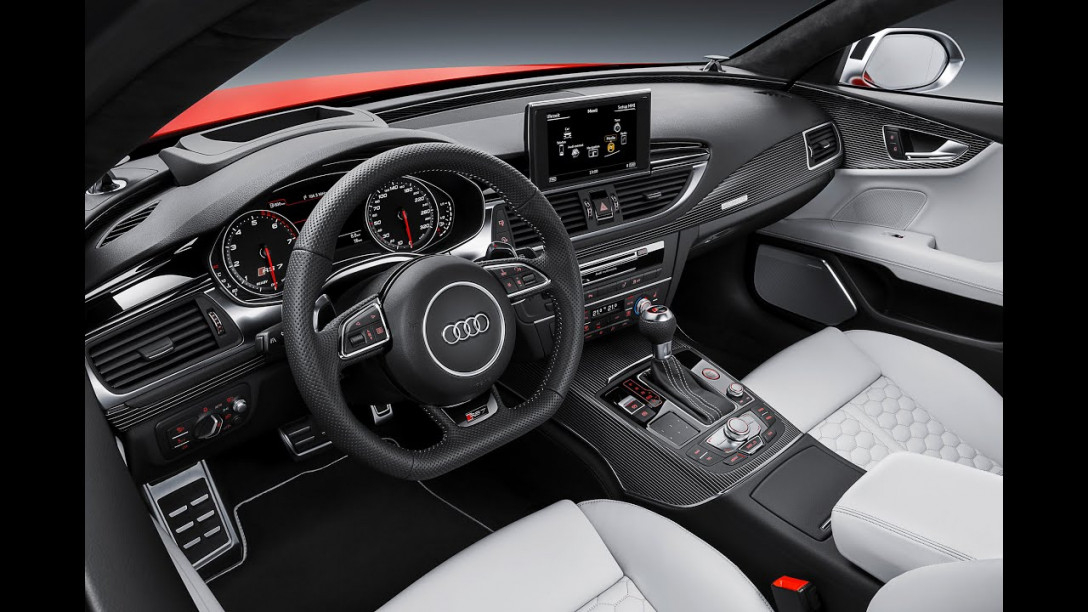
GORGEOUS INTERIOR Audi does interiors right, and the RS 7’s is a prime example. In appearance, function and feel, the RS 7 cabin, with its multifunction flat-bottom steering wheel and slick carbon-fiber trim, has few rivals. We love the knurled dials for the audio and climate controls, and the 8-inch display that rises each time you start the car. QUATTRO SPORT DIFFERENTIAL Standard on the RS 7, the quattro sport rear differential helps the big Audi turn into corners, even when physics tries to make the car continue straight. How so? Unbeknownst to the driver, the sport diff overdrives the outside rear wheel, creating a force that helps rotate the RS 7 into corners, greatly aiding its agility.
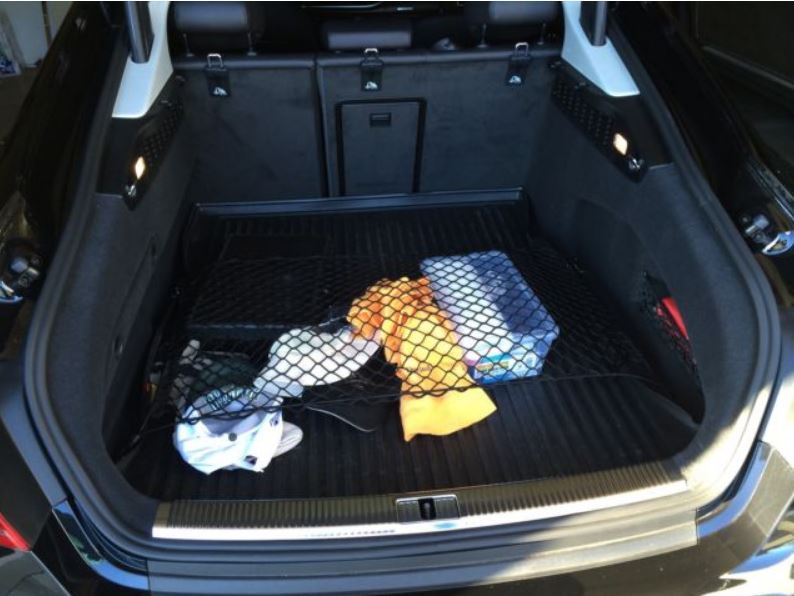
There's much to like inside. The Valcona leather seats are especially handsome, replete with contrast-stitched honeycomb elements and embossed RS 7 logos. Likewise, the 3-spoke flat-bottom steering wheel is exemplary, comfortable in hand and boasting numerous controls yet somehow managing to avoid being too busy. Carbon-fiber inlays on the dash, center console and door panels add high-tech sizzle, while the overall ergonomics are excellent, placing the major controls where expected. As a German sedan, the RS 7 accommodates tall drivers well, but back-seat headroom leaves something to be desired. On a positive note, the rear seat splits and folds to help this Audi better carry large or awkward cargo.
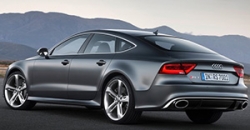
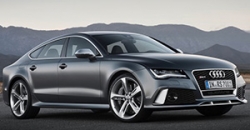
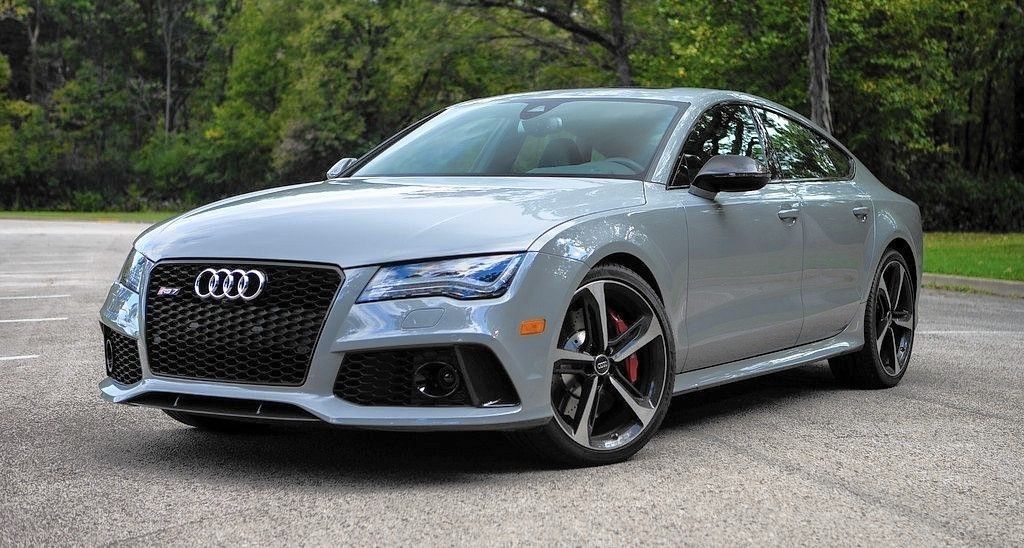
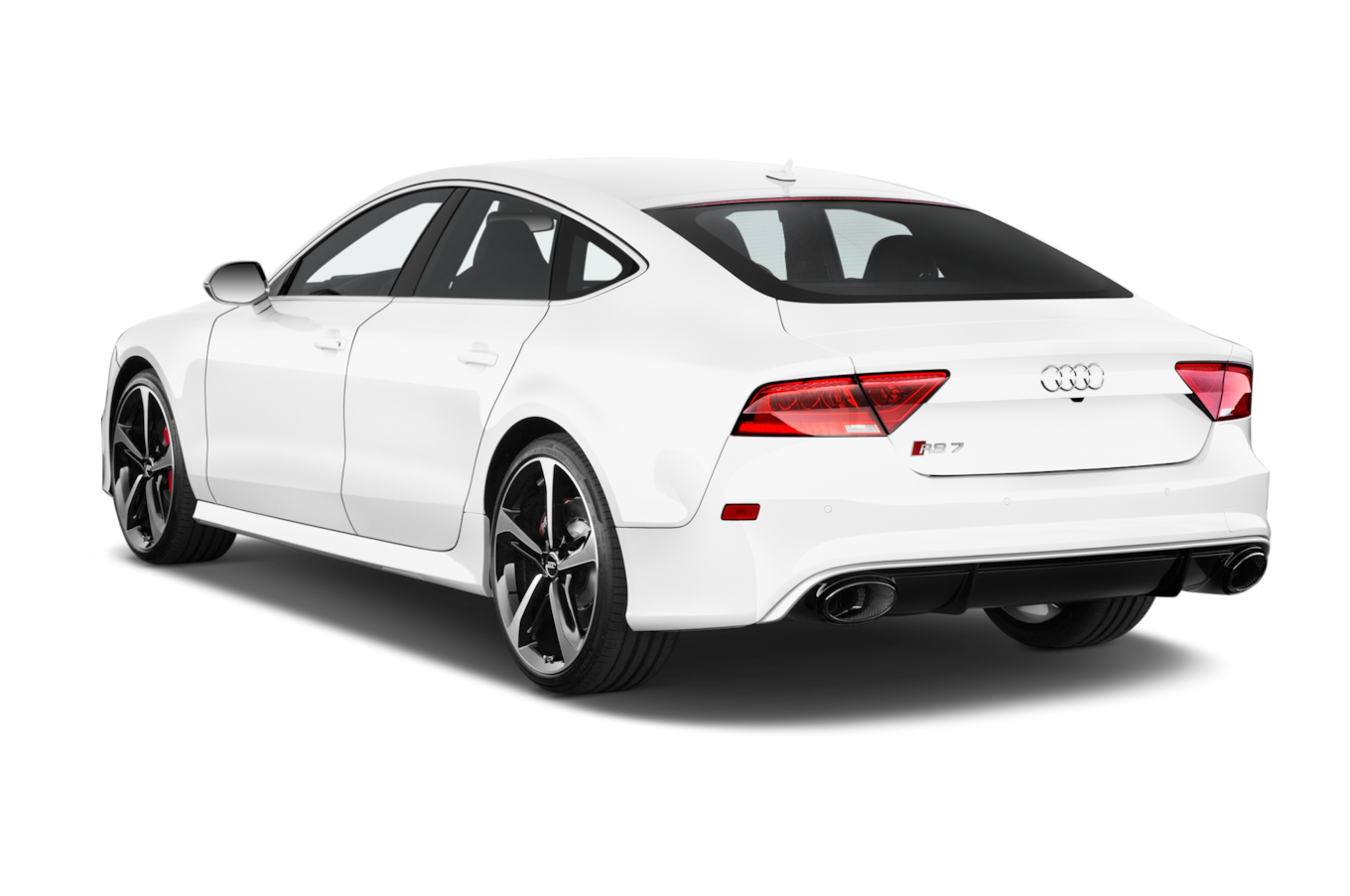
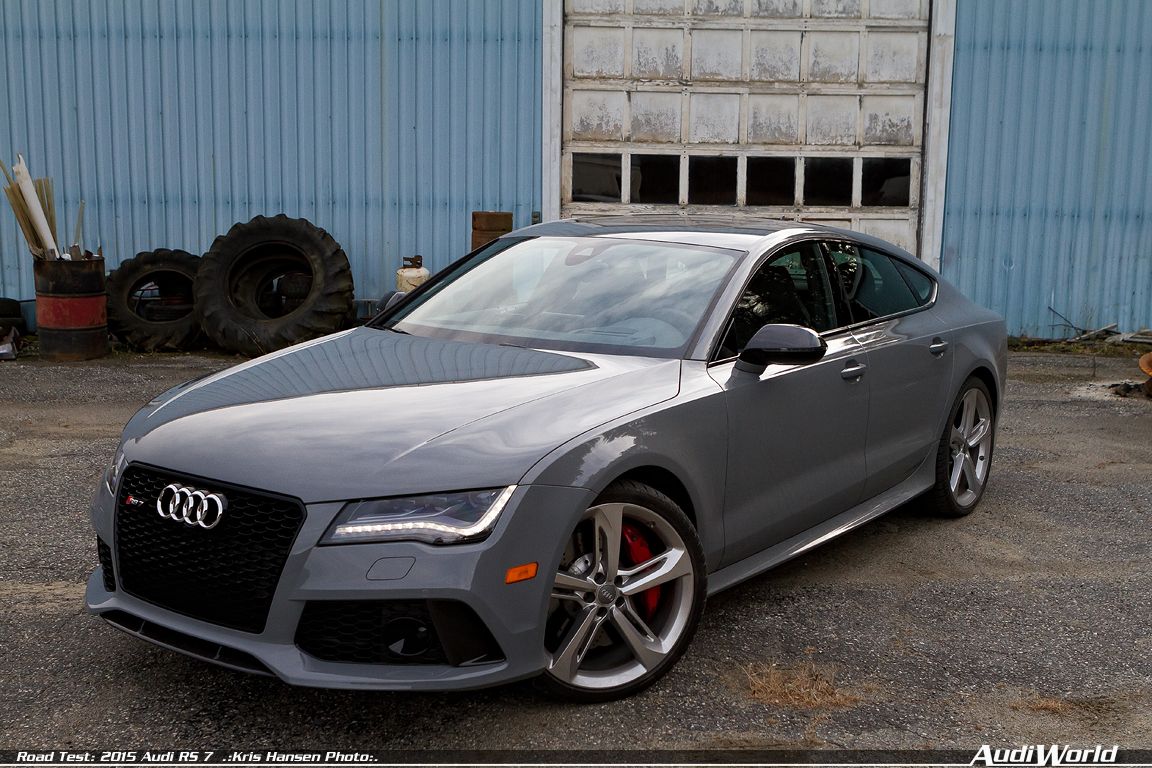
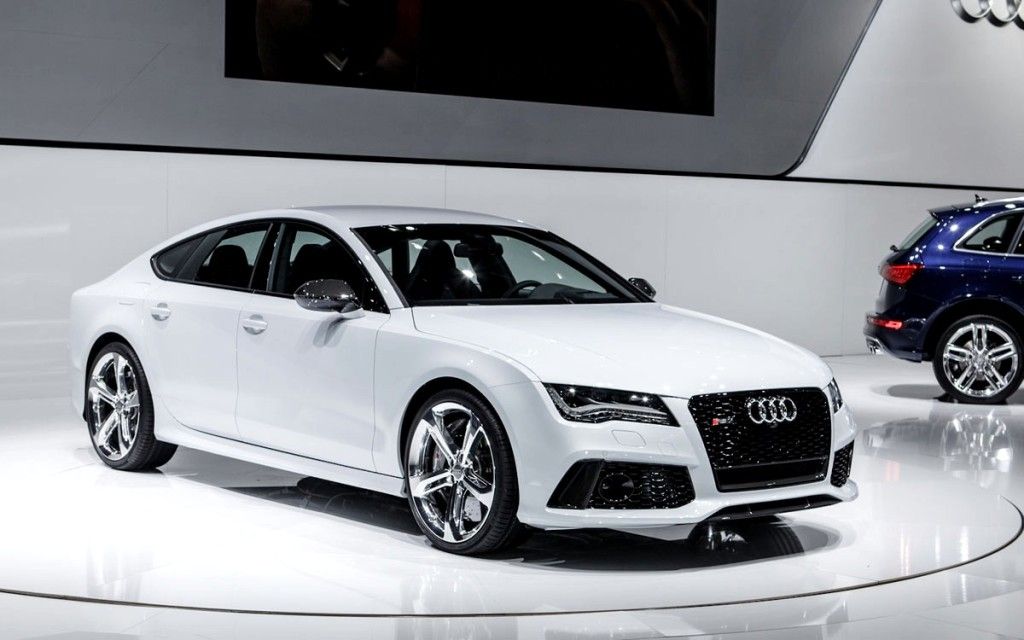
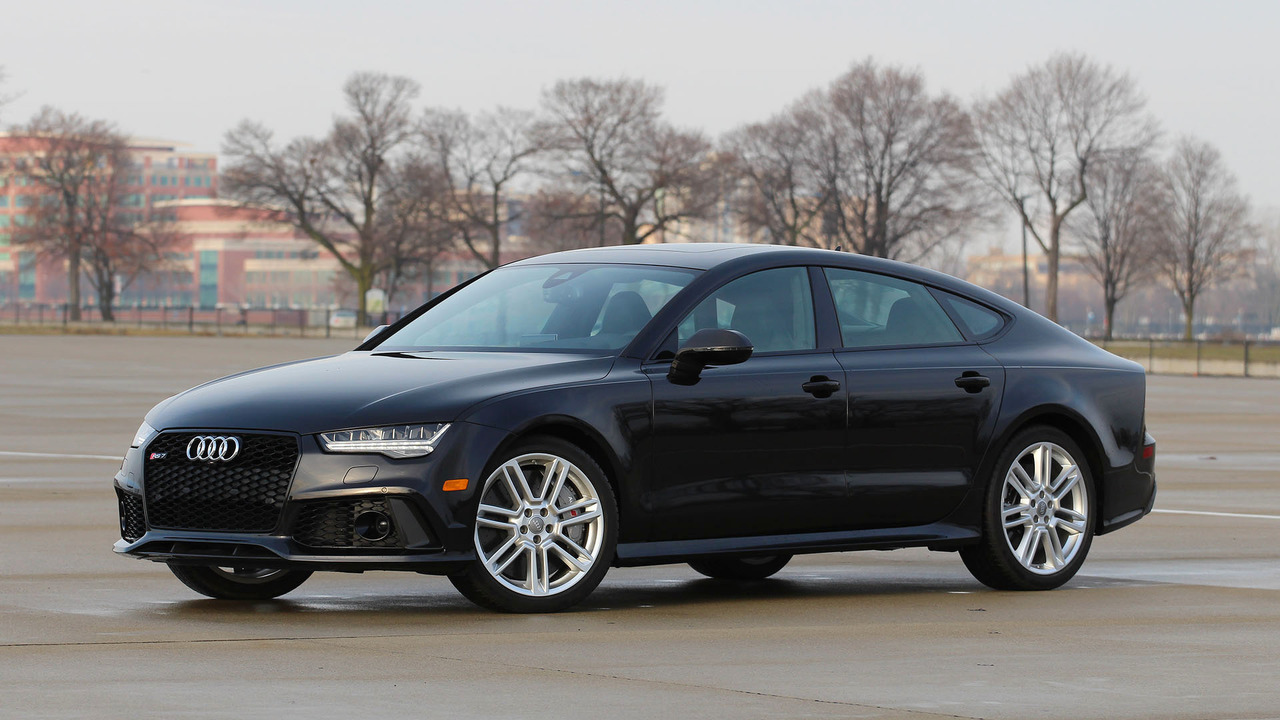
The RS 7 is based on the A7, the hatchback Audi sedan (reviewed here) that has been turning heads since 2012 with its smooth silhouette and sleek fastback roofline. What sets the RS 7 apart? In addition to aluminum-look paint around the grille, there’s a lower front lip spoiler, front-bumper air intakes, and unique side-view mirror housings. And in back, there’s a powered rear spoiler that deploys automatically for increased downforce. Unique 21-inch Audi Sport wheels are available in silver, black and titanium colors. The RS 7 Performance distinguishes itself with a black grille surround and carbon-fiber trim on the front air intakes, side-view mirror housings and rear diffuser.
With a base price of $ 114,875, the 2018 Audi RS 7 is far from sparsely equipped. Apart from that glorious twin-turbo V8, standard equipment includes the quattro sport rear differential, air suspension, navigation, a 14-speaker Bose audio system, a head-up display, SiriusXM satellite radio, and a 7-inch driver information system. Also included: 12-way Valcona leather seats, split-folding rear seats (with pass-through), a tilt/telescoping steering wheel, and LED headlights and taillights. The RS 7 Performance model goes a step further, adding the mighty 605-horsepower engine, electronically adjustable suspension, and track-ready ceramic brakes.
If you want adaptive cruise control (with stop and go functionality) and active lane assist, it’s available as part of the $ 2,000 Driver Assistance Package. Other notable options include a night-vision camera ($ 2,500), a Carbon-Optic package ($ 4,500), massaging front seats ($ 1,950) and a Bang & Olufsen sound system ($ 4,900). The Performance model has basically the same options with one exception: a lightweight Audi Sport titanium exhaust that adds 10 horsepower. A point to consider: While the exhaust saves 18 pounds, its $ 9,350 option price equates to a payout of nearly $ 520 per pound saved.
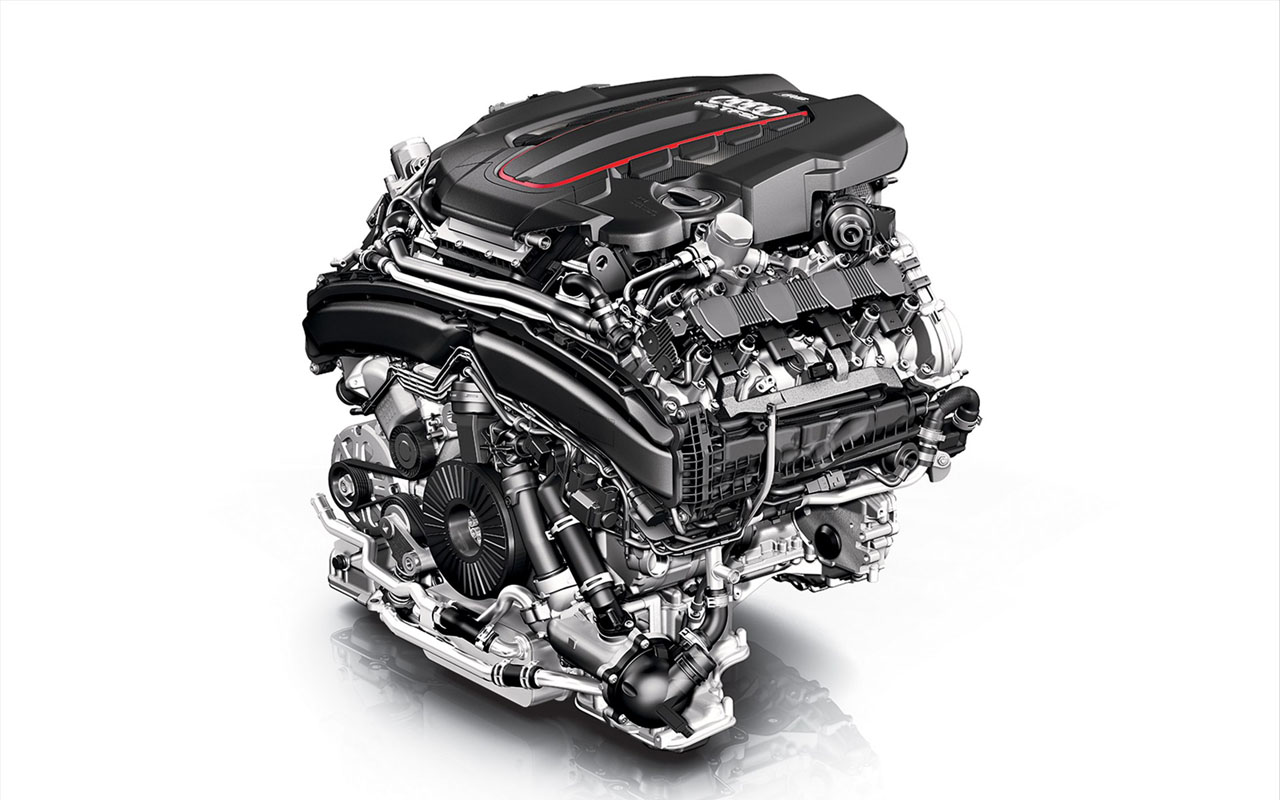
The RS 7’s twin-turbo 4.0-liter V8 produces 560 horsepower at 5,700 rpm and a sweet 516 lb-ft plateau of torque from 1,750 rpm to 5,500. The RS 7 Performance ramps that up to 605 hp at 6,100 rpm and 553 lb-ft. of torque from 2,500 rpm to 5,500, thanks to revised turbochargers, camshafts and intercoolers. Both engines mate to an 8-speed Tiptronic automatic transmission and quattro AWD. 4.0-liter twin-turbo V8 (RS 7) 560 horsepower @ 5,700-6,600 rpm 516 lb-ft of torque @ 1,750-5,500 rpm EPA city/highway fuel economy: 14/24 mpg 4.0-liter twin-turbo V8 (RS 7 Performance) 605 horsepower @ 6,100-6,800 rpm 553 lb-ft of torque @ 2,500-5,500 rpm EPA city/highway fuel economy: 14/24 mpg
The Manufacturers Suggested Retail Price (MSRP) for the 2018 Audi RS 7 is $ 114,875. The RS 7 Performance is listed at $ 131,675. With just about every option, the standard RS 7 (if there is such a thing) will set you back about $ 133,000. The 2018 Audi RS 7 Performance model can pass $ 150,000 with options, including the expensive titanium exhaust. For the record, a Porsche Panamera Turbo, a newer design, starts at about $ 151,000 and can reach $ 180,000. As always, check the Fair Purchase Price to see what others are paying for this Audi.
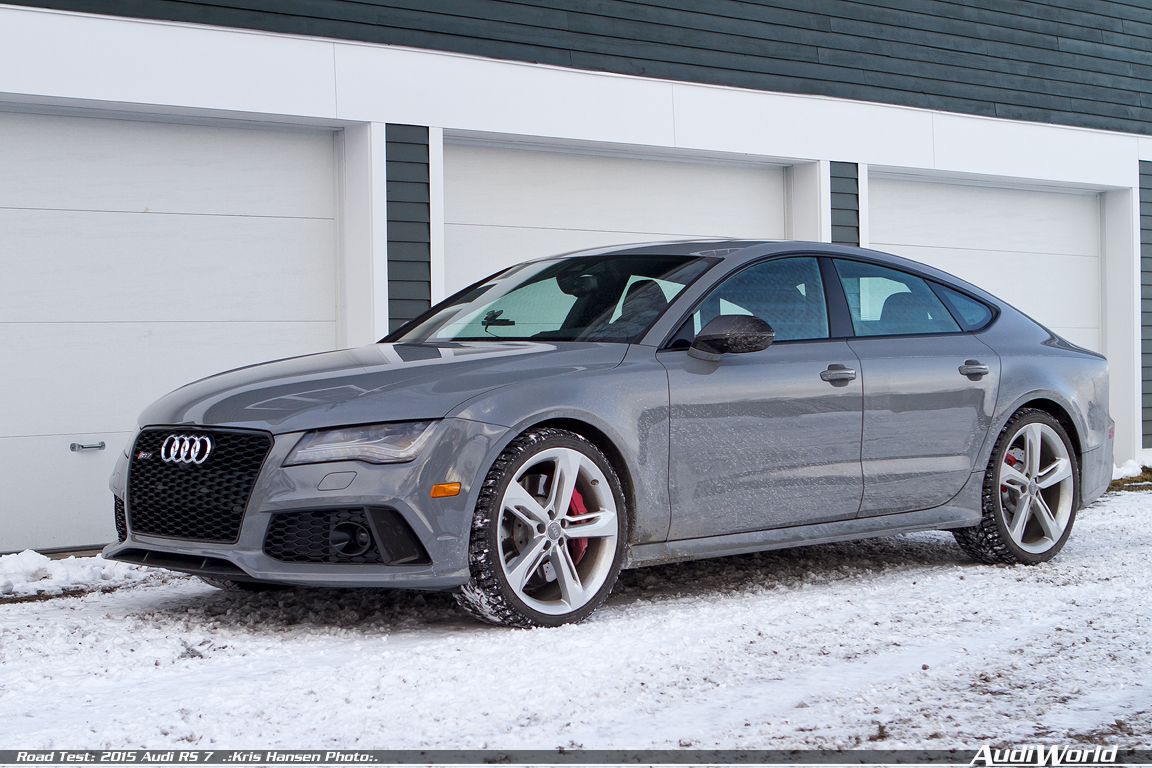

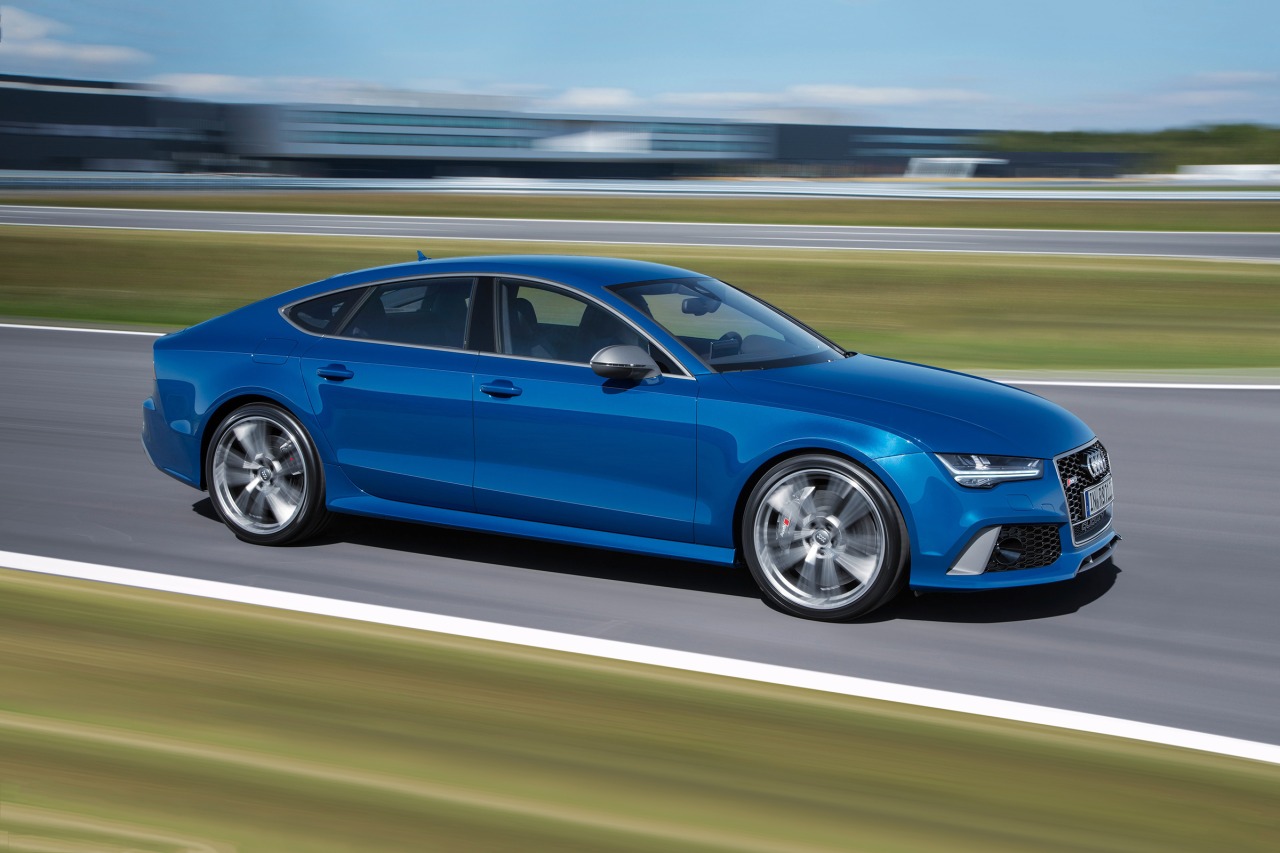
2018 Audi RS 7 Sportback Performance Exterior Colors
2018 Audi RS 7 Sportback Performance Interior Colors
2018 Audi RS 7 Engines
| Engine | Standard in Trim | Power | Torque | Fuel Consumption - City | Fuel Consumption - Highway | 0-100 km/h | Quarter Mile | Half Mile |
|---|---|---|---|---|---|---|---|---|
| 4.0L V8 Turbocharged DOHC 32-valve | Sportback | 560 hp @ 5700 rpm | 661 N.m | 17.0 L/100km | 9.6 L/100km | 4.1 s | 10.7 s | 20.0 s |
| 4.0L V8 Turbocharged DOHC 32-valve | Sportback Performance | 605 hp @ 6100 rpm | 661 N.m | 17.0 L/100km | 9.6 L/100km | 3.9 s | 10.4 s | 19.5 s |
| 4.0L V8 Turbocharged DOHC 32-valve | 4.0 quattro | 560 hp @ 5700 rpm | 661 N.m | 16.2 L/100km | 9.3 L/100km | 4.1 s | 10.7 s | 20.0 s |
| 4.0L V8 Turbocharged DOHC 32-valve | Sportback Performance | 605 hp @ 6100 rpm | 661 N.m | 16.2 L/100km | 9.3 L/100km | 4.2 s | 10.8 s | 20.2 s |
| 4.0L V8 Turbocharged DOHC 32-valve | 4.0 quattro | 560 hp @ 5700 rpm | 661 N.m | 16.2 L/100km | 9.3 L/100km | 4.4 s | 11.0 s | 20.6 s |
| 4.0L V8 Turbocharged DOHC 32-valve | Sportback Performance | 605 hp @ 6100 rpm | 661 N.m | 16.2 L/100km | 9.3 L/100km | 4.2 s | 10.8 s | 20.1 s |
| 4.0L V8 Turbocharged DOHC 32-valve | 4.0 quattro | 560 hp @ 5700 rpm | 661 N.m | 16.3 L/100km | 9.1 L/100km | 4.4 s | 11.0 s | 20.6 s |
2018 Audi RS 7 Trims
2018 Audi RS 7 Previous Generations
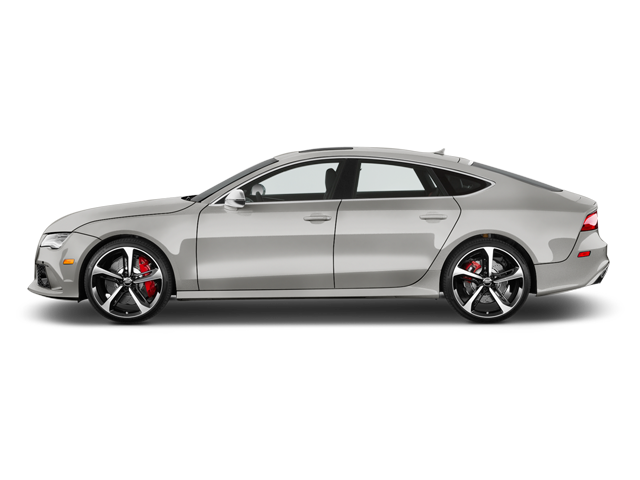
2018 Audi RS 7 Future Generations

Audi RS 7 Overview and History
Automobiles undoubtedly fall into the latter category, and what better way of striking at least one of the remaining three senses if not building an image of a mighty engine roar or purr of a loyal cylinder sextet cradled under the bonnet of an Audi car? Audi translates as 'listen' from latin and besides expressing an unanimously accepted passion of the motorist, that of listening to the engine as if it were a never before heard dissertation on mechanics blended with boisterous 'deux ex machina' comments and demonstrations, it also marks the birth of Audi following Horch's demise, the previous name of the company that can be traced back to 1899.
Its founder, August Horch was forced out of his own company in 1909 due to trademark infringements, 8 years after the first automobile had rolled out the gates of the plant in Zwickau, Germany. After having been dispensed of, Horch started his own company under the same name which led to a fair share of trouble that came to an end as soon as Horch called for a meeting at the apartment of Franz Fikentscher to discuss the matter and come up with a new name for the company. Franz's son who was studying latin at the time was the true deliverer of the name that would later became synonymous with luxury and quality. As 'Horch' means listen in Old German, the boy simply made a switched the name with its latin corespondent, 'audi', sparking enthusiasm into the 'audience' that quickly adopted the name.
Audi's start o the German market was high lighted by the appearance of 2.6 liter engine powered vehicles followed by a series of more powerful ones, such as 4.7 L and the gas-gulping 5.7 L. Having gotten to see his company grow wings, Horch left in in 1920, four years before Audi's first 6 cylinder model was built. In 19128, Audi was acquired By Jorgen Rasmussen, owner of rival company DKW.
A few years later, a merger between Audi, DKW, Horch and Wanderer occurred and thus, the Auto Union was formed in 1932. Those times called for a new badge and the four interlocked rings were born as a sign of unity and identity of the newly formed auto-conglomerate. Technological improvement became a top priority that first took shape during the Second World War when an armored car was produced for the German Army.
However, all the progress would soon be severely slowed down and even halted at times due to heavy bombings. Moreover, as as soon as the conflict had come to an end, Zwickau had been caught in the soviet occupation zone that would become The German Democratic Republic in 1949. Not only that the company's activity was in jeopardy but the Auto Union had also broken up and the Union had to be restarted n new grounds, in Ingolstadt, Bavaria.
Though sluggish at first, the newly Ingolstadt based factory would attract many of the former workers and the construction of two-stroke engines would be resumed in a way similar to that of Zwickau. By 1958, Daimler-Benz had already acquired a whopping 87% of the Auto Union but its investment quickly became property of Volkswagen, the company having bought the factory and and the brands in 1964.
Soon after the change of ownership, two-stroke engines would be eliminated in favor of the more popular and more customer appealing four-stroke ones. DKW, the leading brand of the Union at the time failed as a brand despite of the changes it had made and Volkswagen decided to resurrect Audi. The former DKW built model was rebranded as an Audi one and was the springboard for the make of later models such as the 60, 75 and 80.
After a second merger with the Stuttgart based car-producer NSU by 1970, Audi established itself as a reliable growing brand that would later break the German boundaries and expand to new markets, including the North American one where it encountered difficulties following the release of a biased report that portrayed the car as suffering form 'unintended acceleration'. This was caused by the close placement of the brake and acceleration pedals, right next to each other. Shortly after the report was released , an abrupt decline in sales was registered that was countered only years later with the 1996 release of the A4 model.
Joining a row of successful car-producers, Audi has also garnered acclaim on the racing track with several World Record holdings, including one for Top Speed Endurance. Audi is currently enjoying a privileged position and large market share and is predicted to reach the production threshold of 1 million units by the end of this year.
2018 Audi RS 7 Consumer Reviews
Compare Against Competitors
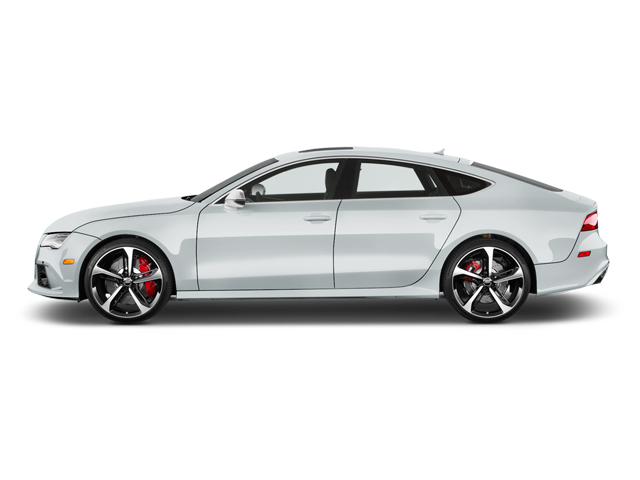
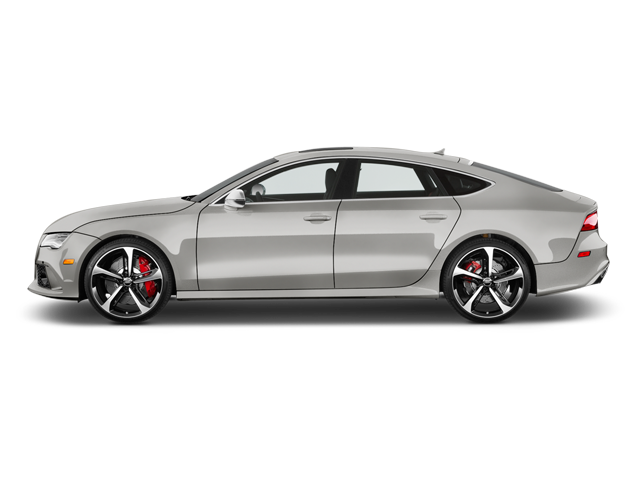
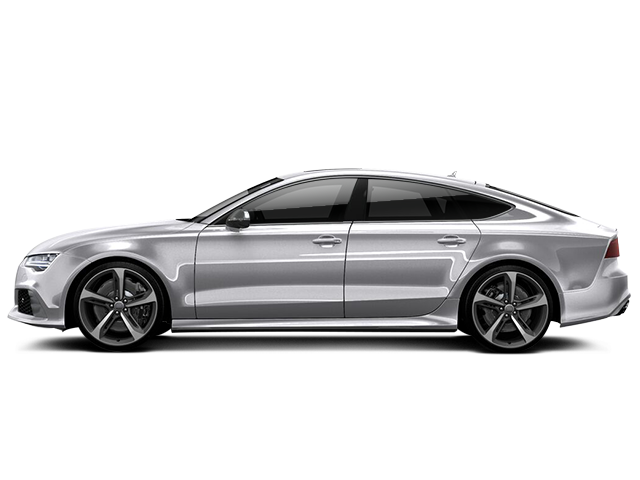
2018 Audi RS 7 Sportback Performance Specifications
Sportback Performance Comfort and Convenience
| AM/FM stereo radio | Yes |
|---|---|
| Air Conditionning | 4-zone auto climate control |
| Ambient Lighting | Ambient lightning |
| Audio Display Audio | Audi MMI touch with hand-writing recognition |
| Audio Interface | Audi smartphone interface |
| Audio Monitor | 8.0-inch colour display screen |
| Audio Volume | Speed-sensitive volume control |
| Bluetooth Wireless Technology | Yes |
| Cargo Mat | Luggage compartment mat |
| Cargo Organizer | Storage package |
| Cruise Control | Yes |
| Cruise Control (Option) | Adaptive cruise control with stop and go function |
| Front Wipers | Rain sensor wipers |
| Garage Door Opener | Homelink universal garage-door opener |
| Heated Steering Wheel | Heated steering wheel |
| Intelligent Key System | Advanced key system |
| MP3 Capability | Yes |
| Navigation System | Audi MMI navigation plus |
| Number of Speakers | 14 speakers |
| Power Door Locks | Yes |
| Power Windows | Power windows with one-touch up/down feature |
| Premium Sound System | Bose surround sound |
| Premium Sound System (Option) | Bang and Olufsen advanced sound system |
| Rear Sunscreen | Manual sunshade for rear window |
| Rear View Mirror | Auto-dimming rear view mirror |
| Remote Keyless Entry | Central remote locking |
| Single CD | CD player |
| Sirius XM satellite radio | SriusXM satellite radio |
| Steering Wheel Adjustment | Electric tilt/telescopic steering wheel |
| Subwoofer | Yes |
| Trunk/Hatch Operation | Movement activated tailgate open |
| Trunk Cargo Power Trunk Tailgate | Power tailgate open/close |
Sportback Performance Dimensions
| Front Headroom | 1028 mm |
|---|---|
| Fuel Tank Capacity | 75 L |
| Gross Vehicle Weight | 2520 kg |
| Height | 1419 mm |
| Length | 5013 mm |
| Rear Headroom | 944 mm |
| Wheelbase | 2915 mm |
| Width | 1911 mm |
Sportback Performance Exterior Details
| Automatic Headlights | Yes |
|---|---|
| Body Trim Badge | Model designation/badging |
| Bumper Colour | Body-colour bumpers |
| Driving Lights | High beam assistant |
| Exhaust (Option) | Sport exhaust with black finishers |
| Exterior Decoration | Titanium optics window surrounds |
| Exterior Decoration (Option) | Matte aluminum optic package list |
| Exterior Folding Mirrors | Power folding exterior mirrors |
| Exterior Mirror Colour | Audi exclusive high-gloss carbon black exterior mirror housings |
| Exterior Mirror Colour (Option) | Body-color exterior mirrors |
| Exterior Mirrors Auto Dimming | Auto-dimming exterior mirrors |
| Exterior Mirrors Memory | Memory function for the exterior mirrors |
| Exterior Mirrors Turn Signals | Exterior mirrors with LED integrated turn signal indicators |
| Front Spoiler | Front spoiler |
| Front Spoiler (Option) | Carbon optics front spoiler |
| Headlight Type | LED headlights |
| Headlights Adaptive Headlights | Adaptive headlights |
| Headlights Daytime Running Lights | LED daytime running lights |
| Headlights Headlight Washers | Headlight washers |
| Heated Exterior Mirrors | Yes |
| Power Exterior Mirrors | Power-adjustable outside mirrors |
| Rear Spoiler | Yes |
| Sunroof | Electric glass sunroof |
| Taillights | LED taillights |
Sportback Performance Interior Details
| Door Trim | Leather door trim |
|---|---|
| Driver Info Center | Driver information system with colour display |
| Floor Console | Center console |
| Floor Covering | Carpet floor covering |
| Floor Mats | Front and rear floor mats |
| Front Center Armrest | Front centre armrest |
| Front Seats Climate (Option) | Ventilation for front seats |
| Front Seats Driver Lombar | Driver's seat 4-way power lumbar support |
| Front Seats Driver Massage (Option) | Massage function for front seats |
| Front Seats Driver Power Seats | Power driver's seat |
| Front Seats Driver Power Seats (Option) | 16-way power front seat |
| Front Seats Driver Seat Memory | Driver seat memory |
| Front Seats Driver Seat Memory (Option) | Front seat memory |
| Front Seats Front Seat Type | Front S sports seats |
| Front Seats Heated | Heated front seats |
| Front Seats Passenger Lombar | Front passenger's seat 4-way power lumbar support |
| Front Seats Passenger Power Seats | Power front passenger seat |
| Headliner | Black cloth headlining |
| Headliner (Option) | Black alcantara headliner |
| Heated Rear Seats | Yes |
| Interior Trim Doorsills | RS aluminum door sills |
| Luxury Dashboard Trim | Carbon fibre inlays |
| Luxury Dashboard Trim (Option) | Matte brushed aluminum inlay |
| Rear Seat Pass-Through | Rear seat load-through |
| Rear Seat Type | Rear sport seats |
| Seat Trim | Valcona leather seats and embossed RS logo |
| Seat Trim (Option) | Valcona leather trim seats |
| Shifter Knob Trim | Leather shift knob |
| Steering Wheel Trim | Leather steering wheel with decorative emblems |
| Steering Wheel Type | Sport steering wheel |
Sportback Performance Mechanical
| Drive Train | All-wheel drive |
|---|---|
| Engine Name | 4.0L V8 Turbocharged DOHC 32-valve |
| Stability Control | Yes |
| Start button | Yes |
| Traction Control | Yes |
| Transmission | 8-speed automatic transmission with manual mode |
| Transmission Paddle Shift | Yes |
Sportback Performance Overview
| Body | Sedan |
|---|---|
| Doors | 4 |
| Engine | 4.0L V8 Turbocharged DOHC 32-valve |
| Fuel Consumption | 17.0 (Automatic City)9.6 (Automatic Highway) |
| Power | 605 hp @ 6100 rpm |
| Seats | 4 |
| Transmission | 8-speed automatic transmission with manual mode |
| Warranties | Bumper-to-Bumper80000/km, 48/Months Powertrain80000/km, 48/Months Roadside AssistanceUnlimited/km, 48/Months Rust-throughUnlimited/km, 144/Months |
Sportback Performance Safety
| Anti-Lock Brakes | 4-wheel ABS |
|---|---|
| Anti-Theft Alarm | Alarm system |
| Blind Spot Warning | Yes |
| Brake Assist | Brake assist |
| Brake Type | 4-wheel disc |
| Child Seat Anchor | Child seat anchors (ISOFIX) |
| Driver Airbag | Driver-side front airbag |
| Driver Assistance Lane Change Assist | Audi side assist |
| Driver Assistance Night Vision System | Night vision assistant |
| Electronic brake force distribution | Electronic brake force distribution (EBD) |
| Forward collision warning | Audi pre sense plus |
| Front Seat Belts | Regular |
| Ignition Disable | Electronic vehicle immobilization device |
| Knee Airbags | Front knee airbags |
| Parking Brake | Electric |
| Parking Distance Sensor | Front and rear parking system |
| Passenger Airbag | Passenger-side front airbag |
| Rear Collision Warning | Yes |
| Rear Side Airbags | Front and rear side airbags |
| Rear View Camera | Front and rear view camera |
| Roof Side Curtain | Side-curtain airbags (front and rear) |
| Side Airbag | Front and rear side airbags |
| Tire Inflator Kit | Tire repair kit |
| Tool Kit | Yes |
Sportback Performance Suspension and Steering
| Active Suspension | Adaptive sport air suspension |
|---|---|
| Drive Selection | Audi drive select |
| Front Suspension | Front independent suspension |
| Front Tires | 275/30R21 performance tires |
| Front Tires (Option) | 275/30R21 performance tires |
| Power Steering | Electric-assist speed-sensitive rack-and-pinion steering |
| Rear Suspension | Rear independent suspension |
| Tire Pressure Monitoring System | Yes |
| Wheel Type | 21-inch 5-double-arm design wheels with matt titanium finish |
| Wheel Type (Option) | 21-inch 5-double-arm design wheels with black finish |
Critics Reviews
New for 2015. The 2015 Audi RS 7 is now available with the Carbon package, which comes with a carbon-fiber splitter and diffuser. Another new option is the Dynamic package with dynamic steering ...
If you’re looking for information on a newer Audi RS 7, we’ve published an updated review: 2018 Audi RS 7 Review. When is 420 horsepower not enough? When you find yourself wanting more. For us, that's hard to imagine, but for you, the 2015 Audi RS 7 might be just what the doctor ordered.
2015 Audi RS 7 Reviews and Model Information. Get information and pricing about the 2015 Audi RS 7, read reviews and articles, and find inventory near you.
Audi hasn't announced official pricing or available trim levels, but we expect the 2020 RS7 Sportback to start around $ 120,000. Power comes from a twin-turbo 4.0-liter V-8 that pairs with a 48 ...
Discussion and Comments
Share Your Comments