2015 Porsche 918 Spyder Base 0-60 Times, Top Speed, Specs, Quarter Mile, and Wallpapers
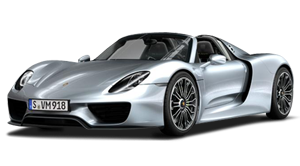
The 2015 Porsche 918 Spyder Base is a All-wheel drive Convertible. It has 2 Doors and is powered by a 4.6L V8 DOHC 32-valve + electric motor engine which outputs 887 hp @ 8700 rpm and is paired with 7-speed automated manual transmission (PDK) gearbox. The 2015 Porsche 918 Spyder Base has cargo capacity of 110 Liters and the vehicle weighs 1675 kg. In terms of ride assists, the 2015 Porsche 918 Spyder Base has stability control and traction control in addition to anti-lock brake system (ABS). The vehicle has an optional engine as well It offers and. Safety features also include None and None. The front suspension is Independent front suspension while the rear suspension is Multi-link rear axle including electric rear axle steering. The car also features a It has 20'' Front and 21'' rear alloy wheels as standard. Electronic features include Cruise Control. For convenience, the car has Power windows and Power door locks. There is also a remote keyless entry feature. Moreover, the car has. The steering wheel has audio control buttons. In terms of performance, the car has 970 N.m of torque and a top speed of 353 km/h. The 2015 Porsche 918 Spyder Base accelerates from zero to 60 mph in 2.7 seconds and hits quarter mile at 8.9 seconds. Fuel consumption is 3.3 L/100km in the city and 3.3 L/100km in the highway. The car price starts at $ 845,000
| Name | Base | |
|---|---|---|
| Price | $ 845,000 | |
| Body | Convertible | |
| Doors | 2 Doors | |
| Engine | 4.6L V8 DOHC 32-valve + electric motor | |
| Power | 887 hp @ 8700 rpm | |
| Number of Seats | N/A Seats | |
| Transmission | 7-speed automated manual transmission (PDK) | |
| Cargo Space | 110.0 L | |
| Maximum Cargo Space | 110.0 L | |
| Wheel Type | 20'' Front and 21'' rear alloy wheels | |
| Series | ||
| Drivetrain | All-wheel drive | |
| Horsepower | 887 HP | |
| Torque | 970 N.m | |
| Top Speed | 353 km/h | |
| Acceleration 0-100 km/h (0-60 mph) | 2.7 s | |
| Fuel Type | ||
| Fuel Consumption (City) | 3.3 L/100km | |
| Fuel Consumption (Highway) | 3.3 L/100km | |
| Gear Type | manual | |
| Weight | 1,675 KG | |
| Brand | Porsche | |
| Model | 918 Spyder | |
| 0-400m (Quarter Mile) | 8.9 s | |
| 0-400m (Quarter Mile) - Speed | 229.9 km/h | |
| 0-800m (Half Mile) | 16.6 s | |
| 0-800m (Half Mile) - Speed | 258.7 km/h | |
| Modifications (MODS) | ||
| Modifications Cost | $ 0 |
➤ 2015 PORSCHE 918 Spyder V8 Hybrid (887 hp) 0-100 km/h 0-300 km/h 0-330 km/h Acceleration & Sound
2015 Porsche 918 Spyder First Test: Fastest 0-60 Time Ever? Plus Porsche 959! - Ignition Ep. 109
2015 Porsche 918 Spyder REVS & Accelerations! Exhaust Notes!
2015 Porsche 918 Spyder | (Half Mile Top Speed Test)
2015 Porsche 918 Spyder Weissach (Top Speed Test)
2015 Porsche 918 Spyder Used Price Estimates
Estimates based on a driving average of 12,000 miles per year| Used Condition | Trade In Price | Private Party Price | Dealer Retail Price |
|---|---|---|---|
| Outstanding | $ 356,605 | $ 363,995 | $ 371,632 |
| Clean | $ 344,201 | $ 351,390 | $ 358,655 |
| Average | $ 319,392 | $ 326,179 | $ 332,701 |
| Rough | $ 294,584 | $ 300,968 | $ 306,746 |
The 2015 Porsche 918 Spyder is nothing less than the plug-in hybrid supercar of tomorrow, available today.
Is the phrase "environmentally friendly supercar" an oxymoron? Not necessarily, at least if that supercar is the 2015 Porsche 918 Spyder plug-in hybrid. That's because the 918 Spyder's front and rear electric motors can propel it up to 93 mph on battery power alone. At the opposite end of the performance spectrum, when the 918's 4.6-liter V8 comes roaring to life, this Porsche will accelerate from zero to 60 mph in an astonishing 2.6 seconds and top out at a dizzying 214 mph. Impressive performance numbers to be sure, but maybe not all that surprising when you consider that the combined output of these three power sources amounts to 887 hp, just waiting for a liberal application of your right foot.
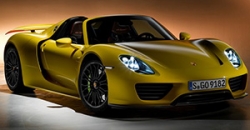
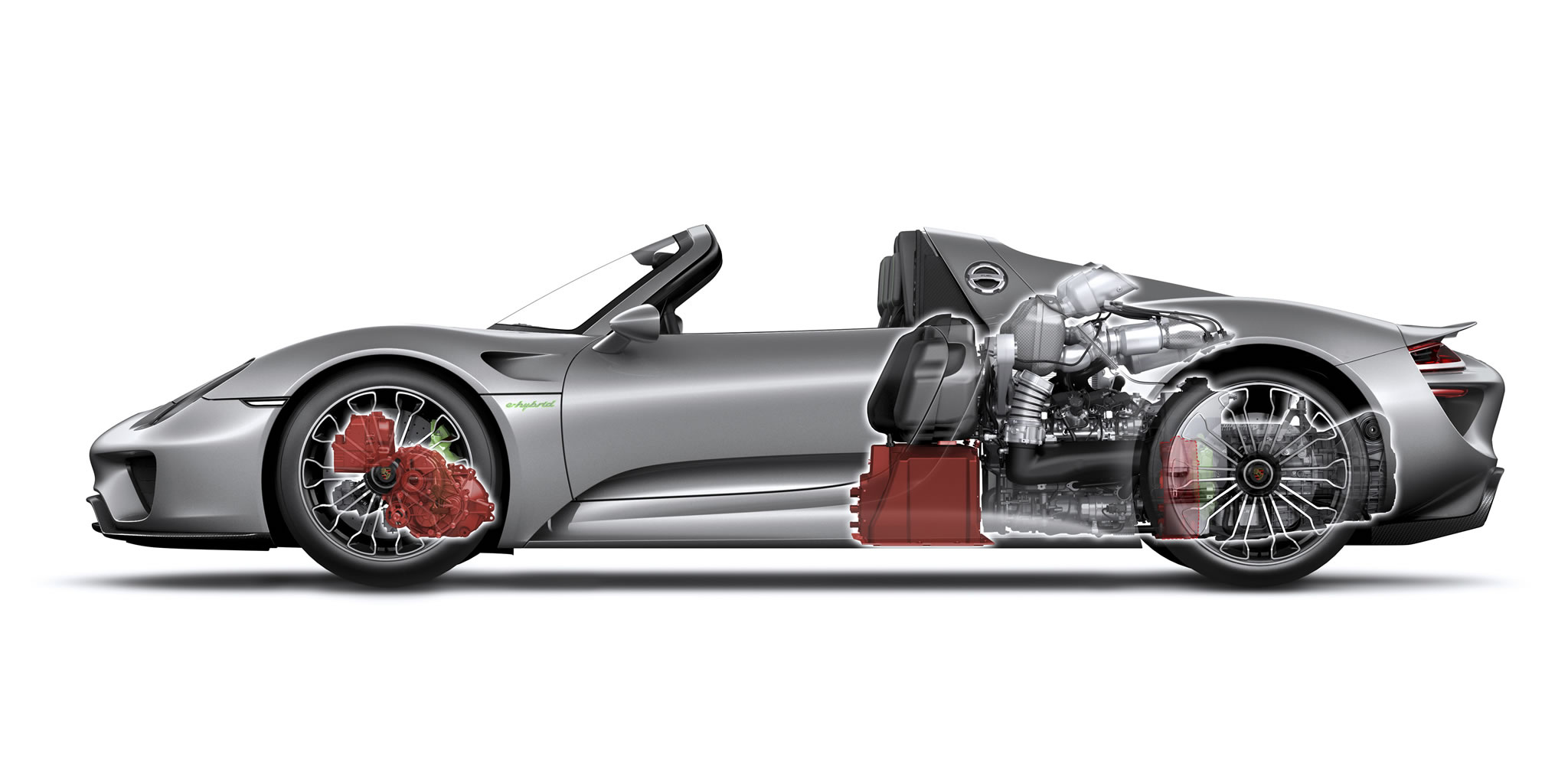
Of course, any car wearing the Porsche badge is about more than straight-line speed. The 918's handling is equally impressive, thanks in part to the engineers' decision to place the heaviest powertrain components below the car's horizontal centerline to give it an extremely low center of gravity. Add a combination of a racecar-style carbon-fiber chassis, a sophisticated adaptive suspension, communicative electromechanical steering of both the front and rear wheels, massive tires and carbon-ceramic brakes and you have a car that's supremely easy to drive ridiculously fast.
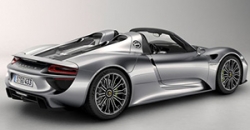
Every car has its downsides, though, and the Porsche 918 Spyder is no exception. Its cargo capacity and rear visibility are limited, which is par for the course among exotic sports cars. So, too, is a stratospheric price, which, at $ 845,000 when new, is well above those of other exotics (or somewhere in the metaphoric price thermosphere). Plus, it can rise to $ 929,000 with the optional Weissach package of lightweight components that shave 90 pounds off the car's 3,691-pound curb weight.
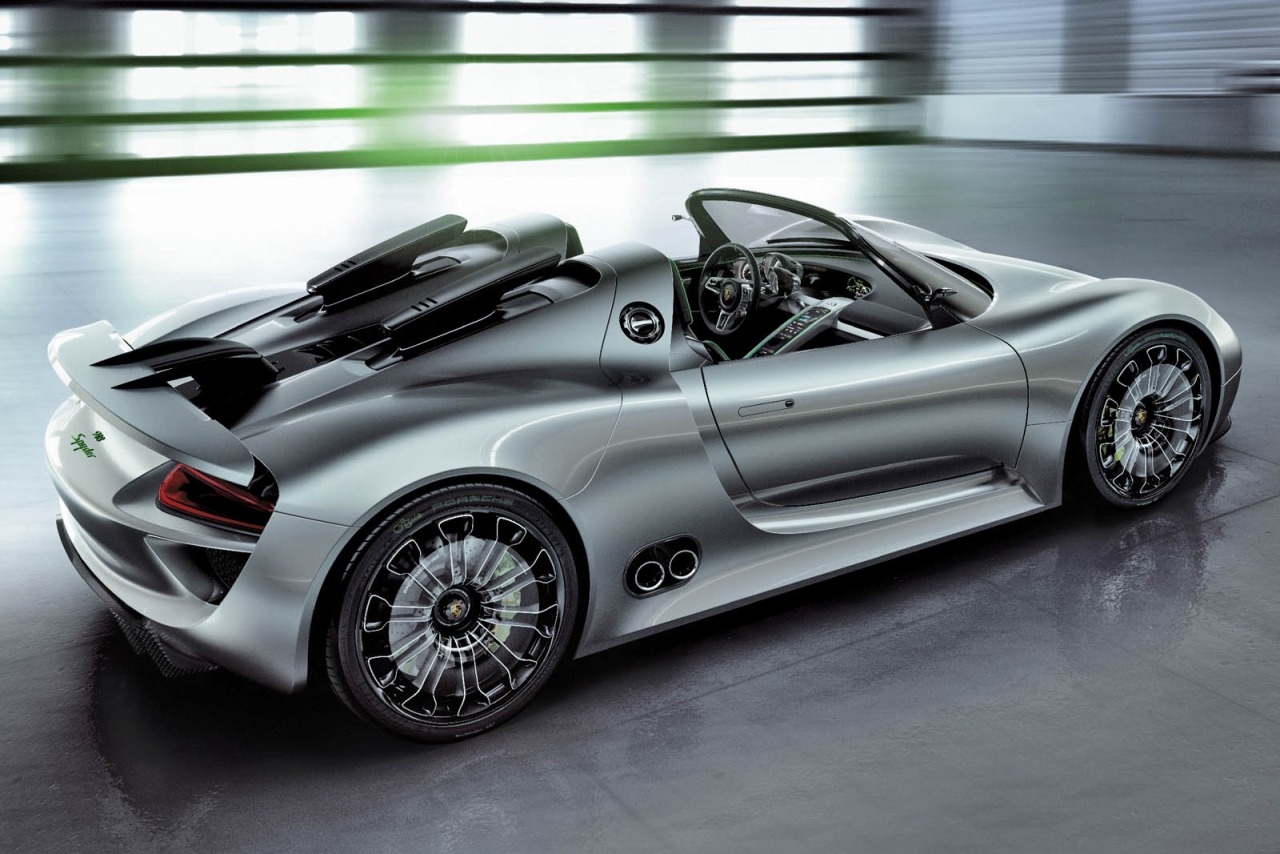
But really, we're guessing that sort of money won't be of great concern for those seriously considering this über Porsche. The real question will be whether to get one instead of its fellow gasoline-electric hypercar competitors, the McLaren P1 and LaFerrari among them, all of which are capable of putting a smile on your face quicker than you can read this sentence. That said, we'd encourage you not to put off your buying decision for too long, as only 918 examples of the 2015 Porsche 918 Spyder will be produced. This means your chances of owning this environmentally friendly supercar may disappear nearly as quickly as all those objects in its rearview mirror.

The 2015 Porsche 918 Spyder is a two-seat luxury sports car with a two-piece removable roof that's offered in a single well-equipped trim level.
Standard features include 20-inch front and 21-inch rear alloy wheels, carbon-ceramic brakes, an adaptive suspension, automatic LED headlights, an automatic windshield wiper, heated mirrors, automatically adaptive aerodynamic body panels, dual-zone automatic climate control, carbon-fiber sport seats (power driver height adjustment, manual fore/aft), full leather interior trim, a tilt-and-telescoping steering wheel, cruise control, a trip computer, a 7-inch touchscreen interface, a rearview camera, a navigation system, Bluetooth phone and audio connectivity and an 11-speaker Burmester surround-sound audio system with two USB ports, satellite radio, HD radio and an auxiliary audio jack.
Options include a 440-volt fast battery charger, different wheels, a front-end lift system for clearing curbs, an auxiliary heating system (which operates when running in electric mode), racing seats (same seat structure, but firmer padding for increased support), upgraded "authentic" natural leather and a variety of customization options.
The Weissach option package includes a number of additions and deletions designed to save weight. These include ultra-lightweight 20-inch front and 21-inch rear magnesium wheels, a special graphics package in place of traditional paint, reduced sound-deadening material, simulated suede interior trim and additional carbon-fiber components and trim. Note that the dual-zone climate control, Burmester sound system and navigation system are deleted, but can be added back as no-cost options.
The midengine 2015 Porsche 918 Spyder is powered by a 4.6-liter V8 that puts out 608 hp and 398 pound-feet of torque. It is paired with a 129-hp front electric motor and a 156-hp rear electric motor, both supplied by a 6.8-kWh lithium-ion battery. Total powertrain output is a staggering 887 hp and 944 lb-ft of torque.
A seven-speed PDK automated manual is the only transmission offered. This sophisticated gearbox can shunt power to the front wheels, the rear wheels or all four, depending on conditions and five driver-selectable powertrain mode settings chosen by a rotary dial located on the steering wheel.
These include Electric, where battery power alone drives just the front wheels under light loads. Hybrid mode calls up power from both the electric motors and gasoline engine and sends it to all four wheels, though in a more relaxed state of tune suitable for everyday driving. Dialing up Sport mode also utilizes all power sources, but sharpens throttle response, steering and transmission settings for a decidedly snappier feel.
Race mode takes those improvements to the next level, and makes all 887 hp available. The final setting, called Hot Lap, is designed for use on a racetrack, as it allows the electric motors to run the car's battery pack down beyond normal limits, relaxes stability control settings and sends more torque to the front wheels for improved cornering.
Porsche says the 918 Spyder will go from zero to 60 mph in 2.5 seconds, or 5.7 seconds in full electric mode. Those numbers will lower when it's equipped with the lighter-weight Weissach option package.
For a car with this level of performance, the 918 Spyder gets impressive EPA fuel economy ratings of 67 MPGe (miles-per-gallon-equivalent) in all-electric mode, and a still respectable 22 mpg on gasoline. The EPA also estimates it can go 12 miles on electricity alone, although that's based on normal driving. Porsche claims recharging the plug-in hybrid's lithium-ion battery pack should take roughly 2.5 hours on a 220-volt home charger.
Standard safety features on the 2015 Porsche 918 Spyder include antilock carbon-ceramic brakes, stability and traction control, seat-mounted thorax-protecting side airbags and door-mounted head-protecting side airbags.
With five driving modes to choose from, the 2015 Porsche 918 Spyder exhibits a distinctly changeable personality. Turn the key in its default all-electric mode and the 918 is ready to cover up to 18 miles in eerie quiet, with the only sounds coming from the wind rushing over the roof and occasional pebbles shed by the massive tires ticking in the fender wells. Mash on the accelerator pedal, however, and the electrons start flying as the front and rear electric motors respond instantly with an entertaining turbine-like whine reminiscent of the original Batmobile. In terms of performance, those electric motors will take you to a top speed of 93 mph before the gasoline V8 kicks in. In this respect, the experience is a lot like driving any other gasoline-electric hybrid, albeit an insanely fast one.
Turning the round knurled knob beneath the right-hand spoke of the steering wheel engages Hybrid mode, which is the most practical setup for everyday driving, as it brings both electric motors and the gasoline engine online, alternately, depending on driving situation. Unlike other hybrids, however, there's no mistaking the moment that this gasoline V8 fires up, thanks to the loud and angry exhaust note that billows from the twin titanium exhausts located atop the rear deck, just inches behind your shoulders. While this mode is still rather sedate by the 918 Spyder's standards, the eager anticipation of things to come it creates is inescapable.
To approach that higher plane of automotive nirvana, turn the black knurled knob one more notch to engage Sport Hybrid mode. Here the big V8 and electric motors begin working together to propel this 3,700-pound bundle of carbon-fiber-reinforced plastic with a still greater degree of urgency. Throttle response and steering feel both get noticeably sharper in this mode as well. For purists who've expressed some concerns over the latter, the electromechanical setup is exceptionally well tuned and feels both precise and nicely weighted.
Twist that knob one more time to select Race mode and the powertrain springs to life with all 887 hp at your command. Laying into the accelerator pedal now brings a full-on wail from behind your head that makes the 918 Spyder sound like the road-going racecar it is. Pushing the red center button in this mode calls up the Hot Lap feature that gives you everything the car's got from both the electric and gasoline motors in case you find yourself ever needing to qualify for pole position. Above 165 mph, the front electric motor decouples as the scenery blurs and the car rockets to its claimed top speed of 214 mph.
While these settings mostly affect the powertrain components, there's a lot more going on here than you might realize. An adaptive suspension delivers firmer settings in Sport and Race modes, for example. Active aerodynamics also comes into play, with the computer opening and closing under-car vents and changing the rear wing angle to produce less drag or more downforce depending on the conditions. The standard carbon-ceramic brakes can feel a little wooden in the more tame Electric and Hybrid modes, when they're called on to help recharge the hybrid system's lithium-ion battery pack, but do a bang-up job of scrubbing off speed in more aggressive driving.
As you'd expect in Porsche's flagship sports car, the cockpit is designed to be very driver-oriented. Three analog gauges, including a large center-mounted tachometer, display important info with a quick glance. The steering-wheel-mounted drive mode switch and other driving-related controls are placed within easy reach. The standard carbon-fiber seats feature significant side bolsters for enhanced support in aggressive driving, and only differ from the optional racing seats in the firmness of the side bolster padding. In other words, this is a car that puts the driver first.
Yet Porsche hasn't built a racecar. Nearly every inch of the carbon-fiber-intensive cabin is covered in soft leather or, for $ 26,000 extra, it can be upgraded with "Authentic" leather crafted from renewable tanning agents and organic pigments to create a unique, matte finish that will develop a distinctive patina over time. Something to consider for you collectors out there.
All secondary functions are located in a rising center console, with a trio of knobs that allow you to page through menus on the high-mounted cell phone-like display, and provide quick access to regularly used features like audio volume and fan speed. Touchscreen-like switches allow the driver to manage the climate control system, Burmester audio system, rear wing position, headlights and more.
Not surprisingly given its racecar genes, the 918 Spyder is a little short on luggage space. Lift the hood and you'll find just 3.9 cubic feet of cargo room, which shrinks to practically nothing should you need to store the two-piece roof inside.
2015 Porsche 918 Spyder Base Exterior Colors
2015 Porsche 918 Spyder Base Interior Colors
2015 Porsche 918 Spyder Engines
| Engine | Standard in Trim | Power | Torque | Fuel Consumption - City | Fuel Consumption - Highway | 0-100 km/h | Quarter Mile | Half Mile |
|---|
2015 Porsche 918 Spyder Trims
2015 Porsche 918 Spyder Previous Generations
2015 Porsche 918 Spyder Future Generations
Porsche 918 Spyder Overview and History
Situated in downtown Stuttgart, Porsche's first contract of developing a people's car, a Volkswagen, appointed by the German government. The result was one of the most famous cars in history, one of the best sold and one of the most easily recognizable out there, the Beetle. Many features of the Beetle would find their place on the first ever Porsche, the 64, developed in 1939.
During WWII the Porsche factory turned to making vehicles for the German Army, such as the Kubelwagen and the Schwimmwagen as well as contributing to the production of Tiger and Elefant tanks. After the war Ferdinand was imprisoned for war crimes for 20 months and was during that time that his son, Ferry Porsche, decided to build a new car to suit his needs – the 356.
The success of the 356 and the death of Ferdinand Porsche in 1951 gave Ferry the confidence to follow in his father's footsteps and continue designing cars. One of his most famous designs was the Spyder 550, a car that would prove very successful in races.
By now, the general line of the company seemed evident, as in 1964 another sporty model, the 911, another car with a air-cooled, boxer, rear-mounted engine. The design team for this car was led by Ferry's oldest son, Ferdinand Alexander Porsche. this car would take the legacy of the 550 Spyder even further, winning races and rallies. Testimony to the success of the 911 is the fact that it's still in production today, despite being heavily modified.
Porsche was going to change its status in 1972 from a limited partnership to a public limited company, which meant that now Porsche would be run by a board of directors supervised by family members. In 1974, at the Paris Auto Show, Porsche unveils the new 911 Turbo, with exhaust turbocharger and pressure regulator.
When the 924 was entered in production in 1975, Porsche took a leap of faith because it had not experienced with front-mounted engines for a long time. By Porsche standards, the 928 was an oddity, with its front-mounted V8 engine made out of metal alloy. Then, in 1981, a new transaxle model is added to the Porsche line-up, the 944. The high-performance Porsche 959 is unveiled at the Frankfurt Auto Show in 1985. It will go on to win a lot of races and rallies, the best known being the Paris-Dakar.
A new technological leap was made in 1988 when the 911 Carrera 4 with all-wheel drive was introduced on the market. Then, in 1989, the “Tiptronic” automatic gearbox system is fitted on Porsches. In 1991, Porsche becomes the first car manufacturer to fit driver and passenger airbags on all its models.
The Boxter model is introduced in 1996 after 3 and a half years of development. That same year, Porsche celebrates 1million units being produced. Two years later, Ferry Porsche dies at the age of 88 but the company moves on and has a great season at Le Mans with the 911 GT1, coming in first and second. This was going to be only the beginning for Porsche, which continued with the very sporty and high-performance models Boxster S and the Carrera GT in 2000.
In 2002 Porsche entered the SUV market with the unconventional Cayenne and its later versions, the Cayenne Turbo and Turbo S. The next model on the line-up for Porsche, announced for 2009 is the Panamera, a four-door sedan. With this new model, Porsche seems set to take on a whole new market, directly competing with other luxury brands such as Mercedes, BMW and Audi.
2015 Porsche 918 Spyder Consumer Reviews
2015 Porsche 918 Spyder Base Specifications
Base Comfort and Convenience
| AM/FM stereo radio | AM/FM stereo and HD Radio® radio |
|---|---|
| Air Conditionning | Dual-zone auto climate control |
| Audio Monitor | Central high-resolution 8-inch TFT display |
| Cruise Control | Yes |
| Interior Air Filter | Active carbon filter |
| Navigation System | D navigation display, featuring 7-inch touch screen |
| Number of Speakers | 11 speakers |
| Power Door Locks | Yes |
| Power Windows | Power windows with one-touch up/down feature |
| Premium Sound System | 500-W attBurmester® High-End Surround Sound System |
| USB Connector | Two USB ports |
Base Dimensions
| Cargo Capacity | 110 L |
|---|---|
| Curb Weight | 1675 kg |
| Fuel Tank Capacity | 70 L |
| Height | 1165 mm |
| Length | 4643 mm |
| Wheelbase | 2730 mm |
| Width | 1940 mm |
Base Exterior Details
| Driving Lights | LED running lights |
|---|---|
| Headlight Type | LED Headlights |
| Heated Exterior Mirrors | Heated outside mirrors |
| Power Exterior Mirrors | Power-adjustable outside mirrors |
| Rear Fog Lights | Rear fog light LED technology |
Base Interior Details
| Seat Trim | Leather seats |
|---|
Base Mechanical
| Drive Train | All-wheel drive |
|---|---|
| Engine Name | 4.6L V8 DOHC 32-valve + electric motor |
| Stability Control | Yes |
| Traction Control | Yes |
| Transmission | 7-speed automated manual transmission (PDK) |
| Transmission Paddle Shift | Yes |
Base Overview
| Body | Convertible |
|---|---|
| Doors | 2 |
| Engine | 4.6L V8 DOHC 32-valve + electric motor |
| Fuel Consumption | 3.3 (Automatic City)3.3 (Automatic Highway) |
| Power | 887 hp @ 8700 rpm |
| Seats | N/A |
| Transmission | 7-speed automated manual transmission (PDK) |
| Warranties | Bumper-to-Bumper80000/km, 48/Months Powertrain80000/km, 48/Months |
Base Safety
| Anti-Lock Brakes | Anti-lock brakes |
|---|---|
| Anti-Theft Alarm | Alarm system |
| Brake Assist | None |
| Brake Type | 4-wheel disc |
| Driver Airbag | None |
| Electronic brake force distribution | None |
| Ignition Disable | Ignition disable system |
| Passenger Airbag | None |
| Roof Side Curtain | Side curtain airbag |
Base Suspension and Steering
| Front Suspension | Independent front suspension |
|---|---|
| Front Tires | 265/35ZR 20 |
| Power Steering | Electric power steering |
| Rear Suspension | Multi-link rear axle including electric rear axle steering |
| Rear Tires | 325/30ZR 21 performance tires |
| Wheel Type | 20'' Front and 21'' rear alloy wheels |
Discussion and Comments
Share Your Comments