2006 Mazda 3 GS 0-60 Times, Top Speed, Specs, Quarter Mile, and Wallpapers
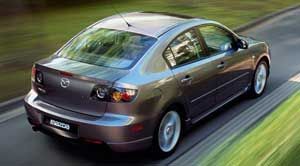
The 2006 Mazda 3 GS is a Front-wheel drive Sedan. It can accommodate up to 5 passengers. It has 4 Doors and is powered by a 2.0L L4 DOHC 16 valves engine which outputs 150 hp @ 6500 rpm and is paired with 5 speed manual transmission gearbox. The 2006 Mazda 3 GS has cargo capacity of 322.8 Liters and the vehicle weighs 1223 kg. In terms of ride assists, the 2006 Mazda 3 GS has stability control and traction control in addition to anti-lock brake system (ABS). The vehicle has an optional engine as well It offers and. Safety features also include Driver side front airbag and Passenger side front airbag. The front suspension is Front independent suspension while the rear suspension is Rear independent suspension. The car also features a It has 15" alloy wheels as standard. Electronic features include Cruise Control. For convenience, the car has Power windows and Power door locks. There is also a remote keyless entry feature. Moreover, the car has. The steering wheel has audio control buttons. In terms of performance, the car has 164 N.m of torque and a top speed of 195 km/h. The 2006 Mazda 3 GS accelerates from zero to 60 mph in 8.6 seconds and hits quarter mile at 16.2 seconds. Fuel consumption is 9.1 L/100km in the city and 6.4 L/100km in the highway. The car price starts at $ 17,895
| Name | GS | |
|---|---|---|
| Price | $ 17,895 | |
| Body | Sedan | |
| Doors | 4 Doors | |
| Engine | 2.0L L4 DOHC 16 valves | |
| Power | 150 hp @ 6500 rpm | |
| Number of Seats | 5 Seats | |
| Transmission | 5 speed manual transmission | |
| Cargo Space | 322.8 L | |
| Maximum Cargo Space | 322.8 L | |
| Wheel Type | 15" alloy wheels | |
| Series | 3 | |
| Drivetrain | Front-wheel drive | |
| Horsepower | 150 HP | |
| Torque | 164 N.m | |
| Top Speed | 195 km/h | |
| Acceleration 0-100 km/h (0-60 mph) | 8.6 s | |
| Fuel Type | Petrol (Gasoline) | |
| Fuel Consumption (City) | 9.1 L/100km | |
| Fuel Consumption (Highway) | 6.4 L/100km | |
| Gear Type | manual | |
| Weight | 1,200 KG | |
| Brand | Mazda | |
| Model | 3 | |
| 0-400m (Quarter Mile) | 16.2 s | |
| 0-400m (Quarter Mile) - Speed | 142.1 km/h | |
| 0-800m (Half Mile) | 26.9 s | |
| 0-800m (Half Mile) - Speed | 160.0 km/h | |
| Modifications (MODS) | ||
| Modifications Cost | $ 0 |
2006 Mazda 3 - 2.0L - 0-100 KM/PH
2006 Mazda 3 0-60 Manual
mazda 3 2006 (0-60mph)(0-100km/h)acceleration
2006 Mazda 3 Used Price Estimates
Estimates based on a driving average of 12,000 miles per year| Used Condition | Trade In Price | Private Party Price | Dealer Retail Price |
|---|---|---|---|
| Outstanding | $ 1,781 | $ 2,704 | $ 3,202 |
| Clean | $ 1,605 | $ 2,443 | $ 2,896 |
| Average | $ 1,253 | $ 1,923 | $ 2,285 |
| Rough | $ 901 | $ 1,403 | $ 1,674 |
Entertaining yet sophisticated in demeanor, the 2006 Mazda 3 doesn't look, feel or drive like an economy car. If you're shopping for a small, inexpensive sedan or hatchback, this Mazda car should be at the top of your list.
Following in a long line of zippy compact cars from Mazda, the Mazda 3 replaced the Protege as the entry-level car in Mazda's lineup. It's available in both four-door sedan and five-door hatchback body styles. Mazda backs up the 3's sporty image with a pair of strong, refined engines. All i trims use a 150-horsepower, 2.0-liter four-cylinder engine, while all s models use a 2.3-liter four-cylinder that bumps the horsepower number to 160 while offering significantly more torque.
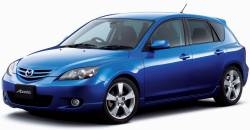
Both engines are equipped with variable valve timing to improve response and efficiency. The Protege had a well-deserved reputation for superior ride and handling compared to most economy cars, and the Mazda 3 builds upon that tradition with the help of a few parts from the more expensive Mazda 6 midsize sedan. Spot-on chassis tuning results in quick turn-in, hardly any body roll and lots of grip on twisty blacktop. At the same time, the highway ride is smooth enough to please most commuters.

While most economy cars serve up generic interior designs with little or no concern for aesthetics, the 3's cabin has a cohesive layout that injects some style into the equation. From the individually recessed gauges to the symmetry of the center stack controls, the attention to detail is evident. Satellite steering wheel controls are a nice touch for a car in this price range, as is the tilt-and-telescoping steering wheel. Build and materials quality is outstanding for this class. There's plenty of room for taller drivers to get comfortable up front, and the rear seats are acceptably spacious for a car in this class. With all the personality of its predecessors along with more powerful engines and a sharp new interior, the 2006 Mazda 3 is an economy car that puts the "zoom-zoom" back into driving.
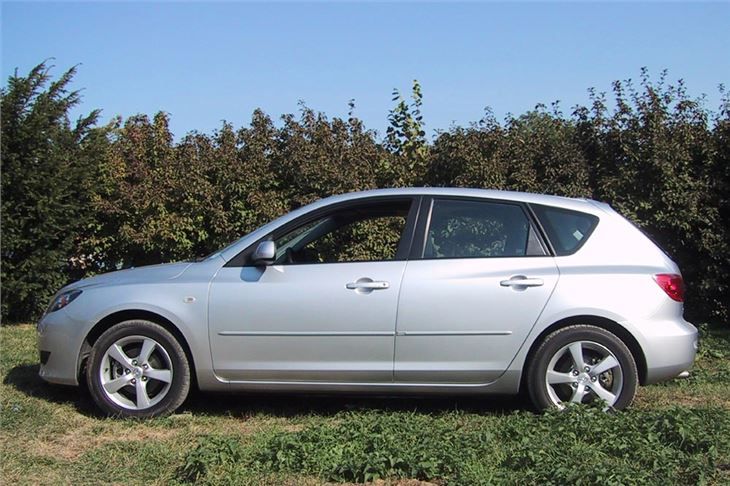
The Mazda 3 is available as a sedan in i, i Touring, s, s Touring and s Grand Touring trims. The four-door hatchback model comes in s, s Touring and s Grand Touring trims. All i sedans have a tilt-and-telescoping steering wheel, a 60/40-split-folding rear seat and a CD stereo. The i Touring adds 16-inch wheels, cruise control, an upgraded stereo and power windows, mirrors and locks. Air conditioning is optional on i models. The s models come with all of the above, plus alloy wheels, a height-adjustable driver seat and a leather-wrapped steering wheel with satellite audio controls. The s Touring adds 17-inch alloys to the mix, while the top-line s Grand Touring provides heated leather seats, auto climate control, rain-sensing wipers and a trip computer. Options include an in-dash CD changer, satellite radio and a moonroof.
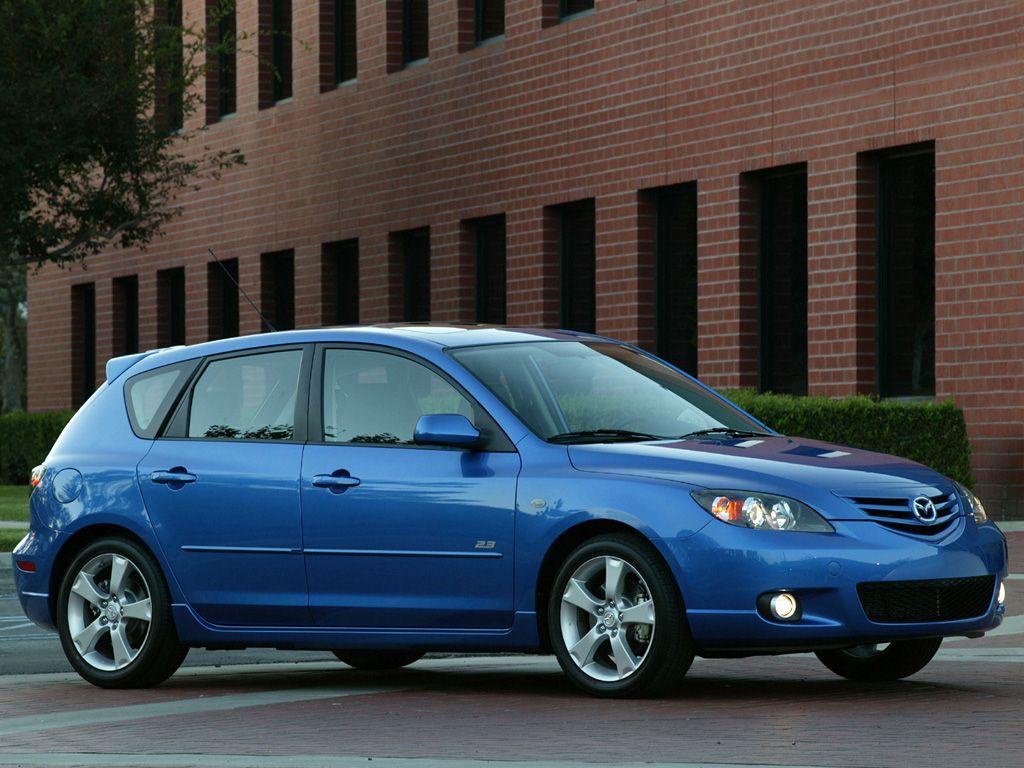
The i sedans use a 2.0-liter, four-cylinder engine rated to produce 150 horsepower, while the s models use a 2.3-liter four-cylinder that bumps the horsepower number to 160. Both engines come standard with a five-speed manual transmission. A four-speed automatic transmission with an automanual mode is optional on i models, while s models upgrade to a five-speed automatic.
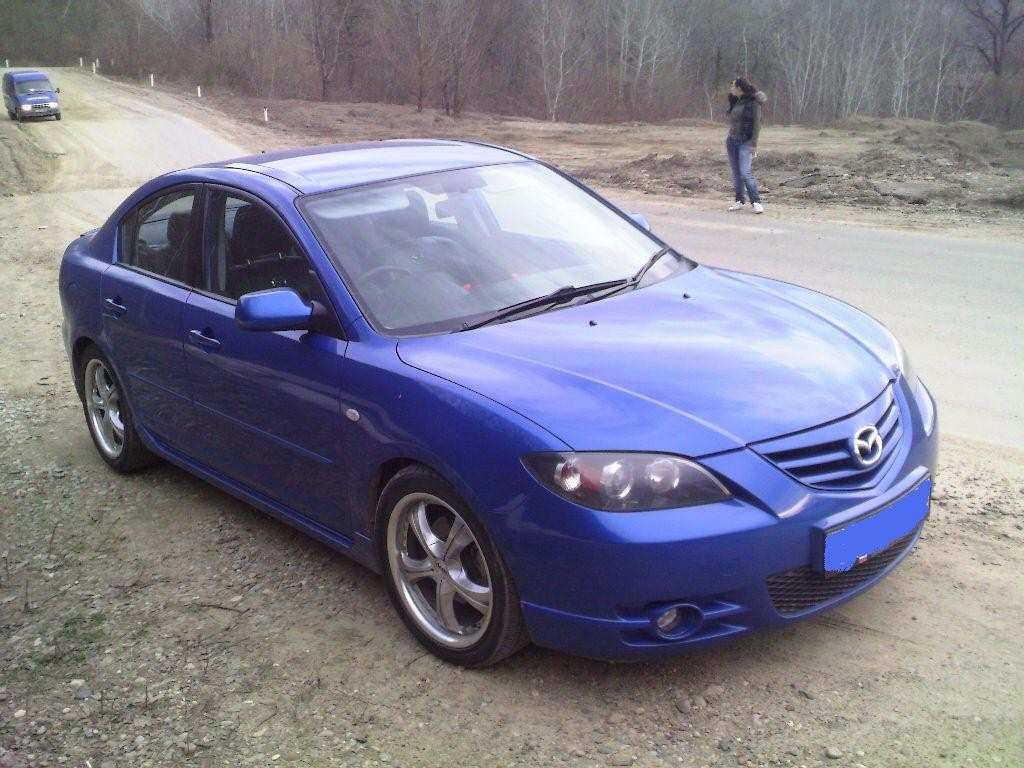
All Mazda 3 models come with four-wheel disc brakes. Antilock brakes with Electronic Brakeforce Distribution (EBD) are standard on s models and optional on i trims. Front-seat side-impact airbags and full-length side curtain airbags are optional on all models. The 3 earned four out of five stars in NHTSA frontal-impact crash tests and was named a "Best Pick" for its performance in the IIHS frontal-offset test. In side impacts, the Mazda earned just three stars from NHTSA and a "Poor" rating (the lowest) from the IIHS, but neither agency has yet to test a 3 with side airbags.
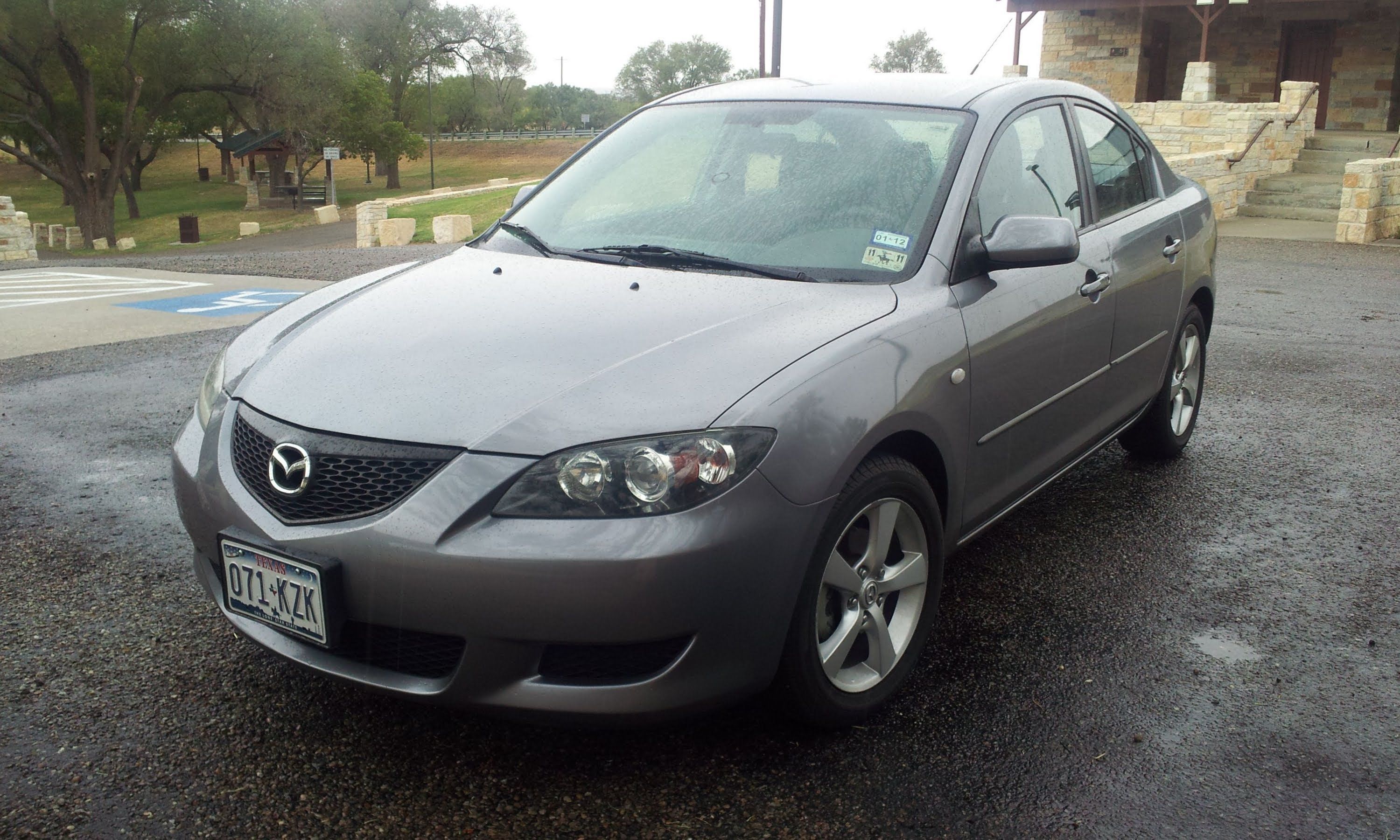
The 2006 Mazda 3 has refined road manners that will likely surprise shoppers expecting the typically flabby ride and handling of many economy cars. The Mazda car feels nimble and tightly controlled during cornering and its steering provides rewarding feedback. For everyday driving, both of the available engines are suitable, though the larger 2.3-liter offers stronger low- and midrange pull.
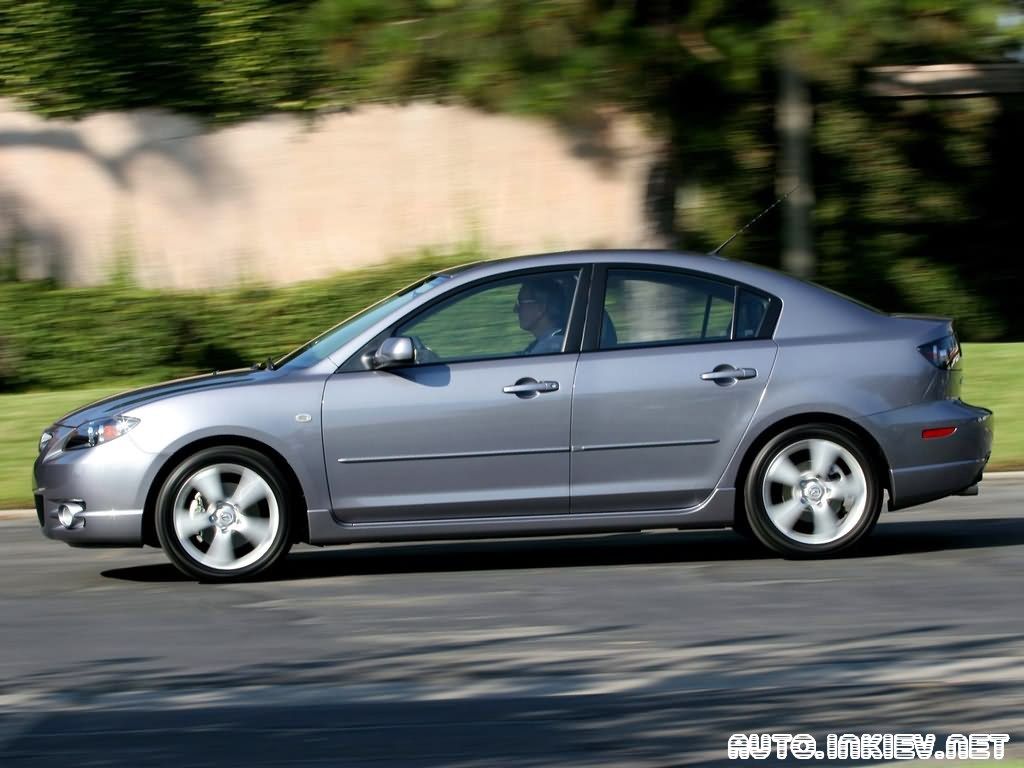
Unlike most economy cars, the Mazda 3 offers a distinctive and upscale interior design. The sharp-looking gauges are housed in individual binnacles, while beautifully choreographed textures, nicely damped controls and tight-fitting panels give the cabin a top-quality feel. There's enough room for taller drivers to get comfortable up front. The rear seats are also comfy and supportive, though legroom is a little tight for 6-footers. Sedans offer 11.4 cubic feet of trunk space; the hatchback offers 17.1 cubes behind its rear seat and 31 when it's folded.
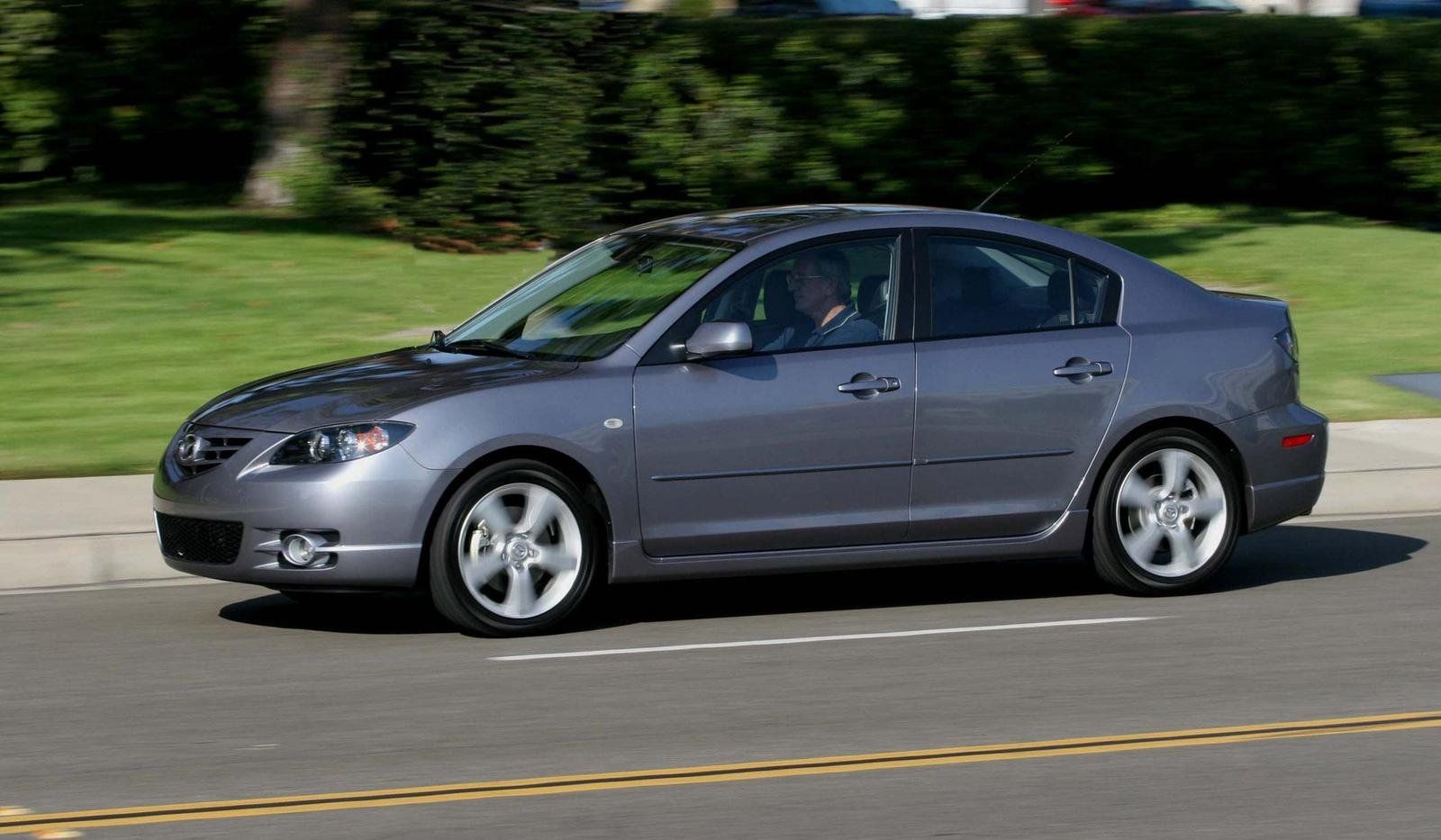


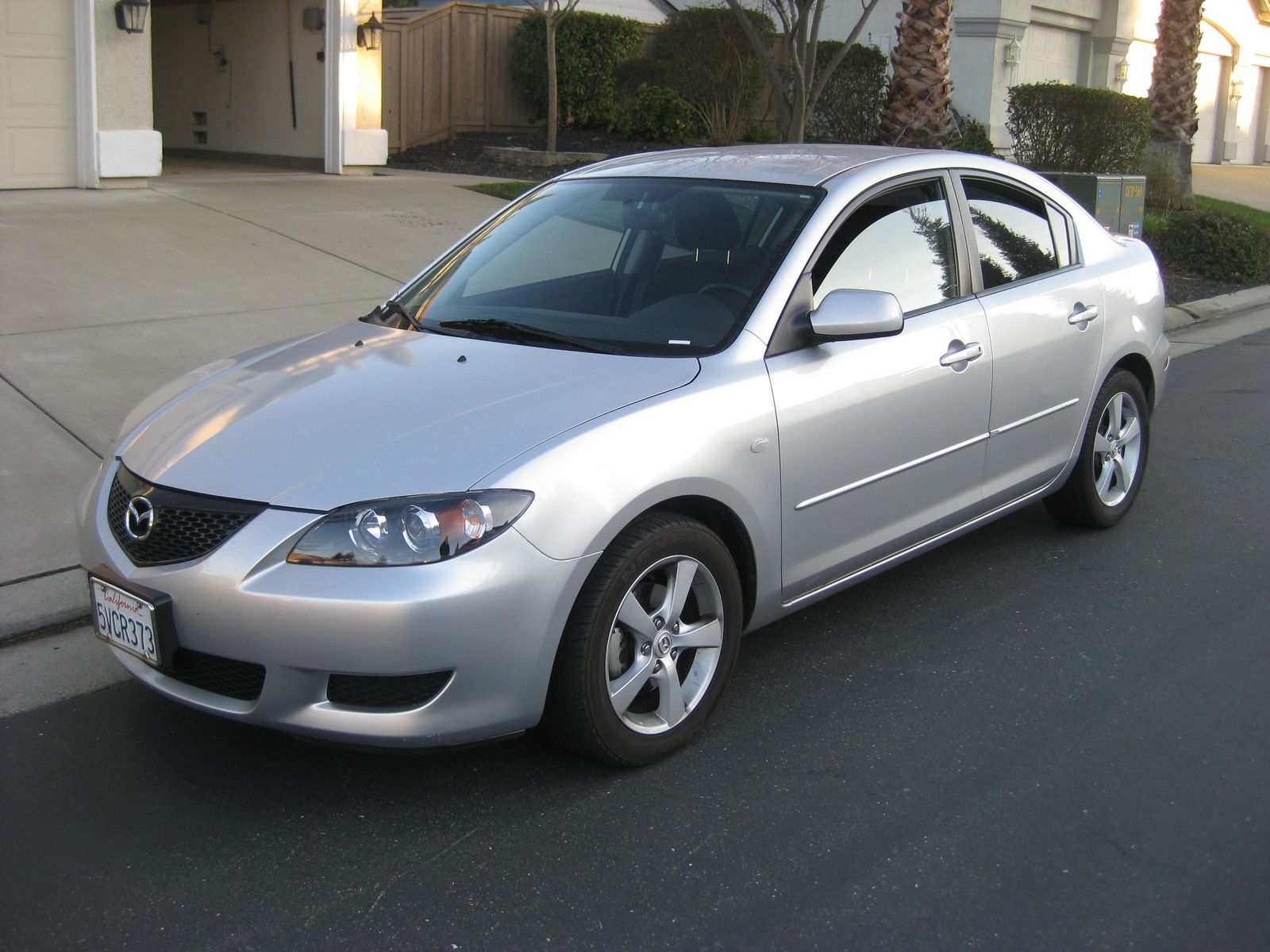

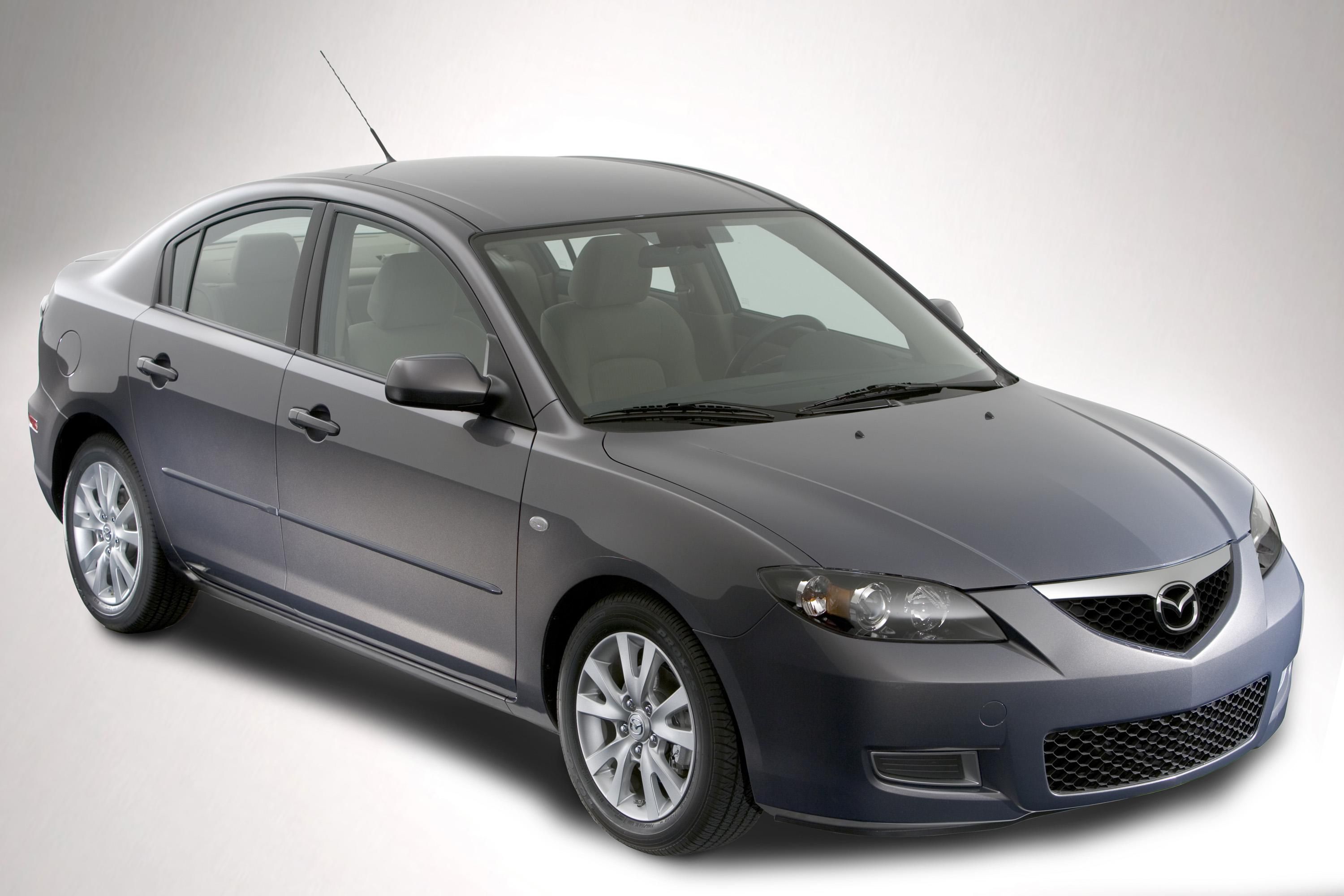
2006 Mazda 3 GS Exterior Colors
2006 Mazda 3 GS Interior Colors
2006 Mazda 3 Engines
| Engine | Standard in Trim | Power | Torque | Fuel Consumption - City | Fuel Consumption - Highway | 0-100 km/h | Quarter Mile | Half Mile |
|---|---|---|---|---|---|---|---|---|
| 2.3L L4 DOHC 16-valve | GT | 156 hp @ 6500 rpm | 164 N.m | 9.5 L/100km | 6.9 L/100km | 8.3 s | 16.0 s | 26.5 s |
| 2.3L L4 DOHC 16-valve | GT | 156 hp @ 6500 rpm | 164 N.m | 9.5 L/100km | 6.9 L/100km | 8.3 s | 15.9 s | 26.4 s |
| 2.3L L4 DOHC 16-valve | GT | 156 hp @ 6500 rpm | 164 N.m | 9.4 L/100km | 6.9 L/100km | 8.3 s | 16.0 s | 26.5 s |
| 2.3L L4 DOHC 16-valve | GT | 156 hp @ 6500 rpm | 164 N.m | 9.4 L/100km | 6.9 L/100km | 8.3 s | 15.9 s | 26.4 s |
| 2.3L L4 DOHC 16 valves | GT | 160 hp @ 6500 rpm | 164 N.m | 9.4 L/100km | 6.9 L/100km | 8.2 s | 15.8 s | 26.3 s |
| 2.3L L4 DOHC 16 valves | GT | 160 hp @ 6500 rpm | 164 N.m | 9.4 L/100km | 6.9 L/100km | 8.1 s | 15.8 s | 26.2 s |
| 2.0L L4 DOHC 16-valve | GX | 148 hp @ 6500 rpm | 164 N.m | 9.1 L/100km | 6.4 L/100km | 8.6 s | 16.2 s | 26.9 s |
| 2.0L L4 DOHC 16-valve | Touring Edition | 148 hp @ 6500 rpm | 164 N.m | 9.1 L/100km | 6.4 L/100km | 8.7 s | 16.3 s | 27.0 s |
| 2.0L L4 DOHC 16 valves | GS | 150 hp @ 6500 rpm | 164 N.m | 9.1 L/100km | 6.4 L/100km | 8.6 s | 16.2 s | 26.9 s |
| 2.0L L4 DOHC 16-valve | Touring Edition | 150 hp @ 6500 rpm | 164 N.m | 9.1 L/100km | 6.4 L/100km | 8.6 s | 16.2 s | 26.9 s |
2006 Mazda 3 Trims
2006 Mazda 3 Previous Generations
2006 Mazda 3 Future Generations
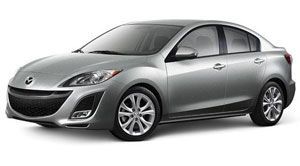
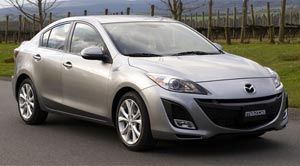
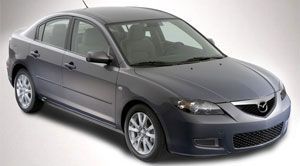
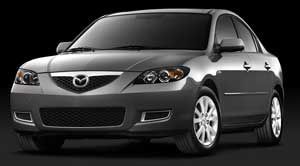
Mazda 3 Overview and History
After the war, part of the Mazda plant served as the Hiroshima prefecture for a short while. Production and export resumed in 1949 with the same 3-wheeled truck. The first 4-wheel truck was the Mazda Romper, introduced in 1958.
The first pasenger car came in 1960, the Mazda R360 Coupe. Mazda's first partnership with a foreign company was the one in 1961 with NSU/Wankel with which it produced and developed rotary engines. This was done in order to differentiate Mazda from the other Japanese companies. To this day, Mazda is the only manufacturer of Wankel rotary engines as the other companies (NSU and Citroen) gave up on the design sometime during the 70s.
Mazda's paid off because its models quickly gained a name as being powerful yet light vehicles. The most successful series for Mazda were going to be the R100 and the RX models which eventually led to the company's development.
Starting with 1970 Mazda began eyeing the biggest market for its cars, the United States. It opened up a North American branch under the name Mazda North American Operations and it proved to have the winning recipe. In fact, Mazda models were so successful that the company even produced a pick up truck based on the rotary engine.
With 1973 and the oil crisis, the thirsty rotary engines that Mazda used caused a drop in sales but the Japanese company hadn't really given up on piston engines so it was able to use a 4 cylinder model on its cars. The smaller Familia series and Capella were born.
But Mazda wasn't about to give up on its sporty cars and it decided to develop a parallel plant that would produce cars outside the mainstream. In 1978, they came up with the very sporty RX7 and later with the RX8. The piston engine also showed up on Mazda's line up with the MX-5 or Miata.
In 1979 Ford Motor Company became an investor in Mazda with a 27% share after the financial decline of the company. Later on, in the 80s, Ford acquired 20% more of the company after a few joint ventures like using the Familia series platform for the Laser and Escort models as well as building the new Probe and the Mazda plant in Flat Rock, Michigan.
The 90s started off with another joint venture with Ford on the 1991 Explorer which turned out to be a bad investment for the Japanese while the Americans reaped all the benefits. Following its fascination with alternative engine designs, Mazda started developing the Miller cycle engine in 1995.
The latter part of the 90s proved to be not so profitable for the Japanese as the financial crisis hit in 1997, during which Ford acquired 39.9% of the company. From that point on, the collaboration between the two marques intensified, sharing engine design and even some platforms (Ford Escape with Mazda Tribute and the new generation Ford Focus with the Mazda Axela).
For the future, Mazda intends to maintain its forward thinking and experimental technology, by developing a hydrogen-powered car. The prototype has so far reached a 200 kilometers autonomy.
2006 Mazda 3 Consumer Reviews
Compare Against Competitors
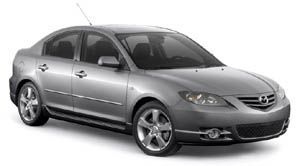
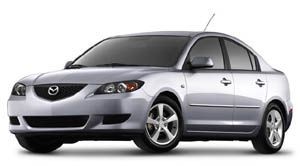
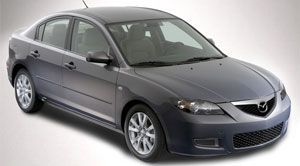
2006 Mazda 3 GS Specifications
GS Comfort and Convenience
| AM/FM stereo radio | Yes |
|---|---|
| Air Conditionning (Option) | Air conditioning |
| Cruise Control (Option) | Yes |
| Driver Vanity Mirror | Yes |
| Front Wipers | Intermittent wipers with rain sensor |
| Fuel Door Operation | Remote fuel door release |
| Illuminated Entry | Yes |
| Number of Speakers | 4 speakers |
| Passenger Vanity Mirror | Yes |
| Power Door Locks | Yes |
| Power Windows (Option) | Yes |
| Reading Light | Front reading lamps |
| Rear Heating | Rear heater ducts |
| Rear View Mirror | Day/night rear vew mirror |
| Remote Audio Controls | Steering wheel mounted audio controls |
| Remote Audio Controls (Option) | Steering wheel mounted cruise controls |
| Remote Keyless Entry | Yes |
| Single CD | CD player |
| Smoking Convenience | Lighter and ashtray |
| Steering Wheel Adjustment | Tilt and telescopic steering wheel |
| Trunk Light | Yes |
| Trunk/Hatch Operation | Remote trunk hatch release |
GS Dimensions
| Cargo Capacity | 322.8 L |
|---|---|
| Curb Weight | 1223 kg |
| Front Headroom | 994 mm |
| Front Legroom | 1065 mm |
| Fuel Tank Capacity | 55 L |
| Height | 1465 mm |
| Length | 4530 mm |
| Rear Headroom | 951 mm |
| Rear Legroom | 921 mm |
| Wheelbase | 2640 mm |
| Width | 1755 mm |
GS Exterior Details
| Bumper Colour | Body-color bumpers |
|---|---|
| Door Handles | Body-color door handles |
| Exterior Mirror Colour | Black exteror mirrors |
| Exterior Mirror Colour (Option) | Body-color exterior mirrors |
| Grille | Black grille |
| Headlight Type | Halogen headlamps |
| Headlights Auto Off | Auto-off headlamps |
| Heated Exterior Mirrors (Option) | Yes |
| Mudguard | Front mud guards |
| Power Exterior Mirrors (Option) | Yes |
| Side-Body Trim | Body-color side mouldings |
| Sunroof (Option) | Power moonroof |
| Tinted Glass | Tinted windows |
GS Interior Details
| Clock | Digital clock |
|---|---|
| Door Trim | Cloth door trim |
| Floor Console | Yes |
| Floor Covering | Carpet floor covering |
| Floor Mats | Front and rear floor mats |
| Folding Rear Seats | 60/40 split rear folding bench |
| Front Center Armrest | Front armrest with storage |
| Front Seats Driver Height | Height adjustable driver seat |
| Front Seats Driver Lombar | Driver lumbar support |
| Front Seats Front Seat Back Storage | Front seatback map pocket |
| Front Seats Front Seat Type | Front bucket seats |
| Headliner | Cloth headliner |
| Instrumentation Type | Analog instrumentation |
| Number of Cup Holders | Dual front cup holders |
| Outside Temperature Gauge | Outside temperature display |
| Seat Trim | Cloth seats |
| Tachometer | Yes |
| Trip Computer | Yes |
| Water Temperature Gauge | Engine temperature gauge |
GS Mechanical
| Drive Train | Front-wheel drive |
|---|---|
| Engine Name | 2.0L L4 DOHC 16 valves |
| Transmission | 5 speed manual transmission |
| Transmission (Option) | 4 speed automatic transmission with manual mode |
GS Overview
| Body | Sedan |
|---|---|
| Doors | 4 |
| Engine | 2.0L L4 DOHC 16 valves |
| Fuel Consumption | 9.1 (Automatic City)6.4 (Automatic Highway)8.4 (Manual City)6.1 (Manual Highway) |
| Power | 150 hp @ 6500 rpm |
| Seats | 5 |
| Transmission | 5 speed manual transmission |
| Warranties | Bumper-to-Bumper80000/km, 36/Months Powertrain100000/km, 60/Months Roadside AssistanceUnlimited/km, 36/Months Rust-throughUnlimited/km, 60/Months |
GS Safety
| Anti-Lock Brakes | Anti-lock brakes |
|---|---|
| Brake Type | 4 wheel disc |
| Child Seat Anchor | None |
| Child-proof Locks | None |
| Driver Airbag | Driver side front airbag |
| Electronic brake force distribution | Electronic brake force distribution |
| Front Seat Belts | Height adjustable, pre-tensioner |
| Ignition Disable | Engine immobilizer |
| Passenger Airbag | Passenger side front airbag |
| Rear Seat Belts | Center 3-point |
GS Suspension and Steering
| Front Anti-Roll Bar | Front stabilizer bar |
|---|---|
| Front Suspension | Front independent suspension |
| Front Tires | P195/65R15 |
| Front Tires (Option) | P205/55R16 |
| Power Steering | Electro-hydraulic power assisted rack and pinion steering |
| Rear Anti-Roll Bar | Rear stabilizer bar |
| Rear Suspension | Rear independent suspension |
| Spare Tire | Compact spare tire |
| Wheel Type | 15" alloy wheels |
| Wheel Type (Option) | 16" alloy wheels |
Critics Reviews
Motor Trend reviews the 2006 Mazda Mazda3 where consumers can find detailed information on specs, fuel economy, transmission and safety. Find local 2006 Mazda Mazda3 prices online.
Discussion and Comments
Share Your Comments