2001 Buick LeSabre Custom 0-60 Times, Top Speed, Specs, Quarter Mile, and Wallpapers
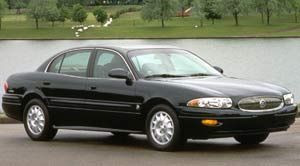
The 2001 Buick LeSabre Custom is a Front-wheel drive Sedan. It can accommodate up to 6 passengers. It has 4 Doors and is powered by a 3.8 L V6 3800 Series II SFI engine which outputs 205 hp @ 5200 rpm and is paired with 4 speed automatic gearbox. The 2001 Buick LeSabre Custom has cargo capacity of 510 Liters and the vehicle weighs 1618 kg. In terms of ride assists, the 2001 Buick LeSabre Custom has stability control and traction control in addition to anti-lock brake system (ABS). The vehicle has an optional engine as well It offers and. Safety features also include None and None. The front suspension is while the rear suspension is. The car also features a It has as standard. Electronic features include Cruise Control. For convenience, the car has Power windows and Power door locks. There is also a remote keyless entry feature. Moreover, the car has. The steering wheel has audio control buttons. In terms of performance, the car has 224 N.m of torque and a top speed of 216 km/h. The 2001 Buick LeSabre Custom accelerates from zero to 60 mph in 8.5 seconds and hits quarter mile at 16.1 seconds. Fuel consumption is 12.3 L/100km in the city and 7.3 L/100km in the highway. The car price starts at $ 32,120
| Name | Custom | |
|---|---|---|
| Price | $ 32,120 | |
| Body | Sedan | |
| Doors | 4 Doors | |
| Engine | 3.8 L V6 3800 Series II SFI | |
| Power | 205 hp @ 5200 rpm | |
| Number of Seats | 6 Seats | |
| Transmission | 4 speed automatic | |
| Cargo Space | 510.0 L | |
| Maximum Cargo Space | 510.0 L | |
| Wheel Type | ||
| Series | ||
| Drivetrain | Front-wheel drive | |
| Horsepower | 205 HP | |
| Torque | 224 N.m | |
| Top Speed | 216 km/h | |
| Acceleration 0-100 km/h (0-60 mph) | 8.5 s | |
| Fuel Type | ||
| Fuel Consumption (City) | 12.3 L/100km | |
| Fuel Consumption (Highway) | 7.3 L/100km | |
| Gear Type | auto | |
| Weight | 1,618 KG | |
| Brand | Buick | |
| Model | LeSabre | |
| 0-400m (Quarter Mile) | 16.1 s | |
| 0-400m (Quarter Mile) - Speed | 142.7 km/h | |
| 0-800m (Half Mile) | 26.7 s | |
| 0-800m (Half Mile) - Speed | 160.6 km/h | |
| Modifications (MODS) | ||
| Modifications Cost | $ 0 |
2001 Buick LeSabre Used Price Estimates
Estimates based on a driving average of 12,000 miles per year| Used Condition | Trade In Price | Private Party Price | Dealer Retail Price |
|---|---|---|---|
| Outstanding | $ 1,574 | $ 2,450 | $ 2,910 |
| Clean | $ 1,393 | $ 2,174 | $ 2,586 |
| Average | $ 1,031 | $ 1,621 | $ 1,940 |
| Rough | $ 670 | $ 1,068 | $ 1,293 |
A crowd-pleasing large sedan that offers space and safety in a value-packed, economical package. Lovers of the traditional American sedan can't go wrong, unless they want a V8 and rear-wheel drive.
Evolutionary in style outside, and revolutionary in style inside, the Buick LeSabre, redesigned last year, appears to have met its designers' goals -- keep the good stuff and improve the rest. Give Buick credit for acting on customer input and coming up with a surprisingly competent overall package.
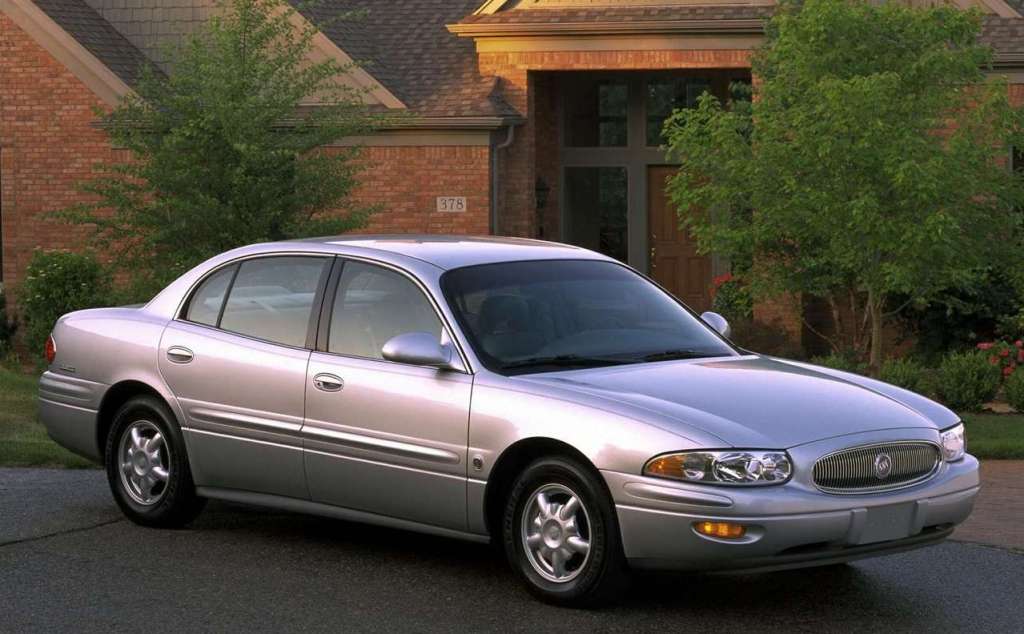
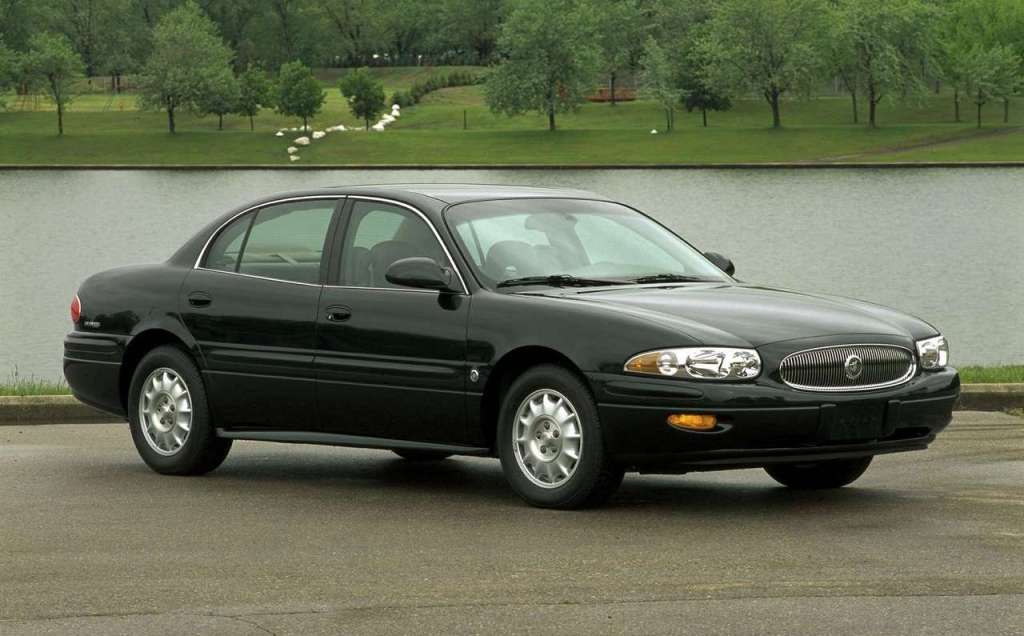
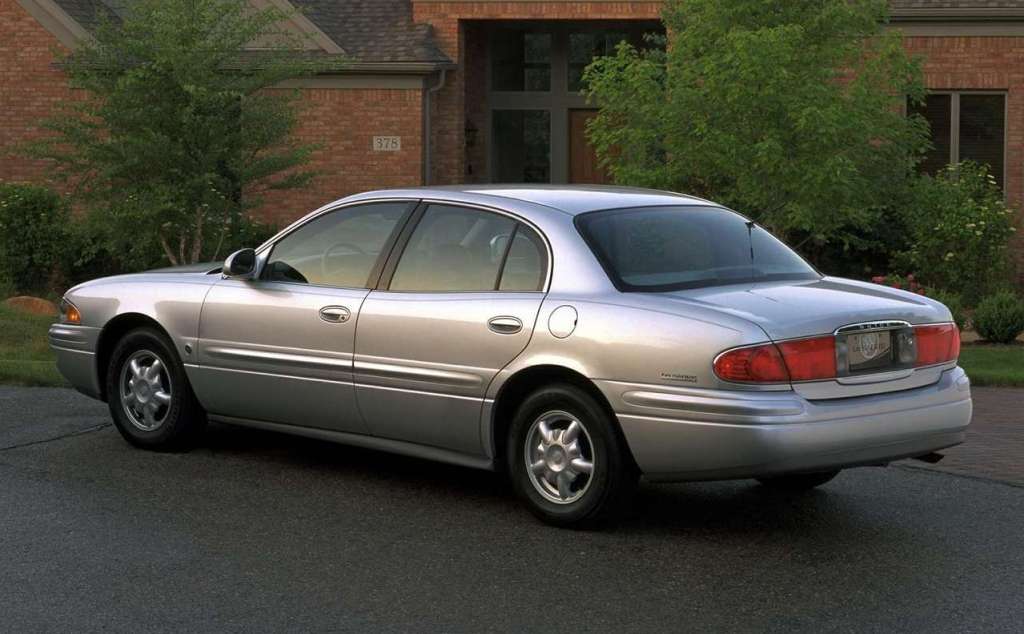
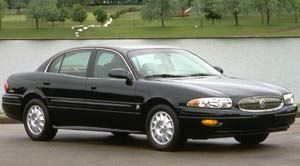
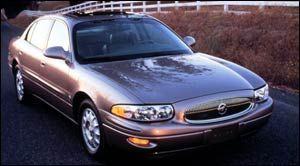
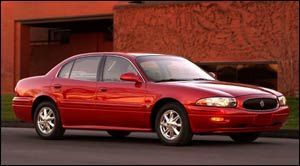
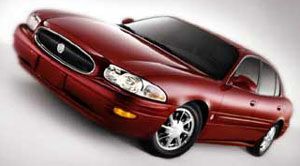
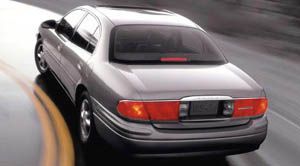
Though this big, front-drive sedan is about an inch narrower than its predecessor, much of its shape and many of its dimensions are little-changed from the previous generation. Buick's signature "waterfall" chrome grille is still there, and the clean-looking front and rear fascias set off the clear-lens headlamps and large tail lamps. Flush, body-colored door handles add a clean look to the LeSabre, and even the bodyside moldings have an integrated look.
Interior storage and safety has also been a Buick hallmark and the 2001 LeSabre doesn't disappoint. In addition to incorporating side airbags, the comfortable and supportive front seats have built-in "self-aligning" head restraints, reducing the risk of whiplash. Front seatbelts are now integrated into the seat frames, and all five seating positions come equipped with shoulder and lap belts. The LeSabre's interior meets the government's new head-impact requirements ahead of the federal deadline. The big news for 2001 is standard dual stage front airbags.
Rear headroom is as good as in the Ford Crown Victoria or Mercury Grand Marquis, and though legroom back there isn't best-in-class, it is still comfortable. Large rear-door glass lowers nearly all the way down into the doors for better ventilation. Trunk room is a decent 18 cubic feet, bettering the 17 cubic feet found in the Chrysler Concorde.
The LeSabre's platform makes for a stiffer, quieter body than its predecessor. While the front suspension features MacPherson struts with coil springs, the rear's semi-trailing arm / coil-spring setup makes for a more-controlled ride. We'd opt for the LeSabre Limited with the Gran Touring Package, despite the fact that the top-of-the-line P255/60R-16 touring radials are not super handlers. Antilock brakes are standard, with the rear drums being upgraded to discs for better stopping power.
The only available powertrain in both the Custom and Limited models remains the trusty 3.8-liter Series II V6, mated to a smooth four-speed automatic transmission. This motor makes a healthy 205 horsepower at 5,200 rpm, with 230 foot-pounds of torque peaking at a useable 4,000 rpm. What's more, GM's V6 meets federal 2001 low-emission vehicle (LEV) standards.
LeSabres have consistently ranked better than average in owner trouble complaints over the years, and the 2001 model should improve that score further. While the median age of most LeSabre buyers has long been in the 60s, more family-oriented buyers are finding themselves in Buick showrooms. That will not only do much to help the brand shake some of its fuddy-duddy image, but also keep LeSabre among the best sellers.
2001 Buick LeSabre Custom Exterior Colors
2001 Buick LeSabre Custom Interior Colors
2001 Buick LeSabre Engines
| Engine | Standard in Trim | Power | Torque | Fuel Consumption - City | Fuel Consumption - Highway | 0-100 km/h | Quarter Mile | Half Mile |
|---|
2001 Buick LeSabre Trims
2001 Buick LeSabre Previous Generations
2001 Buick LeSabre Future Generations
Buick LeSabre Overview and History
However, this choice of name lacked the powerful resonance of its founder's name, which was quick to replace it by 1903 - when the company pinned a brand new name tag to its chest: the Buick Manufacturing Co. During the same year, the company's heads went for further simplifying the name by dropping the 'Manufacturing' from the label.
Once corporate identity and appearance issues were satisfactory solved, Buick started focusing on car-engine development. The emphasis Buick put on his work would soon pay back, the genesis of the overhead valve engine having brought the company a generous amount of acclaim.
This was mostly thanks to the positioning of the valves, which allowed Buick engines to be fitted into tighter spaces while granting drivers easy access to maintenance - unlike the majority of the car engines at the time (which sported angle-mounted valves). Although Buick and his top engineering duo, Eugene Richard and Walter L. Marr, were successful in avoiding some major engine-building related intricacies, the brand entered a stage of slow-sales paradox.
Such were the financial difficulties encountered that, by September 1903, David Buick and his financial backer Benjamin Briscoe Jr. sold the firm to a wagon-making group in Flint, Michigan, 60 miles from Detroit (the former headquarters of the Buick factory). Luckily, the Buick plant was moved entirely to Flint, which allowed David Buick, who had been kept as manager, to further focus on his work.
Despite the 1904 construction of the first Flint Buick, the Model B, the by now one-year old Flint-Buick merger was inches away from hitting against the bulk of a metaphorical harassing Mr. Financial Trouble. And it did. The impact left the company with no other alternative than to seek help.
James H. Whiting, manager of the Flint Wagon Works, approached William C. “Billy” Durant, Flint-carriage king and future GM boss, on the company's status. Durant's nose for business as well as his uncanny intuition and promotional skills would later drag Buick from the pits of tar it had fallen into, straight to flashy auto-show glamour, inked front page wows and racing domination.
Although Durant was not a big automobile fan, he immediately recognized the sales-potential of the Buicks. It was the torque and rugged suspension of the cars Buick had built so far that convinced Durant that he had struck gold.
Thanks to the easiness and sturdiness Buicks proved in hill climbing and muddy terrain, Durant ordered a staggering 1000 units before the company had reached the 40 threshold. Though a series of production increase oriented moves, such as the construction of a new Flint-based plant and a partnership with Charles Stewart Mott (axle supplier and future GM head), Durant saved Buick from near extinction.
Durant didn't settle for just ensuring the success of the Buick brand and went farther to conquer racing grounds as well. His team, formed of Louis Chevrolet and Wild Bob Burman (among others), snatched a total of 500 trophies only between 1908 and 1910. The reason to why Buick had so much success was that by 1908 it had become the country's leading automobile producer with 8,820 cars produced. As if this wasn't enough, the new model 10 had topped all the other company's sales, with 4,002 units produced. The success registered by the Buick name grew enough to provide Durant with the grounds for spawning a large holding company. Thus, General Motors was born.
When the 20's came, Buick was numbly bathing in refreshing popularity as it had become the top choice car brand for world leaders. In breaks between garnering acclaim, Buick was busy crossing finish lines and popping champagnes from the height of first-place racing podiums across the world.
In fact, Buick had virtually conquered the world, with automobiles having taken part in major expeditions and crossings, such as the Lowel Thomas-led first motorized trip into Afghanistan, 1923.
However, the end of the 20's brought along not-so-great news, as the Great Depression swept the country, destroying lots of companies in the process. Buick was able to withstand the fund-consuming Depression, having displayed a range of fully rejuvenated models sporting performance Dynaflow automatic transmissions, aircraft inspired portholes, or Ventiports, and renewed style elements such as flashy vertical grilles and meticulously executed finishing touches.
With its growth uninterrupted, Buick continued to hold its position as the all-leading American car producer throughout the 90's with an emphasis on sedans. The Y2K year inoculated a fresh take on the car with Buick extending its activity in developing new convertible and crossover concepts. The reshaping process undergone by Buick has left the company focusing on a new range of automobiles, currently flaunting the three premium LaCrosse, Lucerne and Enclave models.
2001 Buick LeSabre Consumer Reviews
Compare Against Competitors
2001 Buick LeSabre Custom Specifications
Custom Comfort and Convenience
| AM/FM stereo radio | With Seek/Scan |
|---|---|
| Cassette | Auto Reverse |
| Cassette (Option) | Cassette player only without CD |
| Cruise Control | Steering Wheel Mounted Switches |
| Number of Speakers | Dual Fron/Rear Extended Range |
| Power Door Locks | Memory w/ Lockout Protection & Delayed Locking |
| Remote Keyless Entry | Includes Activation Notification, Panic Feature and Perimeter Lighting |
Custom Dimensions
| Cargo Capacity | 510 L |
|---|---|
| Curb Weight | 1618 kg |
| Front Headroom | 986 mm |
| Front Legroom | 1077 mm |
| Fuel Tank Capacity | 70 L |
| Height | 1448 mm |
| Length | 5080 mm |
| Rear Headroom | 961 mm |
| Rear Legroom | 1013 mm |
| Wheelbase | 2850 mm |
| Width | 1867 mm |
Custom Exterior Details
| Exterior Mirrors Left Exterior Mirrors | Wide Field of View Folding Outside Rearview |
|---|---|
| Exterior Mirrors Right Exterior Mirrors | Wide Field of View Folding Outside Rearview |
| Side-Body Trim | Protective |
Custom Interior Details
| Front Seats Front Seat Type | 55/45 Divided Front |
|---|---|
| Instrumentation Type | Fuel, Temperature, Speedometer, and Trip Odometer |
Custom Mechanical
| Drive Train | Front-wheel drive |
|---|---|
| Engine Name | 3.8 L V6 3800 Series II SFI |
| Traction Control (Option) | Yes |
| Transmission | 4 speed automatic |
Custom Overview
| Body | Sedan |
|---|---|
| Doors | 4 |
| Engine | 3.8 L V6 3800 Series II SFI |
| Fuel Consumption | 12.3 (Automatic City)7.3 (Automatic Highway) |
| Power | 205 hp @ 5200 rpm |
| Seats | 6 |
| Transmission | 4 speed automatic |
| Warranties | Bumper-to-Bumper60000/km, 36/Months Emissions80000/km, 60/Months Powertrain60000/km, 36/Months Roadside Assistance60000/km, 36/Months Rust-through160000/km, 72/Months |
Custom Safety
| Anti-Lock Brakes | 4-wheel ABS |
|---|---|
| Anti-Theft Alarm | None |
| Brake Type | 4-wheel disc |
| Child Seat Anchor | None |
| Child-proof Locks | None |
| Driver Airbag | None |
| Front Seat Belts | Regular |
| Ignition Disable | None |
| Panic Alarm | None |
| Passenger Airbag | None |
| Rear Seat Belts | Center 3-point |
| Side Airbag | None |
Custom Suspension and Steering
| Front Tires | 215/70R15 |
|---|---|
| Front Tires (Option) | P215/70R16 Whitewalls |
| Power Steering | Power Rack and Pinion |
| Wheel Type (Option) | 16" Polished Aluminum wheels |
Discussion and Comments
Share Your Comments