2001 Aston Martin DB7 Vantage 0-60 Times, Top Speed, Specs, Quarter Mile, and Wallpapers
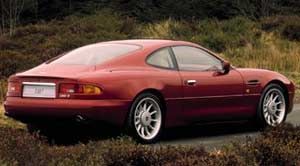
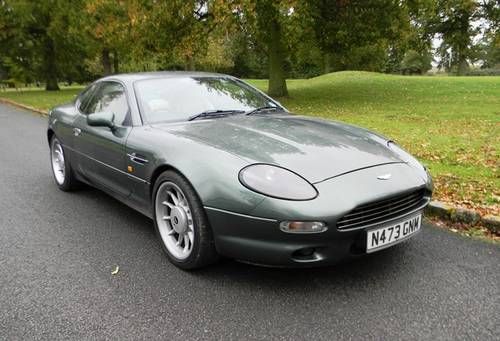
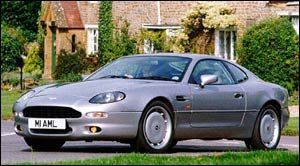
The 2001 Aston Martin DB7 Vantage is a Rear-wheel drive Coupe. It can accommodate up to 2 passengers. It has 2 Doors and is powered by a 6.0L V12 DOHC 48 valves engine which outputs 420 hp @ 6000 rpm and is paired with 5 speed automatic gearbox. The 2001 Aston Martin DB7 Vantage has cargo capacity of 150 Liters and the vehicle weighs 1775 kg. In terms of ride assists, the 2001 Aston Martin DB7 Vantage has stability control and traction control in addition to anti-lock brake system (ABS). The vehicle has an optional engine as well It offers and. Safety features also include None and None. The front suspension is while the rear suspension is. The car also features a It has as standard. Electronic features include Cruise Control. For convenience, the car has Power windows and Power door locks. There is also a remote keyless entry feature. Moreover, the car has. The steering wheel has audio control buttons. In terms of performance, the car has 459 N.m of torque and a top speed of 275 km/h. The 2001 Aston Martin DB7 Vantage accelerates from zero to 60 mph in 5.1 seconds and hits quarter mile at 13.1 seconds. Fuel consumption is L/100km in the city and L/100km in the highway. The car price starts at $ 199,000
| Name | Vantage | |
|---|---|---|
| Price | $ 199,000 | |
| Body | Coupe | |
| Doors | 2 Doors | |
| Engine | 6.0L V12 DOHC 48 valves | |
| Power | 420 hp @ 6000 rpm | |
| Number of Seats | 2 Seats | |
| Transmission | 5 speed automatic | |
| Cargo Space | 150.0 L | |
| Maximum Cargo Space | 150.0 L | |
| Wheel Type | ||
| Series | ||
| Drivetrain | Rear-wheel drive | |
| Horsepower | 420 HP | |
| Torque | 459 N.m | |
| Top Speed | 275 km/h | |
| Acceleration 0-100 km/h (0-60 mph) | 5.1 s | |
| Fuel Type | ||
| Fuel Consumption (City) | L/100km | |
| Fuel Consumption (Highway) | L/100km | |
| Gear Type | auto | |
| Weight | 1,780 KG | |
| Brand | Aston Martin | |
| Model | DB7 | |
| 0-400m (Quarter Mile) | 13.1 s | |
| 0-400m (Quarter Mile) - Speed | 175.7 km/h | |
| 0-800m (Half Mile) | 21.7 s | |
| 0-800m (Half Mile) - Speed | 197.6 km/h | |
| Modifications (MODS) | ||
| Modifications Cost | $ 0 |
2001 Aston Martin DB7 Used Price Estimates
Estimates based on a driving average of 12,000 miles per year| Used Condition | Trade In Price | Private Party Price | Dealer Retail Price |
|---|
A gorgeous automobile with stunning performance, the DB7 Vantage nonetheless faces stiff competition in this stratospheric price range.
If you are considering purchasing a car from the lofty world of 2+2 supercars, there's one main question you need to ask yourself: How do you want to spend your $ 200,000?
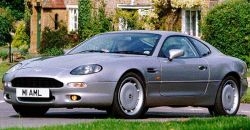
Aston Martin would be quite happy to liberate a large chunk of that from your pocket. In exchange, you would get a beautifully styled machine that's capable of matching the performance of the world's greatest sports cars. That machine would be the DB7 Vantage.
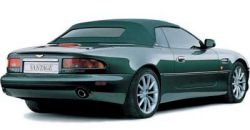
The DB7 Vantage comes in coupe and convertible form (the convertible being called the Volante). Similar to BMW's M cars, Aston's "Vantage" moniker stands for the most powerful and uncompromising models in the Aston Martin range. Non-Vantage models are not sold in the United States.
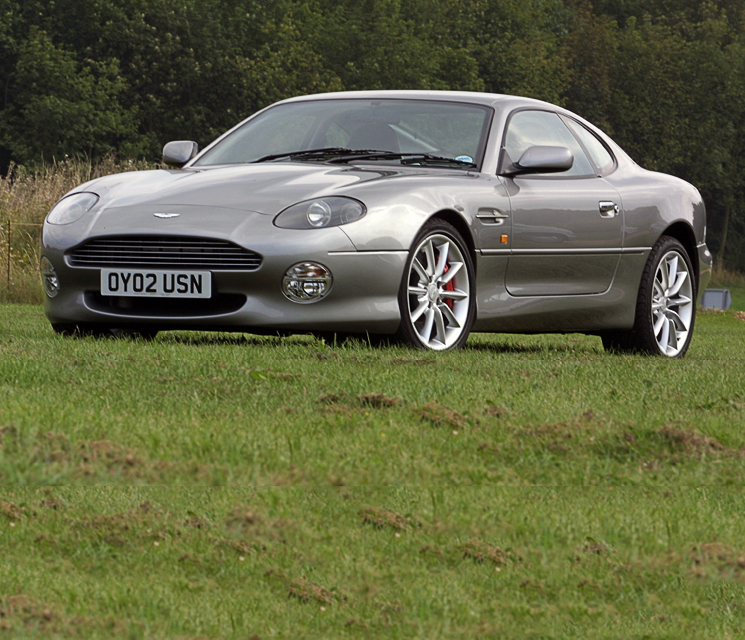
Both DB7 Vantage models are equipped with a 6.0-liter V12 engine that produces 420 horsepower at 6,000 rpm and 400 foot-pounds of torque at 5,000 rpm. As you would expect from numbers like this, the Vantage's power and acceleration are both prodigious. Acceleration from zero to 60 takes a mere 5.0 seconds. Even with this much power, the engine is still quite tractable while driving through city gridlock. DB7 Vantages have a six-speed manual transmission as standard equipment, with a five-speed automatic being a no-cost option.
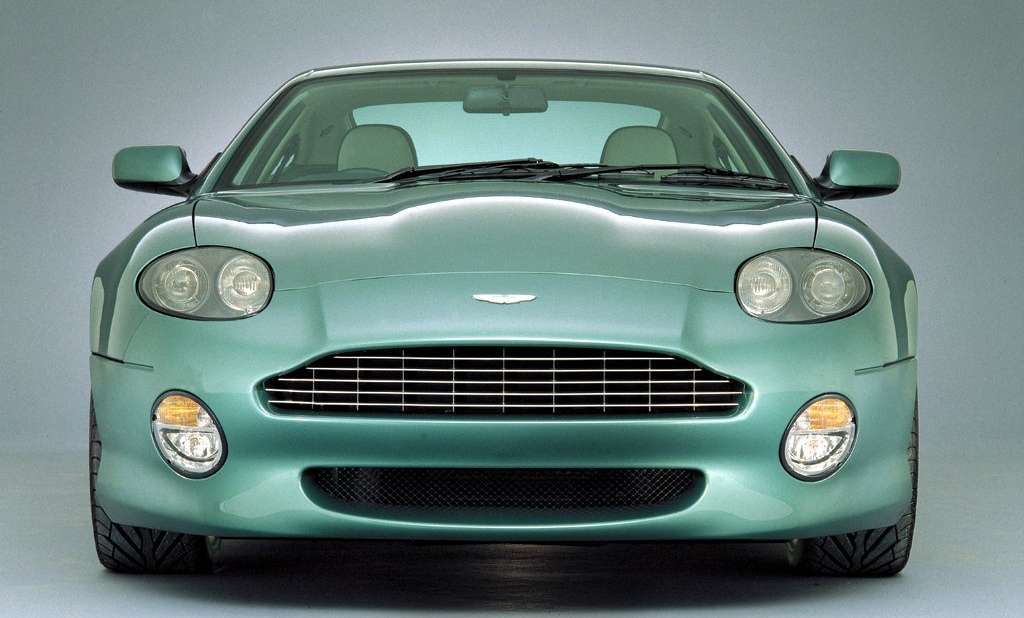
The DB7's ride quality is a blend of firm control with supple response. High-speed cruising is the DB7's forte. American speed limits won't allow the DB7 to truly show its abilities; this car is perfectly happy to whoosh along at speeds over 100 mph. Vantage models have a stiffer suspension along with massive, Brembo four-wheel vented discs and four-piston calipers. Thankfully, such impressive hardware isn't hidden from view by the 18-inch aluminum wheels.
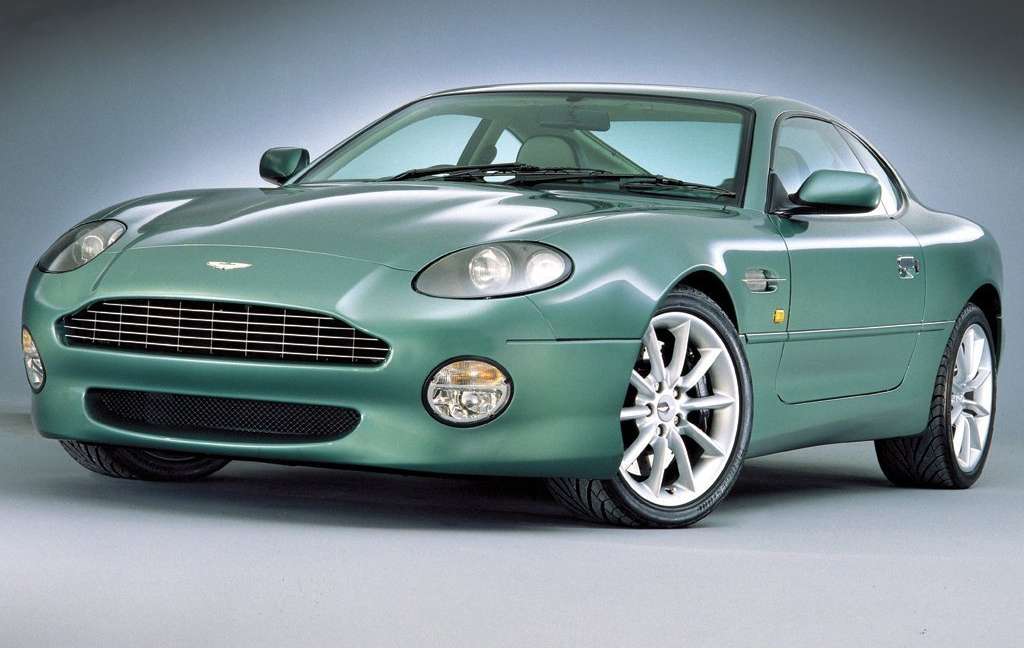
Inside the cabin, Aston Martin equips its DB7s with wide expanses of sumptuous Connolly leather and walnut wood trim, though Ford-sourced switchgear cheapens the effect. The traditional black-and-white gauges are attractive and easy to read. The cabin is rather tight, and front passengers over 6-feet-tall will definitely notice a lack of headroom. This is especially true on Volantes with the top raised. The rear seats are clearly for small children only.
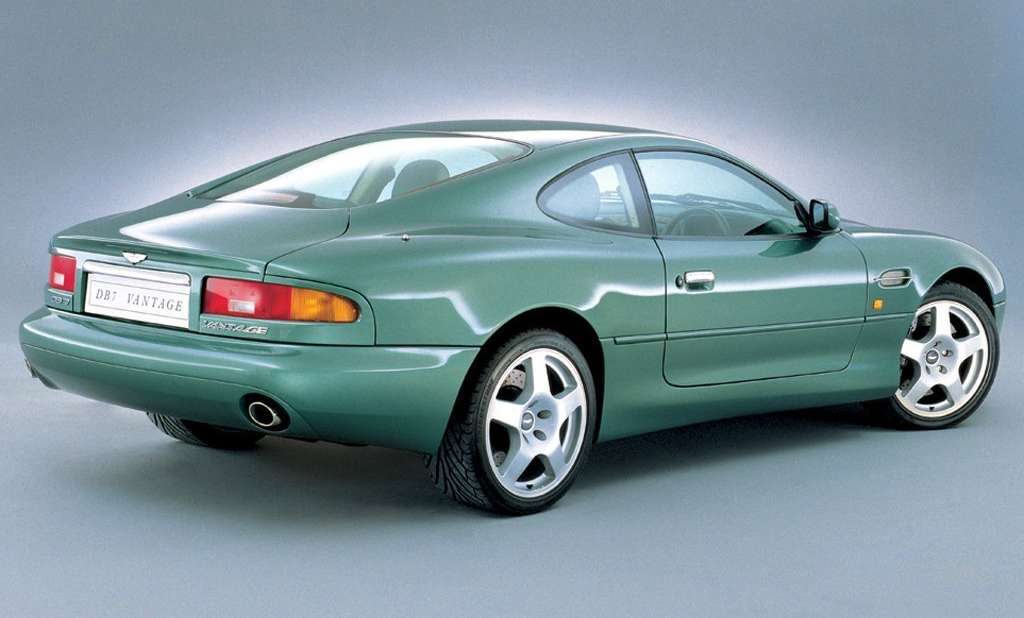
Aston Martin's top-line performance car is certainly unique, but it would be tough to give it a decisive recommendation. The Mercedes-Benz CL-Class is much more refined and feature-laden. A Ferrari 456 GTA costs considerably more but is considerably more prestigious. We would even suggest looking at the DB7's cousin: the Jaguar XKR. The XKR is about $ 80,000 cheaper and offers a very similar driving and ownership experience.
2001 Aston Martin DB7 Vantage Exterior Colors
2001 Aston Martin DB7 Vantage Interior Colors
2001 Aston Martin DB7 Engines
| Engine | Standard in Trim | Power | Torque | Fuel Consumption - City | Fuel Consumption - Highway | 0-100 km/h | Quarter Mile | Half Mile |
|---|
2001 Aston Martin DB7 Trims
2001 Aston Martin DB7 Previous Generations
2001 Aston Martin DB7 Future Generations

Aston Martin DB7 Overview and History
Aston Martin was founded in 1913, soon after Martin emerged victorious out of the famed Aston Hill race. The duo produced their first car 2 years later by fitting a four-cylinder Coventry-Simplex engine to a 1908 Isotta-Fraschinni chassis. However, their plans of starting production were abruptly shattered by the First World War outbreak when both of the car-makers joined the army.
Still, Aston Martin would prevail as soon as the War was over, with the company being refunded to resume its activity. However, not much time went by before Bamford left Aston Martin in 1920. Luckily enough, a wealthy investor saw the true potential of the brand and poured heavy funds into its rejuvenation. Count Louis Zborowski investment turned almost overnight into a delicious technological improvement reward topped with racing track winnings whipped cream.
In 1922, Aston Martin produced vehicles to compete in the French Grand Prix. Besides gaining fame by appearing at some of the most popular races of that time, the cars also collected acclaim by setting new speed and endurance records at Brooklands. The three types of chassis that were used at the time became known as the winning trio with chassis number 1915 at the top and supporting numbers 1914 and 1916 at the sides.
However, the tidal wave of fame that has propelled Aston Martin to new heights broke against the solid wall of a 1924 bankruptcy. Still, it survived, having been purchased by Lady Charnwood who gave her son John Benson an important administrative role. It would ultimately prove that her son could not face the challenges of such a position and the company failed again only one year later. By 1926, the doors had slammed shut, with Lionel Martin stepping into the shoes of his former business partner, Robert Bamford.
Soon after Martin's leaving, the company would be revived for a second time by a ring of rich investors including Bill Renwick and Augustus Bertelli who were responsible for the design and performance of some of the models that would later enter production. By 1937, Bertelli had already developed a variety of vehicles, some of the most famous being the 'Le Mans', the Mk II' and the 'Ulster'.
Although Aston Martin was doing well, it was soon afflicted by a third set of financial problems that were deftly fixed by L. Prideaux Brune, who continued to finance the company for a short time. After changing ownership for a fourth time, the luxury car-maker became still, once the Second World War broke out.
in 1947, the lethargy that had snugly wrapped around the company's activity received a coupe de grace from 'charioteer' David Brown, who had also acquired Lagonda the same year. Aston Martin Motors, who had gained the name during its 1926 resurrection, had entered a new stage of production. The first model of the DB series would soon appear, with a successor being announced in 1950, the DB3 seven years later and so on until the early 70's with the DBS V8.
Although Aston Martin enjoyed success and appreciation, it switched to financial-trouble mode once more, changing two ownerships over the next two decades until Ford took over in the early 90's. During this time, Aston had grown in size and notoriety with a much wider palette of offerings ranging from the Volante to the Vantage and the DB7. Although Ford would not slacken the reigns on Aston Martin's leadership, the board committee was forced to take the same decision as Aston's previous owners: sell the company. Last year (2007) Aston Martin entered a new era when it was purchased by a Prodrive chairman David Richards-led consortium for the amount of $ 848 million. Ever since, Aston has registered an overall sales increase and has expanded by opening more dealers in Europe and even moving to China, a performance that hasn't been achieved in almost a century worth of car-brand history.
2001 Aston Martin DB7 Consumer Reviews
Compare Against Competitors
2001 Aston Martin DB7 Vantage Specifications
Vantage Dimensions
| Cargo Capacity | 150 L |
|---|---|
| Curb Weight | 1775 kg |
| Fuel Tank Capacity | 89 L |
| Height | 1243 mm |
| Length | 4692 mm |
| Wheelbase | 2591 mm |
| Width | 1830 mm |
Vantage Mechanical
| Drive Train | Rear-wheel drive |
|---|---|
| Engine Name | 6.0L V12 DOHC 48 valves |
| Traction Control | Yes |
| Transmission | 6 speed automatic |
| Transmission (Option) | 5 speed automatic |
Vantage Overview
| Body | Coupe |
|---|---|
| Doors | 2 |
| Engine | 6.0L V12 DOHC 48 valves |
| Fuel Consumption | |
| Power | 420 hp @ 6000 rpm |
| Seats | 2 |
| Transmission | 5 speed automatic |
| Warranties | Bumper-to-BumperUnlimited/km, 24/Months EmissionsUnlimited/km, 24/Months PowertrainUnlimited/km, 24/Months Roadside AssistanceUnlimited/km, 24/Months Rust-throughUnlimited/km, 24/Months |
Vantage Safety
| Anti-Lock Brakes | 4-wheel ABS |
|---|---|
| Brake Type | 4-wheel disc |
| Driver Airbag | None |
| Front Seat Belts | Height adjustable |
| Passenger Airbag | None |
| Rear Seat Belts | Regular |
Vantage Suspension and Steering
| Front Anti-Roll Bar | Yes |
|---|---|
| Front Tires | P245/40ZR18 |
| Rear Anti-Roll Bar | Yes |
Discussion and Comments
Share Your Comments