1999 Cadillac Catera Base 0-60 Times, Top Speed, Specs, Quarter Mile, and Wallpapers
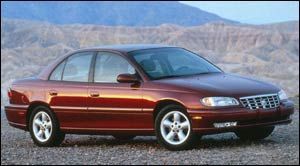
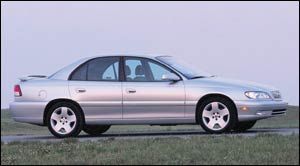
The 1999 Cadillac Catera Base is a Rear-wheel drive Sedan. It can accommodate up to 5 passengers. It has 4 Doors and is powered by a 3.0L V6 DOHC 24 valves engine which outputs 200 hp @ 6000 rpm and is paired with 4 speed automatic gearbox. The 1999 Cadillac Catera Base has cargo capacity of 410 Liters and the vehicle weighs 1710 kg. In terms of ride assists, the 1999 Cadillac Catera Base has stability control and traction control in addition to anti-lock brake system (ABS). The vehicle has an optional engine as well It offers and. Safety features also include None and None. The front suspension is while the rear suspension is. The car also features a It has as standard. Electronic features include Cruise Control. For convenience, the car has Power windows and Power door locks. There is also a remote keyless entry feature. Moreover, the car has. The steering wheel has audio control buttons. In terms of performance, the car has 218 N.m of torque and a top speed of 215 km/h. The 1999 Cadillac Catera Base accelerates from zero to 60 mph in 8.7 seconds and hits quarter mile at 16.6 seconds. Fuel consumption is 13.1 L/100km in the city and 8.8 L/100km in the highway. The car price starts at $ 42,310
| Name | Base | |
|---|---|---|
| Price | $ 42,310 | |
| Body | Sedan | |
| Doors | 4 Doors | |
| Engine | 3.0L V6 DOHC 24 valves | |
| Power | 200 hp @ 6000 rpm | |
| Number of Seats | 5 Seats | |
| Transmission | 4 speed automatic | |
| Cargo Space | 410.0 L | |
| Maximum Cargo Space | 410.0 L | |
| Wheel Type | ||
| Series | Catera | |
| Drivetrain | Rear-wheel drive | |
| Horsepower | 200 HP | |
| Torque | 218 N.m | |
| Top Speed | 215 km/h | |
| Acceleration 0-100 km/h (0-60 mph) | 8.7 s | |
| Fuel Type | Petrol (Gasoline) | |
| Fuel Consumption (City) | 13.1 L/100km | |
| Fuel Consumption (Highway) | 8.8 L/100km | |
| Gear Type | auto | |
| Weight | 1,710 KG | |
| Brand | Cadillac | |
| Model | Catera | |
| 0-400m (Quarter Mile) | 16.6 s | |
| 0-400m (Quarter Mile) - Speed | 139.0 km/h | |
| 0-800m (Half Mile) | 27.5 s | |
| 0-800m (Half Mile) - Speed | 156.5 km/h | |
| Modifications (MODS) | ||
| Modifications Cost | $ 0 |
1999 Cadillac Catera Used Price Estimates
Estimates based on a driving average of 12,000 miles per year| Used Condition | Trade In Price | Private Party Price | Dealer Retail Price |
|---|---|---|---|
| Outstanding | $ 1,086 | $ 1,780 | $ 2,159 |
| Clean | $ 956 | $ 1,571 | $ 1,907 |
| Average | $ 697 | $ 1,154 | $ 1,402 |
| Rough | $ 438 | $ 738 | $ 897 |
The entry-level luxury sedan market accounts for nearly half of all luxury car sales in the US, growing rapidly from 25% just a few years ago. Characteristically, Chrysler, Lincoln and Cadillac have been lethargically slow to react to shifting luxury car buyer tastes, while Lexus, Infiniti, Audi and BMW have been actively wooing these customers with fun-to-drive, lavishly appointed sedans and outstanding customer service. While companies from across either pond brought the ES300, 328i, and A4 to market, the Big Three produced the Eldorado, Continental and New Yorker during the same time period.
Cadillac was the first domestic luxury automaker to attack the entry-level market head-on with the introduction of the 1997 Catera. After its first full year on the market, Catera rolled up sales of 25,411 units, making it the most successful launch of an entry/luxury model in U.S. history. (The previous best was set by Acura, which sold 24,700 copies of its TL model in 1996.)
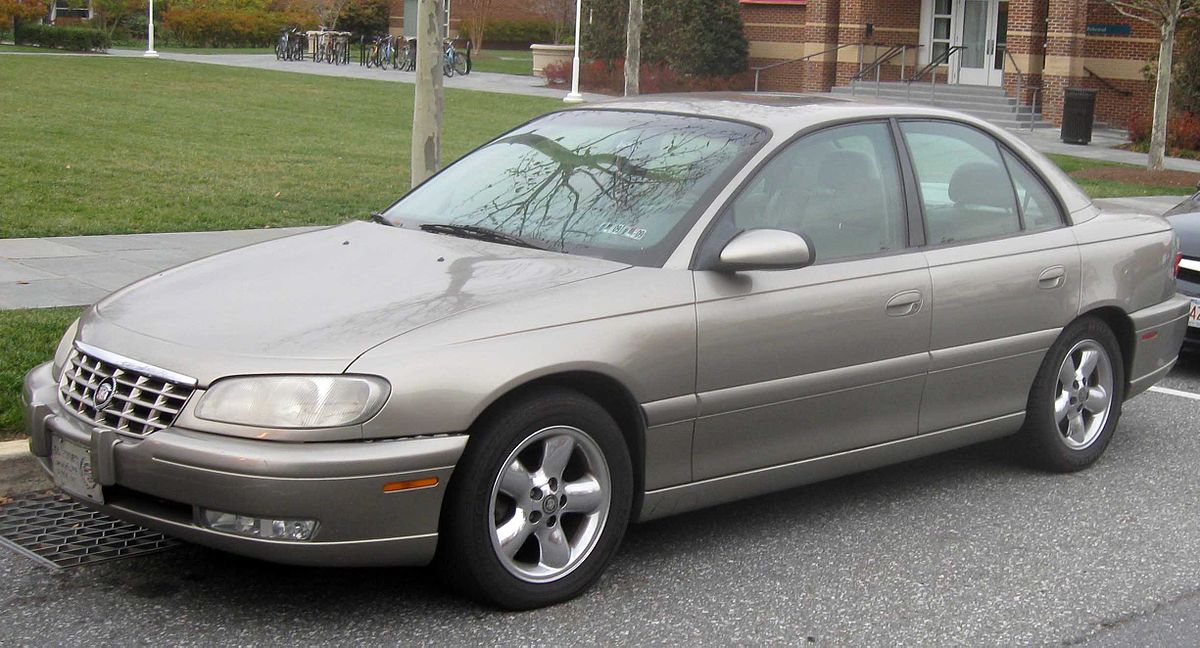
Based on the European-market Opel Omega MV6, the Catera features a 200-horsepower 3.0-liter DOHC V6 engine mated to a four-speed automatic transmission and rear-wheel drive. Built in Russelsheim, Germany, the Catera is touted by Cadillac as a blend of the best of German and American engineering. It features antilock brakes engineered for the German Autobahn, dual front airbags, traction control and an engine-disabling theft deterrent system.
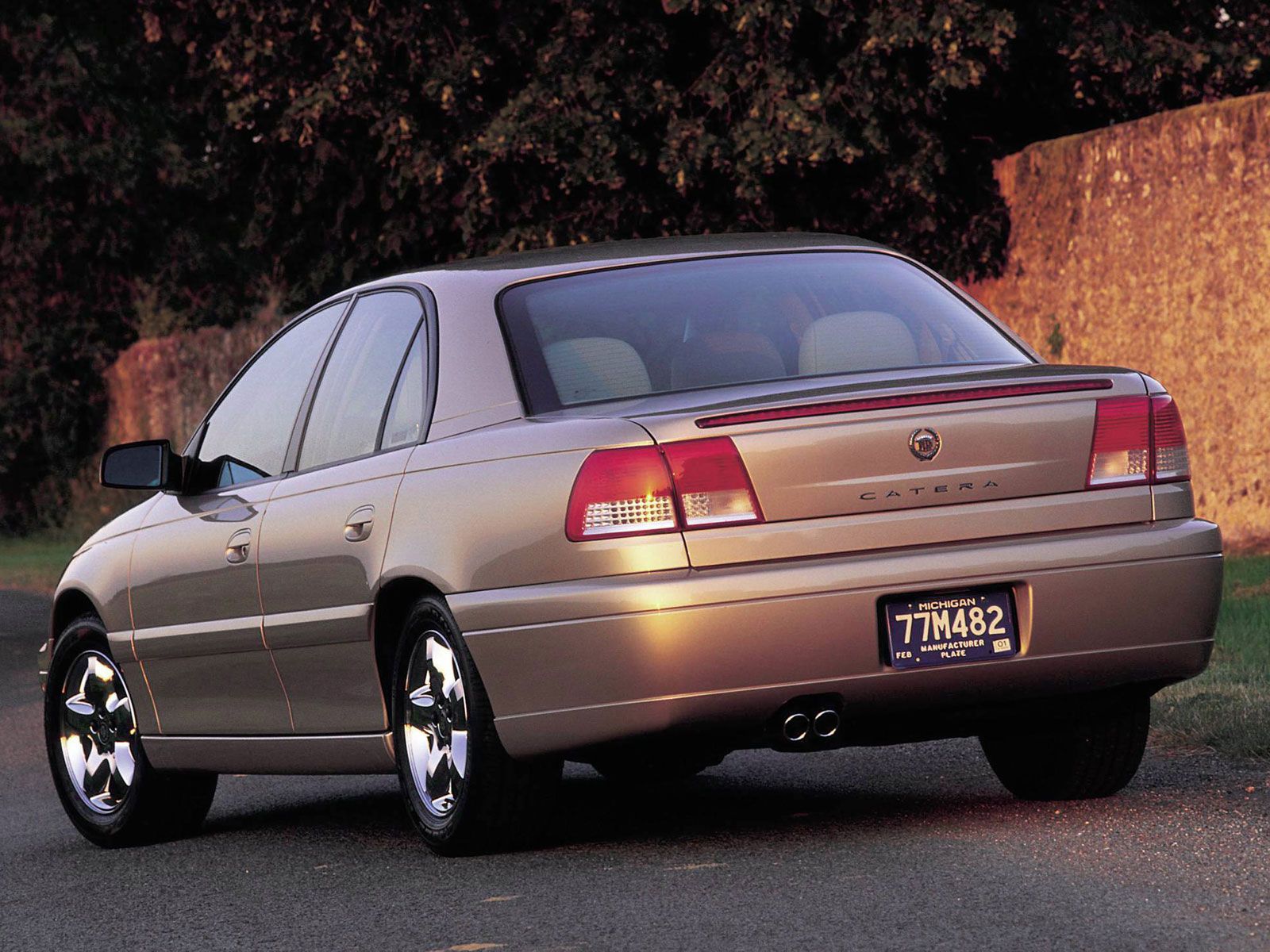
With prices starting around $ 30,000, the Catera qualifies as a bona-fide bargain in this segment. Options are restricted to a power sunroof, power rear sunshade, heated front and rear seats, a Bose audio system, and chrome-plated aluminum wheels. Standard equipment includes power windows with express-down features for all four windows, remote keyless entry, heated windshield washer nozzles, and an automatic dual-zone climate control system. Two models are available; a standard model and one appointed with leather.
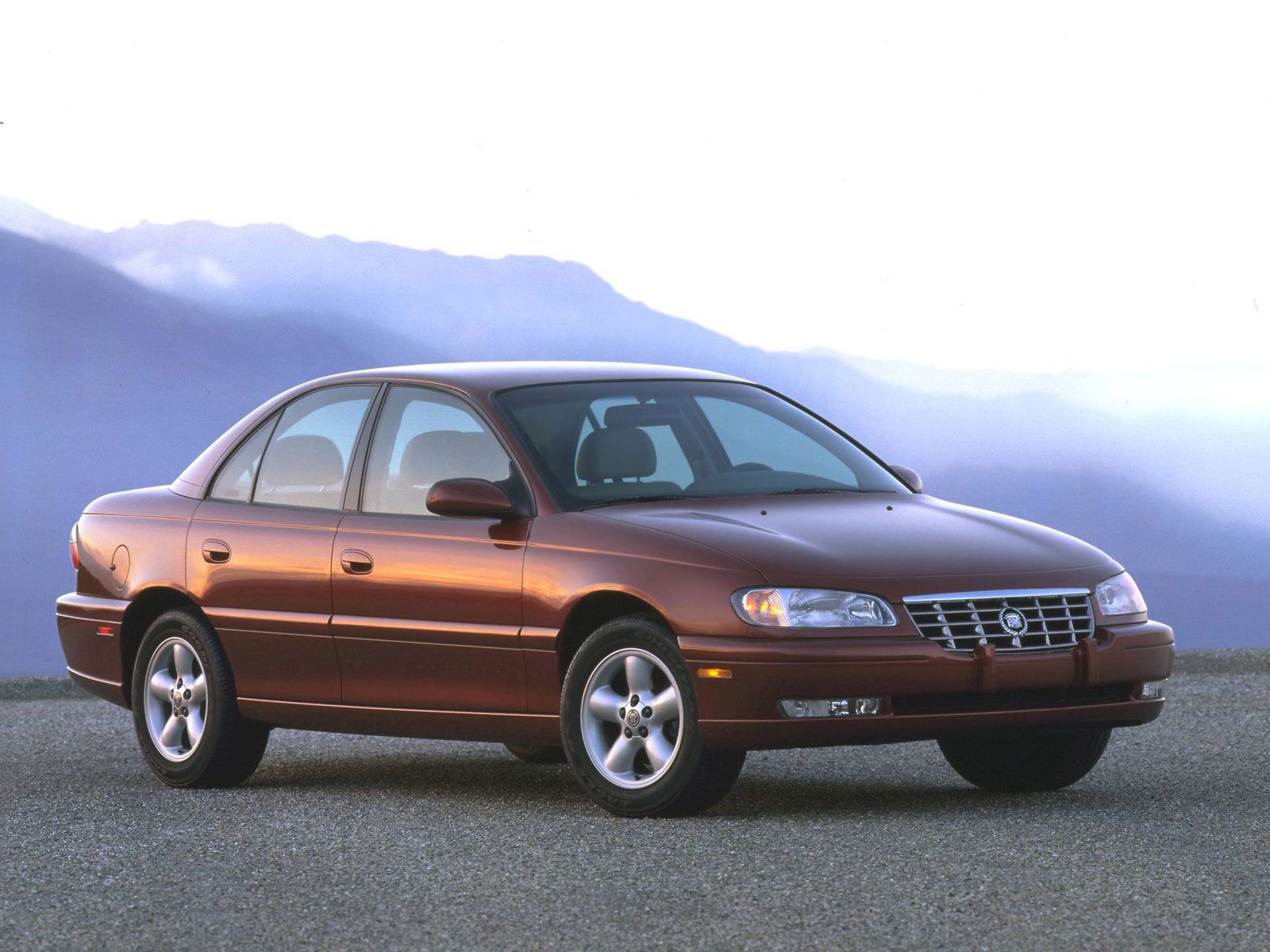
The Catera also benefits from a roomy interior (it is classified a mid-size car by the EPA) with an outstanding dash layout featuring large, analog gauges and easy-to-use controls. Wood trimming is kept to a tasteful minimum, helping the Catera exude a level of interior luxury uncommon for the class.
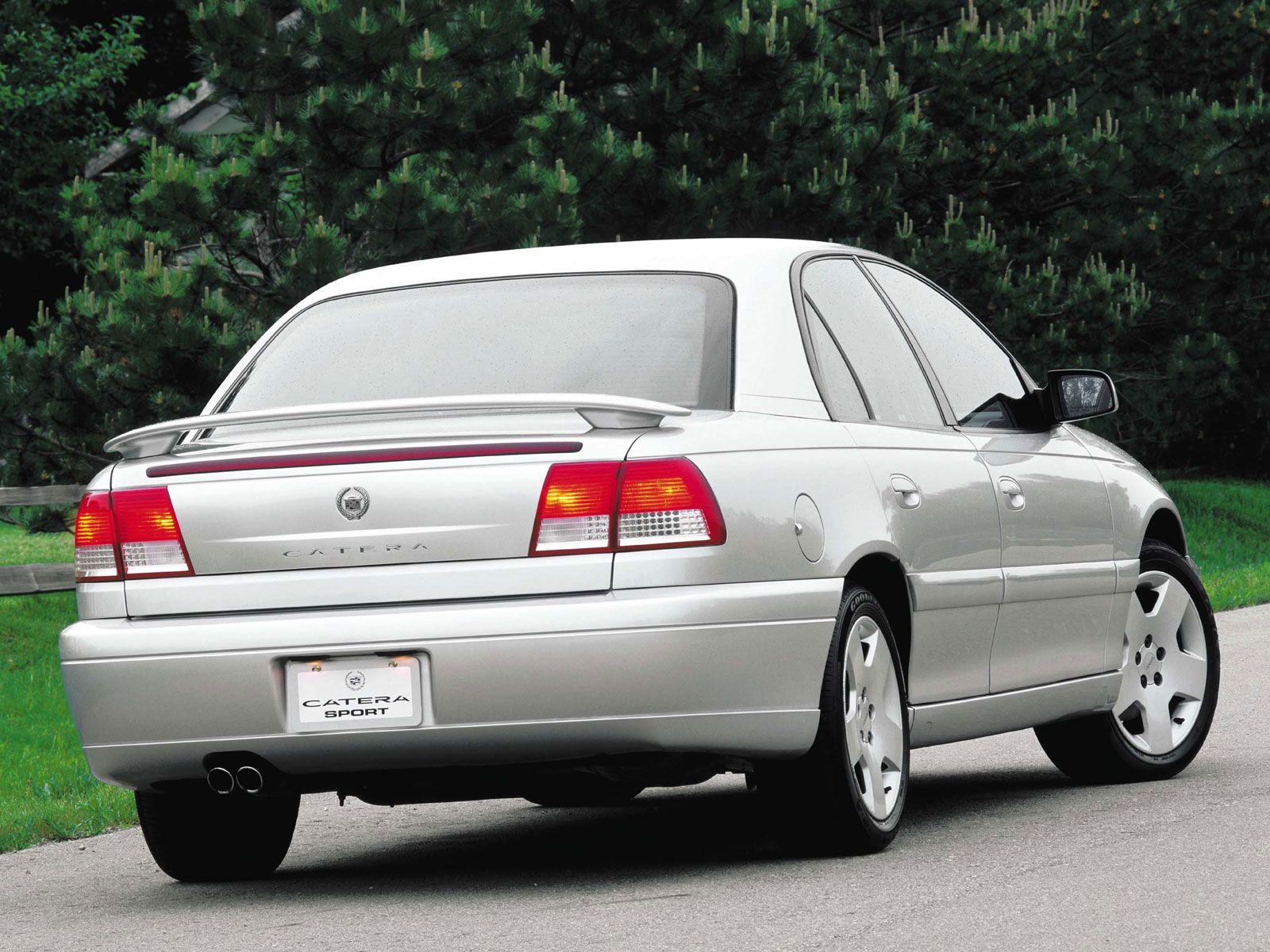
But what about performance? With 0-60 mph arriving in about eight and a half seconds, the Catera holds its own. But we suspect there will be sales lost to the BMW 328i, Infiniti I30, Nissan Maxima and Audi A4 due to the Caddy's lack of a manual transmission. Cadillac also opted to limit the Catera's top speed to 125 mph so it could fit all-season rubber to the standard aluminum wheels. The result is a smoother, softer ride on America's often harsh pavement, and better wet-weather grip, but at the expense of dry-weather handling.
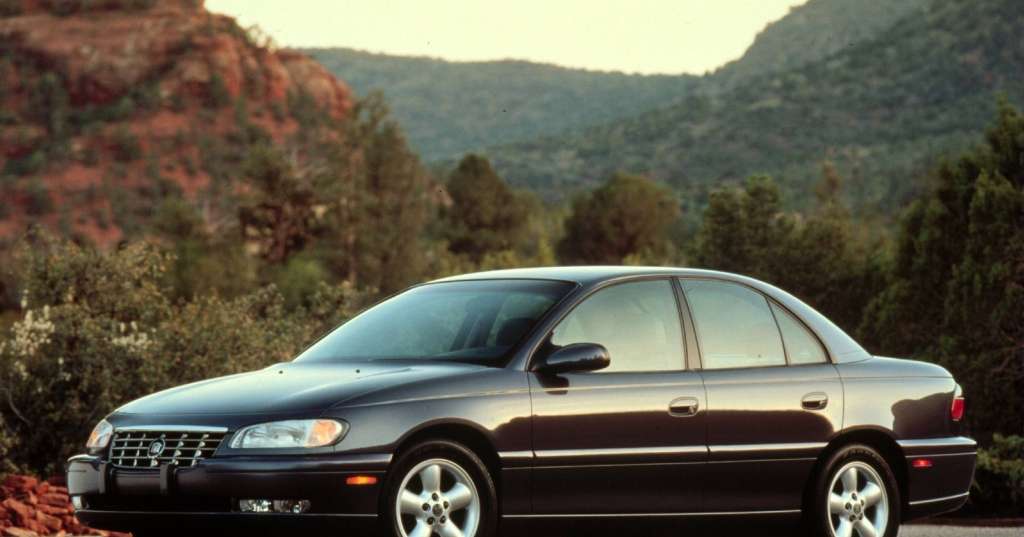
Still, the Catera is a fine effort from Cadillac, priced competitively and offering all the luxury and most of the performance a buyer could want from this segment. All it really needs is more low-end punch and an optional five-speed stick to stir up enthusiast interest.
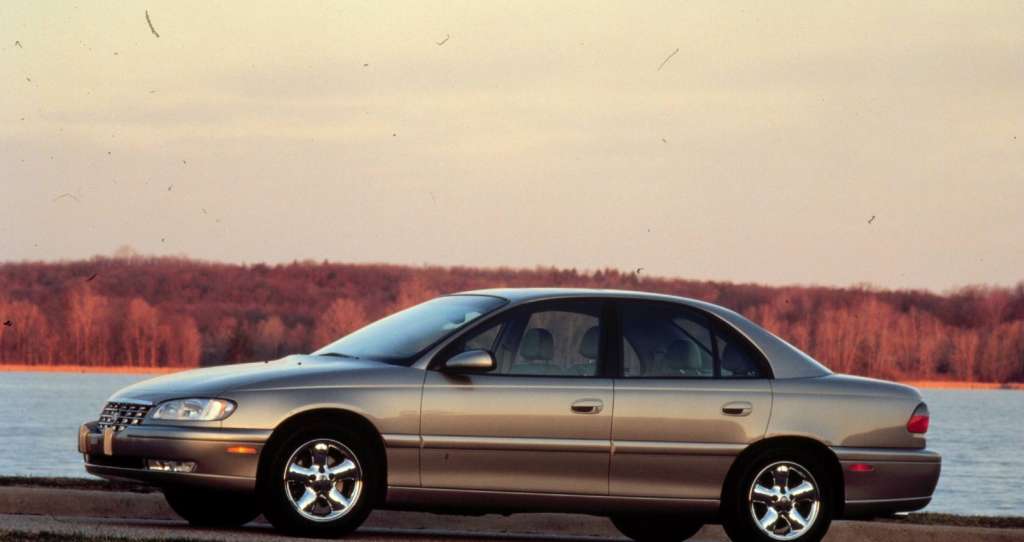
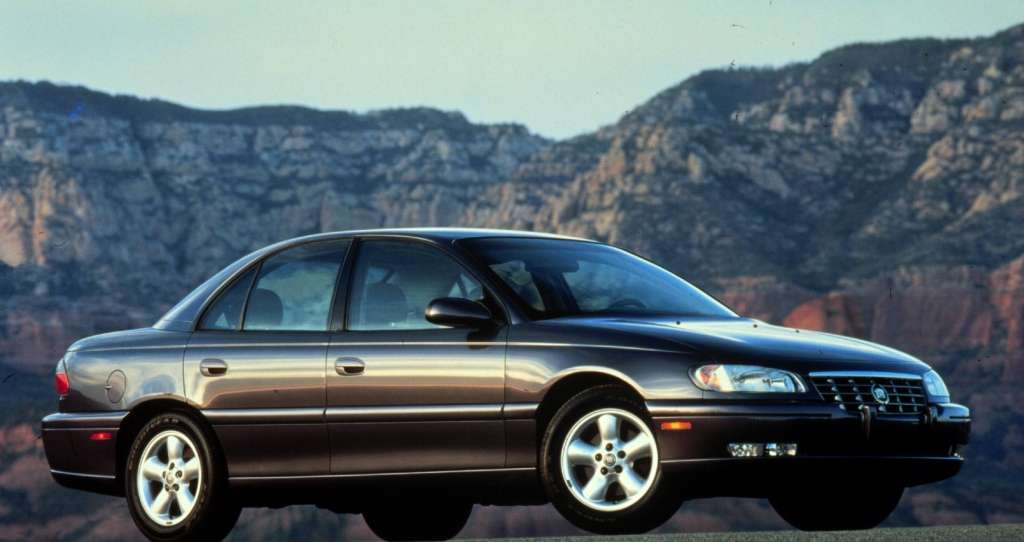
1999 Cadillac Catera Base Exterior Colors
1999 Cadillac Catera Base Interior Colors
1999 Cadillac Catera Engines
| Engine | Standard in Trim | Power | Torque | Fuel Consumption - City | Fuel Consumption - Highway | 0-100 km/h | Quarter Mile | Half Mile |
|---|---|---|---|---|---|---|---|---|
| 3,0L V6 DOHC 24 valves | Base | 200 hp @ 6000 rpm | 218 N.m | 13.1 L/100km | 8.8 L/100km | 9.0 s | 16.6 s | 27.5 s |
| 3.0L V6 DOHC 24 valves | Base | 200 hp @ 6000 rpm | 218 N.m | 13.1 L/100km | 8.8 L/100km | 8.7 s | 16.6 s | 27.5 s |
| 3.0L V6 DOHC 24 valves | Base | 200 hp @ 6000 rpm | 218 N.m | 12.9 L/100km | 8.7 L/100km | 8.7 s | 16.6 s | 27.5 s |
1999 Cadillac Catera Trims
1999 Cadillac Catera Previous Generations
1999 Cadillac Catera Future Generations
Cadillac Catera Overview and History
However, Sir Cadillac would not have any connection to the future of the Cadillac car workshops. Its actual beginnings can be traced to the mid 19th century, when a boy named Henry Martyn Leland was born. Leland grew up on a farm near Barton, Vermont, where he received a solid working-education that taught him the importance of doing a job properly, regardless of its importance.
The farm-training he received, combined with his penchant for improving working methods, led to his growth as an engineer. However, Cadillac would not yet emerge as an automobile brand. By 1890, Leland had founded his own company in partnership with Robert C. Faulconer and Norton, after having convinced the former of the city's need for machine shops. The company's area of expertise was gear grinding and the development of special tools.
Soon after the company received general credit for the quality of the products it marketed and Leland had asserted himself as a talented engineer, the shift from steam-powered vehicles to gasoline-powered ones was made. Following the work of the visionary Daimler and Benz in Europe, a man named Ransom Eli Olds from Michigan teamed up with a group of investors under a firm called Olds Gasoline Engine Works. Their main objective was to build a gasoline-powered engine to be fitted on the chassis of a vehicle.
The project was a success but the resulting product was flawed: the gears in the transmission were too loud. Olds turned to Leland and Faulconer for help. The two entered a straight competition against the Dodge brothers who were also supplying engines for Olds. Although Leland's ultimately developed 10.25 Hp engine was better than that of Dodge, Olds turned it down due to the high car sales his company registered at the time. Basically, there was no need for a new engine.
Still, Leland's engine would soon come to use. Shortly after Olds' refusal of using the newly designed engine, Leland was looked up by two men concerning the liquidation of a company that had previously built cars. Its name was the Detroit Automobile Company and had been initially reorganized by Henry Ford, who left shortly after the company began crumbling again. Leland persuaded the investors to stay in business, convincing them of the utility and importance of the automobile industry in the near future.
With an engine already designed, Leland and Faulconer were brought in and the company adopted the name of Cadillac, that of the explorer that had founded the city over two centuries ago. The Cadillac coat of arms was adopted as the company's new logo and the baby-firm would still receive international recognition for its automobiles.
Leland's engines had already garnered appreciation and were some of the most accurately built units of the time. In fact, not only the engines were reliable and built with pinpoint precision, but they were also highly versatile, successfully catering for the need of interchangeability. This feature has earned Cadillac the Dewer Trophy, being the first time when such an award was handed to an American automobile manufacturer.
Later on, Cadillac would be part of a larger entity, the General Motors company, then run by William Crapo Durant - who paid $ 4.5M in cash for Leland's company to merge with GM. From that point on, several models would be developed and enter production by Leland's departure in 1917.
The Brougham, Fleetwood, Deville and the Eldorado are some of the most famous models build by the GM's prodigious branch. Its accomplishments vary from speed breaking records on American territory to engineering improvements that were a premiere for the automotive world. For example, Cadillac introduced the revolutionary electrical lighting and ignition Delco system as standard equipment on their cars, as well as boasting the world's first independent front suspension on its entire line of automobiles in 1934.
Closed cooling systems, electronic injection systems and catalytic converters are also among the long list of first-to-have-done things introduced by Cadillac in the US. Despite the low reception of the brand in Europe, Cadillac remains one of the great classics overseas, still boasting a privileged status among American car producers. After all, it's a brand deeply rooted in nobility grounds.
1999 Cadillac Catera Consumer Reviews
1999 Cadillac Catera Base Specifications
Base Dimensions
| Cargo Capacity | 410 L |
|---|---|
| Curb Weight | 1710 kg |
| Fuel Tank Capacity | 60 L |
| Height | 1457 mm |
| Length | 4924 mm |
| Wheelbase | 2730 mm |
| Width | 1786 mm |
Base Mechanical
| Drive Train | Rear-wheel drive |
|---|---|
| Engine Name | 3.0L V6 DOHC 24 valves |
| Traction Control | Yes |
| Transmission | 4 speed automatic |
Base Overview
| Body | Sedan |
|---|---|
| Doors | 4 |
| Engine | 3.0L V6 DOHC 24 valves |
| Fuel Consumption | 13.1 (Automatic City)8.8 (Automatic Highway) |
| Power | 200 hp @ 6000 rpm |
| Seats | 5 |
| Transmission | 4 speed automatic |
| Warranties | Bumper-to-Bumper80000/km, 48/Months Emissions80000/km, 48/Months Powertrain80000/km, 48/Months Roadside Assistance80000/km, 48/Months Rust-through160000/km, 72/Months |
Base Safety
| Anti-Lock Brakes | Std |
|---|---|
| Anti-Theft Alarm | None |
| Brake Type | 4-wheel disc |
| Child-proof Locks | None |
| Driver Airbag | None |
| Passenger Airbag | None |
| Side Airbag | None |
Discussion and Comments
Share Your Comments